

Weathering is the breakdown of rock where it lies (in situ), at or near the Earth's surface. Nothing carries the broken material away immediately, which distinguishes it from erosion. Weathering operates through two main mechanisms. Mechanical (physical) weathering breaks solid bedrock into smaller fragments without changing the rock's minerals. Chemical weathering rots or dissolves rock by altering its chemical composition, usually through reactions with water and atmospheric gases. In nature, living organisms also assist through biological weathering, such as plant roots wedging open cracks or decaying humus releasing organic acids. Together, these processes weaken rock, create distinctive landforms such as scree slopes, tors, and limestone pavements, and supply loose material for mass movement and erosion.
Weathering, Erosion, and Mass Movement
Geomorphology distinguishes clearly between three related processes:
- Weathering is the disintegration and decomposition of rock in situ (in place). Rock breaks apart or decays where it lies, with no moving agent carrying it away.
- Mass movement is the downslope movement of rock debris, soil, or regolith under the direct force of gravity alone.
- Erosion is the wearing away and simultaneous transport of rock debris by a mobile agent such as running water, moving glacial ice, sea waves, or wind.
Consider a block of quartzite on Croagh Patrick: when frost shatters the rock, that is weathering. When the broken fragment tumbles down the mountain under gravity onto a slope, that is mass movement. If a mountain stream later picks up the fragment and tumbles it down a valley, that is erosion.
In exams, features such as scree slopes and limestone pavements are classified as products of weathering, not erosion or deposition.
Mechanical Weathering: Freeze-Thaw Action and Scree Formation
Mechanical weathering breaks solid rock apart through physical stress without altering its chemical or mineral composition. In cold climates and mountain uplands, freeze-thaw action (also called frost shattering) is the dominant process. In Ireland, freeze-thaw was intensely active at the end of the last Ice Age and remains active on bare upland peaks during winter.
The process requires three conditions: an open supply of water from rain or melting snow, pre-existing cracks or joints in the rock, and temperatures that fluctuate regularly above and below freezing point ().
Freeze-thaw operates in a clear sequence:
- Water enters the crack: During daytime or milder spells, rainwater or meltwater trickles into open joints, cracks, and bedding planes in exposed rock.
- Water freezes and expands: When temperatures drop below at night, the trapped water freezes into ice. As water turns to ice, it expands in volume by about 9%.
- Pressure widens the crack: Confined within the narrow crack, this 9% expansion puts great outward pressure on the sides of the fissure, wedging the rock walls apart.
- Thawing and deeper penetration: When temperatures rise above , the ice melts. The meltwater sinks deeper into the newly enlarged crack, joined by fresh surface water.
- Shattering and scree accumulation: Repeated cycles of freezing and thawing weaken the rock along its natural lines of weakness until sharp, angular fragments split off completely. These fragments tumble down under gravity to form sloping aprons of loose, sharp debris called scree (talus) at the base of the cliff.
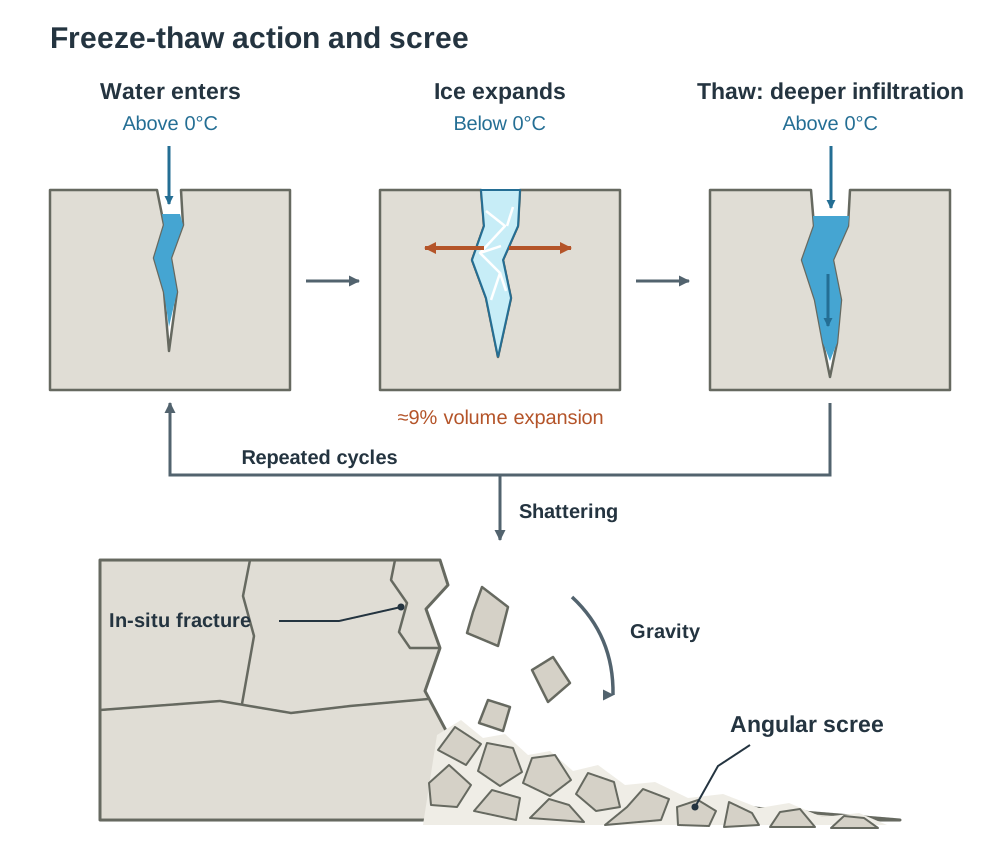
Irish examples: Extensive scree slopes flank the quartzite ridges of Croagh Patrick in County Mayo and the sandstone gullies of Carrauntoohil in County Kerry.
Mechanical Weathering: Exfoliation and Pressure Release
Two further physical processes operate where extreme daily temperatures or the removal of overlying rock by erosion (unloading) place intense physical stress on rock:
Exfoliation (Onion-Skin Weathering)
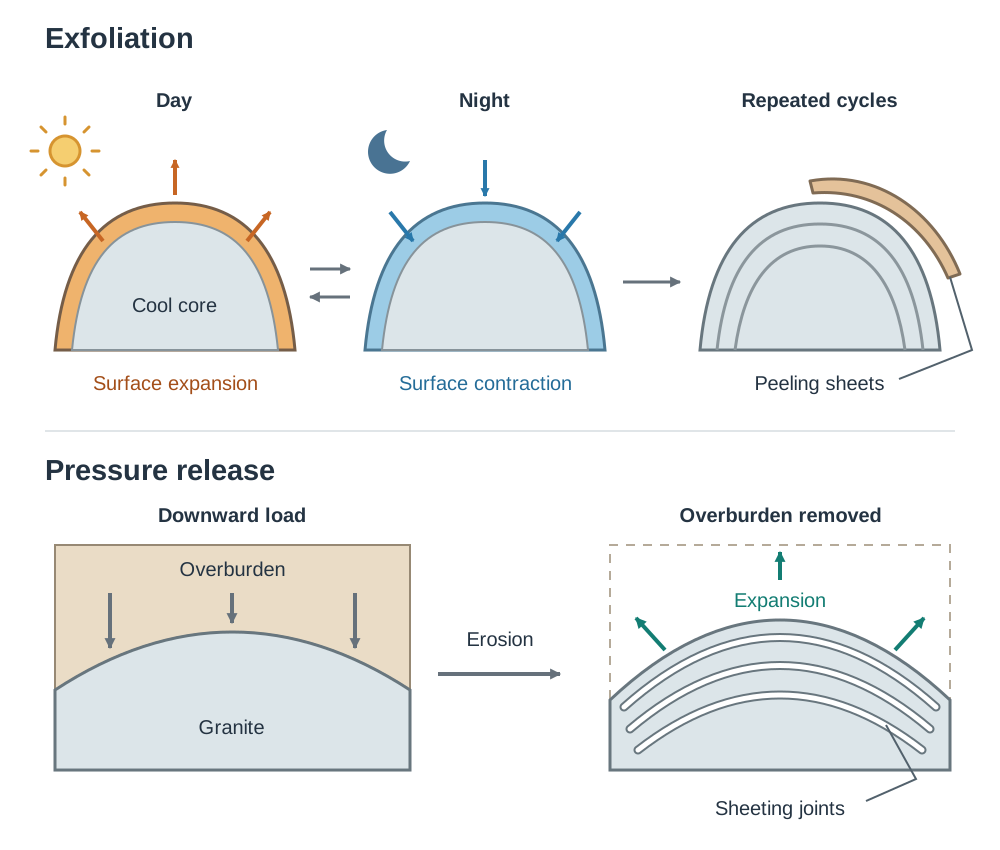
Exfoliation occurs in hot, arid deserts that have a large diurnal temperature range. Under cloudless skies, daytime temperatures can exceed , while night-time temperatures drop close to freezing.
Because rocks conduct heat poorly, only their outer few centimetres absorb solar heat and expand during the day, while the core remains cool. At night, rapid heat radiation causes the outer shell to cool and contract rapidly. This continuous daily cycle of surface expansion and contraction sets up shear stresses parallel to the surface. Over time, curved sheets of rock crack and peel away like onion layers, leaving rounded boulders and domes.
In rocks made of several minerals, such as granite, individual dark and light crystals expand and contract by different amounts, which helps to loosen individual mineral grains.
Named examples: Exfoliation is widespread in the Sahara Desert of North Africa and at Uluru (Ayers Rock) in central Australia.
Pressure Release (Unloading)
Granite forms deep underground, squeezed under enormous pressure from kilometres of overlying rock. Over millions of years, weathering and erosion strip away this heavy overburden. Relieved of this confining downward weight, the rock expands upward and outward. This expansion causes curved, horizontal fractures called sheeting joints to open up near the surface.
Named example: The massive granite domes of Half Dome in Yosemite National Park, California, clearly display curved sheets formed by pressure release.
Chemical Weathering: Carbonation and Karst Landscapes
Chemical weathering decomposes rocks by changing the chemical structure of their minerals through reactions with water, atmospheric gases, and organic acids. Water is essential for all chemical weathering.
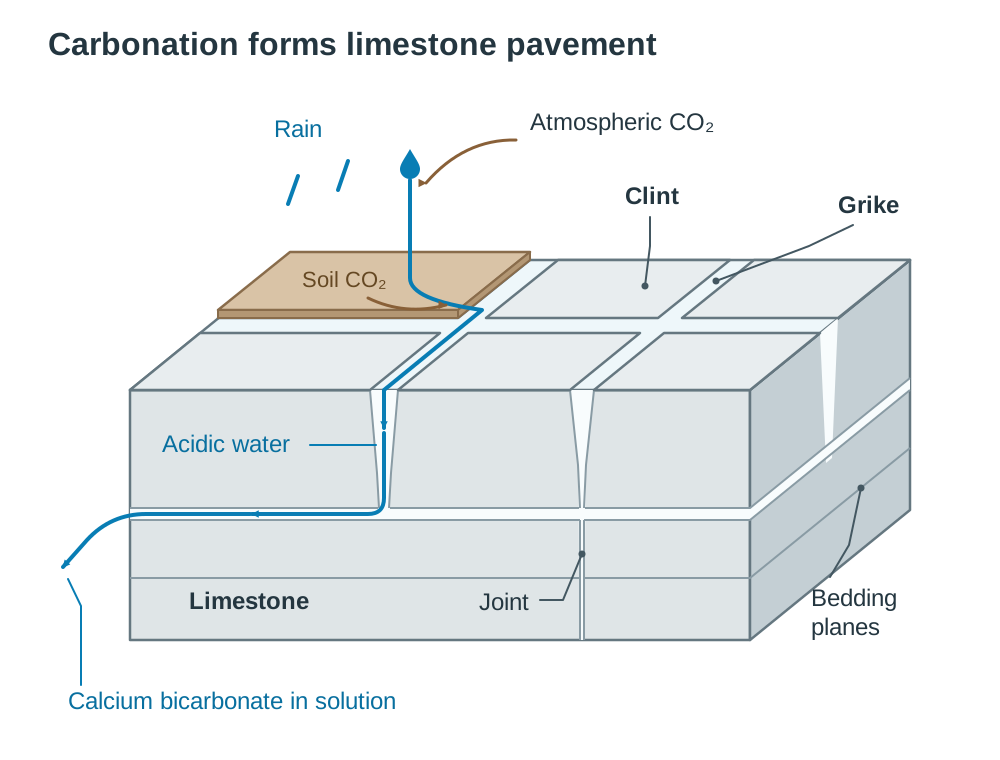
Carbonation is the chemical weathering process in which weak natural carbonic acid dissolves rocks containing calcium carbonate, particularly limestone and chalk.
- Rain falls through the atmosphere, absorbing small amounts of carbon dioxide (). As it filters through decaying vegetation and humus in topsoil, it absorbs much more , forming a weak solution of carbonic acid:
- When this acidic rainwater reaches limestone, it reacts directly with insoluble calcium carbonate (, the mineral calcite) in the rock:
- The reaction transforms insoluble calcium carbonate into soluble calcium bicarbonate. Because calcium bicarbonate dissolves completely in water, it is carried away in solution by trickling groundwater.
Karst Landforms
Because Carboniferous limestone is full of joints and bedding planes, surface water rarely stays on top as streams. Instead, acidic runoff drains into vertical cracks (joints) and horizontal layers (bedding planes). Solution gradually widens the joints into deep gaps called grikes, leaving flat-topped blocks of bare limestone called clints. This combination forms a limestone pavement.
Where a surface stream flows onto limestone, it can disappear down an enlarged vertical opening called a swallow hole (such as Pollnagollum). Hollows formed where the surface has been dissolved or where underground cave roofs have collapsed are called dolines.
Inside subterranean caves, water dripping from the roof loses carbon dioxide to the cave air, causing calcite to be deposited. Calcite hanging from the ceiling builds a stalactite, while deposits building up from the cave floor form a stalagmite. When they join, they form a pillar.
The water table is the upper boundary of the zone underground where all pores and fissures in the rock are permanently saturated with water.
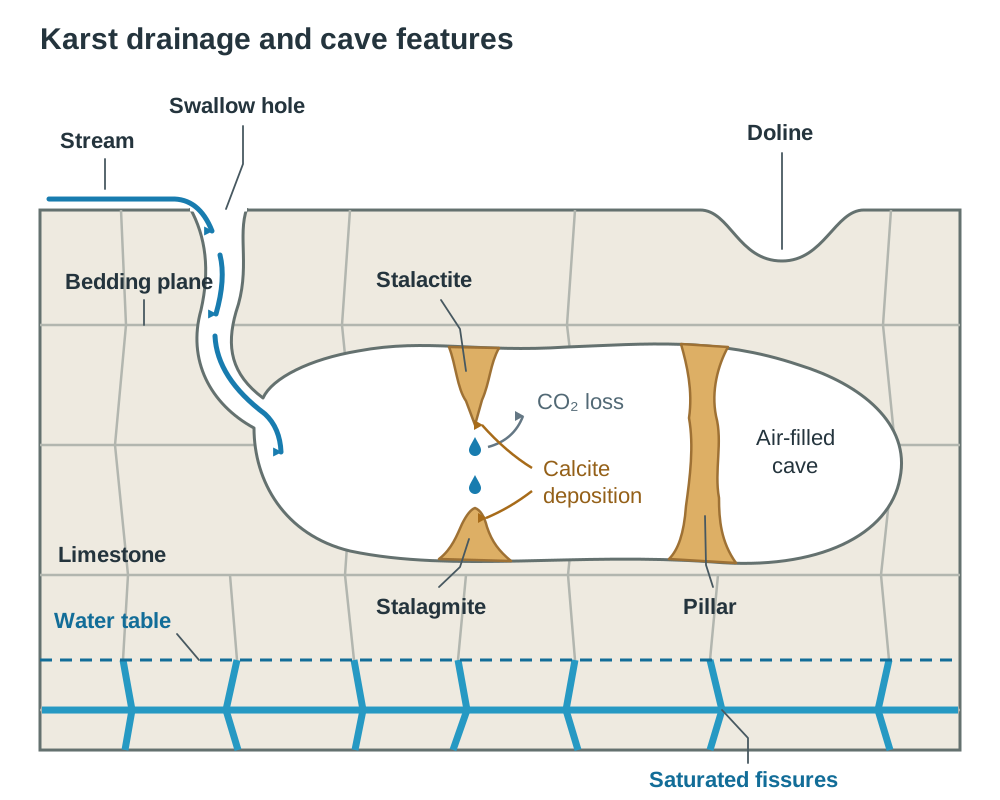
Irish example: The Burren in County Clare is Ireland's premier karst region, containing hundreds of square kilometres of bare limestone pavement, grikes, clints, and cave systems.
Chemical Weathering: Hydrolysis, Hydration, and Oxidation
Beyond carbonation, three other chemical reactions attack crustal minerals:
Hydrolysis and Tor Formation
Hydrolysis is the chemical breakdown of a mineral caused by a reaction with acidic water (specifically hydrogen ions). It is the main process that decomposes igneous rocks rich in feldspar, especially granite.
When carbonic acid in groundwater reacts with orthoclase feldspar in granite, it breaks the mineral down into a soft, powdery white clay called kaolin (china clay):
Because kaolin has no binding strength, the granite loses its cohesion and crumbles into loose grains of quartz sand and mica flakes (known as grus). The rate of hydrolysis doubles with roughly every rise in temperature, meaning deep rotting of granite took place during Ireland's warm, humid Tertiary period.
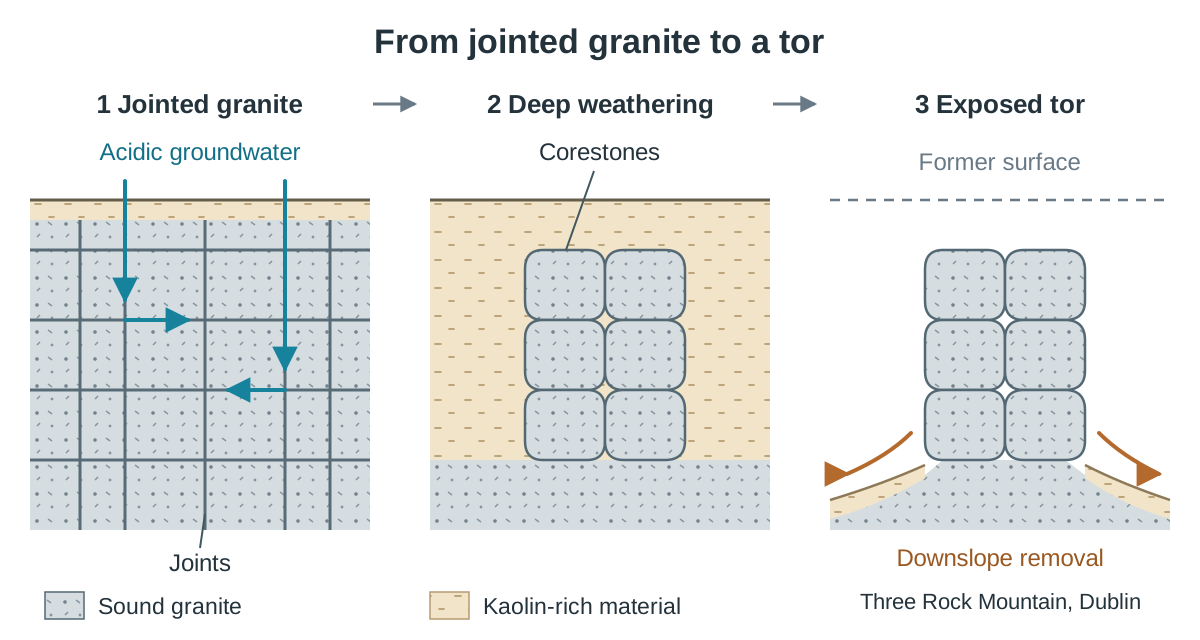
Tor formation: Deep underground, acidic groundwater rotted jointed granite along its intersecting vertical and horizontal joints. Heavily fractured zones decayed completely into kaolin clay and loose grit, while widely spaced blocks remained solid as unweathered corestones. Later, under cold periglacial conditions, this loose, rotted material was washed and slid away downslope by mass movement, leaving the solid stacks of granite corestones standing on the hilltop as tors, as seen on Three Rock Mountain in County Dublin.
Hydration
Hydration occurs when a mineral absorbs water directly into its crystalline structure, forming a new hydrated mineral that takes up more space. For example, the mineral anhydrite absorbs water to become gypsum (), swelling considerably. This expansion stresses the rock internally and causes it to crack, opening passages for further weathering.
Oxidation
Oxidation occurs when oxygen dissolved in water reacts with iron compounds in rock minerals (such as biotite mica or iron pyrite). Ferrous iron is converted to ferric iron, forming reddish-brown or yellowish iron oxides (rust). This reaction weakens the mineral bonds, causing the rock to crumble while leaving visible rust-coloured staining on the surface.
Named example: Visible reddish-brown iron staining occurs on iron-bearing sandstones and around abandoned mineral mine workings in County Wicklow.
Photo-Recognition Guide for Weathering Features
In the Leaving Certificate exam, short questions frequently present four photographs of weathered features and require you to identify the process and classify it as physical or chemical:
- Freeze-thaw action (mechanical/physical): Look for shattered, jagged rock with sharp, angular edges, cracked boulders in cold upland settings, or a sloping apron of loose angular scree at the foot of a cliff.
- Exfoliation (mechanical/physical): Look for rounded boulders or rock domes in hot, bare, arid landscapes, with curved outer layers peeling away like onion skin.
- Carbonation (chemical): Look for bare, grey limestone pavements split into rectangular blocks (clints) separated by deep vertical slots (grikes).
- Oxidation (chemical): Look for rock faces or soils stained with a distinctive reddish-brown or rusty orange colour.
- Hydrolysis (chemical): Look for a tor—isolated, rounded blocks of granite stacked on top of one another on a hilltop—or crumbly, rotted, clay-rich granite.
Memory rule: Sharp, broken, or peeling rock points to mechanical weathering. Dissolved, pitted, stained, or rotted rock points to chemical weathering.
Factors Controlling Weathering Rates
The speed and intensity of rock breakdown depend on five main factors:
- Rock composition: Minerals differ in chemical stability. Quartz is hard and chemically resistant. Calcite dissolves readily in weak acid via carbonation. Feldspar breaks down into kaolin clay via hydrolysis.
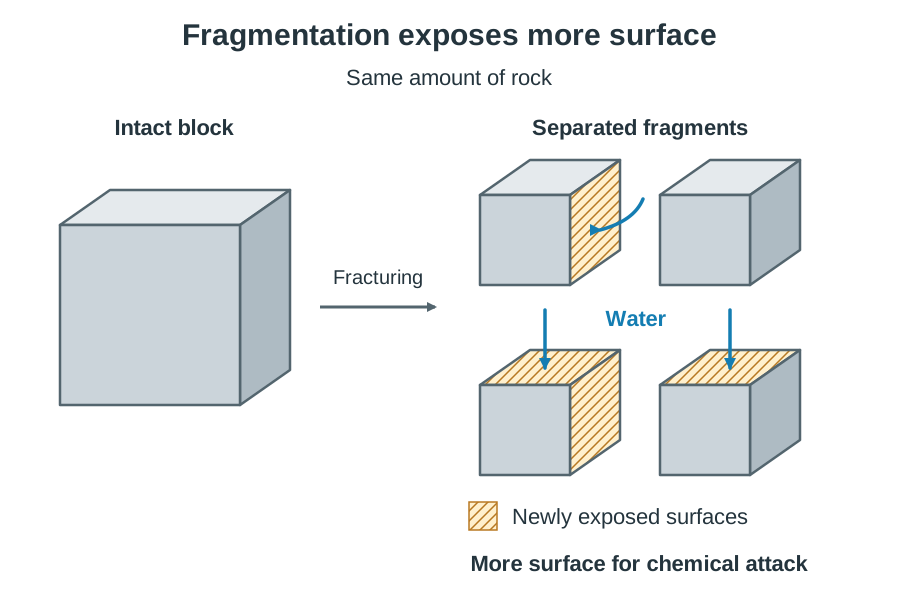
- Rock structure and surface area: Bedrock cut by faults, dense joints, or bedding planes lets water penetrate deeply. When physical weathering fractures a rock into smaller fragments, the exposed surface area increases greatly, giving chemical weathering far more surface to attack.
- Climate (temperature and moisture): High precipitation provides the water required for all chemical reactions and freeze-thaw cycles. Wide temperature swings around drive freeze-thaw action. Large daily temperature swings in hot deserts drive exfoliation. Warm, wet climates maximise chemical weathering, as chemical reaction rates roughly double with every rise in temperature.
- Vegetation cover: Plant canopies shield rock from direct rainfall and moderate surface temperature extremes. However, roots physically wedge open cracks, and decaying humus releases organic acids that accelerate chemical rotting underground.
- Human activity: Burning fossil fuels in industry and transport releases sulphur dioxide and nitrogen oxides into the air. These gases dissolve in cloud water to form acid rain, which is more acidic than natural rain (pH below about 5.6). Acid rain rapidly accelerates the dissolution of limestone buildings, historic monuments, and exposed natural limestone pavements.
Key terms
- Weathering
- The breakdown and decomposition of rocks and minerals in situ (in place) at or near the Earth's surface, without immediate transport by an erosional agent.
- Mechanical Weathering
- The physical disintegration of rock into smaller pieces without any change in its chemical or mineral composition.
- Chemical Weathering
- The decomposition of rock minerals through chemical reactions with water, atmospheric gases, and organic acids.
- Freeze-Thaw Action
- A mechanical weathering process where water enters cracks in rock, freezes and expands by about 9%, exerts pressure on the crack walls, and shatters the rock over repeated cycles.
- Scree (Talus)
- An accumulation of loose, sharp, angular rock fragments shattered by freeze-thaw action that collects at the foot of a steep cliff or mountain slope.
- Exfoliation
- A mechanical weathering process in hot deserts where large daily temperature swings cause outer rock layers to repeatedly expand and contract, peeling away in curved sheets.
- Pressure Release
- The expansion and horizontal fracturing (sheeting) of deep igneous rock when the heavy weight of overlying rock is removed by denudation.
- Carbonation
- A chemical weathering process where weak carbonic acid in rainwater dissolves calcium carbonate in limestone, converting it into soluble calcium bicarbonate.
- Limestone Pavement
- A bare, flat karst landform made up of exposed limestone slabs (clints) separated by deep, solution-widened fissures (grikes).
- Grikes and Clints
- Grikes are deep vertical fissures dissolved along joints in limestone; clints are the flat-topped blocks of rock remaining between them.
- Swallow Hole
- A funnel-shaped opening in a limestone area down which a surface stream disappears underground.
- Doline
- A closed, bowl-shaped depression on a karst landscape formed by solution of limestone or the collapse of an underground cave roof.
- Water Table
- The upper boundary of the underground zone in which rock and soil are permanently saturated with water.
- Hydrolysis
- A chemical weathering reaction between acidic water and minerals, notably breaking down feldspar in granite into soft kaolin clay.
- Kaolin
- A soft, white clay mineral (china clay) formed by the chemical breakdown of feldspar during hydrolysis.
- Tor
- An isolated, prominent stack of rounded granite corestones left standing on a hilltop after surrounding rotted regolith was removed by mass movement.
- Hydration
- A process where a rock mineral absorbs water into its crystalline structure and swells (such as anhydrite changing into gypsum), creating internal stress.
- Oxidation
- A chemical reaction between oxygen dissolved in water and iron-bearing minerals in rock, forming weakened, reddish-brown iron oxides (rust).
Check yourself
By what percentage does water expand when it freezes into ice?
Water expands in volume by approximately 9% upon freezing.
A photograph shows a rock surface covered in a reddish-brown, rust-like stain. Name the weathering process and state whether it is mechanical or chemical.
Oxidation, which is a chemical weathering process.
Write the chemical equation showing what happens when carbonic acid reacts with calcium carbonate in limestone.
CaCO3 + H2CO3 -> Ca(HCO3)2 (calcium carbonate reacts with carbonic acid to produce soluble calcium bicarbonate).
What is the difference between a clint and a grike on a limestone pavement?
A grike is a deep vertical crack widened by solution; a clint is the flat, isolated block of limestone left between the grikes.
How do stalactites and stalagmites differ in a karst cave?
Stalactites hang down from the cave ceiling, whereas stalagmites grow upward from the cave floor. When they join, they form a pillar.
Which clay mineral is formed when orthoclase feldspar in granite breaks down through hydrolysis?
Kaolin (also known as china clay).
Name two Irish mountains where extensive scree slopes formed by freeze-thaw action can be observed.
Croagh Patrick in County Mayo and Carrauntoohil in County Kerry.