

Economic activity drives employment, regional investment, and material living standards, but every economic choice leaves an imprint on the physical environment. Elective Unit 4.5 requires Higher Level students to assess these environmental impacts across local, national, and global scales. The syllabus examines the balance between finite fossil fuels and renewable energy alternatives, the transboundary damage caused by fossil fuel combustion (including acid rain and the enhanced greenhouse effect), and the policies and planning tools used to steer economies towards sustainable development. A central requirement is to examine, in detail, the disputes that break out between developers who want to use a resource and the local communities and conservation groups who want the environment protected, using both Irish and global case studies.
Question Mapping and Energy Resources in the Economy
To prepare effectively for Elective Unit 4.5, match the specific question styles on the Leaving Certificate paper to the required syllabus material:
| Typical Exam Question Type | Primary Syllabus Content | Core Case Studies and Examples |
|---|---|---|
| Renewable energy source: economic and environmental advantages | Use of renewable alternatives; energy security and decarbonisation | Galway Wind Park, Oweninny, Arklow Bank, Celtic Interconnector |
| Impact of burning fossil fuels at different scales | Air pollution, acid rain, climate change across local, regional, global scales | Dublin smoky coal ban, German Black Forest, Scandinavian lakes, Irish climate risks |
| Conflict between economic and environmental interests | Resource extraction vs conservation, safety, and community rights | Corrib Gas Field (national) and Amazon Basin Deforestation (global) |
| Sustainable development and future prospects | Brundtland pillars, EIA process, EPA regulation, future policy | Bord na Móna bog re-wetting, Climate Act 2021, Deposit Return Scheme, Tara Mines |
| Part A data and stimulus questions | Production and consumption trends, percentage calculations | National grid generation shares, fuel mix changes, calculation workings |
Renewable and Non-Renewable Resources
Economic production requires continuous energy inputs. Geographers classify these resources by their rate of replenishment:
- A non-renewable resource is a finite supply formed over millions of years of geological heat and pressure. Because its rate of consumption far exceeds its natural rate of formation, it cannot be replaced on a human timescale. Examples include coal, oil, natural gas, and peat.
- A renewable resource is replenished naturally within a human timescale. Flow resources like wind, solar radiation, and running water are not exhausted by use. Biological renewables like commercial forests and marine fish stocks regenerate naturally, but they can be permanently depleted if extraction exceeds their sustainable yield.
Ireland's Energy Production Profile
Historically reliant on imported coal, imported oil, and domestic peat, Ireland is undergoing a rapid energy transition:
- Peat: Bord na Móna has ended commercial peat harvesting for electricity. The peat-fired stations at Lanesborough and Shannonbridge closed in 2020, removing peat from Ireland's commercial electricity mix. Cutaway bogs are now being re-wetted to store carbon or repurposed for wind farms.
- Natural Gas: Gas remains the single largest fuel for electricity generation, providing vital baseload power and home heating. The offshore Corrib Gas Field, 70 km off the Mayo coast, supplied up to 60% of national gas needs at peak production. Because its reservoir is depleting, Ireland relies increasingly on gas imported via subsea interconnectors from Scotland.
- Wind Energy: Wind is Ireland's largest renewable electricity source, supplying roughly 30% to 35% of the island's electricity in recent years. Generation is dominated by upland onshore wind farms, alongside early offshore schemes like the Arklow Bank Wind Park.
- Hydroelectricity: Ireland's low relief and gentle river gradients mean there are few sites for large hydro schemes, but the Ardnacrusha station on the River Shannon (opened in 1929) still generates renewable electricity.
Under the Climate Action Plan, the Irish Government aims to generate up to 80% of electricity from renewable sources by 2030. The legally binding commitments, set out in the Climate Act 2021, require a 51% cut in overall greenhouse gas emissions by 2030 and climate neutrality by 2050, enforced through statutory five-year carbon budgets.
European Comparisons: Production and Consumption
Energy production profiles reflect physical geography and state policy:
| Country | Dominant Generation Mix | Geographic and Strategic Drivers |
|---|---|---|
| Norway | Hydropower (>90% of electricity) | Steep glaciated valleys, high relief, and heavy precipitation feed high-head reservoirs, allowing Norway to export clean power while selling North Sea oil and gas abroad. |
| Germany | Mixed transition (Energiewende) | Phased out nuclear energy by 2023 and aims to end coal by 2038, investing heavily in wind, solar PV, and transitional gas backup. |
| France | Nuclear power (~70% of electricity) | State investment launched after the 1970s oil crisis built an extensive reactor fleet that provides low-carbon baseload power, though long-term radioactive waste storage remains an issue. |
Patterns of energy consumption show clear spatial disparities. Developed economies consume far more energy per person than developing economies, though demand is growing fastest in industrialising nations like India and China. Within national economies, consumption is divided between transport (dominated by imported oil), heating for homes and commercial buildings, and electricity for manufacturing and digital infrastructure. In Ireland, the rapid expansion of foreign direct investment in data centres has created heavy grid demand: data centres in the Greater Dublin Area now consume over 20% of Ireland's total metered electricity, requiring fossil-fuel turbines to stand by as backup when renewable output drops.
Alternative Energy in Focus: Wind Power in Ireland
Wind energy is the central pillar of Ireland's renewable energy policy, taking advantage of persistent, high-velocity Atlantic depressions.
Named Examples
- Galway Wind Park in the Cloosh Valley, County Galway, is Ireland's largest onshore wind farm. Developed by SSE Renewables and Coillte on commercial forestry land, it comprises 58 turbines with an export capacity of 169 MW, supplying clean electricity to tens of thousands of homes.
- Oweninny Wind Farm in County Mayo was constructed across cutaway bog formerly harvested by Bord na Móna for the Bellacorick peat power station, demonstrating the productive reuse of an industrial brownfield site.
- Offshore development is expanding beyond the existing Arklow Bank scheme (25 MW off County Wicklow) to large-scale east and south coast projects in planning, including Codling Wind Park and Dublin Array.
Economic Advantages
- Free, indigenous fuel: Wind has zero fuel purchase cost once turbines are installed, protecting the economy from global fossil-fuel price spikes like those that followed the 2022 invasion of Ukraine.
- Reduced import bill: Ireland imports roughly 80% of its total primary energy. Every unit of electricity generated by domestic wind keeps financial capital within the national economy.
- Energy security: Domestic generation reduces exposure to disruptions in international gas pipelines or shipping lanes.
- Rural employment: Wind farm planning, civil engineering, grid construction, and ongoing operations and maintenance provide skilled technical jobs in peripheral rural areas with limited industrial employment.
- Local revenue: Developers pay annual commercial rates to local county councils, lease rents to private landowners and Coillte, and contribute to community benefit funds supporting local sports clubs and community centres.
- Export potential: Interconnectors, such as the Celtic Interconnector linking County Cork to Brittany in France, allow Ireland to export surplus wind electricity to the European single market during periods of high wind.
Environmental Advantages
- Zero operational emissions: Turbines emit no carbon dioxide (CO₂), sulphur dioxide (SO₂), or particulate matter while generating, directly curbing both acid rain and climate change.
- Fossil fuel displacement: Every megawatt-hour of wind power fed into the grid directly displaces generation from gas-fired or coal-fired power stations, helping Ireland progress toward its statutory 51% emissions reduction target by 2030.
- No mining or residue: Unlike coal, oil, or uranium, wind power creates no mining waste, open-cast pits, toxic tailings ponds, ash residue, or thermal cooling-water pollution in rivers.
Disadvantages and Environmental Risks
- Intermittency: Wind is variable. During calm anticyclonic weather, turbine output falls to near zero. Grid operators must keep rapid-response gas plants, battery storage, or subsea interconnectors on standby, meaning fossil-fuel capacity cannot be eliminated entirely.
- Landscape and community impacts: Turbines up to 180 metres tall cause visual intrusion in scenic upland landscapes, while nearby residents raise concerns regarding low-frequency aerodynamic noise and shadow flicker across windows.
- Upland and peatland instability: Constructing access roads, concrete turbine foundations, and drainage channels on blanket bog can trigger landslides. In October 2003 at Derrybrien, County Galway, excavation for an upland wind farm caused a peat slide of several hundred thousand cubic metres. The peat flowed into the Owendalulleegh River, killing roughly 50,000 fish, polluting Lough Cutra's drinking water, and resulting in Ireland being heavily fined by the Court of Justice of the European Union for failing to carry out a proper Environmental Impact Assessment.
- Ecological disturbance: Turbines present collision hazards to upland raptors and migratory birds, while offshore pile-driving creates underwater acoustic disturbance for marine mammals.
Fossil Fuel Combustion: Air Quality, Acid Rain, and Climate Change
Fossil fuel combustion powers transport, industry, and electricity generation, but releases chemical pollutants that degrade natural systems across three distinct geographic scales.
1. Local Scale: Urban Winter Smog
Burning bituminous (smoky) coal releases fine particulate matter (PM2.5 and PM10, meaning microscopic soot particles smaller than 2.5 and 10 micrometres across) alongside sulphur dioxide (SO₂). In low-lying urban areas during cold, windless winter weather, these emissions become trapped under thermal temperature inversions. The trapped smoke forms a dense industrial winter smog that triggers asthma, chronic bronchitis, and excess cardiovascular deaths.
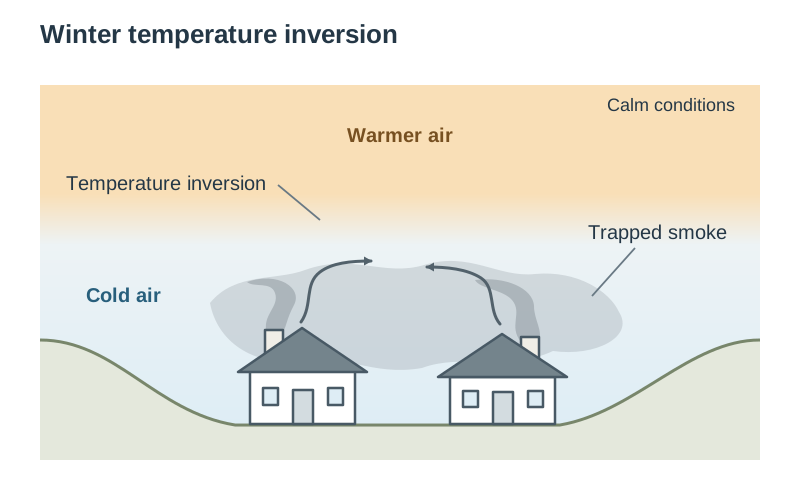
To end this health crisis, the Irish Government enacted the Dublin Smoky Coal Ban in 1990, outlawing the marketing, sale, and distribution of bituminous coal across the city. Black smoke levels dropped immediately, saving roughly 350 lives each year in the capital. The ban was extended to regional towns over subsequent years, and in October 2022 a nationwide ban on smoky solid fuels came into legal effect, prohibiting the retail sale of unseasoned wet firewood, smoky coal, and turf across the state.
2. European Scale: Transboundary Acid Rain
Thermal power plants, metal smelters, and vehicle engines release SO₂ and nitrogen oxides (NOₓ). These gases rise into the troposphere and react with cloud moisture and oxygen to form dilute sulphuric acid (H₂SO₄) and dilute nitric acid (HNO₃). Prevailing westerly and south-westerly winds carry these airborne pollutants hundreds of kilometres across international boundaries before they fall as wet deposition (acid rain, snow, mist) or dry particulate fallout.
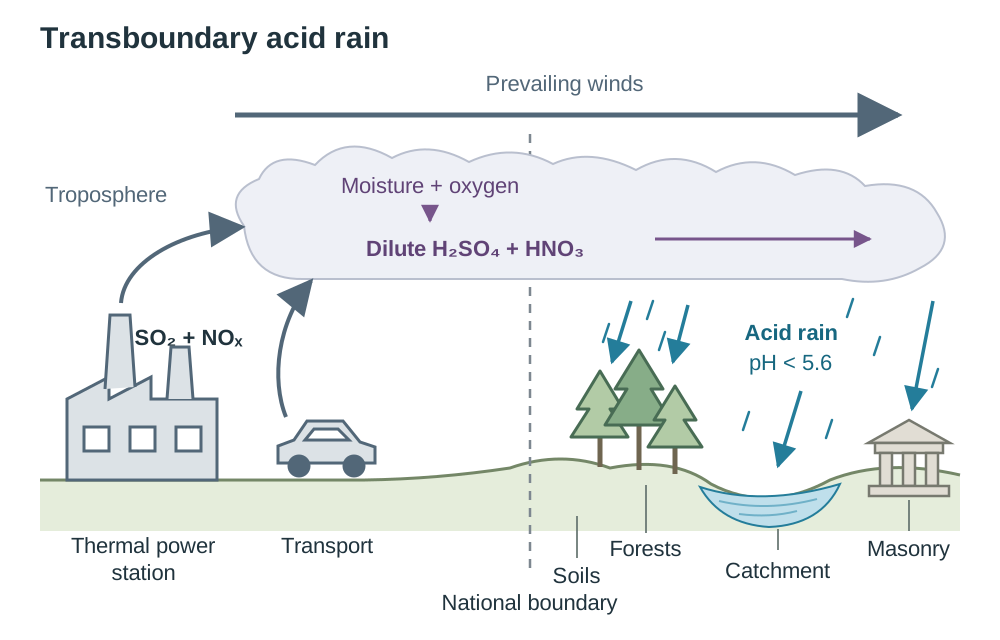
Normal, unpolluted rainfall is naturally slightly acidic (around pH 5.6) due to dissolved atmospheric CO₂ forming weak carbonic acid. Acid rain has a pH below 5.6, and severely affected areas of northern Europe recorded precipitation of pH 4.5 or lower during the 1970s and 1980s. Key impacts include:
- Forest dieback (Waldsterben): In Germany's Black Forest (Schwarzwald)*, acid rain leached essential plant nutrients like calcium and magnesium out of thin forest soils. It also dissolved insoluble aluminium compounds in the soil, freeing toxic aluminium ions that damaged tree roots. Deprived of water and nutrients, needle canopies turned yellow, crowns thinned, and spruce and fir trees died from secondary fungal infection and frost damage.
- Dead lakes and fish kills: In southern Norway and Sweden, the underlying geology consists of ancient Scandinavian granite. Unlike carbonaceous limestone, granite lacks calcium carbonate and has virtually no natural buffering capacity to neutralise incoming acids. Thousands of lakes acidified; dissolved aluminium washed into streams and accumulated on the gills of salmon and brown trout, causing mucus clogging, suffocation, and the extinction of fish populations across entire river catchments.
- Corrosion of built heritage: Acid deposition reacts with the insoluble calcium carbonate in limestone buildings, bridges, and marble sculptures, converting it into soluble calcium sulphate (gypsum, CaSO₄). Rainwater washes the gypsum away, dissolving historic masonry, stonework, and stained glass across European cities.
Because acid rain is transboundary pollution, it required an international legal solution. The UN Convention on Long-Range Transboundary Air Pollution and binding EU directives established national emission ceilings. Thermal stations were retrofitted with flue-gas desulphurisation (FGD) scrubbers, which spray lime slurry into chimney gases to remove SO₂ before release. Ireland's large coal-fired station at Moneypoint, County Clare, was fitted with FGD and low-NOₓ burners in 2008, cutting SO₂ emissions by roughly 90%, before routine coal generation was phased down as the site transitions toward a renewable energy hub.
3. Global and National Scale: Climate Change
At a global scale, burning fossil fuels releases over 35 billion tonnes of CO₂ each year, intensifying the enhanced greenhouse effect. Carbon dioxide and methane absorb the infrared heat radiating from the Earth's surface and re-radiate it back toward the ground, raising global mean surface temperatures by more than 1°C above pre-industrial levels. Under the Paris Agreement (2015), almost 200 nations pledged to keep warming well below 2°C, aiming for 1.5°C; at COP28 in Dubai in 2023, countries formally agreed to transition away from fossil fuels in energy systems.
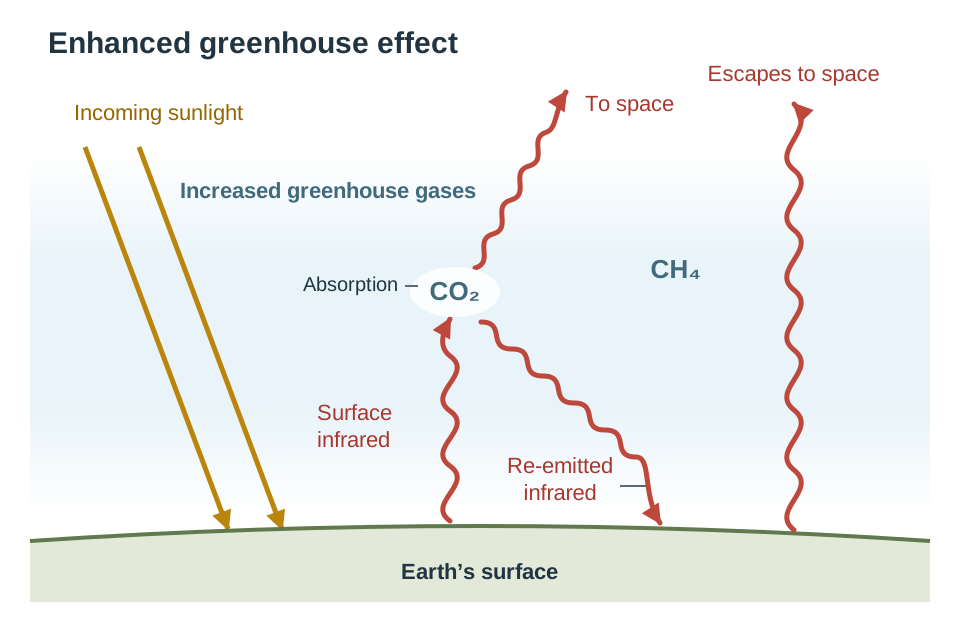
In Ireland, global warming produces distinct national and local environmental impacts:
- Sea-level rise and storm surges: Thermal expansion of ocean water and melting ice sheets threaten low-lying coastal urban areas, including the Dublin docklands, Cork city quays, Limerick, and Galway.
- Accelerated coastal erosion: Soft east-coast boulder clay sediments, such as those at Portrane and Rogerstown in County Dublin, are eroding rapidly under elevated sea levels and winter wave attack.
- Intense winter flooding: Warmer air holds more moisture, generating prolonged rainfall events. The lower Shannon catchment experienced historic winter flooding in 2015–2016, inundating thousands of hectares of farmland, cutting off roads, and flooding homes around Athlone and Clonlara.
- Summer water stress: Warmer, drier summer conditions in the east and south-east deplete water supplies in the Liffey and Vartry catchments serving Greater Dublin, leading to hosepipe bans and low river flows that concentrate agricultural and municipal pollutants.
Resource Exploitation: Peat, Fisheries, Mining, and Tourism
Unsustainable resource extraction occurs when an industry prioritises short-term economic profit over the natural replenishment rate of an ecosystem.
Peat Extraction in the Irish Midlands
For decades, semi-state company Bord na Móna drained and mechanically stripped extensive raised bogs across Offaly, Laois, Longford, Roscommon, and Westmeath using ditchers, milled scrapers, and narrow-gauge railways to supply peat briquette factories and thermal power plants at Lanesborough and Shannonbridge:
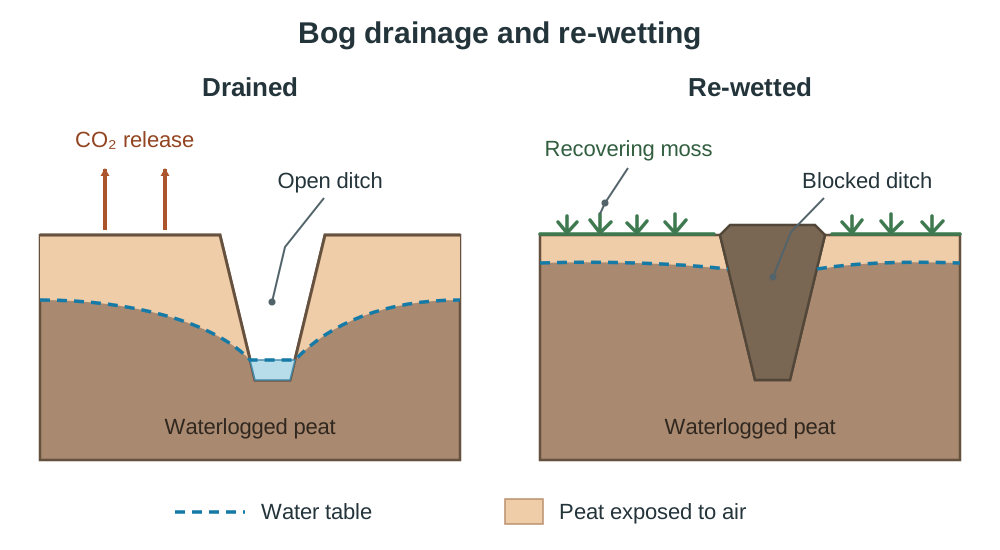
- Destruction of bog ecology: Drainage ditches lowered the groundwater table, drying out the surface bog mat. Without waterlogging, living Sphagnum mosses died, halting peat formation and destroying a rare post-glacial European habitat.
- Loss of a vital carbon sink: Active, wet bogs act as long-term carbon sinks, capturing atmospheric CO₂. Once drained and exposed to air, dry peat oxidises and releases stored carbon. When burned in power stations, peat emits more CO₂ per unit of electricity generated than coal, converting an ancient carbon sink into a heavy carbon source.
- Catchment siltation: Rain and wind eroded bare, milled peat fields. Runoff carried fine peat silt into local tributaries of the River Shannon and River Brosna, clouding the water column, choking riverbeds, and smothering clean gravel spawning beds required by brown trout and Atlantic salmon.
- Habitat and species loss: Breeding grounds for ground-nesting birds like the curlew, lapwing, and red grouse were lost, alongside specialized bog flora like the sundew and bog rosemary.
- Restoration: Commercial harvesting has ceased. Under the Peatlands Climate Action Scheme, Bord na Móna is now decommissioning industrial machinery and blocking drainage ditches to re-wet tens of thousands of hectares of cutaway bog, restoring natural hydrological conditions so peat mosses recolonise the land and resume carbon sequestration.
Depletion of Fish Stocks: The North Atlantic and Ireland
Marine fisheries are biological renewable resources governed by sustainable yield. If harvest rates exceed the natural reproduction rate of mature adult fish, spawning populations collapse:
- The Grand Banks collapse (1992): Off Newfoundland, Canada, heavy commercial fishing by industrial foreign factory trawlers equipped with acoustic sonar, radar, and deep bottom-trawling nets decimated the northern cod stock. Catch rates plummeted until the Canadian government imposed an indefinite fishing moratorium in 1992. The closure eliminated roughly 30,000 jobs overnight and permanently crippled peripheral fishing outports, proving that a renewable biological resource can be pushed to commercial extinction.
- Irish commercial fisheries: In domestic waters, whitefish stocks like Irish Sea and Celtic Sea cod were severely overfished by heavy trawling, prompting scientific bodies to recommend near-zero catch allowances. Herring and mackerel have also required sharp quota reductions.
- EU Common Fisheries Policy (CFP) management: To allow stocks to recover, the CFP sets annual Total Allowable Catches (TACs) divided into national fishing quotas. Management measures include minimum landing sizes, larger diamond or square net mesh sizes to allow juvenile fish to escape and breed, satellite vessel monitoring systems (VMS), seasonal nursery ground closures, and a strict landing obligation (discard ban) that prohibits dumping dead quota fish back into the sea.
- Aquaculture trade-offs: Fish farming (marine salmon cages in Bantry Bay and Clew Bay) supplies consumer markets without catching wild fish. However, aquaculture creates secondary environmental pressures: waste faeces and unconsumed feed enrich seabed sediments with nitrogen and phosphorus, chemical pesticides used against sea-lice pollute surrounding waters, sea-lice cross-infest migrating wild juvenile sea trout and smolts, and escaped farmed salmon interbreed with wild populations, diluting their genetic fitness.
Modern Regulated Mining vs Historic Legacy Pollution
- Historic legacy pollution: Abandoned historic metal mines at Avoca, County Wicklow (copper) and Silvermines, County Tipperary (lead and zinc) operated before statutory environmental controls existed. At Avoca, rainwater reacts with exposed iron pyrite in underground shafts, creating untreated acid mine drainage loaded with toxic copper and zinc that discharges into the Avoca River, staining river gravels bright orange and leaving long stretches ecologically dead. At Silvermines, unmanaged tailing lagoons dried out, generating toxic lead dust storms that contaminated surrounding pasture land and poisoned livestock in 1999.
- Modern environmental standards: By contrast, Tara Mines in Navan, County Meath (Europe's largest underground zinc and lead mine) operates under strict Industrial Emissions Licences enforced by the EPA. Crushed waste rock and mineral tailings are pumped into an engineered containment facility at Randalstown lined with impermeable clay and synthetic membranes. Groundwater monitoring wells surround the site, and the operator is legally bound to fund a progressive rehabilitation and closure plan to seal, cap, and re-vegetate the tailings facility once mining concludes.
Tourism and Heritage: Economic Gain vs Environmental Cost
Tourism is an economic engine in peripheral regions along the Wild Atlantic Way, but heavy visitor numbers create physical wear on fragile landscapes:
- Footpath erosion and trampling: Concentrated pedestrian traffic at honeypot sites strips protective vegetation. Exposed soils are compacted, preventing water infiltration, and then washed out by heavy rainfall to create deep mud gullies. Severe erosion affects the upper slopes of Croagh Patrick, County Mayo, trails at Glendalough in the Wicklow Mountains, and the clifftops at the Cliffs of Moher, County Clare, which receive over 1.4 million visitors annually.
- Traffic, litter, and sewage: Tour buses and rental cars cause road-verge damage, noise, and exhaust emissions on narrow rural routes like the Ring of Kerry. Small coastal villages experience summer population spikes that overwhelm municipal wastewater treatment plants, causing untreated effluent discharges that threaten local bathing water quality.
- Fragile habitat disruption: Karst limestone pavement in the Burren, County Clare, suffers from trampling, rock displacement, and unauthorized souvenir collecting, damaging rare alpine and Mediterranean flora growing in protected grykes.
- Management solutions: National bodies install raised timber boardwalks, stone-pitched steps, viewing platforms, and park-and-ride shuttle buses. At Skellig Michael, County Kerry, the Office of Public Works (OPW) enforces a strict daily landing cap of 180 visitors to safeguard early Christian beehive stone huts and protect nesting colonies of puffins and Manx shearwaters.
Sustainable Economic Development: Planning, the EPA, and Future Prospects
The UN Brundtland Report (Our Common Future, 1987) defines sustainable development as development that meets the needs of the present without compromising the ability of future generations to meet their own needs. It requires balancing three mutually dependent pillars: economic viability, environmental conservation, and social equity.
Environmental Impact Assessment (EIA) and the EIAR
To prevent environmental damage before physical construction begins, European and Irish planning laws require major public and private infrastructure schemes to undergo a formal Environmental Impact Assessment (EIA). An EIA is the comprehensive administrative planning process, whereas the Environmental Impact Assessment Report (EIAR) is the technical document prepared by independent scientific specialists that details the project's predicted effects.
[1. Screening]       ──► Determines if project scale or location legally mandates an EIA.
         │
[2. Scoping]         ──► Identifies the critical environmental issues (aquifers, noise, flora) to survey.
         │
[3. Baseline Survey] ──► Scientific specialists measure pre-construction air, water, soil, and species.
         │
[4. Impact Analysis] ──► Computational models predict noise plumes, traffic volumes, and emissions.
         │
[5. Mitigation]      ──► Engineers design measures to avoid, reduce, or offset identified harm.
         │
[6. EIAR Report]     ──► Full report published so the public can inspect it and make formal submissions.
         │
[7. Final Decision]  ──► An Bord Pleanála grants permission, attaches conditions, or refuses the project.
The Role of the Environmental Protection Agency (EPA)
Established under statute in 1993, Ireland's Environmental Protection Agency (EPA) is the independent regulatory body charged with environmental policing:
- Industrial licensing: The EPA grants Industrial Emissions Licences (IEL) to high-impact operations, including chemical and pharmaceutical plants, power stations, large waste facilities, and intensive poultry and pig farms, setting legal thresholds for stack emissions and effluent discharges.
- Environmental monitoring: It maintains automated air quality stations across urban centres, audits the biological water quality of rivers and lakes under the EU Water Framework Directive, and compiles Ireland's official greenhouse gas inventory.
- Enforcement and prosecution: The EPA conducts unannounced factory audits, tests discharged wastewater, and initiates High Court prosecutions against non-compliant operators, with powers to levy fines or revoke operating licenses.
Future Prospects: Pathways and Constraints for Ireland
- Statutory carbon budgeting: Under the Climate Act 2021, the Government established legally binding five-year carbon budgets allocating maximum emissions ceilings across agriculture, transport, energy, and the built environment to deliver a 51% emissions cut by 2030.
- Carbon taxation: Ireland's carbon tax rises by €7.50 per tonne of CO₂ annually, scheduled to reach €100 per tonne by 2030. This fiscal escalator penalises fossil-fuel combustion and incentivises investment in heat pumps and home retrofitting.
- Circular economy: To move away from traditional landfilling, policy focuses on waste elimination, composting, and resource recovery. Following the historic success of the plastic bag levy of 2002 (which slashed single-use plastic bag consumption by over 90%), the nationwide Deposit Return Scheme introduced in 2024 places a redeemable deposit on plastic bottles and aluminium cans to achieve EU recycling targets of 90%.
- Sustainable agriculture: Agriculture accounts for roughly 38% of Ireland's greenhouse gas emissions. Stricter enforcement of the EU Nitrates Directive limits chemical fertiliser applications and slurry spreading dates to protect water quality, while farmers are incentivised to use protected urea and sow multi-species herbal leys to cut artificial nitrogen inputs.
- The limits of sustainability: Delivering sustainable development involves structural economic conflict. High data centre power demand, an expanded national dairy herd, heavy car dependency in rural regions with limited public transport, and the material demand of a national house-building drive consistently push emissions upward against legally binding climate targets.
Economic Development vs Environmental Protection: Two Conflicts
Severe spatial conflict breaks out when commercial developers extract valuable natural resources in rural or ecologically fragile regions where local communities depend on intact ecosystems.
Conflict Fact Files
| Feature | National Case Study: Corrib Gas Project | Global Case Study: Amazon Basin Deforestation |
|---|---|---|
| Location | Broadhaven Bay, Erris, North County Mayo, Ireland | Amazon Basin, Northern Brazil (e.g. Pará and Mato Grosso) |
| Resource | Subsea natural gas reservoir (70 km offshore) | Hardwood timber, minerals, beef pasture, and soya land |
| Key Developers | Shell E&P Ireland, Statoil, Marathon Oil | Brazilian federal government, cattle ranchers, logging firms |
| Economic Drivers | Energy security; peak gas output; construction jobs; regional capital | Foreign debt repayment; export earnings; hydroelectricity; road expansion |
| Environmental Risks | Raw gas pipeline 70 m from homes; peat instability; Carrowmore Lake siltation | Carbon sink destruction; rainfall disruption; soil erosion; indigenous displacement |
| Outcome / Status | 4.9 km tunnel built under bay; EPA licence; gas flowed 2015 | Satellite monitoring (PRODES); conservation reserves; enforcement fluctuates |
National Conflict: The Corrib Gas Project (County Mayo)
In 1996, Enterprise Oil (subsequently bought by Royal Dutch Shell, partnering with Statoil and Marathon) discovered the Corrib gas field 70 km off north County Mayo in 350 metres of water.
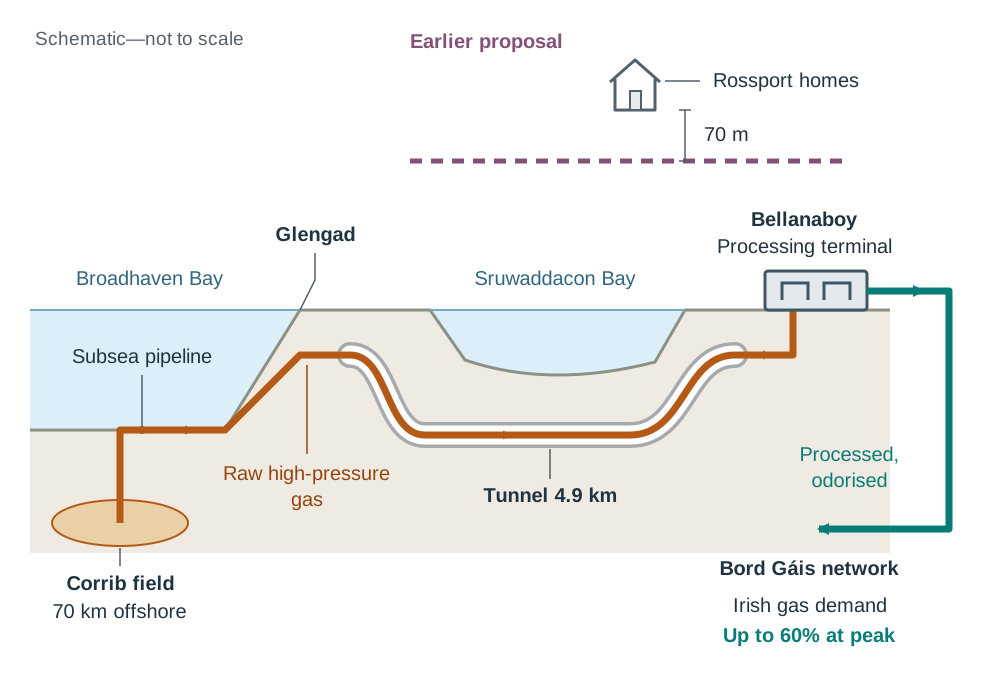
- The economic case: Ireland imported roughly 80% of its total primary energy, exposing the economy to international supply disruptions. Peak production from Corrib promised to supply up to 60% of domestic gas needs, improving national balance of payments and energy security. The project injected over €3.5 billion in capital investment, creating approximately 1,500 temporary construction jobs and 50 permanent engineering roles in the peripheral Erris peninsula.
- The environmental and community objections: Shell chose to pipe raw, unrefined, high-pressure gas directly ashore to an inland gas terminal at Bellanaboy, rather than processing the gas offshore on an ocean platform. Local residents established the 'Shell to Sea' campaign to oppose the onshore route. The high-pressure pipeline was routed within 70 metres of residential houses in Rossport, whereas international guidance recommended safety buffer zones of up to 750 metres. Constructing the Bellanaboy refinery involved excavating hundreds of thousands of cubic metres of wet blanket bog, prompting intense fears of bogburst landslides. Residents were also deeply concerned that acidic peat runoff and terminal effluent would contaminate Carrowmore Lake, the sole drinking water reservoir for the entire Erris peninsula and a designated Special Area of Conservation (SAC) for Atlantic salmon.
- Protests, redesign, and resolution: Civil unrest intensified in 2005 when five local men (the Rossport Five) were imprisoned for 94 days for contempt of court after defying a High Court injunction granting Shell access to their private lands. Sustained public opposition and planning appeals prompted An Bord Pleanála to reject the initial onshore route. To bypass residential homes and fragile foreshores, Shell redesigned the landfall, constructing a 4.9 km subsea tunnel directly beneath Sruwaddacon Bay. The terminal operated only after the EPA granted an Industrial Emissions Licence establishing strict limits on air emissions and water discharges, subject to continuous automated monitoring. First commercial gas finally flowed in late 2015, over a decade behind the original schedule.
Global Conflict: Amazon Basin Deforestation (Brazil)
The Amazon rainforest covers over 5 million square kilometres across South America, with roughly 60% located in Brazil. It serves as an immense continental carbon store holding around 100 billion tonnes of carbon, while recycling vast quantities of moisture into the atmosphere through evapotranspiration to create 'flying rivers' that supply rainfall across South America.
- The economic case: Successive Brazilian governments pursued large-scale development of the interior to exploit mineral resources, expand agricultural exports, service national sovereign debt, and relieve urban poverty. Infrastructure schemes, including the federal Avança Brasil initiative, invested tens of billions of dollars to construct highways such as the Trans-Amazonian Highway (BR-230) and the BR-163 soya corridor. Paved transport corridors allowed timber companies to extract valuable mahogany and cedar, cleared the way for cattle ranchers producing cheap beef for global markets, and enabled agribusinesses to establish massive soya monocultures across Mato Grosso. To supply power to heavy industry, massive hydroelectric projects were constructed: the Tucuruí Dam on the Tocantins River was built largely to power aluminium smelting, while the Belo Monte Dam on the Xingu River flooded hundreds of square kilometres of forest and disrupted river flows to supply electricity to the national grid.
- The environmental and indigenous costs: Over 18% of the original forest cover has been permanently cleared. Highways served as pathways of destruction: once primary roads were cut, illegal loggers, land speculators (grileiros), and wildcat gold miners (garimpeiros) penetrated deep into virgin forest along informal fishbone tracks. Encroachment triggered violent land clashes with indigenous communities like the Yanomami and Kayapo, exposing isolated tribes to infectious diseases and contaminating river networks with toxic mercury from alluvial gold mining. Removing the forest canopy breaks the regional hydrological cycle: with fewer trees to transpire moisture, regional humidity drops, dry seasons lengthen, and remaining forest patches become vulnerable to catastrophic wildfires. Tropical oxisol soils are ancient, acidic, and nutrient-deficient, depending entirely on continuous leaf-litter decomposition for organic matter. Once trees are cleared, torrential equatorial rains leach away residual minerals and cause severe sheet erosion, leaving pastures degraded within a few years. Climatologists warn that if overall clearance reaches 20% to 25%, the Amazon could cross an irreversible tipping point, converting into degraded, fire-prone savannah and releasing tens of billions of tonnes of carbon into the atmosphere to accelerate global climate change.
- Attempts at management and resolution: In response to international consumer pressure and satellite monitoring by Brazil's space agency (INPE) using the PRODES remote sensing system, Brazil created vast conservation units and demarcated indigenous territories. Private commodities traders signed the Amazon Soy Moratorium, refusing to purchase soya grown on land deforested after 2006, while cattle agreements sought to exclude ranches linked to illegal clearing. However, deforestation rates fluctuate significantly depending on the political priorities of the federal administration, demonstrating that long-term preservation of global resources depends on sustained political enforcement and economic alternatives for local populations.
Key terms
- Non-Renewable Resource
- A finite natural resource formed over millions of years of geological time that cannot replenish itself within a human timescale, such as coal, oil, natural gas, or peat.
- Renewable Resource
- A natural resource replenished over human timescales. Flow resources like wind and solar radiation are not exhausted by use, whereas biological renewables like timber and fish stocks require management within their sustainable yield.
- Sustainable Yield
- The highest rate at which a biological resource can be harvested without reducing the size of the breeding population or impairing its long-term ability to naturally regenerate.
- Sustainable Development
- Development that meets the needs of the present generation without compromising the ability of future generations to meet their own needs, balancing economic, environmental, and social pillars.
- Smoke-Free Zone
- A designated municipal or national territory where the marketing, sale, and combustion of smoky bituminous solid fuels is legally prohibited to eliminate urban winter smog.
- Acid Rain
- Precipitation made abnormally acidic when atmospheric sulphur dioxide and nitrogen oxides react with water and oxygen to form dilute sulphuric and nitric acids, falling below the natural unpolluted rain threshold of roughly pH 5.6.
- Transboundary Pollution
- Environmental contaminants generated in one sovereign country that are transported across international land or water borders by prevailing winds or rivers, causing ecological harm in another nation.
- Flue-Gas Desulphurisation (FGD)
- An industrial scrubbing technology installed on thermal power station chimneys that sprays an alkaline lime slurry into exhaust flues to capture sulphur dioxide before it escapes into the air.
- Environmental Impact Assessment (EIA)
- The comprehensive statutory planning process that evaluates the potential direct, indirect, and cumulative ecological, physical, and community effects of a proposed development before planning consent is granted.
- Environmental Impact Assessment Report (EIAR)
- The technical document compiled by scientific and environmental consultants for a developer that sets out the baseline survey data, predicted environmental impacts, and proposed mitigation measures of a project for public and planning scrutiny.
- Environmental Protection Agency (EPA)
- The independent statutory environmental regulatory body in Ireland responsible for issuing Industrial Emissions Licences, monitoring national air and river water quality, and policing environmental compliance.
- Carbon Sink
- A natural or artificial reservoir that absorbs and stores more carbon dioxide from the atmosphere than it releases, such as living peat bogs, tropical rainforests, and ocean ecosystems.
- Acid Mine Drainage
- Acidic, heavy-metal-rich wastewater flowing out of abandoned mining shafts, formed when exposed sulphide minerals like iron pyrite react with oxygen and percolating rainwater.
- Total Allowable Catch (TAC)
- The scientific, legally binding ceiling set annually under the EU Common Fisheries Policy defining the maximum weight of a particular fish species that commercial fleets are permitted to harvest.
Check yourself
State the definition of sustainable development from the 1987 Brundtland Report.
Development that meets the needs of the present without compromising the ability of future generations to meet their own needs.
What is the difference between an Environmental Impact Assessment (EIA) and an Environmental Impact Assessment Report (EIAR)?
An EIA is the overall statutory planning process carried out by planning authorities, whereas an EIAR is the technical document prepared by specialists for the developer containing baseline surveys, predicted impacts, and mitigation plans.
Give one economic advantage, one environmental advantage, and one disadvantage of wind energy in Ireland, naming a specific example.
Economic: wind is a free indigenous fuel that reduces Ireland's roughly 80% import dependence (e.g. Galway Wind Park). Environmental: zero greenhouse gas emissions during generation, displacing gas-fired electricity. Disadvantage: building on blanket bog can cause peat landslides, as seen at Derrybrien, Co. Galway in 2003.
Which two gases react with atmospheric moisture to form acid rain?
Sulphur dioxide (SO2) and nitrogen oxides (NOx).
Why were lakes in southern Norway and Sweden especially vulnerable to acid rain?
The region sits on granite bedrock that lacks calcium carbonate and cannot buffer or neutralise acidic runoff, causing toxic aluminium to leach into waterways and suffocate fish.
Why did the industrial extraction of peat by Bord na Móna turn an environmental carbon sink into a carbon source?
Draining raised bogs lowered the water table, causing the peat to oxidise and release stored CO2 into the atmosphere, while burning the dried peat for electricity released more CO2 per unit of power than burning coal.
Identify two core functions of Ireland's Environmental Protection Agency (EPA).
Issuing Industrial Emissions Licences to large manufacturing and energy plants, and continuously monitoring national river, lake, groundwater, and urban air quality.
What primary safety concern sparked local opposition to the onshore pipeline route of the Corrib Gas project?
The high-pressure, unrefined gas pipeline was designed to pass within 70 metres of residential houses in Rossport, well inside international safety recommendations of up to 750 metres.