
For the Leaving Certificate you need four main past tenses: the pretérito indefinido for completed events, the pretérito imperfecto for ongoing background and habits, the pretérito perfecto compuesto for recent events linked to today, and the pluscuamperfecto for actions completed before another past event. Higher Level written production and comprehension also require knowing how these tenses interact in real communication. You will need them to recount accidents and emergencies under syllabus theme 1.6 using the passive and se constructions, and to pass on telephone messages and report conversations under syllabus theme 1.11.
The Preterite (Pretérito Indefinido / Pretérito Perfecto Simple)
The preterite records completed past actions viewed as single units of time. Use it for finished events, historical facts, sequential actions, or sudden interruptions.
Regular Endings
Remove the infinitive ending (-ar, -er, or -ir) and attach these endings:
| Subject | -ar verbs (hablar) | -er and -ir verbs (comer, vivir) |
|---|---|---|
| yo | hablé | comí / viví |
| tú | hablaste | comiste / viviste |
| él / ella / usted | habló | comió / vivió |
| nosotros / nosotras | hablamos | comimos / vivimos |
| vosotros / vosotras | hablasteis | comisteis / vivisteis |
| ellos / ellas / ustedes | hablaron | comieron / vivieron |
Written accents fall on the first person singular (hablé) and third person singular (habló). Leaving them off changes the meaning entirely: hablo means 'I speak' in the present, while habló means 'he/she spoke' in the preterite.
Irregular-Stem Preterites (No Accents)
A major group of irregular verbs uses an altered stem with unique endings: -e, -iste, -o, -imos, -isteis, -ieron. None of these irregular stems take written accents:
- tener (stem tuv-): tuve, tuviste, tuvo, tuvimos, tuvisteis, tuvieron
- estar (stem estuv-): estuve, estuviste, estuvo, estuvimos, estuvisteis, estuvieron
- hacer (stem hic-; note 3rd person hizo): hice, hiciste, hizo, hicimos, hicisteis, hicieron
- poder (stem pud-): pude, pudiste, pudo, pudimos, pudisteis, pudieron
- poner (stem pus-): puse, pusiste, puso, pusimos, pusisteis, pusieron
- venir (stem vin-): vine, viniste, vino, vinimos, vinisteis, vinieron
- querer (stem quis-): quise, quisiste, quiso, quisimos, quisisteis, quisieron
- saber (stem sup-): supe, supiste, supo, supimos, supisteis, supieron
- andar (stem anduv-): anduve, anduviste, anduvo, anduvimos, anduvisteis, anduvieron
- haber (used impersonally): hubo ('there was' / 'there were' for a single event; e.g. Hubo un accidente)
Exception: when the irregular stem ends in -j, the third person plural takes -eron, not -ieron:
- decir (stem dij-): dije, dijiste, dijo, dijimos, dijisteis, dijeron
- traer (stem traj-): traje, trajiste, trajo, trajimos, trajisteis, trajeron
- conducir (stem conduj-): conduje, condujiste, condujo, condujimos, condujisteis, condujeron
dar, ver, and ir / ser
- dar takes regular -er/-ir endings without accents: di, diste, dio, dimos, disteis, dieron. Me di cuenta de que... (I realised that...).
- ver is regular with no accents: vi, viste, vio, vimos, visteis, vieron.
- ir and ser share identical preterite forms: fui, fuiste, fue, fuimos, fuisteis, fueron. Context shows which is meant: Fue un día horrible (It was a horrible day: ser); Fue a la comisaría (He went to the police station: ir).
Spelling Changes and Stem Changes
Three groups alter spelling to maintain pronunciation or follow vowel rules:
- -car, -gar, -zar verbs change in the yo form only:
- -car → -qué: buscar → busqué, sacar → saqué
- -gar → -gué: llegar → llegué, pagar → pagué
- -zar → -cé: empezar → empecé, cruzar → crucé
- leer, caer, oír, creer change unstressed i to y in the third person:
- leer: leyó, leyeron | caer: cayó, cayeron | oír: oyó, oyeron
- Stem-changing -ir verbs change e→i or o→u only in the third person (singular and plural):
- pedir → pidió, pidieron | dormir → durmió, durmieron | morir → murió, murieron | sentir → sintió, sintieron
- Note that -ar and -er stem-changing verbs do not change in the preterite (pensar → pensó, volver → volvió).
The Imperfect (Pretérito Imperfecto) and Scene Setting
The imperfect provides the ongoing background against which specific events take place. Use it for habits, continuous past states, emotional conditions, time, age, and weather.
Regular Endings
| Subject | -ar verbs (hablar) | -er and -ir verbs (comer, vivir) |
|---|---|---|
| yo | hablaba | comía / vivía |
| tú | hablabas | comías / vivías |
| él / ella / usted | hablaba | comía / vivía |
| nosotros / nosotras | hablábamos | comíamos / vivíamos |
| vosotros / vosotras | hablabais | comíais / vivíais |
| ellos / ellas / ustedes | hablaban | comían / vivían |
For -ar verbs, only the nosotros form carries a written accent (hablábamos). In contrast, all forms of -er and -ir verbs carry an accent on the í throughout the entire conjugation.
The Three Irregular Verbs
Only three verbs are irregular in the imperfect:
- ser: era, eras, era, éramos, erais, eran
- ir: iba, ibas, iba, íbamos, ibais, iban
- ver: veía, veías, veía, veíamos, veíais, veían
Setting the Scene and the Interrupted Action Rule
Setting the scene often uses either the imperfect alone or estaba + gerund:
- Estaba esperando el autobús cuando vi el accidente. (I was waiting for the bus when I saw the accident.)
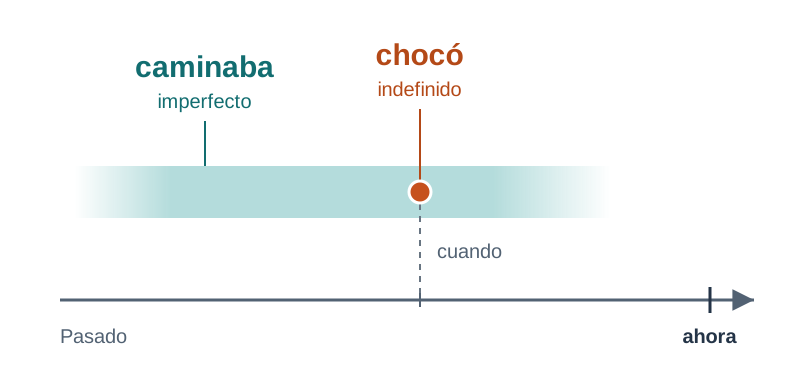
Combining the imperfect and the preterite in one sentence shows the range of structures that written work is assessed on. It is one of the most useful patterns for any story in the past:
- Yo caminaba tranquilamente por la calle cuando, de repente, un coche chocó contra una farola. (I was walking peacefully down the street when, suddenly, a car crashed into a lamppost.)
Time Markers
- Imperfect indicators: siempre, a menudo, todos los días, mientras, de costumbre.
- Preterite indicators: ayer, anoche, el año pasado, de repente, en ese momento.
Compound Past Tenses: Present Perfect and Pluperfect
Compound tenses combine a conjugated form of haber with a past participle. When used with haber, the past participle is strictly invariable: it must always end in -o regardless of the subject.
1. El Pretérito Perfecto Compuesto (Present Perfect)
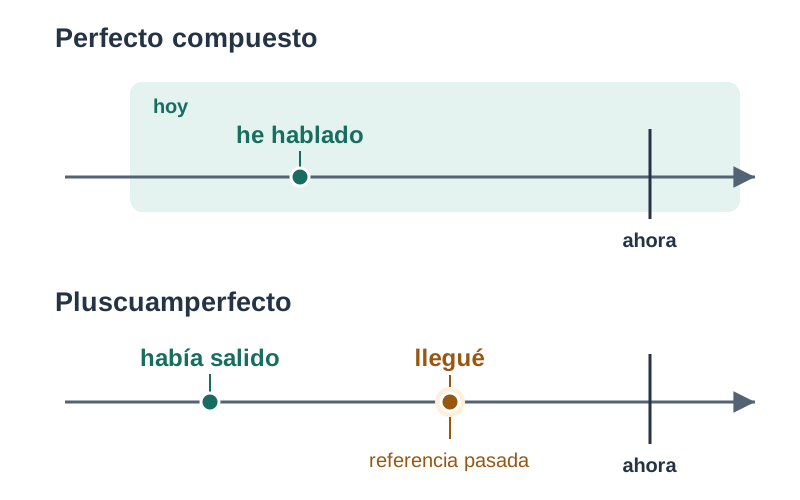
This tense links an action to the current day or an open period of time (hoy, esta semana, este año).
- Conjugation of haber: he, has, ha, hemos, habéis, han.
- Example: Hoy he hablado con la policía. (Today I have spoken with the police.)
- Regional usage: in Spain, the perfect is normal for anything that happened today (Hoy he comido paella). In Latin America, speakers frequently use the preterite instead (Hoy comí paella). Recognising this helps in authentic listening and reading comprehensions.
2. El Pluscuamperfecto (Pluperfect)
Use the pluperfect to describe an action completed before another past event took place ('had done').
- Conjugation of haber: había, habías, había, habíamos, habíais, habían (every form carries an accent on the í).
- Example: Cuando llegué a la estación, el tren ya había salido. (When I arrived at the station, the train had already left.)
Past Participles
- Regular: -ar verbs take -ado (hablado); -er/-ir verbs take -ido (comido, vivido).
- Participles with a written accent on the í: leído (leer), oído (oír), caído (caer), traído (traer), creído (creer).
- Irregular participles: abierto (abrir), dicho (decir), escrito (escribir), hecho (hacer), muerto (morir), puesto (poner), roto (romper), visto (ver), vuelto (volver), cubierto (cubrir), resuelto (resolver), devuelto (devolver), frito (freír).
Emergencies: The Passive with Ser and the Se Construction (Syllabus 1.6)
Under syllabus theme 1.6 (Dealing with emergencies), you are required to describe accidents, thefts, and breakdowns. Spanish uses two distinct structures to narrate what happened to a victim or property.
The Passive Voice with Ser
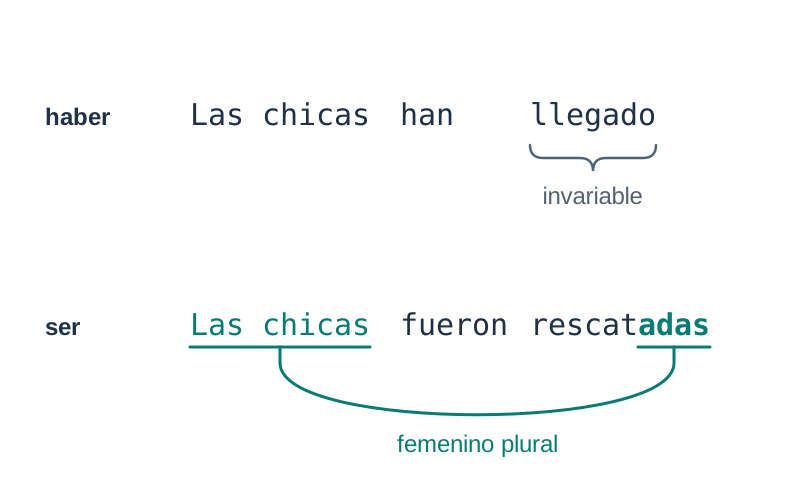
The passive voice is formed with ser + past participle (+ por + agent). Unlike compound tenses with haber, the past participle following ser agrees in gender and number with the grammatical subject:
- El ciclista fue atropellado por un camión. (The cyclist was knocked down by a lorry.)
- La señora ha sido atropellada por un coche. (The woman has been knocked down by a car.)
- Las dos turistas fueron rescatadas por los bomberos. (The two tourists were rescued by the firefighters.)
Compare the agreement rules carefully:
- Las chicas han llegado. (With haber, the participle is invariable.)
- Las chicas fueron rescatadas. (With ser, the participle agrees.)
The Impersonal and Passive Se Construction
Many accident verbs are used with se, for example caerse (to fall):
- Se ha caído una señora en la calle. (A woman has fallen in the street.)
Se is also used when you do not need to say who did the action:
- Se llamó a una ambulancia inmediatamente. (An ambulance was called immediately.)
- Se robaron dos carteras en la estación. (Two wallets were stolen in the station.)
Reported Speech and Indirect Messages (Syllabus 1.11)
Under syllabus theme 1.11 (Passing on messages), you need to be able to pass on telephone calls, voicemails or conversations in reported speech. When your reporting verb is in the past (dijo, explicó, contó), the verb in the original statement shifts back in time.
Backshift Table (Reporting Verb in the Past)
| Direct speech | Reported speech |
|---|---|
| Present: 'Estoy cansada.' | Imperfect: Dijo que estaba cansada. |
| Preterite / Perfect: 'He perdido el tren.' | Pluperfect: Dijo que había perdido el tren. |
| Future: 'Llegaré mañana.' | Conditional: Dijo que llegaría al día siguiente. |
| Imperfect: 'Tenía miedo.' | No change: Dijo que tenía miedo. |
Forms of the conditional attach -ía, -ías, -ía, -íamos, -íais, -ían directly to the infinitive (llegaría). Common irregular roots include tendría, haría, diría, saldría, vendría, podría.
Time and Place Word Shifts
- hoy → aquel día
- mañana → al día siguiente
- ayer → el día anterior
- aquí → allí
- mi / mis → su / sus
Reporting Commands (The Imperfect Subjunctive)
When reporting a past instruction or command (Me dijo que..., Me pidió que...), use the imperfect subjunctive.
To form the imperfect subjunctive:
- Take the third-person plural (ellos) form of the preterite.
- Drop the -ron.
- Add -ra, -ras, -ra, -ramos, -rais, -ran.
- The nosotros form always takes an acute accent on the vowel immediately before -ramos (llamáramos, fuéramos).
| Verb | Ellos preterite | Imperfect subjunctive |
|---|---|---|
| llamar | llamaron | llamara |
| ir / ser | fueron | fuera |
| venir | vinieron | viniera |
| decir | dijeron | dijera |
- Example: El policía me dijo que fuera a la comisaría. (The police officer told me to go to the police station.)
If the reporting verb is in the present (dice), there is no backshift: Marisa dice que llegará mañana (Marisa says she will arrive tomorrow); Mi hermano dice que lo llames (My brother says you should call him; command uses present subjunctive).
Exam Vocabulary and Written Formats Toolbox
Emergency and Incident Lexis (Syllabus 1.6 & 1.11)
| Spanish Term | English Meaning | Spanish Term | English Meaning |
|---|---|---|---|
| el robo | theft / robbery | el ladrón / la ladrona | thief |
| poner una denuncia | to file a police report | el testigo / la testigo | witness |
| la comisaría | police station | el carnet de identidad | identity card |
| la avería | mechanical breakdown | el bombero | firefighter |
| herido / herida | injured person | ¡Socorro! | Help! |
| la embajada irlandesa | Irish embassy | el recado | message / note |
Set Written Formats Phrases
El diario
- Querido diario: (Dear diary:)
- ¡Qué día tan horrible ayer! (What a horrible day yesterday!)
- ¡Vaya día! Hoy me han robado la cartera. (What a day! Today my wallet was stolen.)
- No me lo puedo creer. (I cannot believe it.)
La carta informal
- Te escribo para contarte lo que me pasó la semana pasada. (I am writing to tell you what happened to me last week.)
- Siento no haberte escrito antes, pero he estado muy ocupado/a. (I am sorry for not having written sooner, but I have been very busy.)
El recado / La nota
- Ha llamado tu hermano y dice que lo llames lo antes posible. (Your brother rang and says you should call him as soon as possible.)
- Llamó tu hermano y me dijo que lo llamaras lo antes posible. (Your brother rang and told me you should call him as soon as possible.)
- Te he dejado esta nota para avisarte de que... (I have left you this note to let you know that...)
Key terms
- Pretérito Indefinido (Pretérito Perfecto Simple)
- The simple preterite tense used for completed, bounded actions and historical events that took place at a specific moment in the past.
- Pretérito Imperfecto
- The imperfect tense used for past habits, ongoing background conditions, emotions, weather, time, age, and unfinished descriptive actions.
- Pretérito Perfecto Compuesto
- The present perfect tense formed with present haber + past participle, describing actions completed in an open time frame linked to today.
- El Pluscuamperfecto
- The pluperfect tense formed with imperfect haber + past participle, describing an action completed prior to another past event.
- Participio Pasado
- The -ado / -ido form of the verb, like the English 'spoken' or 'eaten' (irregular examples: hecho, visto). With haber it never changes its ending.
- Verbo Auxiliar
- Haber is the helping verb used to make the compound tenses (he hablado, había salido). It changes for the person and tense; the participle after it does not change.
- Voz Pasiva con Ser
- A passive construction formed with ser + past participle (+ por), where the past participle agrees in gender and number with the subject.
Check yourself
Translate into Spanish to show the accent difference: 'I spoke', 'she spoke', and 'I speak'.
'I spoke' is hablé; 'she spoke' is habló; 'I speak' is hablo.
Translate: 'We used to live in Cork, but in 2020 we moved to Dublin.' Which tense does each verb need, and why?
Vivíamos en Cork, pero en 2020 nos mudamos a Dublín. Vivíamos is imperfect because it is an ongoing past situation ('used to'). Nos mudamos is preterite because it is a single completed event at a specific time (en 2020).
Why is the pluperfect tense used in: 'Cuando llegué a la comisaría, los testigos ya habían salido'?
Because the departure of the witnesses (habían salido) took place prior to the second completed past action of arriving (llegué).
Report this direct statement in the past after 'Marisa me dijo que...': 'Llegaré mañana.'
'Marisa me dijo que llegaría al día siguiente.' (Future shifts to conditional, and 'mañana' shifts to 'al día siguiente').
Identify and correct the error in: 'Las dos turistas fueron rescatado por la policía.'
In the passive voice with ser, the participle agrees with the subject: 'Las dos turistas fueron rescatadas por la policía.'
Give the first-person singular (yo) preterite forms of llegar, buscar, and empezar, and the third-person preterite forms of leer, dormir, and decir.
Yo forms: llegué, busqué, empecé (spelling changes -qué, -gué, -cé). Third-person forms: leer: leyó, leyeron; dormir: durmió, durmieron; decir: dijo, dijeron (j-stem takes -eron).