
Diet and physical health (la dieta y la salud física) is a core theme in Leaving Certificate Higher Level Spanish. It appears across all four exam components: reading comprehension texts on nutrition and lifestyle, listening comprehension dialogues, the oral examination, and written production tasks such as opinion pieces, restaurant dialogues, and formal letters to newspaper editors. To do well on this topic you need three things: the vocabulary for food, exercise, and healthcare; the language to compare life in Ireland and Spain; and the grammar for giving advice (hay que, commands, and the subjunctive).
Daily Meal Patterns and Cultural Contrasts (Spain vs Ireland)
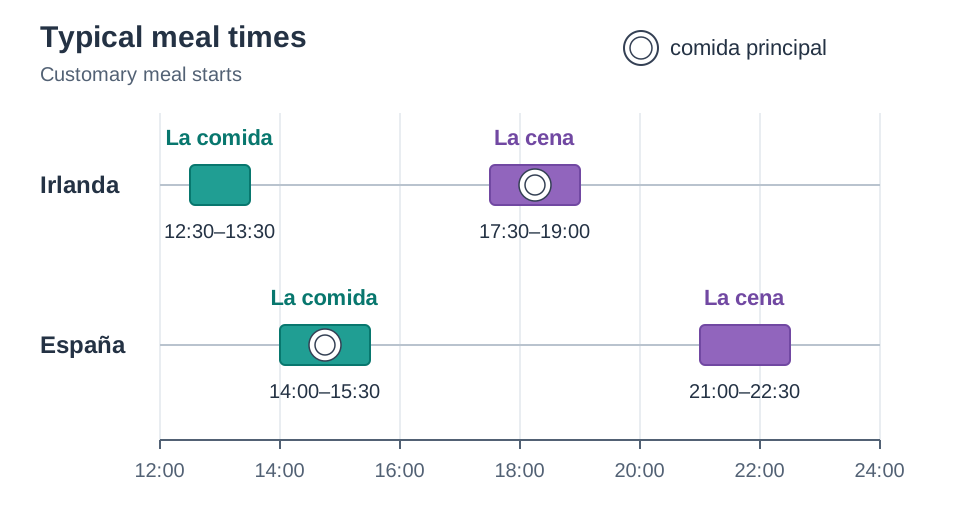
Many Spaniards eat up to five times a day. Meal times occur significantly later than in Ireland due to climate, historical working timetables, and social customs.
Comparative Schedule: Ireland vs Spain
| Meal | Typical Irish Schedule | Typical Spanish Schedule | Typical Foods in Spain |
|---|---|---|---|
| El desayuno (Breakfast) | 07:30–08:30 (cereals, porridge, toast, tea) | 07:00–09:00 (light start) | Tostadas con tomate y aceite, galletas, café con leche, zumo de naranja |
| El almuerzo (Mid-morning snack / Lunch) | 10:30–11:00 (tea or coffee break) | 10:30–11:30 (mid-morning snack in much of Spain; lunch in some regions and Latin America) | Un bocadillo (baguette sandwich), una pieza de fruta, un café |
| La comida (Lunch / Main meal) | 12:30–13:30 (often a quick sandwich or hot dish) | 14:00–15:30 (lunch in Spain; also refers to food or a meal in general) | Multi-course meal: primer plato (soup, legumes, salad), segundo plato (meat or fish), postre |
| La merienda (Afternoon snack) | Rare / light cup of tea at 16:00 | 17:30–19:00 (vital for students and children) | Fruit, pastries, yoghurt, or bread with chocolate |
| La cena (Dinner) | 17:30–19:00 (main evening family meal) | 21:00–22:30 (cooler evening hours) | Lighter than lunch: omelette (tortilla), salad, grilled fish, vegetables |
Essential Meal Verbs
Where English says 'have breakfast' or 'have lunch', Spanish usually uses one verb:
- Desayunar (regular
-ar): Desayuno cereales y una manzana. (I have cereal and an apple for breakfast.) - Almorzar (
o → uestem-changer): almuerzo, almuerzas, almuerza, almorzamos, almorzáis, almuerzan. Notice that the nosotros and vosotros forms do not change. - Comer (regular
-er): To eat, or specifically to have lunch: Comemos en familia a las dos y media. (We have lunch as a family at half two.) - Merendar (
e → iestem-changer): meriendo, meriendas, merienda, merendamos, merendáis, meriendan. Again, nosotros and vosotros keep the base stem. - Cenar (regular
-ar): Cenamos mucho más tarde en verano. (We have dinner much later in summer.) - Tomar: Often used for having food or drink: Tomo un café con leche. (I have a white coffee.)
Comparing Ireland and Spain
- más … que / menos … que: En Irlanda cenamos mucho más temprano que en España. (In Ireland we have dinner much earlier than in Spain.)
- mientras que (whereas): En Irlanda la comida principal suele ser la cena, mientras que en España es la comida del mediodía. (In Ireland the main meal tends to be dinner, whereas in Spain it is the midday meal.)
- a diferencia de (unlike): A diferencia de los irlandeses, los españoles suelen comer a las dos o las tres. (Unlike Irish people, Spaniards usually have lunch at two or three.)
- soler + infinitive (to usually do): Suelo merendar fruta cuando llego del colegio. (I usually have fruit for my afternoon snack when I get home from school.)
The Mediterranean Diet and Public Health Challenges
In reading comprehensions, oral discussions, and opinion pieces, you will often evaluate the traditional healthy diet against modern lifestyle risks.
The Mediterranean Diet (La dieta mediterránea)
Recognised internationally for its cardiovascular benefits, it centres on fresh, local ingredients:
- El aceite de oliva virgen extra: Extra virgin olive oil, used as the primary fat for cooking and salads.
- Las legumbres: Pulses such as lentils (lentejas), chickpeas (garbanzos), and beans (alubias).
- El pescado azul y blanco: Oily fish (tuna, sardines, salmon) providing omega-3 fatty acids, alongside white fish such as cod (el bacalao).
- La fruta de temporada y las verduras: Fresh seasonal fruit and vegetables.
- La comida casera: Homemade cooking, avoiding artificial additives.
Modern Public Health Challenges
Organise your written arguments and oral opinions around three clear headings:
Causas
- El consumo excesivo de la comida basura: Overconsumption of junk food high in saturated fats (las grasas saturadas) and refined sugars (los azúcares refinados*).
- Las máquinas expendedoras: Vending machines in schools selling ultra-processed snacks (alimentos ultraprocesados).
- La adicción a las pantallas: Screen addiction replacing active outdoor leisure.
Consecuencias
- El sedentarismo: Sedentarismo leads to sobrepeso and la obesidad infantil (childhood obesity), a major health concern.
- Problemas cardiovasculares: Heart issues, poor stamina, and chronic fatigue.
Soluciones
- Fomentar la educación física (to promote PE), such as increasing weekly physical education hours in primary and secondary schools.
- Prohibir la comida perjudicial: Banning sugary snacks in educational centres and funding community sports facilities.
Giving Opinions: Indicative vs Subjunctive
Examiners look closely at the verb mood following opinion phrases:
- Positive opinion verbs take the indicative: Creo que, Pienso que, Estoy convencido/a de que. Example: Creo que la dieta española es más sana que la nuestra. (I think the Spanish diet is healthier than ours.)
- Negative opinions and doubt take the subjunctive: No creo que, Dudo que. Example: No creo que la comida rápida sea una buena alternativa diaria. (I do not think fast food is a good daily alternative.)
Physical Wellbeing, Outdoor Recreation, and Mental Health
Physical wellbeing (el bienestar físico) depends on regular exercise, spending time outdoors, and managing stress.
Outdoor and Environmental Lexis
- Al aire libre: Outdoors / in the open air (hacer deporte al aire libre).
- El campo: Countryside.
- El paisaje: Landscape / scenery.
- La naturaleza: Nature.
- El medio ambiente: The environment. Be careful: el ambiente on its own means atmosphere or mood (for example, hay buen ambiente).
- Estar en forma: To be fit / in shape.
- El entrenamiento: Workout / training session.
- Descansar: To rest (es necesario descansar después de hacer ejercicio).
- Proteger la piel: To protect your skin from sun damage (el daño solar) using suncream (crema solar).
Body and Mind (Body and Mental Health)
Physical and mental health are closely connected, especially under exam conditions:
- La salud mental: Mental health.
- El estrés / la ansiedad: Stress / anxiety.
- La presión de los exámenes: Exam pressure.
- Desconectar: To switch off (El deporte me ayuda a desconectar y a reducir el estrés).
- El bienestar emocional: Emotional wellbeing.
- Relajarse: To relax (Vale la pena pasear por el parque para relajarse).
Smoking, Alcohol, and Substance Misuse
Social habits and addictions form a major part of senior-cycle health themes.
Key Vocabulary
- Fumar: To smoke.
- El tabaco: Tobacco.
- El tabaquismo: Tobacco addiction / smoking habit.
- Dejar de fumar: To give up smoking. Grammar rule: dejar de + infinitive means to stop doing something (Mi tío dejó de fumar el año pasado).
- Vapear / el cigarrillo electrónico: To vape / e-cigarette.
- El consumo de alcohol: Alcohol consumption.
- Emborracharse: To get drunk.
- El botellón: Young people gathering in outdoor public areas (streets, parks) to drink alcohol together.
- Las drogas: Drugs.
- La adicción: Addiction.
- La presión de grupo: Peer pressure.
- Perjudicial para la salud: Harmful to health.
Analytical Sentences for Discussion
- Irlanda fue el primer país del mundo en prohibir fumar en los lugares de trabajo, en 2004. (Ireland was the first country in the world to ban smoking in workplaces, in 2004.)
- En España también está prohibido fumar en el interior de bares y restaurantes. (In Spain smoking is also banned inside bars and restaurants.)
- Muchos adolescentes empiezan a beber o fumar debido a la presión de grupo. (Many teenagers start drinking or smoking due to peer pressure.)
Grammar: Advice, Commands, Obligations, and Prohibitions
To achieve high marks in Written Production and Oral components, show range: mix commands, impersonal phrases (hay que, se debe), and subjunctive recommendations (es importante que, te recomiendo que).
1. Impersonal Advice Structures + Infinitive
When giving general advice without naming a specific person, the following verb remains in the infinitive:
- Hay que + inf.: Hay que beber dos litros de agua al día. (One must drink two litres of water a day.)
- Se debe / No se debe + inf.: Se debe evitar el consumo excesivo de azúcar. (One ought to avoid excessive sugar consumption.)
- Vale la pena + inf.: Vale la pena caminar treinta minutos diarios. (It is worthwhile walking thirty minutes daily.)
- Se necesita + inf.: Se necesita dormir al menos ocho horas para rendir bien. (One needs to sleep at least eight hours to perform well.)
2. Evaluative Triggers and Recommendations + Subjunctive
When you introduce a second clause with que and a change of subject, use the present subjunctive:
- (a) Impersonal evaluations: Es importante que, es fundamental que, es necesario que, es imprescindible que.
- Es fundamental que los jóvenes hagan más deporte. (It is fundamental that young people do more sport.)
- Es necesario que el gobierno regule la venta de bebidas energéticas. (It is necessary that the government regulate the sale of energy drinks.)
- (b) Verbs of advice: Recomendar que, sugerir que, aconsejar que.
- Te aconsejo que comas más fruta fresca. (I advise you to eat more fresh fruit.)
- Le recomiendo que vaya al médico de cabecera. (I recommend that you go to the GP.)
3. Advising a Friend (Informal Register)
For notes, informal emails, or friendly dialogue:
- Yo que tú + conditional: Yo que tú, dormiría más antes de los exámenes. (If I were you, I would sleep more before exams.)
- Deberías + infinitive: Deberías apuntarte a un gimnasio. (You should join a gym.)
- ¿Por qué no + present?: ¿Por qué no sales a correr conmigo? (Why do you not come out running with me?)
- Positive tú command: Come sano. (Eat healthy.) / Haz ejercicio. (Do exercise.)
- Negative tú command (uses present subjunctive): No comas tanta comida basura. (Do not eat so much junk food.) / No te acuestes tan tarde. (Do not go to bed so late.)
4. Official Prohibitions
Signs and public health notices use No + Infinitive or the reflexive passive:
- No fumar. (No smoking.)
- Se prohíbe el uso de cigarrillos electrónicos. (The use of e-cigarettes is prohibited.)
Expressing Symptoms, Emergencies, and Healthcare Services
Dealing with illnesses, accidents, and medical appointments requires specific verbs and knowledge of public health amenities.
Physical Sensations and Illness
- Tener + noun: tener hambre (to be hungry), tener sed (to be thirsty), tener fiebre (to have a temperature), tener gripe (to have the flu).
- Tener dolor de + body part: Omit the definite article entirely: Tengo dolor de garganta y dolor de muelas. (I have a sore throat and a toothache.)
- Estar + adjective: estar resfriado/a (to have a cold), estar mareado/a (to be dizzy), estar enfermo/a (to be ill. In Irish English, 'sick' can mean vomiting, which is vomitar or tener ganas de vomitar).
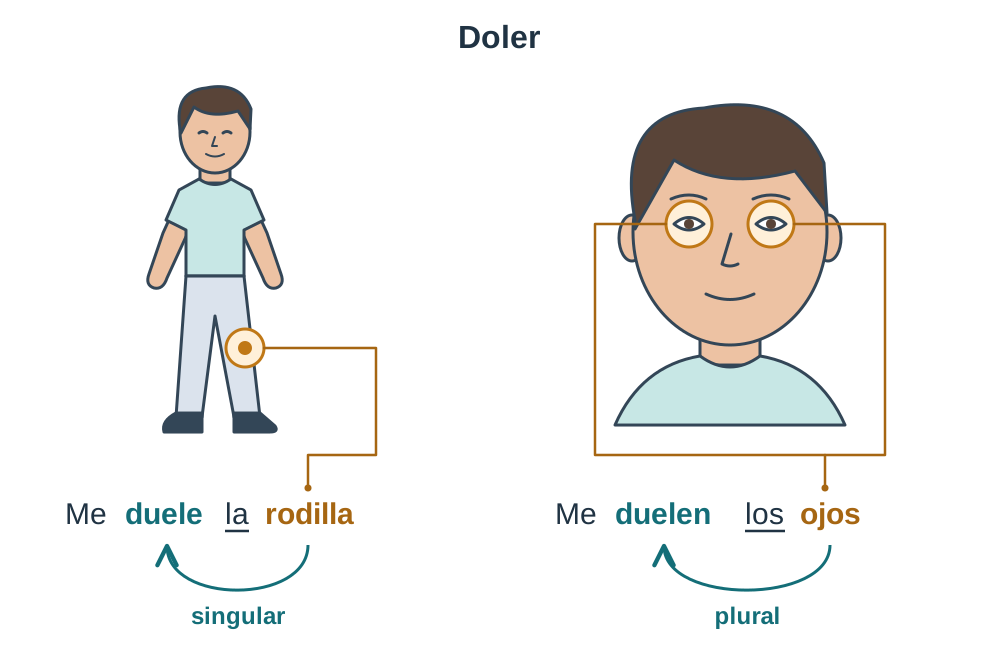
- Doler (
o → ue): Functions like gustar. It takes an indirect object pronoun (me, te, le, nos, os, les) and agrees with the noun causing the pain. Always use the definite article with body parts, never possessive adjectives: - Me duele la rodilla. (My knee hurts. Singular subject → duele).
- Me duelen los ojos. (My eyes hurt. Plural subject → duelen).
Emergencies and Accidents
If an emergency occurs, you need immediate language to summon help or narrate events:
- Calling for help: ¡Socorro! (Help!), ¿Hay un médico por aquí? (Is there a doctor around here?), ¡Llame a una ambulancia! (Call an ambulance! Formal command).
- Emergency number: In Spain and across the EU, dial el 112.
- Narrating an accident: Use the imperfect for the ongoing background and the preterite for the sudden completed action:
- Mientras jugábamos al fútbol, mi amigo se cayó y se rompió el tobillo. (While we were playing football, my friend fell and broke his ankle.)
- Ha sido atropellado por una bicicleta. (He was knocked down by a bicycle - passive voice).
- Other useful verbs: torcerse el tobillo (to twist one's ankle), hacerse daño en (to hurt oneself in/on), desmayarse (to faint).
Spanish Healthcare Amenities
- El ambulatorio / el centro de salud: Local primary care health clinic where outpatient appointments take place.
- El médico de cabecera: GP / family doctor.
- La farmacia de guardia: The chemist on duty that night, weekend, or holiday, taking turns by rota to open outside normal hours.
- El médico de guardia: The doctor on duty.
- Urgencias: The emergency department / A&E in a hospital (el hospital).
- La receta médica: Medical prescription (El médico me dio una receta para el antibiótico).
- Pedir cita: To book an appointment (Quisiera pedir cita con el médico, por favor).
Key terms
- La comida
- The substantial midday meal in Spain (14:00–15:30); also refers generally to food or a meal.
- La merienda
- The afternoon snack (17:30–19:00), traditionally eaten between lunch and the late Spanish dinner.
- Almorzar
- A stem-changing verb (o → ue) meaning to have a mid-morning snack in much of Spain, or to have lunch in other regions and Latin America.
- Merendar
- A stem-changing verb (e → ie) meaning to have an afternoon snack.
- El sedentarismo
- A sedentary lifestyle characterized by prolonged physical inactivity, sitting, and lack of exercise.
- La obesidad infantil
- Childhood obesity, a major public health concern linked to ultra-processed foods and lack of movement.
- La comida basura
- Junk food high in refined sugars, saturated fats, and artificial additives.
- La dieta mediterránea
- A traditional nutritional pattern based on extra virgin olive oil, pulses, fish, seasonal fruit, and vegetables.
- El medio ambiente
- The natural environment. Contrasts with 'el ambiente', which means atmosphere or social mood.
- Dejar de fumar
- To give up smoking, using the structure 'dejar de + infinitive' (to stop doing something).
- Doler
- A gustar-type verb (o → ue) meaning to hurt, taking indirect object pronouns and agreeing with the body part.
- El ambulatorio
- A local public health centre or outpatient clinic providing primary care medical consultations.
- La farmacia de guardia
- The rostered on-duty chemist open outside standard trading hours to supply emergency medication.
- El médico de cabecera
- GP or general practitioner / family doctor who handles primary consultations.
Check yourself
Translate into Spanish: 'My head and my feet hurt.'
'Me duelen la cabeza y los pies.' (Use 'duelen' in the plural because there are multiple body parts causing the pain, and use the definite article rather than possessive adjectives).
Complete the sentence with the correct form of the verb: 'Es necesario que tú ___ (dormir) al menos ocho horas.'
'duermas' (The impersonal trigger with 'que' requires the present subjunctive, and 'dormir' undergoes an o → ue stem change in the 'tú' form).
Translate into Spanish: 'If I were you, I would stop smoking.'
'Yo que tú, dejaría de fumar.' (Uses 'Yo que tú' + conditional tense of 'dejar', followed by 'de + infinitive').
What is the difference in Spanish between 'el ambiente' and 'el medio ambiente'?
'El ambiente' refers to the atmosphere, mood, or vibe of a place or gathering ('hay buen ambiente'). 'El medio ambiente' refers to the natural environment or ecology.
Why is 'No creo que los colegios tienen suficientes horas de educación física' grammatically incorrect?
'No creo que' expresses negative opinion / disbelief and must be followed by the subjunctive: 'No creo que los colegios tengan suficientes horas...'.