

For Leaving Certificate Religious Education (Section C: World Religions), Buddhism offers a distinct non-theistic vision of human existence, spiritual authority, and liberation. Founded upon the historical awakening of Siddhartha Gautama, the tradition rejects the idea of a creator God and a permanent immortal soul. Instead, it teaches that life is characterised by impermanence and suffering, which can be overcome through individual moral effort, meditation, and wisdom. This note covers the founding story, the Four Noble Truths, the profile of the human person, the structure of authority, the community of believers, and the rites marking life stages and sacred time.
The Founding Story of Buddhism
Around the fifth century BCE, Siddhartha Gautama was born a prince in Lumbini (in modern Nepal) and raised in royal luxury in Kapilavastu. His father sheltered him from life's hardships, but as a young adult, he took four chariot journeys outside the palace grounds and encountered the Four Sights:
- An old man, showing that youth fades.
- A sick man, showing that health is fragile.
- A corpse, showing that death comes to all.
- A wandering holy ascetic, showing a path dedicated to seeking truth.
The first three sights revealed that suffering touches every life, while the fourth demonstrated a possible way forward. At age twenty-nine, Siddhartha abandoned his royal status, wife, and infant son in the Great Renunciation. For six years, he practised extreme physical asceticism with forest teachers, starving himself until he realised that self-mortification weakened the mind rather than freeing it. Choosing a balanced Middle Way between luxury and self-denial, he sat beneath the Bodhi tree at Bodh Gaya. There he meditated until he achieved complete enlightenment (bodhi), becoming the Buddha ('the awakened one').
At the Deer Park in Sarnath, the Buddha preached his first sermon to five former companions, setting in motion the wheel of the Dharma. These five ascetics became the first monastic disciples, establishing the Sangha. For roughly forty-five years, the Buddha travelled northern India teaching people of all castes. At age eighty, in Kushinagar, he passed away, entering parinirvana (final release from rebirth).
The Vision of Liberation: The Four Noble Truths
In his first sermon at Sarnath, the Buddha set out his central vision of liberation as the Four Noble Truths. They follow a traditional medical structure: diagnosis, cause, prognosis, and cure.
- Dukkha (the illness): All ordinary life involves suffering, dissatisfaction, and impermanence. Even joyful experiences bring unease because they do not last.
- Samudaya (the cause): Suffering arises from tanha, meaning craving, thirst, or attachment, driven by fundamental ignorance of reality.
- Nirodha (the prognosis: a cure is possible): Suffering ceases entirely when craving is eliminated. This state of ultimate peace is nirvana (literally 'blowing out' the fires of greed, hatred, and delusion). Nirvana is not a celestial heaven or a physical place; it is unconditional liberation from craving and complete release from the cycle of rebirth (samsara).
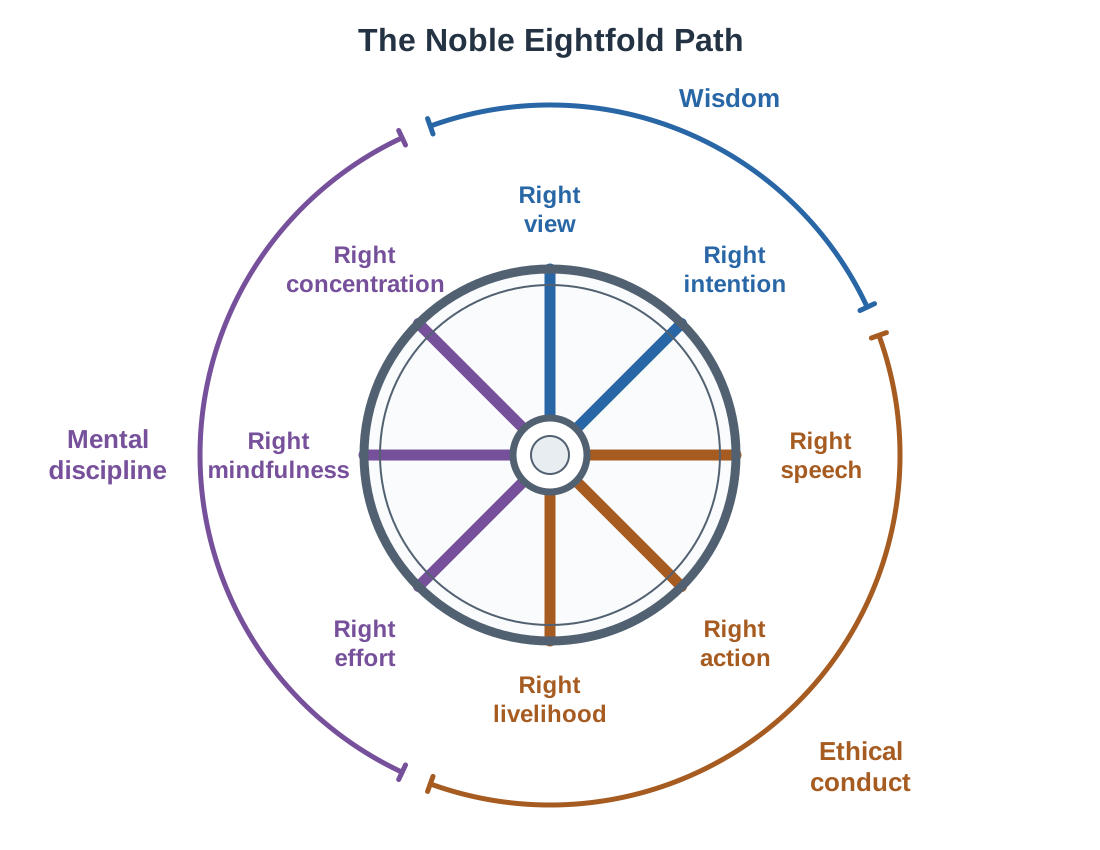
- Magga (the cure or treatment): The practical route to end craving is the Noble Eightfold Path, organised into three interconnected pillars:
- Wisdom (panna): right view, right intention.
- Ethical conduct (sila): right speech, right action, right livelihood.
- Mental discipline (samadhi): right effort, right mindfulness, right concentration.
The Transcendent and the Human
In Buddhism, the relationship between the transcendent and the human is non-theistic. Buddhism does not deny that heavenly beings or gods (devas) exist, but they are finite beings trapped within samsara who cannot grant spiritual salvation. The 'ultimate' reality is nirvana, an unconditioned state attained through human insight and disciplined effort rather than divine intervention. In Mahayana traditions, practitioners also venerate Buddhas and celestial bodhisattvas (such as Avalokiteshvara, who embodies compassion) as sources of spiritual inspiration and assistance on the path.
The Image of the Human Person
Buddhism rejects the notion of an eternal, independent soul. Instead, its profile of the human person rests on the Three Marks of Existence:
- Anicca (impermanence): Everything in the physical and mental universe is in constant change; nothing remains static.
- Dukkha (unsatisfactoriness): Because all conditioned things are impermanent, clinging to them inevitably produces frustration and sorrow.
- Anatta (no-self): There is no permanent, unchanging self or immortal soul. What we call a 'person' is an ever-shifting combination of five aggregates, known as the five skandhas:
- Form (physical body).
- Sensation (feelings of pleasure, pain, or indifference).
- Perception (recognition and labelling of sensory objects).
- Mental formations (habits, impulses, volitions, and thoughts).
- Consciousness (moment-to-moment awareness).
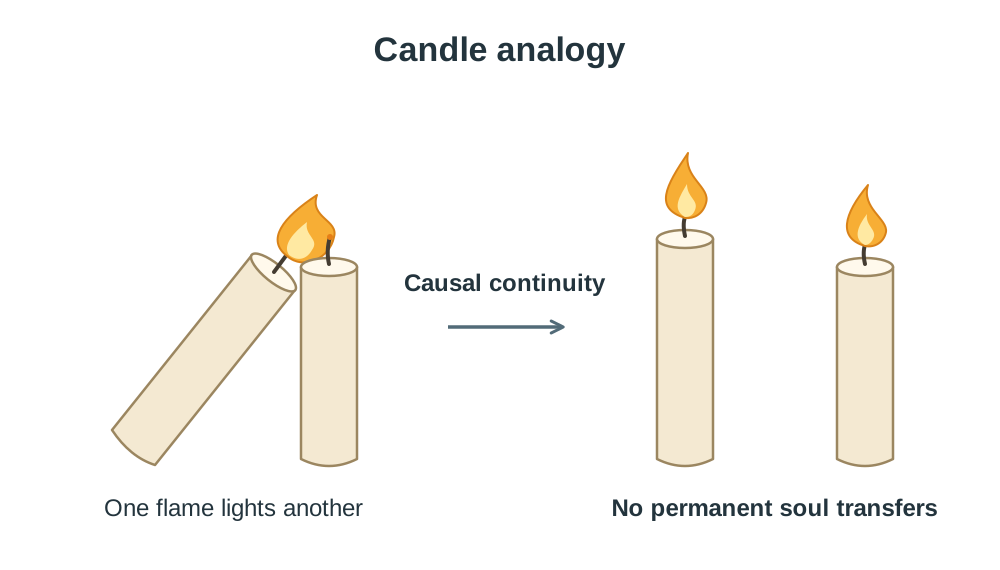
When a person dies, no soul migrates to a new body. Rebirth in Buddhism is the continuation of a dynamic stream of consciousness and karmic energy, similar to one candle flame lighting another candle. The flame is neither entirely identical nor completely separate.
Actions are governed by karma, an impersonal law of moral cause and effect driven by intentional choices. Intentional deeds generate karmic fruits that shape future experiences and rebirth across various realms of samsara. Yet human birth is uniquely precious because only the human realm provides the precise balance of suffering (which inspires the search for freedom) and rational mindfulness (which enables one to grasp and practise the Dharma).
In Mahayana traditions, every conscious being contains Buddha-nature, meaning that the inherent potential for complete spiritual awakening is already present within each person, even when covered by confusion or selfish craving.
Comparative Overview: Christianity and Buddhism
- Salvation / Liberation: Christianity teaches salvation as a gift of divine grace through Jesus Christ; Buddhism teaches liberation through one's own ethical and meditative effort along the Eightfold Path.
- The Human Person: Christianity views each person as possessing an immortal soul created in God's image; Buddhism teaches anatta, where the self is a temporary bundle of changing skandhas.
- The Transcendent: Christianity centres on a loving, personal Creator God; Buddhism focuses on awakening to natural cosmic truths and reaching nirvana without a creator deity.
Sources and Origins of Authority
Buddhism does not possess a single worldwide supreme leader or an infallible governing body. Instead, authority comes from three main sources:
1. The Buddha's Awakened Experience
The Buddha's authority does not derive from divine election, inherited status, or supernatural decrees. It rests on his own enlightenment (bodhi) and on the fact that his teachings work when people put them into practice. In the Kalama Sutta, the Buddha advised seekers never to accept doctrines solely on hearsay, traditional belief, or the word of a revered teacher, but to test teachings directly against their own reason and moral conscience before accepting them.
2. Sacred Scripture
Scripture acts as an objective touchstone for doctrinal accuracy. In Theravada Buddhism, the core canon is the Pali Canon (Tipitaka or 'Three Baskets'):
- Vinaya Pitaka: Monastic rules and ethical discipline for monks and nuns.
- Sutta Pitaka: The discourses and dialogues delivered by the Buddha.
- Abhidhamma Pitaka: Detailed philosophical and psychological analyses of the teachings.
Mahayana communities accept the early discourses and also study the Mahayana Sutras (such as the Lotus Sutra and Heart Sutra), which are preserved largely in Chinese and Tibetan collections and develop the Bodhisattva ideal of compassion.
3. Lineage, Teachers, and Organisational Structure
Authority flows through unbroken lineages of ordination and personal teaching, where senior masters transmit experiential understanding to their students. While Buddhism lacks a global administrative head, it is organised across local, national, and international tiers:
- Locally: Each temple or monastery is led by a senior monk or abbot, with monastics ranked by years since ordination.
- Nationally: Several countries maintain official councils or leadership bodies, such as the Supreme Patriarch (Sangharaja) in Thailand.
- Globally: Buddhism is divided into three major branches—Theravada (widespread in Sri Lanka, Myanmar, and Thailand), Mahayana (prominent in China, Japan, Korea, and Vietnam), and Vajrayana (Tibetan tradition). Voluntary international networks like the World Fellowship of Buddhists foster cooperation without imposing central doctrinal control.
The Community of Believers and the World
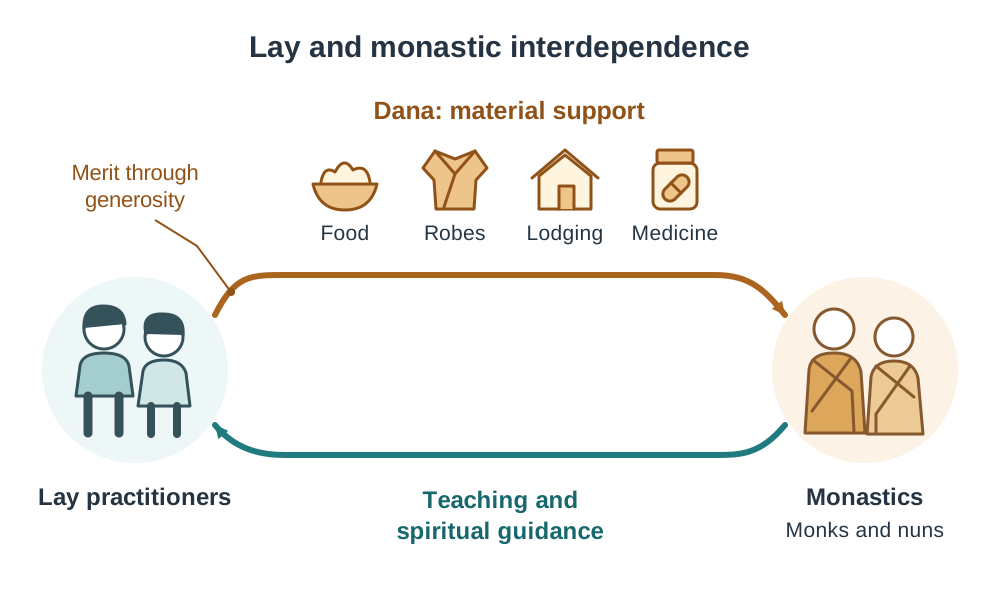
The community of believers is the Sangha. In its strictest sense, it refers to the ordained monks and nuns, but in a broader sense, it includes all lay followers who look to the Buddha's path. Monastics and lay people depend on each other, with each group giving something the other needs:
| Group | Core Responsibilities | Benefits Received |
|---|---|---|
| Monastics (Sangha) | Renounce worldly wealth, live by monastic vows (Vinaya), devote their days to study and meditation, preserve scripture, and provide pastoral teaching. | Depend entirely on lay generosity for daily food alms, robes (saffron or ochre in Theravada, maroon in Tibetan, and often grey or black in Zen), simple lodging, and medicine. |
| Lay Practitioners | Live ordinary family and working lives, keep the Five Precepts, and practise generosity (dana) towards temples. | Receive scriptural instruction, spiritual guidance, and earn spiritual merit (punya), which fosters positive karmic momentum. |
All Buddhists strive to uphold the Five Precepts as voluntary training rules:
- Refrain from taking life (ahimsa).
- Refrain from taking what is not given.
- Refrain from sexual misconduct.
- Refrain from false speech.
- Refrain from intoxicants that cloud mindfulness.
Buddhism and the Wider World
Buddhism understands the world through the principle of interdependence: every event and being arises in dependence on conditions, meaning all life is deeply interconnected. Grounded in loving-kindness (metta) and compassion (karuna), many Buddhists apply these principles to social and environmental challenges. This movement is known as Engaged Buddhism, a term popularised by Vietnamese monk Thich Nhat Hanh, who campaigned actively for peace during the Vietnam War. Other manifestations include the Dalai Lama's non-violent work for Tibetan cultural survival and international human rights, alongside Buddhist involvement in environmental care and hospice work. In turn, secular society has embraced Buddhist practices, adapting mindfulness widely within healthcare, education, and psychological therapies.
At a local level, Irish communities illustrate this presence. The Sunyata Buddhist Centre in County Clare practises within the Theravada Thai Forest tradition, while Dzogchen Beara in West Cork provides Tibetan meditation instruction and community care.
Rites of Initiation and the Human Life Cycle
Rite of Initiation: Taking Refuge
A person formally enters the Buddhist tradition by taking refuge in the Three Jewels (Triratna). During a simple ceremony before a teacher and a shrine, the candidate recites three times: 'I go to the Buddha for refuge; I go to the Dharma for refuge; I go to the Sangha for refuge.' This is followed by a pledge to uphold the Five Precepts. For those entering monastic life, initiation occurs in two subsequent stages:
- Pabbajja ('going forth'): Novice ordination, usually from age seven or eight, where the candidate takes on Ten Precepts.
- Upasampada: Full ordination as a monk or nun, usually from age twenty, binding the individual to the complete Vinaya code.
Birth Rites
In Theravada societies, parents bring their newborn infant to the temple or invite monks to their home. Monks chant blessing and protection verses (paritta), sprinkle holy water over the infant, tie protective threads around the baby's wrists, and occasionally snip a tiny lock of hair to symbolise purification and dedication to the Dharma.
Coming of Age: The Burmese Shin Byu
In Myanmar, young boys celebrate a temporary novice ordination known as the Shin Byu, which reenacts the Buddha's founding story:
- The boy is clothed in rich silk garments and an ornate headdress, riding a horse or carried through town, representing Siddhartha's pampered princely life.
- Arriving at the monastery, the boy removes his princely clothes, and monks shave his head to mark the renunciation of ego and vanity.
- The boy receives a simple monastic robe, takes the Three Refuges, and commits to the Ten Novice Precepts, residing in the monastery for a period ranging from a week to a few months to study scripture and meditation.
Marriage
Marriage in Buddhism is mainly a civil and social matter rather than a religious sacrament. In Theravada countries monks do not usually conduct the wedding itself, but couples often invite monks to chant blessings (paritta) and make offerings of food to them, before or after the ceremony, to earn merit.
Death and Funeral Rites
Death is regarded as an unavoidable display of anicca and a transition to a new rebirth.
- Theravada customs: Monks chant passages on impermanence at the bedside of the dying and during funerals. Family members make gifts of food and cloth to the monks, performing a ritual pouring of water into an overflowing bowl to symbolise the transfer of merit to help the deceased person achieve a favourable rebirth. Cremation is standard practice, mirroring the Buddha's own cremation.
- Tibetan customs: Monks or lamas read the Bardo Thodol (the Tibetan Book of the Dead) to guide the person's consciousness through the intermediate state (bardo) between death and subsequent rebirth, which can last up to forty-nine days. In remote regions, bodies may be left for sky burial as an ultimate act of generosity to nature.
Marking Time and the Seasons
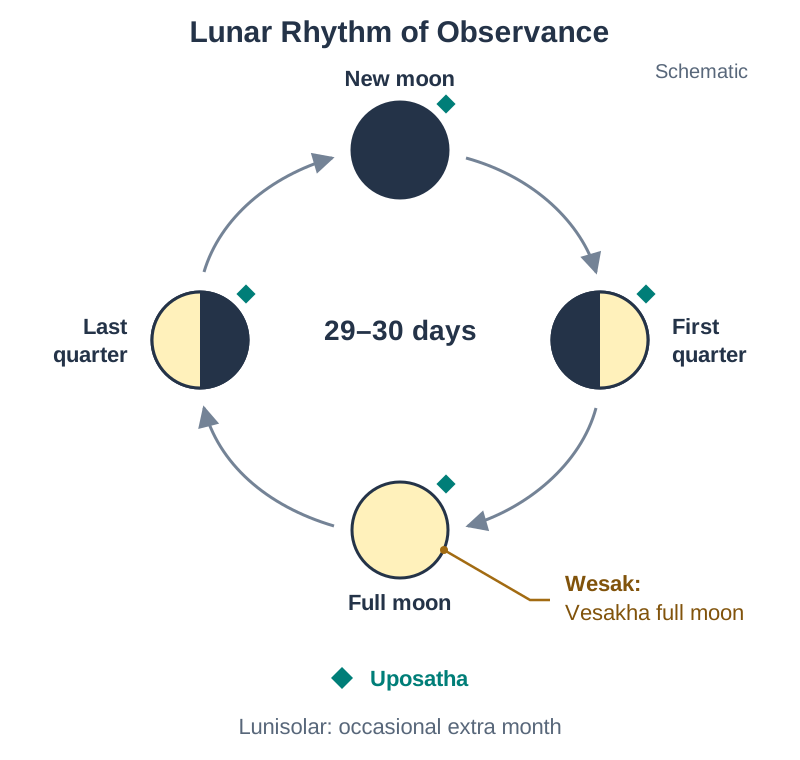
Most traditional Buddhist calendars are lunisolar. Months align with the phases of the moon, lasting 29 or 30 days starting on the new moon. An extra intercalary month is inserted every few years to keep the calendar aligned with the solar cycle, ensuring that annual festivals remain tied to their appropriate seasons while shifting slightly against the Western calendar.
Wesak (Vesakha)
Wesak is the most significant celebration for Theravada Buddhists and is observed on the full moon of the lunar month of Vesakha (typically falling in May). It remembers three key events in the Buddha's life, all traditionally held to have occurred on the same full moon:
- His birth at Lumbini.
- His supreme enlightenment under the Bodhi tree at Bodh Gaya.
- His final passing into parinirvana at Kushinagar.
During Wesak, devotees visit temples before sunrise, raise Buddhist flags, light lanterns to signify wisdom dispelling ignorance, and bathe statues of the infant Buddha with fragrant water. They also engage in acts of compassion, such as releasing captive animals and distributing gifts to the poor. (Some Mahayana traditions separate these events, celebrating the Buddha's birth during spring festivals such as Hanamatsuri in Japan on 8 April).
Vassa and Kathina
Vassa is a three-month rains retreat observed across Theravada countries from roughly July to October. Dating back to the Buddha's lifetime, when monastics stayed put during the monsoon to avoid trampling fresh farm crops and insects, Vassa is a period of intense study and meditation. Lay Buddhists frequently take on extra precepts or give up alcohol during this season.
Vassa concludes with the Kathina festival. Lay followers gather at the monastery to present newly made cloth and stitched robes to the monastic community. It represents one of the year's greatest communal demonstrations of dana.
Regular Observances: Uposatha Days
Uposatha days take place roughly weekly on the new moon, full moon, and quarter moons. On full and new moon days, monks gather to recite their communal code, the Patimokkha. Devout lay people spend the day at temples meditating, listening to Dharma talks, and observing the Eight Precepts, which add three temporary commitments to the basic Five Precepts: abstaining from food after midday, avoiding entertainments and cosmetic adornments, and refraining from luxurious beds.
Key terms
- Dharma
- The universal truth and natural law of existence taught by Siddhartha Gautama, encompassing Buddhist philosophy and ethics.
- Sangha
- The community of Buddhist followers, referring specifically to ordained monks and nuns, and broadly to the entire fellowship of believers.
- Dukkha
- The fundamental unsatisfactoriness, suffering, and unease of ordinary conditioned life, articulated in the first Noble Truth.
- Anatta
- The core doctrine of 'no-self', teaching that there is no permanent, unchanging soul or independent identity within a person.
- Anicca
- The universal truth of impermanence, asserting that all physical and mental phenomena are constantly changing and non-lasting.
- Karma
- The natural law of moral cause and effect whereby intentional actions of body, speech, and mind influence future experience and rebirth.
- Nirvana
- The ultimate goal of Buddhism, meaning the blowing out of greed, hatred, and delusion, bringing freedom from samsara.
- Samsara
- The continuous cycle of birth, death and rebirth, driven by ignorance and craving.
- Three Jewels
- The three foundational refuges of all Buddhists: the Buddha (teacher), the Dharma (truth/teaching), and the Sangha (community).
- Dana
- The practice of voluntary giving and generosity, especially material support given by laypeople to monastics to earn spiritual merit.
- Shin Byu
- A Burmese Theravada rite of passage where young boys temporarily ordain as novice monks, reenacting Siddhartha's Great Renunciation.
- Wesak
- A major festival celebrated on the Vesakha full moon, commemorating the Buddha's birth, enlightenment, and parinirvana.
- Vassa
- The three-month rains retreat in Theravada Buddhism during which monastics remain in their monastery for intensive meditation.
- Engaged Buddhism
- A contemporary movement applying Buddhist insights and mindfulness directly to social justice, peace work, and environmental protection.
Check yourself
What are the Four Noble Truths taught by the Buddha?
1. Dukkha (suffering exists); 2. Samudaya (suffering is caused by craving/tanha); 3. Nirodha (suffering ends with the cessation of craving, reaching nirvana); 4. Magga (the cure is the Noble Eightfold Path).
How does the Buddhist doctrine of anatta differ from the Christian view of the human person?
Christianity teaches that each person has a unique, immortal soul created by God, whereas Buddhism teaches anatta (no-self), where a person is an impermanent combination of five changing aggregates (skandhas).
What advice did the Buddha give about testing spiritual teachings in the Kalama Sutta?
He advised that teachings should not be accepted on blind faith, tradition, or authority, but tested directly against one's own reason and moral experience.
What is the primary spiritual function of the practice of dana (giving) between laypeople and monastics?
Laypeople provide food, clothing, and shelter to support monastics, and in return they generate spiritual merit (punya) and receive teachings of the Dharma.
What is the symbolic meaning of pouring water into an overflowing vessel during a Theravada Buddhist funeral?
It visibly symbolises the transfer of spiritual merit from living relatives to the deceased person to assist them towards a beneficial rebirth.