

Buddhism is one of the List B major living traditions in Section C (World Religions) of the Leaving Certificate Religious Education syllabus. Unlike Christianity, Judaism, and Islam, it does not centre on a creator God. Instead, Buddhism proposes that liberation from suffering is achieved through personal ethical discipline, meditation, and direct insight into reality. This study examines the Buddhist profile of the human person, the vision of liberation as Nirvana compared with Christian salvation, community structures within the Sangha, and the distinctive ways the tradition marks time, seasons, and life-cycle transitions.
The Human Person and the Vision of Liberation
Buddhism approaches human identity without reference to an immortal soul created by God. Instead, it teaches the doctrine of Anatta (no fixed self). What we call a person is an ever-shifting flow of five psycho-physical aggregates (skandhas):
- Physical form (rupa)
- Sensation or feeling (vedana)
- Perception (sanna)
- Mental formations or volitions (sankhara)
- Consciousness (vinnana)
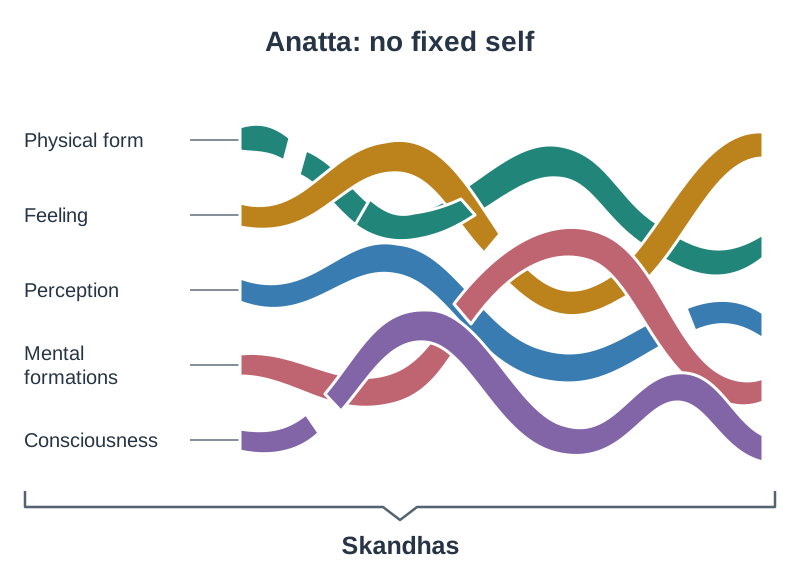
Human existence within the cycle of rebirth (Samsara) is defined by the Three Marks of Existence: Dukkha (suffering, unsatisfactoriness, or friction, like an off-centre wheel on an axle), Anicca (impermanence; all conditioned things change), and Anatta (no permanent soul or self). Craving permanence in a world where nothing lasts produces continual dissatisfaction.
Karma and the Middle Way
Karma (Pali: kamma) means intentional action and its consequences. Actions rooted in generosity, kindness, and wisdom produce skilful results, whereas actions driven by greed, hatred, and delusion bring suffering. Karma is not divine retribution or reward; it functions as a natural law of moral cause and effect that conditions future rebirths in Samsara.
To transcend this cycle, the Buddha taught the Middle Way—a path between the extremes of luxury and self-mortification. The Middle Way is practical and systematic. Think of the Buddha as a physician: he identifies the illness, diagnoses its cause, confirms it can be cured, and prescribes the treatment.
The Four Noble Truths
- Dukkha: Suffering and dissatisfaction are universal to unawakened life.
- Samudaya: The origin of suffering is craving (tanha), fed by the three poisons: greed, hatred, and ignorance.
- Nirodha: Suffering ceases when craving is extinguished.
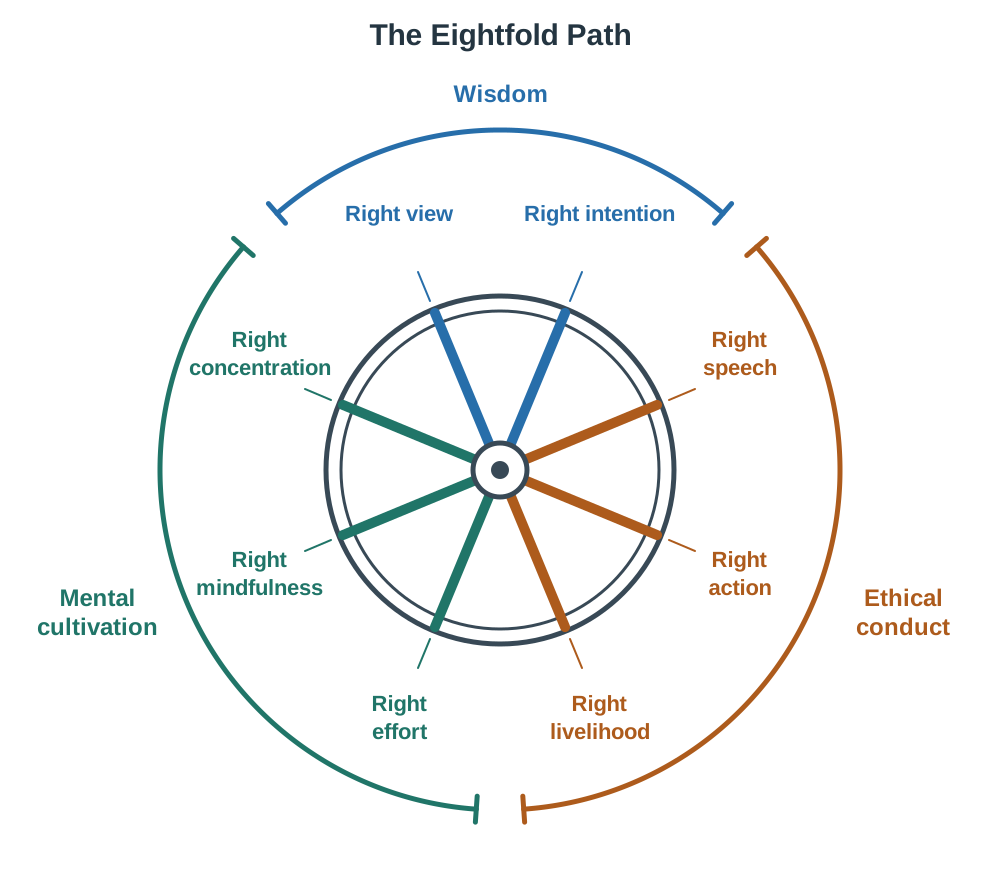
- Magga: The path leading to cessation is the Noble Eightfold Path, grouped into three trainings: wisdom (panna: right view, right intention), ethical conduct (sila: right speech, right action, right livelihood), and mental cultivation (samadhi: right effort, right mindfulness, right concentration).
Liberation is termed Nirvana (Pali: Nibbana), meaning 'extinguished' or 'blown out'. It denotes the complete extinguishing of greed, aversion, and delusion, ending rebirth in Samsara. In Theravada Buddhism, an individual who achieves this liberation through monastic practice is an Arahant. In Mahayana Buddhism, teachers emphasise that all beings possess Buddha Nature—the inherent potential for awakening. Mahayana practitioners take vows to become a Bodhisattva, delaying their own final entry into Nirvana to assist all sentient beings.
The Transcendent and the Human
In Buddhism, the transcendent is not an external personal creator; it is ultimate reality, truth (Dharma), and the unconditioned peace of Nirvana realised through human effort. The Buddha is regarded as a guide and exemplar rather than a divine saviour. While Theravada relies heavily on self-effort, popular Mahayana traditions venerate compassionate bodhisattvas such as Avalokiteshvara for assistance, and Pure Land Buddhists trust in the vow of Amitabha Buddha to enter an environment suited to achieving enlightenment.
Comparing Liberation (Buddhism) and Salvation (Christianity)
Topic 2.1 requires a direct comparison between the two traditions studied. For most Irish students taking Christianity from List A, this comparison centres on human nature, the ultimate human dilemma, and how deliverance is achieved.
| Feature | Buddhism | Christianity |
|---|---|---|
| The Human Problem | Dukkha, rooted in craving (tanha) and ignorance | Sin, understood as estrangement from God |
| The Ultimate Goal | Nirvana: craving extinguished and rebirth ended | Salvation: eternal life in communion with God |
| How It Is Reached | Personal cultivation on the Noble Eightfold Path | God's grace through Jesus Christ, received in faith |
| The Human Person | Anatta: dynamic flow of five skandhas; no fixed soul | Unique, immortal soul created in the image of God |
| After Death | Continual rebirth governed by karma until awakening | Resurrection and divine judgement following earthly life |
Similarities
Both traditions diagnose unawakened human life as fundamentally flawed and in need of radical transformation. Each demands disciplined ethical living, prioritises compassion (karuna in Buddhism; agape or active love of neighbour in Christianity), and promises an ultimate condition of peace that transcends worldly suffering.
Differences
Christian salvation is relational and theistic, resting on divine grace and redemption won through the incarnation, crucifixion, and resurrection of Jesus Christ. Buddhist liberation is non-theistic and mainly self-reliant, realised when an individual dispels delusion and extinguishes craving through personal spiritual training.
Community Organisation, Authority, and the Sangha
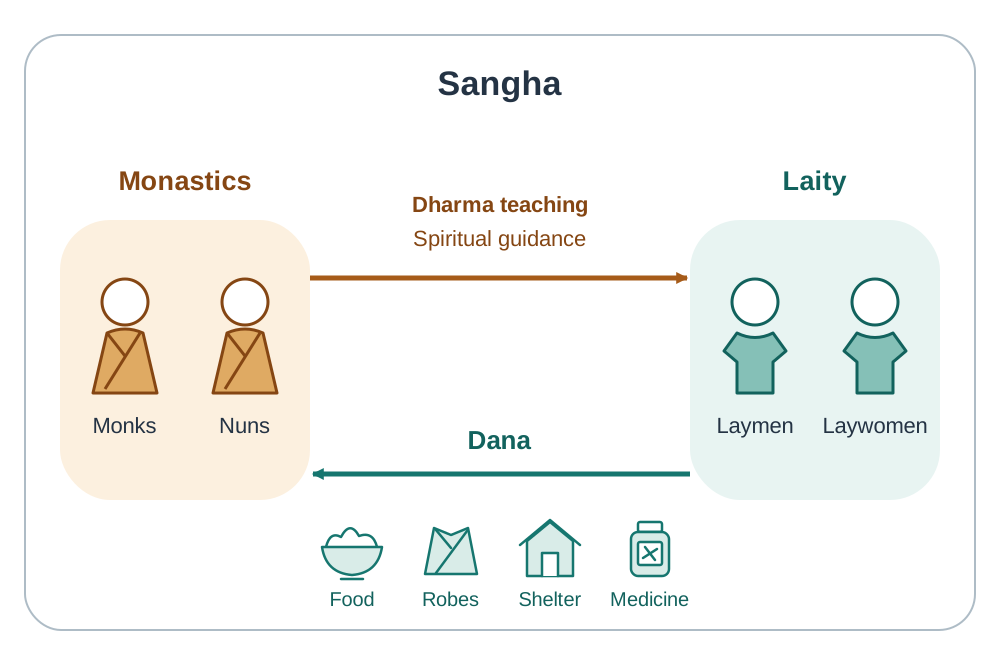
The Buddhist community is known as the Sangha. Doctrinally, it comprises the fourfold assembly: fully ordained monks (bhikkhus), fully ordained nuns (bhikkhunis), laymen (upasakas), and laywomen (upasikas).
The monastic and lay communities exist in a symbiotic, reciprocal relationship. Monastics renounce worldly comforts to study, meditate, and live by the moral code, providing lay followers with Dharma teaching and spiritual guidance. In return, the laity supply monastics with basic material requisites: food, robes, shelter, and medicine (dana). This act of giving generates spiritual merit (punna), yielding beneficial karmic conditions for future lives.
Sources of Authority
Authority in Buddhism does not derive from a supreme institutional official. Before his parinirvana, the Buddha refused to appoint a successor, declaring that the Dharma and the monastic discipline (Vinaya) would serve as the community's guide. In Theravada Buddhism, authority is grounded in the Pali Canon or Tipitaka ('Three Baskets'):
- Vinaya Pitaka: monastic disciplinary rules and operational procedures
- Sutta Pitaka: recorded discourses and dialogues of the Buddha
- Abhidhamma Pitaka: philosophical and psychological analysis
Mahayana traditions also revere later Sanskrit scriptures, such as the Lotus Sutra and Heart Sutra. In the Kalama Sutta, the Buddha established an experiential standard for authority: seekers must not accept teachings based solely on tradition, lineage, or teacher status, but must verify in their own lives whether a practice reduces greed, hatred, and delusion.
Local and Global Organisation
- Theravada Monasteries: Structured locally under an Abbot, whose leadership is based on spiritual maturity and monastic seniority, measured by completed rainy-season retreats (vassa). Formal community actions, such as monastic ordination, are carried out collectively by an assembly of monks under the Vinaya, where silent consent from the assembled quorum signifies agreement.
- Tibetan Lineages: Guided by lineages of reincarnate teachers (tulkus or lamas). In Tibetan Buddhism, the Dalai Lama is revered as an incarnation of Avalokiteshvara (the Bodhisattva of Compassion). While he carries immense international moral authority, he does not hold administrative jurisdiction over other Buddhist traditions or independent schools.
- Global Structures: Buddhism lacks a centralised world governing body. Global unity is fostered through voluntary networks such as the World Fellowship of Buddhists, founded in Sri Lanka in 1950. In Ireland, the Irish Buddhist Union serves as a national network that promotes communication across diverse Theravada, Zen, and Tibetan groups.
The Buddhist in the World
Buddhists understand worldly reality through Pratityasamutpada (Dependent Origination): all phenomena arise in mutual dependence upon causes and conditions. Lay people live out their worldview through the Five Precepts, committing to refrain from:
- Harming or killing living beings
- Taking what is not given
- Sexual misconduct
- False speech
- Intoxicants that cloud the mind
In modern times, this ethic has found expression in Engaged Buddhism, championed by thinkers like Thich Nhat Hanh, who apply mindfulness directly to peace initiatives, social justice, and environmental protection. Meanwhile, western societies have embraced Buddhist practices such as mindfulness, though these techniques are often detached from their original ethical and soteriological roots.
Rites, Seasons, and the Life Cycle
Buddhist rites celebrate significant seasonal moments and life stages without treating them as sacramental conduits of divine grace. They focus on cultivating mindfulness, generating merit, and acknowledging impermanence.
Marking Time and the Seasons
Buddhists use a lunar calendar, placing major observances on full-moon days:
- Wesak (Vesak / Buddha Day): Celebrated on the full moon of Vesakha (usually May). In Theravada communities, it commemorates three pivotal events: the Buddha's birth, his enlightenment under the Bodhi tree at Bodh Gaya, and his final passing into Nirvana (parinirvana). Celebrations include cleaning temples, offering flowers and incense, giving alms to monks, lighting lanterns, and pouring scented water over statues of the infant Buddha to symbolise mental purification.
- Vassa: A three-month rains retreat during the monsoon season (July to October). Monastics stay inside their monasteries for intensive meditation and study, while lay practitioners often intensify their personal spiritual discipline by observing additional precepts.
- Kathina: Held at the conclusion of Vassa, this ceremony allows lay people to present fresh robe cloth and gifts to the monastic community. It is a major merit-making festival that reinforces the reciprocal bond between monastics and the laity.
- Uposatha: Observance days held on the full and new moon (and in some traditions the quarter moons), when lay people visit local temples, take on the Eight Precepts and hear Dharma talks, while monks gather each fortnight to recite their monastic rules (Patimokkha).
Initiation: Taking Refuge and Shin Byu
For lay Buddhists worldwide, formal initiation involves Taking Refuge. A person recites the Three Refuges before a monastic or community teacher: "I take refuge in the Buddha; I take refuge in the Dharma; I take refuge in the Sangha." They then commit to the Five Precepts.
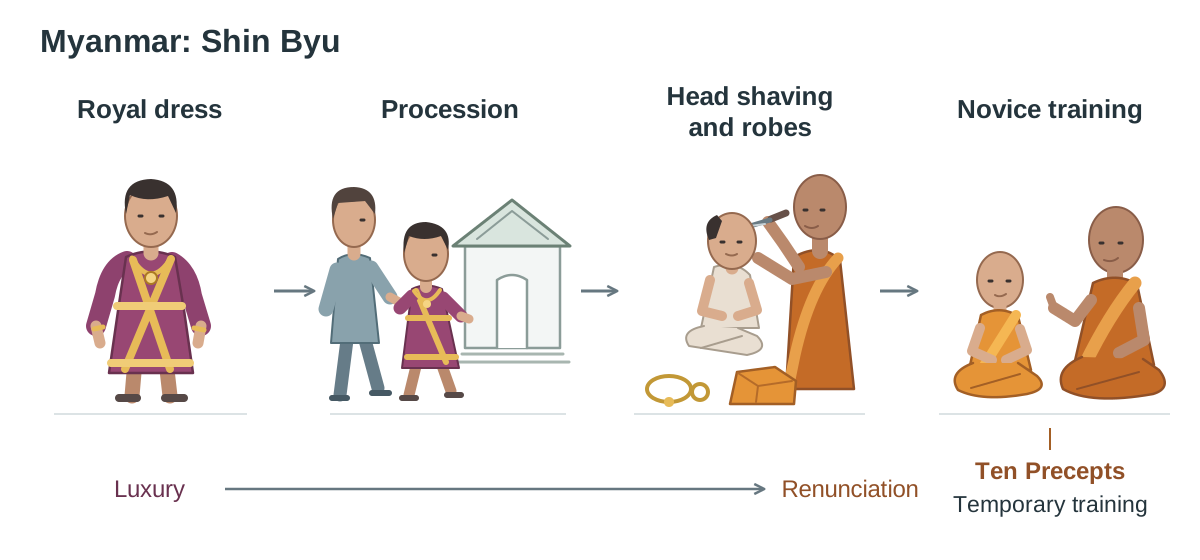
In Theravada cultures (notably Myanmar), boys aged seven to fourteen undertake the Shin Byu rite of passage:
- The boy dresses in elaborate royal silks and jewellery, recalling Prince Siddhartha's life of luxury.
- He is escorted to the monastery in a ceremonial street procession.
- Monks shave his head, strip away his ornamental jewellery to symbolise detachment, and clothe him in saffron robes.
- He takes on the Ten Precepts of a novice monk (samanera) and enters monastic training for a period, generating significant spiritual merit for his family.
Marriage: A Worldly Matter
Unlike Christianity, Buddhism treats marriage as a worldly and domestic arrangement (lokiya) rather than a religious sacrament. The Buddha offered ethical counsel on mutual respect and financial responsibility in the Sigalovada Sutta, but set down no sacramental vows. In Theravada countries, monks do not solemnise the legal union; couples complete civil contracts and then invite monks to chant protective verses (paritta) and offer teachings on loving-kindness (metta). In Mahayana countries such as Japan, temple wedding ceremonies are more common.
Death and Funeral Rites
Buddhists give special attention to death, because the final mental state is understood to exert a major influence on the next rebirth.
- Support for the Dying: Family members and monastics maintain a calm, serene environment, reciting verses or chanting the Buddha's name to help the dying person let go of attachments.
- Funerals and Cremation: Cremation is standard practice across most traditions, echoing the Buddha's own funeral. Altars are set with white flowers, incense, and burning candles, visibly illustrating impermanence (anicca).
- Transfer of Merit (Pattidana): The bereaved family provides gifts and food to monastics, dedicating the merit (punna) generated by these good deeds to the deceased to support their onward journey. For instance, in Sri Lanka, relatives pour water into an overflowing vessel on the seventh day while monks chant, visually enacting the flowing of merit to the departed.
- Rebirth Timelines: Theravada teaches that rebirth is instantaneous. In Tibetan Buddhism, the consciousness is believed to navigate an intermediate transition (Bardo) lasting up to 49 days, during which lamas chant the Bardo Thodol (Tibetan Book of the Dead) to help the mind attain liberation.
Key terms
- Anatta
- The foundational Buddhist teaching of 'no fixed self'; human beings have no permanent, immortal soul.
- Skandhas
- The five psycho-physical aggregates that make up the human person: form, sensation, perception, mental formations, and consciousness.
- Dukkha
- The suffering, stress, and fundamental unsatisfactoriness characteristic of conditioned worldly existence.
- Karma
- Intentional moral actions and their inevitable causal effects, which shape current circumstances and future rebirths.
- Middle Way
- The balanced spiritual path discovered by Siddhartha Gautama, avoiding both sensual self-indulgence and extreme asceticism.
- Nirvana
- The ultimate goal of Buddhism; the complete extinguishing of greed, hatred, and delusion, ending Samsara.
- Sangha
- The fourfold Buddhist community, consisting of ordained monks, ordained nuns, laymen, and laywomen.
- Tipitaka
- The 'Three Baskets' of the Pali Canon, comprising the Vinaya Pitaka (monastic discipline), Sutta Pitaka (discourses), and Abhidhamma Pitaka (higher philosophy).
- Five Precepts
- The foundational moral training rules undertaken voluntarily by lay Buddhists to cultivate non-harm, honesty, and mental clarity.
- Wesak
- The premier Buddhist festival, celebrated on the full moon in May, commemorating the Buddha's birth, enlightenment, and passing.
- Vassa
- The three-month monastic rains retreat, devoted to intensive meditation and study.
- Pattidana
- The ritual transfer of spiritual merit earned from good deeds (such as almsgiving) to a deceased person to assist their rebirth.
Check yourself
What three events in Siddhartha Gautama's life are celebrated during the festival of Wesak?
His birth, his enlightenment at Bodh Gaya, and his death (parinirvana).
List the Five Precepts undertaken by lay Buddhists.
Refraining from harming living beings, stealing, sexual misconduct, false speech, and intoxicants.
How does an Arahant in Theravada Buddhism differ from a Bodhisattva in Mahayana Buddhism?
An Arahant achieves personal liberation from Samsara, whereas a Bodhisattva takes vows to delay entering final Nirvana to work for the awakening of all sentient beings.
Why does the moment of death hold such vital importance in the Buddhist tradition?
The individual's state of mind at the moment of death is believed to exert a direct karmic influence on the conditions of their subsequent rebirth.
On what grounds did the Buddha advise the Kalamas to accept or reject spiritual teachings?
He instructed them not to rely on tradition or scripture, but to test teachings in their own experience to verify whether they dispel greed, hatred, and delusion.