

This topic explores human rights systems across Europe and the wider world, covering international human rights treaties, judicial and monitoring bodies, and core philosophical debates. It examines the global implementation of four key articles of the UN Convention on the Rights of the Child (UNCRC) and the judicial machinery of the European Convention on Human Rights (ECHR), alongside its incorporation into Irish law under the European Convention on Human Rights Act 2003. It applies foundational human rights principles—such as universality, inalienability, indivisibility, and the distinction between positive and negative rights—to global challenges. Key debates examine whether human rights constitute Western cultural imperialism, whether states may legitimately set aside civil liberties to accelerate economic development, and how the 1986 UN Declaration on the Right to Development reframes economic progress. Finally, critical perspectives from Karl Marx, Vandana Shiva, Amartya Sen, Martha Nussbaum, and Robert Nozick evaluate global inequality and international cooperation.
Children's Rights Globally: The UNCRC in Practice
The United Nations Convention on the Rights of the Child (UNCRC, 1989) is the most widely ratified human rights treaty in history. It establishes that children are distinct rights holders entitled to special protections from governments, which act as duty bearers.
The Leaving Certificate specification focuses on four specific articles to assess the global implementation of children's rights:
Article 6: Right to Survival and Development
Article 6 states that every child has the inherent right to life, and governments must ensure the child's survival and development to the maximum extent possible. According to the UN Inter-agency Group for Child Mortality Estimation (UN IGME, 2023), global under-five mortality has declined by more than 50% since 1990. Despite this progress, preventable deaths and severe physical stunting persist due to armed conflict and acute malnutrition in areas such as Yemen, Sudan, and parts of sub-Saharan Africa. The climate crisis also poses an immediate threat to Article 6, alongside Article 24 (health) and Article 27 (adequate standard of living), because droughts, crop failures, and extreme weather disproportionately affect young children.
Article 14: Freedom of Thought, Conscience, and Religion
This article protects the child's right to freedom of thought, conscience, and religion, respecting the rights and duties of parents to provide direction in a manner consistent with the child's evolving capacities. In practice, this right is curtailed around the world through state-mandated religious curricula, bans on minority religious practices, and state persecution. For example, state authorities in Xinjiang have subjected Uyghur Muslim children to forced assimilation and restrictions on religious education and language, while Rohingya children in Myanmar face systematic religious and ethnic exclusion.
Article 19: Protection from Violence, Abuse, and Neglect
Article 19 requires states to take all appropriate legislative, administrative, social, and educational measures to protect children from all forms of physical or mental violence, injury, neglect, maltreatment, and exploitation. According to UNICEF research (2017), approximately 300 million children aged two to four worldwide regularly experience violent discipline at home. In conflict regions, children face grave violations, including recruitment as child soldiers, abduction, and sexual violence.
Article 31: Right to Rest, Leisure, Play, and Recreation
Article 31 guarantees the child's right to rest, leisure, play, recreational activities, and free participation in cultural and artistic life. This right is systematically undermined by economic necessity and child labour. The ILO and UNICEF estimated that around 138 million children were in child labour in 2024 (ILO–UNICEF, 2025), down from 160 million in 2020. That represents a decrease of about 14%, yet approximately 54 million children remain trapped in hazardous work. Excessive domestic and care burdens also fall disproportionately on adolescent girls, restricting their opportunities for recreation and education.
Monitoring, Reporting, and Complaints
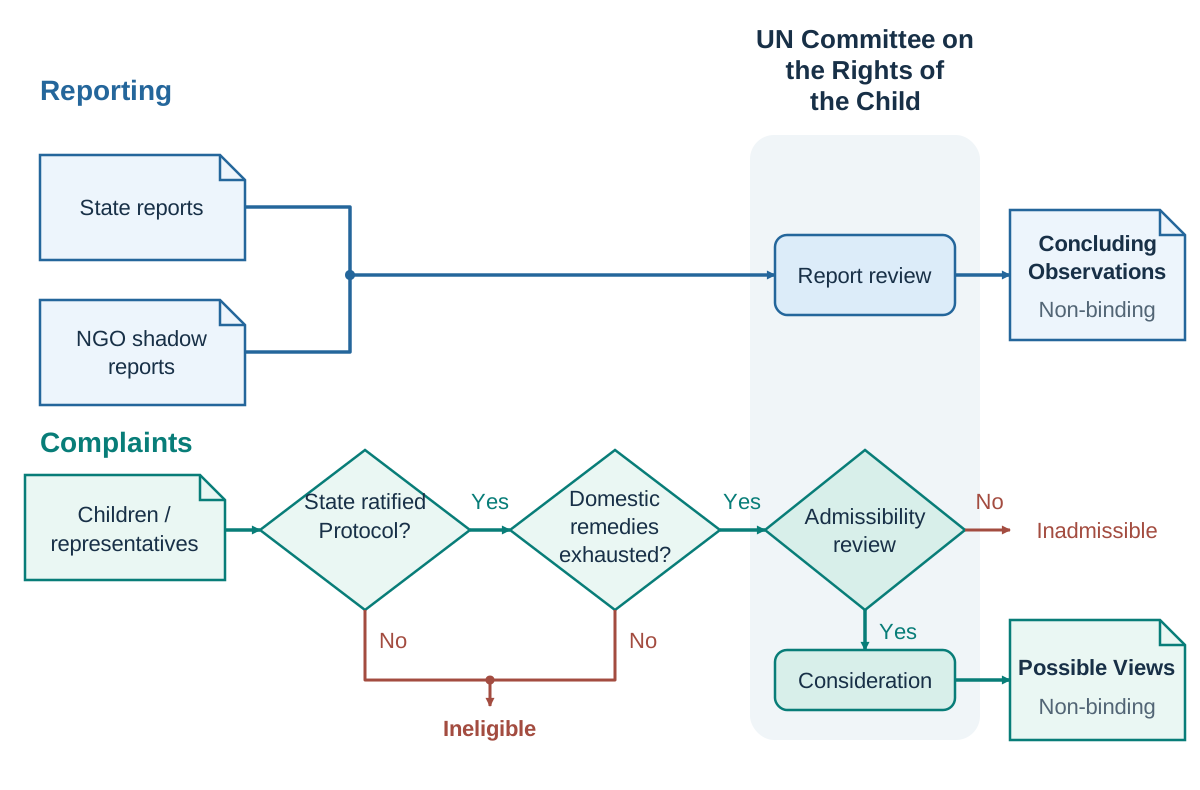
The UN Committee on the Rights of the Child in Geneva monitors treaty implementation. Every five years, signatory states submit periodic reports detailing their progress. The Committee reviews these along with shadow reports submitted by civil society and NGOs, and issues Concluding Observations. These observations subject state policies to diplomatic scrutiny and public debate, although the Committee lacks the legal power to overturn domestic laws or impose financial fines.
Under the Third Optional Protocol on a Communications Procedure (adopted 2011, entering into force in 2014), individual children or their representatives can submit complaints directly to the Committee alleging violations of their rights. A case is admissible only against a state that has ratified the Protocol (which Ireland ratified in 2014) and only after the applicants satisfy the rule of exhaustion of domestic remedies.
A notable test occurred in Sacchi and others v Argentina, Brazil, France, Germany and Turkey (2019), where Greta Thunberg and 15 other young activists argued that inadequate carbon emission cuts violated their rights under Article 6 (survival and development), Article 24 (health), and Article 30 (culture). In 2021, the Committee made a landmark finding that a state's carbon emissions can cause foreseeable cross-border harm to children outside its territory, establishing extraterritorial jurisdiction. However, the Committee declared the complaint inadmissible because the young applicants had not first brought cases through the national courts of those five countries. Although the Committee's final decisions ("Views") are not legally enforceable orders, they create considerable moral, legal, and political pressure on governments.
The European Framework: The ECHR, ECtHR, and Irish Law
Drafted in 1950 by the Council of Europe, the European Convention on Human Rights (ECHR) safeguards fundamental civil and political liberties. Unlike the UNCRC, the ECHR has a court whose judgments are legally binding on states: the European Court of Human Rights (ECtHR), based in Strasbourg, France.
Main Rights Protected Under the ECHR
The Convention contains core articles that set minimum human rights standards across Europe:
- Article 2: Right to life
- Article 3: Freedom from torture, inhuman, or degrading treatment or punishment
- Article 4: Freedom from slavery and forced labour
- Article 5: Right to liberty and security of person
- Article 6: Right to a fair trial
- Article 7: No punishment without law
- Article 8: Right to respect for private and family life, home, and correspondence
- Article 9: Freedom of thought, conscience, and religion
- Article 10: Freedom of expression
- Article 11: Freedom of assembly and association
- Article 12: Right to marry and found a family
- Article 13: Right to an effective remedy
- Article 14: Prohibition of discrimination in the enjoyment of Convention rights
Additional Protocols have expanded these rights, including Protocol 1 (protection of property, the right to education, and free elections) and Protocols 6 and 13 (abolition of the death penalty).
Accessing the European Court of Human Rights
Individuals, non-governmental organisations, or other member states can lodge an application with the Strasbourg Court alleging a violation of Convention rights. Two essential procedural rules govern these applications:
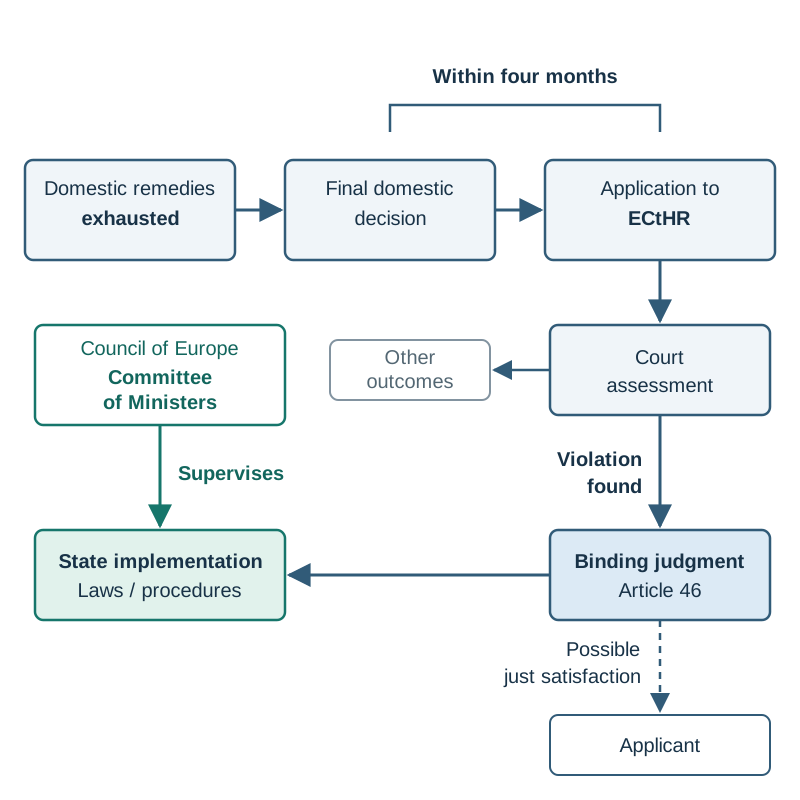
- The applicant must demonstrate exhaustion of domestic remedies, meaning the claim must first be argued through every accessible level of the domestic legal system (in Ireland, up to the Court of Appeal or Supreme Court) without obtaining redress.
- The applicant must lodge the application within four months of the final domestic judicial decision.
When the ECtHR finds a violation, the judgment is legally binding on that state under Article 46. The Court may award the applicant just satisfaction (financial compensation under Article 41). The state must take measures to remedy the breach, which frequently requires amending domestic law or changing administrative procedures. The execution of judgments is supervised by the Council of Europe's Committee of Ministers. The Court cannot directly annul or rewrite national statutes; compliance is carried out by the state itself and can take years.
Irish Precedents: Norris v Ireland and Ireland v United Kingdom
In Norris v Ireland (1988), senator and activist David Norris challenged the statutory criminalisation of consensual adult male homosexual conduct under Victorian-era statutes, having previously lost his case in the Irish Supreme Court. The ECtHR ruled that the blanket prohibition breached his right to respect for private life under Article 8. This judgment prompted the Oireachtas to pass the Criminal Law (Sexual Offences) Act 1993, which decriminalised homosexuality in Ireland.
In the inter-state case Ireland v United Kingdom (1978), the Irish government brought an application against the UK regarding the interrogation techniques used on detainees in Northern Ireland in 1971: hooding, continuous noise, wall-standing, and deprivation of sleep, food, and water. The ECtHR held that these "five techniques" constituted inhuman and degrading treatment in violation of Article 3, although they did not meet the threshold of torture. This case highlighted the absolute character of Article 3 and showed how the Convention allows one state to hold another accountable.
The ECHR in Irish Domestic Law
The European Convention on Human Rights Act 2003 incorporated the Convention into Irish domestic law, sitting below Bunreacht na hÉireann:
- Irish courts must interpret statutory provisions and rules of law in a manner compatible with the State's obligations under the Convention "in so far as is possible".
- Statutory organs of the State have a direct duty to perform their functions compatibly with the Convention.
- Where no other adequate legal remedy is available, the High Court, Court of Appeal or Supreme Court exercising its appellate jurisdiction may make a declaration of incompatibility. This declaration does not invalidate the statute. The Taoiseach lays it before each House of the Oireachtas. The person affected may apply in writing to the Attorney General for compensation, and the Government may, at its discretion, make an ex gratia payment.
Distinguishing the Council of Europe from the European Union
Examiners regularly test whether candidates understand the structural distinctions between European institutions:
| Feature | Council of Europe | European Union |
|---|---|---|
| Member States | 46 member states | 27 member states (all belong to Council of Europe) |
| Foundational Human Rights Document | European Convention on Human Rights (ECHR, 1950) | EU Charter of Fundamental Rights (legally binding since 2009) |
| Primary Court | European Court of Human Rights (ECtHR, Strasbourg) | Court of Justice of the European Union (CJEU, Luxembourg) |
| Core Purpose | Promoting human rights, democracy, and the rule of law | Political, economic, and single-market integration |
Applying Human Rights Principles to Europe and the Wider World
To evaluate global human rights challenges under Learning Outcome 6.2, we must apply the foundational legal concepts established in Topic 5.2 across international contexts:
Absolute, Limited, and Qualified Rights
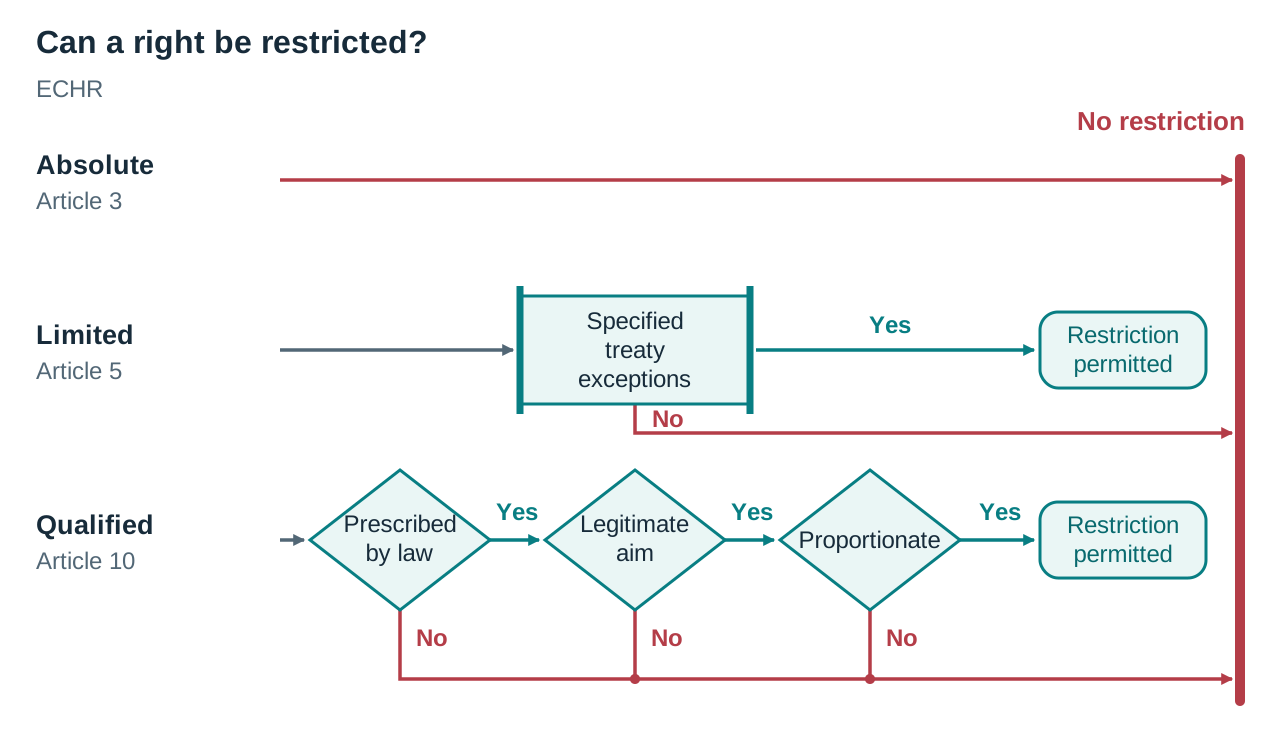
- An absolute right cannot be restricted, suspended, or compromised under any circumstances, even during war or national emergency. Article 3 of the ECHR (freedom from torture, inhuman, or degrading treatment) is an absolute right.
- A limited right can be restricted only under specific, closed exceptions set out in the treaty text. For example, Article 5 of the ECHR (right to liberty) is a limited right. Deprivation of liberty is permitted only in defined circumstances, such as lawful detention following conviction by a competent court or lawful arrest on reasonable suspicion of committing an offence, and the detainee must be brought promptly before a judge.
- A qualified right requires balancing individual freedoms against broader societal interests, such as public safety, national security, or the protection of the rights and freedoms of others. Articles 8, 9, 10, and 11 are qualified rights. Any restriction imposed by a government must be prescribed by law, pursue a legitimate aim, and meet the test of proportionality (it must go no further than strictly necessary in a democratic society).
- The margin of appreciation is the legal leeway the ECtHR grants national governments when applying qualified rights. The Court recognises that national parliaments and domestic courts are often better positioned to assess local cultural, religious, and moral contexts than international judges in Strasbourg.
Universality, Inalienability, and Indivisibility
- Universality holds that human rights belong inherently to every human being across all societies, regardless of citizenship, gender, ethnicity, or creed. The cultural imperialism argument directly attacks this principle by claiming human rights reflect Western individualist norms.
- Inalienability means human rights cannot be given away, sold, or taken away by a state, except in strictly defined situations following due process of law. When authoritarian states carry out arbitrary mass detentions without trial, they treat rights as conditional privileges granted or revoked by the state.
- Indivisibility establishes that civil, political, economic, social, and cultural rights hold equal legal standing and cannot be ranked into a hierarchy. One category of rights cannot be sacrificed to achieve another. The 1993 Vienna Declaration, adopted by consensus among 171 states, affirmed that "all human rights are universal, indivisible and interdependent and interrelated." The "development first" argument challenges indivisibility by attempting to subordinate civil and political rights to economic expansion.
Negative versus Positive Rights and State Duties
- A negative right requires the state to refrain from interfering with the individual. Freedom from arbitrary arrest and freedom from torture are negative rights, requiring the government to refrain from unlawful action.
- A positive right requires the state to provide resources, infrastructure, or social services, such as healthcare, housing, and primary education. Because positive rights demand public funding, debates over international cooperation, development assistance, and sovereign debt relief focus heavily on how less wealthy states can fund them.
Evaluating Unseen Research on Human Rights (Section 2 Toolkit)
In Section 2 of the examination, candidates are required to evaluate an unseen data-based case study, such as a statistical extract from an international agency or an investigative field report. Rather than summarising the passage, judge how far you can trust it. These basic and advanced checks will help:
Basic Data Checks
- Check the date and currency of the data to ensure findings reflect present-day realities rather than historical conditions.
- Examine sample sizes and check whether the study is quantitative (statistical surveys, percentages) or qualitative (semi-structured interviews, observational field notes).
- Note how specific human rights concepts are operationalised and measured. For example, does a study on the right to education measure initial school enrolment or daily classroom attendance?
- Perform basic manipulation of data where appropriate. For example, calculating percentage changes highlights trends clearly: if global child labour falls from 160 million to 138 million, the calculation shows an overall reduction of approximately 14%.
Methodological and Contextual Evaluation
- Assess sample representativeness and access limits. Household surveys and official registries often exclude the most marginalised groups, such as undocumented migrants, street-connected youth, or communities living in conflict zones.
- Evaluate positional and institutional bias. State-generated statistics may underreport prison overcrowding, child labour, or minority discrimination to avoid international criticism. Conversely, non-governmental advocacy organisations might focus primarily on severe violations to raise public awareness and donor funding.
- Check for data triangulation. Reliable findings corroborate quantitative administrative data with independent qualitative field interviews and non-governmental reports.
- Distinguish between correlation and causation. The fact that a human rights treaty was ratified shortly before maternal mortality declined does not prove the treaty caused the drop; improvements in local sanitation, regional trade, or public infrastructure may have produced the change.
- Account for social desirability bias and ethical precautions. When researching sensitive issues like domestic abuse or child labour, participants may conceal violations due to stigma, fear of police retaliation, or financial dependency on illegal employment.
Major Debates: Cultural Imperialism and 'Development First'
Learning Outcome 6.2 requires students to evaluate two major global arguments that challenge conventional human rights thinking.
The Cultural Imperialism Argument
This argument holds that the universal human rights framework is a Western, individualistic construct rooted in Enlightenment philosophy (such as John Locke's theory of natural rights). Critics argue that exporting this model to post-colonial, indigenous, or non-Western societies amounts to cultural imperialism, overriding collective values, family structures, and communitarian duties.
In 1993, several Asian governments signed the Bangkok Declaration, affirming their commitment to human rights while insisting that rights must be considered in the context of "national and regional particularities and various historical, cultural and religious backgrounds." Western governments are also accused of applying human rights standards selectively, using rights rhetoric to criticise geopolitical adversaries while overlooking violations by strategic allies.
However, there is substantial evidence against the cultural imperialism critique:
- The Universal Declaration of Human Rights (UDHR, 1948) was not drafted solely by Western powers. Its drafting committee included P.C. Chang of China, Charles Malik of Lebanon, and Hansa Mehta of India, who successfully insisted on changing "all men are born free and equal" to "all human beings are born free and equal".
- The UDHR was adopted in 1948 without a single dissenting vote (48 states voted in favour, with 8 abstentions).
- At the 1993 Vienna World Conference on Human Rights, 171 states reaffirmed that the universal nature of human rights and fundamental freedoms is "beyond question".
- When rights violations occur, the victims themselves consistently use the language of rights to demand justice. Afghan women protesting against Taliban bans on secondary education and Iranian citizens protesting under the slogan "Woman, Life, Freedom" appeal directly to universal rights to challenge state power.
- Martha Nussbaum defends universal standards through her Capabilities Approach. Nussbaum argues that all human beings share core requirements for human dignity, including bodily integrity, health, and affiliation. She points out that local political elites frequently invoke "culture" and "tradition" simply to justify the domestic subjugation of women and minority groups.
The 'Development First' Argument
Authoritarian regimes and proponents of state-led growth models argue that civil and political rights can be set aside temporarily so a developing nation can build infrastructure, industrialise, and eliminate poverty. Under this view, guarantees like competitive elections, free speech, and trade union strikes generate political friction that delays vital national development.
Advocates of this model point to post-1978 China, where the state lifted over 800 million people out of extreme poverty while maintaining tight political control. Similarly, economies like South Korea and Taiwan achieved rapid industrialisation during the 1960s and 1970s under authoritarian regimes before transitioning to democracy in the late 1980s.
However, this argument faces severe empirical and theoretical counter-arguments:
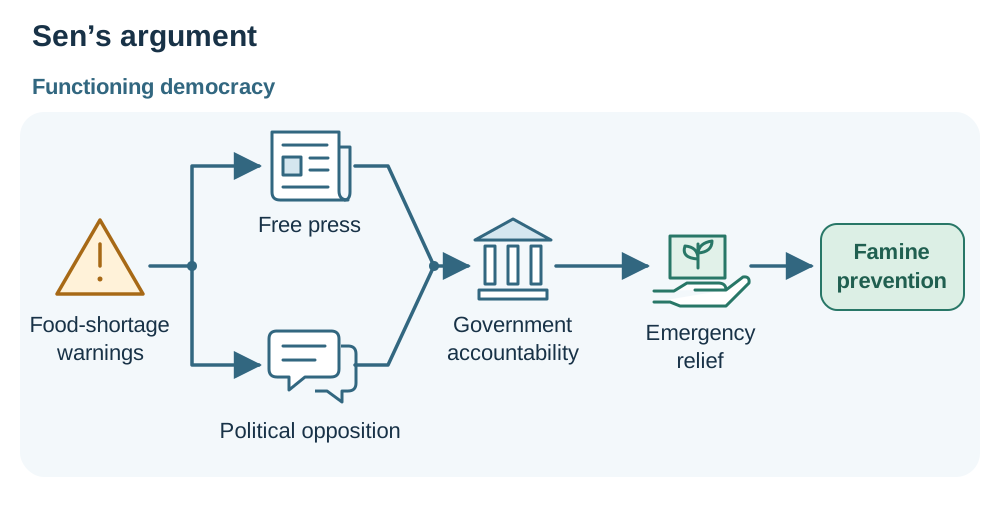
- Amartya Sen argues from historical evidence in Development as Freedom that no major famine has ever occurred in an independent, functioning democracy with a relatively free press. A free press and open political opposition act as essential early-warning systems, compelling governments to distribute emergency relief before food shortages become catastrophic.
- The 1986 UN Declaration on the Right to Development states in Article 6 that all human rights are indivisible and interdependent; its preamble adds that promoting certain rights cannot justify the denial of other rights.
- Suspending political rights removes the public scrutiny needed to curb state corruption, prevent land confiscation, and protect vulnerable communities from exploitative working conditions.
International Cooperation, the Right to Development, and Critical Theorists
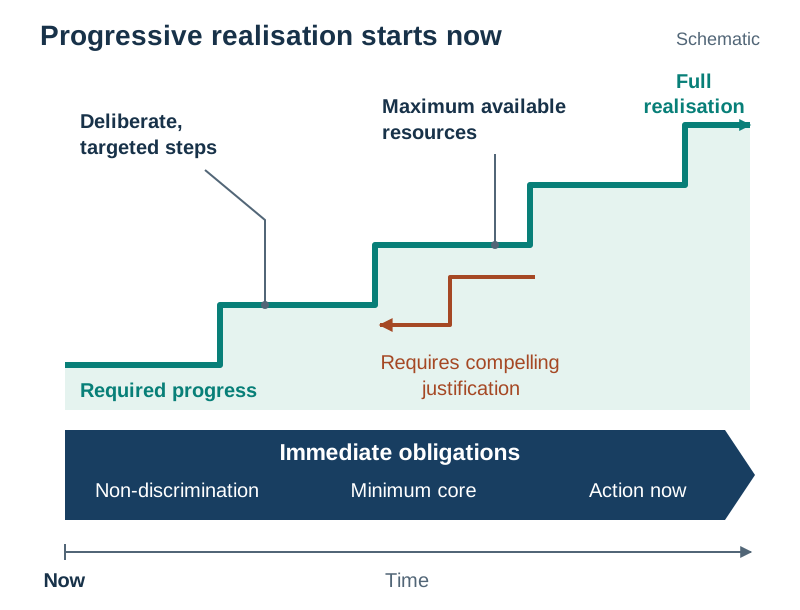
Civil and political rights must be respected immediately; a state cannot excuse torture or arbitrary detention by citing budget constraints. By contrast, under Article 2.1 of the International Covenant on Economic, Social and Cultural Rights (ICESCR), economic, social, and cultural (ESC) rights are subject to progressive realisation. This means the state must take continuous steps, using the maximum of its available resources, to fully achieve these rights over time.
However, ESC rights also contain immediate obligations:
- States must ensure the enjoyment of rights without discrimination.
- States must take immediate, deliberate, and targeted steps rather than delaying action indefinitely.
- States must satisfy minimum core obligations, ensuring access to basic food, essential healthcare, and primary education.
- States are prohibited from taking retrogressive measures (deliberate backward steps without compelling justification).
The Nature of International Cooperation
Article 2.1 of the ICESCR provides that states should realise ESC rights "individually and through international assistance and cooperation". Poorer states and UN bodies argue that this creates a duty for wealthier countries to support developing states through official development assistance (meeting the UN target of 0.7% of Gross National Income, an objective supported by Irish Aid), debt relief, technology transfer, and fairer trade terms. Richer donor states, however, generally treat international aid as a voluntary moral and political commitment rather than an enforceable legal obligation.
From a right-wing libertarian perspective, Robert Nozick argued in Anarchy, State, and Utopia (1974) that positive rights are fundamentally unjust because they force some individuals to pay for the entitlements of others, comparing redistributive taxation to forced labour. Applied internationally, this perspective rejects the claim that taxpayers in wealthy countries carry a structural duty to finance social infrastructure in other nations.
The UN Declaration on the Right to Development (1986)
Adopted by the UN General Assembly in 1986 (146 states in favour, 1 against—the United States—and 8 abstentions), this declaration is not legally binding, but it carries significant normative weight. Its main elements include:
- An inalienable right of all persons and peoples: Development is an individual and collective right covering economic, social, cultural, and political progress (Article 1).
- People at the centre: The human being is the central subject of development and must be its active participant and beneficiary (Article 2).
- Sovereignty and self-determination: Peoples have the right to self-determination and full sovereignty over their natural resources (Article 1).
- Primary state responsibility: National governments have the duty to create conditions for development and ensure fair distribution of benefits (Articles 2, 3, and 8).
- International cooperation: States have a duty to cooperate globally to eliminate obstacles to development (Articles 3 and 4).
- Participation and equality: Development requires active, free, and meaningful participation, equality of opportunity, and full inclusion of women (Articles 2 and 8).
- Indivisibility of rights: All rights are indivisible; states cannot set aside civil liberties to pursue development (Article 6).
- Eliminating gross violations: States must eradicate systematic rights abuses, including colonialism, racism, and foreign occupation (Article 5).
- Disarmament and peace: Resources freed by disarmament should be directed toward socioeconomic development (Article 7).
Critical Theorists: Marx and Shiva
Critical theorists argue that mainstream international development frameworks often conceal deeper structural exploitation.
Karl Marx criticised the modern conception of rights in On the Jewish Question (1843), arguing that civil rights simply protect the egoistic, property-owning individual within capitalist markets rather than delivering authentic human emancipation. In The Communist Manifesto (1848), Marx and Friedrich Engels argued that the state serves as "a committee for managing the common affairs of the whole bourgeoisie". From a Marxist standpoint, international development aid and trade regimes often operate to secure open markets, cheap labour, and raw materials for corporate firms in wealthy nations while locking developing economies into debt dependency.
Vandana Shiva critiques top-down development models that displace peasant farmers and exploit natural ecosystems. She exposes biopiracy, where transnational corporations patent indigenous seed varieties and traditional plant knowledge (such as corporate patent claims over the Indian neem tree, which were challenged and revoked). Shiva argues that commercial seed monopolies trap small farmers in cycles of debt for hybrid seeds, chemical fertilisers, and pesticides. Through her concept of Earth Democracy, Shiva advocates for local community sovereignty, biodiversity, and communal ownership of land and water, arguing that genuine development must respect ecological limits and indigenous autonomy.
Key terms
- UNCRC
- The United Nations Convention on the Rights of the Child (1989), a comprehensive human rights treaty recognising all persons under 18 as rights holders entitled to distinct civil, political, economic, social, and cultural protections.
- Rights Holder and Duty Bearer
- A rights holder is an individual or group entitled to hold and claim human rights; a duty bearer is the entity (primarily the sovereign state) legally and morally obligated to respect, protect, and fulfil those rights.
- European Convention on Human Rights (ECHR)
- An international human rights treaty adopted in 1950 by the Council of Europe that protects fundamental civil and political liberties across European member states.
- European Court of Human Rights (ECtHR)
- The judicial body based in Strasbourg, France, that delivers legally binding judgments on applications from individuals, organisations, or states alleging breaches of the ECHR.
- Exhaustion of Domestic Remedies
- A procedural rule requiring an applicant to appeal through all available national court levels before their case can be declared admissible by an international body like the ECtHR or UNCRC Committee.
- Concluding Observations
- Non-binding recommendations and evaluations issued by UN human rights monitoring bodies (such as the UN Committee on the Rights of the Child) after reviewing a state's periodic compliance report.
- Absolute Right
- A human right that cannot be limited, restricted, or suspended by the state under any circumstances, such as the Article 3 ECHR prohibition of torture and inhuman or degrading treatment.
- Limited Right
- A human right that can be restricted only under specific, closed exceptions set out explicitly in the treaty text, such as lawful detention under Article 5 ECHR.
- Qualified Right
- A human right that may be restricted by a government to protect a legitimate public interest, provided the restriction is prescribed by law, pursues a valid aim, and is strictly proportionate.
- Proportionality
- A legal test requiring that any interference with a qualified human right must be no more restrictive than is strictly necessary to achieve a legitimate public objective.
- Margin of Appreciation
- The legal leeway granted by the ECtHR to national authorities, recognising that domestic bodies are often better placed than international judges to balance qualified rights against local cultural and moral contexts.
- Universal, Inalienable, and Indivisible
- Core human rights principles: universal means rights belong to all humans everywhere; inalienable means they cannot be taken away except by lawful due process; indivisible means all rights hold equal status and cannot be ranked into a hierarchy.
- Immediate Obligation
- A binding duty that a state must implement without delay, including respecting non-discrimination, halting torture, and meeting minimum core survival levels, regardless of financial resource constraints.
- Progressive Realisation
- The legal mechanism under the ICESCR requiring states to take continuous, deliberate steps toward the full achievement of economic, social, and cultural rights to the maximum extent of their available resources.
- Cultural Imperialism
- The practice of imposing the values, cultural norms, and legal concepts of powerful, wealthy nations onto other societies, treating local traditions and communitarian systems as inferior.
- Right to Development
- A 1986 UN General Assembly declaration (not legally binding) stating that development is an inalienable human right of every person and all peoples, with people at the centre as active participants and beneficiaries, and requiring fair distribution of benefits, meaningful participation and international cooperation.
- Capabilities Approach
- A normative framework developed by Martha Nussbaum and Amartya Sen arguing that constitutional justice requires guaranteeing the fundamental capabilities people need to lead a dignified human life.
- Earth Democracy
- Vandana Shiva's alternative development model promoting biodiversity, local ecological stewardship, and communal control of natural resources against corporate biopiracy and global market exploitation.
Check yourself
What does it mean to say that human rights are indivisible?
All human rights have equal legal status and depend on one another; they cannot be placed into a hierarchy where some are granted while others are denied.
Name the body responsible for supervising whether states carry out judgments of the European Court of Human Rights.
The Committee of Ministers of the Council of Europe.
Is the 1986 UN Declaration on the Right to Development a legally binding document?
No. It is a UN General Assembly declaration, meaning it carries moral and political authority but is not legally binding on states.
Under the European Convention on Human Rights Act 2003, what happens when an Irish superior court issues a declaration of incompatibility?
The statutory provision remains in force. The Taoiseach lays the declaration before each House of the Oireachtas, and the Government may make an ex gratia payment after an application to the Attorney General.
What procedural requirement must an applicant fulfil before the ECtHR or the UNCRC Committee will consider an individual application?
The applicant must exhaust all available domestic remedies through their national legal system.
How did Amartya Sen challenge the claim that political freedoms should be suspended to secure economic development?
Sen argued from historical evidence that no major famine has occurred in a functioning democracy with an independent press, because public scrutiny and elections force leaders to act on food crises immediately.