

Every sport makes specific physiological and psychological demands on the body. Topic 2 explores what those demands are and how to plan for them. You need a solid grasp of four areas: fitness components and testing, training methods and principles, sports psychology, and nutrition alongside the energy systems. In the Leaving Certificate exam, definitions should be precise, and when a question refers to a named activity, link your answer to specific moments in that activity.
Fitness Testing: Batteries, Validity, Reliability, and Sequencing
A fitness test battery is a planned series of individual tests selected to profile the precise physical demands of a named sport. There is no one-size-fits-all battery. You would never assess a shot-putter with the multi-stage fitness test, because aerobic endurance has little bearing on a single explosive throw.
Standard Tests for Each Component
When answering exam questions on test selection, always state the component, the recognised test, and a sporting justification:
- Cardiorespiratory endurance: Multi-Stage Fitness Test (bleep test) or Cooper 12-minute run.
- Muscular strength: Handgrip dynamometer or 1-rep max (1RM) bench press or squat.
- Muscular endurance: 1-minute press-up test, timed plank hold, or 1-minute sit-up test.
- Flexibility: Sit-and-reach test.
- Body composition: Skinfold calliper assessment at standard sites. Body Mass Index (BMI) is easy to calculate, but it cannot separate muscle from fat mass. A heavily muscled rugby player will often register as overweight or obese on BMI charts.
- Agility: Illinois agility test or T-test.
- Balance: Stork stand test.
- Coordination: Alternate-hand wall toss test.
- Power: Vertical jump test (Sargent jump) or standing broad jump.
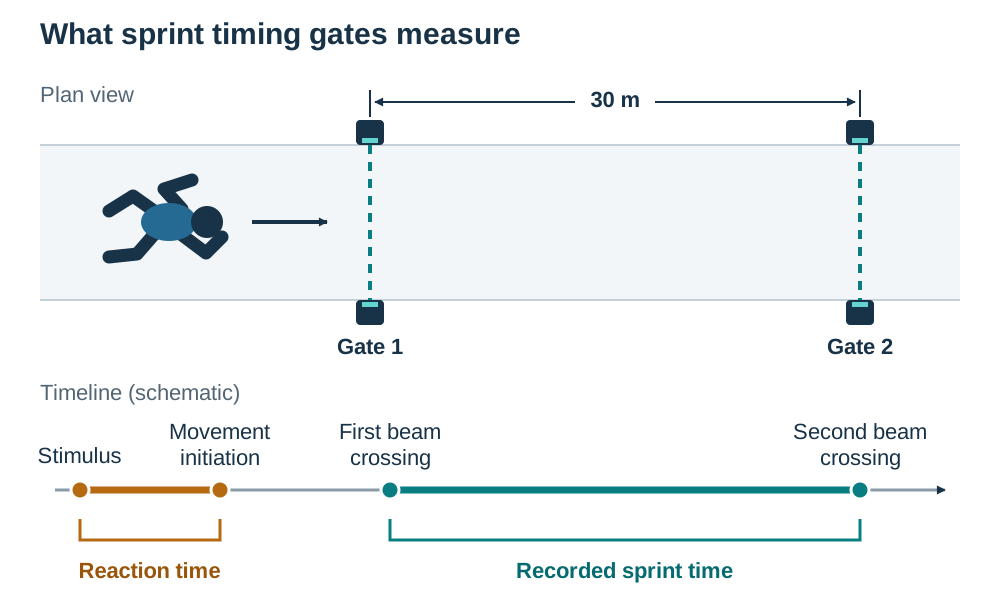
- Speed: 30-metre sprint using electronic timing gates.
- Reaction time: Ruler drop test.
Validity and Reliability
These two principles underpin all sound physical testing:
- Validity means the test measures what it claims to measure. A 30-metre sprint using electronic gates is a valid measure of running speed and acceleration, but it is not a valid measure of reaction time. The timing gates trigger only after the runner moves through the beam, so they capture travel time rather than the gap between a signal and movement initiation.
- Reliability means the test produces consistent, repeatable results under identical conditions. If an athlete retests later the same day without intervening training, their score should be virtually identical. To keep tests reliable, you must standardise the environment, test surface, warm-up protocol, equipment calibration, and tester instructions.
Order of Administration
Fatigue ruins test validity. If you administer a bleep test first, the athlete's legs will be full of lactate, meaning their vertical jump and 30-metre sprint scores will be artificially low. The recommended sequence is:
- Non-fatiguing tests: height, weight, resting heart rate, and skinfold measurements.
- Agility tests: Illinois agility test, which demands a fresh neuromuscular system.
- Maximal strength and power: vertical jump or 1RM.
- Sprint tests: 30-metre sprint.
- Muscular endurance: 1-minute press-ups or timed plank.
- Cardiorespiratory endurance: Multi-Stage Fitness Test. This always comes last because exhaustive aerobic running depletes glycogen and causes severe fatigue.
Principles of Training, FITT, and Conditioning Methods
Good training programmes do not happen by accident. They follow recognised training principles:
- Readiness: Checking that the athlete has the physical and mental maturity to handle the proposed training load without risking injury or burnout.
- Specificity: Ensuring adaptations match the energy systems, muscle groups, and movement patterns of the chosen sport. A swimmer builds endurance in the pool, not on a road bike.
- Overload: Making the body work harder than usual to trigger physiological adaptations. You apply overload by adjusting frequency, intensity, or duration.
- Progression: Introducing overload gradually as the body adapts. Increasing a weekly long run by 10% each fortnight prevents overuse injuries.
- Rest and recovery: Allowing adequate time for tissue repair and glycogen replenishment. The workout creates the stimulus, but fitness gains occur while resting.
- Reversibility: When training stops, adaptations decline ('use it or lose it').
- Tedium: Keeping sessions varied and engaging so athletes stay motivated.
Applying the FITT Formula
The FITT framework structures progressive overload across different fitness targets:
- Cardiorespiratory endurance: Frequency: 3 to 5 times per week. Intensity: 60% to 80% of maximum heart rate. Time: 20 to 60 minutes. Type: continuous running, cycling, rowing, or fartlek.
- Muscular strength: Frequency: 2 to 3 sessions per week with 48 hours recovery between muscle groups. Intensity: high load, low reps (, 1 to 5 repetitions). Time: 3 to 5 sets with 2 to 3 minutes rest between sets. Type: free weights or resistance machines.
- Flexibility: Frequency: 3 to 7 days per week. Intensity: stretch to mild tension, never pain. Time: hold static stretches for 15 to 30 seconds across 2 to 4 sets. Type: static stretching post-workout or dynamic mobility during a warm-up.
- Power: Frequency: 2 sessions per week. Intensity: maximal explosive effort (100%). Time: low repetitions (3 to 6 reps per set) with long rests between sets (at least about 1:10 work-to-rest; about 2–3 minutes for full recovery). Type: plyometrics such as hurdle hops and box jumps.
Training in the Activity vs Outside the Activity
- Training in the activity develops fitness through the sport itself, such as small-sided conditioned games (e.g., 4 v 4 possession drills in soccer). It trains skill execution, tactical awareness, and decision-making under match conditions. However, the coach cannot control individual workloads precisely, and less active players may drop below target training zones.
- Training outside the activity isolates fitness components using gym equipment, tracks, or swimming pools. It allows exact control over load and targets weaknesses identified during fitness testing. The downside is that it lacks game context and ball-handling practice.
Training Methods
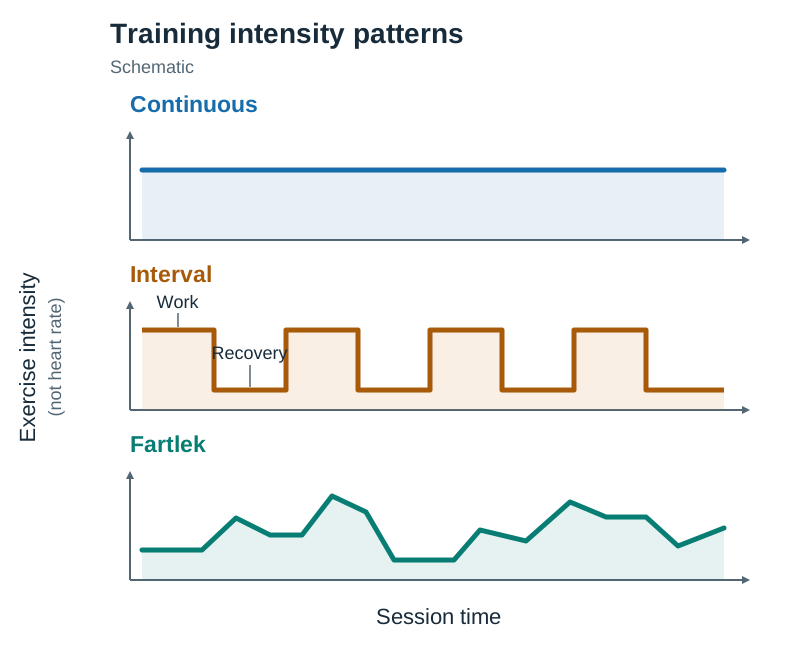
- Continuous training: Steady, uninterrupted exercise for at least 20 minutes in the aerobic zone (). Excellent for building an aerobic base in distance runners and rowers.
- Interval training: Alternating bouts of work and structured rest. The work-to-rest ratio determines what system you train: targets aerobic fitness, or develops lactate tolerance, and trains the ATP-PC system.
- Fartlek training: Swedish for 'speed play'. It blends continuous running with varied paces and changing terrain. This trains both the aerobic and anaerobic systems, mirroring the fluctuating speed demands of field sports.
- Circuit training: A series of 6 to 10 stations working different muscle groups in rotation, with timed work and rest periods. It can be easily adapted for muscular endurance, core stability, or sport skills.
- Weight training: lifting free weights, machines or body weight against resistance. Heavy loads with few repetitions (about 1–5) develop strength. Light loads with many repetitions (about 12–20+) develop muscular endurance. Use good technique and progress the load gradually.
- Plyometrics: Fast, explosive exercises that use the stretch-shortening cycle, where a muscle undergoes a rapid eccentric stretch followed immediately by an explosive concentric contraction. Depth jumps and bounding are typical examples, but athletes need a solid base of strength to do them safely.
Programme Design, Periodisation, Training Zones, and Recovery
Designing a Plan from Fitness Test Data
When an exam question presents test results, follow a logical process: compare the scores to published normative data for that age, sex, and sport; pinpoint the athlete's primary weaknesses; set SMART goals (Specific, Measurable, Achievable, Realistic/Relevant, Time-bound, e.g. improve my bleep-test level from 8 to 9.5 within 6 weeks) targeting those areas; choose appropriate training methods using the FITT formula; and plan a retest after 6 to 8 weeks to track progress.
Combined Approach to Training
A combined plan integrates health-related and performance-related fitness into a single schedule. For instance, an example week for a hockey player in pre-season:
- Monday: interval sprints (speed).
- Wednesday: weight training (strength, muscular endurance).
- Thursday: plyometrics and agility work followed by a 25-minute continuous run (power, agility, cardiorespiratory endurance).
- Saturday: match or conditioned game.
- Stretching after each session (flexibility).
Health- and performance-related components are trained in the same week. Rest days are spread through the week, including the day before the match.
Calculating Heart-Rate Training Zones
To set aerobic and anaerobic training zones, first calculate estimated maximum heart rate:
- Aerobic zone: 60% to 80% of . This develops cardiorespiratory endurance, capillary density, and fat metabolism.
- Anaerobic zone: 80% to 90% of . This builds speed endurance and lactate tolerance.
- Anaerobic (lactate) threshold: The exercise intensity where lactic acid accumulates in the bloodstream faster than the body can clear it. Training just below or at this threshold raises it, allowing athletes to work at higher intensities before fatigue sets in.
Periodisation
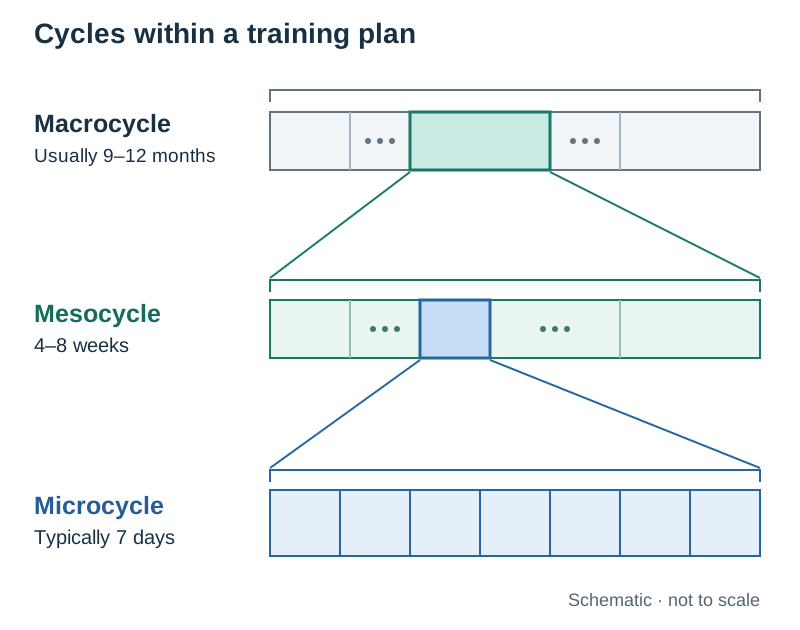
Periodisation is the structured division of a long-term training plan into distinct phases and cycles, ensuring an athlete peaks at major competitions while avoiding overtraining.
- Macrocycle: The entire long-term plan, usually lasting an academic year or competitive season (9 to 12 months).
- Mesocycle: A medium-term block within the macrocycle, lasting 4 to 8 weeks, dedicated to a specific training goal like maximal strength or aerobic base.
- Microcycle: A short block, typically 7 days, detailing individual workouts, intensities, and rest days.
| Phase | Volume and Intensity | Main Aim |
|---|---|---|
| Preparatory Phase | High volume, low-to-moderate intensity | Builds the aerobic base, general strength, and mobility; shifts towards sport-specific power late in the phase. |
| Competitive Phase | Lower volume, high intensity | Refines tactical sharpness and maintains speed and power; includes a pre-event taper ( volume reduction) to eliminate fatigue. |
| Transition Phase | Low volume, low intensity | Active rest and light recreation to let the body heal tissue micro-trauma and provide a mental break. |
Recovery Strategies
Training provides the stimulus, but adaptation happens during recovery. Key recovery strategies include:
- Cool-down: 5 to 10 minutes of light jogging followed by static stretching lowers heart rate gradually, prevents blood pooling in the lower limbs, and helps restore normal muscle length.
- Nutrition: Eating a combination of carbohydrates and protein in a or ratio within 30 to 60 minutes of finishing exercise kick-starts glycogen replenishment and muscle repair.
- Rehydration: Drinking 1.25 to 1.5 litres of fluid for every kilogram of body mass lost through sweat during the session.
- Sleep: Teenagers and competing athletes need 8 to 10 hours of good sleep each night for physical recovery and growth hormone release.
- Hydrotherapy: Contrast water therapy or ice baths () help reduce muscle soreness and perceived fatigue after heavy contact or high-volume matches.
Sports Psychology: Confidence, Arousal, Anxiety, and Feedback
Bandura's Self-Efficacy Theory
Confidence is an athlete's belief in their general ability. When that confidence applies to a specific situation, we call it self-efficacy. Albert Bandura identified four main sources:
- Enactive mastery: Past success. If a camogie player has scored four frees under pressure in recent matches, she steps up with high self-efficacy.
- Vicarious experience: Watching a peer of similar ability execute the skill ('if they can do it, so can I').
- Verbal persuasion: Positive encouragement from coaches, teammates, or deliberate positive self-talk.
- Physiological and emotional states: How the athlete interprets bodily signals. Viewing a pounding heart as readiness rather than fear boosts self-efficacy.
Arousal vs Anxiety
Do not mix these two terms up in your answers:
- Arousal is a neutral physiological and psychological state of readiness and alertness, spanning from deep sleep to extreme excitement.
- Anxiety is a negative emotional state marked by worry, apprehension, and fear.
- Trait anxiety: A permanent personality trait where a performer tends to view competitive situations as threatening.
- State anxiety: A temporary, situation-specific surge of nervousness caused by a high-stakes moment, like taking a penalty in a county final.
- Cognitive anxiety: Mental symptoms, such as self-doubt, negative thoughts, and poor focus.
- Somatic anxiety: Physical symptoms, such as an upset stomach, sweating, tight muscles, and a racing pulse.
Performance Theories
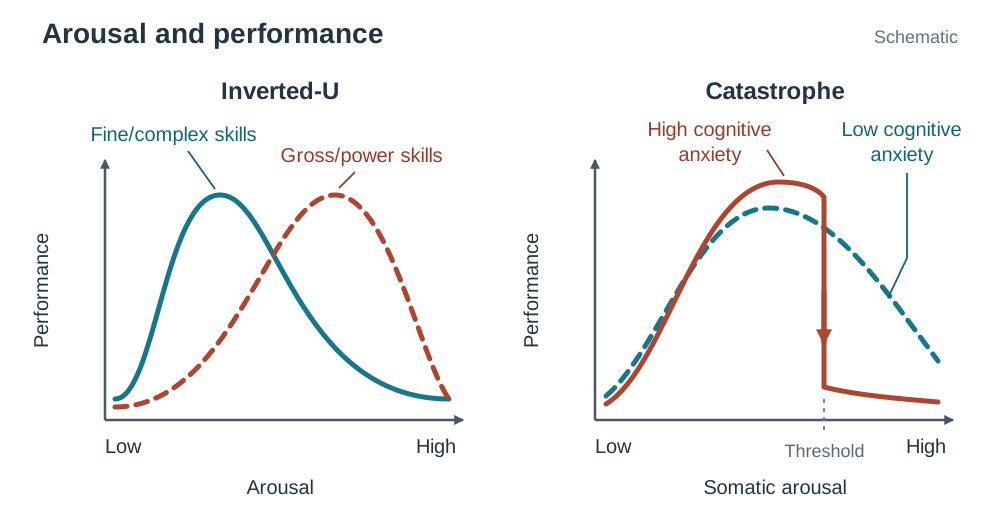
- Inverted-U Hypothesis: Performance improves as arousal rises, up to an optimal midpoint. If arousal climbs past this point, performance drops due to excessive muscle tension and scattered attention. Fine or complex skills (putting in golf, shooting in archery) require a lower optimal arousal level, while gross power skills (a rugby tackle, weightlifting) benefit from higher arousal.
- Catastrophe Theory: Explains what happens when an athlete suffers high cognitive anxiety. If cognitive anxiety is low, performance follows the gradual inverted-U curve. But if cognitive anxiety is high and somatic arousal pushes past the optimal threshold, performance suffers a sudden, catastrophic collapse. The athlete cannot simply make a minor tweak; they must step back, relax physically and mentally, lower their arousal levels, and rebuild their confidence.
Motivation
Motivation is the drive to train and perform. Intrinsic motivation comes from enjoyment or personal satisfaction; extrinsic motivation comes from outside rewards such as praise or trophies.
Use the SMART goals explained in Programme Design to make progress visible. A basketball player might aim to score 7 out of 10 free throws in training within eight weeks. A process goal, such as following the same pre-shot routine every time, gives the player something controllable to practise.
Managing Anxiety and Maintaining Focus
- Cognitive restructuring: Catching negative thoughts ('I will miss this kick') and deliberately reframing them into constructive statements ('I have hit this kick hundreds of times in training').
- Centring: Deep diaphragmatic breathing from the abdomen that stimulates the parasympathetic nervous system, lowering heart rate and easing somatic tension.
- Pre-performance routines: A consistent sequence of physical actions and mental checks before executing a closed skill (such as bouncing the ball three times before a basketball free throw). This creates familiarity and blocks out distractions.
- Attentional focus: Concentration can be broad or narrow, internal or external. A playmaker scans the whole pitch for open runners (broad-external), while a golfer focuses purely on the dimple of the ball at address (narrow-external).
Example: A Personal Psychological Action Plan
For a basketball free-throw shooter, link each action to its purpose:
- Before performance: Use centring during the warm-up to settle physical tension, and recall a successful practice session to build confidence.
- During performance: Follow a consistent pre-shot routine to focus attention. Replace “I will miss” with a useful cue such as “steady routine, follow through”.
- After performance: Review shooting technique with a coach and choose one process goal for the next session. This turns feedback into a controllable action and helps maintain motivation.
Adapt the plan to the performer and activity, and explain the reason for each choice.
Types of Feedback
Feedback gives an athlete information about their movement or the outcome:
- Intrinsic feedback: Information felt directly through kinaesthesis and internal senses, like a tennis player feeling they hit the ball off-centre.
- Extrinsic feedback: Information from outside sources, such as a coach's comment, a video replay, or a stopwatch time.
- Positive vs Negative: Positive feedback praises good execution to build motivation; negative (corrective) feedback pinpoints mechanical errors to guide technical refinement.
- Knowledge of results (KR): Feedback about the outcome of the action (the sliotar went wide; the sprint took ). Highly motivating for beginners.
- Knowledge of performance (KP): Feedback about the quality of the movement mechanics (your elbow was too low on that shot). Essential for intermediate and advanced athletes fine-tuning technique.
Energy Systems, Fuelling, and Sports Nutrition
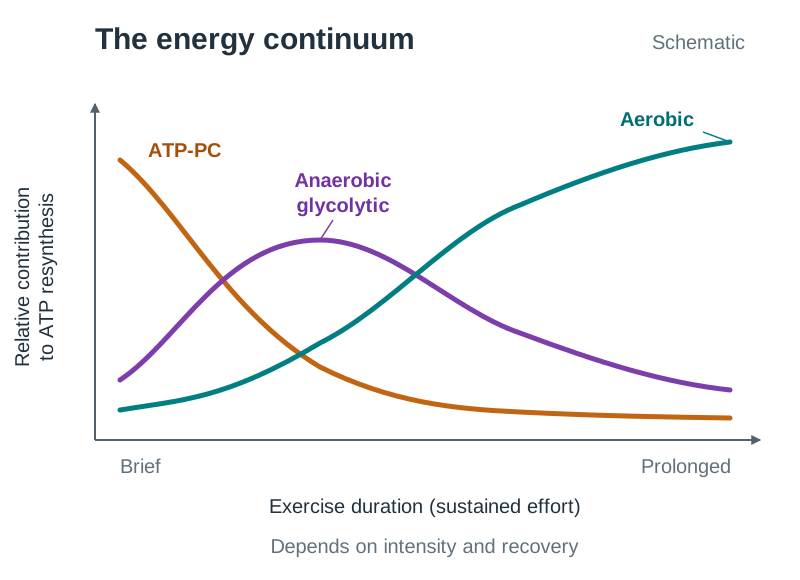
Every muscular contraction needs adenosine triphosphate (). Muscle cells store only enough for 1 to 2 seconds of all-out effort, so the body resynthesises it continuously through three metabolic systems working along a continuum.
| Energy System | Fuel Used | Oxygen Required? | Dominant Duration | Rate vs Capacity | Example |
|---|---|---|---|---|---|
| ATP-PC System | Phosphocreatine () | No (Anaerobic) | Very fast; tiny capacity | Shot-put, sprint start, high jump takeoff | |
| Anaerobic Glycolytic (Lactic) System | Muscle glycogen and glucose | No (Anaerobic) | Fast; limited capacity; accumulates lactate and | run, swim, fast counter-attack | |
| Aerobic System | Carbohydrates and fats (protein contributes in long efforts) | Yes (Aerobic) | Slow; massive capacity; produces harmless and | Marathon running, road cycling, active recovery between sprints |
All three systems contribute at all times; their relative share changes depending on intensity, duration, and recovery time. In field games like hurling or soccer, the aerobic system operates constantly in the background to replenish phosphocreatine during quiet passages, while the ATP-PC system powers sudden sprints and the lactic system handles repeated high-intensity runs.
Nutritional Guidelines for Athletes
- Before performance: Eat a meal rich in low-glycaemic-index (low-GI) complex carbohydrates, with moderate protein and low fat and fibre, 2 to 4 hours before exercise (e.g., porridge with sliced banana, or chicken with brown rice). For endurance events lasting over 90 minutes, athletes use carbohydrate loading (7 to 10 g of carbohydrate per kg of body mass daily for 2 to 3 days beforehand while tapering training volume) to saturate muscle and liver glycogen stores.
- During performance: For sessions under 60 minutes, water is plenty. For continuous work lasting longer, consume 30 to 60 grams of simple carbohydrates per hour through isotonic sports drinks or energy gels to preserve circulating blood glucose.
- After performance: Within 30 to 60 minutes, eat carbohydrates and protein in a or ratio (such as chocolate milk or a chicken wrap). This window is when glycogen replenishment and muscle protein synthesis are at their fastest.
Hydration
Losing just 2% of body mass through sweat degrades aerobic capacity, slows decision-making, and raises core body temperature. Athletes track hydration by weighing themselves before and after training (). Replace lost fluid by drinking 1.25 to 1.5 litres for every kilogram lost, as sweating and urine production continue after exercise.
- Hypotonic drinks: Low concentration of carbohydrates and salts (). They absorb faster than plain water and suit hot conditions where rapid rehydration matters more than energy.
- Isotonic drinks: Match the body's internal fluid concentration ( carbohydrate). They offer a balanced mix of fluid and energy replacement during matches.
- Hypertonic drinks: High carbohydrate concentration (). They absorb slowly and work best as recovery drinks post-event.
Sports Supplements and Anti-Doping
A sports supplement is a product consumed alongside regular meals to meet nutritional needs or boost performance. Common examples include:
- Creatine: Increases muscle phosphocreatine stores, helping repeated high-intensity sprints and heavy resistance sets.
- Caffeine: Stimulates the central nervous system, reducing perceived exertion and boosting alertness in both endurance and team sports.
- Whey protein: A quick, convenient protein source post-workout, though it offers no extra benefits over whole foods like milk, eggs, or chicken.
- Risks: Supplements are not manufactured to pharmaceutical standards and can be cross-contaminated with banned stimulants or steroids. Under the World Anti-Doping Agency's strict liability rule, athletes are solely responsible for any prohibited substance found in their sample, whether they intended to cheat or not. School and club athletes should always follow a 'food-first' approach.
Key terms
- Health-Related Fitness
- The components of fitness that support general physiological health and protect against hypokinetic diseases: cardiorespiratory endurance, muscular strength, muscular endurance, flexibility, and body composition.
- Performance-Related Fitness
- The components of fitness required to carry out motor skills and perform successfully in sporting activities: agility, balance, coordination, power, speed, and reaction time.
- Fitness Test Battery
- A planned collection of specific fitness assessments chosen to profile the physiological and motor skill demands of a named sport or activity.
- Validity
- The degree to which a fitness test measures precisely what it is designed to measure.
- Reliability
- The consistency and repeatability of test results when administered under identical protocols, environmental conditions, and testing standards.
- Readiness
- The training principle of assessing an athlete's physical, physiological, and psychological preparedness to handle training loads without injury or burnout.
- Specificity
- The training principle stating that physiological adaptations are specific to the energy systems, muscle groups, movement patterns, and workloads applied during exercise.
- Overload
- The training principle of working the body harder than usual by increasing frequency, intensity, or time to stimulate physiological adaptation.
- Progression
- The gradual and systematic increase of training overload over time to encourage continuous adaptation without risking overuse injury.
- FITT
- A formula used to structure progressive overload: Frequency (how often), Intensity (how hard), Time (how long), and Type (training method).
- Periodisation
- The structured division of an overall training plan into specific cycles (macrocycle, mesocycle, microcycle) and phases to ensure an athlete peaks for major competitions while avoiding overtraining.
- Self-Efficacy
- An athlete's situation-specific self-confidence in their ability to execute the precise actions required to achieve a desired outcome.
- State Anxiety
- A temporary, situation-specific surge of apprehension and physiological arousal triggered by a perceived high-pressure moment.
- Arousal
- A neutral physiological and psychological state of readiness and alertness along a continuum from deep sleep to extreme excitation.
- Concentration
- The ability to focus attention on relevant environmental cues while ignoring distractions, and sustaining that focus over time.
- Knowledge of Results
- Extrinsic feedback concerning the outcome or end result of a motor skill, such as whether a shot scored or the time recorded.
- Knowledge of Performance
- Feedback concerning the biomechanical quality, movement pattern, or execution of a skill, such as hip height in sprinting or arm follow-through in shooting.
- Carbohydrate Loading
- A strategy of consuming high-carbohydrate meals (7–10 g/kg of body mass) while tapering exercise volume in the 2 to 3 days before an endurance event to saturate muscle and liver glycogen stores.
- Strict Liability
- An anti-doping rule stating that an athlete is entirely responsible for any banned substance detected in their body, regardless of intent, fault, or negligence.
Check yourself
Calculate the aerobic training zone (60–80% HRmax) for a 16-year-old athlete.
Estimated HRmax = 220 - 16 = 204 bpm. Lower threshold (60%) = 204 × 0.60 = 122.4 bpm. Upper threshold (80%) = 204 × 0.80 = 163.2 bpm. The zone is 122 to 163 bpm.
Name one recognised fitness test for balance and one for reaction time.
Balance: Stork stand test. Reaction time: Ruler drop test.
Why is a 1:10 work-to-rest ratio recommended when training the ATP-PC system with interval sprints?
Phosphocreatine runs out within about 10 seconds of maximal work. It takes time to rebuild: roughly half is restored in 30 seconds, and it is almost fully restored after 2–3 minutes. Rests of at least about 1:10 (e.g. a 6-second sprint with about 1 minute of rest, longer for full recovery) let phosphocreatine rebuild. If rests are too short, the next sprint relies more on the lactic system.
What is the key difference between knowledge of results and knowledge of performance?
Knowledge of results gives information about the outcome of the action (e.g. whether the shot scored), while knowledge of performance gives information about the movement mechanics and technique executed.
Explain one major challenge or risk of using sports supplements.
Supplements are not regulated like medicines and can be contaminated with banned substances. Under WADA's strict liability rule, an athlete is fully responsible for any prohibited substance found in their body.
According to Catastrophe Theory, what happens to performance when an athlete with high cognitive anxiety experiences physiological arousal past their optimal point?
Performance suffers a sudden, catastrophic collapse rather than a gradual decline, requiring full mental and physical relaxation before the athlete can recover.