

Gender and Physical Activity explores how social expectations, culture, and institutions shape participation in sport. Topic 9 is one of four elective Strand 2 topics, and two of these are prescribed for each Leaving Certificate cohort; check with your teacher that it is prescribed for your examination year. The topic analyses why girls drop out at higher rates than boys, evaluates school and community initiatives to close this gap, investigates the reciprocal relationship between body image and participation, debates media representations of male and female bodies, and examines how gender socialisation, hegemonic masculinity, hegemonic femininity, and social regulation govern physical activity.
9.1 Participation Patterns and Addressing the Imbalance
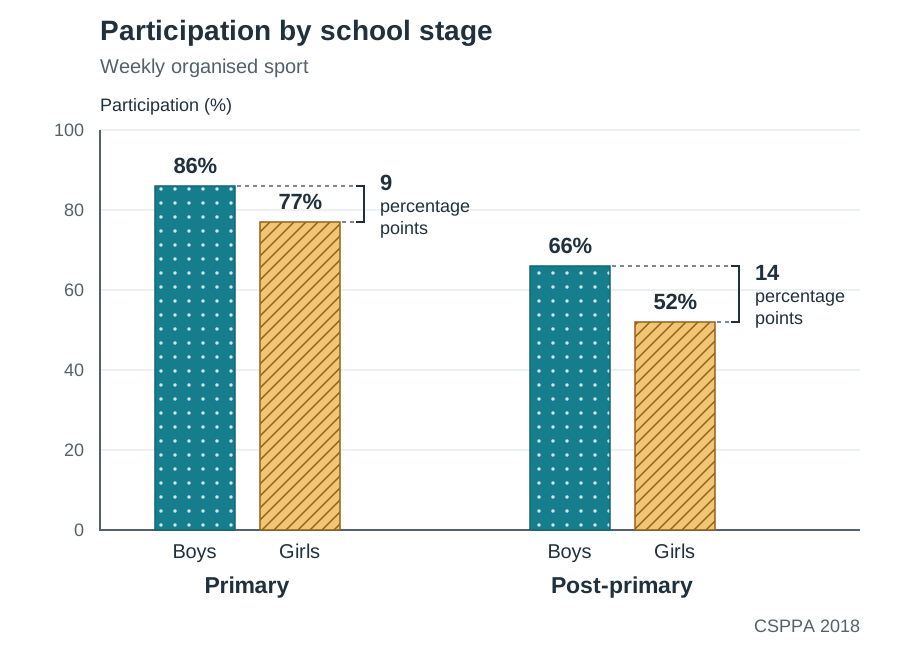
Physical activity participation rates differ markedly between males and females in Ireland. Research from the Children's Sport Participation and Physical Activity study (CSPPA 2018) identifies two consistent trends: activity levels decline steadily as young people grow older, and the gap between boys' and girls' involvement widens during post-primary schooling.
- At primary school level, around 86% of boys and 77% of girls participate in organised sport at least once a week, an initial gap of 9 percentage points.
- In post-primary school, overall participation drops to 66% for boys and 52% for girls, expanding the difference to a gap of 14 percentage points.
- Compliance with the National Physical Activity Guideline of 60 minutes of daily moderate-to-vigorous physical activity (MVPA) is low across the board. In post-primary schools, only 13% of boys and 7% of girls meet this target.
- Extracurricular school sport involvement also falls sharply with age, dropping from 70% in primary school to 63% across post-primary, and falling to 38% among fifth- and sixth-year students.
Influences on Participation Patterns
Several key factors influence whether young people stay active:
- Family: Parents who model regular exercise and provide transport or financial backing encourage lasting participation. When families treat boys' sporting fixtures as more important than girls' fixtures, daughters receive less reinforcement.
- Peers: Peer acceptance heavily influences teenagers. If a friendship group views exercise as uncool or considers a specific sport socially risky, teenagers often drop out to avoid standing out.
- School PE provision: Curricula that rely exclusively on traditional, competitive team field games suit students with early sports coaching but alienate those seeking individual, fitness, or aesthetic pursuits.
- Coaches and role models: Inspiring, approachable coaches keep adolescents engaged. The visibility of female coaches and high-profile female athletes remains lower than that of their male counterparts, limiting relatable role models for girls.
- Cost and access: Registration fees, playing kit, and transport restrict opportunities for teenagers from lower-income households.
- Body image and changing adolescent pressures: Bodily maturation, self-consciousness in changing rooms, and impractical PE uniforms lead many adolescent girls to withdraw from activity.
Addressing the Imbalance in Schools and Communities
Closing the gender gap requires concrete structural changes rather than vague encouragement. Each intervention should target a specific barrier to retention:
| Level | Strategy | Implementation Example | Barrier Removed |
|---|---|---|---|
| School PE Curriculum | Broad and balanced multi-activity programme | Introducing non-traditional, lifetime pursuits such as pilates, badminton, athletics, and couch-to-5k running alongside games. | Removes disinterest caused by narrow field-game bias. |
| School Environment | Flexible uniform policy | Allowing students to wear practical, dark leggings or tracksuits instead of restrictive skirts or gym shorts. | Reduces body self-consciousness and changing anxiety. |
| Extracurricular Sport | Non-competitive recreational clubs | Organising lunchtime or after-school drop-in sessions focused on music and social fun rather than league standings. | Removes fear of competitive failure and peer judgment. |
| Student Voice | PE student councils and surveys | Consulting girls directly on activity choices and timetabling before setting the term schedule. | Removes feelings of powerlessness and disengagement. |
| Community Initiatives | Targeted pathway programmes | Linking schools with community programmes like the LGFA's Gaelic4Girls or Sport Ireland's Her Moves campaign. | Bridges the difficult drop-off transition between school and club sport. |
| National Visibility | Targeted awareness campaigns | Promoting national drives such as the 20x20 campaign ('If she can't see it, she can't be it') and Sport Ireland's Women in Sport Policy. | Addresses the lack of visible, relatable female role models. |
9.2 Body Image and the Media: A Reciprocal Relationship and Debate
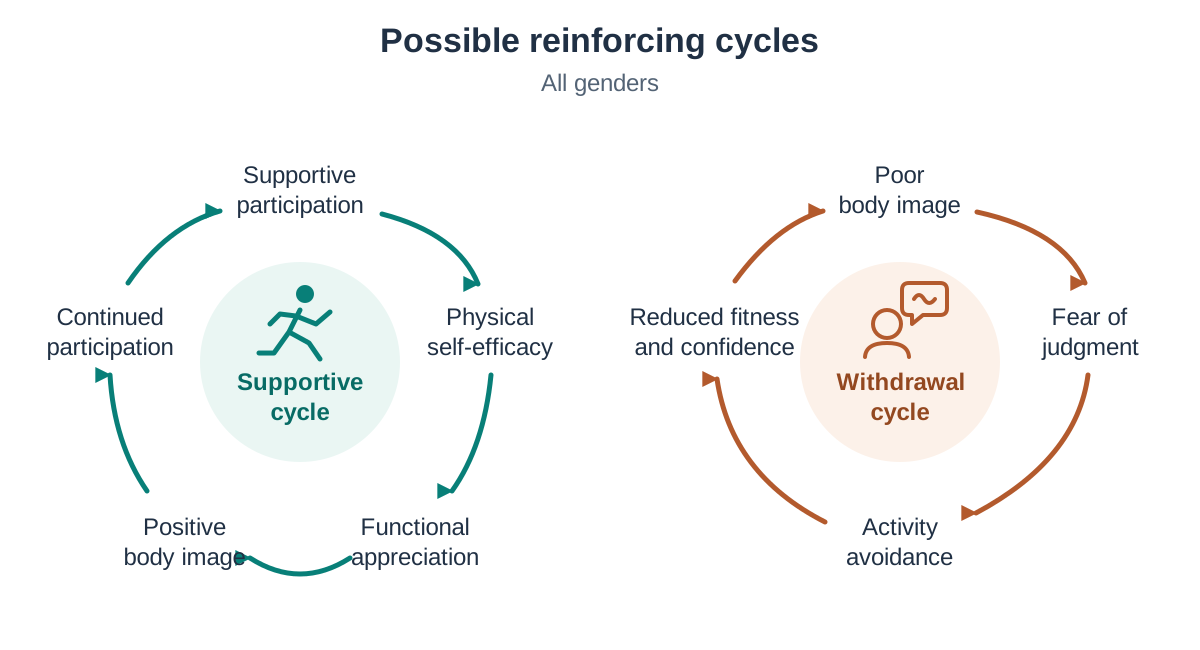
Body image refers to how an individual thinks, feels, and evaluates their physical form, including its appearance, size, and what it can do. In physical activity, this works in a reciprocal relationship: how you feel about your body dictates whether you take part, and taking part reshapes your body image.
- The positive cycle (Participation → Body Image): When young people engage in a supportive environment, they develop physical confidence (physical self-efficacy). They begin to value what their body can achieve—its strength, stamina, and agility—rather than judging it purely on cosmetic appearance. This functional appreciation boosts self-esteem and makes them far more likely to stay active.
- The negative cycle (Body Image → Participation): Poor body image creates acute embarrassment, fear of negative evaluation by peers, and avoidance of sports requiring tight clothing (such as swimming or gymnastics). To avoid scrutiny, individuals withdraw from sport entirely, which further lowers their physical fitness and body confidence.
Pressure to fit a narrow physical ideal affects both sexes. For girls, pressure to maintain an ultra-slender figure can cause them to avoid muscle-building exercises or lead to under-fuelling relative to their training workload. For boys, pressure to achieve a lean, heavily muscled frame can lead to compulsive over-training, supplement abuse, or in extreme cases body dysmorphia, including muscle dysmorphia where a boy fixates on the mistaken belief that he is too small or frail.
Debate: Do Media Representations Help or Hinder Participation?
Media representations exert a powerful influence over young people. An exam answer evaluating media impact must present both sides of the argument.
How the Media Hinders Participation
- Unrealistic body ideals: Commercial media, fitness marketing, and social media feeds bombard young people with retouched physiques. Girls are shown ultra-slender, airbrushed ideals, while boys face images of ripped, hyper-muscular bodies with low body fat. Teenagers who feel their bodies do not match these ideals often avoid changing rooms and communal exercise out of shame.
- Trivialisation and objectification of women: Sports reporting has historically focused on female athletes' marital status, looks, or outfits rather than their tactical acumen or athletic achievements, sending the message that female sporting capability is secondary to visual appeal.
- Underrepresentation of women's sport: Despite improvements, women's sports receive a fraction of the broadcasting hours and column inches granted to men's sport. Girls grow up seeing fewer visible female athletic role models, reinforcing the belief that sport is primarily a male domain.
- Rigid framing of male sport: Mainstream coverage celebrates male athletes predominantly through narratives of aggression, brute power, and physical collision. Men who perform in expressive, rhythmic, or aesthetic sports receive little airtime, discouraging boys who want to pursue those disciplines.
How the Media Helps Participation
- Challenging traditional beauty standards: Targeted media campaigns have helped normalise real athletic bodies. Sport England's This Girl Can shows ordinary women sweating, jiggling, and exercising without cosmetic filtering, directly tackling the fear of being judged.
- Celebrating high-profile female role models: Irish media coverage of elite performers like Katie Taylor, Kellie Harrington, and the Ireland women's rugby sevens team presents strength, resilience, and tactical skill as admirable feminine attributes. Highlighting these athletes shows young women that muscularity and competitive aggression are valid and celebrated.
- National visibility campaigns: Campaigns like Ireland's 20x20 initiative ('If she can't see it, she can't be it') generated substantial public engagement, driving up match attendances and broadcast coverage for women's competitions and giving girls tangible proof of athletic opportunity.
- Widening acceptable masculine expression: Coverage of male athletes excelling in artistic gymnastics, figure skating, or dance shows boys that athleticism takes many forms beyond contact team sports, helping break down restrictive cultural boundaries.
9.3 Gender Socialisation, Hegemony, and Social Regulation of the Body
To explain why gender disparities persist in physical activity, students must understand the sociological mechanisms that govern how people view their bodies and sport.
The Difference Between Sex and Gender
Biological sex refers to the physical and anatomical differences between males and females, such as chromosomes, hormones, and reproductive organs. Gender refers to the socially constructed roles, behaviours, and cultural expectations that a given society considers appropriate for men and women.
Gender Stereotyping and Gender Socialisation
Gender stereotyping in sport is an oversimplified, generalised belief that certain sports, roles, or physical characteristics suit one gender more than the other. It assigns capabilities and preferences to individuals based purely on whether they are male or female, rather than their personal talent or interest. For example, the stereotype that boys are naturally suited to aggressive contact sports like rugby or hurling, while girls suit non-contact, aesthetic activities like dance or gymnastics.
Gender socialisation is the lifelong process through which people absorb these cultural expectations from family, schools, peer groups, and the media. From an early age, boys often receive footballs, are encouraged to climb and roughhouse, and receive coaching in fundamental movement skills. Girls are frequently gifted domestic or artistic toys and cautioned against getting dirty or hurt. This early divergence builds greater movement competence and sporting confidence in young boys before they ever reach secondary school.
Hegemonic Masculinity and Hegemonic Femininity
Hegemonic means dominant. It describes the cultural ideal that a society elevates as the standard of what a 'real' man or woman should be, marginalising those who do not conform.
- Hegemonic masculinity equates ideal manhood with physical toughness, muscular bulk, competitiveness, aggression, and emotional stoicism (hiding fear, weakness, or pain). It raises collision sports like rugby, boxing, and Gaelic football to high status. Boys who dislike heavy contact, or who take part in aesthetic pursuits like dance, risk homophobic insults and peer ridicule.
- Hegemonic femininity prizes physical slenderness, gentleness, emotional sensitivity, grace, and an emphasis on visual appeal over brute strength. It steers girls toward aesthetic activities like gymnastics or figure skating, framing visible muscularity and physical aggression as unfeminine.
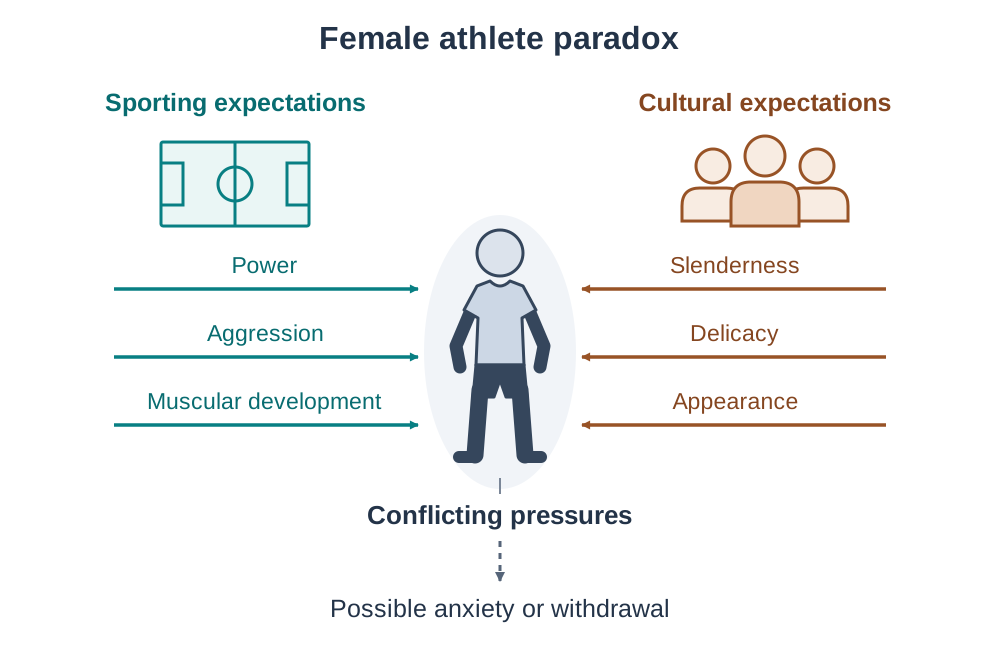
- The female athlete paradox describes the contradictory cultural double-bind faced by female competitors. On the pitch, they must display physical power, aggression, and muscular development to succeed. Off the pitch, society expects them to look slender, delicate, and conventionally feminine. Managing these opposing pressures creates anxiety and causes many girls to quit competitive sport.
Social Regulation of the Body
Social regulation of the body refers to the formal institutional rules and informal social pressures that control, dictate, and limit how physical bodies are used and presented in physical activity.
- Formal regulation of women: Historically, governing bodies barred women from endurance and contact events based on groundless claims that intense exertion would harm their reproductive organs. The women's 800m was excluded from the Olympic Games from 1928 until 1960. The women's marathon was barred until 1984, the women's 3000m steeplechase until 2008, and women's boxing until London 2012. Institutional dress codes also enforce aesthetic standards; for instance, in 2021 the Norwegian women's beach handball team was fined by the European Handball Federation for wearing athletic shorts instead of mandated bikini bottoms, sparking rule reforms.
- Formal regulation of men: Institutional barriers have also restricted male participation in aesthetic activities. Men were excluded from Olympic artistic swimming until Paris 2024, and men still have no pathway to compete in Olympic rhythmic gymnastics.
- Informal regulation: Unspoken peer expectations and cultural policing dictate who feels welcome in sporting spaces. Boys who express an interest in contemporary dance or cheerleading frequently face mockery from peers, steering them back into traditional field sports. In public gyms, free-weight and powerlifting areas are often informally claimed by groups of men lifting heavy weights, creating an intimidating atmosphere that deters women and beginner lifters from using resistance equipment.
Applying Gender Concepts to Your Three Selected Activities
The specification introduces Topic 9 in the context of the three physical activities your class is studying, and Higher Level questions frequently ask you to apply these ideas to one named physical activity — so it is worth preparing your own three activities.
For each of your three chosen activities, prepare notes addressing three core questions:
- Cultural Perception: Is the activity culturally coded as masculine, feminine, or gender-neutral? Which specific traits (e.g. physical collision, tactical discipline, aesthetic grace, endurance) drive this perception?
- Body Image and Kit Demands: How do uniform rules, kit visibility, or physical ideals within the sport influence who takes part? Does the activity demand muscular hypertrophy or a slender frame, and does that cause participants anxiety?
- Practical Interventions: What concrete change at school or club level would create a more balanced intake? Consider changes to uniform requirements, coaching pathways, mixed-gender leagues, or promotional campaigns.
For example, if your activity is Gaelic football, the men's game has traditionally secured prime pitch access, peak match times, and heavier sponsorship. A concrete initiative to balance participation is the LGFA's Gaelic4Girls programme, combined with equal facility scheduling in local GAA clubs.
Key terms
- Gender Stereotyping
- An oversimplified and generalised belief that assigns specific sports, roles, physical traits, or behavioural characteristics to individuals based purely on their gender.
- Gender Socialisation
- The lifelong process by which individuals learn, internalise, and reproduce the roles, values, behaviours, and norms considered appropriate for their sex by family, school, peers, and the media.
- Reciprocal Relationship
- A two-way interaction where two factors directly influence one another; in this topic, physical activity participation shapes body image, while body image equally influences participation.
- Body Image
- A person's subjective cognitive, emotional, and perceptual evaluation of their physical appearance, functional capabilities, and bodily size.
- Physical Self-Efficacy
- An individual's situational confidence in their physical capability to successfully execute the specific movements, motor skills, and tasks required in an activity.
- Body Dysmorphia
- A psychological condition characterised by obsessive preoccupation with perceived, minor, or non-existent flaws in one's appearance; in sport, this includes muscle dysmorphia, where an individual fixates on the mistaken belief that their body is insufficiently muscular.
- Hegemonic Masculinity
- The culturally dominant ideal of manhood that prioritises physical power, competitive dominance, aggression, muscular strength, and emotional stoicism over vulnerability.
- Hegemonic Femininity
- The culturally dominant ideal of womanhood that prioritises physical slenderness, softness, emotional gentleness, grace, and visual aesthetic appeal over muscular power.
- Female Athlete Paradox
- The contradictory cultural tension experienced by female athletes who must display power, aggression, and muscularity in sport while simultaneously feeling pressured to appear delicate and traditionally feminine outside of competition.
- Social Regulation of the Body
- The system of formal institutional rules (such as uniform mandates and event bans) and informal social pressures (such as peer ridicule and changing room banter) that dictate how bodies are used, clothed, and evaluated in physical activity.
- Formal Regulation
- Official written policies, rules, uniform mandates, or eligibility criteria set by sporting governing bodies that restrict who can participate in an event or prescribe how they must present their bodies.
- Informal Regulation
- Unwritten cultural norms, peer ridicule, social exclusion, and intimidation that discourage people from taking part in activities or using facilities deemed inappropriate for their gender.
- Role Models
- Visible sporting figures whose behaviours, achievements, and physical representations inspire others to take up, persist in, or value physical activity.
Check yourself
What is the difference between sex and gender?
Sex refers to biological and physiological differences such as chromosomes and reproductive anatomy. Gender refers to the socially learned roles, behaviours, and cultural expectations that society associates with being male or female.
Define gender stereotyping in sport and provide an example.
Gender stereotyping is the oversimplified belief that certain sports or roles suit one gender more than the other. For example, assuming boys are naturally suited to rugby while girls are suited to dance.
Give one example showing how body image influences participation, and one example showing how participation influences body image.
A girl who is self-conscious about her body avoids swimming to escape peer scrutiny (body image influences participation). A boy who participates in regular athletics develops confidence in what his body can do, leading to a healthier body image (participation influences body image).
Describe one way informal social regulation can discourage a boy from participating in gymnastics.
Informal social regulation, such as teasing, homophobic remarks, or peer questioning of his masculinity for choosing an aesthetic activity, creates anxiety and pressures him to quit.
Identify one historical and one modern example of formal social regulation of the female body in sport.
Historically, women were barred from running the Olympic marathon until 1984 on false health grounds. In 2021, the Norwegian women's beach handball team was fined by their governing body for choosing athletic shorts over mandated bikini bottoms.