

Topic 10 examines the intersection of physical activity, elite sport, and commerce. Modern sport is deeply intertwined with media and private business, forming what is known as the Golden Triangle. In this topic, we examine how revenue is raised through sponsorship, personal endorsements, and merchandising, while analysing the ethical messages sports advertising sends to young people. We also evaluate the impact of commercial deals on national governing bodies, individual athletes, and sports culture. Finally, we look at the enterprise side of mass-participation events and how sports marketing drives tourism across Ireland.
The Golden Triangle and Commercialisation
Commercialisation happens when sport is packaged, marketed, and sold as an entertainment product for financial profit. Decades ago, most sports relied almost entirely on gate receipts and membership subscriptions. Today, elite sport is driven by a mutually dependent three-way partnership known as the Golden Triangle:
- Sport: Provides the competitive drama, athletic skill, unpredictability, and loyal fan base.
- Media: Broadcasts matches via television, streaming platforms, and social feeds, giving the sport vast public reach.
- Business: Injects corporate cash through sponsorship, advertising slots, and naming rights to access that viewing audience.
Each side depends on the other two. Sport needs media exposure to attract corporate sponsors. Businesses need media reach to sell products to sports fans. Broadcasters need gripping sporting drama to secure paying subscribers and sell commercial airtime.
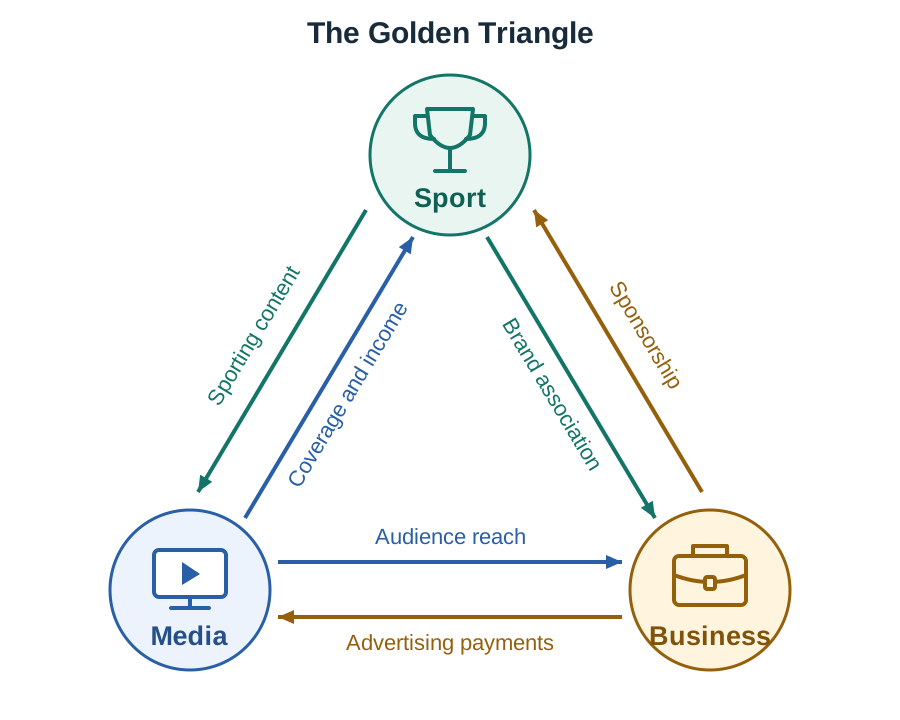
While media income allows minority codes and women's competitions to grow, it comes with a trade-off: high spectatorship gives commercial partners huge leverage. Broadcasters routinely push match kick-off times to late evenings or awkward midday slots to suit television audiences rather than travelling supporters. Competitions also tweak their playing rules to create commercial breaks, such as introducing mandatory strategic time-outs in franchise cricket leagues.
Sponsorship, Endorsement, and Merchandising
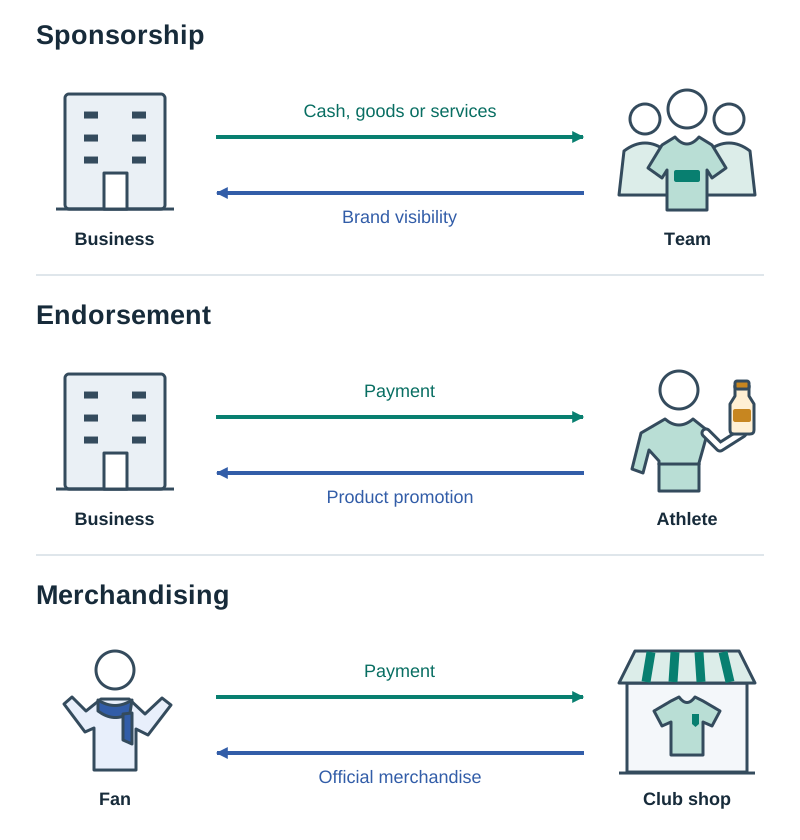
Commercial money enters sport through three distinct avenues, and Leaving Cert questions will expect you to distinguish clearly between them:
1. Sponsorship
Sponsorship is a commercial agreement where a business provides cash, goods, or services to an athlete, team, event, or governing body in return for commercial visibility and brand association. This happens across several tiers:
- Individual: Sponsoring a specific athlete directly (such as Red Bull supporting Irish boxer Kellie Harrington).
- Team or County: Sponsoring kits and training gear (such as SuperValu sponsoring Cork GAA).
- Sport or Competition: Sponsoring an entire league or cup (such as the Allianz Football Leagues, or Investec sponsoring the Champions Cup in rugby).
- Event: Funding event logistics in exchange for title branding (such as Irish Life sponsoring the Dublin Marathon).
- In-Kind Sponsorship: Supplying goods or facilities instead of cash. For example, sports manufacturer O'Neills provides match jerseys, kit bags, and footballs to county GAA squads, or Clayton Hotels provides accommodation and meeting facilities to rugby squads.
- Facility Naming Rights: Selling stadium names to corporate entities (such as Netwatch Cullen Park in Carlow, or SuperValu Páirc Uí Chaoimh in Cork).
2. Endorsement
An endorsement is a personal agreement where an individual athlete publicly recommends, wears, or uses a branded product in return for payment. Golfer Rory McIlroy, for instance, endorses TaylorMade clubs and wears Nike clothing.
- For performers: Lucrative endorsements provide guaranteed income that does not depend on winning weekly prize money. On the flip side, contracts include strict morality clauses, meaning an off-field controversy can destroy a deal overnight.
- For the sport: Global endorsements build household names that inspire children to take up the game, though they can also pull the focus toward celebrity lifestyles and away from team sportsmanship.
3. Merchandising
Merchandising is the manufacture and retail sale of official team clothing, replica shirts, and branded accessories to supporters.
- For clubs and NGBs: Merchandising creates reliable retail profit and turns fans into walking billboards. The downside is that frequent kit redesigns put severe financial pressure on families, and the bulk of sales goes to dominant counties or elite soccer clubs, leaving grassroots teams with next to nothing.
- For performers: Elite stars often negotiate cuts of shirt sales, but amateur athletes, such as county GAA players, see none of that retail income.
Evaluating Sponsorship: NGBs, Performers, and the Sport
The specification asks you to discuss the advantages and disadvantages of sponsorship for three separate groups: the National Governing Body (NGB), the performer, and the sport itself. Give at least one advantage and one disadvantage for each.
| Stakeholder | Advantages | Disadvantages |
|---|---|---|
| National Governing Body (NGB) | • Secures private income to hire regional development officers and subsidise coach education.<br>• Buffers the organisation if public state grants fluctuate.<br>• Funds juvenile development squads and grassroots facilities. | • Over-reliance leaves the NGB exposed if a major sponsor pulls out.<br>• Sponsors may push for fixture reorganisations that clash with club championships.<br>• Association with a corporate partner caught in a scandal damages the NGB's public reputation. |
| The Performer | • Financial security covers medical expenses, physiotherapy, travel, and top-tier coaching.<br>• Frees the athlete to train and recover full-time without needing a second job.<br>• Builds a public profile that opens up post-retirement career pathways. | • Mandatory sponsor appearances, media duties, and shoots cut into training and rest.<br>• Pressure to maintain a flawless public image under penalty of contract termination.<br>• Unequal corporate interest means high-profile stars land huge sums while niche athletes struggle. |
| The Sport / Activity | • Finances modern all-weather playing surfaces, video analysis tech, and safer stadiums.<br>• Quality TV productions attract younger audiences and lift participation numbers.<br>• Raises the overall standard and professionalism of the game. | • Fixture times are shifted to suit television schedules rather than match-going supporters.<br>• Commercial funds pool heavily in high-visibility sports (soccer, GAA, rugby), leaving minority sports behind.<br>• Rule changes introduced to create ad breaks or speed up play can alienate traditional fans. |
Advertising Messages, Ethics, and Youth Codes of Practice
Sport-related advertising targets fans in many formats, including pitch-side LED hoardings, sponsored kit logos, athlete-led social media campaigns, and title sponsorships of major tournaments.
Analysing Sports Advertising
When evaluating a sports advert in an exam, break it down using four critical prompts:
- Who is the target audience?
- What is the explicit, literal message?
- What is the implied message about body shape, social status, or athletic ability?
- Is this message realistic, healthy, and appropriate for young people?
Many sports adverts push questionable messages: suggesting that wearing expensive branded boots will instantly make you a better player, showing unrealistic muscular or lean body ideals, or implying that junk food and sports gambling go hand-in-hand with watching a match. On the positive side, campaigns can challenge stereotypes. The Lidl "Serious Support" campaign for the Ladies Gaelic Football Association (LGFA) and the 20x20 campaign reshaped public perceptions, proving that women's sports deserve serious coverage and prime-time broadcast slots.
Legal Restrictions in Ireland
Ethical problems crop up when sports bodies partner with industries that harm public health. Ireland has taken legislative action on several fronts:
- Alcohol: The Public Health (Alcohol) Act 2018 bans alcohol advertising in the playing area during sporting fixtures, forbids alcohol ads within 200 metres of schools and playgrounds, and outlaws alcohol sponsorship of events aimed primarily at children.
- Gambling: The Gambling Regulation Act 2024 introduces strict daytime advertising watersheds and prohibits gambling logos on sports clothing intended for children.
- Tobacco: Completely prohibited from sports sponsorship under Irish law.
Suggested Code of Practice for Youth Sport
A code of practice is a set of ethical rules that clubs and governing bodies adopt to vet commercial partners. For youth sport, an effective code should require:
- Product exclusions: An outright ban on sponsors linked to alcohol, gambling, vaping, tobacco, or foods high in fat, sugar, and salt (HFSS).
- Appropriate kit branding: Restricting jersey prints to local family businesses or the club crest, avoiding oversized corporate logos on juvenile kits.
- Ring-fenced funding: Ensuring that all sponsorship cash raised by youth teams is spent directly on safety equipment, first aid, and youth coaching.
- Data and image safeguards: Barring commercial sponsors from collecting personal details from underage players or using children in promotional advertising.
Investigating Business in Sport: A Practical Framework
To investigate any company's commercial footprint in sport, you can organise your thoughts under six practical headings:
- The Business: What does the company sell, and who are its primary customers?
- Type of Involvement: Is it kit sponsorship, tournament naming rights, broadcast streaming, or grassroots funding?
- Commercial Motives: Is the company chasing brand awareness, entering a younger market, showcasing corporate social responsibility (CSR), or selling products directly?
- Benefits to the Sport: What does the sport gain? Look for capital funding, upgraded venues, coaching grants, or increased public visibility.
- Costs and Concerns: Does the partnership create financial over-reliance, ethical friction, awkward scheduling, or paywalls for fans?
- Overall Judgement: Weighing the evidence to decide whether the partnership genuinely benefits the sport long term.
Case Study: Lidl and the LGFA
- The Business: A multinational discount supermarket chain operating stores across Ireland, targeting family household shoppers.
- Type of Involvement: Title sponsor of the Ladies National Football Leagues, funding grassroots school jersey competitions, and running high-budget national ad campaigns.
- Motives: Building family goodwill through corporate social responsibility and linking the brand with healthy living and female athletic empowerment.
- Benefits: Pumped millions of euro into ladies football, launched the influential "Serious Support" campaign, and helped drive record attendance figures at both Croke Park and local club fixtures.
- Concerns: The sport risks losing visibility if a single corporate partner shifts its marketing priorities elsewhere.
- Judgement: Highly positive. The deal provided vital funding to a historically under-resourced sport, elevated female athletes into household names, and boosted participation among young girls while preserving the amateur ethos of the LGFA.
(Broadcasting Context: Between 2014 and 2022, Sky held exclusive rights to show select live GAA Championship matches alongside free-to-air coverage on RTÉ and TG4. In 2023, those matches moved to GAAGO, a streaming platform co-owned by the GAA and RTÉ. This highlights an ongoing debate in Irish sport: balancing commercial broadcast income against keeping traditional national games accessible on free-to-air television.)
Mass Participation Events: Enterprise and Impact
A mass-participation event is an organised sporting contest that welcomes hundreds or thousands of participants of all abilities at the same time. Familiar Irish examples include the Dublin Marathon, the Cork City Marathon, and the Vhi Women's Mini Marathon.
Why Have These Events Grown?
- Health and fitness awareness: Adults, particularly in the 30-to-50 age bracket with steady disposable income, use mass events as structured milestones to maintain fitness.
- Wearable technology and social apps: GPS watches and apps like Strava let runners log training mileage, follow training plans, and share progress with their peer groups.
- Charity fundraising: Pairing a sporting challenge with charitable donations removes competitive intimidation. The Women's Mini Marathon has raised over €127 million for Irish charities since its first race in 1983.
- Inclusive formats: Events like Darkness into Light 5k walks welcome people of all ages and fitness levels, shifting the focus from race times to community solidarity.
Commercial Enterprise and the Multiplier Effect
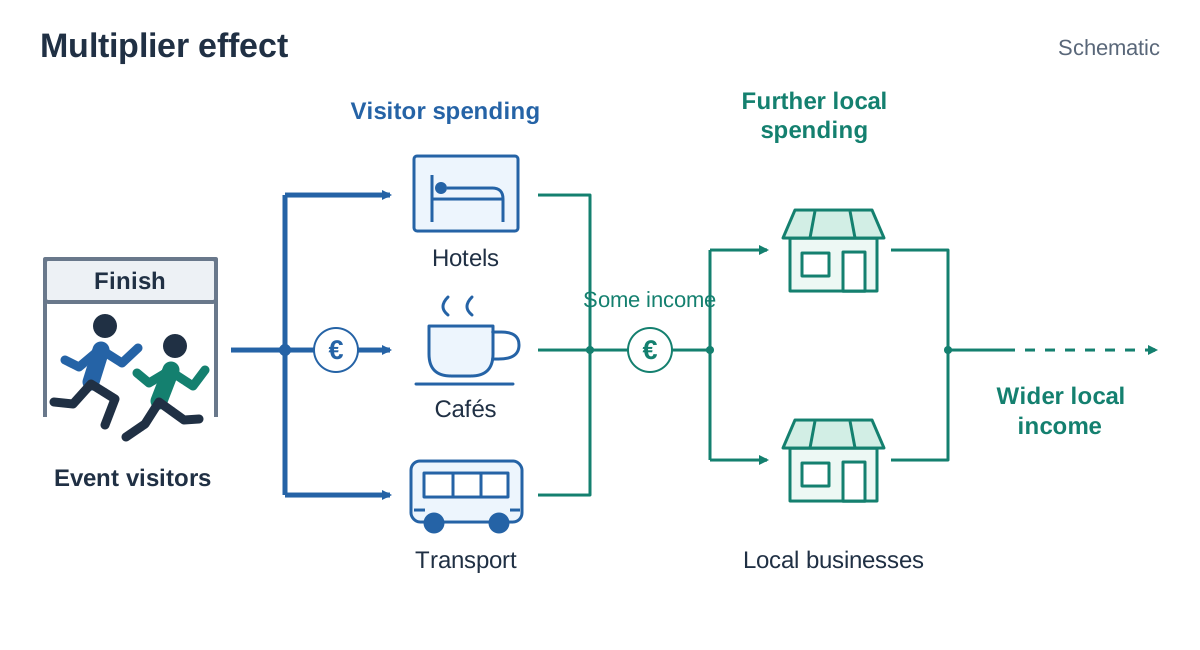
Mass events create business opportunities well beyond race entry fees. They support chip-timing contractors, sports nutrition brands, sports photographers, and merchandise printers. Host communities also benefit from the multiplier effect, where runner spending circulates through local hotels, cafes, and transport providers. For instance, the Dublin Marathon generates over €10 million for the city economy across a single bank holiday weekend.
At the other end of the scale, volunteer-run models like weekly 5k parkruns show that mass physical activity can thrive without commercial entry fees, though they still provide indirect enterprise benefits to local running shops and cafes.
However, commercial mass events carry drawbacks:
- Entry fees can reach €80 to €110, which prices out low-income runners.
- Poorly prepared runners face muscle tears, dehydration, or cardiovascular strain.
- Extensive road closures disrupt city traffic, emergency routes, and local shopkeepers who are cut off from weekend footfall.
Sports Marketing and Tourism in Ireland
Sports tourism involves people travelling away from their home area either to watch a sporting fixture or to take part in an activity. Tourism Ireland and Fáilte Ireland actively use sports marketing to attract visitors, fill hotel beds, and boost regional economies outside the busy summer months.
Sports tourism falls into three clear categories:
1. Sport Event Tourism
Visitors travel specifically to watch an organised sporting competition as spectators.
- Irish example: Travelling to Dublin for Six Nations rugby fixtures at the Aviva Stadium, All-Ireland Finals at Croke Park, or the 2019 Irish Open golf tournament at Lahinch.
- Enterprise impact: Out-of-state spectators spend money on flights, hotels, dining, and match programmes, generating rapid revenue spikes for host towns.
2. Active Sport Tourism
Visitors travel primarily to take part in an outdoor sport, making use of the local landscape and natural amenities.
- Irish example: Surfing in Bundoran (Donegal), trail hiking in the Wicklow Mountains, cycling along the Great Western Greenway in Mayo, or playing links golf along the Wild Atlantic Way.
- Enterprise impact: Tourists hire equipment, pay surf instructors, book local guesthouses, and sustain rural employment over multi-day trips.
3. Nostalgia Sport Tourism (Heritage Sport Tourism)
Visitors travel to experience the history, tradition, or cultural significance of famous sporting venues and heritage sites.
- Irish example: Touring Croke Park and the GAA Museum, or visiting historic golf links like Ballybunion.
Assessing Sports Marketing for Tourism
Using sports marketing to attract visitors brings major upsides. Mega-events, such as the 2027 Ryder Cup at Adare Manor in Limerick, put Irish scenery on global television screens, driving long-term international bookings. Sporting visitors also travel during shoulder seasons (autumn and spring), providing steady revenue to rural hospitality businesses.
Yet there are clear limits. Economic boosts are often short-lived and vanish once the weekend ends. Heavy visitor numbers cause severe traffic bottlenecks and trigger price gouging among local hotels. In delicate coastal areas, unmanaged outdoor tourism erodes dunes and walking paths. Finally, staging huge events requires substantial taxpayer investment in road upgrades and policing, and much of the ticket revenue ends up with international governing bodies rather than local communities.
Key terms
- Commercialisation
- The process of managing, packaging, and marketing sport or physical activity as a commercial product designed to generate financial profit.
- Golden Triangle
- The interdependent three-way relationship connecting sport, the media, and commercial business sponsors.
- Sponsorship
- A commercial deal where a business provides funds, goods, or services to a sporting entity in return for brand visibility and positive publicity.
- In-Kind Sponsorship
- A sponsorship arrangement where physical goods, equipment, accommodation, or professional services are provided instead of cash.
- Endorsement
- A formal partnership where an individual athlete publicly recommends, wears, or uses a branded product in exchange for payment.
- Merchandising
- The retail production and sale of official branded sports apparel, equipment, and accessories to fans.
- Spectatorship
- The practice of watching a sporting event as an observer, creating the viewing audience that attracts commercial advertisers.
- Code of Practice
- A written set of ethical rules and standards adopted by sporting bodies to regulate commercial partnerships and protect participants.
- Mass-Participation Event
- A large-scale organised sporting event open simultaneously to hundreds or thousands of participants of all ability levels.
- Multiplier Effect
- The economic ripple where direct spending by sports visitors recirculates through local hotels, restaurants, and shops, generating wider regional income.
- Sport Event Tourism
- Travel undertaken by individuals specifically to watch a scheduled live sporting fixture or tournament as spectators.
- Active Sport Tourism
- Travel where the main purpose is personal participation in an outdoor pursuit or sporting activity in a specific natural environment.
- Nostalgia Sport Tourism
- Travel to visit sports museums, famous stadiums, or historical grounds to engage with sporting history and tradition.
Check yourself
What three elements make up the Golden Triangle in sports commercialisation?
Sport, the media, and commercial business sponsors.
Give one realistic example of in-kind sponsorship in Irish sport.
A sportswear company like O'Neills providing team jerseys, training balls, and kit bags to a county GAA team instead of paying cash.
What four questions should you ask when analysing a sports advertisement targeted at young people?
1. Who is the target audience? 2. What is the literal message? 3. What is the implied message? 4. Is the message realistic, healthy, and appropriate for young people?
List the six core headings used to investigate a business's involvement in sport.
1. The business, 2. Type of involvement, 3. Commercial motives, 4. Benefits to the sport, 5. Costs and concerns, 6. Reasoned overall judgement.
State two reasons why mass-participation events have grown so quickly in Ireland.
Greater health awareness among adults with disposable income, and the rise of wearable fitness technology and tracking apps like Strava.
Give one economic advantage and one drawback of using major sporting events to promote Irish tourism.
Advantage: Drives tourist spending into local accommodation, restaurants, and transport while showcasing Irish scenery to global television audiences. Drawback: Economic gains are often brief and concentrated over a single weekend, while large crowds cause traffic disruption and inflated hotel prices.