

Ethics and fair play are about taking part in sport honestly and treating everyone fairly. This topic covers the four core ethical principles of integrity, respect, fairness, and equity, alongside formal codes of behaviour across sporting roles. It explores the behavioural spectrum of sportsmanship, gamesmanship, and deviance, the physiological actions and health risks of performance-enhancing drugs (PEDs), Irish anti-doping regulations governed by strict liability, Therapeutic Use Exemptions (TUEs), and best practice for dietary supplements in a named physical activity.
Principles of Ethical Practice
Ethical practice in sport encompasses written rules as well as unwritten standards of behaviour known as etiquette. Four core principles guide every participant, coach, and official:
- Integrity: Acting with honesty and upright morals, keeping to the spirit of the game even when no referee is looking. For example, a golfer who accidentally causes their ball to move while addressing it calls a one-stroke penalty on themselves, even if no playing partner noticed.
- Respect: Acknowledging the dignity and safety of everyone involved. This means accepting referee decisions without dissent, treating opponents with courtesy, and supporting teammates. In Gaelic games, the GAA's Give Respect – Get Respect initiative promotes respect for referees at underage level, for example by keeping parents and mentors in designated sideline areas away from the pitch and match officials.
- Fairness: Setting up conditions where everyone competes under identical rules with no unfair advantage. It relies on non-discrimination and neutral officiating. For instance, in track athletics, starting every runner from measured lanes using calibrated electronic timing creates fairness across the field.
- Equity: Removing barriers and adjusting support so that everyone has meaningful access to sport, regardless of ability, social background, or gender.
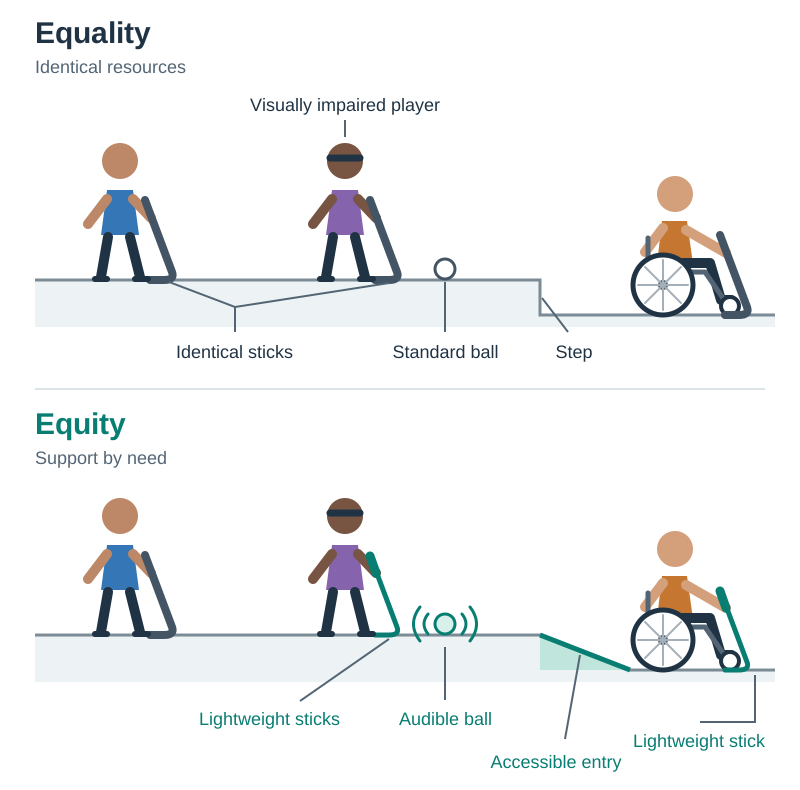
Equity versus Equality
Equity is one of the four principles named in the syllabus, and students often confuse it with equality. Equality means giving every participant the exact same resources, regardless of circumstances. Equity means allocating resources according to specific needs to create an even starting point. Giving every student in a PE class an identical hockey stick is equality. Providing adapted lightweight sticks, audible balls for visually impaired players, and wheelchair-accessible facilities so every student can participate fully is equity.
Codes of Ethics and the Spectrum of Conduct
A code of ethics is a formal policy set down by a National Governing Body (NGB). It lays out mandatory standards of behaviour, fair play rules, and statutory child safeguarding guidelines.
Codes of Ethics in a Named Activity: GAA Code of Behaviour (Underage)
Codes of ethics set out what is expected of everyone involved in a sport. For example, the GAA Code of Behaviour (Underage) defines clear expectations for four stakeholder groups:
- Participants (Players): Respect referee decisions, play strictly within the rules, avoid foul play, and shake hands with opponents after the final whistle.
- Coaches and Mentors: Prioritise player welfare and development above winning at all costs, ensure balanced playing time, and hold up-to-date Garda vetting and safeguarding training.
- Parents: Encourage effort rather than criticise mistakes, support club volunteers, and stay behind designated spectator lines.
- Spectators: Create an encouraging match atmosphere, applaud good play from both teams, and never abuse or intimidate match officials.
The code is enforced through club, county, and national disciplinary hearings, which can issue warnings, fines, or bans.
The Spectrum of Sporting Conduct
| Concept | Definition | Sporting Example |
|---|---|---|
| Sportsmanship | Honourable conduct that sticks to written rules and the unwritten spirit of fair play, putting honesty, respect, and generosity above winning. | A soccer player kicking the ball out of play to allow an injured opponent to receive medical attention. |
| Gamesmanship | Bending the rules to their limit without technically breaking them, using psychological distractions or questionable delays to gain an edge. | A Gaelic football goalkeeper untying bootlaces to delay a kick-out and disrupt the opposition's scoring momentum. |
| Deviance | Behaviour that goes against the accepted norms or rules of sport, such as violence, match-fixing, or taking prohibited substances. | A sprinter taking anabolic steroids to build power, or a player accepting a bribe to throw a match. |
Deviance is supporting context in this topic. Negative deviance involves destructive rule-breaking. Positive deviance is over-conforming to the 'win at all costs' sport ethic, such as playing on with a fractured foot; it breaks no formal rule, but it risks severe harm to the athlete's long-term health.
Performance-Enhancing Drugs (PEDs): Categories and Actions
Doping means using prohibited substances or methods to artificially boost physical or mental performance. The World Anti-Doping Agency (WADA) maintains a Prohibited List updated annually.
| PED Category | Primary Physiological Action | Sports where misuse is most common | Major Health Risks |
|---|---|---|---|
| Anabolic Agents (e.g., Testosterone, Nandrolone) | Mimic testosterone to accelerate muscle protein synthesis and reduce muscle breakdown, building strength and speeding recovery. | Weightlifting, sprinting, rugby | Liver damage, cardiovascular disease, hypertension, infertility, severe aggression. |
| Peptide Hormones: EPO (Erythropoietin) | Stimulates bone marrow to produce extra red blood cells, increasing oxygen transport and max. | Road cycling, marathon running, rowing | Hyperviscosity (thickened blood), blood clots, stroke, heart attack. |
| Peptide Hormones: HGH (Human Growth Hormone) | Stimulates cellular growth, protein synthesis, and connective tissue repair, assisting muscular hypertrophy. | Power sports, track and field | Acromegaly (abnormal bone growth), joint damage, diabetes, heart failure. |
| Beta-2 Agonists (e.g., Terbutaline; Salbutamol above permitted limits) | Relax and widen airways (bronchodilation), allowing more oxygen into the lungs. High doses also promote muscle growth and fat loss. | Cycling, distance running, swimming | Rapid heart rate (tachycardia), muscle tremors, headaches, heart strain. |
| Stimulants (e.g., Amphetamine, Cocaine) | Stimulate the central nervous system, heightening alertness and reaction speed while reducing perceived fatigue. | Sprints, team field sports | Arrhythmias, extreme hypertension, heat exhaustion, addiction. |
| Beta Blockers | Block adrenaline receptors to lower heart rate and reduce involuntary muscle tremors. | Archery, target shooting, snooker | Hypotension, chronic fatigue, restricted aerobic endurance, fainting. |
| Diuretics | Increase urine production to shed water weight quickly or flush out metabolites of other banned drugs. | Boxing, jockeying, combat sports | Acute dehydration, kidney damage, dangerous electrolyte imbalances, cramping. |
| Narcotics (e.g., Morphine, Oxycodone) | Depress the central nervous system to mask severe pain, allowing an athlete to keep playing through injury. | Contact sports, collision codes | Respiratory depression, physical dependency, permanent joint and tissue damage. |
Prohibited methods (not drugs) include blood doping, which involves removing, storing, and later re-infusing packed red blood cells to artificially raise circulating haemoglobin.
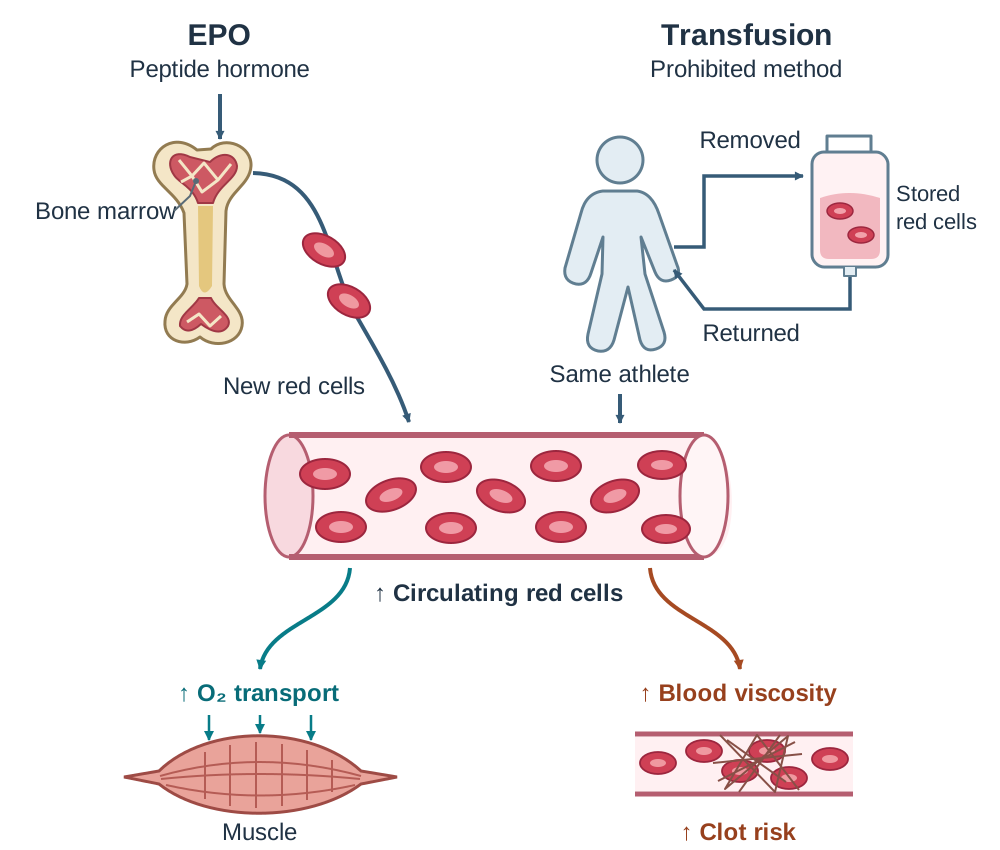
Describing a PED Category for the Exam
When an exam question asks you to describe a PED category, provide four pieces of information: the category name, its physiological action, a named drug, and a named sport. For example: Stimulants act on the central nervous system to increase alertness and reduce perceived fatigue, e.g., amphetamine used by a sprinter to sharpen reaction time out of the blocks.
Implications of Doping
A useful way to organise the consequences of doping for the performer is under four headings:
- Health: Severe organ damage, cardiovascular disease, dependency, mental health breakdown, or fatal blood clots.
- Social: Public humiliation, loss of peer respect, social isolation, and being branded a cheat.
- Financial: Loss of sponsorships, withdrawal of national grant funding, and having to repay prize money.
- Sanctions: Disqualification of results, return of medals, and bans from all sport (four-year ban for an intentional first violation). For the sport itself, scandals cause sponsors to pull out, ticket and broadcast revenues to drop, and public cynicism to grow, as seen when cycling lost sponsors following the Lance Armstrong revelations.
Irish Anti-Doping Enforcement, Strict Liability, and TUEs
Sport Ireland runs the Irish Anti-Doping Programme under Irish Anti-Doping Rules aligned with the WADA Code. The whole system rests on strict liability.
The Principle of Strict Liability
Strict liability means an athlete is solely and completely responsible for any prohibited substance or metabolite found in their sample. It does not matter whether the drug entered their body deliberately, through bad advice from a coach, or accidentally through a cough medicine that contained a banned ingredient. Proving lack of intent or contamination can shorten a ban, but it never excuses the violation.
How the Rules Are Enforced
Sport Ireland enforces the rules through several practical mechanisms:
- In-competition and out-of-competition testing: Doping control officers take urine and blood samples at championship events and unannounced at training grounds or athletes' homes.
- Whereabouts system: Elite athletes in a Registered Testing Pool (RTP) must log a 60-minute window every single day where they can be located for testing.
- Athlete Biological Passport (ABP): Biological markers in blood and urine are tracked over years. A sudden abnormal shift, such as a jump in red blood cell markers in a cyclist, can be used as evidence of doping even without a positive sample.
- Results management and disciplinary hearings: Suspicious cases are referred to the independent Irish Sport Anti-Doping Disciplinary Panel, which reviews evidence, decides whether a breach occurred, and issues sanctions.
- Sanctions: Standard penalties include disqualifying results and imposing a four-year ban for an intentional first offence. Irish swimmer Michelle Smith de Bruin was handed a four-year ban in 1998 for tampering with a urine sample, proving a violation does not need a positive chemical test.
- Education: Delivering workshops and anti-doping seminars to junior and senior competitors.
Anti-Doping Rule Violations (ADRVs)
Doping covers far more than a positive laboratory test. WADA and Sport Ireland recognise eleven ADRVs, including:
- Presence: A prohibited substance or its markers detected in a sample.
- Use or Attempted Use: Using or trying to use a banned substance or method.
- Evading, Refusing, or Failing to Submit to Sample Collection: Running away from a doping officer or refusing to provide a sample after official notification.
- Whereabouts Failures: Any combination of three missed tests or filing errors within a rolling 12-month period.
- Tampering: Interfering with, altering, or destroying any part of the testing equipment or sample.
- Possession: Having a banned substance or method without an approved medical excuse.
- Trafficking or Administration: Selling, transporting, or giving prohibited substances to any other athlete.
Therapeutic Use Exemptions (TUEs)
A Therapeutic Use Exemption (TUE) allows an athlete with a diagnosed medical condition to use an otherwise banned medication so they can compete safely. For instance, an athlete with Type 1 diabetes needs insulin, which is on the Prohibited List.
To receive a TUE from Sport Ireland, four conditions must be met:
- The athlete would experience significant impairment to health if the medication were withheld.
- The treatment will produce no additional enhancement of performance beyond returning the athlete to normal baseline health.
- There is no reasonable permitted alternative medication available.
- The need for the drug is not caused by earlier use of a banned substance without a TUE.
Athletes check their medicines online using databases like Eirpharm before using them.
Best Practice for Supplements in a Named Activity
A dietary supplement is a product taken to make up for a diagnosed dietary deficiency or to support heavy training. Any substance or training method used to boost energy production, recovery, or overall performance is called an ergogenic aid.
Supplements carry genuine contamination risks. Because supplements are regulated as food products rather than pharmaceuticals, cross-contaminated factory lines or unlisted stimulants (such as methylhexaneamine) can lead to positive doping tests.
The Food-First Philosophy
Sport Ireland advises all athletes to follow a food-first approach. Athletes should hit their calorie, macronutrient, and micronutrient targets through whole foods, proper hydration, and sleep before touching a packaged supplement. Supplements cannot fix poor day-to-day nutrition.
Deciding Whether to Use a Supplement
Before taking any supplement, an athlete must work through four questions:
- Is it necessary? Has a qualified sports dietitian or medical professional confirmed a real dietary gap or performance need?
- Is it effective? Does peer-reviewed scientific research confirm that the product actually works for this activity?
- Is it safe? Is the dosage safe for long-term health, avoiding stress on the liver, kidneys, and heart?
- Is it batch-tested? Has this specific manufacturing batch been tested by an independent programme like Informed Sport? Batch testing greatly reduces the risk of contamination, but it can never offer a 100% guarantee, so strict liability always applies.
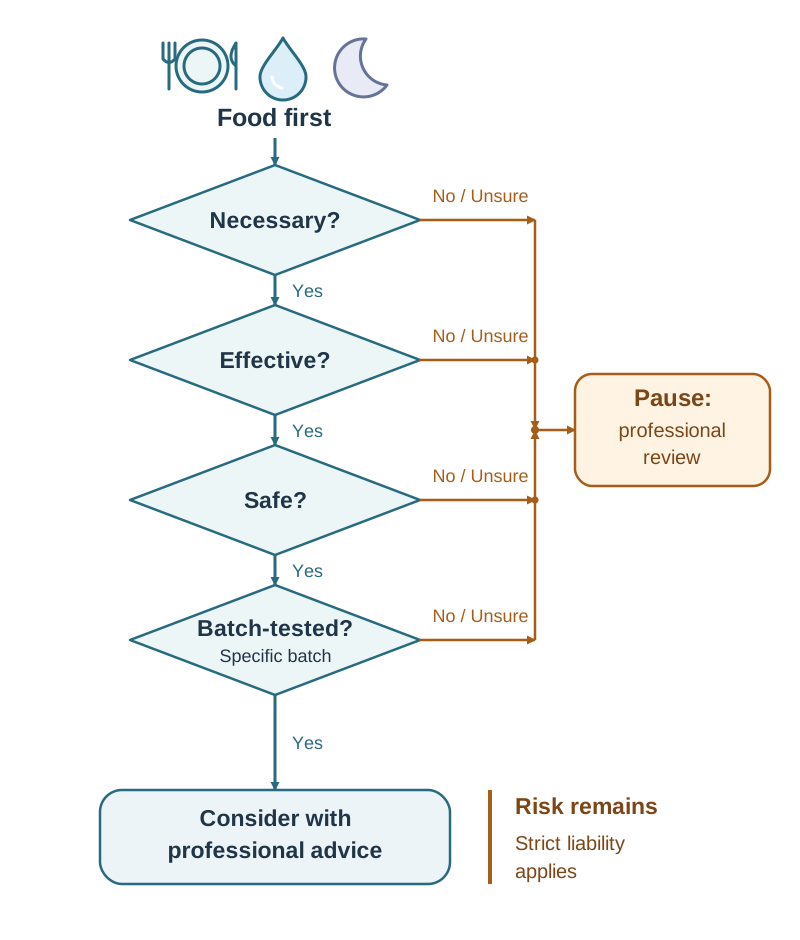
Supplements in a Named Activity: Rugby
- Creatine monohydrate: Increases muscle phosphocreatine stores. This helps the ATP-PC system rapidly resynthesise ATP during repeated high-intensity efforts, such as scrummaging, rucking, and short explosive sprints. It allows a player to complete higher training volumes in the gym, though it can cause slight weight gain through water retention.
- Whey protein: A practical protein source consumed within 30 to 60 minutes after contact or resistance training. It provides essential amino acids (especially leucine) to stimulate muscle protein synthesis and repair damaged muscle tissue when whole foods are not immediately accessible.
- Caffeine: Stimulates the central nervous system to improve alertness, sharpen tackling reactions, and reduce perceived exertion during an 80-minute match. While legal, excessive amounts cause tremors, elevated heart rates, and disrupted sleep.
Key terms
- Integrity
- Acting with moral soundness and honesty in sport, sticking to both written rules and unwritten etiquette even when unobserved.
- Equity
- Adjusting resources and support to meet individual needs and remove barriers, ensuring everyone has fair access to participate.
- Sportsmanship
- Honourable conduct that respects rules, opponents, and officials, demonstrating dignity in victory and defeat.
- Gamesmanship
- Bending the rules to their limit without technically breaking them to gain an advantage, often through psychological tactics or deliberate delays.
- Strict Liability
- The anti-doping principle making athletes solely accountable for any prohibited substance found in their sample, regardless of intent or accidental contamination.
- Therapeutic Use Exemption (TUE)
- Official permission allowing an athlete with a diagnosed illness to use a prohibited medication strictly to restore baseline health.
- Whereabouts System
- The tracking protocol requiring testing-pool athletes to specify a daily 60-minute window where they can be located for unannounced drug tests.
- Athlete Biological Passport (ABP)
- An electronic record monitoring an athlete's biological markers over time to reveal doping patterns without needing a single positive chemical test.
- Food-First Philosophy
- The Sport Ireland guideline stating that athletes should meet all energy, nutrient, and recovery needs through whole foods before considering supplements.
- Batch-Testing
- Independent laboratory screening of a specific supplement production run (such as by Informed Sport) to check for prohibited contaminants.
Check yourself
What are the four principles of ethical practice in physical activity?
Integrity, respect, fairness, and equity.
How does equity differ from equality in sports participation?
Equality treats everyone identically by providing the same resources, whereas equity allocates support based on specific individual needs and barriers to ensure fair access.
Explain what strict liability means for an athlete who tests positive for a banned stimulant.
The athlete is solely responsible for what is in their body; proving they did not intend to cheat or that a supplement was contaminated will not prevent an anti-doping violation.
Name two ways Sport Ireland enforces anti-doping rules besides urine testing at competitions.
Unannounced out-of-competition blood testing, the whereabouts tracking system, tracking the Athlete Biological Passport, and holding disciplinary hearings via the Irish Sport Anti-Doping Disciplinary Panel.
What are two conditions that must be met before Sport Ireland grants a TUE?
The athlete would experience significant health impairment without the drug, the drug produces no extra performance benefit beyond returning to normal baseline health, and there is no reasonable permitted alternative.
Explain how creatine monohydrate can benefit a rugby player during training.
Creatine increases muscle phosphocreatine stores, speeding up ATP resynthesis during short, explosive efforts like scrums, tackles, and sprints, allowing for higher training intensity.