

Energy Systems, Fuelling, and Sports Nutrition
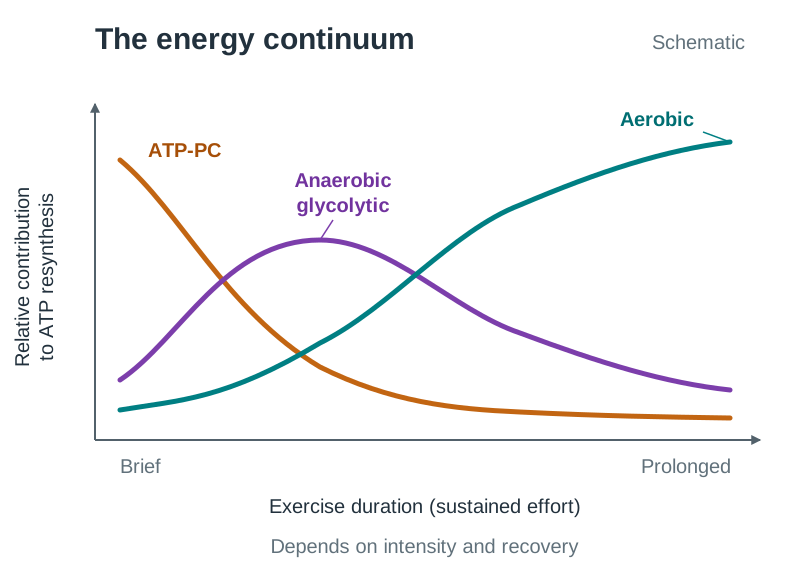
Every muscular contraction needs adenosine triphosphate (). Muscle cells store only enough for 1 to 2 seconds of all-out effort, so the body resynthesises it continuously through three metabolic systems working along a continuum.
| Energy System | Fuel Used | Oxygen Required? | Dominant Duration | Rate vs Capacity | Example |
|---|---|---|---|---|---|
| ATP-PC System | Phosphocreatine () | No (Anaerobic) | Very fast; tiny capacity | Shot-put, sprint start, high jump takeoff | |
| Anaerobic Glycolytic (Lactic) System | Muscle glycogen and glucose | No (Anaerobic) | Fast; limited capacity; accumulates lactate and | run, swim, fast counter-attack | |
| Aerobic System | Carbohydrates and fats (protein contributes in long efforts) | Yes (Aerobic) | Slow; massive capacity; produces harmless and | Marathon running, road cycling, active recovery between sprints |
All three systems contribute at all times; their relative share changes depending on intensity, duration, and recovery time. In field games like hurling or soccer, the aerobic system operates constantly in the background to replenish phosphocreatine during quiet passages, while the ATP-PC system powers sudden sprints and the lactic system handles repeated high-intensity runs.
Nutritional Guidelines for Athletes
- Before performance: Eat a meal rich in low-glycaemic-index (low-GI) complex carbohydrates, with moderate protein and low fat and fibre, 2 to 4 hours before exercise (e.g., porridge with sliced banana, or chicken with brown rice). For endurance events lasting over 90 minutes, athletes use carbohydrate loading (7 to 10 g of carbohydrate per kg of body mass daily for 2 to 3 days beforehand while tapering training volume) to saturate muscle and liver glycogen stores.
- During performance: For sessions under 60 minutes, water is plenty. For continuous work lasting longer, consume 30 to 60 grams of simple carbohydrates per hour through isotonic sports drinks or energy gels to preserve circulating blood glucose.
- After performance: Within 30 to 60 minutes, eat carbohydrates and protein in a or ratio (such as chocolate milk or a chicken wrap). This window is when glycogen replenishment and muscle protein synthesis are at their fastest.
Hydration
Losing just 2% of body mass through sweat degrades aerobic capacity, slows decision-making, and raises core body temperature. Athletes track hydration by weighing themselves before and after training (). Replace lost fluid by drinking 1.25 to 1.5 litres for every kilogram lost, as sweating and urine production continue after exercise.
- Hypotonic drinks: Low concentration of carbohydrates and salts (). They absorb faster than plain water and suit hot conditions where rapid rehydration matters more than energy.
- Isotonic drinks: Match the body's internal fluid concentration ( carbohydrate). They offer a balanced mix of fluid and energy replacement during matches.
- Hypertonic drinks: High carbohydrate concentration (). They absorb slowly and work best as recovery drinks post-event.
Sports Supplements and Anti-Doping
A sports supplement is a product consumed alongside regular meals to meet nutritional needs or boost performance. Common examples include:
- Creatine: Increases muscle phosphocreatine stores, helping repeated high-intensity sprints and heavy resistance sets.
- Caffeine: Stimulates the central nervous system, reducing perceived exertion and boosting alertness in both endurance and team sports.
- Whey protein: A quick, convenient protein source post-workout, though it offers no extra benefits over whole foods like milk, eggs, or chicken.
- Risks: Supplements are not manufactured to pharmaceutical standards and can be cross-contaminated with banned stimulants or steroids. Under the World Anti-Doping Agency's strict liability rule, athletes are solely responsible for any prohibited substance found in their sample, whether they intended to cheat or not. School and club athletes should always follow a 'food-first' approach.