

Lipids include solid fats and liquid oils. They are organic macronutrients composed of carbon, hydrogen, and oxygen that provide a concentrated source of dietary energy, carry fat-soluble vitamins, and supply essential fatty acids. For Leaving Certificate Home Economics Higher Level, lipids are examined across their chemical structure (glycerol, fatty acids, and triglyceride formation), classification and properties, culinary applications, biological digestion and absorption, and their direct link to coronary heart disease and the modern Irish diet.
Chemical Composition and Triglyceride Formation
Lipids contain the elements carbon (C), hydrogen (H), and oxygen (O). Unlike carbohydrates, which have a fixed 2:1 ratio of hydrogen to oxygen, lipids contain very little oxygen relative to their large amounts of carbon and hydrogen. This high proportion of carbon-hydrogen bonds makes lipids an exceptionally concentrated source of chemical energy.
The Triglyceride Molecule
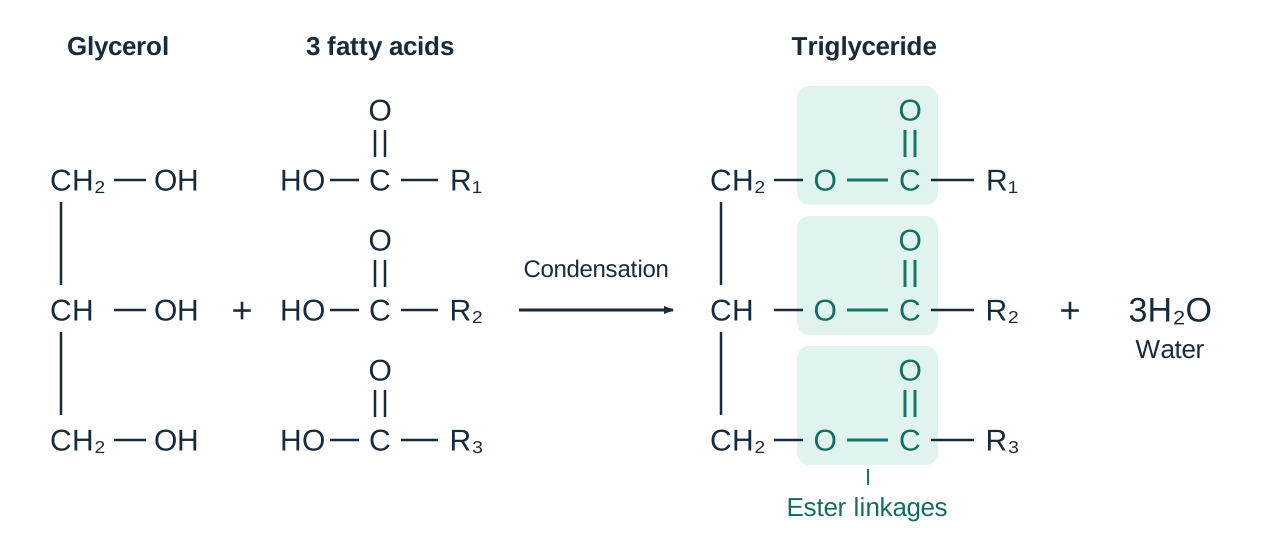
The basic structural unit of almost all dietary lipids is the triglyceride. A triglyceride is formed from one molecule of glycerol chemically combined with three fatty acid molecules.
- Glycerol is an alcohol with three carbon atoms, each carrying a hydroxyl (–OH) group: . This is what 'trihydric' means, and it explains why three fatty acids can attach to a single glycerol molecule.
- Fatty acids consist of an unbranched hydrocarbon chain ending in an acidic carboxyl group ().
Condensation and Hydrolysis
Triglycerides form through a condensation reaction. Each hydroxyl group of glycerol reacts with the carboxyl group of a fatty acid to establish an ester bond (). Three separate condensation reactions take place per molecule, eliminating a total of three water molecules:
If all three fatty acids are identical, the lipid is a simple triglyceride (such as tristearin in beef fat). When the attached fatty acids differ, it is a mixed triglyceride, which is the form found in almost all natural foods.
Not all lipids are triglycerides. For example, phospholipids (such as lecithin in egg yolk) contain two fatty acids and a phosphate group attached to glycerol, while cholesterol is a lipid with a ring structure. These non-triglyceride lipids play vital roles as emulsifiers and in cell membrane structure.
During digestive breakdown and hydrolytic spoilage, the reverse reaction occurs. Hydrolysis splits the three ester bonds by adding three molecules of water back in the presence of lipase enzymes or heat.
Classification and Molecular Structure of Fatty Acids
A fatty acid consists of a methyl group () at one end, a hydrocarbon chain, and a carboxyl group () at the other. Fatty acids are classified by the number of carbon-to-carbon double bonds in their hydrocarbon chain.
| Classification | Chemical Structure | Room Temp State | Named Example | Formula | Food Source |
|---|---|---|---|---|---|
| Saturated (SFA) | No double bonds; fully saturated with hydrogen | Solid | Stearic acid | Beef fat, suet | |
| Saturated (SFA) | No double bonds; short chain | Liquid (butter itself is solid because it also contains long-chain saturated fatty acids) | Butyric acid (short chain) | Butter (solid due to mixed long chains) | |
| Monounsaturated (MUFA) | One double bond | Liquid | Oleic acid | Olive oil, rapeseed oil | |
| Polyunsaturated (PUFA) | Two or more double bonds | Liquid | Linoleic acid (2 double bonds) | Sunflower oil, walnuts |
Notice the pattern across the 18-carbon fatty acids: stearic acid has 35 hydrogens, oleic acid has 33, and linoleic acid has 31. Each double bond removes exactly two hydrogen atoms.
Structural Outlines for Exam Answers
When asked to illustrate fatty acid types, sketch simple carbon skeletons:
- Saturated:
–C–C–C–C–with single bonds only, hydrogen atoms above and below every carbon, forming a straight chain. - Monounsaturated:
–C–C=C–C–showing one double bond that introduces a bend or kink. - Polyunsaturated:
–C–C=C–C–C=C–showing two or more double bonds with multiple kinks.
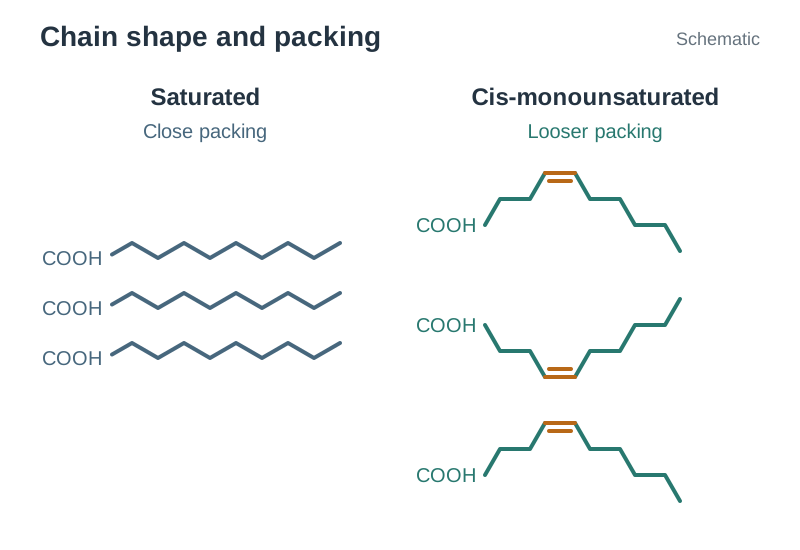
As a general rule, the more saturated and the longer the fatty acid chains in a fat, the higher its melting point and the more likely it is to be solid at room temperature. Straight saturated chains pack closely together, creating strong intermolecular forces. The kinks in unsaturated chains push the molecules apart, keeping them liquid at lower temperatures.
Essential Fatty Acids (EFAs)
Essential fatty acids cannot be made by the human body and must be supplied directly by the diet. Both are polyunsaturated:
- Linoleic acid (Omega-6): Found in sunflower oil, corn oil, and seeds.
- Alpha-linolenic acid / ALA (Omega-3): Found in flaxseeds, walnuts, rapeseed oil, and oily fish (salmon, mackerel, sardines).
Functions of Omega-3 Fatty Acids (learn any three):
- Lower raised blood triglyceride levels, reducing the risk of heart disease and stroke.
- Provide the starting material for prostaglandins, hormone-like substances that regulate blood clotting and inflammation.
- Help lower blood pressure and support healthy brain function.
- Essential for visual and neurological development in infants.
- Reduce inflammation, which benefits conditions such as rheumatoid arthritis.
Geometric Isomerism: Cis and Trans Fatty Acids
The position of hydrogen atoms across a carbon-carbon double bond determines the geometric shape of an unsaturated fatty acid:
- Cis fatty acids: The hydrogen atoms are located on the same side of the double bond. This puts a pronounced bend in the hydrocarbon backbone. Almost all naturally occurring plant and animal unsaturated fats have this cis configuration.
- Trans fatty acids: The hydrogen atoms are located on opposite sides of the double bond. This gives the hydrocarbon chain a straight shape, allowing the molecules to pack closely together. Trans fats behave physically like saturated fats, but they remain chemically unsaturated because they retain a carbon-carbon double bond. Trans fats are created mainly during industrial partial hydrogenation of vegetable oils. They raise harmful LDL cholesterol and lower protective HDL cholesterol, significantly increasing the risk of coronary heart disease.
Classification and Dietary Sources of Lipids
Lipids can be classified by their origin and by the predominant fatty acid they contain.
Predominant Fatty Acids in Common Foods
Every natural fat is a mixture of triglycerides, so foods are classified by the fatty acid present in the greatest proportion. For example, butter contains some oleic acid, and olive oil contains small amounts of saturated fatty acids.
| Food | Predominant Fatty Acid Type |
|---|---|
| Butter, cream, hard cheese, suet, lard | Saturated |
| Coconut oil, palm oil | Saturated (vegetable origin) |
| Olive oil, rapeseed oil, avocados, peanuts | Monounsaturated |
| Sunflower oil, corn oil, soya oil, walnuts | Polyunsaturated (omega-6) |
| Salmon, mackerel, herring, sardines, cod liver oil | Polyunsaturated (long-chain omega-3) |
Important Exception: Coconut oil and palm oil are plant lipids, but they consist mainly of saturated fatty acids. This causes them to remain solid or semi-solid at Irish room temperatures.
Visible and Invisible Fat
- Visible fat can be seen and easily removed: butter, margarine, cooking oil, dairy cream, fat rind on bacon or chops, and chicken skin.
- Invisible (hidden) fat is mixed into the food matrix and cannot be seen: fat in cheese, whole milk, chocolate, pastries, biscuits, sausages, savoury snacks, mayonnaise, and ready meals.
This distinction is important because most dietary fat in Ireland is invisible fat. People often exceed recommended fat limits without realising it because they focus only on visible spreads and cooking fats.
Culinary and Physical Properties of Lipids
Temperature Characteristics
- Melting Point: Edible fats do not melt at a single fixed temperature because they are mixtures of different triglycerides with varying chain lengths and degrees of saturation. They soften and melt over a range of temperatures (butter melts between and ).
- Smoke Point: The temperature at which a heated lipid decomposes into free fatty acids and glycerol. Glycerol dehydrates into acrolein, producing visible blue-grey smoke and an acrid smell. High-smoke-point oils (), such as sunflower or corn oil, are suitable for deep-fat frying. Low-smoke-point fats, such as butter (, due to milk solids and water), burn easily and are unsuitable for deep-fat frying.
- Flash Point: The temperature at which heated fat produces enough vapour to ignite briefly when exposed to a flame or spark ( for culinary oils).
Plasticity and Culinary Working Properties
Plasticity is the ability of a solid fat to change shape under pressure and hold that shape without breaking. It depends on the ratio of solid fat crystals to liquid oil at a given temperature.
- Shortening: Fat coats flour particles, waterproofing them and preventing excess gluten development. This produces a crumbly, tender texture in shortcrust pastry and shortbread.
- Aeration: Plastic fat traps air bubbles during creaming with sugar, helping sponge cakes rise.
- Layering: Firm fat rolled between dough layers melts during baking, leaving spaces expanded by steam in puff and flaky pastry.
Hydrogenation
Hydrogenation is the industrial process of bubbling hydrogen gas through liquid vegetable oils at under pressure, using a finely divided nickel catalyst. Hydrogen adds across the carbon-carbon double bonds, converting them into single bonds (). This raises the melting point, turning liquid oils into solid, spreadable fats for margarines and shortenings. Incomplete or partial hydrogenation can produce harmful trans fatty acids.
Emulsions, Emulsifiers, and Stabilisers
Oil and water are immiscible — they will not mix and separate out into layers. An emulsion is a mixture in which tiny droplets of one of these liquids are spread evenly (dispersed) through the other.
- Dispersed Phase: The suspended internal droplets.
- Continuous Phase: The surrounding liquid medium.
| Emulsion Type | Dispersed Phase | Continuous Phase | Practical Examples |
|---|---|---|---|
| Oil-in-Water (O/W) | Oil droplets | Water or vinegar | Milk, mayonnaise, hollandaise sauce |
| Water-in-Oil (W/O) | Water droplets | Continuous fat | Butter, margarine |
A mixture of oil and vinegar shaken together forms a temporary emulsion (such as French dressing). Within minutes, the oil droplets join back together (coalesce) and separate. A permanent emulsion requires an emulsifying agent.
Action of an Emulsifier
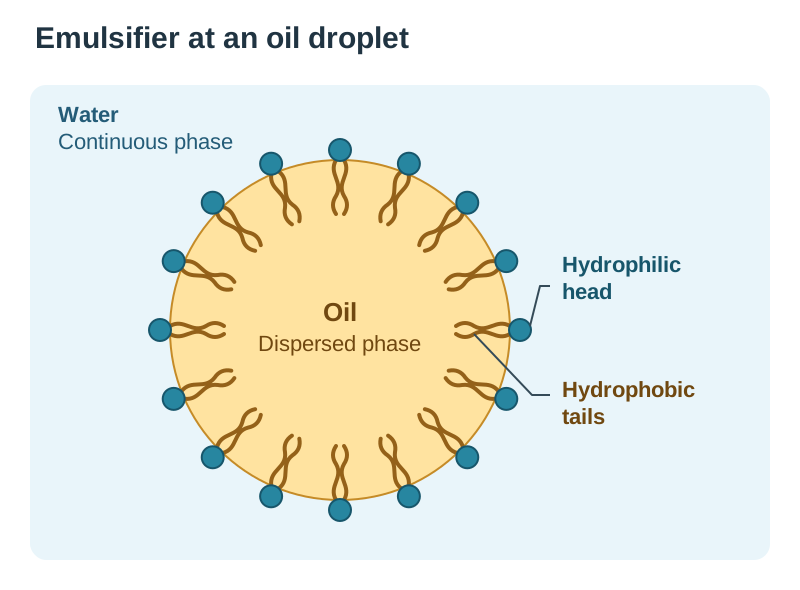
An emulsifier molecule has two distinct ends:
- A hydrophilic (water-loving) polar head that bonds with water.
- A hydrophobic (water-hating / fat-loving) non-polar tail that dissolves in fat.
When whisked into an oil-and-water mixture, the hydrophobic tails embed themselves into the oil droplets, while the hydrophilic heads stick out into the water. This lowers surface tension at the oil/water boundary and forms a protective, electrically charged coating around each droplet that stops them coalescing.
- Natural Emulsifier: Lecithin (E322), a phospholipid found in egg yolk and soya beans.
- Manufactured Emulsifier: Mono- and diglycerides of fatty acids (E471), added to commercial ice cream and bakery shortenings.
Emulsifiers vs Stabilisers
Examiners expect candidates to distinguish clearly between these two additives:
- Emulsifier: Lowers surface tension at the oil/water boundary and coats each droplet (e.g. lecithin, E322).
- Stabiliser: Does not act at the droplet boundary; instead, it thickens the continuous phase so droplets cannot move and separate (e.g. xanthan gum E415, carrageenan E407, pectin E440).
Rancidity, Antioxidants, and Food Storage
Rancidity is the spoilage of fats and oils that produces unpleasant flavours, acrid odours, and loss of nutritional value.
1. Oxidative Rancidity
Oxygen from the air attacks the double bonds in unsaturated fatty acids, forming peroxides that break down into foul-smelling aldehydes and ketones. Once it starts, the reaction keeps itself going: each spoiled molecule triggers the next, which is why rancidity spreads quickly through a fat. It is speeded up by heat, light, oxygen, and traces of metals such as copper and iron. Polyunsaturated oils are most vulnerable because they have multiple double bonds.
2. Hydrolytic Rancidity
In the presence of moisture and warmth, enzymes called lipases (from bacteria or the food itself) split triglycerides into free fatty acids and glycerol. When short-chain fatty acids like butyric acid are released in butter, they produce an intense, sour smell.
Storage Guidelines
- Store liquid oils in tightly sealed, airtight containers in cool, dark cupboards away from light and heat.
- Store butter and solid fats wrapped in the refrigerator at to slow down bacterial lipase activity and prevent absorption of strong food odours.
Antioxidants
Antioxidants delay oxidative rancidity by donating hydrogen atoms or electrons to lipid free radicals, neutralising them and stopping the chain reaction before off-flavours develop. They cannot reverse rancidity that has already occurred, nor can they stop hydrolytic rancidity caused by moisture.
- Natural Antioxidants: Vitamin E / tocopherols (E306–E309), Vitamin C / ascorbic acid (E300), and beta-carotene (E160a).
- Synthetic Antioxidants: Butylated hydroxyanisole / BHA (E320) and butylated hydroxytoluene / BHT (E321).
Antioxidants are added to high-fat foods such as margarine, crisps, biscuits, and oils. Their use in food is legally controlled in the European Union, with permitted additives identified by E numbers.
Biological Functions, Dietary Energy, and the Irish Diet
Biological Functions of Lipids
When asked to state biological functions, always provide the function and a clear explanation:
- Concentrated source of heat and energy: Provides 9 kcal (37 kJ) of energy per gram — more than twice the energy in 1 g of carbohydrate or protein (4 kcal / 17 kJ).
- Energy reserve and thermal insulation: Excess dietary energy is converted to triglycerides and stored as subcutaneous adipose tissue, which insulates the body against heat loss.
- Protection of delicate organs: Adipose tissue surrounds vital organs such as the kidneys and heart, cushioning them against physical injury.
- Carrier of fat-soluble vitamins: Lipids are essential for dissolving, absorbing, and transporting fat-soluble vitamins A, D, E, and K through the digestive tract.
- Source of essential fatty acids: Lipids supply linoleic acid (omega-6) and alpha-linolenic acid (omega-3), which the body cannot synthesise. These are required for cell membranes and for producing prostaglandins.
Lipids in the Irish Diet
- Current Guidelines: Fat should provide no more than 30%–35% of total daily energy, with saturated fat kept below 10%.
- The Irish Diet in Practice: National dietary surveys indicate that fat contributes approximately 35% or more of total dietary energy in the Irish diet, with saturated fat exceeding the 10% ceiling. A high saturated fat intake is recognised as an aspect of malnutrition in Ireland, alongside low dietary fibre and relatively low iron and calcium intakes.
- Main Contributors: Butter and spreads, whole milk and hard cheeses, fatty and processed meats (sausages, rashers, burgers), pastries, cakes, biscuits, crisps, and deep-fried convenience foods.
Dietary Energy Calculation
For example, if an individual consumes 70 g of fat in a 2,100 kcal diet:
Evaluation: At 30%, this intake meets the guideline recommendation of no more than 30%–35% of total dietary energy from fat.
Coronary Heart Disease (CHD) and Meal Planning
A high intake of saturated and trans fats prompts the liver to manufacture excess Low-Density Lipoprotein (LDL) cholesterol. Excess LDL deposits cholesterol inside arterial walls, forming plaques called atheromas. This narrows the lumen and hardens the artery walls, a condition called atherosclerosis. If a coronary artery becomes blocked, the heart muscle is starved of oxygen, causing angina or a myocardial infarction (heart attack). Blockages in cerebral arteries cause a stroke.
Meal-Planning Guidelines to Reduce Saturated Fat (e.g. for CHD):
- Reduce saturated fat: Trim visible fat from chops, remove poultry skin, and choose lean mince, as saturated fat raises blood LDL cholesterol.
- Replace, don't just remove: Cook with olive or rapeseed oil (rich in monounsaturates) instead of butter, lard, or hard margarine, as MUFAs lower LDL without lowering protective HDL.
- Eat oily fish twice a week: Include salmon, mackerel, or sardines to supply omega-3 fatty acids, which lower blood triglycerides and reduce blood clotting.
- Choose low-fat dairy: Use low-fat or skimmed milk, reduced-fat cheddar, or natural yogurt to retain calcium intake while lowering saturated fat.
- Use low-fat cooking methods: Grill, bake, steam, poach, or microwave instead of deep-fat or shallow frying.
- Limit trans fats: Cut back on commercially baked pastries, biscuits, and pies made with partially hydrogenated fats.
- Increase soluble fibre: Eat porridge oats, beans, pulses, and vegetables, as soluble fibre helps bind cholesterol in the gut and remove it from the body.
Digestion, Absorption, and Utilisation of Lipids
Because lipids are insoluble in water, the body must mechanically emulsify them before digestive enzymes can hydrolyse the ester bonds.
1. Digestion Sequence
| Organ | Secretion | Enzyme | Substrate | Products |
|---|---|---|---|---|
| Mouth | Saliva | None | Food lipids | Mechanical action only: chewing breaks food down and body heat softens solid fat. No chemical digestion of fat takes place in the mouth. |
| Stomach | Gastric juice | Gastric lipase | Emulsified fats | Acts only on already-emulsified fats such as milk fat; in adults it contributes very little to fat digestion, and warmth continues to soften solid fats. |
| Duodenum | Bile (from liver / gall bladder) | None (Contains bile salts) | Large fat globules | Mechanically emulsified into tiny droplets, vastly increasing the surface area for enzyme action. |
| Duodenum | Pancreatic juice | Pancreatic lipase | Emulsified triglycerides | Fatty acids and glycerol (in stages: diglycerides, monoglycerides, and free fatty acids). |
| Ileum | Intestinal juice | Intestinal lipase | Remaining glycerides | Fatty acids and glycerol. |
2. The Absorption Mechanism
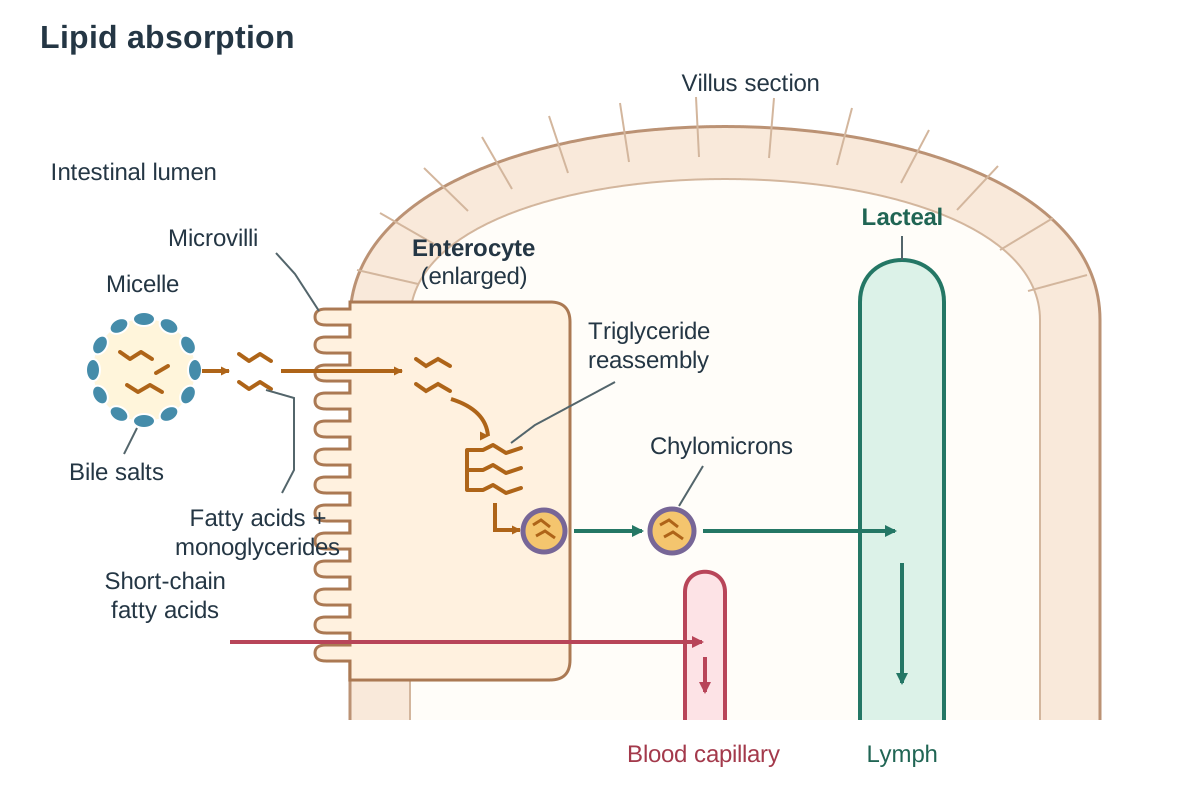
- Micelle Formation: In the small intestine, free fatty acids and monoglycerides combine with bile salts to form microscopic, water-soluble spheres called micelles.
- Diffusion into Enterocytes: Micelles transport the fatty components to the microvilli of the intestinal epithelial cells (enterocytes). The fatty acids and monoglycerides detach from bile salts and diffuse across the cell membrane.
- Triglyceride Reassembly and Chylomicrons: Inside the enterocytes, fatty acids and monoglycerides are recombined into triglycerides. These are packaged with phospholipids, cholesterol, and protein into water-soluble transport units called chylomicrons.
- Lacteal Absorption: Chylomicrons pass out of the cells into the lacteals (lymph vessels) in the centre of each villus. They travel through the lymphatic system and enter the bloodstream at the thoracic duct.
Exception: Short-chain fatty acids (such as butyric acid) are water-soluble. They bypass the lacteals and absorb directly into blood capillaries, travelling straight to the liver via the hepatic portal vein.
3. Utilisation of Lipids
- Energy Production: Cells take up fatty acids and oxidise them during cellular respiration to produce ATP, carbon dioxide, and water.
- Cell Structure: Lipids are built into cell membranes, myelin sheaths around nerve fibres, and hormones.
- Storage: Any excess energy not used immediately is converted back into triglycerides and stored in adipose tissue.
Key terms
- Triglyceride
- A lipid molecule composed of one glycerol molecule linked to three fatty acid molecules through three ester bonds via a condensation reaction.
- Glycerol
- An alcohol with three carbon atoms, each carrying a hydroxyl (-OH) group, forming the backbone of all triglycerides.
- Saturated Fatty Acid
- A fatty acid whose hydrocarbon chain contains only single covalent bonds between carbon atoms (no C=C double bonds), fully saturated with hydrogen.
- Monounsaturated Fatty Acid
- A fatty acid whose hydrocarbon chain contains exactly one carbon-to-carbon double bond (C=C), such as oleic acid.
- Polyunsaturated Fatty Acid
- A fatty acid whose hydrocarbon chain contains two or more carbon-to-carbon double bonds (C=C), such as linoleic acid.
- Essential Fatty Acid
- A polyunsaturated fatty acid that the human body cannot manufacture and must obtain from the diet, specifically linoleic acid and alpha-linolenic acid.
- Cis Fatty Acid
- An unsaturated fatty acid where hydrogen atoms attached across the C=C double bond are on the same side, creating a pronounced bend in the chain.
- Trans Fatty Acid
- An unsaturated fatty acid where hydrogen atoms across the C=C double bond are on opposite sides, producing a straight chain that behaves like a saturated fat.
- Smoke Point
- The temperature at which heated fat decomposes into free fatty acids and glycerol, producing visible blue acrolein smoke.
- Flash Point
- The temperature at which heated fat produces sufficient flammable vapours to ignite briefly in the presence of an external flame or spark.
- Plasticity
- The ability of a solid fat to change shape under pressure and hold that shape without breaking, determined by its ratio of solid crystals to liquid oil.
- Hydrogenation
- The industrial addition of hydrogen gas across the double bonds of liquid oils using a nickel catalyst to produce solid, spreadable fats.
- Oxidative Rancidity
- Lipid spoilage caused by oxygen reacting with double bonds in unsaturated fatty acids, forming unpleasant peroxides, aldehydes, and ketones.
- Hydrolytic Rancidity
- The breakdown of triglycerides into free fatty acids and glycerol caused by water, heat, or bacterial lipase enzymes.
- Emulsion
- A mixture in which tiny droplets of one immiscible liquid are spread evenly (dispersed) throughout another continuous liquid.
- Lecithin
- A natural phospholipid emulsifier found in egg yolk and soya beans (E322), possessing a hydrophilic head and hydrophobic fatty acid tails.
- Micelle
- A microscopic, water-soluble sphere of bile salts and fatty breakdown products that carries fatty acids to intestinal villi for absorption.
- Chylomicron
- A water-soluble lipoprotein package formed in intestinal cells that carries reassembled triglycerides into the lacteals.
- Lacteal
- The central lymphatic vessel located inside an intestinal villus that absorbs chylomicrons.
- Antioxidant
- A substance that inhibits oxidative rancidity by donating electrons or hydrogen atoms to neutralise lipid free radicals.
Check yourself
How many water molecules are eliminated during the condensation reaction that produces one triglyceride?
Three water molecules, because one ester bond forms between each of the three glycerol hydroxyl groups and a fatty acid carboxyl group.
What is the structural difference between oleic acid and stearic acid?
Stearic acid (C17H35COOH) is saturated with only single carbon-carbon bonds, whereas oleic acid (C17H33COOH) is monounsaturated with one carbon-carbon double bond.
Name the two essential fatty acids and identify one dietary source for each.
Linoleic acid (omega-6), found in sunflower oil and seeds; alpha-linolenic acid (omega-3), found in flaxseeds, walnuts, and rapeseed oil.
Give one difference between an emulsifier and a stabiliser, naming an example of each.
An emulsifier lowers surface tension at the oil/water boundary and coats droplets (e.g. lecithin, E322); a stabiliser does not act at the droplet boundary but thickens the continuous phase so droplets cannot move and separate (e.g. xanthan gum, E415).
Explain why a person who adds no butter or oil to their food may still exceed daily fat guidelines.
Most dietary fat is invisible fat hidden inside everyday foods such as cheese, whole milk, sausages, pastries, biscuits, chocolate, and ready meals.
A meal supplies 15 g of fat and delivers a total of 450 kcal. Calculate the percentage of energy provided by fat.
15 g × 9 kcal/g = 135 kcal from fat. (135 ÷ 450) × 100 = 30% of total dietary energy.