

This topic covers what milk contains and why it matters in the diet, how dairies process milk to extend shelf life, how butter, cheese, and yogurt are manufactured, packaged, and labelled, and how to cook with and store dairy foods safely.
Nutritional Value of Milk
Cow's milk is an oil-in-water emulsion made up of roughly 87% water and 13% milk solids. That high water content hydrates body tissues and holds water-soluble nutrients in solution, while the solids provide an impressive concentration of macro- and micronutrients.
Protein (approx. 3.5%)
Milk supplies High Biological Value (HBV) protein containing all essential amino acids in proportions that suit the human body. Roughly 80% of this protein is caseinogen, a phosphoprotein that precipitates in acid conditions. The remaining 20% consists of whey proteins, chiefly lactalbumin and lactoglobulin, which stay dissolved in the liquid serum.
Lipids (approx. 3.5%–4.0% in whole milk)
Fat is dispersed throughout milk as microscopic droplets surrounded by delicate phospholipid membranes. Most milk fatty acids are saturated, though milk also contains small amounts of short-chain fatty acids like butyric acid. Fat levels drop to 1.5%–1.8% in low-fat milk and fall below 0.5% in skimmed milk.
Carbohydrates (approx. 4.5%–5.0%)
The sole carbohydrate in fresh milk is lactose, a disaccharide made of glucose and galactose. Lactose provides energy, gives milk a mild sweetness, and aids the absorption of calcium in the small intestine.
Vitamins and Minerals
Milk is an outstanding source of riboflavin () and cobalamin (), along with smaller amounts of thiamine () and niacin. Whole milk provides fat-soluble vitamin A, but it holds very little vitamin D unless fortified by the dairy. Skimmed and low-fat milks lose almost all fat-soluble vitamins during separation. Vitamin C is present only in trace amounts and is easily destroyed by light and heat.
For minerals, milk delivers abundant calcium and phosphorus. Because these two minerals occur in an ideal ratio for bone mineralisation, the body absorbs them readily. Milk also supplies potassium and zinc, but it is virtually devoid of iron.
Dietary Deficiencies
Milk has three major nutritional shortcomings: it contains zero dietary fibre (non-starch polysaccharide), provides almost no iron, and is low in vitamins C and D. Anyone relying heavily on milk needs to balance their meals with wholegrain cereals, pulses, citrus fruits, and leafy green vegetables.
Dietetic Value and Calcium Absorption
In Leaving Certificate questions, dietetic value means explaining how the specific nutrients in milk suit different life stages or medical conditions. Never just repeat the nutrient list; always link the nutrient directly to the consumer's body.
Life Stages and Specific Dietary Needs
- Children and Adolescents: The rapid cell division and skeletal growth of youth require generous amounts of HBV protein, calcium, and phosphorus. Drinking three glasses of milk daily during the teenage years builds peak bone mass, which helps protect against osteoporosis later in life.
- Older Adults: Bone density declines naturally with age. Bioavailable calcium and phosphorus from milk and dairy slow down this mineral loss and help maintain mobility.
- Coronary Heart Disease (CHD) and Weight Management: Whole milk, cream, and butter contain substantial levels of saturated fatty acids. People managing high cholesterol, arterial plaques, or obesity should switch to low-fat or skimmed milk, which preserves the protein and calcium while slashing saturated fat.
- Lactose Intolerance: People who lack the intestinal enzyme lactase cannot split lactose into glucose and galactose. When undigested lactose reaches the large intestine, gut bacteria ferment it, producing gas, abdominal cramps, and diarrhoea. Sufferers can choose plant-based alternatives, lactose-free milk (treated with lactase), or mature hard cheeses where bacteria have already converted the sugar into lactic acid.
- Cow's Milk Protein Allergy: This is an immune reaction against caseinogen or whey proteins rather than an enzyme shortage. It can trigger hives, gastrointestinal bleeding, breathing distress, or anaphylaxis. Anyone diagnosed with this allergy must avoid all cow's milk products completely.
Factors Influencing Calcium Absorption
Having calcium in the diet is not enough; the body must actually absorb it through the intestinal wall into the bloodstream.
Absorption Enhancers:                Absorption Inhibitors:
• Vitamin D (calcitriol synthesis)   • Phytic acid (unrefined wholegrains)
• Lactose (lowers intestinal pH)     • Oxalic acid (spinach, rhubarb)
• Protein / amino acids              • Excess dietary fibre
• Balanced Ca:P ratio (approx. 1:1)  • Excess caffeine and soft drinks
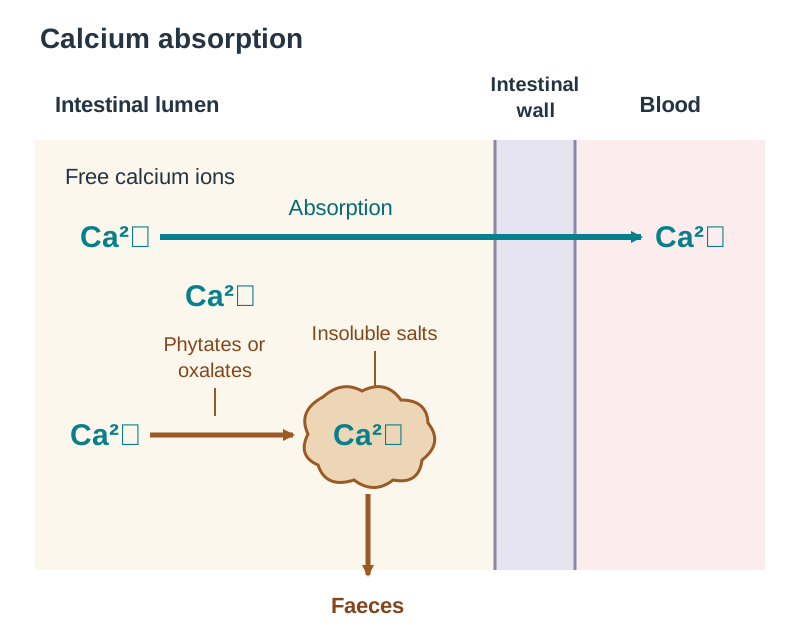
Phytates and oxalates bind to ionic calcium in the digestive tract, producing insoluble salts that pass straight out of the body in faeces.
Milk Processing and Preservation
Raw milk spoils within hours at ambient temperatures because its moisture and nutrient levels favour bacterial multiplication. Dairies use heat treatments, pressure, and dehydration to destroy pathogens and extend keeping quality.
| Method | Processing Conditions | Scientific Effect on Milk | Shelf Life & Packaging |
|---|---|---|---|
| Pasteurisation (HTST) | Heated to – for 15–25 seconds; cooled rapidly below . | Kills all pathogenic bacteria (Mycobacterium tuberculosis, Listeria, Salmonella). Inactivates most natural milk enzymes. Flavour stays fresh; minor loss of vitamins B and C. | 5–7 days unopened at –. Packed in cartons, plastic jugs, or glass. |
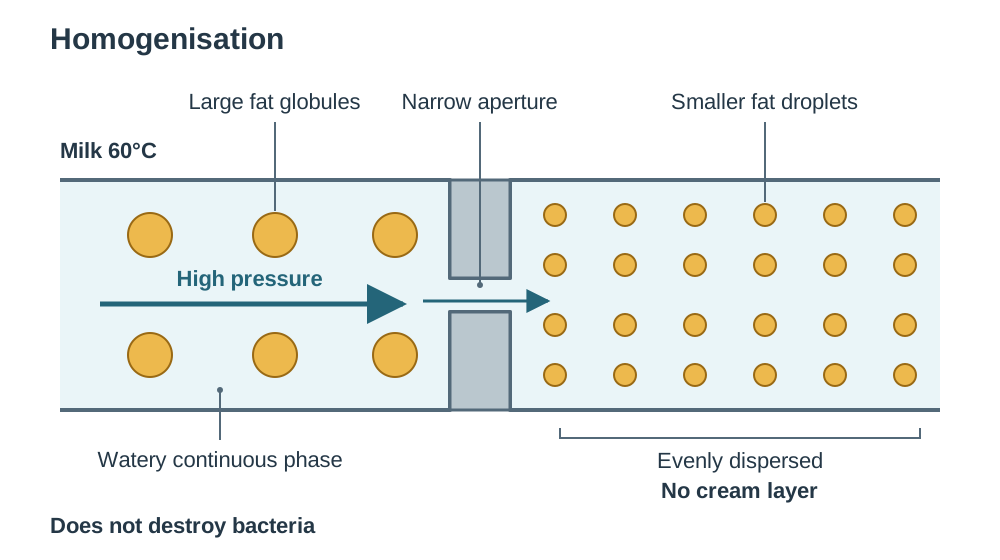
| Homogenisation | Heated to and forced under high pressure through microscopic apertures. | Mechanical shearing fractures large fat globules into uniform droplets smaller than 2 microns. These stay suspended, stopping a cream line from rising. Does not destroy bacteria. | Same as unhomogenised pasteurised milk. |
| Ultra-Heat Treatment (UHT) | Heated to – for 1–3 seconds; cooled rapidly. | Destroys all vegetative micro-organisms and bacterial endospores. Gives a distinct cooked flavour and destroys up to 20% of vitamins B and C. | 6–9 months unopened at ambient temperature. Packed aseptically into foil-lined cartons. Refrigerate once opened. |
| Sterilisation | Bottled milk heated to – for 10–30 minutes under steam pressure. | Destroys all bacteria and spores. Causes extensive Maillard browning between lactose and lysine, protein denaturation, and a pronounced caramelised taste. | Several months unopened at room temperature. |
| Evaporated Milk | Milk is preheated, concentrated under vacuum to remove 50%–60% of water, then homogenised, canned, and sterilised. | Vacuum boiling keeps temperatures low to reduce scorching, but sterilisation in the can causes light Maillard browning and a slightly cooked, caramel-like flavour. | Up to 12 months in airtight metal cans. |
| Condensed Milk | Water is evaporated under vacuum, and roughly 40%–45% refined sucrose is added before canning without terminal sterilisation. | The heavy sugar concentration creates high osmotic pressure, drawing water out of microbial cells so bacteria cannot grow. Very thick, sweet, and sticky. | 12 months unopened at ambient temperature. |
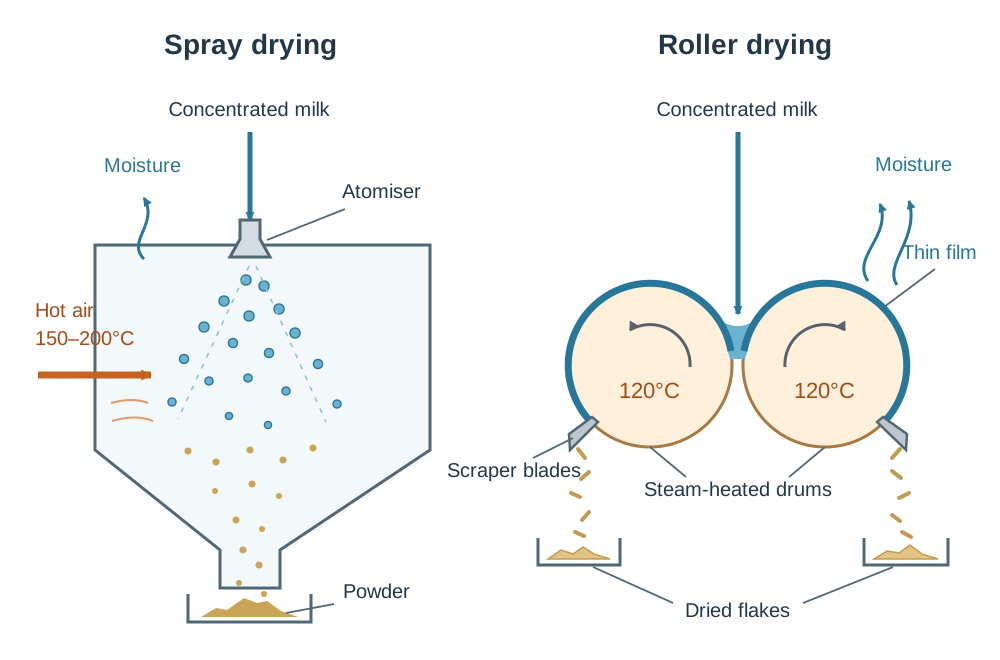
| Dried Milk Powder | Spray drying: Concentrated milk is atomised into a chamber of hot air (–).<br>Roller drying: Milk is spread onto steam-heated revolving metal drums () and scraped off. | Moisture drops below 4%, halting all microbial growth and enzyme activity. Spray drying yields a fine, soluble powder with little flavour change. Roller drying scorches lactose, giving a darker, less soluble powder. | Up to 1 year in foil-laminated pouches or tins. |
Cream and Butter: Emulsions and Phase Inversion
Milk is an oil-in-water emulsion where microscopic fat droplets float in a watery serum. Cream and butter show how mechanical separation and churning alter that emulsion system.
Separation and Commercial Grades of Cream
To separate cream, fresh whole milk is gently warmed to about and spun in a centrifugal separator. Because butterfat has a lower density than water, the heavy skimmed milk is flung outwards towards the bowl walls while the lighter fat globules congregate in the centre and flow out through a separate spout.
- Single Cream (18%–20% fat): Light pouring cream for coffee, soups, and desserts. It cannot be whipped into a foam because its fat content is too low to support air cell walls.
- Whipping Cream (35%–38% fat): Ideal for whipping. Agitating cold whipping cream incorporates air bubbles. The fat globule membranes partially rupture, letting sticky fat droplets clump together around the air cells and form a stable foam. If you over-whip, the fat clumps completely, collapsing the foam into butter and buttermilk.
- Double Cream (48% fat): Rich and thick. Double cream whips easily and can be stirred directly into simmering sauces without curdling because the high fat protects the proteins from heat shock.
- Soured Cream (approx. 20% fat): Pasteurised cream inoculated with a lactic acid starter culture. The acid thickens the liquid and gives it a clean, tangy taste.
Butter Manufacture and Phase Inversion
Butter is a water-in-oil emulsion. Under Irish and EU rules, butter must contain at least 80% butterfat, no more than 16% water, and around 2% non-fat milk solids and salt.
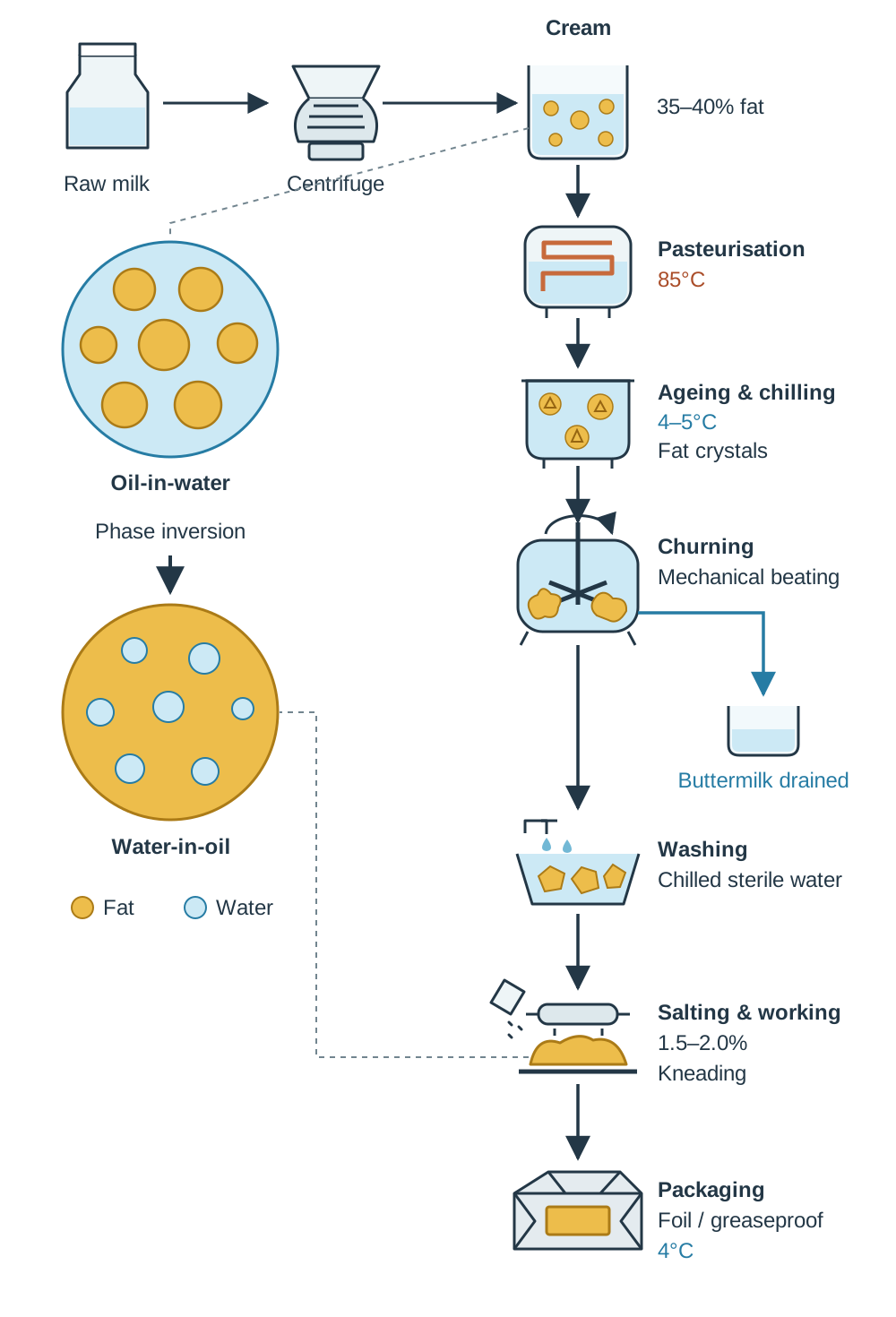
During churning, violent mechanical agitation ruptures the phospholipid membranes surrounding the fat droplets. The exposed liquid butterfat sticks together, gathering into yellow butter grains. This step is known as phase inversion: the original oil-in-water emulsion flips inside out, trapping tiny droplets of water inside a continuous sea of solid and liquid butterfat.
Cheese: Classification and Cheddar Manufacture
Cheese is an added-value dairy product made by coagulating milk proteins, draining away the liquid whey, and pressing the remaining solid curd.
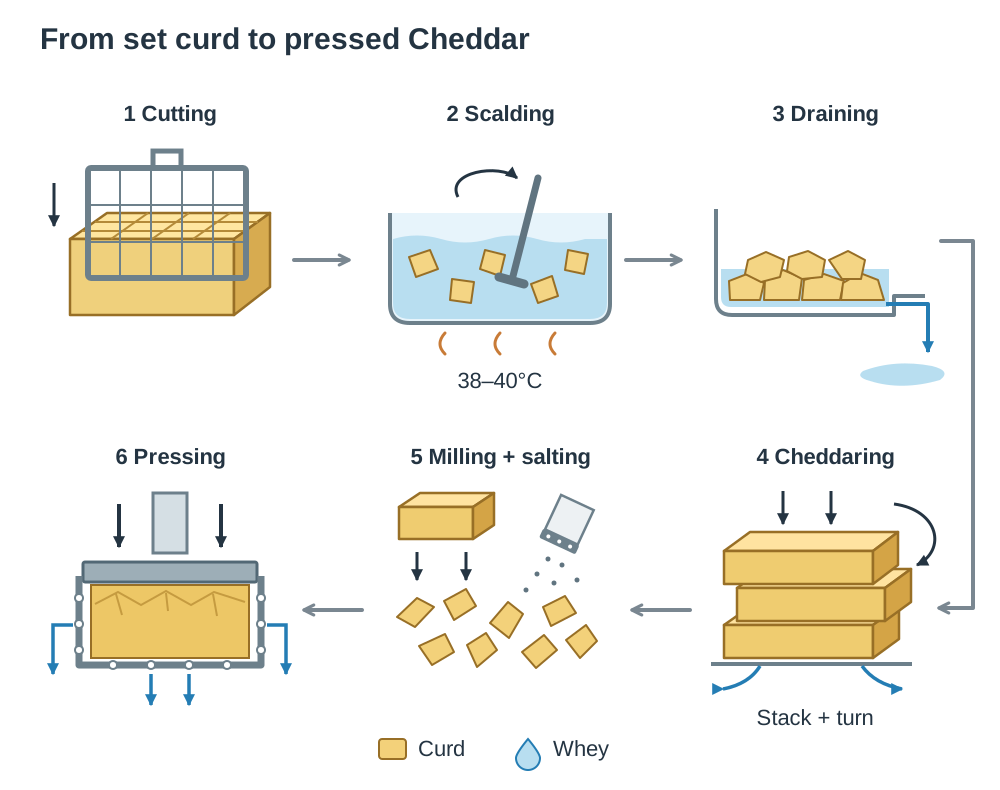
Classification of Cheeses
| Category | Moisture | Production Characteristics | Common Examples |
|---|---|---|---|
| Hard | 30%–40% | Curds are scalded, cheddared, milled, heavily pressed, and matured for 3 to 12 months. Firm texture, low water content. | Cheddar, Parmesan, Gruyère |
| Semi-hard | 40%–50% | Lightly scalded and pressed under moderate weight; aged for 2 to 6 months. Pliable texture, melts evenly. | Gouda, Edam, Tilsit |
| Soft | 50%–75% | Curds are cut gently and drained by gravity without heavy pressing. Often surface-ripened with moulds that break down protein into a creamy paste. | Brie, Camembert |
| Blue-veined | 40%–50% | Inoculated with Penicillium roqueforti and pierced with stainless steel needles. Oxygen enters the channels, allowing the mould to grow blue-green veins and sharp flavours. | Cashel Blue, Stilton, Roquefort |
| Fresh | 60%–80% | Unripened, unpressed curds made by direct acid or rennet coagulation. Mild flavour, highly perishable. | Cottage cheese, Ricotta, Mozzarella |
| Processed | Variable | Made by blending shredded hard cheese with water, colouring, and emulsifying salts (such as sodium phosphates), then heating to melt into a uniform paste. | Slices, cheese spreads, triangles |
Industrial Manufacture of Cheddar Cheese
- Pasteurisation: Whole milk is heated to for 15 seconds, then cooled down to . Pasteurisation destroys pathogenic bacteria so the cheese is safe; flavour later develops from the starter bacteria and their enzymes during ripening.
- Starter Culture Addition: A starter culture of lactic acid bacteria (Lactococcus lactis) is stirred into the warm milk. Over 30–45 minutes, these bacteria ferment lactose into lactic acid, creating an acidic environment suitable for enzyme action.
- Renneting: Rennet containing the enzyme rennin (chymosin) is introduced. In the presence of soluble calcium, rennin cleaves kappa-casein, changing soluble caseinogen into insoluble casein. Within 30–40 minutes, the milk sets into a firm, custard-like junket.
- Cutting the Curd: Mechanical frames strung with stainless steel wire knives slice the junket into tiny cubes. Slicing dramatically increases the surface area, letting trapped liquid whey escape freely from the protein matrix.
- Scalding: The curds and whey are heated slowly to – while being stirred continuously. Gentle heat contracts the protein network, expelling more moisture and firming up each curd particle.
- Draining and Cheddaring: The liquid whey is pumped away. The remaining curd particles settle into thick mats along the bottom of the vat. Workers or automated belts cut these mats into heavy rectangular blocks, stack them on top of each other, and turn them every 15 minutes. This process, called cheddaring, uses the weight of the slabs to squeeze out leftover whey, knitting the curd into a smooth, dense, elastic texture.
- Milling and Salting: The cheddared slabs pass through rotating cutting mills that tear the rubbery blocks into chip-sized pieces. Dry dairy salt (roughly 2%) is sprinkled over the warm chips. Salt enhances flavour, suppresses unwanted spoilage bacteria, and draws out the last drops of moisture by osmosis.
- Pressing and Maturing: Salted curd chips are packed into perforated metal moulds and pressed under mechanical or hydraulic rams for 16 to 24 hours. The pressed blocks are vacuum-sealed in oxygen-barrier plastic film and stored in temperature-controlled curing rooms (–) for 3 to 12 months. During ripening, bacterial enzymes break down fats and proteins into complex flavour compounds.
Nutritive Comparison: Milk, Butter, and Cheese
Processing liquid milk into butter or cheese radically shifts its nutritional profile. The syllabus asks you to examine how processing changes nutritional value, for example turning milk into butter or cheese.
Typical Percentage Composition
Nutrient               Whole Milk       Cheddar Cheese      Butter
──────────────────────────────────────────────────────────────────
Protein                3.5%             25.0%               0.5%–1.0%
Fat (mostly saturated) 3.5%–4.0%        33.0%–35.0%         80.0%–82.0%
Carbohydrate (lactose) 4.8%             Trace / Nil         Trace / Nil
Water                  87.0%            36.0%–38.0%         15.0%–16.0%
Minerals (Ash)         0.7%             3.5%–4.0%           1.5%–2.0%
──────────────────────────────────────────────────────────────────
How Processing Explains These Shifts
- Milk to Cheese: Separating and discarding the liquid whey removes most of the water, water-soluble B vitamins, and lactose. What stays behind in the curd is a concentrated mass of casein protein, butterfat, and insoluble calcium phosphate. That is why 100 g of Cheddar provides roughly seven times the protein and about six times the calcium of 100 g of whole milk, while containing practically zero carbohydrate.
- Milk to Butter: Churning gathers the fat globules into a solid block, pushing all the water-soluble compounds out into the buttermilk. As a result, butter is almost pure lipid along with concentrated fat-soluble vitamins A and D. It provides negligible protein, almost no calcium, and no water-soluble B vitamins.
Yogurt Manufacture and Functional Dairy
Yogurt is an added-value, fermented dairy food manufactured by culturing warm milk with specific bacterial strains.
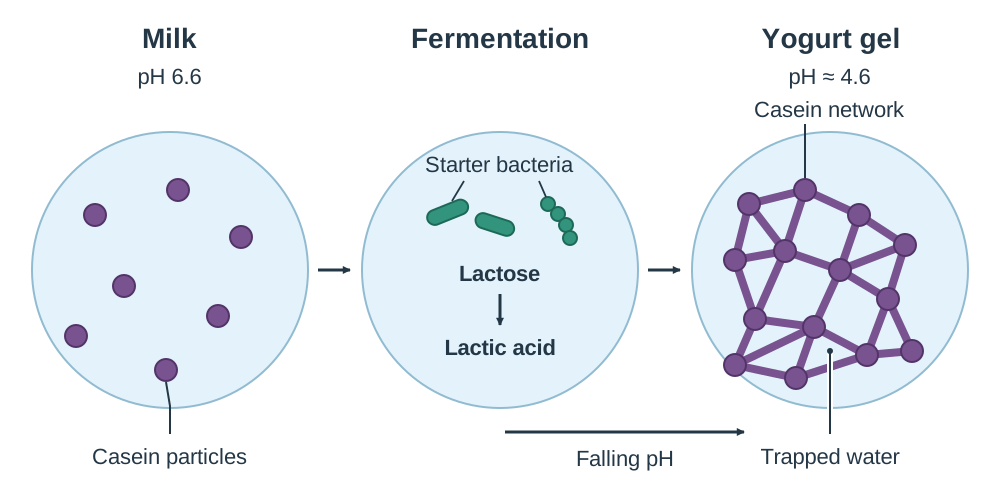
Industrial Steps in Yogurt Manufacture
- Standardisation and Homogenisation: Whole, semi-skimmed, or skimmed milk is tested, and milk powder is often added to lift total solids and ensure a thick body. The milk is homogenised at under pressure to disperse fat droplets evenly and create a creamy mouthfeel.
- Pasteurisation: The blend is heated to for 30 minutes, or – for 3–5 minutes. This intense heat treatment kills wild bacteria that might compete with the culture, and it denatures whey proteins so they bind water rather than leaking whey later.
- Cooling: The milk is cooled to about – (commonly – in industry), the optimum growth temperature for thermophilic yogurt bacteria.
- Inoculation: A starter culture consisting of equal parts Lactobacillus delbrueckii subsp. bulgaricus and Streptococcus thermophilus is introduced.
- Incubation: The inoculated milk is held at about – (commonly –) for 4 to 8 hours. The bacteria ferment lactose into lactic acid. As the acid builds up, the pH drops from 6.6 down to roughly 4.5. When milk hits the isoelectric point of casein (pH 4.6), the protein particles lose their charge and coagulate, setting the liquid into a soft gel.
- Cooling and Blending: Once the desired tartness and firmness are reached, the yogurt is chilled quickly to to stop bacterial growth. For stirred varieties, pasteurised fruit purées, natural colourings, or sweeteners are blended through the cool curd.
- Packaging and Labelling: The product is metered into preformed plastic pots (polystyrene or polypropylene) and heat-sealed with aluminium foil or plastic-laminated lids. The containers are packed into cartons and held in refrigerated cold stores (–). Labels show the name and type of yogurt (e.g. low-fat strawberry set yogurt), brand, net weight, ingredients list with milk highlighted as an allergen, nutritional information, a use-by date, 'Keep refrigerated', the manufacturer's name and address, and 'contains live cultures' where relevant.
Added-Value versus Functional Foods
- Added-Value Food: A raw agricultural commodity that has undergone processing or packaging to increase its appeal, shelf life, and market value for the manufacturer. Raw liquid milk sells for a modest price per litre, but processing that milk into Greek yogurt, artisan cheese, or portion-packed butter yields a far higher retail margin.
- Functional Food: A food that provides a demonstrated health benefit beyond standard nutritional nourishment, usually because the producer added a targeted bioactive ingredient. Examples in the dairy aisle include:
- Probiotic yogurts containing live cultures of Lactobacillus acidophilus or Bifidobacterium to support gut microflora.
- Spreads and milks enriched with plant sterols or stanols that block cholesterol absorption in the small intestine.
- Specialty milks fortified with vitamin D and calcium to protect bone mineral density.
Culinary Science, Effects of Heat, and Spoilage Control
Cooking with dairy requires an understanding of how heat, acid, and mechanical agitation affect milk proteins and emulsions.
Physical and Chemical Effects of Heat on Milk
- Surface Skin Formation: When milk is heated uncovered above , surface evaporation concentrates the whey proteins (lactalbumin and lactoglobulin). They denature and coagulate, forming a tough elastic skin that traps steam underneath. As the steam expands, the milk boils over abruptly. Covering the pan or whisking gently prevents this skin from forming.
- Scorching: Whey proteins settle onto the base of the saucepan. If heated over direct high flame, these proteins coagulate against the hot metal and burn, imparting an acrid scorch flavour throughout the milk.
- Maillard Browning: Gentle prolonged heating promotes a chemical reaction between the amino group of lysine (in milk protein) and the aldehyde group of lactose. This non-enzymatic browning gives sterilised and evaporated milks their caramel notes.
- Vitamin Losses: Up to 20% of thiamine and over half of vitamin C are destroyed by prolonged boiling.
Preventing Curdling and Greasiness in Cooking
Fresh casein is heat-stable at milk's normal pH, but it coagulates rapidly if you heat it alongside acids or salts. When making tomato soups, cheese sauces, or beef stroganoff, keep these principles in mind:
- Never boil high-acid mixtures after stirring in milk or soured cream; use low temperatures and add the dairy gradually at the end of cooking.
- Use a starch buffer. Whisking flour or cornflour into the sauce forms a viscous starch gel that coats casein particles, physically preventing them from clumping together into curds.
- When adding cheese to a béchamel sauce, grate it finely, pull the pan completely off the heat, and stir until just melted. Excessive heat shrinks the casein chains into tough, rubbery cords, squeezing out the trapped butterfat and leaving an oily slick.
Spoilage, Pathogens, and Storage Hygiene
Liquid milk is classified as a high-risk food because its neutral pH (6.6), high water activity, and wealth of nutrients make it an ideal breeding ground for micro-organisms.
- Natural Souring: Non-pathogenic lactic acid bacteria break down lactose into lactic acid. When enough acid builds up (the pH falls), the casein curdles into sour clots. Souring is much faster at room temperature but still happens slowly in the fridge.
- Pathogens in Dairy: Listeria monocytogenes can grow even inside a domestic refrigerator set to . Because Listeria causes miscarriage, stillbirth, and meningitis, pregnant women are advised to avoid unpasteurised milk and soft, mould-ripened cheeses (like Brie and Camembert). Unpasteurised milk can also harbour Salmonella, Escherichia coli, and Campylobacter.
- Safe Kitchen Practices: Store fresh milk, cream, and soft cheese at – in the main body of the fridge rather than the door shelves, where warm room air enters every time the door opens. Always respect use-by dates, keep cartons tightly capped to prevent them absorbing onion or fish odours, and never pour leftover jug milk back into the original carton.
Key terms
- Caseinogen
- The main soluble phosphoprotein in milk (making up roughly 80% of milk protein) which coagulates into insoluble casein in the presence of rennin or acid.
- Whey
- The liquid serum separated from milk curds during cheese and yogurt making, containing water, lactose, soluble minerals, and the proteins lactalbumin and lactoglobulin.
- Pasteurisation (HTST)
- A heat process where milk is held at 72°C–75°C for 15–25 seconds and cooled rapidly below 10°C to destroy all pathogenic vegetative bacteria.
- Homogenisation
- A mechanical treatment forcing milk at 60°C through microscopic apertures under high pressure to break fat globules into tiny droplets that remain permanently suspended.
- Phase Inversion
- The structural change during butter churning where an oil-in-water emulsion (cream) flips into a water-in-oil emulsion (butter).
- Rennin
- A coagulating protease enzyme (chymosin) found in rennet that converts soluble caseinogen into insoluble casein during cheese manufacture.
- Cheddaring
- The step in hard cheese production where curd slabs are piled, stacked, and turned repeatedly to squeeze out residual whey and create a dense texture.
- Starter Culture
- A pure culture of selected lactic acid bacteria added to milk to ferment lactose into lactic acid at controlled temperatures during cheese and yogurt production.
- Added-Value Food
- A food product that has undergone secondary processing or refinement to increase its commercial value, appeal, and retail profitability for the producer.
- Functional Food
- A food that delivers a targeted health-promoting or disease-preventing benefit beyond basic nutrition, usually via an added bioactive ingredient.
- Probiotics
- Live beneficial bacterial cultures (such as Lactobacillus acidophilus) added to foods to help balance intestinal microflora.
- Maillard Reaction
- A non-enzymatic browning reaction between the amino group of an amino acid and a reducing sugar (such as lactose) in the presence of heat.
Check yourself
What temperature, holding time, and cooling requirements define HTST pasteurisation of milk?
Milk is heated to 72°C–75°C for 15–25 seconds, then cooled rapidly to below 10°C.
Explain the process of homogenisation and state its primary purpose.
Milk is heated to 60°C and forced under high pressure through tiny holes. This fractures large fat globules into uniform small droplets so they stay evenly suspended and do not form a cream line.
What is phase inversion, and when does it occur during dairy processing?
Phase inversion is the structural change where an oil-in-water emulsion becomes a water-in-oil emulsion. It occurs during the churning stage of butter manufacture when agitated fat globule membranes rupture and stick together.
Which milk proteins coagulate to form the skin on boiled milk?
The whey proteins lactalbumin and lactoglobulin coagulate to form the skin, trapping fat and calcium salts. Casein does not coagulate with heat alone.
State two effects of Ultra-Heat Treatment (UHT) on milk.
All micro-organisms and bacterial spores are destroyed, allowing unopened storage for months without refrigeration; it also causes a cooked flavour and a slight loss of vitamins B and C.