

Meal planning and preparation sits inside Food Studies, the largest area of the Leaving Certificate Home Economics course (45% of the syllabus). It connects nutritional science directly to practical household resource management and culinary technique. At Higher Level, you must be able to formulate balanced menus across the life cycle and for specific modified diets, explain the physical and chemical principles of cooking across various food commodities, adapt recipes, safely implement food preparation routines, and conduct valid sensory analysis.
Principles of Meal Planning and Resource Management
Meal planning is the managerial process of designing, preparing, and serving meals that satisfy nutritional needs while operating within real household constraints. Planning weekly family menus in advance ensures balanced nutrition, reduces food waste, and prevents reliance on expensive convenience foods or takeaways.
Applying the family resource management model ensures meals are planned and prepared efficiently:
- Inputs: Demands and available resources. These include nutritional needs, dietary requirements, health goals, financial budget, available preparation time, culinary knowledge and skills, equipment, and seasonal food availability.
- Throughputs: The active stages of planning menus, generating structured shopping lists, budgeting, and implementing hygienic kitchen work schedules.
- Outputs: The finished dishes, nutritional adequacy, waste reduction, and post-meal evaluation to redirect future management routines.
Why People Choose the Food They Do
Examiners frequently ask you to discuss factors influencing food choices. Use the formula: name the factor, explain it, and provide a concrete example:
- Culture and religion: Food traditions and religious rules shape menus (e.g. no pork or non-halal meat in an Islamic household; turkey at Christmas in Ireland).
- Eating patterns: Work schedules, school hours, and long commutes often replace traditional family dinners with grazing, snacking, or convenience items eaten on the go.
- Sensory aspects: The appearance, aroma, flavour, and texture of food decide whether it is eaten; for instance, a child may reject green vegetables based entirely on colour.
- Nutritional awareness: Understanding nutritional guidelines leads to healthier choices, such as buying wholemeal bread for dietary fibre or oily fish for omega-3 fatty acids.
- Health status: Medical conditions dictate ingredient selection (e.g. a person with coeliac disease must choose certified gluten-free foods).
- Availability: Local shops, transport, and the season dictate what can be bought, though modern preservation and global transport allow out-of-season produce year-round.
- Finance: Household income determines how much can be spent on food; families on restricted budgets often rely on cheaper, carbohydrate-dense staples.
- Marketing and advertising: Media campaigns, packaging, celebrity endorsements, and special in-store offers heavily influence consumer buying habits, particularly among adolescents.
Energy Balance in Meal Planning
- Basal metabolic rate (BMR) is the minimum amount of energy the body needs at complete rest to maintain vital involuntary processes, including breathing, circulation, cellular repair, and body temperature regulation.
- Factors determining energy requirements: Age (energy needs per kilogram of body weight are highest during growth phases in infancy and adolescence, declining in older age); sex (males generally have higher BMR due to greater lean muscle mass); body size and composition; physical activity levels (PAL); health status (fever or recovery from surgery raises energy needs); and physiological state (pregnancy and lactation demand extra energy for foetal and milk production).
- Energy balance: When energy intake equals energy output, body weight remains stable. Intake exceeding output leads to excess energy stored as adipose tissue (weight gain and obesity). Intake below output forces the body to metabolise glycogen and fat stores, leading to weight loss. When planning menus, adjust portion size and dietary fats and refined sugars rather than removing nutrient-dense staple foods.
Dietary Guidelines and the Modern Irish Diet
Dietary guidelines translate nutritional science into practical food advice, formulated from population health research and Recommended Dietary Allowances (RDAs). An RDA is the average daily dietary intake level sufficient to meet the nutrient requirements of nearly all (97–98%) healthy individuals in a specific life stage and gender group. Food composition tables supply nutrient values per 100 g, allowing planners to calculate daily macro- and micronutrient provision.
Healthy Eating Guidelines
- Vegetables, salad, and fruit: 5–7 servings daily. Provides dietary fibre, potassium, and antioxidant vitamins A and C.
- Wholemeal cereals, breads, potatoes, pasta, and rice: 3–5 servings daily (up to 7 for active adolescent boys). Supplies complex carbohydrates and B-group vitamins.
- Milk, yogurt, and cheese: 3 servings daily; 5 servings daily for 9–18-year-olds to support peak bone mass formation. Pregnant and breastfeeding women also need extra calcium and should choose low-fat dairy products, avoiding unpasteurised dairy and soft mould-ripened cheeses.
- Meat, poultry, fish, eggs, beans, and nuts: 2 servings daily. Prioritise lean cuts, include oily fish twice weekly for omega-3 fatty acids, and incorporate pulses.
- Fats, spreads, and oils: In very small amounts. Select polyunsaturated and monounsaturated vegetable oils.
- Top Shelf (foods high in fat, sugar, and salt): Not needed daily. Maximum once or twice a week.
Malnutrition and Deficiencies in the Modern Irish Diet
Compared to traditional diets, modern Irish eating patterns feature greater consumption of highly processed convenience foods, refined carbohydrates, and animal fats, alongside reduced physical activity.
| Nutritional Problem | Dietary Causes | Physiological Effects | Corrective Meal Planning Measures |
|---|---|---|---|
| Low Dietary Fibre | Over-reliance on refined grains (white bread, pasta) and insufficient vegetables and pulses. | Constipation, diverticular disease, haemorrhoids, and higher risk of bowel cancer. | Substitute refined starches with 100% wholemeal cereals, porridge oats, brown rice, and legumes; consume at least 5–7 portions of vegetables and fruit daily. |
| High Saturated Fat | High intake of fatty meats, butter, cream, fried convenience items, and baked pastries. | Elevated blood LDL cholesterol, atheroma formation, and increased risk of coronary heart disease and stroke. | Trim visible fat, replace red meats with oily fish (salmon, mackerel), substitute butter with rapeseed or olive oils, and choose grilling or steaming over frying. |
| Inadequate Iron Intake | Low intake of haem iron from lean red meat; failure to absorb non-haem iron in plant diets. | Iron-deficiency anaemia, characterised by fatigue, paleness, lethargy, and reduced immune function (especially in adolescent females). | Include lean red meat, liver, dark green leafy vegetables, and fortified cereals; strictly pair non-haem iron sources with vitamin C foods (e.g. peppers, citrus) to enhance absorption. |
| Inadequate Calcium Intake | Displacement of dairy milk by sugar-sweetened beverages; low intake of fortified plant milks. | Impaired bone mineralisation, failure to achieve peak bone mass in youth, and increased risk of osteoporosis in later life. | Consume 3–5 portions of reduced-fat milk, fortified plant drinks, yogurts, or hard cheeses daily; ensure sufficient vitamin D to facilitate intestinal calcium absorption. |
Planning Across the Life Cycle and Special Diets
Nutrient demands vary dynamically throughout the human life cycle:
- Infancy and Weaning (0–12 months): High energy and protein requirements per kilogram of body weight to support rapid cell division. Breast milk or infant formula provides sole nourishment up to roughly 6 months. Weaning begins with smooth vegetable purées, introducing iron-rich pulses and puréed meats as maternal iron stores deplete. Never add salt or refined sugar.
- Childhood: Young children have small stomach capacities combined with rapid growth rates, requiring small, frequent, nutrient-dense meals rather than bulky portions. Emphasise calcium and vitamin D for skeletal growth, protein for tissue repair, and minimise confectionery to prevent dental caries.
- Adolescence: Major physical growth spurt and sexual maturation. Heightened energy and protein demands. Teenage girls require elevated iron (14–15 mg/day) to compensate for menstrual blood losses. Both sexes require high calcium (1,200 mg/day) to reach peak bone mass.
- Adulthood: Body processes transition from growth to maintenance. Match energy intake to physical activity levels to prevent obesity. Restrict saturated fats and sodium to mitigate long-term cardiovascular risks.
- Pregnancy and Lactation: Nutritional quality takes precedence over volume. Extra folate/folic acid is essential preconception and during the first trimester to prevent neural tube defects (such as spina bifida). Demands for iron, calcium, and protein increase. Avoid unpasteurised dairy and raw or undercooked foods due to Listeria monocytogenes risks, and exclude liver due to toxic retinol levels.
- Older Adulthood: Basal metabolic rate and activity levels decrease, reducing energy requirements, yet micronutrient density must remain high. Ageing bones require calcium and vitamin D to curb osteoporosis. High dietary fibre and fluid combat sluggish bowel motility. Soft, appetising textures assist individuals with dental problems.
Modified Diets
When modifying diets, implement the 'Identify, Explain, Apply' formula:
- Coeliac Disease: An autoimmune condition where the ingestion of gluten causes villous atrophy in the small intestine, leading to malabsorption. Completely exclude wheat, barley, and rye. Base diets on naturally gluten-free foods (potatoes, rice, maize, quinoa, fresh meat, and vegetables). Use certified gluten-free oats. Verify food packaging for the Crossed Grain symbol and prevent cross-contamination in the kitchen.
- Coronary Heart Disease (CHD): Reduce saturated fatty acids and trans-fats to suppress LDL cholesterol. Replace animal fats with monounsaturated fatty acids (MUFAs; olive oil) and polyunsaturated fatty acids (PUFAs; rapeseed oil, walnuts). Consume oily fish twice weekly to provide omega-3 EPA and DHA, which reduce blood clotting and triglycerides. Restrict salt to no more than 6 g a day (about 2.4 g sodium): avoid table salt, use herbs, garlic, and pepper for flavour, and limit cured meats, stock cubes, and packet soups because excessive sodium intake elevates blood pressure.
- Type 2 Diabetes: Characterised by insulin resistance and impaired blood glucose regulation. Replace refined sugars with low glycaemic index (GI), complex carbohydrates (porridge oats, brown basmati rice) that release glucose gradually into the bloodstream. Maintain consistent meal timing and integrate dietary fibre to slow gastric emptying.
- Vegan Diet: Strict exclusion of all animal products (meat, poultry, fish, dairy, eggs, honey). Plan meals around protein complementation: combining two low biological value (LBV) plant proteins lacking different essential amino acids in the same meal (e.g. lysine-deficient cereals paired with methionine-deficient legumes, such as beans on wholemeal toast or hummus with wholemeal pitta) to provide high biological value (HBV) protein. Supplement or choose foods fortified with vitamin B12, vitamin D, calcium, and iodine. Pair non-haem iron with vitamin C.
- Lacto-Vegetarian Diet: Excludes meat, fish, poultry, and eggs, but includes dairy products (milk, yogurt, cheese). Obtain HBV protein from dairy foods, supplemented with pulses, seeds, nuts, and soya. Avoid hidden animal additives like animal rennet in cheese and gelatine in desserts.
Food Science and Chemical Changes During Preparation
Food preparation alters the physical structure and chemical composition of commodities. Understanding these mechanisms enables precise control over flavour, texture, and nutrient retention.
Browning Mechanisms
- Enzymic Browning: An oxidation reaction occurring in damaged or cut plant tissues (e.g. sliced apples, potatoes). Intracellular polyphenol oxidase enzymes react with atmospheric oxygen and phenolic compounds to synthesise dark brown melanin pigments. Prevent by:
- Altering pH: The oxidase enzyme works best near neutral pH, so brushing cut surfaces with lemon juice lowers the pH below its optimum, inactivating the enzyme.
- Applying heat: Blanching produce in boiling water for one minute permanently denatures the enzyme because the enzyme is a protein.
- Excluding oxygen: Submerging cut produce in cold water or vacuum-packing prevents contact with atmospheric oxygen.
- Antioxidants: Adding ascorbic acid (vitamin C) causes it to oxidise preferentially, preserving natural phenolic compounds.
- Non-Enzymic Browning:
- Maillard Reaction: A chemical browning reaction between the amino group of an amino acid and the carbonyl group of a reducing sugar under dry heat above 140°C, producing brown melanoidin pigments and complex aroma compounds (e.g. crust of baked bread, roast meat surface).
- Caramelisation: The thermal decomposition of pure carbohydrates (sugars) heated without moisture above 160°C, producing sweet, nutty aromas and brown caramel pigments.
- Dextrinisation: The thermal breakdown of long-chain starch polysaccharides into shorter-chain dextrins upon exposure to dry heat (e.g. toasted sliced bread).
Structural and Nutrient Transformations
- Protein Denaturation and Coagulation: Heat disrupts weak hydrogen bonds holding secondary and tertiary protein structures together, causing chains to uncoil (denaturation). Unfolded chains cross-link into a solid three-dimensional matrix, trapping liquid (coagulation). Excessive heat causes syneresis (over-coagulation where the protein matrix contracts tightly, squeezing out liquid).
- Collagen Hydrolysis: Prolonged, gentle moist heat (above 80°C) breaks down tough, insoluble collagen in connective tissues, converting it into soft, soluble gelatine.
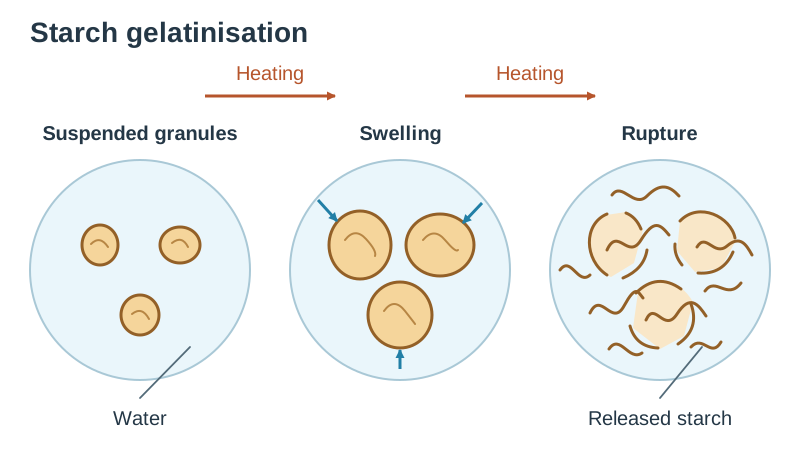
- Starch Gelatinisation: When starch granules are heated in liquid, they absorb water and swell at 60°C. At 80–100°C, the granules burst, releasing amylose and amylopectin to trap the liquid, creating a thick sol or gel (the basis of roux-based sauces).
- Nutrient Conservation: Water-soluble vitamins (ascorbic acid and thiamine) are vulnerable to leaching and thermal destruction. Retain nutrients by cooking vegetables in minimal water with a tight-fitting lid, using steaming or microwaving, and incorporating cooking liquors into gravies and sauces.
Principles of Cooking Across Food Commodities
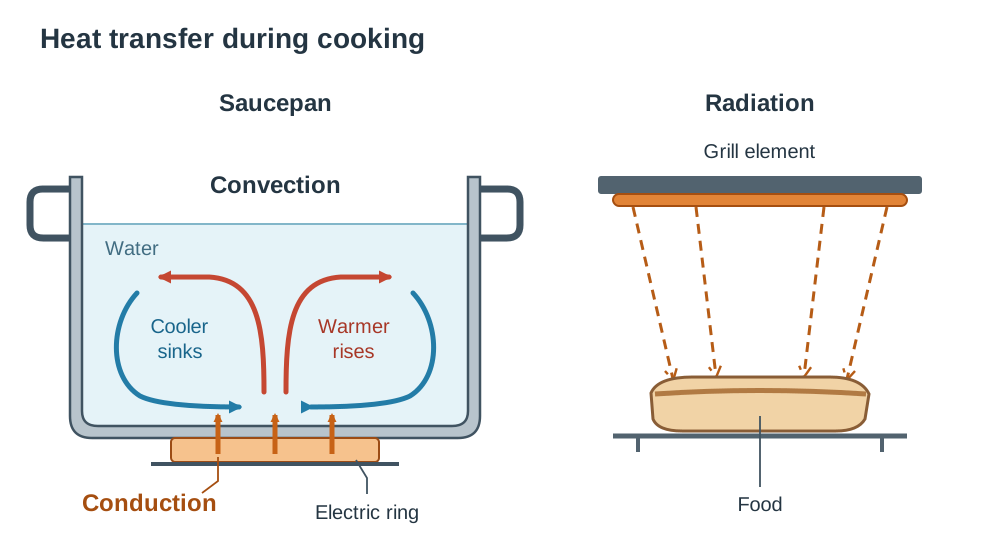
Heat energy moves through food via three mechanisms:
- Conduction: Direct transfer of heat energy from particle to particle through physical contact (e.g. heat moving from an electric ring into a saucepan base and progressively through food to its centre).
- Convection: Thermal transfer through circulating currents in liquids or gases. Heated fluid expands, becomes less dense, and ascends; cooler, denser fluid descends to displace it (e.g. boiling water in a pot or hot air in a convection oven).
- Radiation: Direct transmission of thermal energy via electromagnetic infrared rays moving in straight lines from a radiant heat source to the food surface without requiring a physical medium (e.g. an overhead electric grill element).
What Cooking Does to Each Commodity
Leaving Certificate questions regularly ask you to evaluate a cooking method for a named food commodity. You must understand the scientific effects for all major groups:
- Meat: In tough cuts, prolonged moist cooking (stewing, braising at 85–90°C) hydrolyses tough, insoluble collagen into soft, soluble gelatine. In tender cuts, dry heat (roasting, grilling) quickly coagulates actin and myosin, rendering fat and developing flavour via the Maillard reaction. Overcooking squeezes out moisture, resulting in dry, tough meat.
- Eggs: Egg white protein (ovalbumin) denatures and coagulates at roughly 60–65°C; yolk proteins coagulate at 68–70°C. Gentle cooking methods like poaching or gentle scrambling preserve a tender texture. Excessive heat causes syneresis (weeping) and creates an unappealing green-grey ferrous sulphide ring around the yolk of hard-boiled eggs.
- Fish: Because fish contains minimal connective tissue (collagen), it cooks rapidly and requires gentle treatment (poaching, steaming, or baking en papillote). Protein coagulates, turning flesh opaque and easily flaked. Overcooking dries out the delicate muscle blocks (myotomes) and breaks them apart.
- Vegetables: Heat softens insoluble cellulose and hemicellulose in cell walls, making vegetables digestible and tender. Starch granules swell and gelatinise (as in boiled potatoes). Boiling in excess water leaches water-soluble vitamins B and C; steaming or microwaving preserves these heat-labile vitamins and natural pigments.
- Cereals (rice, pasta, oats, flour): Starch granules absorb water, swell, and undergo gelatinisation between 60°C and 100°C, softening grains and making starch digestible. In dry heat, surface starches undergo dextrinisation, creating a crisp, browned crust on bread and pastries.
- Milk and Cheese: Heat coagulates lactalbumin and lactoglobulin in milk, creating a surface skin that traps steam and causes boiling over. Milk sugars (lactose) scorch easily over high heat. Cheese must be heated gently and added off the heat: excessive temperatures cause protein chains to over-coagulate into tough, rubbery strings while emulsified fats separate into an oily layer.
Classification of Culinary Methods
- Moist Methods:
- Boiling: Food submerged in water at 100°C; heat transfers via convection. Suitable for potatoes, dried legumes, and pasta. Causes severe leaching of water-soluble vitamins.
- Poaching: Cooking in liquid maintained gently at 70–85°C (below simmering point). Ideal for fragile proteins (fish, eggs, fruit) preventing physical disintegration.
- Steaming: Food suspended in steam vapour above boiling water without direct liquid contact. Highly nutrient-preserving; minimises vitamin leaching and requires no added fat.
- Stewing: Slow cooking of diced food submerged in minimal liquid in a covered vessel at 85–90°C. Hydrolyses collagen in tough cuts of meat; all leached nutrients are retained in the served gravy.
- Braising: Two-stage method: meat is seared in fat to induce Maillard browning, then cooked slowly in a covered dish with a shallow layer of stock and aromatic vegetables.
- Pressure Cooking: Trapped steam elevates pressure, raising water's boiling point to roughly 120°C. Shortens cooking times by two-thirds, conserving fuel and heat-sensitive vitamins.
- Dry Methods:
- Baking: Convection and radiation inside an enclosed oven (150–220°C). Breads and pastries brown via dextrinisation and the Maillard reaction.
- Roasting: Dry oven heat at higher temperatures (180–230°C) with added fat. Develops crisp exteriors on joints and root vegetables.
- Grilling: Fast cooking via direct infrared radiation from an overhead radiant element or glowing coals, rendering surface fat out of meats.
- Frying Methods (Shallow, Stir, Deep): Cooking using hot oil (160–200°C) as the heat-transfer medium via conduction. Rapidly seals exterior surfaces, imparting crispness while increasing calorie density.
Soups, Sauces, and Pastry Preparation
You need to be able to classify soups, sauces, and pastry, explain how each is made and why the method works, and evaluate the finished dish.
Soups
- Classification:
- Thin Soups: Clear soups (strained, clarified broths like consommé) and unstrained broths (containing visible dice of meats, cereals, and vegetables, like Irish chicken and vegetable broth).
- Thick Soups: Purées (thickened naturally by blending the cooked starchy pulse or vegetable ingredients, e.g. carrot and lentil soup), thickened soups (thickened with an added starch liaison such as flour, cornflour, or roux), creams (finished with milk or dairy cream), and bisques (thick shellfish purées).
- Culinary Guidelines: Build on a well-flavoured, degreased stock. Sweat a base of finely diced onion, carrot, and celery gently in a little oil, with the lid on, to draw out the flavour without browning it. Simmer the soup gently rather than boiling it hard: rapid boiling curdles dairy cream additions and disperses rendered fat into the liquid, giving a greasy finish.
Sauces
Sauces enhance moisture, add complementary flavours, provide visual contrast, and bind composite dishes.
- Classification: Roux-based (béchamel, velouté, espagnole), blended (cornflour slurries mixed with cold liquid, e.g. sweet fruit coulis or custard), egg-based emulsions (mayonnaise, hollandaise), and purées (apple sauce, tomato coulis).
- Roux-Based White Sauce (Béchamel) Proportions:
| Consistency | Fat (Butter) | Plain Flour | Milk / Liquid | Practical Culinary Applications |
|---|---|---|---|---|
| Pouring Sauce | 25 g | 25 g | 500 ml | Poured over steamed fish, vegetables, or desserts. |
| Coating Sauce | 50 g | 50 g | 500 ml | Coats ingredients evenly without running off (e.g. cauliflower cheese, lasagne). |
| Panada (Binding) | 100 g | 100 g | 500 ml | Extremely stiff base used to bind croquettes and fish cakes. |
- Preparation Science: Melt butter over low heat; stir in flour to produce a pale roux. The melted fat coats individual starch granules, isolating them to prevent clumping. Remove from direct heat and introduce cold milk gradually, whisking vigorously into a uniform suspension. Return to heat, stirring continuously. As the temperature climbs past 60°C, starch granules swell; at 80–100°C, they rupture, completing gelatinisation. Simmer gently for 2–3 minutes to cook out raw starch flavours.
Pastry Preparation
You must know the principles of two pastries you have made in practical class (typically shortcrust and flaky, though choux or puff are equally acceptable).
- Shortcrust Pastry (Ratio: 1 part fat to 2 parts flour, e.g. 100 g butter to 200 g plain flour):
- Technique: Sieve plain flour to aerate. Rub chilled fat into flour lightly using fingertips, lifting the mixture to incorporate air until it resembles fine breadcrumbs. Add chilled water gradually, binding with a round-bladed knife into a non-sticky dough. Rest in the refrigerator for 30 minutes. Roll lightly in one direction to roughly 3 mm thickness; avoid stretching.
- Underlying Science: Fat coats flour proteins (glutenin and gliadin), forming a waterproof barrier that restricts gluten development when water is introduced (shortening effect), yielding a crumbly, tender bake. Resting relaxes stretched gluten elastic chains, preventing oven shrinkage. Bake in a hot oven (200°C): rapid expansion of trapped air lifts the pastry while starch granules swell and burst, absorbing melting fat before it runs out.
- Common Faults: Tough pastry (caused by using too much water, over-kneading, or heavy rolling); shrunken pastry (caused by omitting the resting stage or stretching the dough into the tin); soggy bottom (caused by an under-heated oven base or adding wet, hot fillings before baking).
- Flaky Pastry (Ratio: roughly 3 parts fat to 4 parts strong flour, e.g. 150 g fat to 200 g flour):
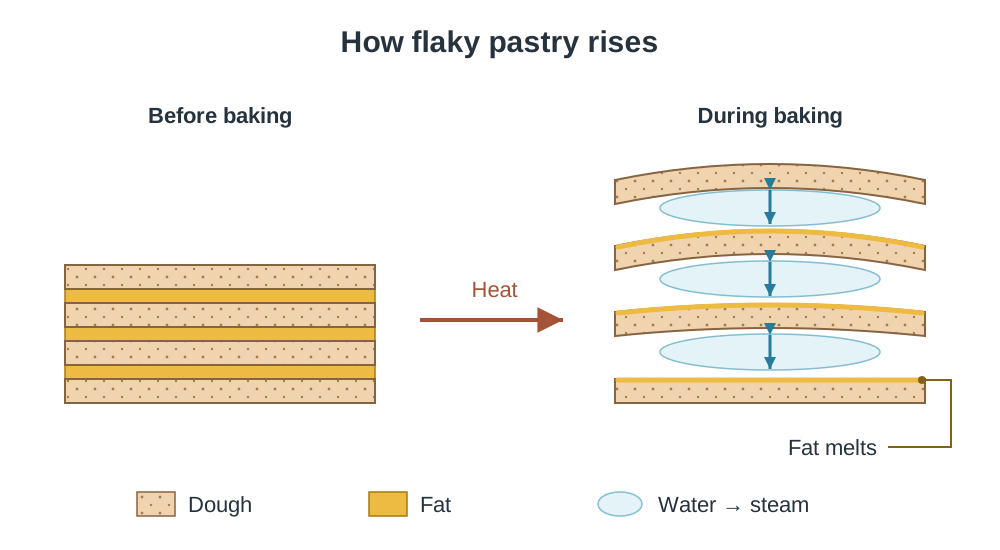
- Technique: Requires strong flour with high gluten content. Dough is rolled into an oblong; chilled fat is dotted over two-thirds of the sheet. Fold into three layers (envelope fold), seal edges to trap air, turn 90°, and roll out again. Repeat rolling, folding, and resting cycles. Bake at 210–220°C.
- Underlying Science: The alternating micro-layers of dough and fat trap pockets of air. In the intense oven heat, water in the dough vaporises into steam, forcing the gluten layers upward and apart while fat melts into the expanding laminations, yielding exceptionally flaky, crisp layers.
Kitchen Appliances and Equipment Selection
Choosing the appropriate appliance optimises cooking times, retains nutrients, and conserves household energy.
The Microwave Oven
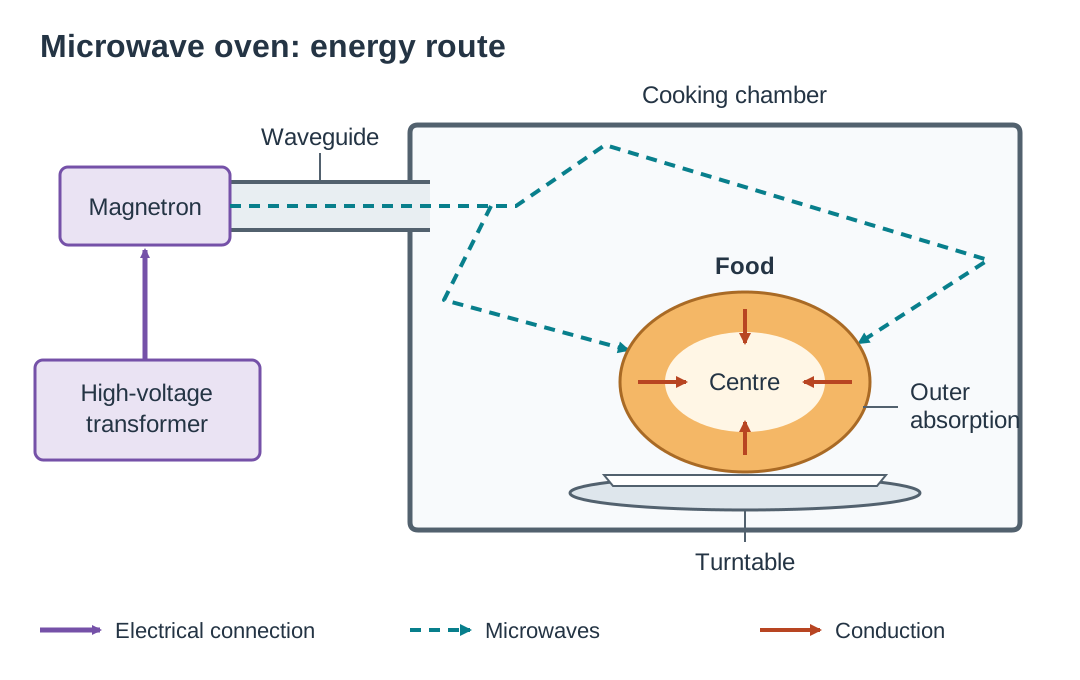
- Working Principle: Domestic mains alternating current (230 V) is stepped up to approximately 2,000–4,000 V by a high-voltage transformer. This powers a magnetron (vacuum tube), converting electrical energy into high-frequency electromagnetic radio waves at 2,450 MHz.
- Microwaves travel along a reflective metal waveguide into the cooking chamber, where a rotating metal stirrer fan or motorised revolving turntable distributes them evenly.
- Microwaves penetrate food to a depth of 2 to 4 cm and are absorbed by dipole water, fat, and sugar molecules.
- The high-frequency alternating electric field forces water dipoles to rotate 2,450 million times per second. This rapid friction generates intense thermal kinetic energy within the outer 2–4 cm. Heat then transfers to the cold inner core entirely via conduction.
- Operating Rules and Care: Cover dishes to retain steam and ensure even cooking; allow mandatory 'standing time' so internal conduction equilibrates temperatures and eliminates hazardous cold spots. Never place metals inside, as electrical arcing will damage the cavity. Clean splatters immediately to prevent carbonised hot spots.
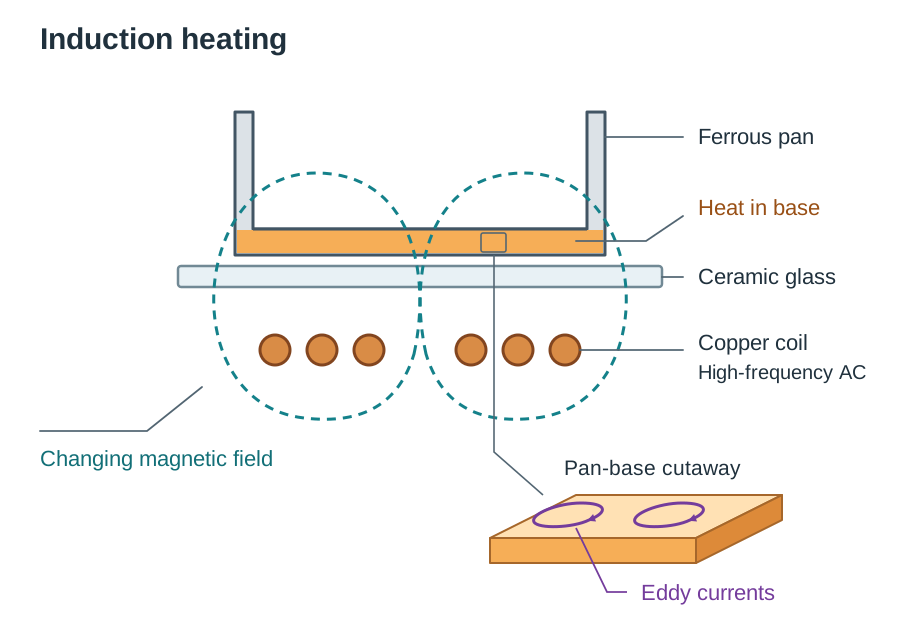
Induction Hobs
- Working Principle: Copper induction coils positioned beneath a smooth ceramic glass surface are supplied with high-frequency alternating electrical current, generating an oscillating magnetic field.
- When compatible cookware made of ferrous metal (cast iron or magnetic stainless steel) is set onto the cooking zone, the magnetic field penetrates the pan base, inducing microscopic electrical currents called eddy currents.
- The intrinsic electrical resistance of the ferrous material resists these eddy currents, converting electrical energy directly into thermal heat inside the pan base.
- Advantages: Exceptional energy efficiency (over 90% of energy converts directly to pan heat, compared to ~40% for gas); immediate temperature response; the glass cooktop remains relatively cool, preventing burnt-on food spills and reducing kitchen burn hazards.
Choosing and Caring for Kitchen Equipment
- Guidelines when buying: Match the size and capacity to family needs; check the energy efficiency label (A–G) and running costs; verify recognized safety marks (CE mark, NSAI mark); inspect ease of cleaning (dishwasher-safe removable parts, smooth surfaces with few crevices); check the length and terms of the guarantee alongside spare part availability; compare unit prices across retailers to stay within budget; select multi-purpose attachments where kitchen storage is limited.
- Safe use and care: Read instruction manuals carefully before operation; never handle electrical plugs with wet hands or overload power sockets; keep flexes short and clear of sink water and hot cooker rings; always switch off and unplug from mains before cleaning; never immerse motorised appliance bases in water; clean attachments immediately after use before food dries; descale kettles and steamers regularly; service and repair electrical equipment only through qualified technicians.
Food Safety, Hygiene, and HACCP in Meal Preparation
Food safety must be integrated into every stage of meal planning, preparation, and cooking to eliminate the risk of foodborne illnesses.
Essential Food Safety Temperatures
- Fridge operating temperature: 0–5°C (slows bacterial multiplication).
- Freezer operating temperature: −18°C (suspends microbial growth; bacteria become dormant).
- Danger zone: 5–63°C — bacteria multiply rapidly within this range, with optimum growth around 37°C.
- Core cooking temperature: cook food until the internal core reaches at least 75°C (verify using a sanitized probe thermometer).
- Hot-holding: maintain cooked food above 63°C until service.
- Leftovers: cool rapidly at room temperature, refrigerate within 90 minutes, and consume within 2 days.
- Reheating: reheat cooked food once only, reaching a core temperature of at least 70°C for two minutes (or 75°C instantaneously).
Applying HACCP to a Hot Main Course (e.g. Chicken Casserole)
HACCP (Hazard Analysis and Critical Control Point) is a systematic, preventative food-safety system. It identifies potential food safety hazards, sets Critical Control Points (CCPs) where hazards must be controlled, establishes limits, monitors procedures, and implements corrective actions.
| Stage | Hazard | Control Measure (CCP) |
|---|---|---|
| 1. Purchase | Biological: pathogenic bacteria (Salmonella, Campylobacter) on raw poultry; out-of-date ingredients. | Buy from reputable suppliers; check that packaging is undamaged and use-by dates are valid; place raw chicken in insulated cool bags last. |
| 2. Storage | Biological: bacterial multiplication; cross-contamination onto ready-to-eat foods. | Place raw chicken immediately into fridge at 0–5°C, securely covered on the bottom shelf below cooked and ready-to-eat items. |
| 3. Preparation | Biological: cross-contamination from raw chicken to vegetables or hands. | Use separate, colour-coded chopping boards (red for raw meat, green for salad/veg); wash hands with warm soapy water for 20 seconds; tie hair back; cover cuts with blue waterproof plasters. |
| 4. Cooking | Biological: survival of pathogenic micro-organisms. | Cook casserole thoroughly until the centre of chicken pieces reaches a core temperature of 75°C on a probe thermometer, and cooking juices run completely clear. |
| 5. Serving / Hot-Holding | Biological: bacterial spore germination and multiplication in the danger zone (5–63°C). | Serve immediately on heated plates, or hold in bain-marie above 63°C for a maximum of 2 hours. |
| 6. Cooling & Storing Leftovers | Biological: multiplication of surviving bacterial spores (e.g. Clostridium perfringens). | Cool leftover casserole within 90 minutes; store covered in the fridge at 0–5°C; consume within 48 hours; reheat once only to at least 70°C for two minutes. |
ISO 9000 is a series of international quality-management standards. Certification confirms that an organisation maintains documented, audited operating procedures ensuring consistent product quality, safety, and hygiene standards.
Sensory Analysis and Culinary Evaluation
Sensory analysis is a scientific methodology used to evoke, measure, analyse, and interpret reactions to food products through the senses of sight, smell, taste, touch, and hearing. It is widely applied in product development, recipe modification, and comparative quality evaluation.
Categories of Sensory Tests
- Preference (Affective) Tests: Measure subjective consumer liking and acceptability.
- Paired Preference: Taster samples two coded items and identifies the preferred sample.
- Hedonic Rating Scale: Evaluators score degree of liking on a structured 9-point scale ranging from 'like extremely' to 'dislike extremely' (or pictorial smiley faces for children).
- Preference Ranking: Evaluators arrange three or more coded samples in hierarchical order of preference.
- Difference (Discrimination) Tests: Determine whether an objective, perceptible variation exists between products.
- Triangle Test: Testers receive three coded samples simultaneously—two are identical, one is different. The tester must identify the odd sample. Used to assess whether an ingredient reformulation (such as reducing sodium or substituting a sweetener) alters the product profile.
- Directional Paired Comparison: Evaluators taste two samples to identify which exhibits greater intensity of an attribute (e.g. 'Which soup is more viscous?').
- Descriptive Tests: Measure and quantify the specific sensory attributes of a food (flavour notes, crispness, acidity) using trained panels. Results are plotted on a star diagram (spider graph) to generate an objective sensory fingerprint.
Rigorous Testing Conditions for a Fair Test
- Environmental Controls: Individual testing booths isolate panellists from non-verbal cues. Maintain neutral white illumination (or use red lighting to mask visual colour bias during blind flavour trials). Ensure quiet conditions and odour-free ventilation.
- Standardised Sample Presentation: All samples must be identical in volume, temperature, shape, and presentation vessel. Samples must be labelled strictly with random three-digit codes (e.g. 482, 917) to eliminate expectation and psychological bias (letters like 'A' or digits like '1' carry subconscious positive bias).
- Panellist Protocol: Testers must be in good health (unaffected by colds), non-smokers, and must refrain from eating or drinking for at least 30 minutes prior to testing. Provide water at room temperature and plain unsalted crackers between tastings to cleanse the palate.
Home-made versus Commercial Food: Points of Comparison
- Nutritional value: Home-made meals typically contain lower amounts of saturated fat, sugar, and salt because the cook controls the ingredients. Commercial ready meals often contain elevated sodium levels to enhance flavour and extend shelf life.
- Additives: Home-cooked dishes require no artificial preservatives, emulsifiers, or artificial flavour enhancers. Commercial products frequently incorporate E numbers to maintain stability, texture, and visual appearance.
- Cost: Home cooking is generally cheaper per portion when ingredients are bought in season or in bulk, though fuel costs and the cook's preparation time must be considered. Commercial ready meals carry higher retail costs per portion.
- Time and skill: Commercial products require minimal preparation time and basic culinary skills, suiting time-poor households. Home cooking demands advance meal planning, organisation, and cooking proficiency.
- Sensory qualities: Freshly prepared home meals typically offer superior aroma, varied textures, and fresh taste. Commercial products offer standardised, uniform appearance and flavour consistency across batches.
- Portion control and waste: Home-made meals allow exact portioning to match individual energy needs, and leftovers can be repurposed. Commercial meals come in fixed portion sizes and generate significant non-biodegradable packaging waste.
Aesthetic Presentation: Garnishes versus Decorations
- Garnish: An edible enhancement applied to savoury dishes to provide colour contrast, aroma, and texture. Examples: chopped flat-leaf parsley, lemon wedges on fish, or wholemeal croutons on soup.
- Decoration: An edible enhancement applied to sweet dishes or desserts to elevate visual appeal and elegance. Examples: fresh mint sprigs, raspberry coulis lines, piped whipped cream, or chocolate shavings.
Key terms
- Meal Management
- The managerial process of using available resources (knowledge, time, money, equipment, food availability) to plan, prepare, and present nutritionally balanced meals within household constraints.
- Recommended Dietary Allowance (RDA)
- The average daily dietary intake level of a nutrient sufficient to meet the nutritional requirements of nearly all (97–98%) healthy individuals in a specific life stage and gender group.
- Basal Metabolic Rate (BMR)
- The minimum amount of energy required by the body at complete physical and mental rest to maintain involuntary vital life processes such as breathing and circulation.
- Protein Complementation
- Combining two low biological value (LBV) plant proteins lacking different essential amino acids in the same meal, so they compensate for each other to supply all essential amino acids (HBV).
- Coeliac Disease
- An autoimmune disorder in which the consumption of gluten causes chronic inflammation and villous atrophy in the small intestine, impairing nutrient absorption.
- Enzymic Browning
- A biochemical oxidation reaction occurring in cut or bruised plant tissues where polyphenol oxidase enzymes react with atmospheric oxygen and phenols to create brown melanin pigments.
- Maillard Reaction
- Non-enzymic browning occurring under dry heat above 140°C between the amino group of an amino acid and the carbonyl group of a reducing sugar, generating melanoidins and savoury flavour.
- Gelatinisation
- The swelling and bursting of starch granules when heated in liquid between 60°C and 100°C, causing amylose and amylopectin to release and form a thick sol or gel.
- Magnetron
- A high-voltage vacuum tube inside a microwave oven that converts electrical energy into high-frequency electromagnetic microwave radiation (2,450 MHz).
- Shortening
- The ability of fat to coat flour protein particles (glutenin and gliadin), forming a waterproof layer that prevents water absorption and limits gluten development, producing a crumbly texture.
- Danger Zone
- The temperature range between 5°C and 63°C within which food-poisoning bacteria multiply most rapidly.
- HACCP
- Hazard Analysis and Critical Control Point: a systematic, preventative food-safety management system that identifies hazards, establishes critical control points, and monitors controls.
- Critical Control Point (CCP)
- A specific step in food preparation where control must be applied to prevent, eliminate, or reduce a food safety hazard to an acceptable level.
- Triangle Test
- A sensory discrimination test where an evaluator is presented with three coded samples (two identical, one different) and must identify the odd sample.
- Star Diagram
- A radial visual chart used in descriptive sensory analysis to plot the perceived intensities of multiple sensory attributes of a food product simultaneously.
- Conduction
- The transfer of thermal energy from molecule to molecule through direct physical contact within a solid or between substances without bulk mass displacement.
Check yourself
What primary heat transfer mechanism moves heat through circulating currents in boiling water or oven air?
Convection.
Name the specific enzyme responsible for the browning of sliced raw apples when exposed to air.
Polyphenol oxidase.
What are the precise quantities of fat, flour, and milk needed to produce 500 ml of a coating white sauce?
50 g fat, 50 g flour, and 500 ml milk.
What is the operating temperature range of the bacterial danger zone?
5°C to 63°C.
State one critical control point and its corresponding control measure during the cooking stage of raw chicken.
Ensure the chicken reaches a minimum core temperature of 75°C (measured with a sanitised probe thermometer) to destroy pathogenic bacteria like Salmonella.
Why should grated cheese be stirred into a roux sauce off the heat at the very end of cooking?
Excessive heat causes cheese proteins to over-coagulate into tough, stringy lumps and causes the fat to separate into an oily layer.