

The ancient Greeks and Romans worshipped many gods who looked, felt, and acted like human beings. In this topic, you learn to recognise the major deities in art by their attributes, match Greek and Roman counterpart names, understand their spheres of influence, and explore how ancient writers explained their purpose. Classical religion was fundamentally anthropomorphic: the gods possessed immortal bodies and immense cosmic power, but they also displayed human flaws like jealousy, vanity, and wrath. In Homer's Odyssey and Virgil's Aeneid, the gods drive human history through direct intervention. Over time, philosophers like Xenophanes and Plato criticised these traditional stories, while the Romans adapted Greek myths through syncretism to serve their own civic and political needs.
The Twelve Olympians and the Divine Family
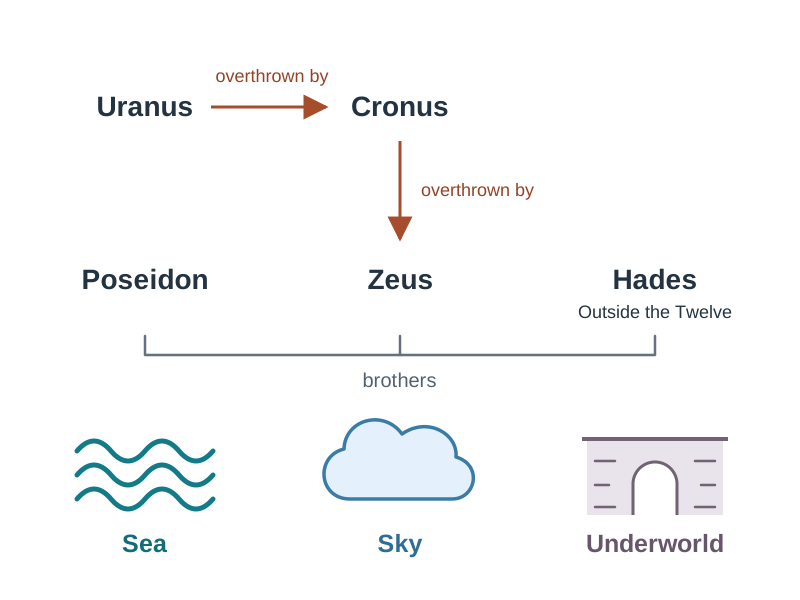
Classical myths explained the origins of the universe through divine genealogy. According to Hesiod's Theogony, first of all Chaos (the primal void) came into being, and then Gaia (Earth). Gaia gave birth to Uranus (Sky), and their son Cronus overthrew Uranus, only to be overthrown in turn by his youngest son, Zeus, during the great war known as the Titanomachy.
After their victory, Zeus and his two brothers drew lots to divide the cosmos:
- Zeus won dominion over the sky, the weather, and supreme kingship over gods and mortals.
- Poseidon received the sea, earthquakes, and horses.
- Hades received the Underworld, ruling the dead and the wealth beneath the earth.
The Twelve Olympians were the principal deities who resided on Mount Olympus: Zeus, Hera, Poseidon, Demeter, Athena, Apollo, Artemis, Ares, Aphrodite, Hermes, and Hephaestus, along with either Hestia or Dionysus (tradition held that Hestia yielded her seat to Dionysus). Although Hades was Zeus's brother and a major god, he inhabited the Underworld rather than Mount Olympus and is not usually counted among the Twelve.
Explaining Human Suffering: Prometheus and Pandora
In his Theogony and Works and Days, Hesiod used myth to explain why mortal life is full of hardship and why mortals offer sacrifice:
- The division of sacrifice: The Titan Prometheus tricked Zeus at Mecone by wrapping rich meat in an ox's stomach and disguising bare bones under glistening fat. Zeus chose the bones. From that day on, Greek animal sacrifice followed this pattern: mortals kept the meat to eat, while burning the fat and bones on the altar for the gods.
- The theft of fire and Pandora: Angered by the trick, Zeus withheld fire from humans. Prometheus stole it back in a hollow fennel stalk. In retaliation, Zeus ordered the creation of Pandora, the first woman. Sent to earth with a storage jar, Pandora opened it, scattering toil, disease, and sorrow among mankind, leaving only hope trapped inside.
- Prometheus's punishment: Zeus chained Prometheus to a mountain in the Caucasus, where an eagle tore out his regenerating liver every day until Heracles eventually freed him. For Hesiod, this narrative explains why human life requires relentless labour and why mortal defiance of divine will always brings ruin.
Recognising the Gods in Art and Architecture
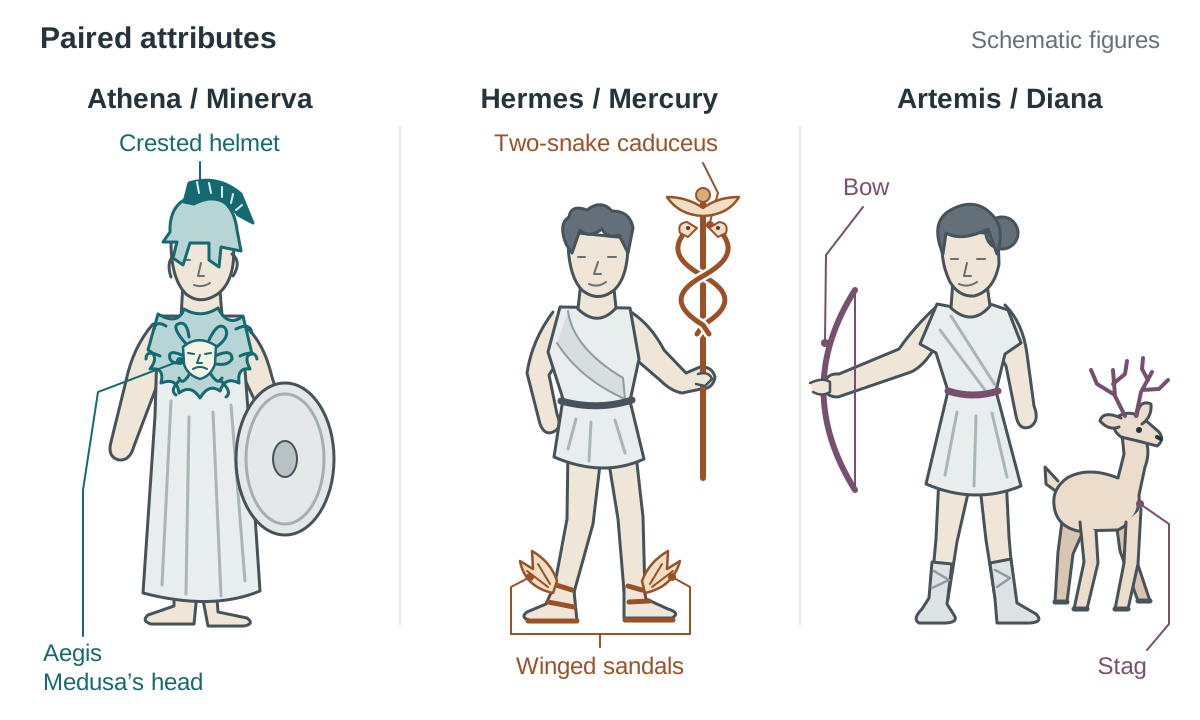
Ancient painters and sculptors rarely labelled their subjects with names. Instead, they relied on standardised attributes—specific items of clothing, weapons, hand-held objects, or sacred animals—so viewers could recognise each deity at a glance. Section A questions can use visual sources, so you may need to identify a god from an image.
Olympian Visual Attributes and Domains
| Greek God | Roman God | Key Domains | Physical Attributes and Clothing | Sacred Animals and Plants |
|---|---|---|---|---|
| Zeus | Jupiter | Sky, weather, lightning, kingship, justice | Mature beard, enthroned, holding lightning bolt or sceptre | Eagle, oak tree |
| Hera | Juno | Marriage, family, Queen of the gods | Veiled head, royal diadem (crown), lotus-topped sceptre | Peacock, cow |
| Poseidon | Neptune | Sea, earthquakes, tidal waves, horses | Mature beard, wild hair, brandishing a three-pronged trident | Horse, dolphin, bull |
| Demeter | Ceres | Agriculture, grain harvest, fertility of crops | Mature woman, holding a sheaf of wheat, torches, or cornucopia | Pig, serpent, wheat |
| Athena | Minerva | Strategic warfare, wisdom, crafts, defence of the city | Crested helmet, spear, shield, wearing the aegis with Medusa's head | Owl, olive tree |
| Apollo | Apollo | Prophecy, music, archery, healing, light | Youthful, clean-shaven, holding a lyre (kithara) or bow | Raven, swan, laurel wreath |
| Artemis | Diana | Hunting, wild animals, chastity, the moon | Short hunting tunic (chiton), boots, holding a bow and quiver | Stag (deer), hunting dog, cypress |
| Ares | Mars | Violent combat, bloodshed, physical slaughter | Armed as a hoplite with helmet, breastplate, greaves, spear, shield | Vulture, dog |
| Aphrodite | Venus | Erotic love, physical beauty, fertility | Often nude or semi-draped, holding a mirror or golden apple | Dove, sparrow, goose, rose, myrtle |
| Hermes | Mercury | Messengers, trade, travellers, guide of souls | Winged sandals (talaria), traveller's hat (petasos), caduceus wand | Tortoise, ram |
| Hephaestus | Vulcan | Blacksmithing, metalwork, fire, volcanoes | Tongs, anvil, blacksmith's hammer, shown lame or leaning on a staff | Donkey |
| Hestia | Vesta | The hearth, domestic life, civic sacred flame | Modest, veiled woman seated, holding a sceptre or libation bowl | Donkey, hearth fire |
| Dionysus | Bacchus | Wine, ritual madness, religious theatre | Crown of ivy or grape leaves, holding a thyrsus staff and wine cup | Panther, leopard, grapevine |
| Hades | Pluto | Underworld, ruler of the dead, wealth beneath the earth | Enthroned in gloom, mature beard, holding a sceptre or cornucopia | Cerberus (three-headed dog), cypress |
The Artemision Bronze: Reasoning from Evidence
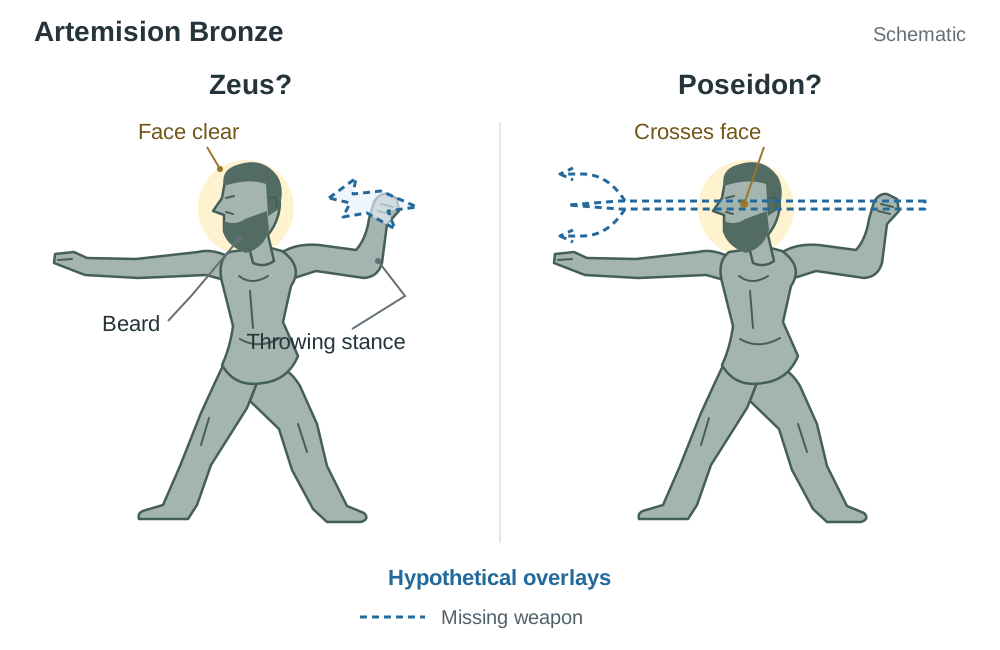
When a statue has lost its hand-held attribute, you must reason carefully from pose and context. A famous example is the fifth-century BC Artemision Bronze, recovered from a shipwreck off the Greek coast. The statue depicts a mature, naked, bearded god standing with his left arm pointing forward and his right arm raised behind his head to hurl a weapon.
- If the missing weapon was a thunderbolt, the statue represents Zeus.
- If it was a three-pronged trident, it represents Poseidon.
Art historians argue that a long trident would have cut across the figure's face and obscured his sightline, which classical sculptors generally avoided. A thunderbolt fits the grip and leaves the face clear. When analysing visual evidence, always identify at least two distinct markers (such as the mature beard and throwing stance) and justify your identification based on how the figure is composed.
Prescribed Temples: Acropolis and Forum
Mythological scenes on public temples reinforced civic pride and state identity:
- The Contest for Athens (Parthenon, West Pediment): Athena and Poseidon competed to become patron deity of Athens. Poseidon struck the Acropolis rock with his trident, creating a salt-water spring. Athena planted the first olive tree. The Athenians chose Athena's gift because it supplied food, oil, and timber. The nearby Erechtheion marked the actual site of the salt spring and housed Athena's sacred olive tree.
- The Birth of Athena (Parthenon, East Pediment): Athena was born fully grown and fully armed from the head of Zeus after he swallowed the Titaness Metis (Wisdom). This myth highlighted Athena's connection to strategic wisdom (metis) and justified her title as Athena Parthenos (the Virgin), loyal entirely to her father.
- The Temple of Vesta: A small, circular building in the Roman Forum that housed the eternal sacred fire of Rome. It contained no cult statue because Vesta was embodied in the flame itself. Maintained day and night by the six Vestal Virgins, the fire stood as the physical guarantee of Rome's divine protection; if it went out, Romans believed catastrophic disaster would follow.
Greek Deities and Roman Counterparts: Cultural Syncretism
The Romans did not simply take over Greek religion word for word. They practised religious syncretism, blending the anthropomorphic stories and visual representations of Greek gods with their own native Italian spirits (numina). Early Roman religion focused on performing exact rituals to preserve the pax deorum (peace with the gods). When Roman writers absorbed Greek literature, they mapped their traditional deities onto Greek equivalents, yet significant differences in cultural values remained.
Fast Reference: Name Pairs
- Zeus = Jupiter
- Hera = Juno
- Poseidon = Neptune
- Demeter = Ceres
- Athena = Minerva
- Apollo = Apollo (name unchanged)
- Artemis = Diana
- Ares = Mars
- Aphrodite = Venus
- Hermes = Mercury
- Hephaestus = Vulcan
- Hestia = Vesta
- Dionysus = Bacchus
- Hades = Pluto
Contrasting Cultural Values
Ares versus Mars: To the Greeks, Ares embodied the savage, insatiable butchery of battle. In Book 5 of the Iliad, when the mortal Diomedes wounds him with Athena's help, Ares retreats screaming to Mount Olympus, where Zeus calls him the most hateful of all the gods. By contrast, the Romans viewed Mars with great reverence. He was an orderly, disciplined guardian of the state, warfare, and agriculture. Most importantly, Mars was revered as pater Mars, the father of Romulus and Remus, making him the direct ancestral protector of the Roman people.
Aphrodite versus Venus: Greek Aphrodite was an unpredictable, dangerous power who sparked uncontrollable sexual desire and family ruin, as seen in the Judgement of Paris. Roman Venus, while retaining these erotic myths, took on monumental imperial importance. Julius Caesar and his adopted son Augustus promoted the cult of Venus Genetrix ('Venus the Mother'), claiming that the Julian family descended directly from Venus through the Trojan hero Aeneas. In Roman hands, a goddess of erotic desire became an emblem of imperial legitimacy.
Hestia versus Vesta: Greek Hestia was a gentle domestic goddess who guarded the family hearth fire and rarely featured in major myths. Roman Vesta was central to the survival of the state. Her temple in the Roman Forum was the heart of civic life, and her priestesses, the Vestal Virgins, enjoyed legal independence and prime public seating, balanced against the lethal penalty of being buried alive if they broke their thirty-year vow of chastity.
The Gods in the Odyssey and the Aeneid
Classical religion was defined by anthropomorphism: the gods possessed human forms and emotional drives, magnified by immortality. They were not morally perfect beings. Instead, they were driven by honour, wounded pride, and personal favourites.
The Gods in Homer's Odyssey
In Homer, the gods act largely out of personal loyalty or grudges, though Zeus acts as the ultimate guardian of justice:
- Athena: Serves as Odysseus's patron deity, championing his cunning and endurance. In Book 1, she pleads his case before the council of the gods while Poseidon is away. She disguises herself as Mentes and Mentor to guide Odysseus's son Telemachus, and later disguises Odysseus as an elderly beggar on Ithaca so he can test his household.
- Poseidon: Odysseus's relentless persecutor. When Odysseus blinds the Cyclops Polyphemus, Polyphemus prays to his father Poseidon for vengeance. Poseidon's anger keeps Odysseus from home for years. When Odysseus finally sails from Calypso's island on a raft (Book 5), Poseidon raises a storm that wrecks it. This shows that the gods protect their family members regardless of moral right.
- Zeus and Human Folly: In Book 1 of the Odyssey, Zeus complains that mortals constantly blame the gods for their misery, when in reality they bring suffering on themselves 'beyond what is fated' through their own reckless choices. He points to Aegisthus, who murdered Agamemnon despite Hermes explicitly warning him of the consequences. Later, Odysseus's crew slaughter the sacred cattle of Helios despite strict warnings; Helios demands retribution, and Zeus shatters their ship with a thunderbolt.
- Xenia and Justice: Zeus presided over xenia (the sacred code of hospitality). The Cyclops Polyphemus directly violated xenia by trapping and devouring Odysseus's men, making his blinding a just punishment under divine law.
The Gods in Virgil's Aeneid (Books 1–6)
Virgil adapted Homer's epic machinery, but subordinated divine anger to the overarching concept of Roman destiny and imperial propaganda:
- Juno: Acts as the relentless antagonist of the Trojans. Her fury stems from three grievances: the Judgement of Paris (where Paris chose Venus over her), her love for Carthage (which fate decreed Rome would destroy), and the Trojan prince Ganymede replacing her daughter Hebe as cupbearer to Jupiter. In Book 1, she bribes Aeolus, ruler of the winds, to unleash a storm that wrecks Aeneas's fleet off the coast of Africa. Virgil opens the epic by asking: 'Can there be such anger in the hearts of the gods?'
- Venus: Mother and divine protector of Aeneas. She appears to him disguised as a huntress in Book 1, and sends Cupid to make Queen Dido fall desperately in love with him, securing his safety in Carthage. In Book 2, during the fall of Troy, she strips the mortal mist from Aeneas's eyes to show him Neptune, Juno, and Jupiter tearing down the city walls, convincing him to flee rather than waste his life in futile fighting.
- Jupiter and Fate: Jupiter is the steady guarantor of fate (fatum). In Book 1, he calms Venus by unrolling the scroll of destiny, prophesying that Aeneas will reach Italy and that his descendants will build an empire without end (imperium sine fine), culminating in the reign of Augustus Caesar.
- Mercury and Pietas: In Book 4, when Aeneas lingers in Carthage with Dido, Jupiter dispatches Mercury to rebuke him. Mercury orders Aeneas to remember his duty to Italy and his son Ascanius. This forces Aeneas to demonstrate pietas (duty to family, gods, and country) by abandoning personal happiness for his imperial mission.
- Laocoön: In Book 2, Laocoön, a priest of Neptune, warns the Trojans not to trust the Wooden Horse, throwing his spear into its wooden belly. Moments later, two gigantic sea serpents emerge from the sea, crush Laocoön and his two sons to death, and shelter beneath the statue of Minerva. The Trojans misinterpret this horrific death as divine punishment for striking the horse, prompting them to drag it into Troy. In reality, the gods silenced Laocoön to ensure Troy fell as fated.
Ancient Explanations of Myth: Aetiology, Ritual, and Philosophy
Ancient people developed several ways of making sense of their gods, ranging from traditional storytelling to rational philosophical critiques.
Aetiological Myths and Reciprocal Worship
An aetiology is an origin story that explains why a natural event occurs or why a particular ritual is performed:
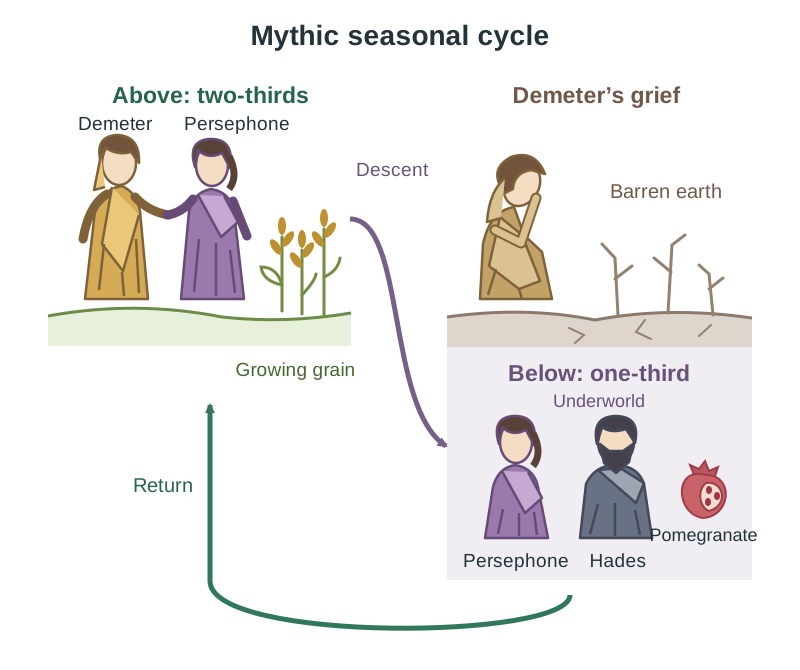
- Demeter, Persephone, and the Seasons: Hades abducted Persephone into the Underworld. Stricken with grief, Demeter wandered the earth searching for her daughter, neglecting the crops until the earth turned barren. Zeus brokered a settlement: because Persephone had eaten pomegranate seeds in the Underworld, she had to spend one-third of the year below with Hades, returning to the upper air for the remaining two-thirds. When Persephone is below, Demeter mourns and the earth is barren (winter); when she returns, vegetation springs to life once more. This aetiological myth explained the seasonal cycle and formed the heart of the Eleusinian Mysteries, secret initiation rites that promised initiates a blessed afterlife.
- Do Ut Des: Ancient religious worship was fundamentally transactional. Mortals gave offerings based on the principle of do ut des ('I give so that you might give'). Mortals offered animal sacrifices, poured libations of wine, and dedicated statues to secure divine favour, heal disease, or ensure military victory.
- Hubris and Nemesis: The gods guarded the divide between mortality and divinity. Mortals who displayed hubris (arrogant pride or claiming superiority to the gods) invited immediate divine retribution (nemesis), as seen when the weaver Arachne boasted she was better than Athena and was transformed into a spider.
Philosophical Critiques of Myth
From the sixth century BC, Greek thinkers began challenging the literal truth and moral value of epic myths, and later Roman writers such as Cicero continued the debate:
- Xenophanes of Colophon (6th century BC): Condemned Homer and Hesiod for portraying the gods as thieves, adulterers, and liars. He argued that human beings create gods in their own image: if horses, oxen, or lions could draw, they would depict their gods as horses, oxen, and lions. Xenophanes proposed a single, supreme, non-physical god who moves the universe solely with his mind.
- Plato (4th century BC): In his Republic, Plato argued that stories of gods fighting, deceiving, and mourning corrupted the moral education of the young. He maintained that because god is good by nature, god can never be the author of evil or change shape to deceive mortals. Plato argued that traditional Homeric myths should be censored and excluded from his ideal state.
- Euhemerus (late 4th century BC): Pioneered the rationalist theory of euhemerism, arguing that the gods were originally exceptional mortal kings, inventors, and conquerors who were deified by grateful populations after their deaths.
- Cicero and Roman Stoicism (1st century BC): In De Natura Deorum (On the Nature of the Gods), Cicero laid out Stoic allegorical interpretations. The Stoics argued that the traditional gods were personifications of physical elements: Jupiter was the upper ether, Juno the air, and Neptune moisture. Cicero stressed that while educated citizens might reject crude myths, public rituals and sacrifices remained essential for maintaining civic discipline and preserving the state.
Key terms
- Pantheon
- 1. The collective family of all the gods recognised by a polytheistic culture (from the Greek 'pan' for all and 'theoi' for gods). 2. The famous domed temple in Rome, completed under Hadrian around AD 126 and dedicated to all the gods.
- Attribute
- A distinctive personal item, piece of clothing, weapon, or animal consistently associated with a specific deity in classical art and literature to make them instantly recognisable.
- Anthropomorphism
- The practice of attributing human physical appearance, psychological traits, and moral weaknesses to divine beings.
- Syncretism
- The blending of religious beliefs, stories, and practices from different cultures, such as the Romans identifying their native deities with the Greek Olympians.
- Aetiology
- A traditional myth or story that explains the origin or cause of a natural phenomenon, social custom, or religious ritual.
- Aegis
- A protective cape, collar, or breastplate made of goatskin, bordered with serpents and displaying the severed head of Medusa, worn primarily by Athena and Zeus.
- Caduceus
- The sacred herald's staff carried by Hermes (Mercury), featuring two intertwined snakes and often topped with wings.
- Do ut des
- A Latin phrase meaning 'I give so that you might give', describing the reciprocal, transactional agreement at the heart of Roman and Greek animal sacrifice and prayer.
- Pax deorum
- A Latin phrase meaning 'peace with the gods', denoting the central goal of Roman civic religion, achieved through exact and continuous ritual performance.
- Xenia
- The sacred Greek code of hospitality and reciprocal protection governing hosts and guests, divinely guarded and enforced by Zeus Xenios.
- Hubris
- Excessive human arrogance, overconfidence, or defiance of the gods, which inevitably invites divine retribution (nemesis).
- Nemesis
- The inescapable punishment, ruin, or downfall inflicted by the gods upon mortals who commit hubris or break divine laws.
- Moira / fate
- The destiny allotted to each person and to events. In Homer, Zeus generally respects fate but the poem leaves open whether he could override it. In Virgil, Jupiter actively guarantees fate (fatum).
- Euhemerism
- The rational theory developed by Euhemerus suggesting that mythological gods were originally historical human rulers and heroes deified over time by their communities.
Check yourself
Match the following five Roman deities to their Greek counterparts: Jupiter, Neptune, Minerva, Mercury, and Bacchus.
Jupiter = Zeus; Neptune = Poseidon; Minerva = Athena; Mercury = Hermes; Bacchus = Dionysus.
Which visual attributes distinguish Athena from other goddesses in classical Greek art?
She wears a crested Corinthian helmet, carries a spear and shield, and wears the snake-fringed aegis displaying the severed head of the Gorgon Medusa.
Why did Poseidon relentlessly persecute Odysseus in Homer's Odyssey?
Odysseus blinded Poseidon's son, the Cyclops Polyphemus, and Polyphemus prayed to his father to delay Odysseus's homecoming and kill all his companions.
What three grievances caused Juno's hatred of the Trojans in Virgil's Aeneid?
The Judgement of Paris (Paris chose Venus over her), her love for Carthage (which was fated to be destroyed by Rome), and the Trojan prince Ganymede replacing her daughter as cupbearer to Jupiter.
What core philosophical critique of traditional religion was put forward by Xenophanes of Colophon?
He argued that humans invent gods in their own image, observing that if horses, oxen, or lions could draw, they would depict gods with the bodies of horses, oxen, and lions.