

In the ancient Greek and Roman worlds, death was never only a private matter: even the most domestic rites were religious duties with public consequences for the family and the city. Funerals guarded the living from ritual pollution, secured safe passage for the soul into the underworld, and preserved family memory across generations. Leaving a body unburied was believed to trap the deceased between realms and offend the gods. By examining physical remains such as the Dipylon Amphora, the Hegeso Stele, white-ground lekythoi, and Roman reliefs alongside writers such as Homer, Polybius, Virgil, and Ovid, we can reconstruct the main stages of ancient mourning, though our evidence comes mostly from wealthy families in Athens and Rome.
The Sacred Duty of Burial and the Journey of the Soul
For both Greeks and Romans, burial rites were an absolute religious obligation. Abandoning a corpse without rites caused severe ritual pollution (miasma in Greek), defiling the family, offending the gods, and leaving the soul stranded between realms.
Ancient epic demonstrates this anxiety. In Book 11 of Homer's Odyssey, when Odysseus journeys to the borders of the Underworld, the first shade he meets is his unburied comrade Elpenor, who begs him not to leave his corpse behind unwept and unburied, lest he draw down the anger of the gods. In Book 23 of Homer's Iliad, the ghost of Patroclus begs Achilles to bury him as quickly as possible so that he can pass through the gates of Hades, since the other ghosts will not let him cross the river.
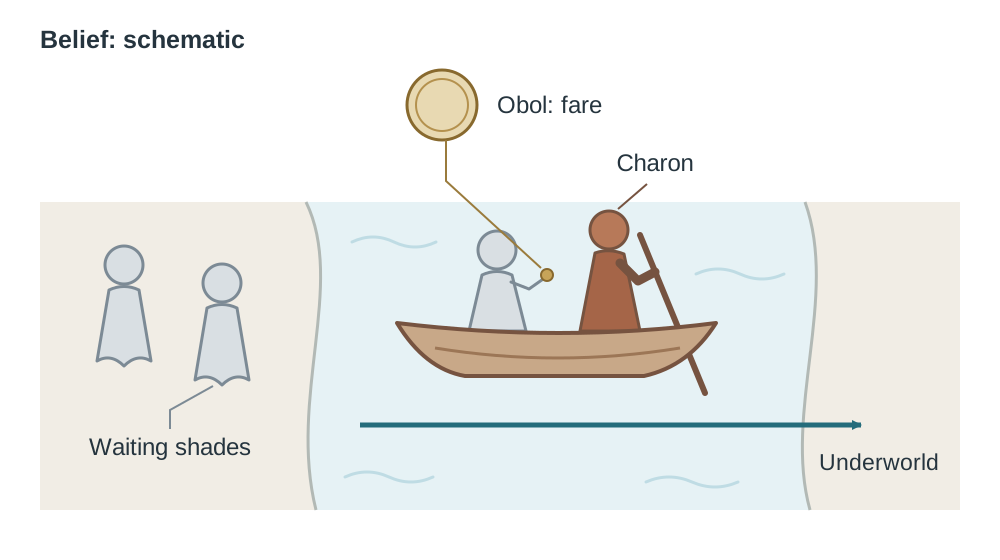
This belief produced the custom of Charon's obol: placing a small coin in the mouth or hand of the deceased as fare (naulon in Greek, naulum in Latin) for Charon, the underworld ferryman. Without it, or without burial rites, the soul was condemned to wander the near bank in misery.
Conceptions of the underworld evolved over centuries. In Homer, Hades is mostly a gloomy place where the shades live a feeble half-life as joyless phantoms (eidola), though a few great sinners like Tantalus and Sisyphus are punished and Minos judges disputes. Later, the Mysteries of Demeter at Eleusis promised initiates a happier afterlife, while philosophers such as Plato stressed post-mortem judgement based on earthly conduct. Book 6 of Virgil's Aeneid presents a fully divided underworld: Tartarus for the wicked and the Elysian Fields for the blessed.
The Classical Greek Funeral: Sequence, Law, and Purification
An Athenian funeral followed a three-part sequence designed to manage pollution and guide the soul safely:
1. The Prothesis (Laying Out)
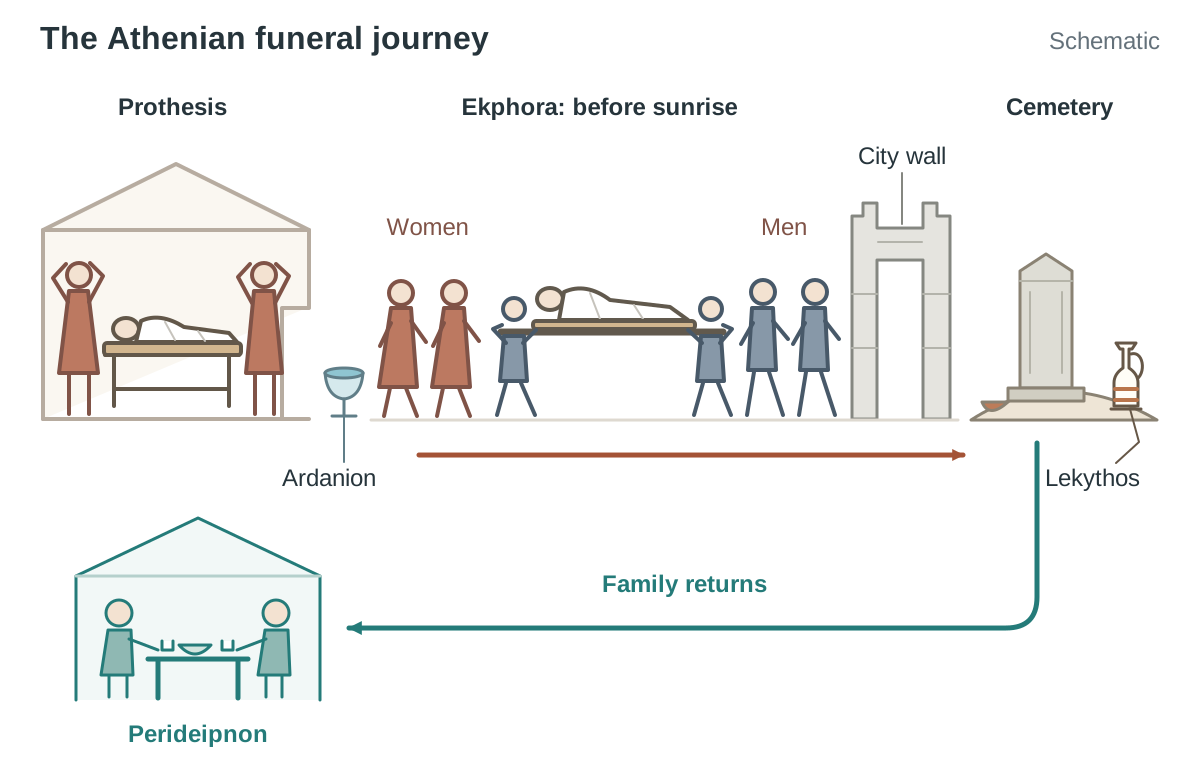
Immediately after death, female relatives washed, anointed the body with perfumed oil, and dressed it in white robes. The corpse lay on a high couch (kline) inside the house for a day so relatives could pay their respects. Women directed this domestic phase, singing traditional laments (threnoi), tearing their hair, and beating their breasts. Outside the entrance stood an ardanion, a vessel of spring water, allowing visitors to wash away ritual pollution as they left. Mourners often cut locks of hair to place on the deceased.
2. The Ekphora (Procession)
The funeral procession conveyed the deceased from the home to the cemetery outside the city walls. By the early sixth century BC, the Athenian lawgiver Solon restricted funeral practices to curb aristocratic excess and disorder (recorded in the speech Against Macartatus and Plutarch's Life of Solon). Solon's laws required the prothesis to take place indoors, mandated that the ekphora leave before sunrise on the day after the prothesis, placed men in front and women behind, and barred women under sixty from entering the house or following the bier unless they were close relatives. Self-laceration, hired mourning, and extravagant grave goods were banned, asserting civic control over private grief.
3. Interment and Post-Burial Rites
The body was cremated or buried in an extramural cemetery such as the Kerameikos in Athens. Family members poured libations (choai) of wine, milk, honey, and water at the grave, and left perfumed oil in slender white-ground lekythoi, painted with scenes of tomb visits, farewells, or Charon in his skiff.
After returning from the grave, the family shared a funeral meal (perideipnon) at the home of the nearest relative, and the polluted house was ritually cleansed. Offerings returned to the tomb on the third, ninth, and thirtieth days, with the thirtieth day ending formal mourning. Families continued annual gravesite rituals, including the Athenian civic festival of the Genesia.
Visual Evidence for Greek Funerals
Material artefacts provide physical details that complement literary texts:
The Dipylon Amphora (c. 760–750 BC)
Discovered in the Kerameikos cemetery, this monumental Geometric vase stood as an elite grave marker. Its central belly frieze depicts the earliest surviving scene of a Greek prothesis: the deceased lies on an elevated bier beneath a patterned shroud, flanked by silhouettes of mourners with both hands raised to their heads in the traditional gesture of lamentation.
Funerary Plaques (Pinakes)
Sixth-century BC black-figure terracotta plaques depict close-up scenes of the prothesis. They show female relatives positioned at the head of the bier—touching the head of the deceased was the special duty of the chief mourner—while male relatives stand at the foot with right arms raised in formal salute.
The Hegeso Stele (c. 410 BC)
Recovered from the Kerameikos, this carved marble stele depicts the aristocratic Hegeso seated on an elegant chair (klismos), examining a necklace from a jewellery box (pyxis) held by her domestic servant. The inscription reads simply: 'Hegeso, daughter of Proxenos'. Rather than displaying raw anguish, the carving embodies classical sophrosyne (dignified emotional restraint), commemorating Hegeso entirely within the domestic sphere (oikos) while quietly advertising her family's civic standing.
The Ordinary Roman Funeral: Step by Step
For an ordinary Roman citizen family, funerary custom followed a rigorous domestic and ritual sequence:
1. At Death: Conclamatio
The nearest relative leaned forward to give a last kiss to catch the dying person's final breath (the soul) and closed the eyes. Relatives then called the deceased's name aloud repeatedly. This was the conclamatio, a ritual check to ensure the person was dead and not merely unconscious.
2. Preparing the Body
Professional undertakers (libitinarii, based at the grove of the goddess Libitina) and their assistants (pollinctores) washed and anointed the body. A male citizen was dressed in his white woollen toga, decorated with the border of any magistracy he had held in life.
3. Lying in State: Collocatio
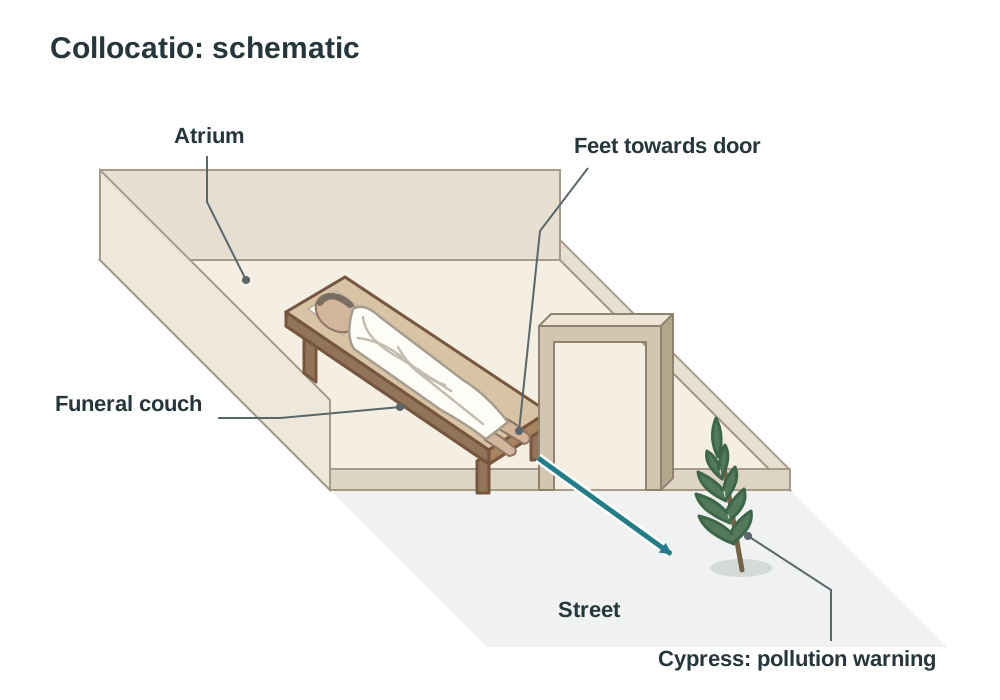
The body lay on a funeral couch in the atrium with its feet pointed towards the street door, symbolising departure. A branch of cypress or pine was placed outside the front door to warn priests and magistrates to avoid entering the house and contracting ritual pollution.
4. Procession and Mourning
Musicians playing flutes (tibicines) and horns (cornicines) led the procession. Hired female mourners (praeficae) chanted dirges (naeniae) and beat their breasts. Family members and freedmen walked behind the bier.
5. Disposal and Os Resectum
The Twelve Tables (Rome's earliest law code) banned burying or burning the dead inside the city, partly because a corpse was believed to pollute sacred space. Bodies were cremated or buried along roads outside the walls. Prior to cremation on a pyre (rogus), a single finger bone was sometimes severed (os resectum) and buried in the earth, ensuring that an ancient earth burial had technically occurred even if the rest of the body was reduced to ash.
6. Feasts and Purification
Mourners shared a funeral meal (silicernium) beside the tomb. On the ninth day after death, the family conducted the novendialis sacrifice and feast (cena novendialis), ending formal mourning. The family house was purified by sweeping with a sacred broom and fumigating with herbs.
Elite Funerals: Imagines, the Rostra, and Monuments
An elite Roman funeral, publicly announced by a herald (funus indictivum), was a theatrical civic spectacle designed to project family pedigree and political power. Only exceptional public figures received a funus publicum, a funeral voted and paid for by the Roman Senate.
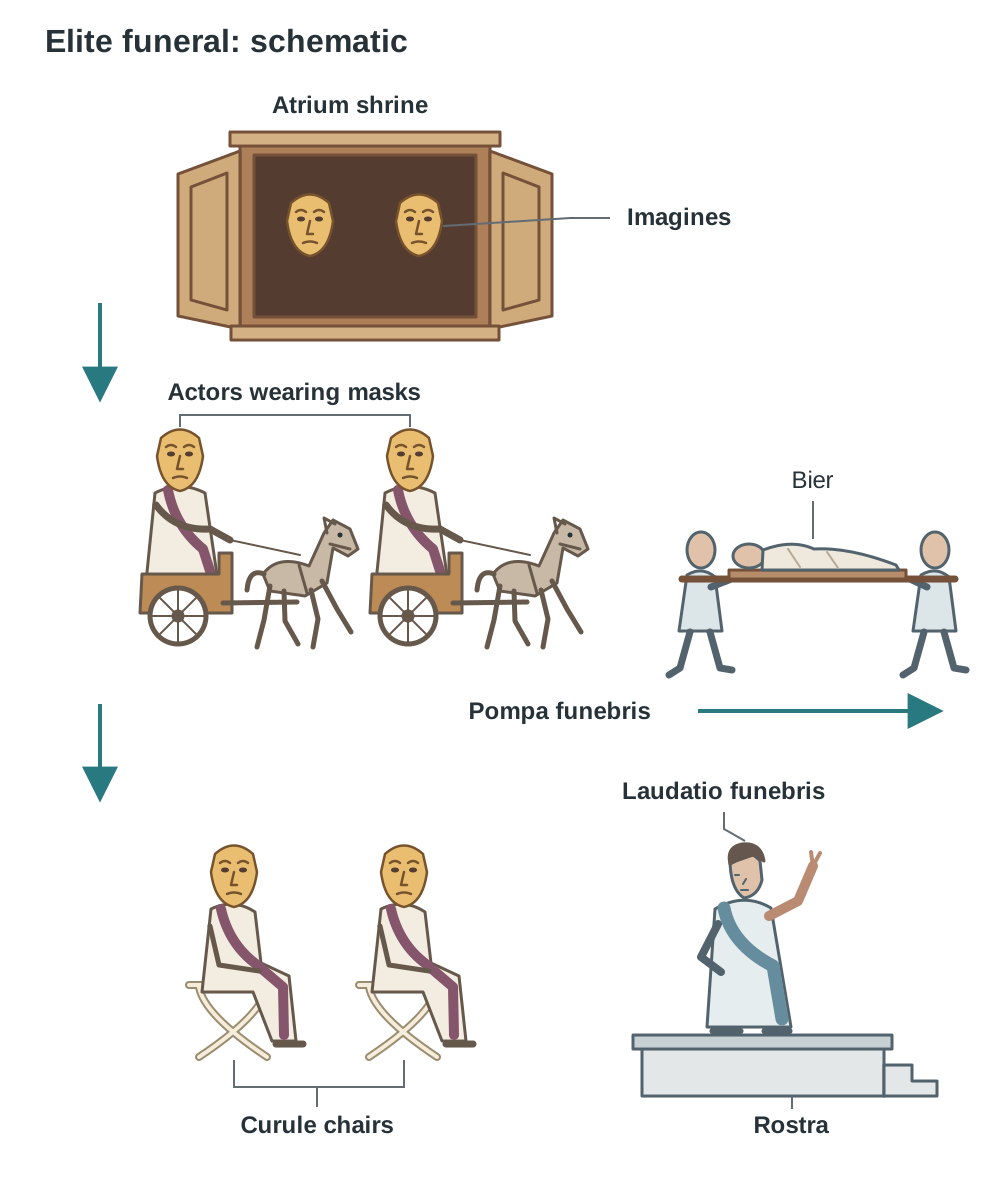
In the atrium of a noble home stood wooden shrines containing the family's imagines—lifelike wax portrait masks moulded from the faces of ancestors who had held curule magistracies. During the public funeral procession (pompa funebris), actors chosen to match the height and build of deceased ancestors wore these masks and their corresponding robes of office, riding in chariots behind the bier.
The procession halted at the rostra in the Forum. With the masked 'ancestors' seated in a row on ivory curule chairs, a son or close relative delivered the laudatio funebris (funeral eulogy). The orator recounted the honours, magistracies, and military victories of both the deceased and the ancestors seated there. The Greek historian Polybius (Histories 6.53) observed that this ceremony inspired young citizens to endure hardship for the Republic, though modern historians note that it also served as dynastic propaganda for the aristocratic voting assemblies.
Because burial was banned inside the sacred boundary (pomerium), wealthy Romans built imposing monuments along highways like the Via Appia to secure memoria (lasting earthly renown). The Tomb of the Scipios features epitaphs (tituli) recording consulships, censorships, and military victories, such as those of Scipio Barbatus. The vast, drum-shaped Tomb of Caecilia Metella advertises dynastic status through its sheer scale and an inscription naming her powerful father and husband.
By the second century AD, inhumation largely replaced cremation among the elite, prompting the production of carved marble sarcophagi. Reliefs depicted myths with allegorical links to death and transition: Endymion (peaceful eternal sleep), Persephone (abduction and seasonal return from Hades), and Meleager (lamented premature death).
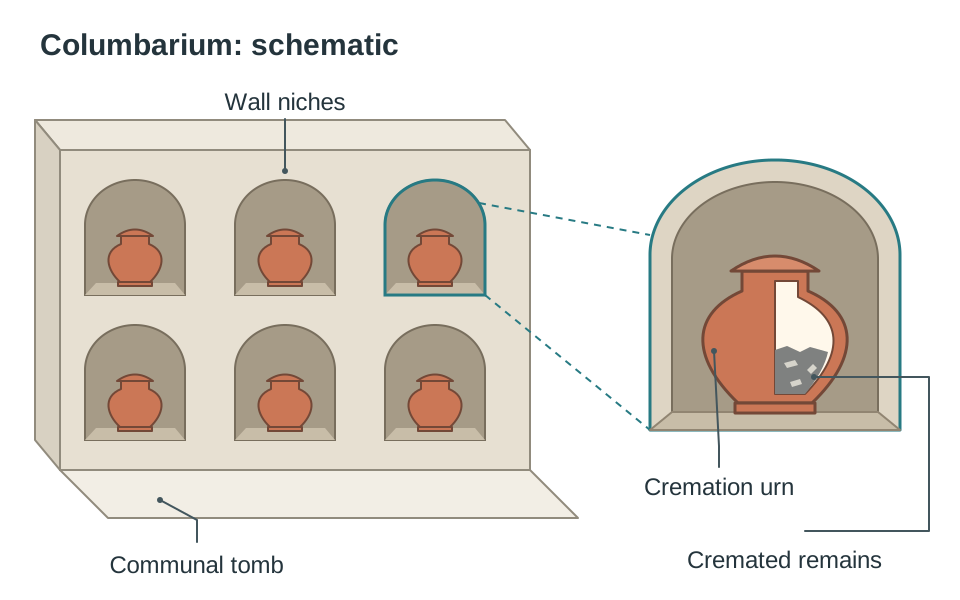
Poorer citizens, freedmen, and enslaved people could not afford private monuments. Instead, they contributed monthly dues to burial clubs (collegia) to secure space in a columbarium (a communal tomb lined with rows of small niches like a dovecote), ensuring proper cremation and regular commemoration.
Roman Reliefs and Continuing Bonds
Two key Roman sculptural reliefs illustrate these funerary customs:
The Amiternum Relief (1st century BC)
Found in central Italy, this relief depicts an elite funeral procession. Bearers carry the deceased on a high, decorated couch beneath an embroidered canopy. Flute players (tibicines) and horn players (cornicines) march ahead, while mourning women tear their hair and family members follow behind.
The Haterii Relief (late 1st century AD)
From the Tomb of the Haterii in Rome, this relief illustrates the collocatio. The dead woman lies on an elaborate funeral couch inside the atrium, surrounded by burning torches, a flute player, professional mourners beating their breasts, and a woman placing a garland on her head.
Ancestral Spirits and Festivals
Romans divided ancestral spirits into distinct categories:
- The Manes (or Di Manes): Benevolent ancestral spirits, invoked on tombstones as D.M. (Dis Manibus — 'To the Deified Shades'). When tended with food and wine, they protected the household.
- The Lemures: Hostile, restless ghosts of those who died violently or lacked burial, liable to haunt and torment the living.
To honour and manage these spirits, Romans observed annual festivals:
- Parentalia (February): A peaceful nine-day family festival honouring ancestors. Ovid (Fasti 2) tells Romans to appease ancestral souls with modest gifts: wreaths, grain, salt, bread soaked in wine, and violets laid on tombs. The festival concluded on 21 February with the public rites of the Feralia, followed on 22 February by the Caristia, a family reunion meal to heal domestic quarrels.
- Lemuria (May): A midnight domestic ritual described by Ovid (Fasti 5) to banish restless ghosts. The paterfamilias washed his hands in spring water, walked barefoot through the dark house, and threw black beans behind him nine times without looking back, declaring: 'With these beans I redeem me and mine.' After washing again and clashing bronze to frighten the spirits, he commanded nine times: 'Ghosts of my fathers, depart!'
Evaluating Afterlife Beliefs and Evidence of Doubt
Funerary practices provide indirect evidence for what ancient peoples believed about death. Evaluating this evidence requires linking specific customs to underlying beliefs while noting the limits of our sources:
Connecting Practice to Belief
- Charon's obol: Implies the dead faced a definite geographic journey across underworld rivers, where correct ritual preparation mattered more than personal virtue.
- Grave goods and libations (choai): Implies the soul survived in some tangible form and had physical needs that could be met by the living.
- Ghost narratives (Elpenor, Patroclus) and the Lemuria: Imply unburied or neglected souls remained restless, wandering the earth and menacing the living.
- Imagines, roadside tombs, and epitaphs: Imply that for many Romans, the most reliable form of afterlife was earthly memory (memoria) and civic repute maintained by descendants.
- Initiation at Eleusis: Implies some Greeks believed secret initiation rituals secured a privileged, joyful existence in the afterlife.
Evidence of Doubt and Scepticism
Surviving evidence must not be taken as proof of universal, uniform faith. Material remains reflect mostly the elite who could afford monuments, and many people observed rituals purely out of ancestral duty or fear of public shame. Furthermore, numerous Roman tombstones record open rejection of any afterlife. The widespread Latin epitaph formula non fui, fui, non sum, non curo ('I was not, I was, I am not, I do not care', often abbreviated on stone as NF F NS NC) demonstrates popular Epicurean scepticism, showing that many Romans viewed death as complete, peaceful annihilation.
Ancient Rites Contrasted with Modern and Irish Experience
Comparing classical customs with modern mourning practices—particularly traditional Irish practices—clarifies how the social function of death has evolved:
Parallels with Irish Mourning Traditions
- The Wake: The Irish tradition of laying out the body at home or in a funeral parlour for neighbours and relatives to visit closely resembles the Greek prothesis and Roman collocatio.
- Keening (caoineadh): The traditional lamentation performed by women over the corpse parallels the Greek threnos and the Roman praeficae*. In Ireland, Catholic authorities historically tried to suppress keening due to its pagan origins, echoing Solon's legal curbs on female laments in ancient Athens.
- The Removal and Cortege: The hearse procession, for which bystanders in rural Ireland still pause and pull over, mirrors the public journey of the ekphora and pompa.
- Month's Mind and Anniversaries: The Catholic Month's Mind Mass celebrated thirty days after death directly echoes the Greek thirtieth-day tomb rites and the Roman novendialis in marking the close of formal mourning.
- State Commemoration: Modern civic ceremonies, such as the National Day of Commemoration at the Royal Hospital Kilmainham or state funerals, serve the same public function as Athenian war orations and Roman aristocratic funerals.
The Central Contrast
Ancient funerals were primarily mandatory religious obligations performed to protect the community from miasma, assist the soul across underworld rivers, and appease the dead. Modern Irish funerals, while retaining prayers for the soul, focus primarily on offering psychological comfort to the bereaved and celebrating the individual's personal life.
Key terms
- Miasma
- Ritual pollution generated by death or unburied bodies in Greek thought, requiring ceremonial purification to protect the living.
- Prothesis
- The formal laying out of the body in the home by female relatives in ancient Greece, accompanied by ritual lamentation.
- Ekphora
- The ancient Greek funeral procession carrying the body from the home to the cemetery, which by Solon's law left before sunrise on the day after the prothesis.
- Lekythos
- A slender Greek pottery flask with a narrow neck, often white-ground, used to pour oil offerings at graves.
- Stele
- An upright, carved stone slab used as an identification and commemorative marker over a Greek tomb.
- Perideipnon
- The Greek post-burial funeral feast held at the home of the nearest relative, marking the start of household purification.
- Conclamatio
- The Roman custom of shouting the dead person's name repeatedly immediately after death to confirm that life had ceased.
- Collocatio
- The Roman lying in state of the deceased on an atrium couch, with feet pointed towards the front door.
- Praeficae
- Professional female mourners hired by Roman families to chant funeral dirges (naeniae) and lead lamentations.
- Imagines
- Lifelike wax portrait masks of distinguished Roman ancestors, kept in atrium cupboards and worn by actors during funeral processions.
- Pompa funebris
- The formal Roman funeral procession from the house to the Forum and burial site, accompanied by musicians, actors, and mourners.
- Laudatio funebris
- A formal funeral oration delivered from the Rostra in the Roman Forum, praising the deceased and their famous ancestors.
- Pomerium
- The sacred civic boundary of Rome inside which the Twelve Tables strictly prohibited the burial or cremation of human corpses.
- Columbarium
- A Roman communal tomb, often partly underground, lined with wall niches like a dovecote to hold cremation urns for poorer citizens, freedmen, or slaves.
- Memoria
- The Roman pursuit of perpetual earthly renown through prominent tombs, public inscriptions, and ancestral remembrance.
- Manes
- The benevolent spirits of dead ancestors in Roman belief, honoured and fed during the Parentalia festival.
- Lemures
- Restless, hostile Roman ghosts who lacked proper rites or suffered violent deaths, banished during the midnight Lemuria ritual.
- Parentalia
- A nine-day Roman festival in February where families honoured ancestral Manes with quiet tomb offerings.
- Lemuria
- A Roman domestic ritual in May during which the paterfamilias cast black beans to expel malevolent spirits from the house.
- Sarcophagus
- A carved stone or marble coffin, widespread in the Roman world from the 2nd century AD onwards, decorated with mythological reliefs.
Check yourself
What was the conclamatio and why was it carried out?
It was the Roman ritual of shouting the dead person's name aloud immediately after death to verify that life had truly ended.
Name two specific restrictions on funerals introduced by Solon in Athens.
Solon required the ekphora to depart before sunrise, mandated that the prothesis take place indoors, and banned women under sixty from attending unless they were close relatives.
Why did Romans sometimes sever and bury a finger bone (os resectum) before cremation?
It ensured that a traditional earth burial had technically occurred, fulfilling religious obligations even when the body was cremated.
Give one piece of material evidence showing that some Romans did not believe in an afterlife.
The common tombstone inscription non fui, fui, non sum, non curo ('I was not, I was, I am not, I do not care', abbreviated NF F NS NC), reflecting Epicurean views that death is complete cessation.
What primary visual details appear on the Geometric Dipylon Amphora to indicate a funeral?
The deceased lying on a raised bier beneath a shroud, surrounded by stick-figure mourners with both hands raised to their heads in lamentation.
What is the difference in purpose between the Roman Parentalia and Lemuria festivals?
The Parentalia in February was a peaceful family festival honouring benevolent ancestral spirits (Manes), while the Lemuria in May was a midnight domestic ritual to banish hostile, wandering ghosts (Lemures).