

Insular art, also termed Hiberno-Saxon art, developed across Ireland and Britain between roughly 500 and 1100 CE following the arrival of Christianity. It represents a synthesis of three distinct traditions: native Celtic Iron Age La Tène curvilinear motifs, Germanic Anglo-Saxon animal interlace, and Mediterranean Christian iconography and text. Working in self-contained monastic communities such as Clonmacnoise, Iona, and Lindisfarne, craftsmen produced work across four primary areas of practice: illuminated vellum manuscripts, precious liturgical and secular metalwork, monumental stone high crosses, and mortared stone architecture. Instead of pursuing Roman naturalism or three-dimensional illusion, Insular artists turned to energetic surface pattern, rhythmic unbroken line, and horror vacui to express religious devotion.
Context, Architecture, and the Fusion of Traditions
Before the arrival of Christianity, Irish craftworkers had developed the La Tène style of the Iron Age. Artworks such as the Turoe Stone and the Petrie Crown established a visual vocabulary of running spirals, trumpet ends, triskeles, and lentoid peltas. From roughly 500 CE onward, this indigenous heritage merged with two outside streams inside monastic workshops:
- The Celtic (La Tène) Tradition: Provided fluid curvilinear movement, pelta motifs, and spinning trumpet spirals.
- The Anglo-Saxon Tradition: Introduced complex ribbon interlace, biting animal heads (zoomorphic ornament), geometric step patterns, and advanced metal techniques like wire filigree and chip carving.
- The Mediterranean Christian Tradition: Brought the Latin script, liturgical codices, canon tables (tables that cross-reference passages in the four Gospels, framed by painted arches and columns), foliate vine scrolls, and figurative representations of Christ and the Evangelists.
The Monastic Setting and Architecture
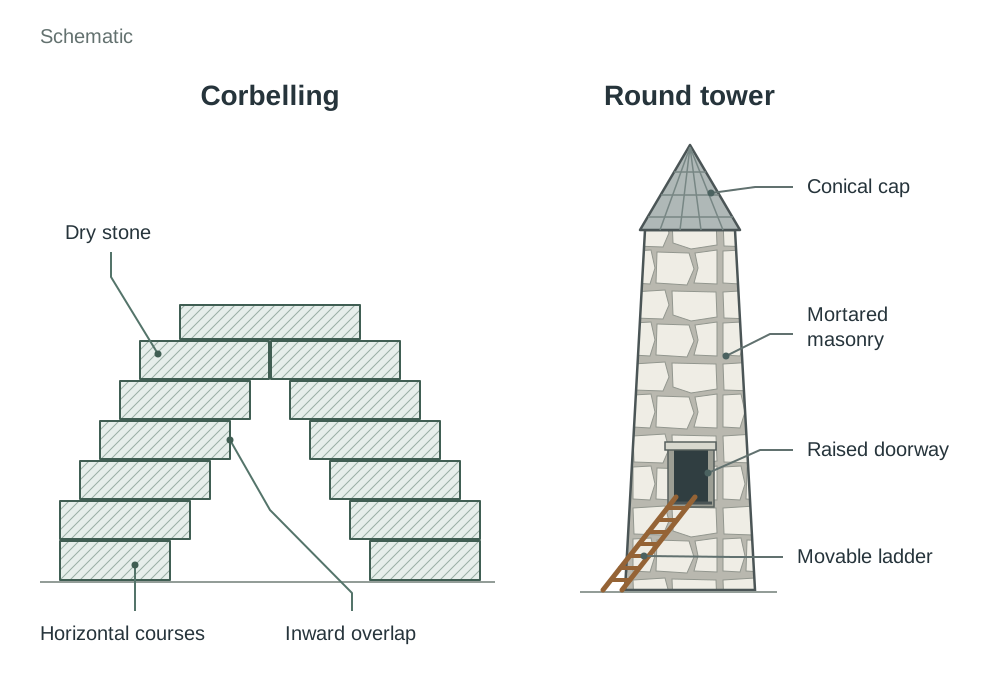
Monasteries were typically surrounded by a circular earthen or dry-stone rampart marking off the sacred precinct, known as the termon. Inside stood churches, living quarters, workshops, and graveyards. Early religious communities built stone structures without mortar using corbelling, laying dry stones horizontally in overlapping courses so each layer stepped slightly inward until meeting at the ridge. The Gallarus Oratory (Co. Kerry) survives as an intact corbelled church shaped like an inverted boat, while the remote hermit settlement at Skellig Michael preserves dry-stone beehive huts (clocháin).
Between the tenth and twelfth centuries, Irish monasteries introduced the round tower (cloigtheach, meaning 'bell house'). Built from mortared rubble and stone with a conical cap, these freestanding stone towers stood between twenty and forty metres high. The doorway was raised two to six metres above ground level, reached by a movable wooden ladder. Round towers had multiple functions: their primary role was as a belfry to call the community to the divine hours; they functioned as prominent navigational landmarks for incoming pilgrims; and their high chambers provided storage for sacred vessels and relics, along with limited refuge during attacks.
Patronage
Luxury art required significant wealth and social backing. Abbot-patrons and kings funded these projects to gain prestige and show their religious devotion. Royal patronage expanded in the later centuries, seen in royal inscriptions on both high crosses and processional reliquaries.
Illuminated Manuscripts: From the Cathach to the Book of Kells
Monastic scriptoria prepared sacred texts on vellum, which was calfskin washed, scraped, stretched, and rubbed smooth with pumice. Scribes marked guidelines using lead-point plummets and pricking compasses, writing text with quill pens in dark iron-gall ink.
Illuminators mixed dry pigments with egg white or fish glue binders. Warm yellow came from orpiment, green from malachite or verdigris, and vibrant red from minium (red lead). Analysis of the Book of Kells shows its rich blue is indigo, likely extracted from the woad plant, while purples and mauves were made with folium, a Mediterranean vegetable dye.
Chronological Development
- The Cathach of St Columba (c. 600): The earliest surviving Irish manuscript, containing the Psalms. Decoration is confined to enlarged initial letters that terminate in spirals, peltas, and red dots, marking the earliest step toward turning text into abstract ornament.
- The Book of Durrow (c. 650–690): The earliest complete Insular Gospel book. It features six full carpet pages (pages devoted entirely to non-scriptural geometric knotwork and interlace), evangelist symbols, and a restrained palette of red, green, yellow, and brown. Its symbol of Matthew shows a flat, armless figure wrapped in a chequered cloak resembling millefiori glass, flanked by stylised profile feet.
- The Lindisfarne Gospels (c. 715–720): Produced at Lindisfarne by Eadfrith, Bishop of Lindisfarne, who is explicitly named in a tenth-century colophon added by the priest Aldred. The codex combines Mediterranean figurative portraits with five complex carpet pages, executed with fine calligraphic penwork, dense animal knots, and rows of red dots.
- The Book of Kells (c. 800): probably begun on Iona and brought to Kells, Co. Meath, after the Viking raid on Iona in 806. It represents the height of Insular manuscript design. It contains intricate ornament, evangelist portraits and four-symbol pages, narrative miniatures, and the earliest surviving Western manuscript image of the Virgin and Child.
The Chi-Rho Page (Book of Kells, Folio 34r)
The Chi-Rho page introduces Christ's birth narrative in the Gospel of Matthew (1:18). The Greek letters Chi (X), Rho (P), and Iota (I), representing the sacred name of Christ, stretch across the vellum page alongside the Latin words autem generatio ('now the birth'). The letterforms dissolve into whirling trumpet spirals, peltas, and knotwork panels. Tucked into the pattern are small, detailed animal vignettes: two cats watching two mice fight over a Communion host, and an otter catching a fish. These narrative details integrated the natural world into central theological mysteries.
Precious Metalwork: 8th-Century Masterpieces
Insular goldsmiths and bronzesmiths possessed advanced metallurgical skills, joining cast components with cold mechanical joints and enriching surfaces with intricate filigree, cast facets, and fused vitreous pastes.
Core Techniques
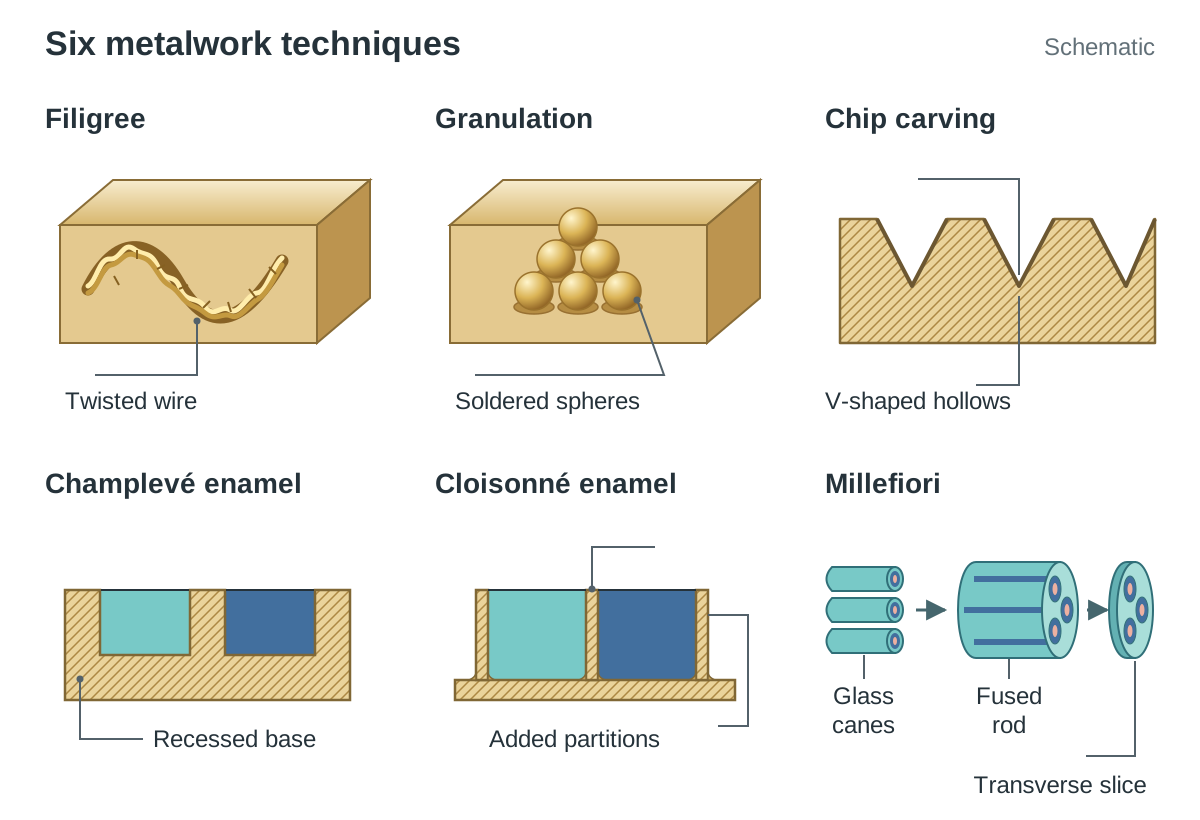
- Filigree: Fine threads of gold or silver wire, twisted, braided, or beaded, soldered into sunken trays to construct miniature animal interlace.
- Granulation: Microscopic gold balls soldered onto metal plates in precise geometric clusters.
- Chip carving (kerbschnitt): Angled, V-shaped hollows cast or chiselled into bronze or silver to form raised facets that create high-contrast highlights and shadows.
- Champlevé Enamel: Hollow depressions or troughs are gouged or cast into the base metal, packed with coloured powdered glass paste, and heated until the glass fuses smoothly with the surrounding metal wall.
- Cloisonné Enamel: Thin metal ribbons are soldered upright onto a metal backplate to form distinct cells (cloisons), which are filled with crushed glass pastes and fired.
- Millefiori: Multi-coloured glass canes fused into a patterned rod, sliced across like a stick of rock, and set as miniature geometric glass inlays.
The Tara Brooch (c. 710–720)
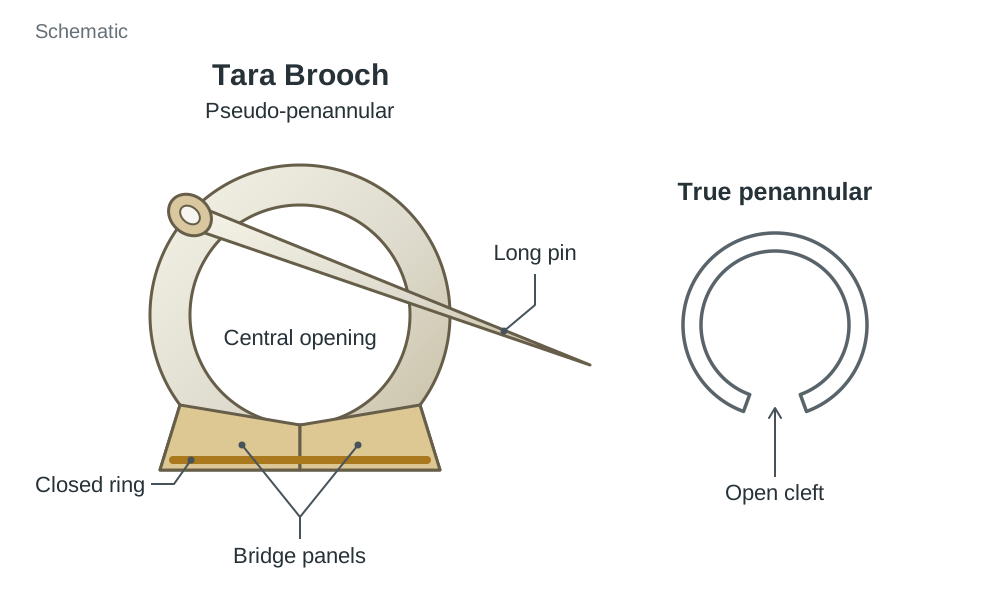
Discovered near Bettystown, Co. Meath, this is a silver-gilt pseudo-penannular brooch. Unlike true penannular brooches that have an open cleft, the ring on this brooch is solid, joined by two sunken trapezoidal panels. The garment was pinned by pushing fabric through the central opening and driving the long pin over the ring.
The front displays gold wire filigree animals, chip-carved spirals, granulated bosses, amber studs, and polychrome glass inserts. Remarkably, the reverse side, which was not visible when worn, is also fully decorated with cast chip-carved (kerbschnitt) spirals and triskeles, silver and copper panels, and glass studs. Its decoration is in lower relief than the front. The fact that both sides are decorated shows the craftsman's pride in the work, and possibly its devotional value.
The Ardagh Chalice (c. 750)
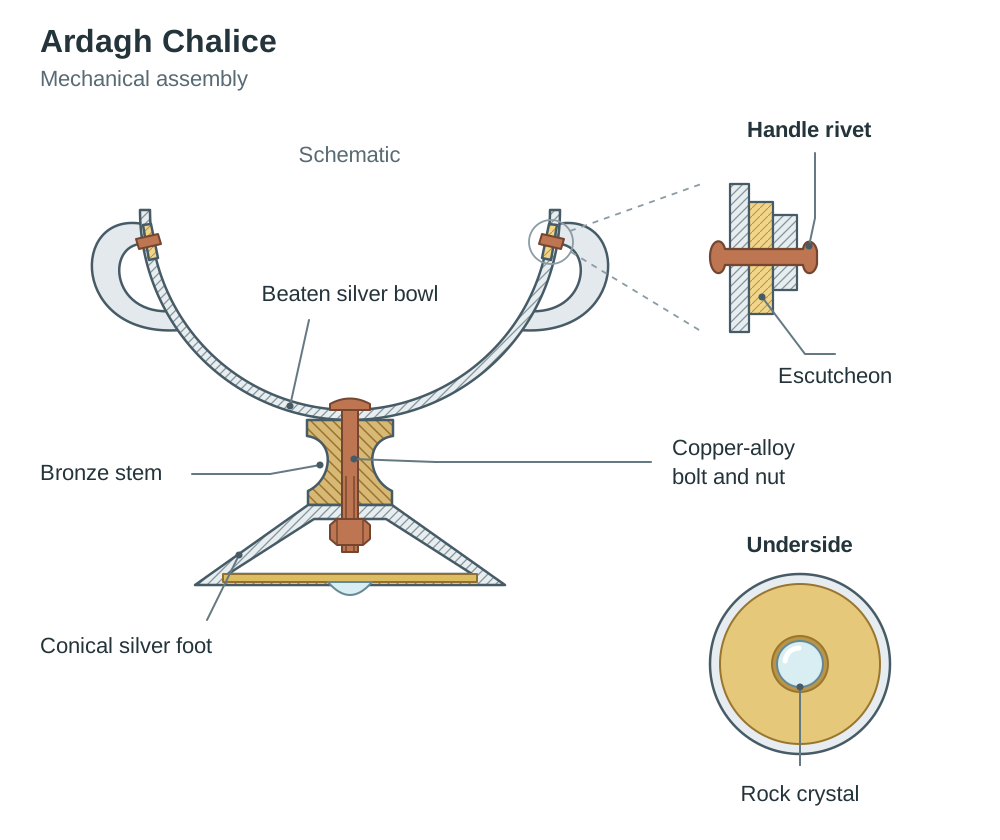
Found in a hoard at Ardagh, Co. Limerick, this is a large two-handled ministerial chalice (calix ministerialis) built to hold Communion wine for the congregation. It consists of a beaten hemispherical silver bowl, a cast bronze stem, and a circular, conical silver foot. Rather than using heat soldering, which could melt the thin silver bowl, the craftsmen joined the components mechanically with a central threaded copper-alloy bolt and nut running vertically through the stem.
The chalice handles are riveted to the bowl through decorative escutcheons enriched with beaded filigree and glass studs. Below the rim runs a cast girdle with twelve gold filigree panels separated by round champlevé enamel studs. Under the girdle, the names of the Twelve Apostles are lightly inscribed in fine dot-punched lettering against a stippled ground. The underside of the foot features an intricate, hidden gilded disc centred around a polished rock crystal cabochon.
Later Metalwork: Shrines, Croziers, and the Cross of Cong (c. 800–1150)
Viking raids beginning in the 790s disrupted coastal monastic life, leading to a decline in the production of luxury secular personal brooches. In response, patrons and metalworkers focused their attention on reliquaries, which were protective casings constructed to hold the physical remains or associated possessions of Irish saints, such as bells, books, and croziers (the ceremonial walking staffs of bishops and abbots).
Over the ninth, tenth, and eleventh centuries, continuous contact, trade, and settlement with Scandinavian communities introduced Norse stylistic movements into the Irish repertoire:
- Ringerike Style (11th Century): Defined by dynamic animal figures surrounded by tendril-like loops, scrolled leaves, and open lobed crests.
- Urnes Style (Late 11th–12th Century): Characterised by slender, fluid quadrupeds intertwined in figure-of-eight patterns, tangled with ribbon-like serpents.
The Cross of Cong (c. 1123)
Commissioned by Toirdelbach Ua Conchobair (Turlough O'Connor), King of Connacht and High King of Ireland, this monumental processional cross was made to hold a fragment of the True Cross sent from Rome. Inscriptions running along the silver edging name the royal patron, Church authorities, and the master craftsman, Máel Ísu mac Bratáin Uí Echach.
- Construction and Materials: An oak core plated with cast bronze panels, enriched with gilding, silver inlays, and niello.
- Decoration: Openwork bronze panels decorated with interlaced beasts in the Urnes style. Long, ribbon-like animals bite their own bodies and intertwine in graceful figure-of-eight configurations.
- Focal Features: The central crossing holds a raised, polished rock crystal cabochon through which the wood relic was displayed. The base of the cross terminates in the cast head of a roaring animal whose open jaws grip the shaft, connecting the cross to its carrying pole.
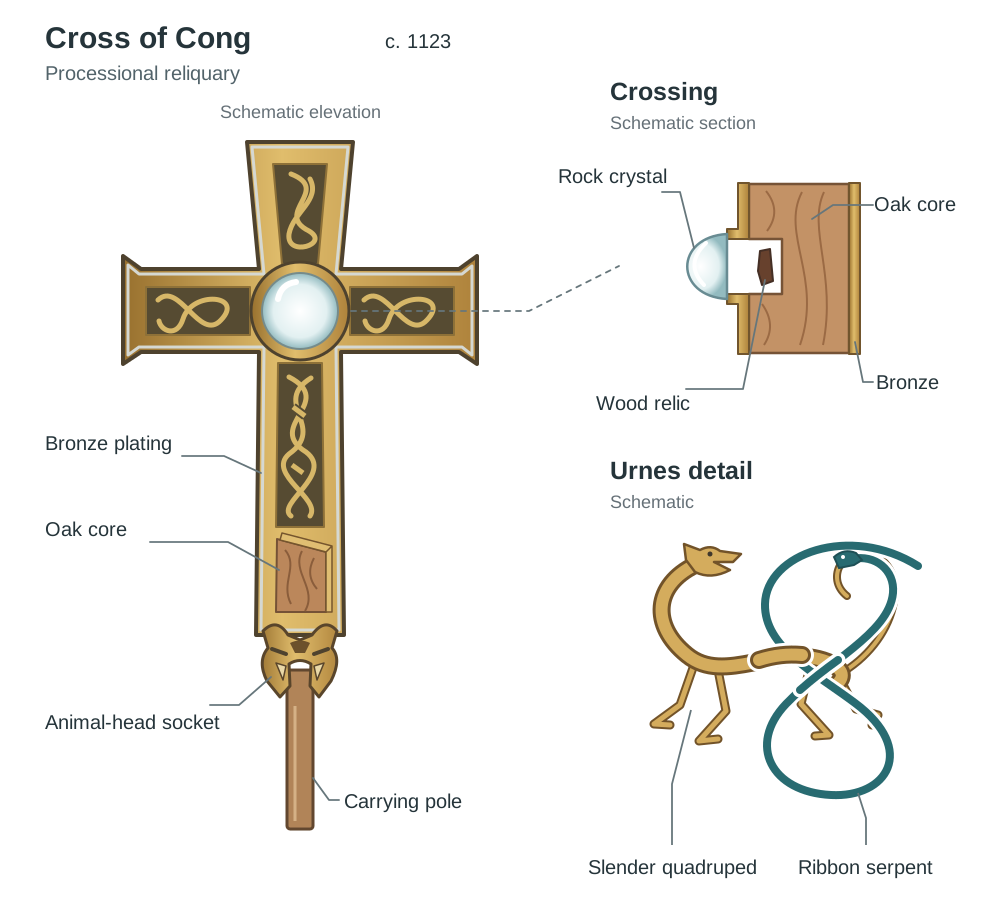
Between the eighth century (Ardagh Chalice) and the twelfth century (Cross of Cong), religious metalwork shifted in focus from liturgical vessels decorated with miniature gold filigree toward large-scale reliquaries covered in bold openwork bronze showing Scandinavian animal interlace.
Monumental Stone Sculpture: The Evolution of High Crosses
Freestanding stone high crosses translated the delicate linear patterns of manuscripts and metalwork into large, durable public monuments. Erected across monastic precincts, they marked sanctuary boundaries (termon lines), directed processional routes, and served as stations for outdoor prayer and religious teaching.
Three Evolutionary Phases
- Incised Stone Slabs (6th–7th Centuries): Upright pillars such as the Carndonagh Cross and the Fahan Mura slab in Co. Donegal. These early monuments feature low-relief ribbon crosses and incised outline figures cut into local stone.
- Ornamental High Crosses (8th Century): Examples at Ahenny, Co. Tipperary, and Kilkieran, Co. Kilkenny, carved in local sandstone. These crosses replicate metal prototypes in stone: hemispherical bosses imitate metal rivets, raised borders mimic twisted bronze cables, and the shafts carry abstract spirals and interlace, while figurative narrative scenes are limited to small panels carved around the base.
- Scriptural High Crosses (9th–10th Centuries): Abstract ribbonwork was largely replaced by relief panels illustrating Old and New Testament events. This shift was motivated by the need to teach biblical history to gatherings of the faithful, supported by royal and abbatial patrons, and influenced by continental Carolingian visual programmes.
The Stone Ring: Engineering and Meaning
The cross ring had both functional and symbolic roles:
- Engineering function: Sandstone has low tensile strength and fractures under shear stress. The four curved quadrant arms act as structural stone brackets, supporting the cantilevered horizontal arms and directing their weight back into the vertical shaft.
- Symbolic meaning: The ring functioned as a visual reference to Christ's heavenly halo, the cosmos, and the Roman laurel wreath of eternal victory over death. Scholars continue to debate whether structural needs or theological symbolism drove the design first.
Muiredach's Cross, Monasterboice (c. 920)
Standing 5.5 metres high, Muiredach's Cross is carved from three separate sandstone components: a stepped pyramidal base, a monolithic shaft and ringed cross-head, and a pitched-roof capstone modeled on a church-shaped reliquary. An Old Irish inscription at the bottom of the west shaft reads Or do Muiredach las ndernad in chros ('A prayer for Muiredach, by whom this cross was made'), linking the monument to Muiredach mac Domhnaill, Abbot of Monasterboice (died 923).
- East Face: The crossing displays the Last Judgement, where Christ stands holding a cross-sceptre and flowering staff, flanked by angels and the choir of the blessed, while beneath him St Michael weighs souls with scales as a devil tries to pull down the pan. Below on the shaft, four panels read from the bottom up: three Old Testament scenes (Adam and Eve with Cain and Abel; David and Goliath; Moses striking water from the rock) and the New Testament Adoration of the Magi.
- West Face: Focuses on the New Testament Passion and Christian ministry. The crossing carries the Crucifixion, flanked by the Roman soldiers Stephaton (offering vinegar on a reed) and Longinus (piercing Christ's side with a lance). Shaft panels illustrate the Arrest of Christ in the Garden of Gethsemane, Doubting Thomas touching Christ's wound, and Christ delivering the New Law to Peter and Paul.
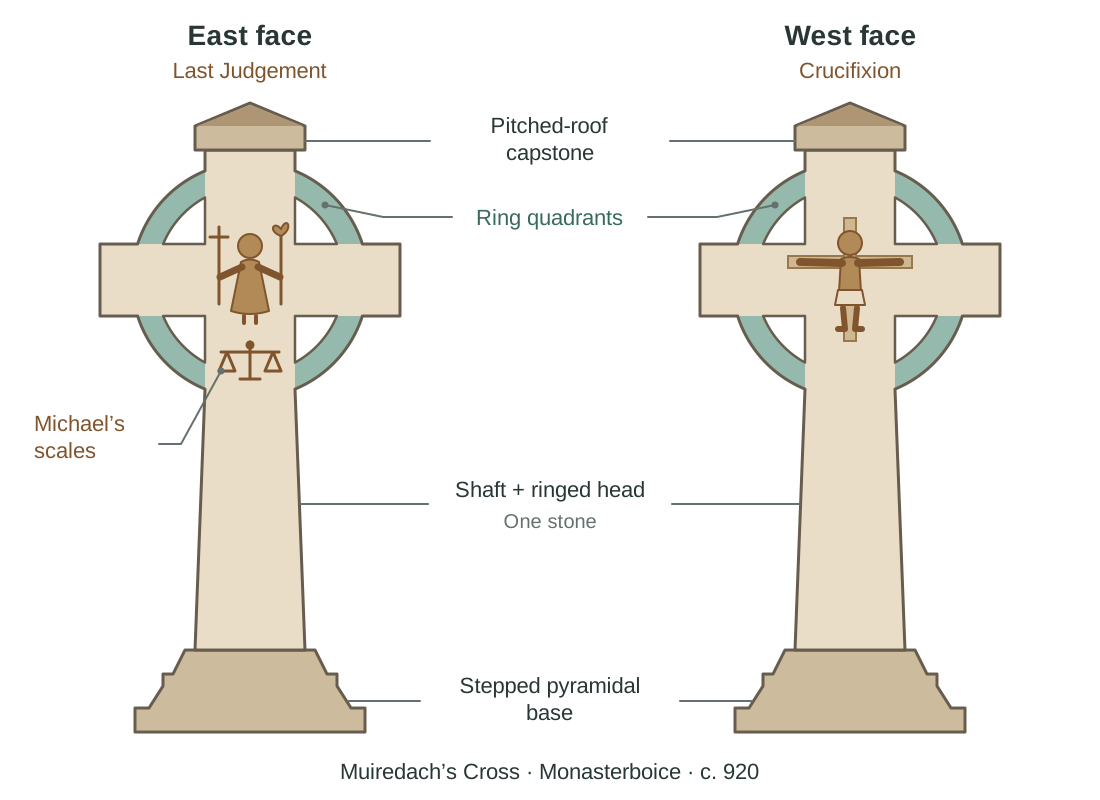
Carved in deep, rounded relief, the figures have shortened proportions and enlarged heads. These rounded forms caught direct daylight, ensuring that the biblical narratives were clearly visible from ground level.
Visual Studies Analysis, Innovations, and Legacy
Art Elements and Design Principles Applied
- Line: Rhythmic and unbroken. Ribbon interlace and stylised animal bodies loop over and under with clear geometric precision, leading the viewer's eye through the design on the Chi-Rho page, the Ardagh Chalice girdle, and high-cross shaft mouldings.
- Space and Form: Flat and non-perspective. Human figures, such as the symbol of Matthew in the Book of Durrow or the figures on Muiredach's Cross, are arranged as frontal or profile icons rather than bodies in receding naturalistic space.
- Horror Vacui: The deliberate practice of covering nearly the entire background with dense pattern, leaving almost no plain resting areas.
- Texture and Relief: Marked tactile variation. The Ardagh Chalice contrasts smooth beaten silver with granulated gold beads, twisted wire filigree, and polished glass studs. Muiredach's Cross uses deeply carved rounded relief to generate bold shadows that stand out against the smooth stone borders.
- Colour: Used for symbolic clarity and visual impact. Manuscript illuminators paired complementary greens, ochres, purples, and blues side by side, making the vellum folios vivid under candlelight.
Summary of Innovation and Invention
- The Carpet Page: A newly invented Insular page layout composed purely of dense, non-figurative ornament without text.
- Fusion of Word and Image: Monogram pages turned initial letters into monumental, stand-alone visual artworks (such as the Chi-Rho page).
- Cold Mechanical Construction: the Ardagh Chalice's bowl, stem and foot were joined with a central bolt and nut, rivets and pins, rather than relying on solder that could damage the thin silver bowl.
- Technique Consolidation: Craftsmen combined chip carving, filigree, granulation, champlevé and cloisonné enamelling, and millefiori inlays on individual prestige objects such as the Tara Brooch.
- The Freestanding Ringed High Cross: A new type of monumental stone sculpture in Western Europe that paired narrative reliefs with load-bearing quadrant rings.
- The Round Tower: A distinctive Irish stone building form serving as a belfry, navigation marker, and secure storage vault.
The Legacy of Insular Art
- Hiberno-Romanesque Architecture (12th Century): Carved stone doorways at Clonfert Cathedral and Cormac's Chapel on the Rock of Cashel incorporated Insular ribbon interlace and Urnes-style biting animal heads into Romanesque arches.
- The 19th-Century Celtic Revival: Nineteenth-century jewellers and antiquarians adopted the style as a defining expression of Irish identity. George Waterhouse, a Dublin jeweller, registered the commercial name 'Tara Brooch' and mass-produced replicas, popularising Celtic knotwork internationally.
- The Arts and Crafts Movement (c. 1890–1930): Crafts studios like the Dun Emer Guild and artists such as Harry Clarke adapted Insular lettering, dense spirals, and elongated figures into embroidery, graphics, and stained-glass panels.
- Modern Visual Culture: The Book of Kells and the ringed high cross remain internationally recognised emblems of Irish cultural heritage, used throughout contemporary graphic design, coinage, and public sculpture.
Key terms
- Insular Art
- The distinctive early medieval style flourishing across Ireland and Britain from c. 500 to 1100 CE, combining Celtic La Tène, Anglo-Saxon, and Christian Mediterranean traditions.
- Horror Vacui
- A Latin term meaning 'fear of empty space', describing the deliberate artistic choice to fill almost all surface areas with intricate decorative ornament.
- Vellum
- A durable writing and painting surface made from scraped, cleaned, and stretched calfskin.
- Carpet Page
- A full manuscript folio devoted entirely to geometric or animal interlace ornament, typically preceding a Gospel to prepare the reader for sacred scripture.
- Chi-Rho
- The monogram formed by the Greek letters Chi (X) and Rho (P), used as an abbreviation for Christ and illuminated as an elaborate opening page in Insular Gospel books.
- Filigree
- Delicate ornamental wirework of gold or silver, often twisted, beaded, or braided, soldered onto a recessed metal base.
- Granulation
- A decorative metalworking method where microscopic spheres or grains of gold are soldered onto a metal surface in geometric patterns.
- Chip carving
- Known also as kerbschnitt; a technique of casting or cutting V-shaped facets into metal or stone to generate bold highlights and dark shadow.
- Champlevé Enamel
- An enamelling method where hollows or troughs are carved or cast into the base metal and filled with powdered glass paste before firing.
- Cloisonné Enamel
- An enamelling method where thin metal strips are soldered upright onto a backplate to create walled compartments that hold coloured glass pastes.
- Millefiori
- Glasswork made by fusing multi-coloured glass canes into a rod and slicing it horizontally to yield patterned mosaic discs.
- Pseudo-penannular Brooch
- A brooch with a complete, closed circular ring joined by decorative bridge plates, worn by piercing the cloth and pinning it across the face.
- High Cross
- A monumental, freestanding ringed stone cross erected in monastic precincts to mark boundaries, guide pilgrimage, and teach Christian doctrine.
- Urnes Style
- A late Scandinavian animal style dating to the late eleventh and twelfth centuries, featuring slender quadrupeds and looping serpents intertwined in figure-of-eight patterns.
- Round Tower
- A freestanding, tapering stone tower (cloigtheach) with a conical roof and a raised door, built on Irish monastic sites as a belfry, landmark, and storehouse.
- Corbelling
- A dry-stone building method where successive courses of horizontal stones step progressively inward until meeting at the apex to create a roof without mortar.
Check yourself
What three cultural and artistic traditions merged to form the Insular style?
The Celtic Iron Age La Tène tradition, the Germanic Anglo-Saxon tradition, and the Mediterranean Christian Roman tradition.
Name the four major manuscript books of the Insular period in chronological order.
The Cathach of St Columba (c. 600), the Book of Durrow (c. 650–690), the Lindisfarne Gospels (c. 715–720), and the Book of Kells (c. 800).
How are the bowl, stem, and foot of the Ardagh Chalice joined together?
They are held together mechanically by a central threaded copper-alloy bolt and nut running vertically through the stem, avoiding the risk of melting the thin silver bowl with soldering heat.
What is unusual about the reverse side of the Tara Brooch?
It is fully decorated with cast chip-carved (kerbschnitt) spirals, triskeles, copper and silver panels, and glass studs, even though this surface would rarely be seen while worn.
Name a 12th-century processional cross and identify the Viking style seen in its decoration.
The Cross of Cong (c. 1123); decorated with interlaced openwork animals in the Scandinavian Urnes style.
Give two primary functions of a monastic round tower (cloigtheach).
It served as a belfry to summon the monastic community to prayer and as a visual navigation landmark for arriving pilgrims; it also provided secure storage for relics and church treasures.
What historical evidence links Muiredach's Cross at Monasterboice to its patron and date?
An Old Irish inscription carved on the west face of the base reads 'A prayer for Muiredach, by whom this cross was made', identifying Abbot Muiredach mac Domhnaill, who died in 923.