

The Manufacturing Account
A manufacturing enterprise makes finished products from raw materials. It prepares a Manufacturing Account to calculate the production cost of completed goods before compiling its trading account.
Sequence of Costs
- Direct Materials Consumed: Opening Stock of Raw Materials + Purchases of Raw Materials + Carriage Inwards on Raw Materials − Closing Stock of Raw Materials.
- Direct Labour: wages of factory staff directly involved in making the product.
- Direct Expenses: specific costs traceable to production volume, such as patent royalties or equipment hire.
- Factory Overheads: indirect factory costs, including factory supervisor wages, factory power, factory insurance, and depreciation of plant and machinery.
- Sale of scrap: income from selling waste or scrap materials is deducted directly in the manufacturing account, reducing Factory Cost.
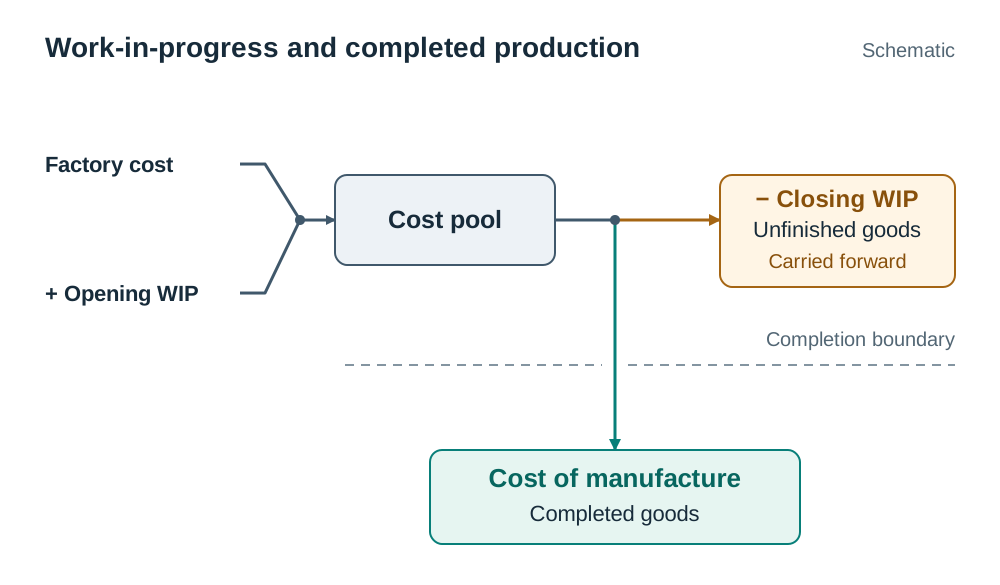
- Work-in-Progress (WIP): unfinished goods remaining on the factory floor:
Transfer at Market Value and Unit Cost
- Transfer at market value: some businesses transfer finished goods to the trading account at current market value rather than their cost of manufacture. The difference is called factory profit:
Factory profit is credited to the profit and loss account. This comparison reveals whether internal production is cheaper than purchasing completed items from external suppliers.
- Unit cost of production: calculated to monitor operational efficiency:
If the internal unit cost is €15 and identical goods can be bought on the market for €14, manufacturing is less cost-effective than buying from outside suppliers.