

The Cash Budget and Deficit Management
The cash budget shows the cash the business expects to receive and pay out each month, highlighting projected cash surpluses or deficits.
Structure and Layout
A cash budget records only cash transactions in the exact month money changes hands. Non-cash accounting entries (such as depreciation and bad debt provisions) are completely excluded.
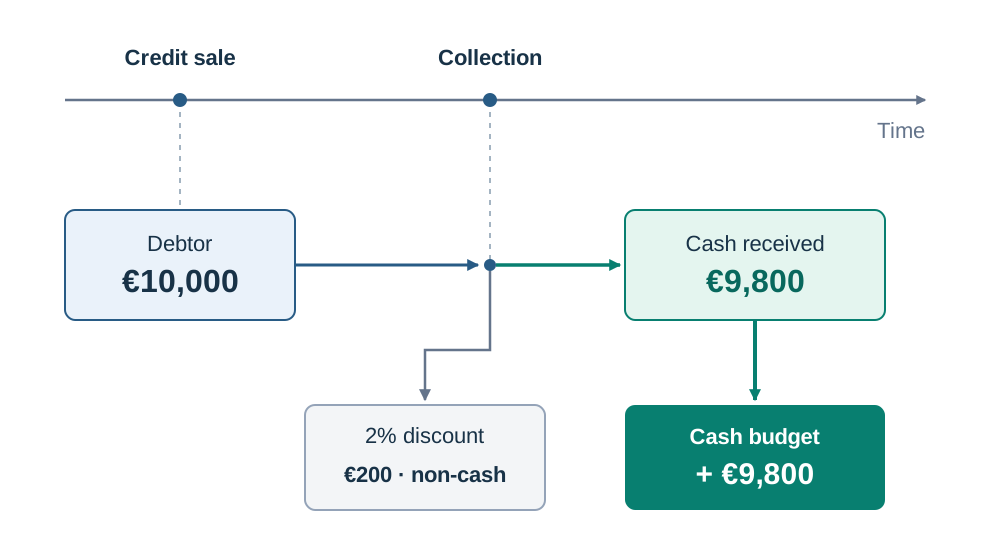
Discount allowed is not a payment. Instead, receipts from debtors are shown net of discount (for example, €10,000 owed with a 2% discount gives a receipt of €9,800).
Standard monthly cash budget layout:
| Month 1 (€) | Month 2 (€) | Month 3 (€) | |
|---|---|---|---|
| Receipts | |||
| Cash sales | X | X | X |
| Receipts from debtors | X | X | X |
| Total receipts | A | A | A |
| Payments | |||
| Payments to creditors | X | X | X |
| Direct wages | X | X | X |
| Overheads (excluding depreciation) | X | X | X |
| Capital expenditure | X | X | X |
| Total payments | B | B | B |
| Net cash flow (A − B) | C | C | C |
| Opening cash | D | E | F |
| Closing cash (Net cash flow + Opening cash) | E | F | G |
The closing cash balance of one month becomes the opening cash balance of the following month.
Managing Projected Cash Deficits
When a cash budget reveals a looming deficit, management should take practical steps:
- Arrange a bank overdraft facility in advance with the bank.
- Accelerate cash inflows from debtors by offering cash discounts for prompt payment or tightening credit periods.
- Negotiate extended credit terms with suppliers, keeping in mind that delaying payments risks losing prompt payment discounts and can damage supplier goodwill.
- Defer major capital expenditure or lease equipment rather than making outright cash purchases.
- Review and trim discretionary overheads, such as non-essential advertising or administrative outgoings.