
This topic explores how electronic components control current in sensing circuits, how energy efficiency is calculated, and how technology affects society and the environment. In the exam, you need to explain circuit behaviour, calculate electrical power and efficiency, and evaluate technologies and media claims using scientific evidence.
Electronic Components and Sensing Circuits
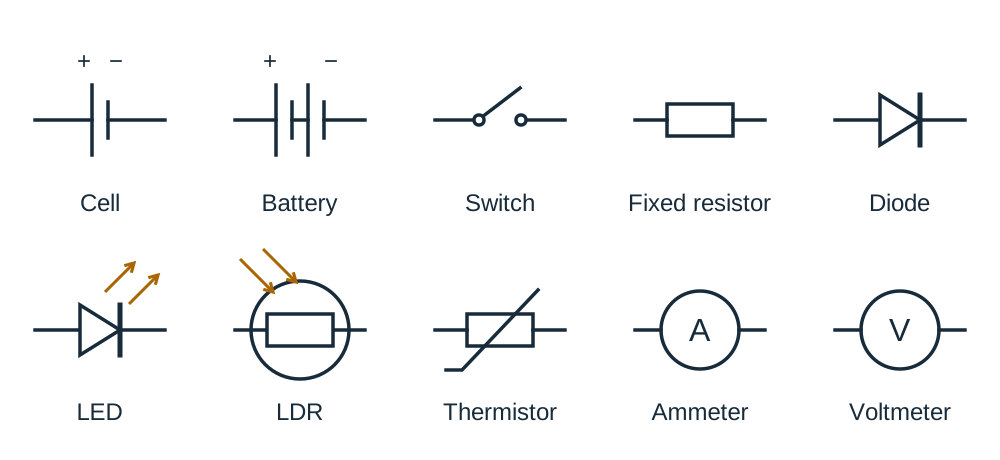
To design and build circuits, you need to recognise standard symbols: cell or battery, switch, fixed resistor, diode, LED, LDR, thermistor, ammeter, and voltmeter. Resistance is measured in ohms ().
| Component | Function | Key Rule |
|---|---|---|
| Diode | Lets current flow in one direction only | Current flows only when the diode's positive end is connected towards the positive terminal; the band on the diode (the bar in the symbol) marks the negative end. |
| LED | Emits light in forward bias | Long leg connects to positive; short leg connects to negative. |
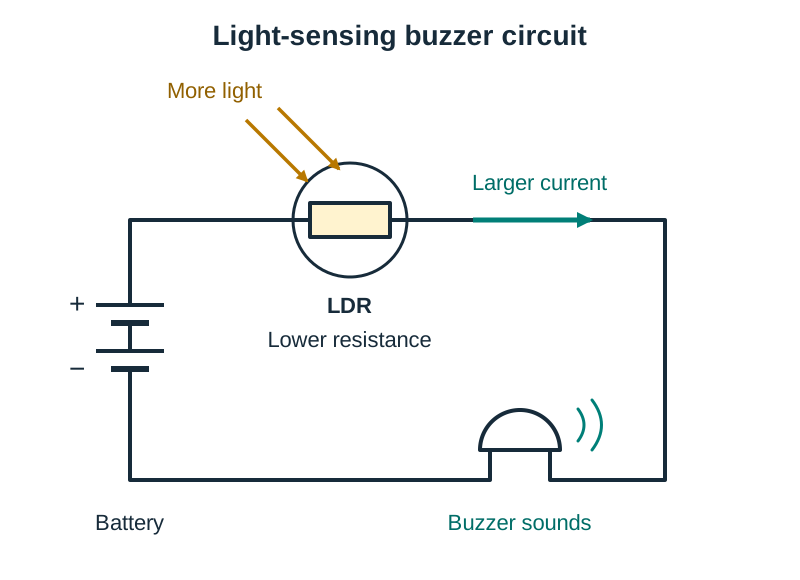
| LDR | Senses light level | High resistance in the dark, low resistance in bright light. |
| Thermistor | Senses temperature | High resistance when cold, low resistance when heated. |
| Fixed resistor | Restricts current to a safe level | Protects an LED from burning out. |
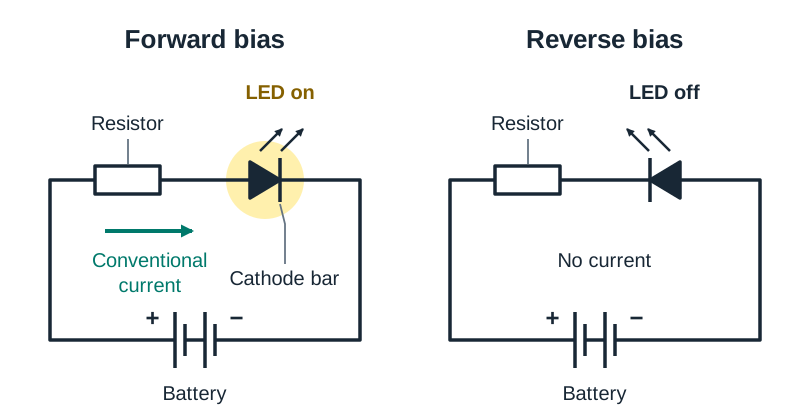
Forward bias means the diode's positive leg is connected towards the positive terminal of the battery, so current flows. Turn it the other way round (reverse bias) and no current flows. In a sensing circuit, an LDR or thermistor is wired in series with an output device like a buzzer so changing conditions trigger an alert.
Power, Dissipation, and Efficiency
Electrical appliances transfer electrical energy into useful work. Energy cannot be created or destroyed, but some is always dissipated as heat to the surroundings.
Electrical power is the rate of energy conversion, measured in watts (W):
Device efficiency compares useful energy output to total energy input:
An LED bulb turns much more of the electrical energy into light, so it gives the same brightness using far fewer watts and wastes less energy as heat compared to an old filament bulb.
Technological Application: Solar PV Panels
When you discuss a technology, always write about it under three headings:
- Science: Solar photovoltaic (PV) panels convert light energy from the Sun directly into electrical energy. A typical domestic panel converts about one fifth of the light energy that strikes it.
- Society: Generating your own solar electricity lowers household bills and reduces reliance on imported fossil fuels. However, panels are expensive to purchase and install, and electricity output drops significantly during dull winter days.
- Environment: Solar panels release no greenhouse gases or pollutants while generating electricity. However, the mining of raw materials and manufacturing processes consume energy, and old panels must be safely recycled at the end of their lifespan.
Generating Electricity and Evaluating Claims
Most electricity is generated from fossil fuels (coal, oil, gas), which are finite and release carbon dioxide that contributes to global climate change. Renewable sources (wind, solar, hydroelectric) produce no emissions during operation, but their output depends on the weather.
Ethical issues include deciding who pays for new wind farms and transmission pylons, where they should be built, and balancing immediate costs against the needs of future generations. We can reduce electricity consumption by insulating buildings, switching off standby modes, and choosing energy-efficient appliances.
When evaluating a media claim about a technology, state the specific claim examined, describe the data you analysed, state your judgement, and identify any bias or missing evidence such as unstated test conditions.
Key terms
- Diode
- An electronic component that allows electric current to flow in only one direction.
- Light-Emitting Diode (LED)
- A diode that gives off light when connected in forward bias.
- Light-Dependent Resistor (LDR)
- A sensor resistor whose electrical resistance decreases as the light shining on it increases.
- Thermistor
- A temperature-sensitive resistor whose electrical resistance decreases as its temperature increases.
- Efficiency
- The percentage of total input energy converted into useful output energy by a device.
- Bias
- A one-sided preference or viewpoint that distorts scientific evidence or conclusions.
Check yourself
Which leg of an LED must be connected toward the positive terminal of a battery for forward bias?
The longer leg.
What happens to the resistance of a thermistor when its temperature rises?
Its resistance decreases.
State the formula used to calculate electrical power from voltage and current.
P = V × I (Power = Voltage × Current).
Give one ethical issue linked to generating electricity from wind.
People living near the turbines may object to noise or visual impact even though the wider country benefits from renewable power.
What three factors should you evaluate when judging the reliability of a scientific source or claim?
Relevance, accuracy, and bias.