
Earth and space sustainability looks at how natural cycles and human actions shape our climate, alongside the risks and benefits of space missions. In the exam, you need to evaluate climate initiatives and discuss how space technology affects society.
Earth Processes and Human Factors on Climate
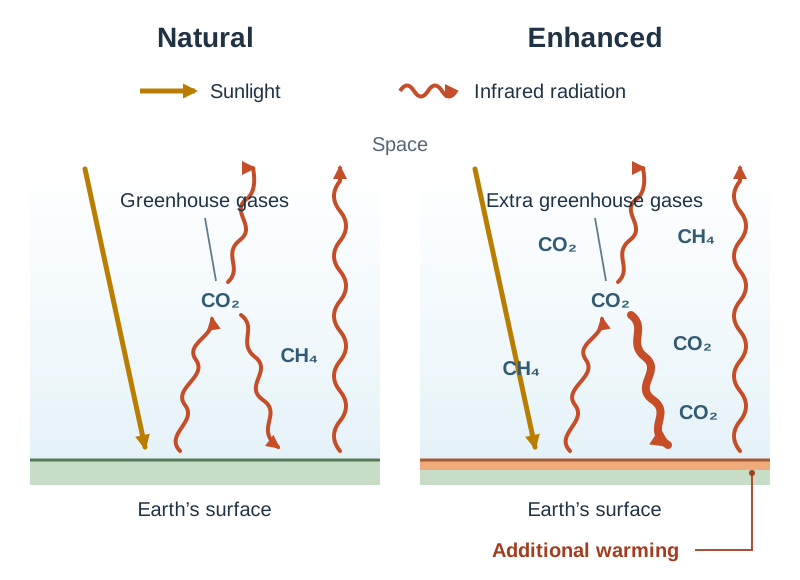
Our planet relies on the natural greenhouse effect to trap heat and sustain life, but extra emissions create an enhanced greenhouse effect. Both natural events and human activities dictate how thermal energy moves through the atmosphere.
- Weather changes daily, while climate tracks average weather patterns measured over decades.
- Large volcanic eruptions blast dust and sulphur into the air, which reflects sunlight and cools the planet temporarily.
- Ocean currents naturally carry enormous amounts of warm and cold water around the globe, shifting regional weather patterns.
- Burning fossil fuels like coal, oil, and gas releases extra carbon dioxide into the atmosphere.
- Chopping down large forests leaves fewer trees to absorb carbon dioxide through photosynthesis.
- Cattle farming and rotting food in landfill sites release large quantities of methane gas.
Climate Impacts and Evaluating Initiatives
Rising global temperatures melt polar ice caps and expand ocean water, raising sea levels and causing coastal floods. Ireland faces warmer, drier summers along with heavier winter rainfall that causes serious inland flooding.
| Initiative | Main benefit | Limitation |
|---|---|---|
| Wind and solar power | Generates clean electricity without burning fossil fuels. | Turbines stop producing electricity when the wind does not blow. |
| Home insulation retrofits | Traps heat indoors so homes burn much less oil or gas. | Upfront building work is very expensive for homeowners. |
| Planting native woodlands | Growing trees absorb carbon dioxide from the air as they grow. | Saplings require large tracts of land and take decades to mature. |
- Ireland's Climate Action Plan sets legal targets to cut greenhouse gas emissions across farming, transport, and energy.
- Carbon taxes make fossil fuels more expensive, which nudges businesses and households towards cleaner choices.
- People cut their carbon footprint by walking, cycling, taking public transport, and recycling household rubbish.
Space Exploration: Hazards, Benefits, and Society
Venturing into space delivers vital technology for everyday life on Earth, but missions carry extreme physical dangers and financial costs.
- Weather and Earth-observation satellites track storm paths, melting glaciers, and forest loss across the globe.
- Satellites provide everyday communications, global positioning networks (GPS), and international disaster monitoring.
- Space research yielded useful spinoffs for civilian life, including scratch-resistant lenses, ear thermometers, and advanced water filters.
- Astronauts face deadly cosmic radiation and lose muscle mass and bone density while working in microgravity.
- Fast-moving space debris from old rocket stages can smash into operating weather or communications satellites.
- Some people argue that governments should spend billions fixing poverty and healthcare on Earth before funding crewed bases on the Moon or Mars.
Key terms
- Sustainability
- Meeting our present needs without damaging the ability of future generations to meet their own needs.
- Enhanced greenhouse effect
- Additional heat trapped in the atmosphere because human activities add extra greenhouse gases.
- Global warming
- The steady rise in Earth's average surface temperature over long periods.
- Carbon footprint
- The total greenhouse gases released into the air by an individual, organisation, or activity.
- Space debris
- Defunct artificial objects and rocket fragments orbiting Earth at high speed.
- Spinoff technology
- A commercial product originally developed for space missions that solves an everyday problem on Earth.
Check yourself
Name two greenhouse gases increased by human actions.
Carbon dioxide and methane.
How can a volcanic eruption temporarily cool the Earth?
The ash and dust blasted into the sky reflect incoming sunlight back into space.
Give one everyday item that was developed as a spinoff from space research.
Scratch-resistant lenses, ear thermometers, or portable water filters.
Why is space debris dangerous to working communication satellites?
Debris travels at thousands of kilometres per hour, so even small fragments can destroy a satellite on impact.