
Climate change is the long-term shift in global temperatures and weather patterns caused by an enhanced greenhouse effect. In the exam, you need to identify greenhouse gases, distinguish natural factors from human activity, and evaluate climate actions.
Greenhouse Gases and the Carbon Cycle
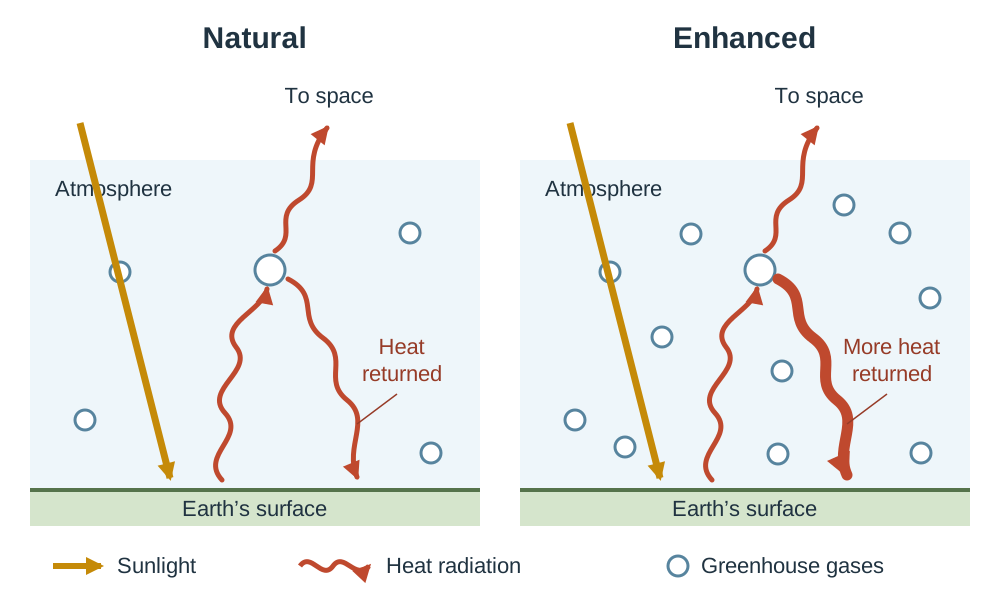
Earth's atmosphere naturally traps heat radiated from the ground, which keeps the planet warm enough for life. Human activity adds extra gases, creating an enhanced greenhouse effect that drives global warming.
- Carbon dioxide () is released when we burn fossil fuels like coal, oil, and gas.
- Respiration in living cells adds to the air, while photosynthesis in plants removes it.
- Methane () comes from livestock digestion, animal slurry, and decomposing waste in landfill sites.
- Nitrous oxide () comes from chemical fertilisers used on farms and vehicle exhausts.
- Water vapour () enters the air through evaporation from oceans and transpiration from plant leaves.
Natural reservoirs that absorb more carbon than they release, such as bogs and growing forests, are called carbon sinks.
Natural Processes and Human Factors
Earth's climate changes due to both natural cycles and human pollution, but modern warming is driven by human choices.
| Factor | Origin | Effect on Climate |
|---|---|---|
| Volcanic eruptions | Natural | Ash clouds block sunlight and cause short-term global cooling. |
| Ocean currents | Natural | They move warm water around the globe to keep regional climates mild. |
| Burning fossil fuels | Human | Releases trapped carbon into the air as carbon dioxide. |
| Deforestation | Human | Removing trees cuts down photosynthesis and leaves excess in the air. |
| Livestock farming | Human | Cattle produce large volumes of methane during digestion. |
In Ireland, agriculture produces the largest share of greenhouse gas emissions, followed by transport and energy generation.
Consequences of Climate Change
Rising global temperatures disrupt weather systems, ocean chemistry, and living things across the planet.
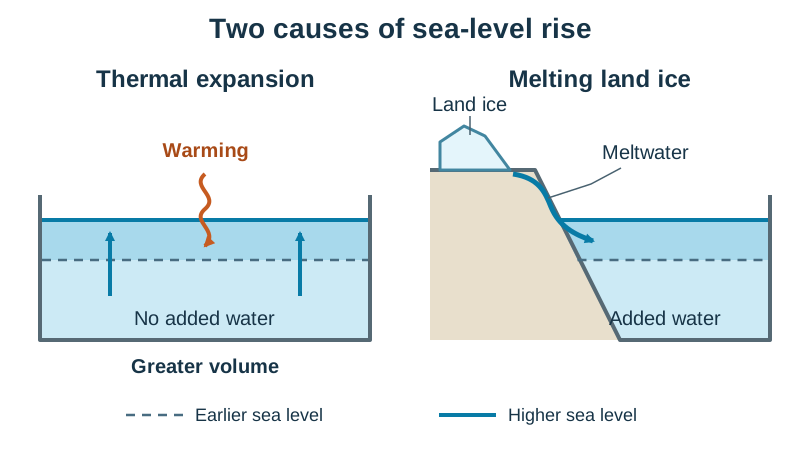
- Sea levels rise because warmer seawater expands in volume, a process called thermal expansion.
- Melting glaciers and land-based ice sheets pour extra water into the oceans.
- Warmer air holds more energy, creating severe droughts, heatwaves, and intense storms.
- Extra dissolved makes oceans more acidic, harming shellfish and coral reefs.
- Shifting temperatures alter habitats, which reduces biodiversity and threatens global food production.
Mitigation and Adaptation
Dealing with climate change requires two separate strategies: fixing the root cause and coping with the damage.
- Mitigation means cutting greenhouse gas emissions or absorbing carbon to slow down global warming.
- Adaptation means changing our towns, farms, and habits to protect against unavoidable climate damage.
| Action | Type | Benefit | Limitation |
|---|---|---|---|
| Wind farms | Mitigation | Generates clean electricity without burning fuel. | They generate no power on calm days. |
| Re-wetting bogs | Mitigation | Traps carbon safely in peat soils. | Land can no longer be farmed or cut for turf. |
| Coastal sea walls | Adaptation | Protects low-lying towns from rising tides and storm surges. | Expensive to build and maintain over time. |
| Drought-resistant crops | Adaptation | Helps farmers grow food during severe dry spells. | Special seeds can be expensive to buy. |
Key terms
- Enhanced greenhouse effect
- The extra trapping of heat in the atmosphere caused by human emissions of greenhouse gases.
- Carbon sink
- A natural feature, such as a peat bog or forest, that absorbs and stores more carbon than it releases.
- Carbon footprint
- The total amount of greenhouse gases released by the direct and indirect activities of a person or group.
- Thermal expansion
- The physical increase in the volume of ocean water as it warms up.
- Mitigation
- Any action taken to reduce greenhouse gas emissions or remove carbon from the air.
- Adaptation
- Any action taken to adjust structures and behaviour to cope with the impacts of climate change.
Check yourself
Which gas is released by farm cattle during digestion?
Methane ().
What is the term for the swelling of ocean water as it warms?
Thermal expansion.
Which Irish economic sector produces the greatest share of greenhouse gases?
Agriculture.
Is building a flood barrier along a river an example of mitigation or adaptation?
Adaptation, because it protects against flooding without cutting emissions.