

A solution is a mixture formed when a solute dissolves completely and evenly into a solvent. In the Junior Cycle examination, you will be tested on explaining dissolving with particle theory, calculating solubility, reading solubility curves, and separating mixtures.
Solutes, Solvents, and Mixtures
A solution is a mixture of two or more substances that are mixed together but not chemically combined. The solute and solvent keep their original properties and can be separated again by physical means, such as evaporation. A solution is uniform throughout, meaning a sample taken from the top is identical to one taken from the bottom.
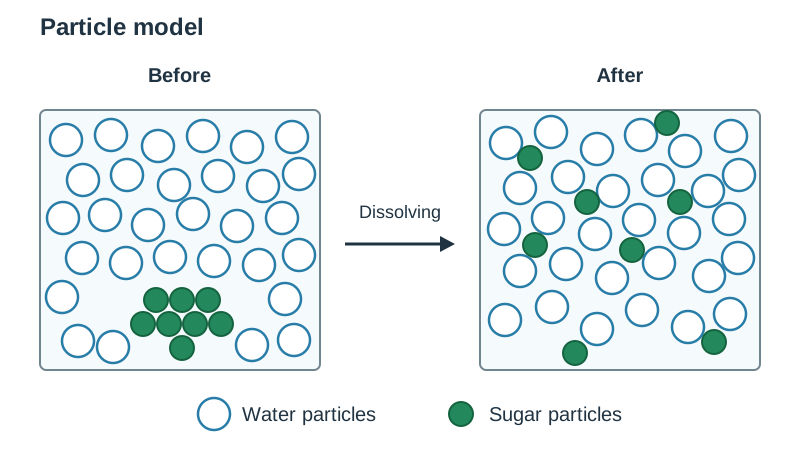
Dissolving is a physical change that conserves mass. Solute particles move into the spaces between solvent particles rather than disappearing. For example, dissolving 5 g of sugar in 100 g of water produces exactly 105 g of solution.
Dissolved salts conduct electricity because their charged particles are free to move through the liquid.
Separating Mixtures and Solutions
A substance is soluble if it dissolves in a liquid, and insoluble if it does not, like sand in water. Mixtures can be separated using different physical methods:
- Evaporation: heat the solution gently so the water turns to vapour, leaving the solid solute behind in the evaporating basin.
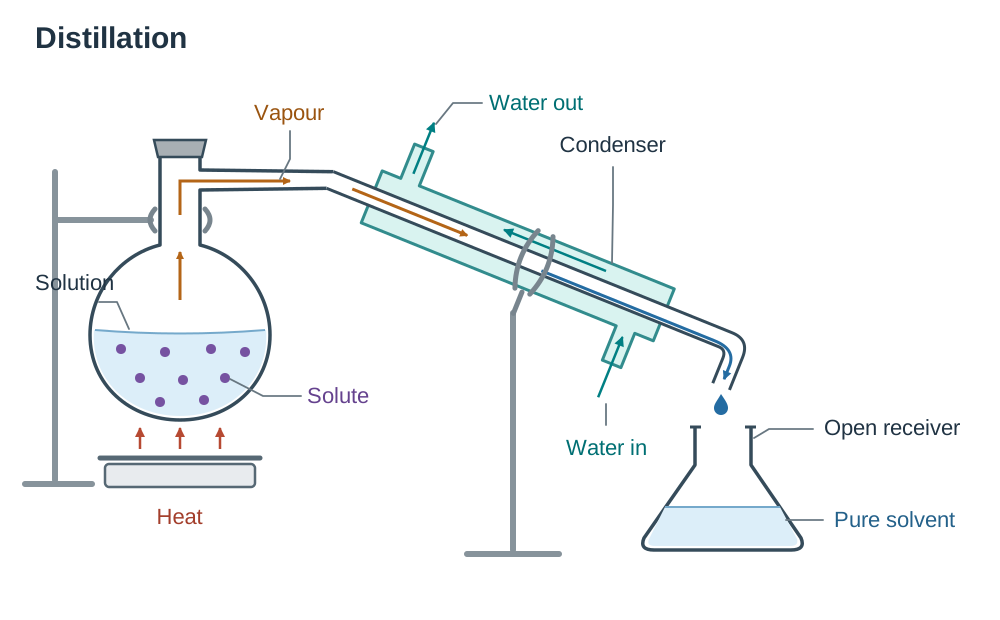
- Distillation: boil the solution, then cool and condense the vapour in a condenser to collect pure liquid solvent.
- Filtration: pour a suspension through filter paper; the undissolved solid stays on the paper and the liquid passes through.
Filtration cannot separate a true solution, because the dissolved solute particles are small enough to pass straight through the filter paper.
Concentration and Saturation
Solutions vary depending on the mass of solute dissolved in a given volume of solvent.
| Type | Description | Everyday Example |
|---|---|---|
| Dilute | Small mass of solute dissolved in a large volume of solvent | Weak squash with lots of water added |
| Concentrated | Large mass of solute dissolved in a small volume of solvent | Squash poured directly from the bottle |
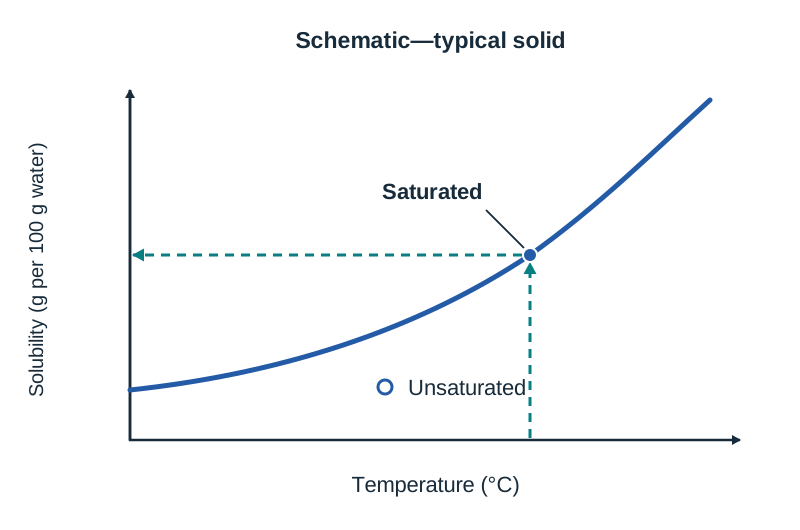
| Unsaturated | Contains less than the maximum solute and can dissolve more | Adding another spoon of sugar that fully dissolves |
| Saturated | Contains the maximum mass of solute that can dissolve at that temperature | Extra solute added settles at the bottom |
Heating a saturated solution usually makes it unsaturated, because most solids dissolve better in hot water than in cold water.
Investigating Solubility
Solubility is the maximum mass of a solute that will dissolve in a fixed amount of solvent at a specific temperature.
To investigate how temperature affects solubility fairly:
- Independent variable: temperature of the water.
- Dependent variable: mass of solute that dissolves.
- Controlled variables: volume of water used and stirring rate.
Add small weighed amounts of solute, stirring after each one. Stop when solid stays at the bottom and will not dissolve. Record the total mass that did dissolve. For most solids, solubility increases as water temperature rises.
Solubility Curves and Crystallisation
A solubility curve is a graph plotting solubility against temperature. To read a curve, go up from the temperature on the x-axis to the curve, then across to the y-axis to read the solubility. Points below the curve represent unsaturated solutions.
When a hot, saturated solution cools, crystallisation occurs because colder water holds less dissolved solid. A crystal is a solid with flat faces and straight edges, because its particles are arranged in a regular, repeating pattern.
For the same mass of water, and if none of the water evaporates:
Cooling a solution of 100 g of water saturated with copper sulfate from 80 °C (56 g dissolved) to 20 °C (only 20 g can stay dissolved) forms 56 g − 20 g = 36 g of crystals.
Key terms
- Solute
- The substance that dissolves in a liquid to form a solution.
- Solvent
- The liquid in which a solute dissolves.
- Solution
- The clear (see-through, but not always colourless) mixture formed when a solute dissolves completely in a solvent.
- Suspension
- A cloudy mixture containing small, undissolved solid particles floating in a liquid.
- Saturated solution
- A solution that contains the maximum mass of solute that can dissolve at a specific temperature.
- Solubility
- The maximum mass of solute in grams that will dissolve in a set amount of solvent at a specific temperature.
- Crystallisation
- The formation of regular solid crystals as a hot, saturated solution cools down.
Check yourself
Why can filtration not be used to separate salt from salt water?
The dissolved salt particles are too small and pass through the pores of the filter paper with the water.
What is the total mass when 8 g of salt dissolves completely in 100 g of water?
108 g, because mass is conserved during dissolving.
What is the difference between a solution and a suspension?
A solution is clear because the solute dissolves completely, whereas a suspension is cloudy because solid particles remain undissolved.
Why does a salt solution conduct electricity while pure water does not?
Dissolved salt releases charged particles that are free to move and carry an electric current.