

Your body is constantly exposed to organisms that can make you ill. Immunity is the set of defences that stop them, and it works on two levels: defences you are born with, and defences you build up after you meet a particular pathogen. The immune system forms an essential response system in the human body alongside the nervous, hormonal, and musculoskeletal systems. At Higher Level, you need to understand the six main groups of pathogens, contrast innate and acquired immunity, and compare the specialised functions of white blood cells including monocytes, natural killer cells, B lymphocytes, and the four T lymphocyte subtypes. You will also model cellular viral replication in DNA versus RNA viruses, explain active and passive immunity, analyse disease spread using the basic reproduction number (R₀), trace how antibiotic resistance develops, and discuss the impact of emerging diseases and autoimmune disorders on society.
Pathogens, Infection, and Plant Defences
A pathogen is any biological organism or infectious agent capable of causing disease in a host organism. Pathogens span six distinct groups:
- Prions: Infectious, abnormally folded proteins that contain no genetic material (neither DNA nor RNA). A prion acts as a template, forcing normal proteins in brain tissue to misfold into diseased forms. This triggers fatal neurodegenerative conditions such as Bovine Spongiform Encephalopathy (BSE) in cattle, scrapie in sheep, and Creutzfeldt-Jakob Disease (CJD) in humans.
- Viruses: Non-cellular obligate intracellular parasites composed of a nucleic acid core (DNA or RNA) enclosed in a protein capsid coat (for example, influenza, human immunodeficiency virus, and tobacco mosaic virus). They can only reproduce inside a living host cell.
- Bacteria: Microscopic, single-celled prokaryotic organisms that cause disease through cellular damage or toxin secretion (such as Streptococcus, Salmonella, and Mycobacterium tuberculosis).
- Fungi: Heterotrophic eukaryotic organisms that absorb nutrients from their surroundings (including Candida causing thrush, tinea causing athlete's foot, and Hymenoscyphus fraxineus causing ash dieback in ash trees).
- Protists: Single-celled eukaryotic organisms that are distinct from plants, animals, and fungi (such as Plasmodium, transmitted by mosquitoes to cause malaria).
- Parasitic animals: Multicellular invertebrates that live in or on a host at the host's expense. These include endoparasites like tapeworms and roundworms, and ectoparasites like ticks, fleas, and mites.
Plants Defend Themselves Too
Unlike animals, plants lack circulating white blood cells and antibodies. Their immune response relies entirely on non-specific anatomical and chemical adaptations:
- Anatomical adaptations: A waxy cuticle and thick bark act as mechanical barriers; thorns, spines, and stinging hairs deter grazing herbivores; and wounds can be sealed off with resin or callose.
- Chemical adaptations: Plants produce toxic or distasteful compounds such as tannins, alkaloids (for example, caffeine and nicotine), and antimicrobial proteins that kill or inhibit attacking fungi and bacteria.
Innate Immunity: Surface Barriers and Internal Defences
Innate immunity is the non-specific defence system present from birth. It responds immediately and identically to every foreign invader without requiring prior exposure, and it leaves no immunological memory.
The First Line of Defence: External Physical and Chemical Barriers
- Skin forms a continuous, tough mechanical barrier of keratinised cells. Breaches are rapidly sealed by blood clotting to prevent microbial entry.
- Sebaceous glands secrete sebum, an oily substance that lubricates the skin and contains antibacterial chemicals that inhibit microbial growth.
- Mucous membranes produce sticky mucus across the respiratory, digestive, and urogenital tracts to trap microbes. In the airways, microscopic cilia beat rhythmically to sweep mucus upwards to the throat to be swallowed or coughed out.
- Lysozyme is an antimicrobial enzyme present in tears, saliva, and perspiration that hydrolyses the peptidoglycan cell walls of bacteria, causing them to burst by osmotic lysis.
- Stomach acid (hydrochloric acid) maintains a pH of 1 to 2, denaturing microbial enzymes and destroying swallowed pathogens.
- Beneficial microflora are harmless bacteria that normally live in the gut and vagina; they produce lactic acid and outcompete incoming pathogens for nutrients and space.
The Second Line of Defence: Internal Non-Specific Defences
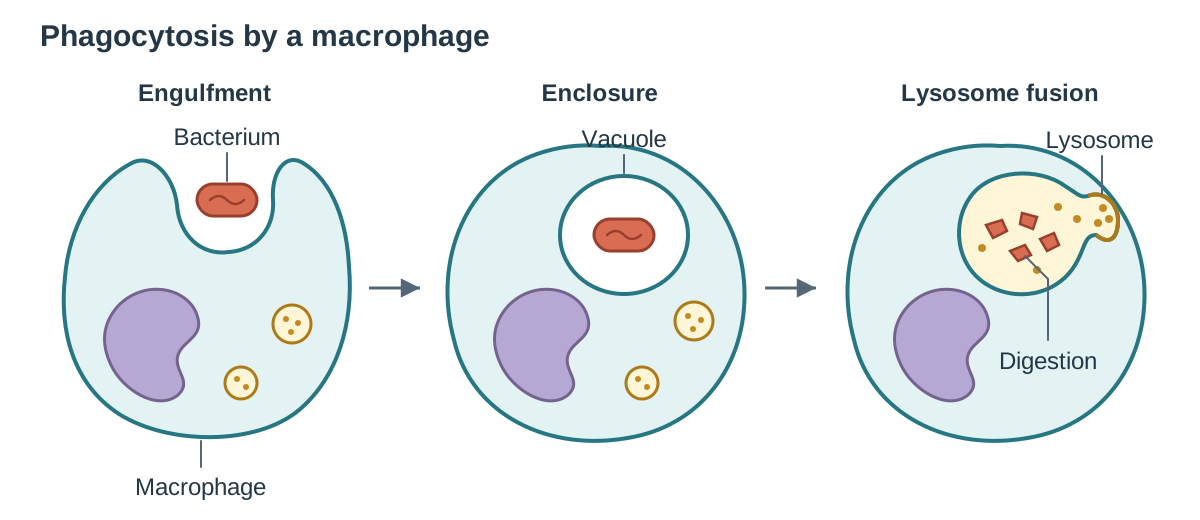
- Phagocytosis: When pathogens breach physical barriers, circulating monocytes and tissue macrophages engulf foreign particles into vacuoles and digest them enzymatically using lysosomes.
- Natural killer cells: Cytotoxic innate lymphocytes that patrol blood and tissues. NK cells detect and destroy abnormal host cells—such as virus-infected cells or emerging tumour cells—spontaneously, without requiring specific antigen recognition.
- Defensive proteins: Interferons are signalling proteins released by virus-infected cells that stimulate neighbouring cells to produce antiviral enzymes. Complement is a group of blood proteins activated in a cascade that burst pathogen membranes and coat pathogens so phagocytes engulf them more easily.
- Inflammation: Damaged tissues release histamine, which dilates local blood vessels and increases capillary permeability. This brings extra blood flow, warmth, and swelling while drawing phagocytic white blood cells directly into the infected area.
Acquired Immunity: Distinctions, Principles, and Graphs
Acquired (adaptive) immunity is a targeted defence system that develops throughout an organism's lifetime. It relies on lymphocytes, recognises specific molecular shapes, and establishes long-term immunological memory.
Distinguishing Innate from Acquired Immunity
| Feature | Innate immunity | Acquired (adaptive) immunity |
|---|---|---|
| Present from | Birth; inherited and always ready | Develops during life following exposure to an antigen |
| Specificity | Non-specific; acts the same way against every pathogen | Specific; each lymphocyte responds to one matching antigen |
| Speed | Immediate (minutes to hours) | Slow on first exposure (takes 7 to 14 days) |
| Memory | No memory; identical response upon repeated exposure | Memory B and T cells formed; secondary response is faster and stronger |
| Main components | Skin, mucus, lysozyme, stomach acid, phagocytes, natural killer cells, inflammation, interferons | B lymphocytes (antibodies) and T lymphocytes (helper, killer, suppressor, memory) |
| Example | A macrophage engulfing any bacterium in a wound | Antibodies produced against the measles virus after vaccination |
If asked to distinguish them in an examination: innate immunity is present from birth, acts immediately against any pathogen and leaves no memory, whereas acquired immunity develops after exposure, targets one specific antigen and produces memory cells.
Antigens and Antibodies
- An antigen is any substance—usually a protein or polysaccharide, often on the surface of a pathogen—that the immune system recognises and that stimulates an immune response, including the production of specific antibodies. Molecules on the body's own cells are called self-antigens; the immune system normally learns to ignore these, a state known as self-tolerance.
- An antibody is a specialised Y-shaped immunoglobulin protein produced by plasma B lymphocytes that binds with complementary precision to one specific matching antigen.
Reading an Antibody-Titre Graph
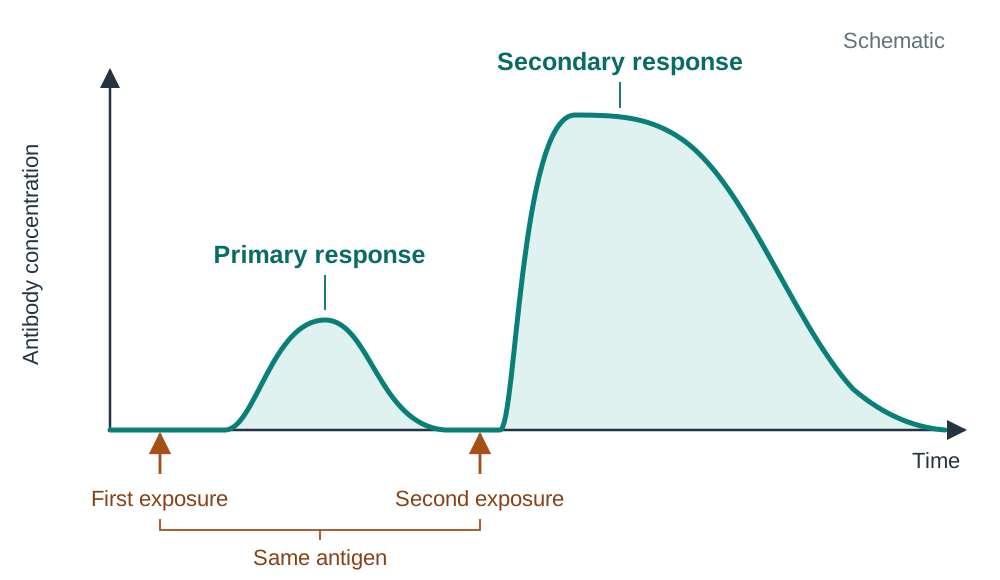
When measuring blood antibody concentration (titre) over time following two separate exposures to the same antigen:
- Primary lag phase: After the first exposure, there is a delay of roughly 7 to 14 days before antibodies appear in blood, as the matching lymphocyte is selected and divides.
- Primary peak: Antibody levels rise slowly, reach a relatively low peak, and then decline as the infection clears.
- Secondary response: Following a second exposure, the lag is virtually absent (1 to 3 days).
- Secondary peak: Antibody levels rise faster, reach a much higher concentration, and remain high for longer.
- Biological cause: Memory B cells already exist in large numbers and divide immediately into antibody-secreting plasma cells, clearing the pathogen before symptoms can develop.
Specialised White Blood Cells (Higher Level)
White blood cells (leucocytes) originate from stem cells in the bone marrow. Higher Level candidates must compare their origin, maturation site, and precise physiological role.
| White Blood Cell Type | Branch & Maturation | Primary Physiological Role |
|---|---|---|
| Monocyte | Innate; circulates in blood, matures into a macrophage in tissues | Circulates in the blood, then migrates into infected tissue and matures into a macrophage. The macrophage engulfs pathogens and cellular debris by phagocytosis and acts as an antigen-presenting cell (APC), displaying digested fragments on its surface to activate helper T lymphocytes. |
| Natural killer cell | Innate; found in blood and lymphoid tissues | Cytotoxic lymphocyte that targets virus-infected cells and tumour cells. Destroys compromised cells non-specifically without prior antigen sensitisation. |
| B lymphocyte | Acquired; matures in bone marrow | Expresses unique antigen receptors. When activated by matching antigens and helper T cytokines, it clones into plasma B cells (which secrete thousands of specific antibodies per second) and long-lived memory B cells. |
| Helper T cell | Acquired; matures in thymus gland | The coordinator of adaptive immunity. Recognises foreign antigens displayed by APC macrophages and secretes chemical signals (cytokines) that stimulate B cells to multiply and activate killer T cells. |
| Killer T cell (Cytotoxic) | Acquired; matures in thymus gland | Binds directly to infected host cells displaying complementary foreign antigens. Releases perforin, which forms pores in the target membrane, allowing water and ions to rush in until the cell bursts by lysis. |
| Suppressor T cell | Acquired; matures in thymus gland | Acts as the brakes of the immune system. Releases inhibitory signals that downregulate and terminate the adaptive response once an infection is cleared, protecting healthy tissues. |
| Memory T cell | Acquired; matures in thymus gland | Survives for decades in lymphoid tissues. Rapidly differentiates into active helper and killer T cells upon reinfection with the identical pathogen. |
Memory Hook for T Lymphocytes
- Helper: calls the others in (activates B cells and killer T cells).
- Killer: destroys infected body cells with perforin.
- Suppressor: switches the response off when the threat has gone.
- Memory: remembers the specific antigen for next time.
Clinical illustration: The Human Immunodeficiency Virus (HIV) specifically targets and destroys helper T cells. Without helper T cells releasing activating cytokines, neither antibody production by B cells nor cytotoxic action by killer T cells can be coordinated, leaving the body vulnerable to secondary opportunistic infections.
Active and Passive Immunity, Vaccines, and Antibiotic Resistance
Acquired immunity is categorised by whether the host manufactures their own antibodies (active) or receives pre-formed antibodies from another source (passive).
| Type | Mechanism | Onset Speed | Duration of Protection | Memory Cells Formed? |
|---|---|---|---|---|
| Natural Active | Normal infection by a live, active pathogen | Slow (days to weeks) | Long-term (often lifelong) | Yes |
| Artificial Active | Deliberate introduction of antigen via vaccination | Slow (days to weeks) | Long-term | Yes |
| Natural Passive | Maternal antibodies cross placenta or enter via colostrum / breast milk | Immediate | Short-term (weeks to months) | No |
| Artificial Passive | Injection of pre-formed donor antibodies (antibody booster injection, antiserum) | Immediate | Short-term (antibodies degrade) | No |
Active immunity requires the recipient's own B lymphocytes to respond to an antigen, forming antibody-producing plasma cells and durable memory cells. Passive immunity provides immediate but temporary protection because the recipient receives ready-made antibodies. The recipient's own lymphocytes are never activated, so no memory cells are produced; once the transferred antibodies break down, immunity disappears.
Passive immunity can be delivered medically by injecting ready-made antibodies from a donor—sometimes referred to as an antibody booster injection, antiserum, or antitoxin (for example, tetanus antitoxin after a puncture wound or snake antivenom). Do not confuse an antibody booster injection with a vaccine booster: a vaccine booster delivers antigens to stimulate the patient's own active response and memory cells, whereas an antibody booster injection delivers pre-formed antibodies for immediate, passive defence.
A vaccine introduces a non-pathogenic preparation containing killed microbes, weakened (attenuated) pathogens, isolated surface antigens, or mRNA that directs host cells to make a viral antigen. This stimulates a primary immune response without triggering severe disease, producing memory cells that protect against future infection.
Treating Microbial Diseases and Antibiotic Resistance
Strategies to treat microbial diseases:
- Antibiotics: for bacterial infections (targeting cell wall or ribosome targets).
- Antiviral drugs: for some viral infections.
- Antifungal drugs: for fungal infections such as thrush or athlete's foot.
Strategies to prevent microbial diseases:
- Vaccination.
- Personal hygiene such as handwashing and correct use of PPE.
- Safe handling, cooking and storage of food, and access to clean water and sanitation.
- Controlling vectors such as mosquitoes and ticks, isolating infectious people, and avoiding misuse of antibiotics.
Antibiotics are chemical substances that kill or inhibit bacteria by disrupting bacterial cell wall synthesis or bacterial ribosomes. Antibiotics are completely ineffective against viruses because viruses do not possess bacterial cell walls, ribosomes, or their own metabolic machinery.
How antibiotic resistance develops through natural selection:
- A random mutation occurs in bacterial DNA that gives resistance (for example, a gene coding for an enzyme that destroys the antibiotic).
- When the antibiotic is administered, non-resistant bacteria are killed, but the resistant bacterium survives.
- The resistant bacterium reproduces rapidly by binary fission, passing the resistance gene to all offspring.
- Over time, resistant strains become dominant, rendering the antibiotic ineffective.
Strategies to slow antibiotic resistance:
- Prescribe antibiotics strictly for bacterial infections, never for viral illnesses like colds or flu.
- Patients must complete the full prescribed course so that partially resistant bacteria are not left behind.
- Ban routine, prophylactic use of antibiotics in farm animal feed.
- Maintain strict hospital hygiene and isolate patients infected with resistant strains such as MRSA.
Modelling Viral Replication: DNA vs. RNA Viruses (Higher Level)
Viruses lack metabolic machinery, organelles, and ribosomes. They are obligate intracellular parasites that replicate solely by taking over a host cell's resources.
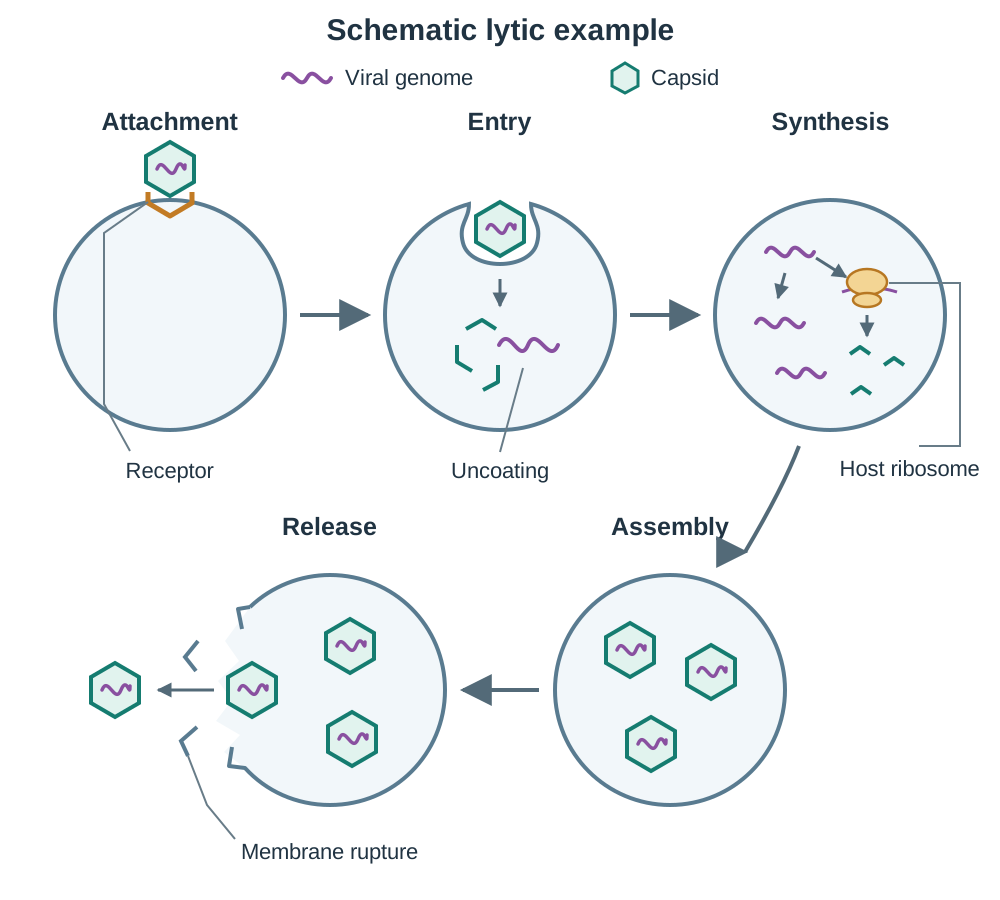
The Five Stages of Viral Cellular Replication
- Attachment: Viral surface glycoproteins bind with complementary lock-and-key specificity to receptor molecules on the host cell membrane.
- Entry: The viral nucleic acid enters the host cell. The capsid may remain outside, the viral envelope may fuse with the host membrane, or the virus may enter whole via endocytosis, after which host enzymes digest the protein coat to release the genome.
- Synthesis: The viral genome hijacks host cell machinery. Host transcription and translation are suppressed, while host ribosomes, amino acids, tRNA, ATP, and enzymes are forced to synthesise viral nucleic acids and viral capsid proteins.
- Assembly: Newly synthesised viral genomes and protein capsomeres assemble spontaneously inside the host cell to construct thousands of intact new virions.
- Release: Progeny viruses exit the host cell. Non-enveloped viruses typically cause osmotic lysis, bursting and destroying the host cell. Enveloped viruses bud off through the host membrane, taking a layer of phospholipid membrane with them.
When a Virus Does Not Destroy the Cell Straight Away: Viral Latency
Not all viral infections lead immediately to cell lysis. Some viruses integrate their genetic material into host chromosomes and enter a dormant or latent state. The viral genome is replicated silently alongside host DNA each time the cell divides, producing no symptoms. Under conditions of physical or emotional stress, illness, or immunosuppression, the virus reactivates and enters the lytic cycle. A classic example is the varicella-zoster virus: initial infection causes chickenpox, after which the virus lies latent inside sensory nerve ganglia for decades, occasionally reactivating later in life as shingles.
Comparison of DNA and RNA Viruses
| Feature | DNA Viruses | RNA Viruses |
|---|---|---|
| Genetic material | Deoxyribonucleic acid (DNA) | Ribonucleic acid (RNA) |
| Replication site | Host cell nucleus (for most animal viruses) | Host cell cytoplasm (for most animal viruses) |
| Mutation rate | Relatively low; replication uses proofreading enzymes | High; RNA-copying enzymes lack proofreading mechanisms |
| Examples | Chickenpox (varicella-zoster), herpes simplex, HPV | Influenza, SARS-CoV-2, HIV, measles, tobacco mosaic virus |
The high mutation rate of RNA viruses causes frequent alterations in their surface antigen shapes. Existing antibodies and memory cells fail to recognise the new shapes, enabling updated strains to bypass existing population immunity.
Disease Emergence, Population Immunity, and Society (Higher Level)
An emerging infectious disease is one that has newly appeared in a population, or has existed previously but is rapidly increasing in incidence or geographical range, affecting plants or animals.
Interrelated Factors Driving Disease Emergence
- Persistence of the pathogen in a host: Pathogens that establish long-term latency or asymptomatic carrier states stay in hosts longer, multiplying opportunities for transmission.
- Mutations: Rapid mutation rates generate novel antigen shapes that evade existing host immunity.
- Antibiotic or chemical resistance: Heavy agricultural and clinical drug use selects for resistant pathogens, defeating standard treatments.
- Immunity level in the population: Low vaccination rates leave large pools of susceptible hosts.
- Mobility in affected populations: Global air travel and commercial transport move infected people, animals, and agricultural goods across continents in hours. For example, ash dieback (Hymenoscyphus fraxineus), a destructive fungal tree disease, was introduced into Ireland in 2012 via imported infected ash saplings.
- Reproduction number (R₀): Determines the intrinsic spread of the disease.
The Basic Reproduction Number (R₀) and Population Immunity
The basic reproduction number (R₀) is the average number of secondary infections generated by a single infected individual in an entirely susceptible population where nobody is immune and no control interventions have been introduced.
- If R₀ < 1: Each case infects fewer than one other person on average; transmission declines and the outbreak dies out.
- If R₀ = 1: Each case infects exactly one other person; the disease remains stable and endemic.
- If R₀ > 1: Each case infects more than one person; transmission increases exponentially, with epidemic or pandemic potential.
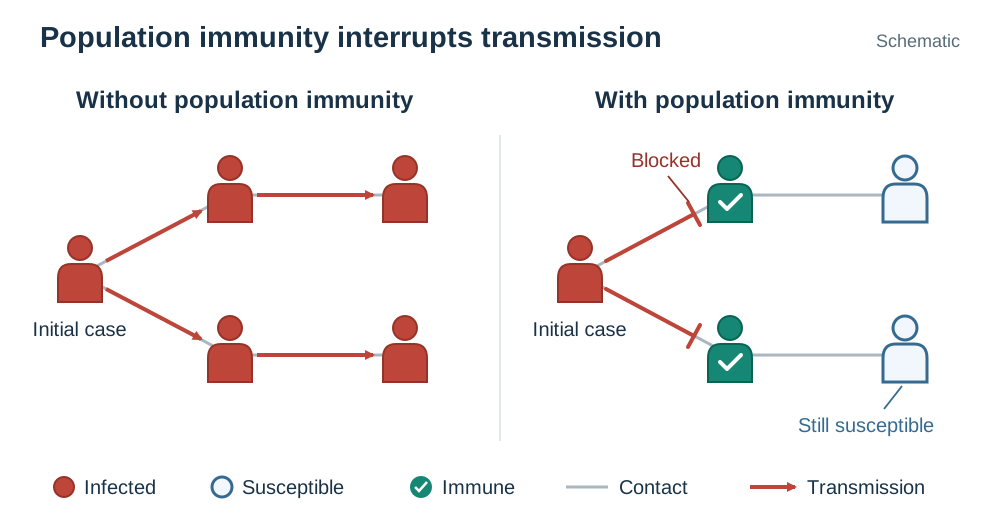
Population immunity (herd immunity) is the collective protection given to an entire population—including unimmunised individuals—when a high enough proportion is immune (via vaccination or past recovery) that transmission chains break. In an ongoing outbreak, the actual transmission rate is the effective reproduction number (R), which falls as the proportion of immune individuals rises. Diseases with very high R₀ values, like measles (R₀ ≈ 12–18), require significantly higher vaccination coverage (about 95%) to achieve population protection than diseases with lower R₀ values.
Why Knowledge of Emerging Diseases Matters to Society
- Surveillance and containment: Early detection via hospital monitoring and wastewater testing allows isolation, contact tracing, and vector control to prevent healthcare services being overwhelmed.
- Biotechnology: Rapid gene sequencing of new pathogens enables researchers to engineer diagnostic tests and targeted vaccines (such as mRNA vaccines) in record time.
- Agriculture and economy: Monitoring plant and animal diseases protects livestock and crop yields. Ash dieback has killed vast numbers of native Irish ash trees, requiring costly felling and replanting schemes.
- Balancing costs: Society must weigh containment measures (travel curbs, school closures, livestock culling) against economic and social costs, while addressing vaccine inequality and misinformation.
Autoimmune Disorders
An autoimmune disease occurs when the immune system loses self-tolerance, failing to distinguish self-antigens from foreign antigens and attacking the body's own tissues:
- Type 1 diabetes: Cytotoxic T cells attack and destroy the insulin-secreting beta cells in the islets of Langerhans of the pancreas.
- Rheumatoid arthritis: Chronic immune inflammation destroys the synovial membranes of joints.
- Multiple sclerosis: The immune system attacks and destroys the myelin sheath of neurons in the brain and spinal cord, slowing or blocking nerve impulse conduction.
Key terms
- Pathogen
- Any biological organism or infectious agent capable of causing disease in a host organism.
- Antigen
- Any substance—usually a protein or polysaccharide, often on the surface of a pathogen—that the immune system recognises and that stimulates an immune response, including antibody production.
- Antibody
- A specialised Y-shaped immunoglobulin protein produced by plasma B lymphocytes that binds with complementary specificity to a matching antigen.
- Innate Immunity
- Non-specific physiological defence mechanisms present from birth that resist all foreign agents equally without providing immunological memory.
- Acquired Immunity
- Specific defence developed over an organism's lifetime mediated by lymphocytes and antibodies, characterised by immunological memory.
- Active Immunity
- Resistance developed when an organism's own lymphocytes synthesise antibodies and memory cells following direct exposure to an antigen.
- Passive Immunity
- Short-term resistance conferred by receiving pre-formed antibodies from another organism without generating memory cells.
- Phagocytosis
- The cellular process by which specialised white blood cells surround, engulf, and enzymatically digest foreign microorganisms and debris using lysosomes.
- Natural Killer (NK) Cell
- A cytotoxic lymphocyte of the innate immune system that destroys virus-infected and cancerous body cells without requiring prior antigen exposure.
- Monocyte
- A phagocytic white blood cell that circulates in the blood before migrating into tissues to mature into an antigen-presenting macrophage.
- Helper T Cell
- A T lymphocyte that coordinates the immune response by recognising presented antigens and releasing cytokines to activate B cells and killer T cells.
- Killer T Cell
- A cytotoxic T lymphocyte that binds to abnormal or infected host body cells and releases perforin to destroy them via lysis.
- Suppressor T Cell
- A regulatory T lymphocyte that stops and downregulates the immune response once an infection has been cleared.
- Memory T Cell
- A long-lived T lymphocyte formed during an infection that remains in lymphoid tissue to rapidly trigger killer and helper T cell responses upon reinfection.
- Memory B Cell
- A long-lived B lymphocyte formed during an infection that remains in lymphoid tissue to rapidly divide into antibody-secreting plasma cells upon reinfection.
- Prion
- An infectious, misfolded protein lacking nucleic acids that converts normal proteins into diseased forms, causing fatal neurodegenerative illness.
- Basic Reproduction Number (R₀)
- The average number of secondary infectious cases produced by a single primary case in a completely susceptible population with no interventions.
- Autoimmune Disease
- A disorder in which the adaptive immune system fails to recognise self-antigens and attacks the organism's own healthy tissues.
Check yourself
What structural feature of bacteria is targeted and degraded by lysozyme in tears and saliva?
Lysozyme catalyses the hydrolysis of peptidoglycan polymers in bacterial cell walls, weakening the wall and causing the bacterium to burst by osmotic lysis.
Where in the human body do B lymphocytes and T lymphocytes complete their maturation?
Both originate from stem cells in the bone marrow; B lymphocytes complete their maturation in the bone marrow, whereas T lymphocytes migrate to mature in the thymus gland.
Distinguish between natural passive immunity and artificial passive immunity, giving one example of each.
Natural passive immunity occurs via the biological transfer of maternal antibodies across the placenta or through breast milk/colostrum. Artificial passive immunity occurs when pre-formed donor antibodies are medically injected into a patient (e.g. anti-tetanus serum or snake antivenom).
Name the five stages of cellular viral replication in correct chronological order.
Attachment, Entry, Synthesis, Assembly, and Release.
Why do RNA viruses generally have significantly higher mutation rates than DNA viruses?
RNA viruses replicate using RNA polymerases that lack the proofreading and error-correction mechanisms found in cellular DNA replication enzymes, resulting in frequent copying errors.
What is the specific physiological function of perforin when released by killer T cells?
Perforin makes pores (holes) in the membrane of the target cell, so water and ions flood in, the cell swells and bursts (lysis).
State the function of suppressor T cells during an immune response.
Suppressor T cells release inhibitory chemical signals that downregulate and turn off the immune response once the pathogen has been cleared, preventing ongoing damage to healthy body tissues.
Explain what is meant by viral latency, using a named example.
Viral latency is a dormant state where a virus integrates its genetic material into the host cell without causing immediate lysis or symptoms. An example is the varicella-zoster virus, which causes chickenpox, remains latent in nerve cells, and can reactivate years later as shingles.
Give one example of an emerging plant disease and state how it was introduced into Ireland.
Ash dieback (caused by the fungus Hymenoscyphus fraxineus) was introduced into Ireland in 2012 via the importation of infected young ash saplings.
What is an autoimmune disease? Name one specific example and describe the tissue it targets.
An autoimmune disease is a condition where the immune system loses self-tolerance and attacks the body's own healthy tissues. An example is multiple sclerosis, where the immune system attacks and destroys the myelin sheath of neurons in the brain and spinal cord.