

Genetics is the study of heredity: how characteristics are passed from parents to offspring. Most genes are carried on chromosomes in the nucleus, but mitochondria and chloroplasts carry a few genes of their own. For Leaving Certificate Higher Level Biology, this topic covers chromosome structure, nuclear versus non-nuclear maternal inheritance, Mendel's laws of segregation and independent assortment, incomplete dominance, gene linkage, sex determination, and sex-linked conditions like haemophilia and red-green colour blindness. It also explores epigenetics, examining how environmental and behavioural factors regulate gene expression without altering the underlying DNA base sequence.
Chromosomes, Genes, and the Genome
You have two copies of most genes, one inherited from each parent. The different versions of a gene are called alleles. Which alleles you inherit, and how they interact, determines the physical traits you display. Within any biological species—a group of similar organisms that can naturally interbreed to produce fertile offspring—genetic instructions are organised within cells.
Inside eukaryotic cells, genetic instructions are organised within the nucleus. When a cell is not dividing, the genetic material exists as an uncoiled, diffuse mass called chromatin. When division begins, chromatin condenses and coils into distinct structures called chromosomes.
Chromosome Structure
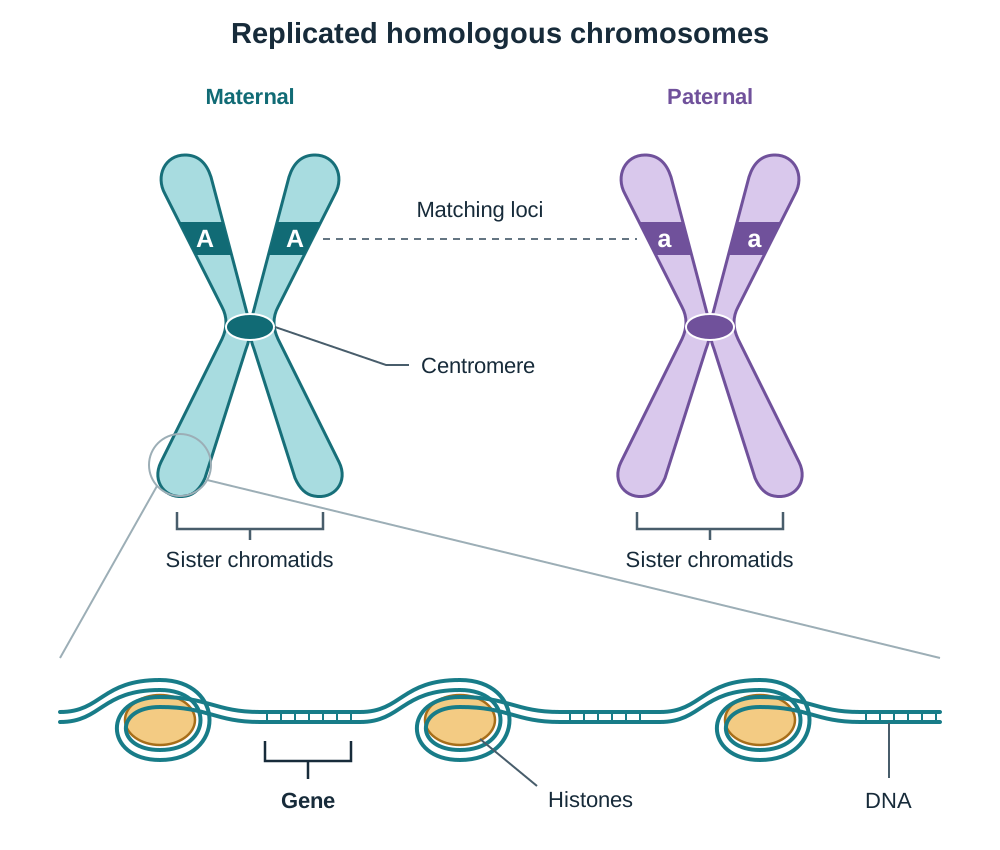
A chromosome is a thread-like structure composed of DNA and packaging proteins called histones. The double-stranded DNA wraps around these histone proteins, allowing metres of genetic code to fit securely into the microscopic nucleus.
Before a cell divides, each DNA molecule duplicates. A replicated chromosome consists of two identical copies known as sister chromatids, joined together at a central region called the centromere. These sister chromatids remain united until anaphase, when they pull apart into separate daughter cells.
Genes, Loci, and Non-Coding DNA
A gene is a specific sequence of DNA containing the instructions to produce a functional protein, which in turn influences a trait. The exact physical position of a gene on a chromosome is its locus (plural: loci). Homologous chromosomes carry matching genes at identical loci, with one chromosome coming from the male parent and one from the female parent.
The complete collection of genetic instructions in an organism is its genome. Only a minority of genomic DNA codes directly for proteins (coding DNA). Large portions consist of non-coding DNA, which includes regulatory switches that control when and where genes are transcribed, structural sequences, and regions of unknown function.
Nuclear vs Non-Nuclear Inheritance
In eukaryotic organisms, genetic material is divided between the nucleus and specific energy-converting organelles in the cytoplasm.
Nuclear Inheritance
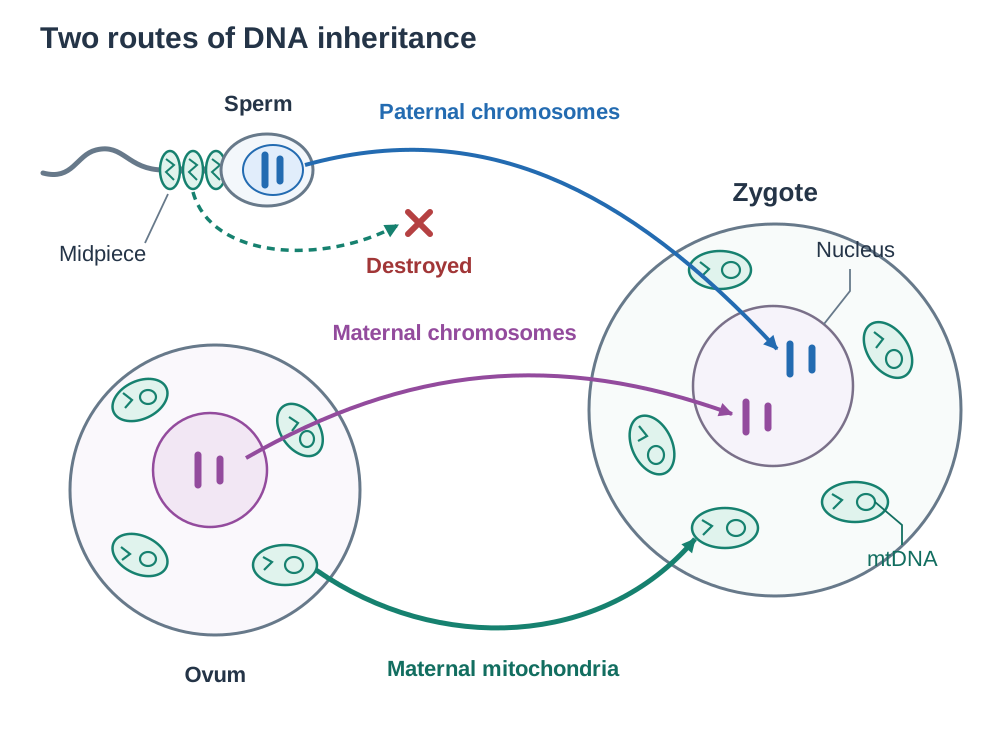
The vast majority of an organism's genes are found in the nucleus. In sexual reproduction, specialised haploid sex cells called gametes (sperm and egg) unite during fertilisation, forming a diploid zygote. Consequently, offspring inherit nuclear inheritance traits equally from both biological parents.
Non-Nuclear Inheritance
Mitochondria and chloroplasts contain their own genetic material, known as mitochondrial DNA (mtDNA) and chloroplast DNA (cpDNA). These molecules exist as small, circular loops containing relatively few genes:
- Mitochondrial DNA (mtDNA): in humans, 37 genes. Some code for proteins used in making ATP; the rest code for the RNA (transfer RNA and ribosomal RNA) that the mitochondrion needs to build those proteins.
- Chloroplast DNA (cpDNA): in plants, approximately 100 genes, mostly coding for proteins used in photosynthesis and chloroplast RNA.
Non-nuclear DNA displays maternal inheritance. At fertilisation, any sperm mitochondria that enter the egg are destroyed. All functional mitochondria in the zygote come directly from the cytoplasm of the ovum. Therefore, a condition caused by a fault in mtDNA is passed from a mother to all her children (though the severity can vary between them). An affected father does not pass the condition on.
Comparing Nuclear and Non-Nuclear Inheritance
| Feature | Nuclear Inheritance | Non-Nuclear Inheritance |
|---|---|---|
| Location | Cell nucleus | Mitochondria and chloroplasts |
| DNA Structure | Long, linear molecules wrapped around histones | Small, circular loops without histones |
| Number of Genes | Tens of thousands | Few (approx. 37 in mtDNA, 100 in cpDNA) |
| Parental Origin | Equal contribution from both parents | Maternal line only |
Genetics, Epigenetics, and Gene Regulation
Genetics involves the study of traits dictated by the specific nucleotide base sequence (A, T, G, C) of DNA. Genetic changes (mutations) alter this base sequence and are usually permanent.
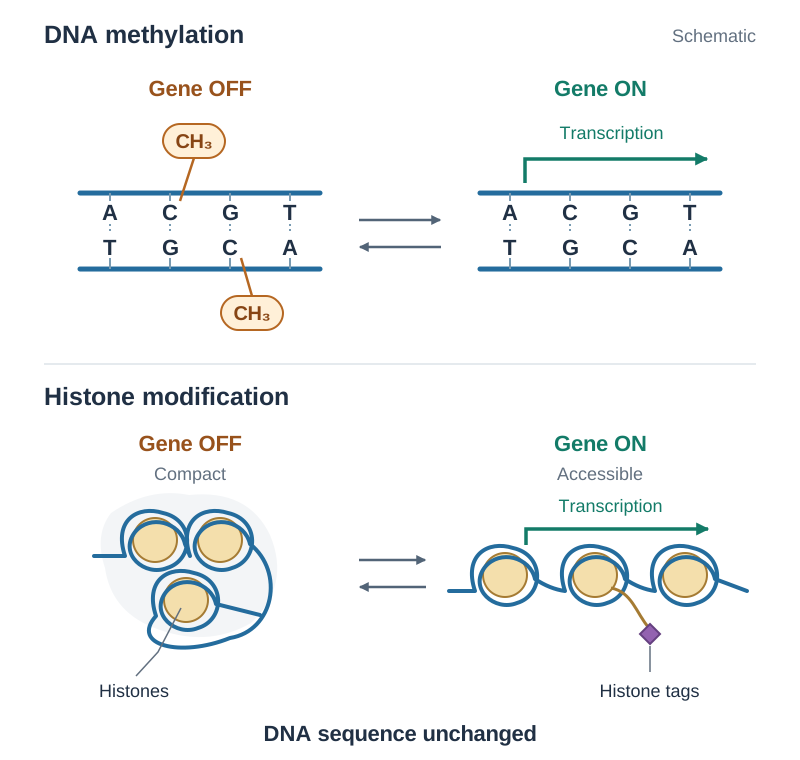
Epigenetics is the study of heritable changes in gene expression that occur without altering the underlying DNA base sequence. Epigenetic modifications act as molecular switches, determining whether specific genes are read into proteins or kept silent.
Epigenetic Mechanisms
Cells modify gene expression through chemical tags:
- DNA Methylation: Enzymes attach a methyl group () directly to cytosine bases in DNA. This chemical tag physically prevents transcription enzymes like RNA polymerase from binding, switching the gene off. Removing the methyl group allows transcription to resume.
- Histone Modification: Chemical tags added to histones change how tightly DNA is wound around them. Tightly wound DNA cannot be read by transcription machinery, switching the gene off. Loosely wound DNA can be accessed, switching the gene on.
Comparing Genetics and Epigenetics
| Feature | Genetic Mechanisms | Epigenetic Mechanisms |
|---|---|---|
| What changes | Base sequence of DNA (A, T, G, C) | Chemical tags on DNA or histones |
| Reversibility | Usually permanent | Often reversible |
| Primary causes | Mutations, replication errors, mutagens | Environmental and behavioural factors (diet, stress, temperature) |
| Biological example | Haemophilia, cystic fibrosis | Flower shape in toadflax (Linaria vulgaris) |
Epigenetics in Nature and Human Health
- Toadflax (Linaria vulgaris): A naturally occurring variety of toadflax produces radially symmetrical, star-shaped flowers instead of the usual two-lipped bilateral flowers. The DNA sequence of the gene governing flower shape (Lcyc*) is completely identical in both types. However, in the star-shaped variant, the gene is heavily methylated and silenced. This methylation pattern passes through seeds to future generations without altering the DNA code. Occasionally, the methyl groups are lost, and the plant reverts to normal two-lipped flowers, demonstrating that epigenetic changes are reversible.
- The Dutch Hunger Winter (1944–1945): Children exposed to severe famine in the womb had altered DNA methylation patterns decades later, and they also had higher adult rates of obesity and heart disease. This suggests that the environment before birth can change gene expression for a lifetime.
Mendel's First Law and Monohybrid Crosses
Gregor Mendel laid down the foundations of classical genetics through controlled breeding experiments on the garden pea (Pisum sativum). A monohybrid cross follows the inheritance of a single trait governed by one gene locus.
Mendel's First Law: The Law of Segregation
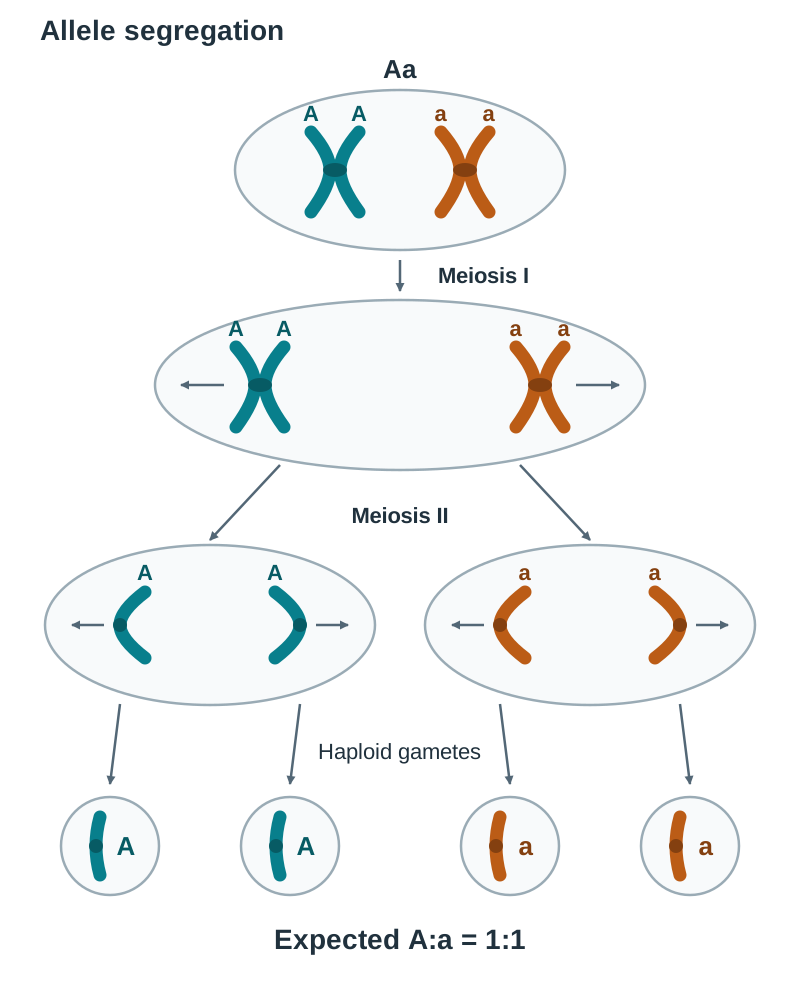
Mendel's Law of Segregation states that inherited characteristics are controlled by pairs of alleles. These alleles separate (segregate) from each other during gamete formation, with each gamete receiving only one allele from each pair.
During anaphase I of meiosis, homologous chromosomes carrying alternative alleles separate and move to opposite poles of the dividing cell. For example, in a cell with genotype , the homologous chromosomes separate so that half the resulting gametes carry and half carry .
Worked Example: A Monohybrid Cross and Test Cross
In pea plants, tall () is dominant to dwarf (). A heterozygous tall plant is crossed with a dwarf plant.
- Parental phenotypes: Tall Dwarf
- Parental genotypes:
- Gametes: (from tall parent) and (from dwarf parent)
- Offspring genotypes: and in a 1 : 1 ratio
- Offspring phenotypes: Tall and dwarf in a 1 : 1 ratio
Crossing an individual showing the dominant phenotype with a homozygous recessive individual is called a test cross. If all offspring are tall, the unknown parent was homozygous dominant (). If dwarf offspring appear in a 1 : 1 ratio, the unknown parent was heterozygous ().
Incomplete Dominance
In complete dominance, the dominant allele fully conceals the recessive allele in the heterozygous condition ( looks identical to ).
In incomplete dominance, neither allele is dominant over the other. The heterozygote displays a distinct phenotype intermediate between both homozygous forms (for example, pink flowers appearing from red and white parents). The alleles themselves do not blend: crossing two pink plants still yields red and white offspring.
In snapdragons (Antirrhinum), use uppercase letters for both alleles: produces red flowers, produces white flowers, and produces pink flowers.
Crossing two pink snapdragons ():
| (Red) | (Pink) | |
| (Pink) | (White) |
- Offspring genotypic ratio:
- Offspring phenotypic ratio: 1 Red : 2 Pink : 1 White ()
A 1 : 2 : 1 phenotypic ratio in the generation is the hallmark of incomplete dominance.
Mendel's Second Law, Dihybrid Crosses, and Gene Linkage
A dihybrid cross tracks the inheritance of two separate characteristics controlled by two different gene pairs.
Mendel's Second Law: The Law of Independent Assortment
Mendel's Law of Independent Assortment states that when gametes are formed, either member of a pair of alleles can combine randomly with either member of another pair, provided the genes are on different chromosomes.
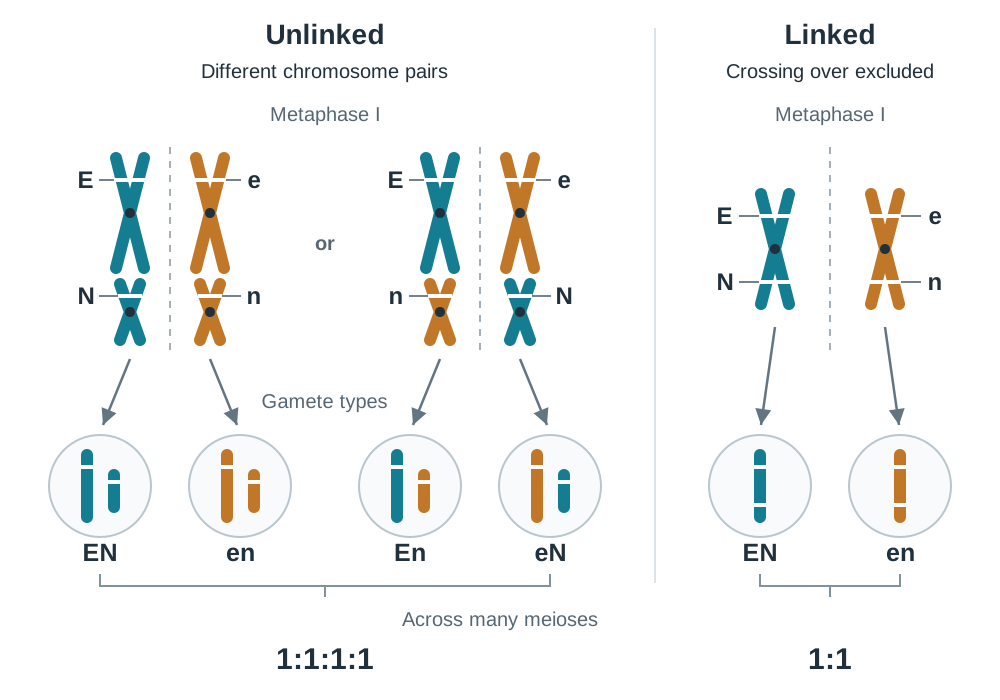
In metaphase I of meiosis, each pair of homologous chromosomes lines up on the equator independently of every other pair, so the way one pair separates does not affect how another pair separates. A parent with genotype produces four distinct gamete types in equal numbers: , , , and in a 1 : 1 : 1 : 1 ratio.
Worked Example: An Unlinked Dihybrid Cross
In fruit flies (Drosophila), grey body () is dominant to ebony body (), and normal wings () are dominant to curly wings (). The genes are on different chromosomes. A fly heterozygous for both traits is crossed with an ebony, curly-winged fly.
- Parental phenotypes: Grey body, normal wings Ebony body, curly wings
- Parental genotypes:
- Gametes: yields , , , (use the FOIL method: First, Outer, Inner, Last). The parent produces only gametes.
- Offspring genotypes: in a 1 : 1 : 1 : 1 ratio
- Offspring phenotypes: Grey normal : Grey curly : Ebony normal : Ebony curly in a 1 : 1 : 1 : 1 ratio
If two double heterozygotes are crossed (), a Punnett square gives the classic unlinked dihybrid ratio: 9 Grey normal : 3 Grey curly : 3 Ebony normal : 1 Ebony curly (9 : 3 : 3 : 1).
Gene Linkage
If asked what genes on the same chromosome are called, the answer is linked genes. Because linkage places genes on the same continuous DNA strand, they do not assort independently during gamete formation and tend to be inherited together as a unit (note that crossing over is not required at this level).
- When alleles are linked ( with , and with , written ), the heterozygote produces only two gamete types: and in a 1 : 1 ratio.
- A test cross with a linked heterozygote () yields only parental phenotypes in a 1 : 1 ratio, rather than the 1 : 1 : 1 : 1 ratio expected if the genes were unlinked.
Summary of Classic Genetic Ratios
| Cross Type | Cross Details | Expected Phenotypic Ratio |
|---|---|---|
| Monohybrid Complete Dominance | 3 : 1 | |
| Monohybrid Incomplete Dominance | 1 : 2 : 1 | |
| Monohybrid Test Cross | 1 : 1 | |
| Dihybrid Unlinked Heterozygotes | 9 : 3 : 3 : 1 | |
| Dihybrid Unlinked Test Cross | 1 : 1 : 1 : 1 | |
| Dihybrid Linked Test Cross | 1 : 1 |
Sex Determination and Sex Linkage
Human body (somatic) cells carry 22 pairs of autosomes and 1 pair of sex chromosomes.
Modelling Sex Determination
Females carry two matching X chromosomes () and are the homogametic sex, producing eggs that each carry a single X chromosome. Males carry one X chromosome and one much smaller Y chromosome () and are the heterogametic sex, producing 50% X-bearing sperm and 50% Y-bearing sperm.
- Parental genotypes: (female) (male)
- Gametes: (maternal) and (paternal)
- Offspring genotypes: , giving a 1 female : 1 male ratio.
Every egg supplies an X chromosome; the father's sperm decides the sex of the child.
Sex Linkage
Sex linkage refers to traits controlled by genes located on the sex chromosomes. Almost all of these genes are on the X chromosome, because the much smaller Y chromosome carries few genes and lacks matching alleles for most X-linked genes.
Because human males have only one X chromosome, they express any recessive allele present on that chromosome. Females have two X chromosomes, so a single recessive allele is masked by a dominant partner on the other X, making the female an unaffected carrier.
Two key human X-linked recessive conditions are:
- Red-green colour blindness: defective photopigments in the retina.
- Haemophilia: failure to produce blood-clotting factors, causing prolonged bleeding.
Worked Example: Inheritance of Colour Blindness
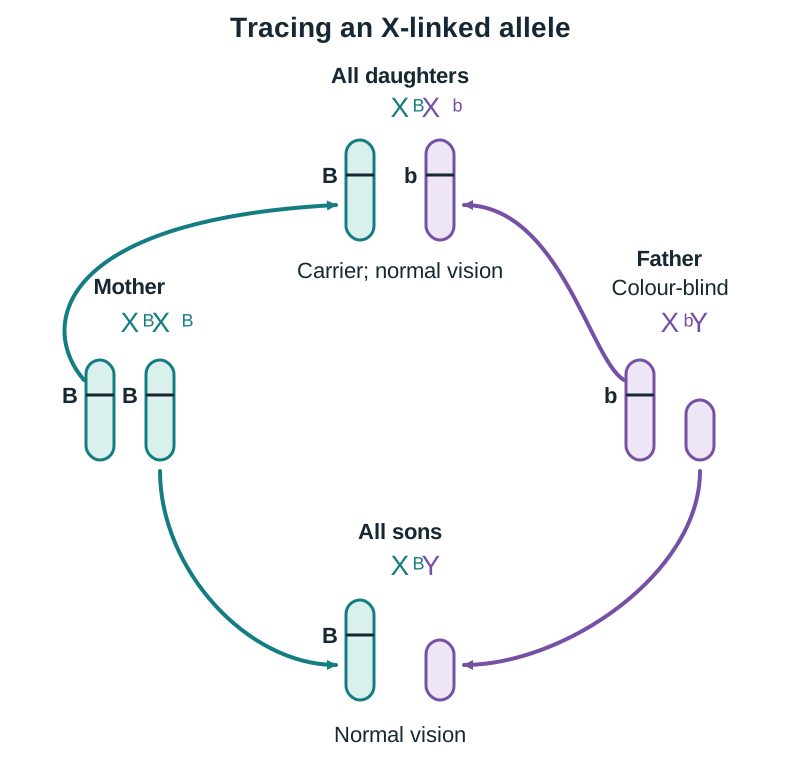
A colour-blind man () and a woman with two normal alleles () have children.
- Parental genotypes:
- Gametes: (mother) and (father)
- Offspring: all daughters are carriers () with normal vision; all sons have normal vision (). A father cannot transmit an X-linked trait to his sons because he passes them his Y chromosome, but all his daughters inherit his X chromosome.
Benefits and Limitations of Mendelian Genetics
Mendel's laws explain how the way chromosomes separate in meiosis leads to the ratios of traits we see in offspring. While these principles provide essential predictive models, they have biological limits.
Benefits of Mendelian Genetics
- Genetic Counselling: Enables doctors and genetic counsellors to calculate the probability that a child will inherit a single-gene disorder such as cystic fibrosis, sickle-cell anaemia, or Huntington's chorea.
- Selective Breeding: Allows agricultural breeders to predict and select desirable combinations of traits in crops and farm animals, such as drought tolerance or high milk yields.
- Foundation of Cytogenetics: Provides the mathematical rules that mirror the physical distribution of chromosomes during gamete formation.
Limitations of Mendelian Genetics
- Polygenic Traits: Many complex characteristics, such as human height and skin colour, are controlled by multiple genes interacting at different loci. These traits show continuous variation rather than tidy Mendelian ratios.
- Gene Linkage: Linked genes on the same chromosome travel together into gametes, breaking the rule of independent assortment.
- Environmental Influences on Phenotype: Mendelian models assume genotype dictates physical appearance directly. In reality, external conditions interact with genes, described by the relationship:
For example, Himalayan rabbits possess an allele for an enzyme that produces black pigment (melanin). The enzyme is heat-sensitive: it becomes inactive at warm body core temperatures but functions at cooler temperatures. As a result, the rabbit develops black fur only on its cooler extremities (ears, nose, tail, and paws) and white fur elsewhere. The genotype is identical across all body cells, but the local environment shapes the final phenotype.
Key terms
- Species
- A group of similar organisms that can naturally interbreed to produce fertile offspring.
- Gamete
- A haploid sex cell (such as a sperm or egg) that fuses with another gamete at fertilisation.
- Heredity
- The passing of characteristics from parents to offspring by means of genes.
- Sexual Reproduction
- Reproduction involving the fusion of two haploid gametes, one from each parent, to produce a genetically unique diploid zygote.
- Fertilisation
- The fusion of a male gamete and a female gamete to form a diploid zygote.
- Chromosome
- A thread-like structure made of DNA and histone proteins that carries genes.
- Gene
- A section of DNA that contains instructions for producing a specific protein.
- Allele
- An alternative or different form of the same gene.
- Locus
- The specific physical position or address of a gene on a chromosome.
- Gene Expression
- The process by which the information in a gene is decoded to synthesise a protein, resulting in the appearance of a trait.
- Dominant
- An allele that prevents the expression of a recessive allele in the heterozygous condition.
- Recessive
- An allele whose expression is masked in the presence of a dominant allele.
- Homozygous
- Having two identical alleles for a particular characteristic.
- Heterozygous
- Having two different alleles for a particular characteristic.
- Genotype
- The genetic make-up of an organism, representing the combination of alleles present.
- Phenotype
- The physical appearance or observable characteristic of an organism, produced by genotype interacting with the environment.
- Test Cross
- A cross between an organism showing the dominant phenotype and a homozygous recessive individual, used to determine the unknown parent's genotype.
- Incomplete Dominance
- A condition in which neither allele is dominant, resulting in an intermediate phenotype in the heterozygote.
- Mendel's Law of Segregation
- States that inherited characteristics are controlled by pairs of alleles that separate during gamete formation, each gamete receiving only one allele from each pair.
- Mendel's Law of Independent Assortment
- States that when gametes are formed, either member of a pair of alleles can combine randomly with either member of another pair on different chromosomes.
- Linkage
- The condition where genes are located on the same chromosome and tend to be inherited together.
- Sex Linkage
- A condition where a characteristic is controlled by a gene located on one of the sex chromosomes (usually the X chromosome).
- Epigenetics
- The study of heritable changes in gene expression caused by environmental factors or behaviour without altering the DNA base sequence.
- Maternal Inheritance
- The transmission of non-nuclear genes located in mitochondria or chloroplasts exclusively through the female gamete.
Check yourself
What is the physical event during meiosis that explains Mendel's Law of Segregation?
The separation of homologous chromosome pairs during anaphase I of meiosis, which pulls the two alleles of a gene pair into different gametes.
A pink snapdragon is crossed with a white snapdragon. What is the expected phenotypic ratio of the offspring?
A cross of RW x WW produces RW (pink) and WW (white) in a 1 : 1 ratio (50% pink : 50% white).
What fraction of the daughters of a carrier woman (X^N X^n) and a normal man (X^N Y) will be carriers?
One half (1/2), because half of the daughters will be X^N X^N (normal) and half will be X^N X^n (carriers).
Why are human males significantly more likely than females to display X-linked recessive disorders?
Males have only one X chromosome (XY), so any recessive allele on that X chromosome will be expressed; females have two X chromosomes (XX) and must inherit two copies of the recessive allele to show the condition.
How does gene linkage affect the expected results of Mendel's Law of Independent Assortment?
Linked genes are located on the same chromosome and do not assort independently; they travel together into gametes, producing mostly parental phenotypes and breaking the expected 9:3:3:1 or 1:1:1:1 ratios.
Why is mitochondrial DNA inherited entirely through the mother?
At fertilisation, any sperm mitochondria that enter the ovum are destroyed, so all functional mitochondria in the zygote come directly from the egg cytoplasm.