

Biomolecules are the organic compounds produced and used by living organisms. Your body is built from and runs on four main groups of biomolecules: carbohydrates for readily available fuel, lipids for energy storage and cell membranes, proteins for cellular structures and biochemical machinery, and nucleic acids for genetic instructions. These large molecules are built up from smaller subunits through condensation reactions and broken down by hydrolysis, for example during digestion. Respiration then breaks down glucose to release energy. Life also depends on water as a solvent and transport medium, essential minerals, vitamins, and cellular transfer molecules such as ATP, NAD⁺, and NADP⁺.
The Chemistry of Life: Metabolism and Biomolecule Overview
Metabolism is the sum of all chemical reactions taking place inside a living organism. These reactions are grouped into two pathways:
- Anabolism: Reactions that build large, complex molecules from smaller, simpler ones. These reactions require an input of energy. Examples include photosynthesis, joining amino acids to form proteins, and condensing glucose into glycogen or starch.
- Catabolism: Reactions that break down large, complex molecules into smaller, simpler ones, releasing chemical energy. Examples include cellular respiration and the digestion of food.
Two fundamental chemical reactions drive these pathways:
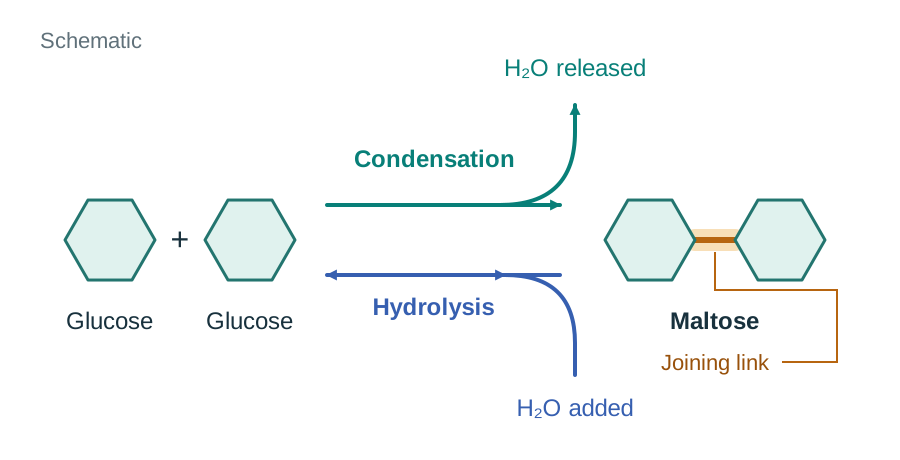
- A condensation reaction joins two molecules together with the loss of a water molecule. For example, two glucose molecules join to form maltose and water.
- A hydrolysis reaction breaks down a compound by chemical reaction with water. For example, maltose is split into two glucose molecules by adding a molecule of water.
Summary of the Major Biomolecules
| Biomolecule | Elements | Basic Building Unit | Example | Structural Role | Metabolic Role | Nutritional Sources |
|---|---|---|---|---|---|---|
| Carbohydrate | C, H, O | Monosaccharide | Glucose, Starch | Cellulose forms plant cell walls | Glucose broken down in respiration to yield energy | Bread, potatoes, pasta, rice, fruits |
| Lipid | C, H, O | Triglyceride (glycerol + 3 fatty acids) | Fats, Oils | Phospholipids form cell membranes | Broken down in respiration to release energy; long-term energy store | Butter, cooking oils, nuts, cheese, oily fish |
| Protein | C, H, O, N (often S) | Amino acid | Keratin, Amylase | Keratin in hair and nails; collagen in skin | Enzymes catalyse reactions; hormones regulate body functions | Meat, fish, eggs, milk, lentils, beans |
| Nucleic Acid | C, H, O, N, P | Nucleotide | DNA, RNA | DNA, together with protein, makes up chromosomes | Stores genetic code; directs protein synthesis | Present in all cellular food sources |
Carbohydrates: Structures, Types, and Roles
Carbohydrates have the general formula . In most carbohydrates, hydrogen and oxygen are present in a 2:1 ratio, just as in water. Glucose, for example, has the formula , which corresponds to .
Carbohydrates are divided into three groups based on their molecular size:
Monosaccharides
Monosaccharides are single sugar units. They are sweet to taste and dissolve freely in water. Cells use them as their immediate fuel for cellular respiration.
- Glucose is the primary sugar broken down during cellular respiration and synthesised by plants during photosynthesis.
- Fructose is found in fruits and honey.
- Ribose is a five-carbon sugar that forms the backbone of RNA.
Disaccharides
Disaccharides are formed when two monosaccharides join by a condensation reaction, eliminating a molecule of water.
- Maltose (glucose + glucose) is produced during seed germination and starch digestion.
- Sucrose (glucose + fructose) is table sugar, transported through plant phloem.
- Lactose (glucose + galactose) is the sugar found in milk.
Polysaccharides
Polysaccharides are long polymer chains formed from many repeating monosaccharide units linked together. They do not taste sweet and are insoluble in water.
- Starch is the primary carbohydrate storage molecule in plants, made of coiled glucose chains that are easily broken down when energy is required.
- Glycogen is the energy storage carbohydrate in animals and fungi. It has a highly branched structure and is stored in liver and muscle cells.
- Cellulose consists of straight chains of glucose held firmly together by cross-linking hydrogen bonds. This creates strong microfibrils that provide structural support in plant cell walls. Unlike starch, cellulose cannot be broken down by human digestive enzymes and acts as dietary fibre.
Reducing Sugars
A reducing sugar is a sugar that donates electrons to reduce Benedict's solution, turning the blue copper(II) ions into a brick-red precipitate of copper(I) oxide when heated. All monosaccharides (glucose, fructose, galactose) and some disaccharides (maltose, lactose) are reducing sugars. Sucrose is a non-reducing sugar and gives a negative (blue) result unless it is first hydrolysed into its monosaccharide subunits.
Lipids: Triglycerides, Phospholipids, and Membrane Function
Lipids contain carbon, hydrogen, and oxygen. They contain far less oxygen relative to carbon and hydrogen than carbohydrates do. Because they possess many carbon-hydrogen bonds, lipids yield more than twice as much energy per gram as carbohydrates, making them compact long-term energy stores.
Triglycerides
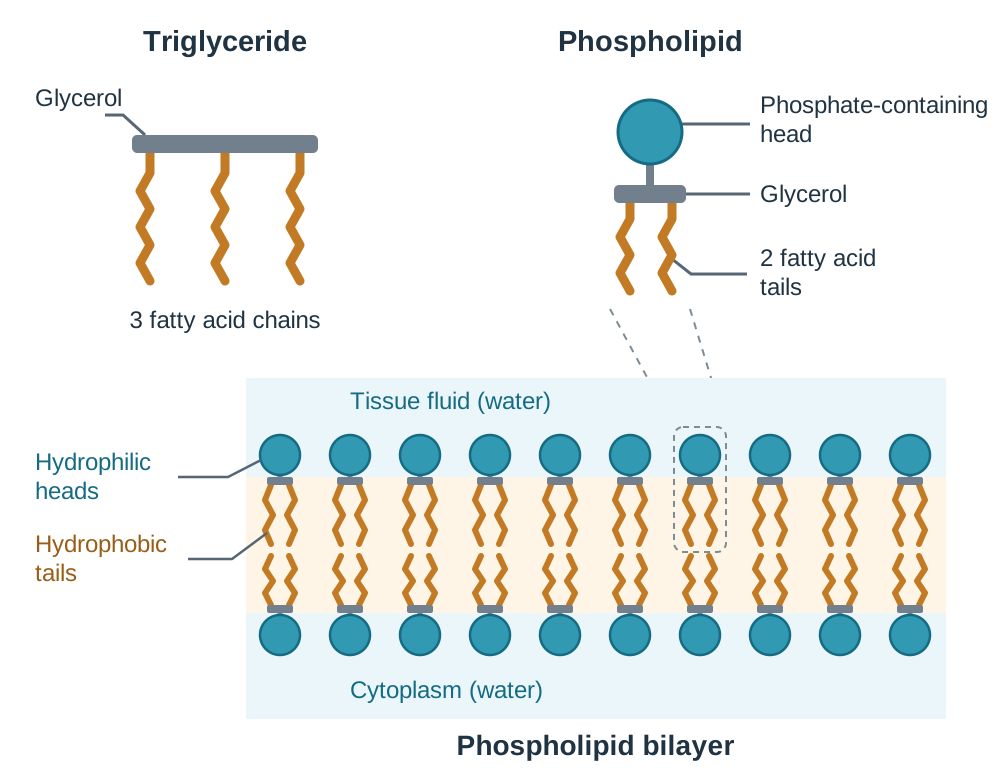
The basic unit of a lipid is a triglyceride, composed of one glycerol molecule chemically bonded to three fatty acid chains.
- Fats are triglycerides that remain solid at room temperature (20°C). They are mostly saturated and come from animal sources such as butter, lard, and fatty meat.
- Oils are triglycerides that remain liquid at room temperature. They are predominantly unsaturated and come from plant sources, including olive oil and sunflower oil, as well as oily fish.
Phospholipids and Membranes
A phospholipid is a modified triglyceride in which one fatty acid chain has been replaced by a phosphate group. Each phospholipid has a hydrophilic (water-loving) phosphate head and two hydrophobic (water-fearing) fatty acid tails.
When placed in water, phospholipids spontaneously form a bilayer. The hydrophilic heads face outward toward the watery cytoplasm and tissue fluid, while the hydrophobic tails point inward, away from water. This phospholipid bilayer forms the structural core of all cell membranes. It acts as a selectively permeable barrier, preventing water-soluble molecules from crossing freely.
Functions of Lipids
- Energy storage: Stored in adipose tissue under the skin and around internal organs.
- Thermal insulation: Subcutaneous fat layers reduce heat loss in warm-blooded animals.
- Physical protection: Fat pads cushion and protect vital internal organs, such as the kidneys.
- Membrane structure: Phospholipids form the essential framework of all cellular and organelle membranes.
Proteins: Structure, Membrane Roles, and the Genetic Code
Proteins contain carbon, hydrogen, oxygen, and nitrogen, with many also containing sulphur and some phosphorus. They are polymers built from 20 different amino acids.
Each amino acid has a central carbon atom bonded to four groups: a hydrogen atom, an amino group (), a carboxyl group (), and a variable R group. The chemical nature of the variable R group determines how the chain folds into its final shape.
Amino acids join together through peptide bonds. A peptide is a short chain of amino acids, while a polypeptide is a longer chain. A functional protein consists of one or more polypeptides folded into a specific three-dimensional shape that enables it to perform its biological role.
Fibrous and Globular Proteins
- Fibrous proteins show little or no tertiary folding. They form long, tough, insoluble fibres that provide structural support. Examples include keratin in hair, skin, and nails, and collagen in tendons, ligaments, and skin.
- Globular proteins are extensively folded into compact, rounded shapes that are soluble in water. Their shape allows them to carry out metabolic tasks. Examples include enzymes (amylase, catalase), transport proteins (haemoglobin), hormones (insulin), and antibodies.
Proteins in Cell Membranes
Protein molecules are embedded within the phospholipid bilayer and regulate what enters and leaves the cell:
- Channel proteins form water-filled pores that allow specific ions (such as sodium, , or potassium, ) to diffuse across the membrane.
- Transporter (carrier) proteins bind to a specific molecule, such as glucose, and change shape to carry it across the membrane.
- Receptor proteins have a specific shape that binds signaling molecules like hormones. For example, insulin binds to insulin receptors on muscle and liver cells, signaling them to take up glucose from the blood.
- Antibodies are defense proteins made by white blood cells. Each antibody has a specific binding site that locks onto an antigen on a pathogen, targeting it for destruction.
Proteins cannot be stored in the human body. Surplus amino acids are carried to the liver, where they undergo deamination; the amino group is removed and converted into urea for excretion by the kidneys.
From Gene to Protein to Trait
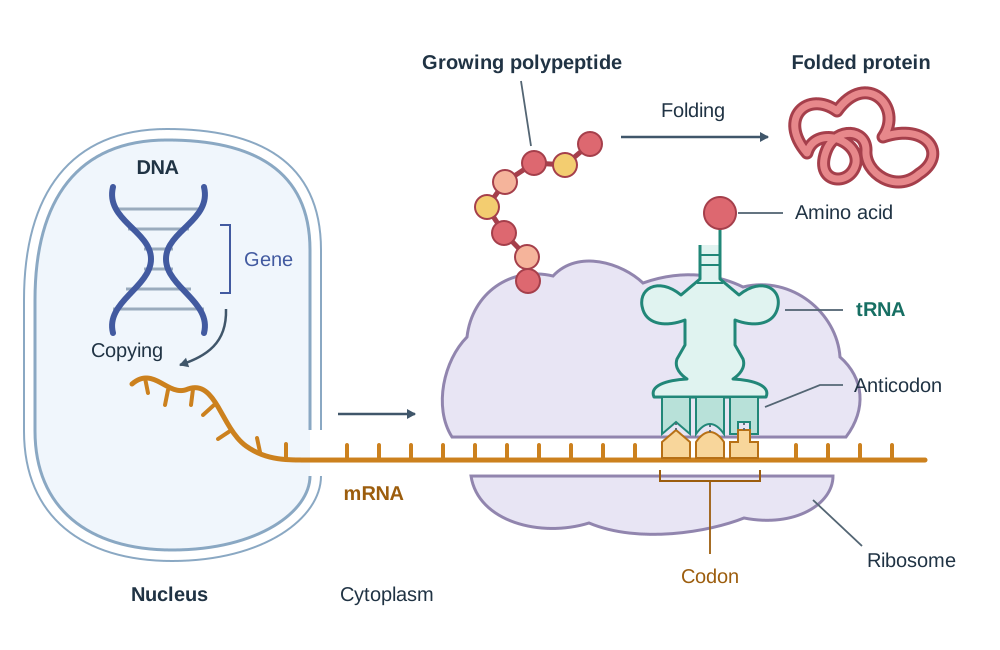
A gene is a specific sequence of DNA bases that contains the instructions to make a particular protein.
- The sequence of bases along the gene forms the genetic code. The base sequence of the gene is copied into a molecule of messenger RNA (mRNA), which carries the code from the nucleus to a ribosome.
- The code is read three bases at a time. Each triplet of three bases on messenger RNA (mRNA) is called a codon, and each codon specifies one amino acid.
- Transfer RNA (tRNA) molecules bring amino acids to the ribosome. Each tRNA molecule carries an anticodon: a sequence of three bases that is complementary to a specific codon on the mRNA. This ensures that amino acids are assembled in the correct sequence.
- The amino acid sequence dictates how the polypeptide folds into its three-dimensional shape, and that shape dictates the protein's function.
- The protein's activity produces the observable trait (characteristic).
For example, a gene carries the code to make an enzyme that produces the pigment melanin. If the gene carries a mutation that makes the enzyme non-functional, no melanin is made, and the resulting trait is albinism.
Nucleic Acids and Energy Transfer Molecules
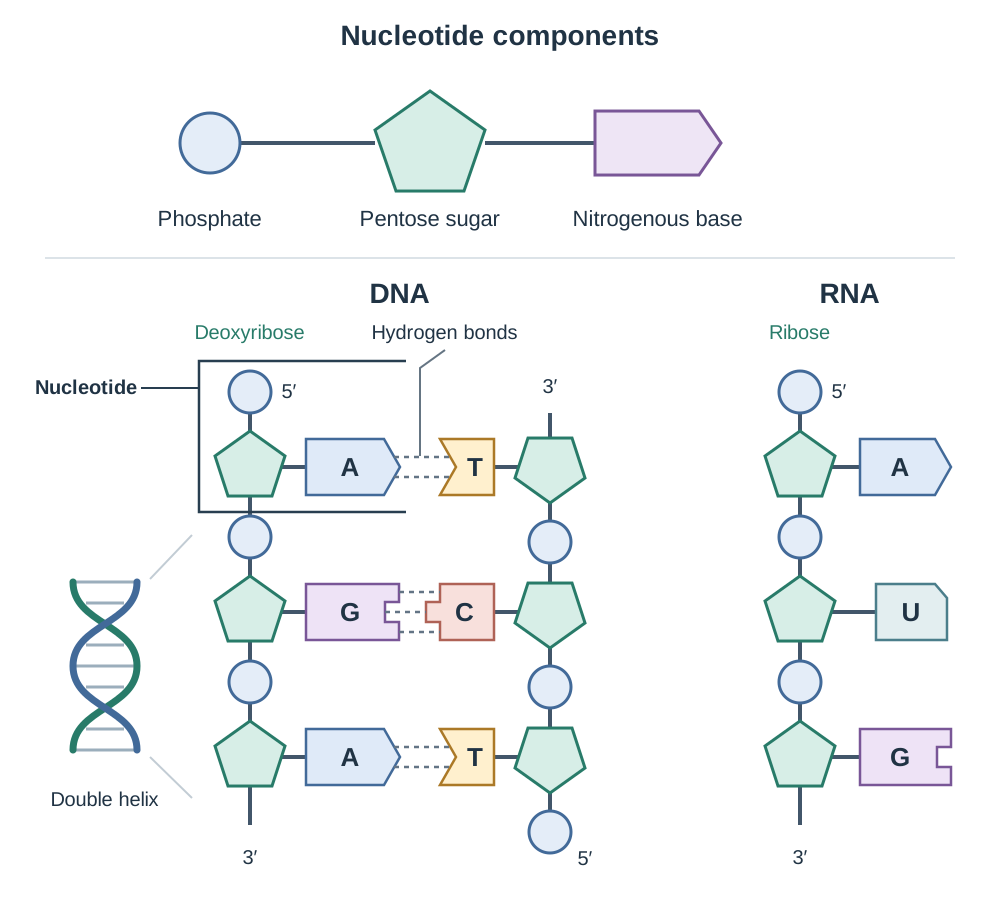
Nucleic acids store and express genetic information. The monomer unit of a nucleic acid is a nucleotide, which consists of three parts:
- A five-carbon pentose sugar (deoxyribose or ribose)
- An inorganic phosphate group
- A nitrogenous base
DNA and RNA
- DNA (Deoxyribonucleic acid): Contains the sugar deoxyribose. DNA consists of two strands wound into a double helix. The strands are linked by hydrogen bonds between complementary base pairs: adenine (A) pairs with thymine (T), and guanine (G) pairs with cytosine (C).
- RNA (Ribonucleic acid): Contains the sugar ribose. RNA is single-stranded, and the base uracil (U) replaces thymine, meaning adenine pairs with uracil.
Cellular Transfer Molecules
Cells use specialized nucleotide derivatives to shuttle energy and electrons between metabolic reactions:
- ATP (Adenosine Triphosphate): The universal energy currency of the cell. It consists of adenine, ribose, and three phosphate groups joined by unstable bonds. When a cell needs energy, ATP is hydrolysed into low-energy ADP and phosphate, releasing energy:
Recharging ADP into ATP requires energy supplied by cellular respiration or light absorption in photosynthesis.
- NAD⁺ / NADH: Nicotinamide adenine dinucleotide functions in cellular respiration. Low-energy acts as an electron acceptor. It picks up two high-energy electrons and a hydrogen ion from respiratory intermediates to form high-energy . carries these electrons to the electron transport chain in the mitochondria, where their energy is used to generate ATP.
- NADP⁺ / NADPH: Nicotinamide adenine dinucleotide phosphate has an additional phosphate group. In this course, is the electron carrier used in photosynthesis. In the light-dependent stage, it captures electrons and hydrogen ions to form . supplies the reducing power in the chloroplast stroma to convert carbon dioxide into glucose during the light-independent stage.
Water, Minerals, and Vitamins
Water
Water makes up roughly 60% of human body mass and 80–90% of plant mass. Its vital biological roles include:
- Solvent: Water dissolves more substances than any other liquid. It provides the aqueous medium in which chemical reactions occur in the cytoplasm and organelle fluids, and it transports dissolved nutrients and wastes in blood plasma, xylem, and phloem.
- Temperature regulation: Water has a high specific heat capacity, meaning it absorbs and releases large amounts of heat energy with minimal changes in temperature. This buffers organisms against rapid temperature shifts, keeping enzymes at their optimal temperature.
- pH regulation: Biological buffers are dissolved in water in the cytoplasm and blood. Excess hydrogen ions are removed from the body dissolved in water in urine, helping body fluids maintain a steady pH suitable for enzyme activity.
- Osmoregulation and turgor: Organisms actively regulate water and salt balance. In plants, osmotic water uptake creates turgor pressure against the cell wall, keeping non-woody tissues upright and firm. In humans, the kidneys adjust water excretion to maintain blood solute concentrations.
Minerals
Minerals are simple inorganic elements needed in small quantities. Dietary sources of calcium include milk, cheese, and green leafy vegetables, while iron is obtained from red meat, liver, spinach, and fortified cereals (plants absorb minerals from the soil). Their main biological roles include:
- Enzyme regulation: Magnesium () is an essential cofactor for enzymes that utilize ATP during respiration and photosynthesis.
- Muscle contraction: Calcium ions () are released inside muscle cells to initiate contraction.
- Nerve impulse transfer: Sodium () and potassium () ions move across nerve cell membranes to transmit electrical impulses.
- pH balance: Dissolved mineral ions, such as hydrogencarbonate and phosphate, act as buffers to maintain constant fluid pH.
- Structural support: Calcium forms calcium pectate to cement adjoining plant cell walls and combines with phosphate to harden mammalian bones and teeth.
- Part of important molecules: Iron () forms the haem group of haemoglobin for oxygen transport. Magnesium is the central atom in chlorophyll.
Vitamins
Vitamins are organic micronutrients required in tiny amounts for healthy metabolism. Their biological solubility dictates how the body manages them:
| Vitamin | Solubility | Stored in Body? | Main Biological Role | Deficiency Disease | Good Dietary Sources |
|---|---|---|---|---|---|
| Vitamin C (Ascorbic acid) | Water-soluble | No; excess excreted daily in urine | Synthesis and maintenance of collagen and connective tissues | Scurvy (bleeding gums, loose teeth, poor wound healing) | Citrus fruits, blackcurrants, peppers, green vegetables |
| Vitamin D (Calciferol) | Fat-soluble | Yes; stored long-term in the liver and adipose tissue | Promotes absorption of calcium and phosphorus from the intestine | Rickets in children (soft, deformed leg bones); osteomalacia in adults | Oily fish, egg yolks, fortified milk (synthesised in skin via sunlight) |
Food Testing: Qualitative and Quantitative Investigations
Testing food samples requires distinct chemical reagents, specific physical conditions, and a negative control. For solid food samples, the food must first be crushed or blended with a small amount of distilled water and filtered to prepare a clear test liquid. Always wear eye protection when carrying out food tests, as Biuret contains corrosive sodium hydroxide and Benedict's solution is heated.
Qualitative Food Tests
| Nutrient | Reagent | Starting Colour | Positive Result | Heating Required? | Control |
|---|---|---|---|---|---|
| Starch | Iodine solution | Yellow-brown | Blue-black | No (room temperature) | Distilled water (stays yellow-brown) |
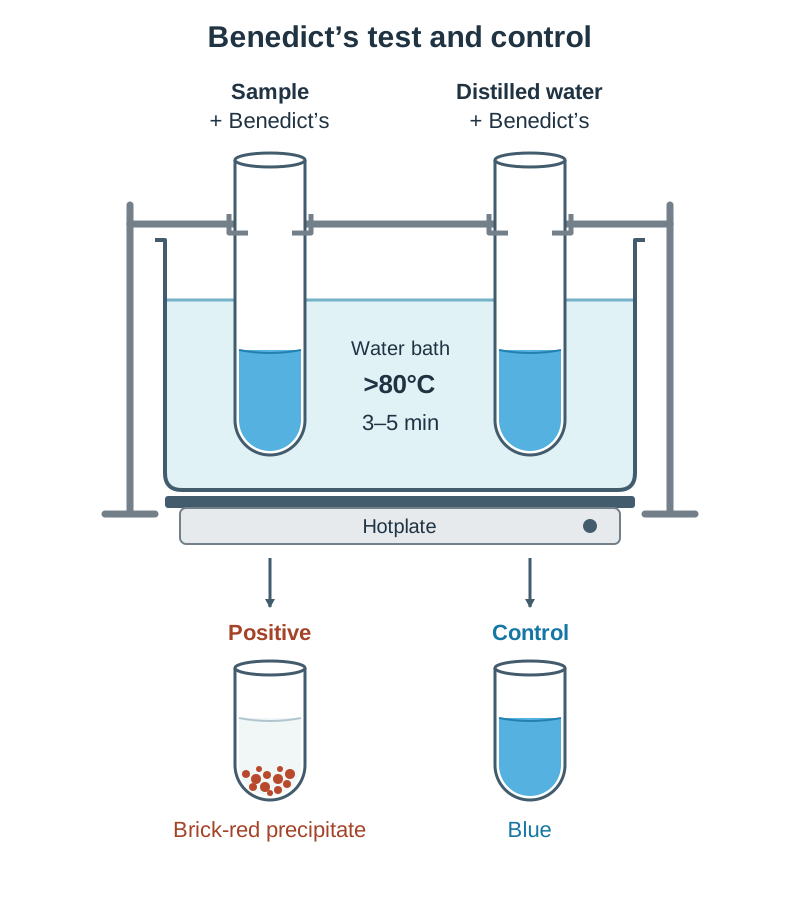
| Reducing Sugar | Benedict's solution | Blue | Green → Yellow → Brick-red precipitate | Yes (heat in water bath >80°C for 3–5 min) | Distilled water (stays blue) |
| Protein | Biuret reagent (NaOH + dilute ) | Blue | Purple / Violet | No (room temperature) | Distilled water (stays blue) |
| Lipid | Brown paper | Opaque dry paper | Translucent greasy spot that does not dry out | No | Spot of distilled water (dries and disappears) |
The experimental control: A control is prepared by replacing the food sample with an equal volume of distilled water while treating it with the identical reagent and heating procedure. If the control remains unchanged, this confirms that the positive colour change in the test sample is caused solely by the nutrient in the food and not by the reagent or water.
Interpreting Qualitative Primary Data
| Sample | Iodine Test | Benedict's Test (Heated) | Biuret Test | Brown Paper Test | Conclusion |
|---|---|---|---|---|---|
| Milk | Yellow-brown | Brick-red precipitate | Violet | Translucent stain | Contains reducing sugar, protein, and lipid; lacks starch |
| Potato extract | Blue-black | Blue | Blue | No stain | Contains starch; lacks reducing sugar, protein, and lipid |
| Egg white | Yellow-brown | Blue | Violet | No stain | Contains protein; lacks starch, reducing sugar, and lipid |
| Apple juice | Yellow-brown | Brick-red precipitate | Blue | No stain | Contains reducing sugar; lacks starch, protein, and lipid |
Quantitative Test for Reducing Sugars
To determine the actual concentration of reducing sugar in a range of food samples:
- Prepare a dilution series of glucose standards of known concentrations (e.g., 0.0%, 0.2%, 0.4%, 0.6%, 0.8%, 1.0%).
- Add an equal volume of Benedict's reagent to each tube. Heat all tubes simultaneously in a boiling water bath at 100°C for 5 minutes (keeping volume, heating time, and reagent concentration identical for fairness).
- Centrifuge or filter the tubes to remove the brick-red copper(I) oxide precipitate.
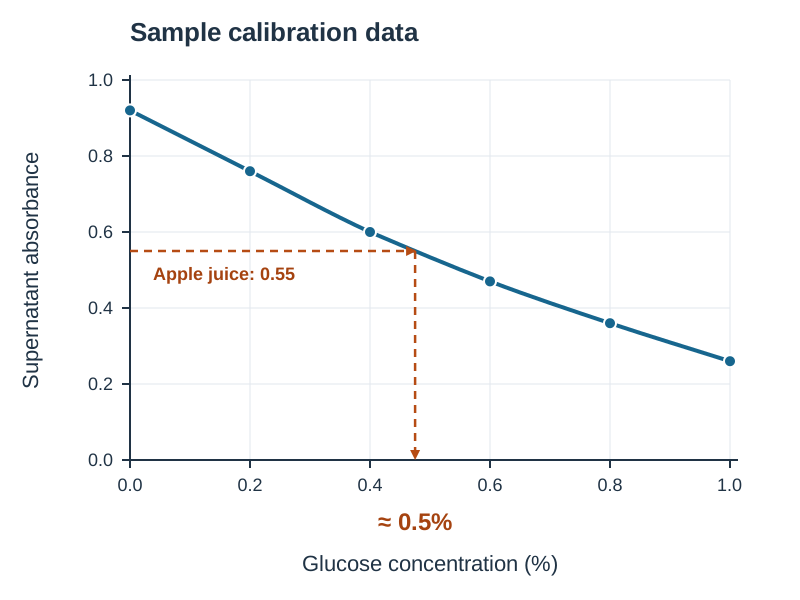
- Measure the absorbance of each blue supernatant liquid using a colorimeter fitted with a red filter (blue solutions absorb red light). As glucose concentration increases, more copper(II) ions are reduced and precipitated, leaving less blue copper(II) in the liquid. Therefore, supernatant absorbance decreases as glucose concentration rises.
- Plot a calibration curve of standard glucose concentration (x-axis) against absorbance (y-axis).
- Test the unknown food extracts under identical conditions, measure their absorbance, and read their reducing sugar concentrations directly off the calibration curve.
Sample Calibration Data:
| Glucose standard (%) | 0.0% | 0.2% | 0.4% | 0.6% | 0.8% | 1.0% |
|---|---|---|---|---|---|---|
| Absorbance | 0.92 | 0.76 | 0.60 | 0.47 | 0.36 | 0.26 |
If an unknown apple juice extract produces an absorbance of 0.55, reading across to the curve and down to the x-axis gives about 0.5% reducing sugar (between the 0.4% standard at 0.60 and the 0.6% standard at 0.47).
Key terms
- Anabolism
- Metabolic reactions that build large, complex molecules from smaller, simpler ones, requiring an input of energy.
- Catabolism
- Metabolic reactions that break down large, complex molecules into smaller, simpler ones, releasing energy.
- Condensation Reaction
- A chemical reaction in which two molecules combine to form a larger molecule with the elimination of a water molecule.
- Hydrolysis
- The chemical breakdown of a compound due to reaction with water.
- Monosaccharide
- A single sugar unit that forms the basic building block of carbohydrates, such as glucose or fructose.
- Polysaccharide
- A complex carbohydrate composed of many monosaccharide units linked together, such as starch, glycogen, or cellulose.
- Reducing Sugar
- A sugar capable of donating electrons to reduce Benedict's solution from blue copper(II) to a brick-red copper(I) oxide precipitate when heated.
- Triglyceride
- A lipid molecule composed of one molecule of glycerol chemically bonded to three fatty acid chains.
- Phospholipid
- A modified lipid where one fatty acid of a triglyceride is replaced by a phosphate group, forming cellular membranes.
- Deamination
- The metabolic process in the liver where the amino group is removed from excess amino acids and converted into urea.
- Channel Protein
- A membrane protein that forms a water-filled pore allowing specific ions to diffuse across the cell membrane.
- Receptor Protein
- A membrane-bound protein with a specific shape that binds to signaling molecules, such as hormones, to trigger a cellular response.
- Gene
- A sequence of DNA bases that codes for the production of a specific protein or polypeptide.
- Codon
- A sequence of three consecutive bases on mRNA that codes for a specific amino acid or a start/stop signal.
- Anticodon
- A sequence of three bases on a tRNA molecule that is complementary to a specific mRNA codon.
- ATP
- Adenosine triphosphate; the universal cellular energy carrier that releases immediate energy when hydrolysed to ADP and phosphate.
- High Specific Heat Capacity
- The property of water requiring large amounts of heat energy to raise its temperature, preventing rapid thermal fluctuations in organisms.
- Scurvy
- The deficiency disease caused by a lack of Vitamin C, characterized by bleeding gums, poor wound healing, and loss of teeth.
- Rickets
- The deficiency disease in children caused by a lack of Vitamin D or calcium, resulting in soft, malformed bones.
Check yourself
Which two mineral ions are needed in animals to transmit nerve impulses?
Sodium (Na⁺) and potassium (K⁺).
An mRNA codon has the base sequence GCU. What is the base sequence of the complementary tRNA anticodon?
CGA (cytosine pairs with guanine, and adenine pairs with uracil).
Explain the biological significance of vitamin solubility for Vitamin C compared to Vitamin D.
Vitamin C is water-soluble, cannot be stored in body tissues, and is excreted daily in urine, requiring regular dietary intake. Vitamin D is fat-soluble and is stored long-term in the liver and adipose reserves, so daily intake is not strictly essential.
During a quantitative Benedict's test using a colorimeter, what happens to the absorbance of the blue supernatant as the concentration of reducing sugar in the standard increases?
The absorbance decreases. Higher sugar concentrations reduce more copper(II) ions into solid precipitate, leaving less blue copper(II) in the supernatant, which absorbs less red light.