

The endocrine system coordinates and regulates body functions through chemical messengers called hormones. Produced by ductless glands, hormones are secreted directly into the bloodstream and carried to distant target organs. Working alongside the nervous system, the endocrine system maintains homeostasis through stimulus-response mechanisms governed by negative feedback. Understanding how endocrine glands function, where they are situated, and how hormones are manipulated in medicine, sport, and agriculture forms an essential part of Leaving Certificate Biology.
Endocrine Glands and Hormones
A gland is an organ or cluster of cells that synthesises and secretes specific chemical substances. The human body contains two distinct categories of glands:
- Exocrine glands: Possess ducts (tubes) to carry their secretions onto an internal or external body surface. Examples include salivary glands, sweat glands, and the enzyme-secreting tissue of the pancreas.
- Endocrine glands: These are ductless glands that secrete hormones directly into the blood.
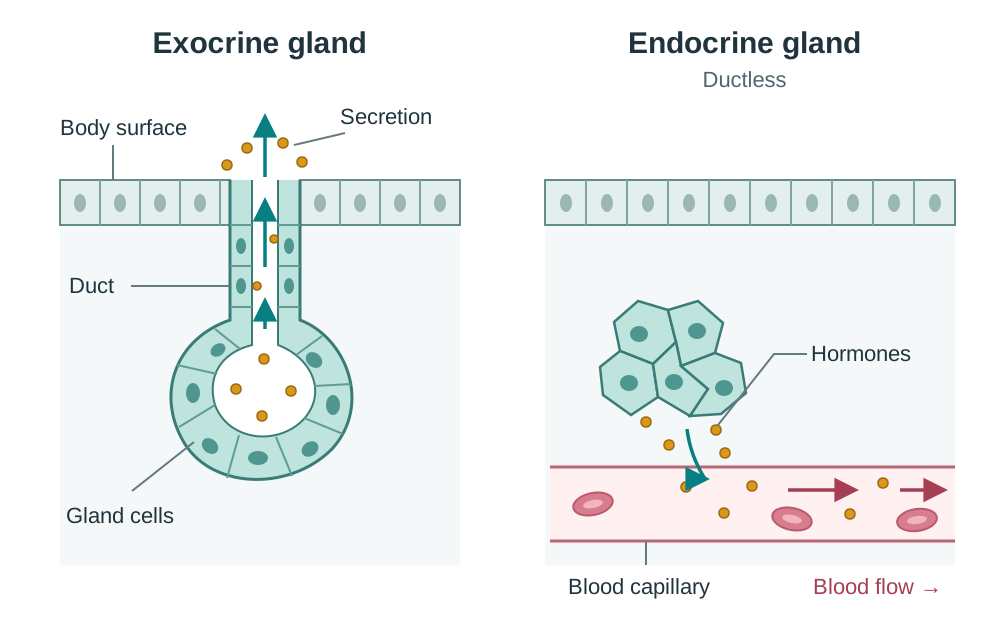
A hormone is a chemical messenger produced by an endocrine gland and transported in the blood to alter the activity of one or more target organs.
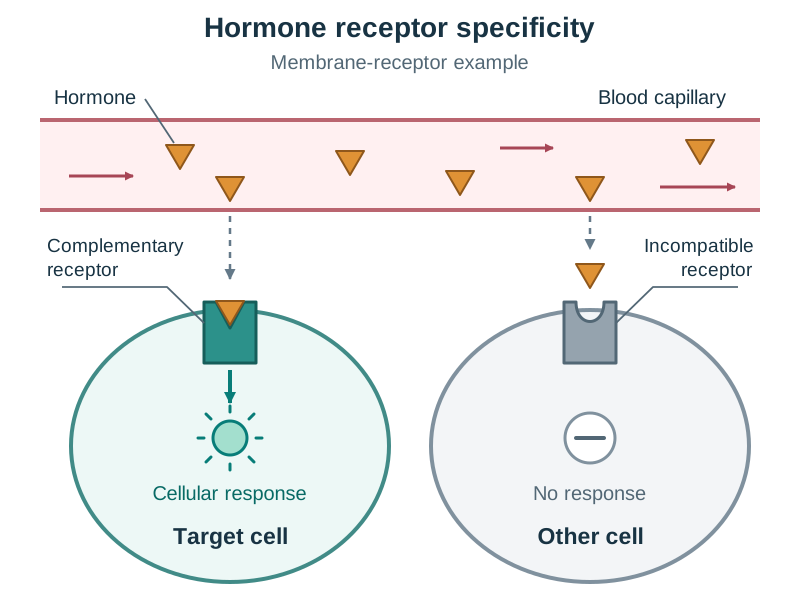
Target tissues have specific protein receptors on their cell membranes or inside their cytoplasm with shapes that match the complementary hormone. When a hormone binds to its receptor, it triggers a specific cellular response. Most hormones are proteins (for example, insulin) or steroids made from lipids (for example, testosterone and oestrogen).
Summary of Course Glands
| Gland | Anatomical Location | Main Secretion(s) | Key Physiological Function |
|---|---|---|---|
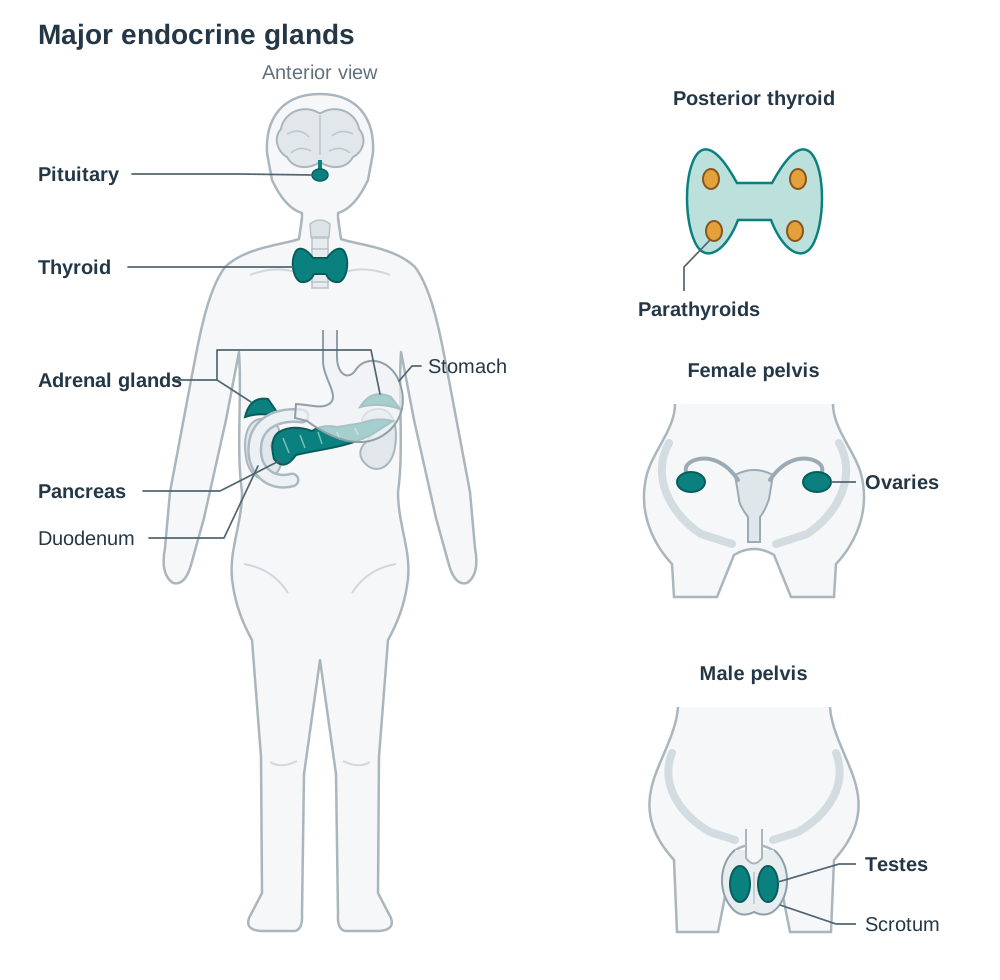
| Pituitary | Base of the brain | TSH, FSH, LH, ADH, Oxytocin (also prolactin) | Regulates other glands, reproduction, osmoregulation, birth |
| Thyroid | Neck, front of trachea below larynx | Thyroxine | Regulates basal metabolic rate and physical/mental development |
| Parathyroid | Embedded in rear surface of thyroid (4 glands) | Parathyroid Hormone (PTH) | Increases blood calcium levels |
| Adrenal | Top of each kidney (2 glands) | Adrenaline | Coordinates fight-or-flight response, raises heart rate and blood glucose |
| Pancreas | Abdomen, behind stomach in curve of duodenum | Insulin | Lowers blood glucose by prompting cell uptake and glycogen storage |
| Testes | Scrotum (males) | Testosterone | Promotes male secondary sexual characteristics and sperm production |
| Ovaries | Pelvic cavity (females) | Oestrogen, Progesterone | Thickens/maintains endometrium, controls menstrual cycle |
Comparing Endocrine and Nervous Coordination
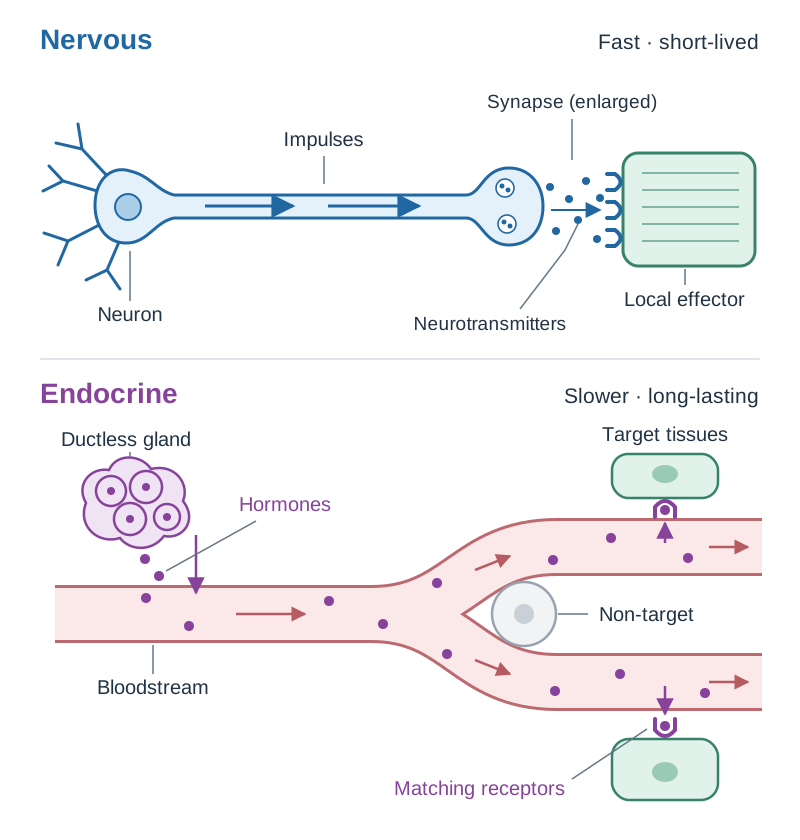
Vertebrates maintain a constant internal environment and react to external changes using two interacting communication systems: nervous and hormonal. While both link sensory receptors to effectors via a control centre, their pathways and timescales differ substantially:
| Feature | Nervous System | Endocrine System |
|---|---|---|
| Nature of message | Electrical impulses along neurons and chemical neurotransmitters across synapses | Chemical substances (hormones) |
| Transmission pathway | Neurons (nerve fibres) | Bloodstream (circulatory system) |
| Speed of action | Very fast (milliseconds) | Relatively slow (seconds, minutes, or hours) |
| Duration of effect | Short-lived and transient | Long-lasting and persistent |
| Target area | Localised and highly specific (a single muscle or gland) | Often widespread, affecting multiple target organs |
Some events demand rapid responses, such as blinking when an object nears the eye or withdrawing your hand from a hot surface. Others, such as physical growth, kidney osmoregulation, or managing the menstrual cycle, require the sustained, widespread control that hormones deliver. Both pathways link receptors and effectors through a control centre; they differ in how the message travels.
The Seven Major Glands and Their Secretions
You need to know the location, secretions, and roles of the seven major endocrine glands on your course:
1. The Pituitary Gland
Located at the base of the brain just beneath the hypothalamus. Known as the 'master gland' because several of its secretions stimulate other endocrine glands:
- Thyroid-Stimulating Hormone (TSH): Stimulates the thyroid to secrete thyroxine.
- Follicle-Stimulating Hormone (FSH): Stimulates follicle development and oestrogen production in ovaries; stimulates sperm development in testes.
- Luteinising Hormone (LH): Triggers ovulation and corpus luteum formation in females; stimulates testosterone secretion in males.
- Anti-Diuretic Hormone (ADH): Released into the blood to act on the distal convoluted tubule and collecting duct of the nephron, increasing water reabsorption during osmoregulation.
- Oxytocin: Stimulates uterine wall contractions during labour and milk ejection during breastfeeding. Note: Oxytocin during childbirth acts via positive feedback, where contractions cause more oxytocin release to drive delivery, unlike standard homeostatic loops.
- Prolactin: Stimulates milk production in mammary tissue (you meet this again in Reproduction).
2. The Thyroid Gland
Located in the neck across the trachea, just below the larynx. It combines the amino acid tyrosine with iodine to produce thyroxine.
- Function: Regulates basal metabolic rate (the rate of cellular respiration and energy release in resting cells) and guides growth and development.
3. The Parathyroid Glands
Four small glands embedded in the posterior (rear) surface of the thyroid gland.
- Secretion: Parathyroid Hormone (PTH).
- Function: Elevates blood calcium by stimulating calcium release from bones, increasing calcium absorption from food in the gut, and reducing calcium loss in urine.
4. The Adrenal Glands
Located like caps on the top of each kidney.
- Secretion: Adrenaline.
- Function: Coordinates the emergency 'fight-or-flight' stress reaction. It raises heart rate and breathing rate, elevates blood pressure, promotes glycogen breakdown in the liver to boost blood glucose, and diverts blood to skeletal muscles.
5. The Pancreas
The pancreas lies in the abdomen, behind the stomach, with its head resting in the loop of the duodenum. It is a dual-function gland: exocrine cells secrete digestive enzymes into pancreatic juice, while clusters of endocrine cells called the islets of Langerhans secrete hormones directly into blood capillaries.
- Secretion: Insulin.
- Function: Lowers blood glucose levels by enabling cells to take up glucose and stimulating liver and muscle cells to convert soluble glucose into insoluble glycogen.
6. The Gonads (Testes and Ovaries)
- Testes: Located externally within the scrotum of males. They secrete testosterone, which controls male puberty, secondary sexual characteristics (such as voice deepening and facial hair), and sperm production.
- Ovaries: Located in the pelvic cavity of females. They produce oestrogen (stimulates endometrial repair and female secondary characteristics) and progesterone (maintains the vascular lining of the endometrium for pregnancy and inhibits further ovulation).
Homeostasis and Negative Feedback Mechanisms
Homeostasis is the maintenance of a constant internal environment in an organism. Vertebrates coordinate internal stability using a stimulus-response model operated by negative feedback.
Every negative feedback system includes the same fundamental components:
- Stimulus: A deviation away from the normal set point.
- Receptor: Detects the deviation.
- Control centre: Evaluates the signal against the set point and sends a corrective message via nerves or hormones.
- Effector: The responsive gland or muscle.
- Response: Reverses the initial change back toward the set point, which switches off the original stimulus.
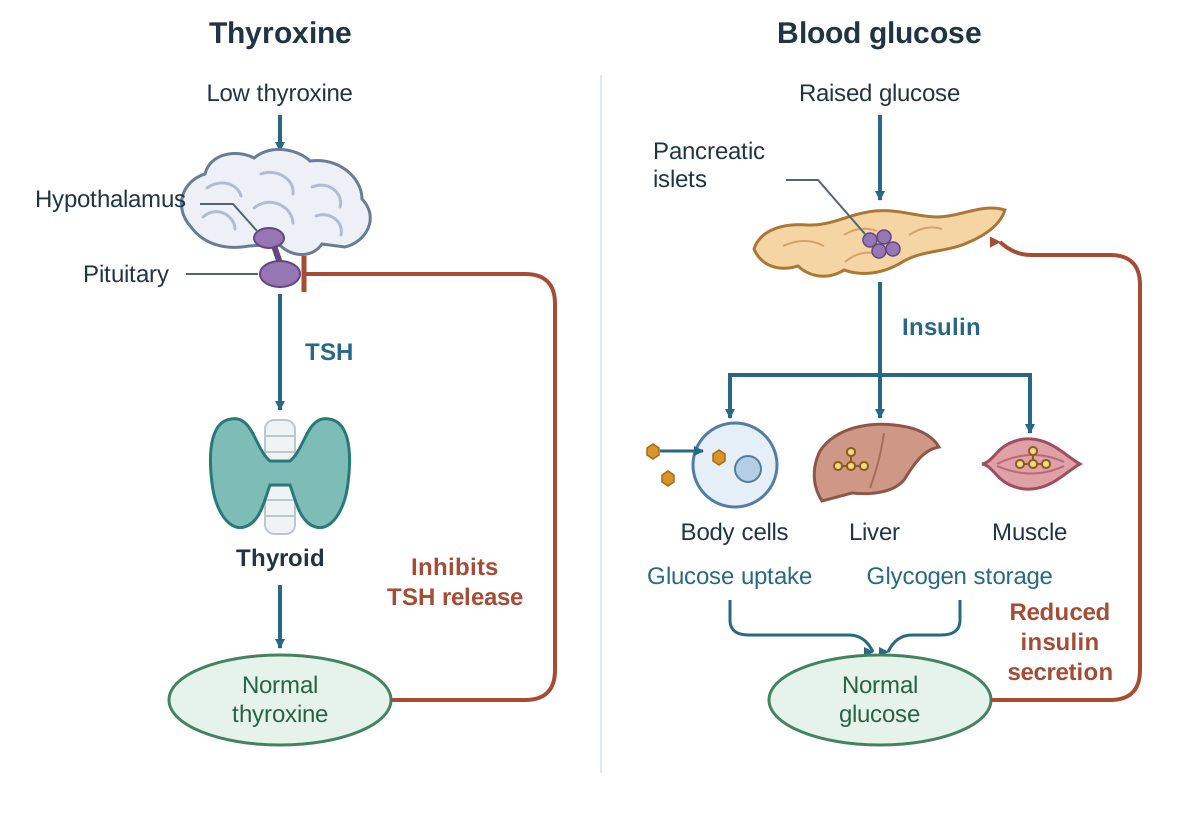
Negative Feedback Control of Thyroxine
- Stimulus: Blood thyroxine concentration drops below normal.
- Receptor and control centre: The hypothalamus and pituitary gland in the brain detect this decrease.
- Message: The pituitary gland secretes TSH into the bloodstream.
- Effector: TSH travels to the thyroid gland and stimulates it to synthesise and secrete thyroxine.
- Response: Thyroxine raises the basal metabolic rate across body tissues, warming the body and consuming energy.
- Feedback: As blood thyroxine levels return to normal, thyroxine inhibits TSH release from the pituitary gland. With less TSH, thyroid secretion settles, preventing an overproduction of thyroxine.
Clinical consequences: In hypothyroidism, too little thyroxine slows metabolism, leading to lethargy, weight gain, and cold sensitivity. If caused by a dietary lack of iodine, because little thyroxine is made, it no longer inhibits the pituitary, so the pituitary keeps secreting TSH, which makes the thyroid swell into a visible mass called a goitre. In hyperthyroidism, an overactive thyroid produces excess thyroxine, causing weight loss, rapid pulse, restlessness, and heat intolerance.
Negative Feedback Control of Blood Glucose
- Stimulus: Blood glucose rises above the standard set point, such as following a meal rich in carbohydrates.
- Receptor and control centre: Cells in the islets of Langerhans in the pancreas detect the rise in blood glucose.
- Message: The islets secrete insulin into the bloodstream.
- Effector: Body cells, the liver, and skeletal muscles.
- Response: Body cells take in glucose from the blood. Liver and muscle cells convert glucose into stored glycogen.
- Feedback: As blood glucose falls back to normal, the stimulus is removed and insulin secretion decreases.
Hormonal Manipulations in Sport, Health, and Agriculture
Because hormones trigger widespread changes at very low concentrations, applying synthetic analogues or natural extracts has substantial practical impacts:
1. In Sport
- Anabolic steroids: Synthetic substances structurally derived from testosterone. Athletes take them illegally to boost protein synthesis, increase muscle bulk, and accelerate muscle recovery between training sessions. Hazard: Misuse causes severe health risks, including liver damage, elevated blood pressure, cardiovascular disease, testicular shrinkage, and infertility.
- Erythropoietin (EPO): A hormone that stimulates red blood cell production in bone marrow. Endurance competitors abuse it to improve oxygen transport to working muscles. Hazard: Too many red blood cells make the blood dangerously viscous, sharply increasing the danger of blood clots, strokes, and heart failure.
2. In Healthcare
- Insulin therapy: Genetically modified bacteria produce human insulin via recombinant DNA technology. Daily subcutaneous injections or continuous pump infusions manage Type 1 diabetes, where pancreatic islet cells fail to produce native insulin.
- Hormone Replacement Therapy (HRT): Prescribed to alleviate menopausal symptoms in women by supplementing declining oestrogen and progesterone, helping protect bone density against osteoporosis.
- Hormonal contraception: The combined oral contraceptive pill supplies synthetic oestrogen and progesterone. These maintain constant negative feedback on the pituitary gland, inhibiting FSH and LH release, which prevents follicle development and stops ovulation.
3. In Agriculture
- Livestock reproductive management: Progesterone sponges or intravaginal devices synchronise oestrus ('heat') cycles across groups of sheep and cattle. When removed simultaneously, females enter oestrus together, allowing artificial insemination to take place on a single date and ensuring grouped lambing or calving.
- Growth regulation in meat production: While synthetic growth hormones have been used internationally to accelerate muscle development in cattle, the practice is banned across the European Union to protect food safety and consumer health.
- Plant growth regulators: Synthetic auxins act as selective weedkillers on broad-leaved weeds in grass pastures and serve as rooting powders for vegetative cuttings. Ethene gas is applied commercially in warehouses to ensure uniform, controlled ripening of fruit such as bananas.
Key terms
- Endocrine Gland
- A ductless gland that produces and secretes hormones directly into the blood.
- Exocrine Gland
- A gland that releases its secretions through a tube or duct onto an internal or external body surface.
- Hormone
- A chemical messenger produced by an endocrine gland and transported by the bloodstream to reach and affect specific target organs.
- Target Organ
- A specific tissue or organ containing complementary protein receptors that bind a particular hormone to trigger a physiological response.
- Homeostasis
- The maintenance of a constant internal environment within an organism.
- Negative Feedback
- A regulatory mechanism where a change in a physiological variable sets off a corrective response that counteracts and reverses the original change to restore equilibrium.
- Islets of Langerhans
- The clusters of endocrine cells scattered throughout the pancreas that produce and secrete the hormone insulin.
- Thyroxine
- An iodine-containing hormone produced by the thyroid gland that regulates the body's basal metabolic rate.
- Anti-Diuretic Hormone (ADH)
- A hormone released by the pituitary gland that increases water reabsorption in the distal convoluted tubule and collecting duct of the nephron, producing a smaller volume of more concentrated urine.
- Anabolic Steroid
- A synthetic drug structurally related to testosterone that stimulates muscle growth, tissue repair, and protein synthesis.
Check yourself
What is the defining structural difference between an endocrine gland and an exocrine gland?
An endocrine gland is ductless and releases hormones directly into the blood, whereas an exocrine gland releases its secretions through a duct or tube onto an internal or external body surface.
Which dietary element is essential for making thyroxine, and what visible symptom can develop if it is lacking?
Iodine is essential. Without enough iodine, little thyroxine is made, so thyroxine no longer inhibits the pituitary. The pituitary keeps secreting TSH, which makes the thyroid swell into a goitre.
After a meal, what does the pancreas release, and how does this return blood glucose to normal?
The islets of Langerhans release insulin into the blood, which stimulates body cells to absorb glucose and prompts liver and muscle cells to convert glucose into glycogen.
Where are the adrenal glands located, and what hormone do they secrete?
They are located on top of each kidney and secrete adrenaline.
How does the combined contraceptive pill prevent pregnancy using endocrine principles?
It provides synthetic oestrogen and progesterone, which exert negative feedback on the pituitary gland to inhibit FSH and LH release, preventing egg follicle development and ovulation.