

Cell metabolism covers every chemical reaction taking place inside a living organism. Instead of releasing energy in a single damaging flash, cells run these reactions through step-by-step pathways where each step has its own specific enzyme. We divide these pathways into anabolism, which builds complex molecules and absorbs energy, and catabolism, which breaks large molecules down and releases energy. Cells transfer this energy and high-energy electrons using carrier molecules like ATP, NAD+, and NADP+. Enzymes act as biological catalysts. They are folded globular proteins made at ribosomes that speed up reactions by lowering the activation energy barrier. Under Daniel Koshland's Induced Fit model, the flexible active site moulds snugly around its substrate, putting strain on chemical bonds to convert substrates into products. Because an enzyme's 3D shape depends on delicate intermolecular bonds, conditions like temperature, pH, substrate levels, and enzyme concentration directly govern its rate of activity. In modern biotechnology, trapping enzymes inside insoluble gel beads allows industries to recover their catalysts and run clean, continuous operations.
Metabolism, Energy Carriers, and Metabolic Pathways
Metabolism is simply the sum of all chemical reactions taking place inside a living organism. In a cell, these reactions never run in total isolation. Instead, cells organise them into ordered sequences called metabolic pathways. In these pathways, the product of one enzyme-controlled step becomes the starting substrate for the very next step. If a genetic mutation prevents a cell from producing an enzyme along that sequence, the whole pathway grinds to a halt right before the missing step.
Every reaction in a cell falls into one of two distinct categories:
- Anabolism: reactions that assemble small, simple molecules into larger, complex ones. Anabolic reactions take in energy. Photosynthesis is our classic example: green plant cells absorb light energy to build glucose () from carbon dioxide and water.
- Catabolism: reactions that break down complex molecules into simpler pieces, releasing energy as bonds rearrange. Cellular respiration is our standard example: cells break down glucose to yield energy that fuels everyday cellular work.
Cells cannot afford to let catabolic energy escape as a sudden burst of heat, which would destroy cell components. To manage this energy safely, cells rely on dedicated carrier molecules:
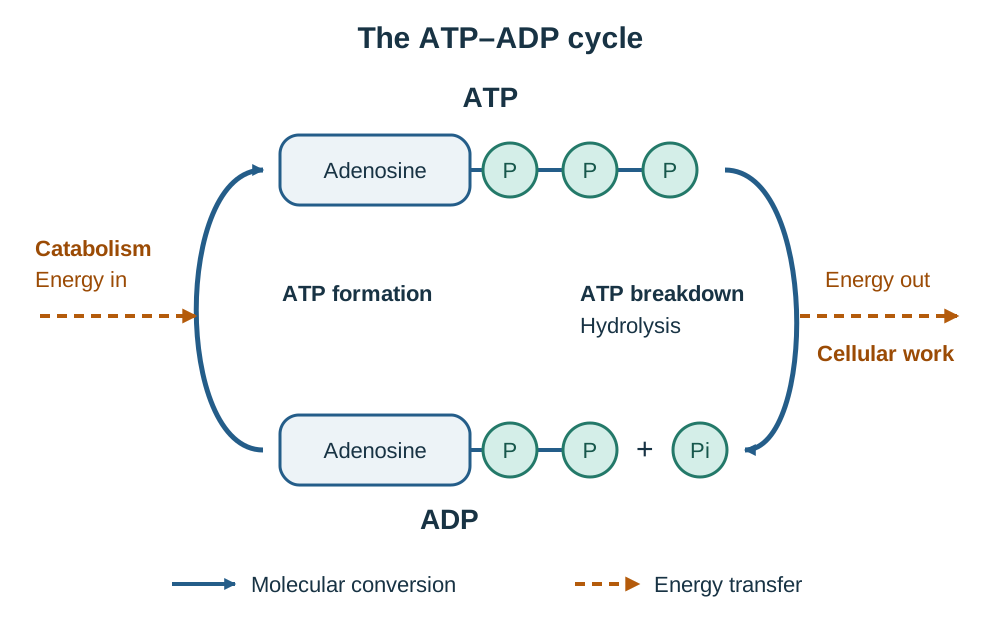
- ATP (adenosine triphosphate): the immediate energy currency of every living cell. When catabolic pathways break down fuel, the released energy attaches a third phosphate group onto adenosine diphosphate (ADP). Later, when the cell needs to pump ions, contract a muscle fibre, or assemble a protein, it breaks that terminal bond to release a controlled packet of energy.
- NAD+ and NADP+: electron and proton taxis. Catabolic reactions like glycolysis and the Krebs cycle transfer high-energy electrons and hydrogen ions to , forming . In contrast, works in anabolic reactions, particularly photosynthesis, where supplies the reducing power needed to fix carbon dioxide into sugar.
Enzyme Structure, Activation Energy, and the Induced Fit Model
Enzymes are biological catalysts made of protein. A cell synthesises them at its ribosomes as long polypeptide chains of amino acids, which fold into precise, three-dimensional globular shapes. Like any catalyst, an enzyme speeds up a chemical reaction without getting used up or permanently altered. Because the enzyme emerges unchanged, one single molecule can process thousands of substrate molecules every minute.
Only a tiny pocket of the folded protein actually touches the substrate. We call this region the active site. It has a unique 3D shape and chemical environment that matches just one specific substrate molecule. This exclusive matching is called enzyme specificity.
Activation Energy
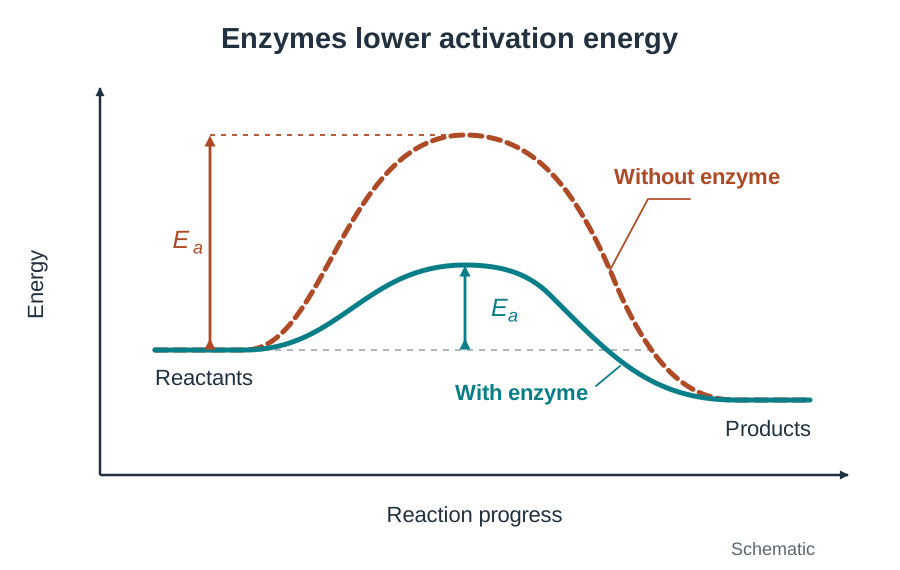
Chemical bonds rarely break spontaneously at room temperature. Before reacting, molecules must absorb an initial burst of energy to destabilise their bonds. We call this barrier the activation energy.
Enzymes work by lowering the activation energy. When the substrate enters the active site, the enzyme holds it in the ideal position and strains its chemical bonds. This enables the reaction to run swiftly at body temperatures, such as in humans. Without enzymes, cells would need dangerously high heat to kick-start their chemistry, which would destroy membranes and organelles.
The Induced Fit Model
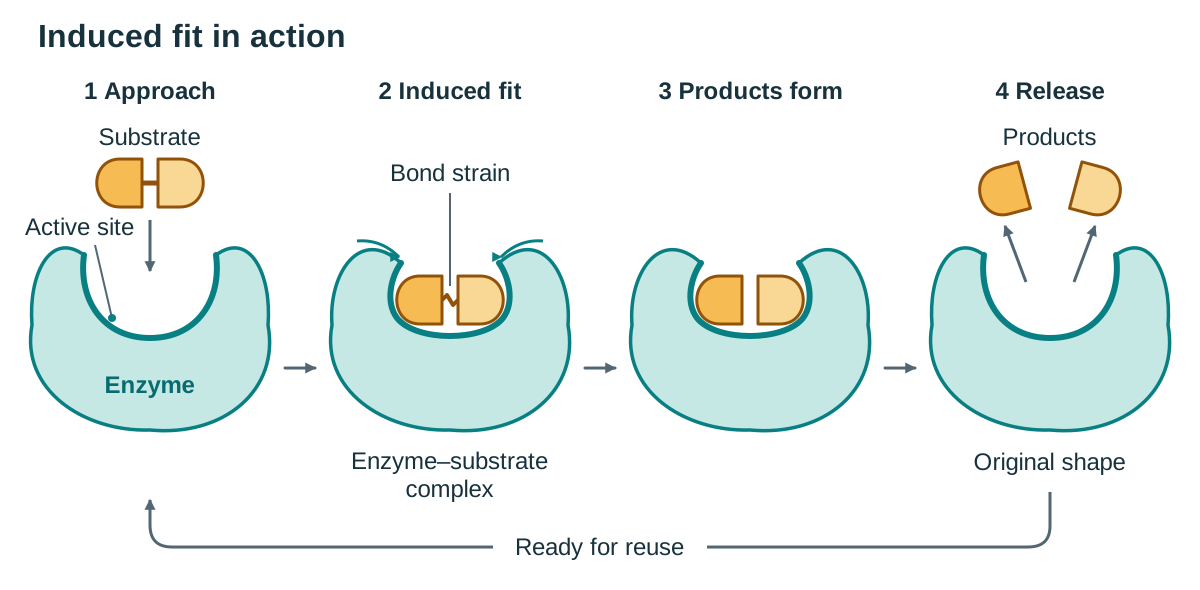
For many years, scientists relied on Emil Fischer's Lock and Key model, picturing the active site as a rigid socket. We now use Daniel Koshland's Induced Fit model, which accounts for protein flexibility:
- The substrate approaches the enzyme's active site, which already has a shape closely matching the substrate.
- When the substrate moves in, it induces the active site to change shape slightly, wrapping snugly around it like a hand slipping into a leather glove.
- This creates an enzyme–substrate complex. Physical strain placed on the substrate's bonds lowers the activation energy barrier.
- The chemical reaction occurs, converting the bound substrate into brand new products.
- Because the products have a different shape and charge, they detach and diffuse away. The active site springs back to its original resting shape, ready to take in the next substrate molecule.
Factors Affecting Enzyme Activity
We quantify enzyme activity by the rate of reaction: how much substrate disappears, or how much product appears, per unit of time. Several environmental variables directly influence this catalytic speed.
Temperature
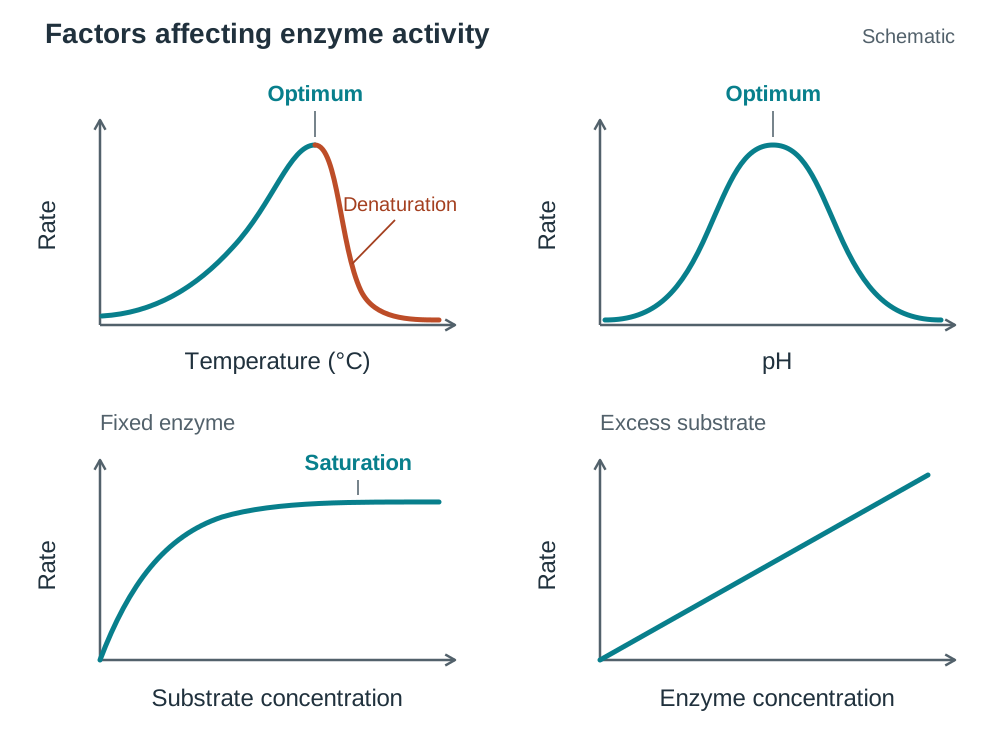
In cold environments between and , molecules possess very little kinetic energy. They drift slowly through the cytosol, meaning collisions between substrates and active sites are rare. Reaction rates remain low, but the enzyme is completely undamaged. As you warm the mixture, kinetic energy increases, collisions happen more often, and the rate climbs until it reaches the optimum temperature:
- Human enzymes work best near .
- Most plant enzymes hit peak rates between and .
Once temperature rises past the optimum, atomic vibrations within the protein become violent. Delicate hydrogen and ionic bonds holding the tertiary structure together snap. The polypeptide chain uncoils, the active site loses its shape, and substrate molecules cannot fit anymore. The enzyme is permanently denatured.
pH
Every enzyme also has an optimum pH where its active site maintains the ideal electric charge and conformation. If the pH drifts away from this point, changing hydrogen ion () concentrations disrupt ionic bonds between amino acid side chains. The active site warps, collision success drops, and extreme shifts cause irreversible denaturation.
- Most enzymes that work inside cells operate best in near-neutral conditions, about pH 6 to pH 8.
- Pepsin, the stomach's protein-digesting enzyme, is adapted to an optimum of pH 2 to thrive in gastric acid.
Substrate and Enzyme Concentration
- Substrate Concentration: If you keep the enzyme quantity fixed and steadily add substrate, the rate of reaction rises because collisions increase. Eventually, the curve flattens into a plateau. At this point, every active site is fully occupied—the enzyme is saturated, and enzyme availability now limits the rate.
- Enzyme Concentration: Adding more enzyme provides extra active sites. Provided you supply excess substrate, the rate of reaction climbs in direct proportion to enzyme concentration.
Specification Investigations: Factors Affecting Catalase Activity
In school laboratory investigations, we commonly use catalase. It occurs abundantly in plant tissues like blended celery or potato and in animal liver, where it breaks down toxic cellular hydrogen peroxide into harmless water and oxygen:
Investigating the Effect of Temperature
- Apparatus: Graduated cylinder, boiling tubes, thermostatically controlled water baths, thermometer, stopclock, dropper.
- Procedure:
- Place of blended celery extract, of pH 9 buffer, and one drop of washing-up liquid into a graduated cylinder.
- Measure of hydrogen peroxide into a separate boiling tube.
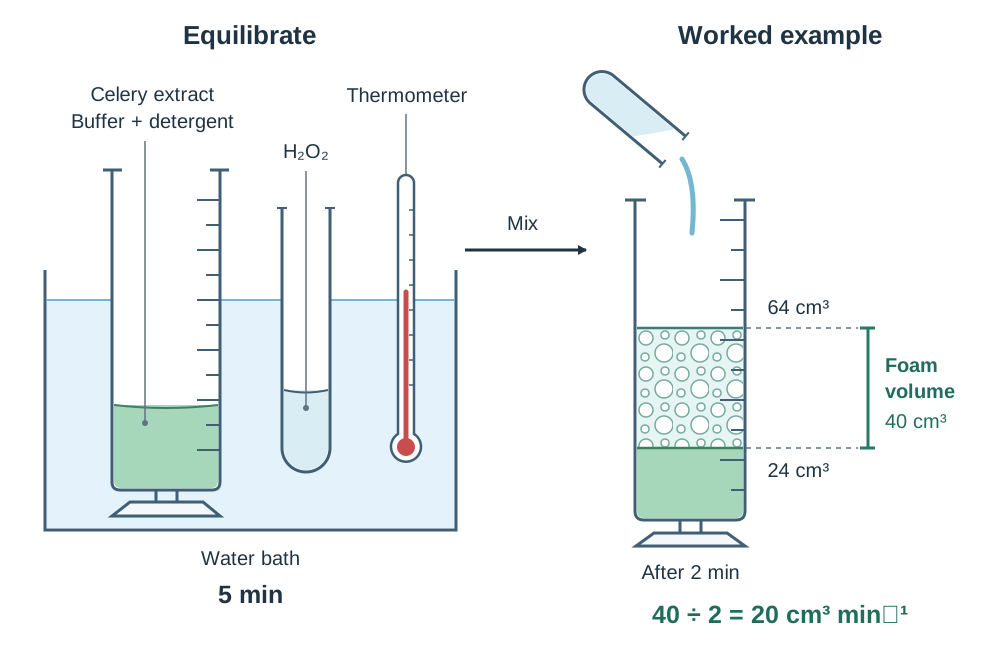
- Stand both containers in a water bath set to the target temperature (for example ) for 5 minutes. This equilibration step ensures both liquids reach the test temperature before mixing.
- Pour the peroxide into the cylinder, record the starting liquid level, and start the stopclock immediately.
- The washing-up liquid traps the released oxygen gas as foam. Record the top level of the foam column after exactly 2 minutes.
- Repeat this procedure across several temperatures, such as , , , , , and .
- Fixed Variables: Keep the volume and concentration of hydrogen peroxide, the volume of celery extract, the pH (buffered to 9), and the reaction duration (2 minutes) constant.
- Control: Set up an identical tube using celery extract that was boiled vigorously for 10 minutes and cooled. It produces no foam, proving that an active biological catalyst is strictly required.
- Reliability: Repeat each temperature at least three times and calculate the average foam volume. Close repeat readings show that the results are repeatable.
- Errors and Safety:
- Random error: Estimating an uneven foam meniscus differently between runs.
- Systematic error: A thermometer or water bath reading a degree higher than actual water temperature.
- Safety: Wear safety goggles and lab coats, as hydrogen peroxide is corrosive and irritates skin.
Investigating the Effect of pH
Keep the water bath fixed at . Vary the pH by adding different buffer solutions (such as pH 4, 7, 9, 10, and 12) to the cylinder while keeping enzyme and peroxide volumes constant. In school investigations, foam output from celery catalase typically peaks at around pH 9 and drops sharply on either side.
Calculating Reaction Rates
If the liquid starts at and the foam reaches after 2 minutes, the foam volume is . The rate is .
Data Analysis and Conclusions
- Graphing: Plot the independent variable (temperature in or pH) on the horizontal x-axis and the rate of reaction () on the vertical y-axis. Ensure axes have informative labels and standard units.
- Spotting Anomalies: An anomalous result is one that clearly diverges from the trend of your other repeats. Identify it, suggest a plausible cause (such as a timer error or spilled peroxide), and omit it when calculating the mean.
- Justified Conclusion: State the pattern in your data and link it to biological principles. For example: 'The rate of reaction increased between and due to more frequent molecular collisions, peaked at , and dropped to zero at because heat denatured the catalase.'
- Secondary Data: Compare your primary results with published values from textbooks or scientific papers to evaluate whether your observed optimum matches accepted scientific figures.
Biotechnology: Enzyme Immobilisation and Industrial Applications
Using free enzymes dissolved in industrial bioreactors creates serious headaches: separating the dissolved enzyme from the finished product is tedious, and the enzyme gets washed away after one single cycle. To solve this, industrial biotechnology relies on immobilised enzymes.
Immobilised enzymes are enzymes attached to an inert support or trapped within an insoluble matrix or membrane.
Laboratory Method: Immobilising Yeast Cells
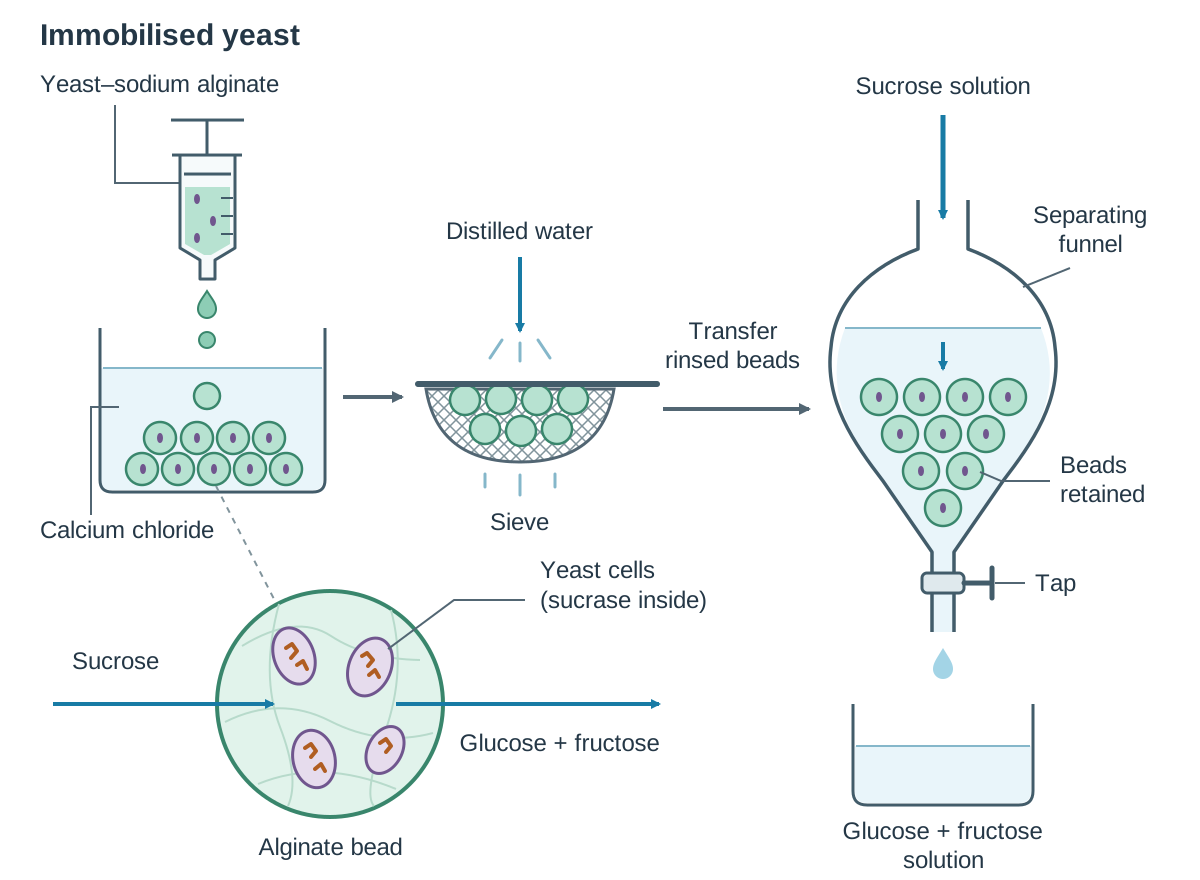
- Dissolve of sodium alginate in of distilled water to form a smooth paste, then stir in dried baker's yeast, which contains the enzyme sucrase.
- Draw the yeast-alginate mixture into a clean syringe.
- Position the syringe about above a beaker of calcium chloride () solution and drip the mixture in slowly.
- As each droplet hits the liquid, calcium ions cross-link the alginate polymers, forming solid, insoluble beads that trap the yeast cells inside.
- Let the beads harden for 10 minutes, strain them through a sieve, and rinse them thoroughly with distilled water to remove any free yeast clinging to the bead surfaces.
- Transfer the beads into a separating funnel column. Pour sucrose solution into the top and collect the liquid dripping out the bottom tap.
- Test the collected filtrate with glucose test strips or Benedict's solution to confirm that sucrase inside the beads cleaved sucrose into glucose and fructose.
- Control: Run sucrose solution through a funnel containing free yeast suspended in water. The liquid from the free yeast comes out cloudy with cells, whereas the liquid from the immobilised column is clear, free of yeast, and tests positive for glucose.
- Safety: Wear eye protection when handling calcium chloride solution, which is an irritant, and wipe up any spills immediately.
Advantages of Immobilised Enzymes
- Reusability: Beads remain inside the column, allowing factories to collect and reuse the same batch of catalyst repeatedly.
- Pure Product: Because the enzyme stays locked inside the matrix, no expensive downstream purification is needed.
- Greater Stability: The surrounding alginate gel provides structural support, making the enzyme less sensitive to mild changes in temperature and pH.
Applications Across Key Sectors
- Food and Beverages: Pectinase breaks down plant cell wall pectins to clarify cloudy fruit juices, while lactase converts milk lactose into sweeter glucose and galactose to produce lactose-free dairy.
- Biofuels: Cellulase digests tough agricultural cellulose into fermentable sugars, which yeast then ferments into bioethanol.
- Medicine: Diagnostic test strips use glucose oxidase to monitor blood sugar levels in diabetic patients.
- Pharmaceuticals: Penicillin acylase is used to convert natural penicillin into semi-synthetic penicillins. Some of these work against bacteria that resist natural penicillin.
Key terms
- Metabolism
- The sum of all chemical reactions that take place in a living organism.
- Anabolism
- A metabolic pathway that builds complex molecules from smaller units, requiring an input of energy.
- Catabolism
- A metabolic pathway that breaks down complex molecules into simpler pieces, releasing energy.
- Enzyme
- A biological catalyst, protein in nature, that accelerates a biochemical reaction without being consumed.
- Substrate
- The specific chemical molecule upon which a given enzyme acts.
- Active Site
- The distinct 3D pocket of an enzyme that binds the substrate and carries out catalysis.
- Enzyme Specificity
- The property whereby an enzyme acts on only one distinct substrate to catalyse a specific reaction.
- Activation Energy
- The minimum energy colliding molecules must possess to trigger a chemical reaction.
- Induced Fit Model
- The theory stating that substrate binding causes the active site to change shape slightly for an optimal catalytic fit.
- Denaturation
- The irreversible loss of an enzyme's functional 3D shape and active site conformation, preventing substrate binding.
- Optimum Activity
- The specific temperature or pH at which an enzyme catalyses a reaction at its maximum rate.
- Immobilised Enzymes
- Enzymes fixed to an inert support or trapped within an insoluble matrix so they can be recovered and reused.
- Bioreactor
- A vessel in which living cells, organisms, or active enzymes carry out biological reactions to produce useful products.
Check yourself
What is the biochemical nature of enzymes, and where in the cell are they produced?
Enzymes are proteins (globular folded proteins) and are synthesised at the ribosomes.
How does an enzyme increase the speed of a chemical reaction?
It speeds up the reaction by lowering the activation energy needed to begin.
Which electron carrier operates mainly in catabolic cellular respiration, and which functions in anabolic photosynthesis?
NAD+ operates in respiration (catabolic), while NADP+ operates in photosynthesis (anabolic).
During a catalase experiment, liquid volume starts at 22 cm³ and the foam reaches 58 cm³ after 2 minutes. What is the reaction rate?
Foam volume produced is 58 - 22 = 36 cm³. The rate is 36 ÷ 2 = 18 cm³ per minute.
Name the two chemicals used to make insoluble alginate beads during yeast immobilisation.
Sodium alginate and calcium chloride (CaCl2).