

Sheep production in Ireland combines an integrated stratified breeding system with extensive hill grazing and productive lowland pastures. This note covers the scientific principles and practical management required for Higher Level Agricultural Science: breed classifications and hybrid vigour; reproductive endocrinology, synchronisation, and flushing; ruminant versus monogastric digestion and neonatal development; late-gestation nutrition and metabolic disorders; lambing and neonatal care; housing and handling design; parasite life cycles, anthelmintic resistance, and flock health; farm economics; and environmental sustainability under Irish grass-based conditions.
Sheep Terminology, Breeds, and the Stratified Industry
Mastering sheep terminology is essential, as examiners regularly test lifecycle stages and breed roles in short and structured questions.
- Lamb: A sheep of either sex under one year of age.
- Hogget: A young sheep from weaning until about two years of age, sitting between a lamb and a mature adult. Sheep are aged by inspecting their permanent incisors: two-tooth at one year, four-tooth at two years, six-tooth at three years, full mouth at four years, and broken mouth when incisors become worn, loose, or missing.
- Ewe: An adult female sheep used for breeding.
- Ram (Tup): An intact, uncastrated adult male sheep used for breeding.
- Wether: A castrated male sheep reared strictly for meat production.
- Cast Ewe (Draft Ewe): An older hill ewe whose incisors have worn down on rough upland vegetation. While unable to thrive on mountain heather, she is sold down to lowland farms where softer, nutritious grass allows her to produce lambs for several more seasons.
Breed Groupings and Adaptations
- Mountain and Hill Breeds: Reared on extensive upland rough grazing and commonage peat soils. The Scottish Blackface has a horned, mottled black face, coarse fleece, and great foraging agility. The Wicklow Cheviot is white-faced and polled (naturally hornless) with strong mothering instincts and hardiness. Both breeds rear fewer lambs (typically 1.0 to 1.2 per ewe) because feed on upland heather and rough grazing is scarce and of low quality, and because natural selection prioritises hardiness and survival over large litter sizes.
- Lowland Maternal and Prolific Breeds: Kept on improved pastures and selected for milk yield, mothering ability, and high prolificacy. The Galway is Ireland's only native sheep breed; it is a large, polled, white-woolled animal well adapted to damp lowland soils. The Belclare was developed in Co. Galway by crossing the native Galway with highly prolific breeds such as the Finnish Landrace and Lleyn. It is exceptionally prolific (regularly weaning more than 1.8 lambs per ewe), milks well, and lambs easily, making it widely used to produce replacement ewes. The Border Leicester (large frame, prominent upright ears) and Bluefaced Leicester (dark blue facial skin, roman nose) are prized sires for crossbreeding.
- Terminal Sire Breeds: Rams chosen solely to sire fast-growing, well-muscled lambs destined strictly for slaughter. None of their female progeny are retained as replacements. The Suffolk (black head and bare black legs) delivers rapid early daily live-weight gain, making it ideal for the early Easter lamb market. The Texel (broad, muscular head, wide loin, and short fleece) delivers superior hindquarter muscling and high kill-out percentages, dominating mid-season grass-based lamb production.
Rams can also be chosen on recorded genetic merit, not just breed. Performance testing measures the ram's own traits—weight for age, and muscle and fat depth measured by ultrasound or CT scanning. Progeny testing judges a ram by how his lambs actually perform, and genomic selection uses a DNA test to estimate his breeding value while he is still young. In Ireland these figures are combined by Sheep Ireland into the €uro-Star indexes: a terminal index for growth and carcase traits, and a replacement index for maternal traits such as prolificacy and milk.
The Stratified Sheep System
The Irish sheep sector links geographical land types into a continuous chain called the stratified sheep system, allowing commercial farmers to exploit hybrid vigour (heterosis)—where crossbred progeny outperform the average of their purebred parents in fertility, milk yield, and growth rate.
[ Tier 1: Mountain / Hill ]
Purebred Scottish Blackface or Wicklow Cheviot (Draft/Cast Ewes at 4–5 years)
         │
         ▼  (Sold to Lowland Crossing Flocks)
[ Tier 2: Lowland Crossbreeding ]
Cast Hill Ewe  ×  Prolific Maternal Ram (Border Leicester / Bluefaced Leicester)
         │
         ▼
Crossbred Breeding Ewes:
• Mule = Bluefaced Leicester ram × Hill ewe (Blackface or Cheviot)
• Greyface = Border Leicester ram × Scottish Blackface ewe
         │
         ▼  (Mated on Lowland Finishing Farms)
[ Tier 3: Commercial Meat Production ]
Mule / Greyface Ewe  ×  Terminal Sire (Texel or Suffolk)
         │
         ▼
100% of Progeny (Male and Female) Finished for Slaughter
Comparing Irish Production Systems
| System Feature | Hill / Mountain Enterprise | Mid-Season Lowland Enterprise | Early-Lamb Lowland Enterprise |
|---|---|---|---|
| Dominant Breeds | Scottish Blackface, Wicklow Cheviot | Mule, Greyface, Belclare crosses | Crossbred ewes bred for early cycling |
| Ram Type | Purebred mountain rams | Terminal sires (Texel, Suffolk) | Suffolk (fast growth rate) |
| Mating Period | November | October | July to August (hormone sponges) |
| Lambing Period | April (outdoors on hill) | March to April (indoors, then turnout) | December to January (housed) |
| Feed Resource | Heather, indigenous mountain grasses | Rotational perennial ryegrass and white clover | Conserved silage and heavy concentrate feeding |
| Weaning Rate | 1.0 to 1.2 lambs/ewe | 1.5 to 1.8 lambs/ewe | 1.3 to 1.5 lambs/ewe |
| Market Target | Store lambs or light hill carcases | Factory slaughter lambs (40–45 kg live weight) | High-value early Easter lamb market |
| Main Trade-Offs | Lowest input costs, but lowest output and harsh environmental risk | Lowest production cost per kg meat off grass, but lambs sell when national supply is high and price is lower | Premium price at Easter, but higher feed and housing costs, hormone treatments, and higher financial risk |
Digestive Physiology: Ruminant vs Monogastric Comparison and Lifecycle Nutrition
An adult sheep is a ruminant: it has one stomach divided into four compartments—rumen, reticulum, omasum, and abomasum.
Ruminant (Sheep) versus Monogastric (Pig)
| Feature | Ruminant (Sheep) | Monogastric (Pig) |
|---|---|---|
| Stomach Compartments | Four compartments: rumen, reticulum, omasum, abomasum | One simple stomach |
| Cellulose Digestion | Extensive, via microbial fermentation | Negligible; cannot digest fibrous plant cell walls |
| Site of Microbes | In the foregut (rumen and reticulum), before the true stomach | In the hindgut (caecum and colon), after enzymatic digestion |
| Role of Microorganisms | Produce the enzyme cellulase, fermenting cellulose to VFAs; synthesise microbial protein and B vitamins | Minor; pig relies almost entirely on its own digestive enzymes |
| Main Energy Source | Volatile fatty acids absorbed across the rumen wall | Glucose absorbed across the small intestine |
| Rumination | Regurgitates and re-chews digesta (cud) | Does not ruminate |
| Typical Diet | Forage, grazed grass, silage | Cereal-based concentrate rations (barley, wheat, soya) |
The central scientific principle is that sheep cannot produce the enzyme cellulase themselves. Billions of bacteria, protozoa, and fungi in the rumen produce it, breaking down cellulose into simple sugars. The microbes then ferment these sugars anaerobically into volatile fatty acids (VFAs)—predominantly acetic, propionic, and butyric acid—which are absorbed across the rumen papillae to supply over 70% of the sheep's metabolisable energy. Sudden diet changes upset this delicate ecosystem; concentrates must always be introduced gradually over two to three weeks to let microbial populations adapt.
Food Constituents and Their Functions in Sheep
- Carbohydrates: Provide energy for maintenance, foetal development, and lactation. Structural carbohydrates (cellulose) are fermented into VFAs; non-structural carbohydrates (starch and sugars from cereals) provide rapid energy.
- Protein: Required for muscle growth, wool formation, udder development, and colostrum antibodies. Supplied by grass, clover, and protein concentrates such as soya bean meal.
- Lipids (Fats): Supply concentrated energy (providing about 2.25 times the energy of carbohydrates) and carry fat-soluble vitamins (A, D, E, K).
- Minerals and Vitamins: Calcium and phosphorus build bone and milk; cobalt allows rumen microbes to synthesise vitamin B12; selenium works alongside vitamin E to prevent nutritional muscular dystrophy (white muscle disease); iodine ensures thyroid health and vigorous newborn lambs. Vitamin A and D are provided by green forage and sunlight.
Copper Toxicity Warning
Sheep have a very limited capacity to excrete excess copper in bile. Copper accumulates in the liver over months until a sudden stress event triggers massive liver release, causing haemolysis (destruction of red blood cells), jaundice, and death. Never feed cattle mineral mixtures or high-copper dairy rations to sheep.
The Pre-Ruminant Lamb and the Reticular Groove
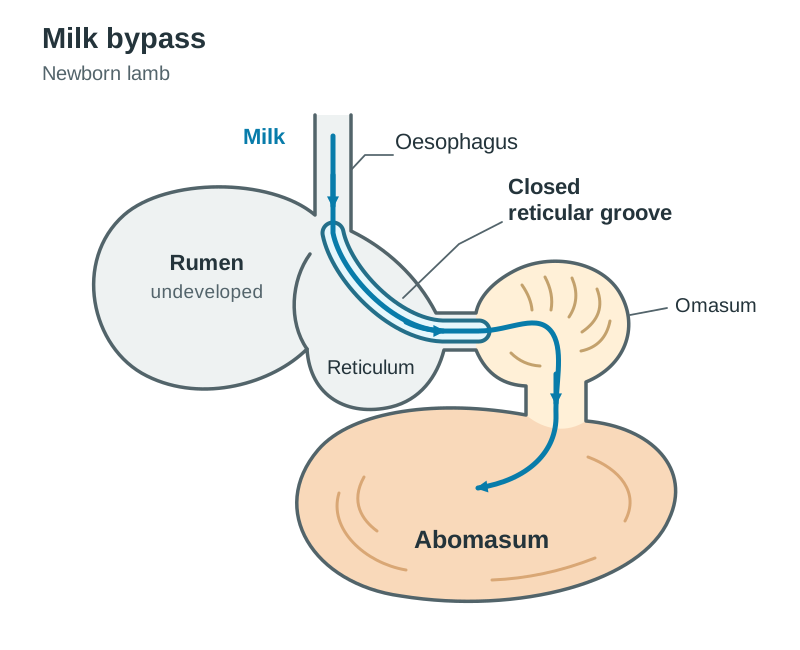
Newborn lambs have an undeveloped, non-functional rumen. When a lamb suckles milk, a nervous reflex causes the muscular lips of the reticular groove (oesophageal groove) to close tightly. This forms a continuous tube channelling milk directly past the rumen and reticulum, through the omasum, and straight into the abomasum. In the abomasum, rennin clots the milk protein (casein), and pepsin begins digestion. If milk entered the undeveloped rumen, it would ferment abnormally, causing bloat, severe scour, and death. Solid feed stimulates rumen development; providing early access to sweet creep pellets and leafy forage encourages microbial colonisation, establishing a functional rumen by six to eight weeks of age.
Late-Gestation Nutrition and Pregnancy Toxaemia
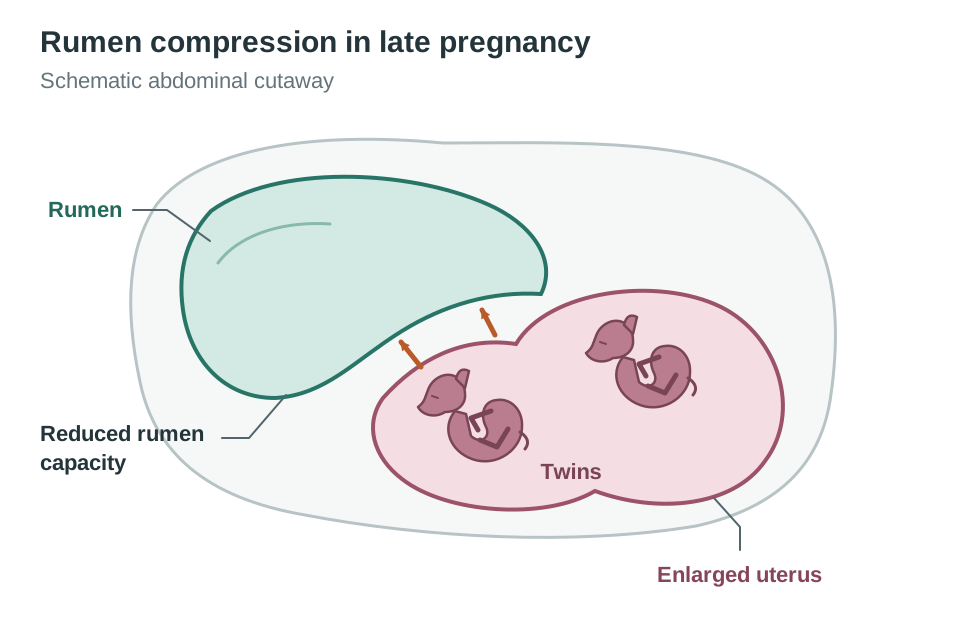
Roughly 70% of foetal lamb growth occurs in the final six weeks of pregnancy. At the same time, the expanding uterus physically compresses the rumen, reducing the ewe's dry matter intake capacity by roughly 30%. Ewes carrying twins or triplets need energy-dense rations to meet rapid foetal growth without filling the compressed digestive tract.
A typical late-gestation ration (18% crude protein) contains 55% rolled barley, 20% soya bean meal, 15% unmolassed beet pulp, 5% molasses, and 5% sheep mineral-vitamin premix. Fed alongside 72% to 75% DMD silage, feeding starts at 0.3 kg/day six weeks before lambing and steps up to 0.9 kg/day for twin-bearing ewes in the final week, split into two feeds daily to prevent gorging.
If energy density is insufficient, the ewe enters negative energy balance and rapidly mobilises adipose tissue. The liver becomes overwhelmed by free fatty acids, resulting in incomplete beta-oxidation and the accumulation of toxic ketone bodies (acetone and beta-hydroxybutyrate) in the blood. This causes pregnancy toxaemia (twin-lamb disease). Symptoms include lethargy, dullness, separating from the flock, teeth grinding, blindness, a sweet acetone breath odour, recumbency, and death. Prevention relies on ultrasound scanning to batch ewes by litter size, monitoring body condition score, and progressive steaming up with concentrates.
Reproduction, Endocrine Control, and Breeding Management
Sheep are seasonal short-day breeders. In autumn, shortening day length is detected by the eyes, causing the pineal gland to increase melatonin secretion. Melatonin stimulates the hypothalamus to release Gonadotropin-Releasing Hormone (GnRH), which prompts the anterior pituitary to secrete Follicle-Stimulating Hormone (FSH) (driving ovarian follicle growth) and Luteinising Hormone (LH) (triggering ovulation).
Reproductive Milestones
- Oestrous Cycle Duration: 17 days on average (normal range 16–18 days).
- Duration of Oestrus (Standing Heat): 24 to 36 hours.
- Gestation Period: 147 days (~5 months, or 21 weeks).
Because the ewe's cervix is narrow and folded into tight fibrous rings, an ordinary artificial insemination catheter cannot be passed through it. Routine AI with frozen-thawed semen requires laparoscopic AI, a minor surgical procedure where an endoscope guides semen deposition directly into the uterine horns. Pedigree flocks may also use embryo transfer, superovulating elite donor ewes and transferring flushed embryos into synchronized recipient ewes.
Oestrus Synchronisation and Advancing the Breeding Season
- Progesterone Sponges (or CIDRs): An intravaginal sponge impregnated with synthetic progesterone is inserted for 12 to 14 days, mimicking an active corpus luteum and blocking FSH and LH release. Removing all sponges simultaneously lifts this inhibition across the flock, bringing ewes into standing heat within 36 to 48 hours for a compact lambing spread.
- PMSG (eCG): Injected at sponge removal to stimulate follicle growth and ovulation during out-of-season breeding.
- Melatonin Implants: Inserted beneath the skin at the base of the ear in early summer, mimicking short autumn days to advance cyclicity for December and January lambing.
- The Ram Effect (Teaser Rams): Introducing a vasectomised teaser ram 14 days before fertile rams triggers sudden pheromone stimulation, inducing ewes to break seasonal anoestrus naturally without hormones.
Pre-Breeding Management Practices
- Culling: Undertaken 8 to 10 weeks before mating to remove broken-mouthed, chronically lame, barren, or chronically mastitic ewes, ensuring pasture and concentrates go only to productive stock.
- Body Condition Scoring (BCS): Assessed from 1 (emaciated) to 5 (obese) by palpating muscle and fat cover over the spinous and transverse processes of the lumbar vertebrae. Target BCS at mating is 3.0 to 3.5 for lowland ewes and 2.5 for hill ewes. Rams should reach BCS 4.0 because they lose significant body condition during active mating.
- Flushing: Moving ewes from bare maintenance pasture onto clean, lush aftermath or feeding 0.25 to 0.5 kg of concentrates daily for three weeks before and three weeks after ram introduction. The rising plane of nutrition stimulates the ovaries to release more ova (elevating ovulation rate), enhances uterine blood flow to support embryo implantation, and reduces early embryonic mortality.
- Ram Raddling: Fitting rams with a raddle harness using coloured wax crayons (or brisket paint), changing the colour every 16 to 17 days from light to dark (e.g., yellow to red to blue). This identifies mated ewes, detects repeating ewes or ram infertility early, and allows precise batching by expected lambing date.
Lambing, Neonatal Care, and the Flock Calendar
Lambing is the most critical window in the sheep enterprise, as perinatal mortality directly undermines annual flock profitability.
The First 24 Hours: Colostrum Management
A lamb is born without circulating antibodies because the ewe's placenta does not allow maternal immunoglobulins to pass to the foetus. The newborn lamb depends entirely on absorbing maternal immunoglobulins from colostrum to establish passive immunity. Colostrum also supplies dense digestible fats to prevent hypothermia and acts as a laxative to clear meconium from the digestive tract.
The lamb's small intestine can absorb whole immunoglobulin molecules only through non-selective pinocytosis. This gut closure window begins declining rapidly after birth and closes completely by 24 hours. Lambs must receive 50 ml of colostrum per kg of birth weight within the first 6 hours of life, and a total of 200 ml/kg within the first 24 hours (roughly 1 litre across the day for a 5 kg lamb). Vaccinating the ewe with a clostridial booster four to six weeks prior to lambing ensures protective antibodies against pulpy kidney, tetanus, and blackleg are concentrated into her colostrum.
Routine Neonatal Procedures
- Clear airways and stimulate breathing if the newborn lamb is unresponsive.
- Immerse or spray the umbilical cord in strong 10% tincture of iodine immediately after birth to desiccate the navel cord and prevent environmental bacteria causing joint ill and navel ill.
- Verify that the ewe's teats are unblocked and that the lamb suckles vigorously; provide stomach-tube supplementation if the lamb is weak.
- Retain the ewe and lambs in an individual pen for 24 to 48 hours to ensure maternal bonding, then apply national identification ear tags before turnout.
Mid-Season Lowland Flock Calendar
| Period | Key Management Tasks | Scientific and Production Justification |
|---|---|---|
| August to September | Cull unfit ewes, assess BCS, vaccinate, trim hooves | Ensures only sound, healthy ewes go to the ram |
| September to October | Flush ewes on leafy pasture; introduce raddled rams (1:40) | Rising plane of nutrition elevates ovulation rate; tracks service dates |
| November to December | Maintenance grazing; dose for adult liver fluke | Embryonic attachment complete; feed demand matches grass supply |
| December to January | Ultrasound scan ewes at 50 to 70 days post-mating | Identifies barren ewes; batches pregnant ewes by litter size |
| February to March | House ewes; steam up with concentrates; administer clostridial booster | Meets 70% of foetal growth, prevents twin-lamb disease, enriches colostrum |
| March to April | Supervise lambing, deliver colostrum, dip navels, turn out to grass | Delivers passive immunity, prevents neonatal infections, utilises spring grass |
| April to June | Rotational grazing, monitor faecal egg counts (FEC), dock/castrate | Sward height kept at 6–8 cm for peak milk yield; controls roundworms |
| June to July | Shear ewes, apply blowfly protection, wean lambs at 14 weeks | Removes flystrike risk; allows ewe condition to recover before autumn mating |
| July to October | Draft finished lambs at 40–45 kg; build ewe BCS for breeding | Meets factory specification; prepares flock for the next breeding season |
Housing, Handling Facilities, and Farmyard Safety
Housing pregnant ewes for six to eight weeks before lambing prevents winter pasture poaching, allows accurate feed rationing based on scanned litter size, provides shelter during winter storms, and reduces neonatal lamb mortality.
Housing and Environmental Specifications
- Lying Space: Provide 1.2 m² of floor space per lowland ewe on expanded metal or plastic slats, and 1.4 to 1.5 m² per ewe on deep-bedded straw. Overcrowding causes bullying, stress, and higher abortion rates.
- Feed Trough Space: Lowland ewes require 450 to 500 mm of feed face per head for concentrate feeding (rising to 600 mm for large continental cross ewes). All ewes must be able to eat simultaneously; shy ewes pushed out from troughs rapidly develop pregnancy toxaemia.
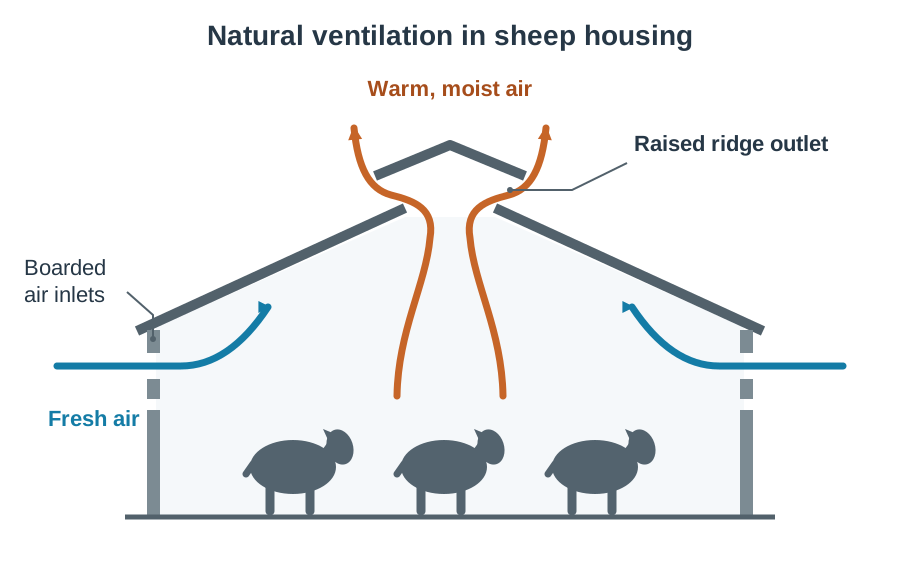
- Ventilation: Good sheep housing relies on natural convection (the stack effect). Space-boarded or Yorkshire-boarded side walls admit fresh air while a continuous raised roof ridge allows warm, moist air to escape without causing draughts at sheep level. Damp, stale indoor air predisposes housed sheep to pasteurellosis and pneumonia.
- Individual Lambing Pens: Provide one individual pen (1.5 m × 1.5 m) per ten ewes. Pens must be thoroughly cleaned, disinfected with hydrated lime, and bedded with fresh straw between occupants to break cycles of watery mouth (E. coli) and cryptosporidiosis.
- Water: A lactating ewe requires up to 10 litres of clean water daily. Troughs must be clean and positioned at head height to prevent contamination with dung.
Handling Units and Farmyard Layout
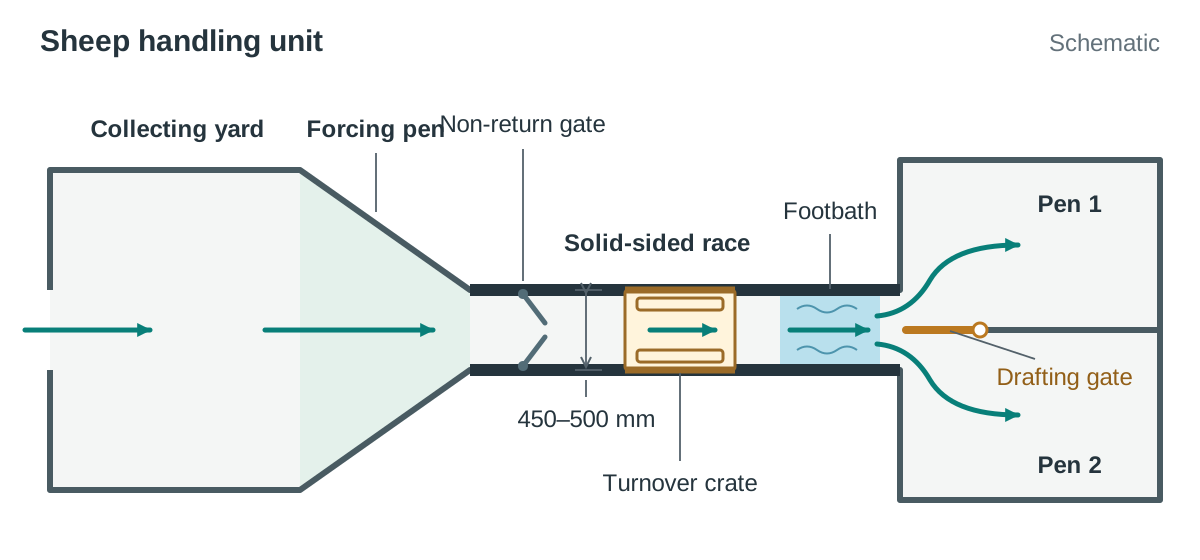
A well-designed handling unit allows one person to manage sheep safely without catching animals by hand. Core components include:
- A wide collecting pen narrowing into a funnel-shaped forcing pen.
- A narrow drafting race (450–500 mm wide) with solid walls to stop sheep seeing distractions outside, fitted with non-return gates and a 2-way or 3-way drafting gate at the exit.
- A concrete footbath built into the race exit for routine lameness control.
- A turnover crate integrated along the race to restrain sheep comfortably for foot paring.
Farm Safety and Hazard Controls
- Physical Hazards: Rams can butt and knock handlers unexpectedly; never turn your back on a ram, and use handling races rather than catching sheep in open pens. Use PTO shaft shields on machinery. When agitating slurry, evacuate all animals and people from the shed, open all doors, agitate on a windy day, and stay out for at least 30 minutes to avoid fatal hydrogen sulphide (H₂S) gas poisoning.
- Biological Hazards (Zoonoses): Sheep carry pathogens that transfer to humans. Orf is a parapoxvirus causing painful pustular sores on human hands. Abortive agents—notably toxoplasmosis (Toxoplasma gondii) and enzootic abortion (Chlamydia abortus)—cause severe illness and miscarriage in pregnant women. Strict hygiene, wearing disposable nitrile gloves during lambing, and excluding pregnant women entirely from lambing sheds are mandatory safety precautions.
- Chemical Hazards: Organophosphate and synthetic pyrethroid sheep dips and pour-ons are neurotoxic pesticides. Handlers must wear full waterproof PPE (gloves, face shield, rubber boots), store chemicals in locked cabinets, and dispose of spent dip legally through approved dilution and soakaway channels.
Flock Health, Parasitology, and Zoonoses
Maintaining flock health requires proactive prevention, biosecurity, and adherence to legal welfare standards.
Legal Duties and Animal Welfare
The Animal Health and Welfare Act 2013 places a legal duty of care on every livestock owner to protect animal wellbeing and prevent unnecessary suffering. Welfare compliance is evaluated against the Five Freedoms:
- Freedom from hunger and thirst (access to fresh water and balanced diets).
- Freedom from discomfort (appropriate shelter, dry bedding, and adequate space).
- Freedom from pain, injury, and disease (prevention, rapid diagnosis, and prompt treatment).
- Freedom to express normal behaviour (sufficient space and company of their own kind).
- Freedom from fear and distress (calm handling conditions and predator protection).
Gastrointestinal Roundworms and Anthelmintic Resistance
Parasitic gastroenteritis is caused by nematodes such as Teladorsagia circumcincta (abomasal stomach worm) and Nematodirus battus (small intestinal worm of young spring lambs). Their life cycle is direct:
- Adult worms in the abomasum or intestine lay microscopic eggs, which pass out in sheep dung.
- Eggs hatch on pasture into free-living larvae, developing through L1 and L2 stages to infective L3 larvae in warm, moist weather.
- L3 larvae migrate up grass blades in films of moisture.
- Grazing lambs ingest L3 larvae, which mature into egg-laying adults within two to three weeks.
Symptoms include profuse scour (dirty hindquarters), dark watery dung, unthriftiness, poor DLG, and sudden lamb mortality during spring Nematodirus surges.
Flock Control Strategies:
- Monitor faecal egg counts (FEC) under a microscope to treat only when egg counts indicate harmful burdens, avoiding blanket routine treatments.
- Graze lambs on clean pasture (silage aftergrass or new reseeds) to break larval ingestion.
- Practice mixed grazing with cattle; sheep nematode larvae do not mature in cattle, so cattle act as biological vacuum cleaners on pasture.
- Manage anthelmintic resistance (where worms survive standard doses of benzimidazoles, levamisoles, or macrocyclic lactones). Calibrate dosing guns accurately, weigh the heaviest lamb to set dose volume, rotate anthelmintic classes annually, and quarantine-dose bought-in sheep.
Liver Fluke (Fasciola hepatica)
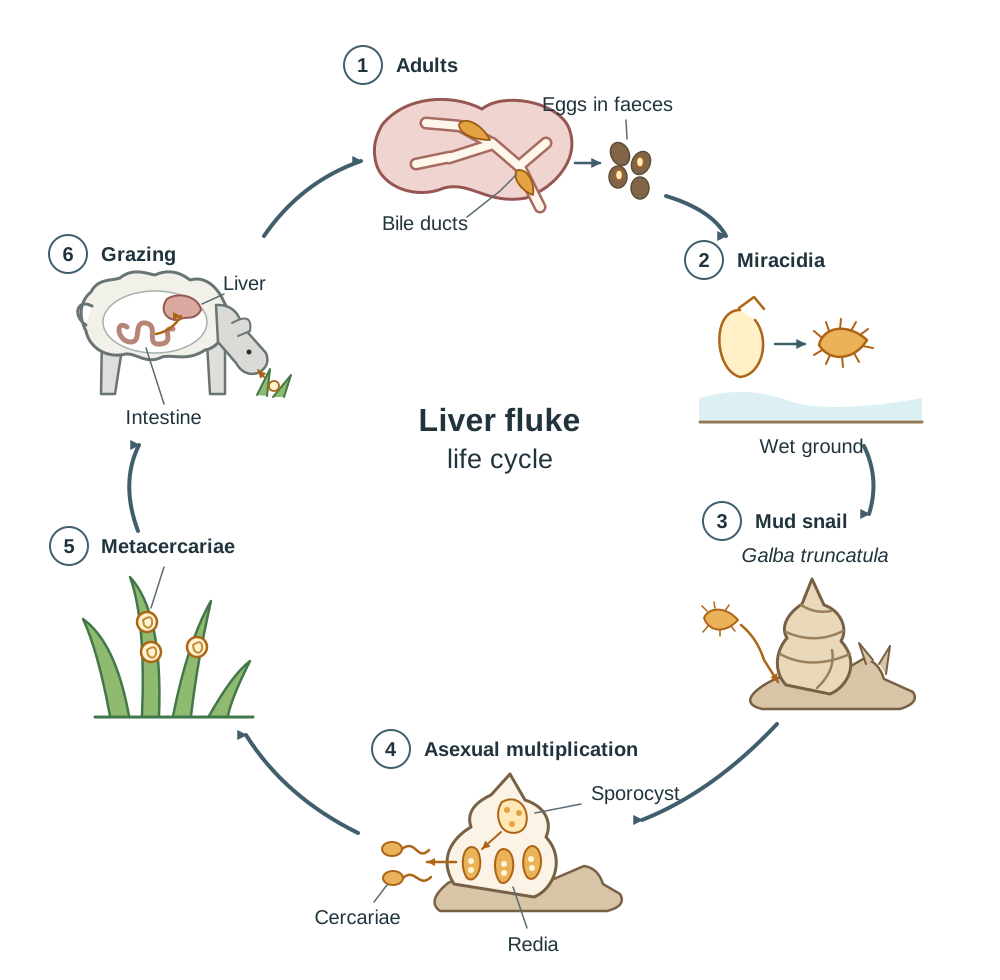
Liver fluke is an indirect trematode parasite requiring an intermediate host. In exams, you should draw this cycle as a circular sequence with six labelled stages:
- Adult flukes residing in the bile ducts of the sheep liver lay eggs, which pass onto pasture in faeces.
- In moist soil (>10°C), eggs hatch into ciliated, free-swimming miracidia.
- Miracidia locate and penetrate the dwarf mud snail (_Galba truncatula_) within 24 hours.
- Inside the snail, the parasite multiplies asexually through sporocyst and redia stages, releasing free-swimming cercariae.
- Cercariae encyst onto blades of grass as dormant metacercariae.
- Grazing sheep swallow metacercariae. Immature flukes excyst in the duodenum, burrow through the gut wall, and tunnel across liver tissue, causing acute haemorrhage, anaemia, submandibular oedema (bottle jaw), and death.
Control combines dosing with flukicides (e.g., triclabendazole for immatures or closantel/oxyclozanide for adults) with land drainage and fencing off wetland snail habitats.
Blowfly Strike (Myiasis)
The green bottle fly (_Lucilia sericata_) is attracted by decomposing organic matter on soiled fleece around the breech. Hatched maggots secrete proteolytic enzymes that dissolve living muscle tissue, causing intense irritation, septicaemia, and death. Control includes routine summer shearing, dagging (shearing dung-soiled wool from the hindquarters), scouring control, and applying preventative insect growth regulators (IGRs) or synthetic pyrethroid pour-ons.
Footrot and Lameness
Footrot is a contagious hoof disease caused by _Dichelobacter nodosus_ working in synergy with _Fusobacterium necrophorum_. Bacteria invade through broken interdigital skin, causing foul-smelling inflammation and separating the hoof horn from the sensitive laminae. Control involves walking sheep through a 10% zinc sulphate footbath, paring overgrown loose horn, administering systemic antibiotics, and isolating infected sheep.
Clostridial Diseases
Acute, fatal bacterial infections caused by soil-borne, spore-forming anaerobic bacteria. Key forms include pulpy kidney (Clostridium perfringens type D), blackleg (C. chauvoei), and tetanus (C. tetani). Prevention relies on administering a multivalent clostridial vaccine to ewes four to six weeks prior to lambing, passing protective antibodies into colostrum, followed by lamb vaccinations at eight to twelve weeks.
Notifiable Diseases and Traceability
Notifiable diseases are conditions that farmers are legally mandated to report immediately to the Department of Agriculture on suspicion. Key examples in sheep include scrapie, foot-and-mouth disease, bluetongue, anthrax, and brucellosis (Brucella melitensis). Rapid reporting allows the Department to impose quarantine zones, halt animal movements, and contain outbreaks before export markets are suspended.
Traceability is underpinned by the National Sheep Identification System (NSIS). All sheep moving off holdings carry electronic identification (EID) tags, and movements are recorded in flock registers and dispatch documents submitted to the Animal Identification and Movement (AIM) database. This traceability supports consumer confidence and allows Irish lamb to be certified under Bord Bia's Sustainable Sheep Assurance Scheme (SSAS).
Flock Economics, Performance Metrics, and Secondary Data Interpretation
Evaluating enterprise success requires analyzing physical performance metrics alongside farm financial returns.
Core Reproductive and Production Formulas
- Prolificacy: The ability of a ewe to produce a large number of offspring; in practice, the average number of lambs born per ewe.
- Litter Size:
- Weaning Rate:
This is the critical figure determining enterprise profitability, as it counts only surviving lambs. Lowland flocks target 1.5 to 1.8; hill flocks achieve 1.0 to 1.2.
- Daily Live-Weight Gain (DLG):
Lowland lambs sucking the ewe should gain 0.30 to 0.40 kg/day (300–400 g/day) to be drafted early.
- Feed Conversion Ratio (FCR):
FCR has no units. A lower FCR is superior, indicating that less feed dry matter is required to produce one kilogram of live-weight gain.
- Kill-Out Percentage (KO%):
Finished lambs average 44% to 50%, influenced by breed, fleece clean weight, and gut fill.
- Livestock Unit (LU): A standardised measure representing the feed eaten annually by a 550 kg mature dairy cow (1.0 LU), equivalent to roughly 12 tonnes of grass dry matter. A mature ewe equals 0.15 LU (accepted range 0.14–0.2 LU).
Interpreting Secondary Performance Data
Consider two contrasting finishing groups of lambs evaluated over a 40-day finishing period:
- Batch A (Texel-cross): DLG = 0.34 kg/day; FCR = 3.5
- Batch B (Suffolk-cross): DLG = 0.38 kg/day; FCR = 4.4
Interpretation: Batch B grows faster and will be drafted for slaughter sooner, reducing days to slaughter and pasture demand. However, Batch A converts feed dry matter significantly more efficiently (requiring 3.5 kg DM per kg gain compared to 4.4 kg DM). When concentrates are expensive, Batch A yields a lower feeding cost per kg of carcase produced. The more profitable batch depends on relative concentrate prices and factory slaughter deadlines.
Enterprise Economics: Gross Margin per Ewe
Gross margin measures the money remaining after paying direct variable costs:
Output includes lamb sales, cull ewe sales, wool receipts, and scheme payments (such as the Sheep Improvement Scheme). Variable costs include concentrates, fertiliser, veterinary treatments, contractor fees, and transport. Fixed overhead costs (land, machinery depreciation, buildings) are not deducted in gross margin calculations.
Weaning rate is the primary economic driver. Mating 100 ewes with a weaning rate of 1.6 yields 160 lambs; dropping to 1.2 yields only 120 lambs. Because the annual variable costs of keeping the ewe change very little, losing 40 lambs dramatically slashes net profit per hectare.
Environmental Sustainability and Grass-Fed Market Attributes
Sheep production in Ireland must balance food output with climate change mitigation, water conservation, and biodiversity management.
Environmental Impacts and Solutions
- Enteric Methane (CH₄): Produced by methanogenic archaea during anaerobic rumen fermentation and belched out by sheep. Methane is a potent greenhouse gas roughly 28 times more warming than CO₂ over a century. Reductions are achieved by finishing lambs faster (lowering total days alive), providing digestible, leafy swards, and using genetic selection through €uro-Star indexes (terminal and replacement) to breed feed-efficient animals.
- Nitrous Oxide (N₂O) and Ammonia (NH₃): N₂O is released from fertiliser and dung patches; ammonia volatilises from open slurry and urine. Mitigation involves replacing CAN fertiliser with protected urea, establishing white clover in swards to fix atmospheric nitrogen biologically, and applying farmyard manure and slurry during spring using trailing-shoe equipment.
- Water Quality and Eutrophication: Runoff of phosphorus and nitrogen into waterways causes eutrophication—excessive nutrient enrichment triggering algal blooms, which consume dissolved oxygen on decomposing and suffocate fish. Farmers manage this by leaving fenced buffer strips along drains, maintaining closed spreading periods under the Nitrates Regulations, and never spreading on waterlogged soil.
- Upland Commonage Management: On hills, excessive stocking rates cause overgrazing, destroying native heather (Calluna vulgaris), destabilising blanket bog peat, and releasing stored soil carbon. Regulated stocking density preserves upland habitats and prevents erosion.
- Sustainable Intensification: Producing more agricultural output per hectare while reducing the carbon and environmental footprint per kilogram of meat produced. Increasing flock weaning rate from 1.3 to 1.6 lambs per ewe dilutes the breeding ewe's annual methane output over more saleable meat, reducing the carbon footprint per kg of lamb carcase.
Attributes of Irish Grass-Fed Lamb and Market Outlets
- Nutritional Advantages: Lamb produced on grazed grass has higher concentrations of heart-healthy omega-3 polyunsaturated fatty acids, elevated conjugated linoleic acid (CLA), and higher vitamin E, which naturally preserves meat colour and retail shelf-life.
- Export Dominance: Around 75% of Irish sheepmeat is exported, primarily to France, the United Kingdom, Germany, and Belgium. Producers target high-value seasonal markets, notably the early Easter market and religious festivals (Eid al-Fitr and Eid al-Adha).
- Value-Added and Artisan Outlets: Niche markets command price premiums, including organic lamb, direct boxed lamb sales, and regional products like Connemara Hill Lamb, which holds EU Protected Geographical Indication (PGI) status based on the unique heather-flavoured diet of mountain lambs.
Key terms
- Prolificacy
- The ability of a ewe to produce a large number of offspring, commonly expressed as the average number of lambs born per ewe.
- Terminal Sire
- A ram selected specifically for carcase conformation, muscling, and growth rate, whose entire male and female offspring are slaughtered for meat.
- Maternal Sire
- A ram selected to produce female offspring with superior milk yield, mothering ability, and high prolificacy for retention as replacement breeding ewes.
- Cast Ewe (Draft Ewe)
- An older hill ewe with teeth worn down by rough mountain grazing, sold to lowland farms where richer pasture supports continued lamb production.
- Stratified Sheep System
- The national breeding framework integrating mountain, upland crossing, and lowland enterprises to exploit hybrid vigour across varying Irish land types.
- Hybrid Vigour (Heterosis)
- The biological phenomenon whereby crossbred offspring outperform the average of their purebred parents in traits such as fertility, viability, and growth.
- Flushing
- The practice of increasing the plane of nutrition for ewes three weeks before and after mating to raise ovulation rate, conception, and embryo implantation.
- Reticular Groove
- A muscular channel in neonatal lambs that reflexively closes during suckling, directing milk past the undeveloped rumen straight into the abomasum.
- Pregnancy Toxaemia
- A metabolic disorder in late-pregnancy ewes caused by a severe energy deficit, resulting in excessive fat breakdown and toxic blood ketone accumulation.
- Volatile Fatty Acids (VFAs)
- Short-chain fatty acids (mainly acetic, propionic, and butyric) produced by rumen fermentation that serve as the ruminant's main energy source.
- Kill-Out Percentage
- The weight of the dressed carcase expressed as a percentage of the live weight of the animal immediately prior to slaughter.
- Livestock Unit (LU)
- A standardised measure based on the feed eaten annually by a 550 kg dairy cow (1.0 LU), equivalent to approximately 0.15 LU for an adult ewe.
- Colostrum
- The first milk produced by the ewe after lambing, rich in immunoglobulins that provide essential passive immunity to the newborn lamb.
- Zoonosis
- An infectious disease that can be naturally transmitted from vertebrate animals to humans, such as orf, toxoplasmosis, or enzootic abortion.
- Notifiable Disease
- An animal disease that must, by law, be reported immediately to the Department of Agriculture on suspicion, such as scrapie or bluetongue.
- Anthelmintic Resistance
- The genetically inherited ability of internal parasite worms to survive standard recommended doses of an anthelmintic medication.
Check yourself
What endocrine pathway triggers seasonal breeding in the ewe as autumn day length decreases?
Decreasing day length causes the pineal gland to secrete melatonin, which stimulates the hypothalamus to release GnRH, prompting the anterior pituitary to secrete FSH and LH.
State the minimum floor space required for a lowland ewe on slats, and name one problem caused by overcrowding.
1.2 m² per ewe on slats; overcrowding causes bullying at the feed trough, uneven feed intake, increased risk of pregnancy toxaemia, and higher disease transmission.
Why must a newborn lamb receive colostrum within the first six hours of life?
Because the lamb is born with no antibodies of its own, and the intestine can only absorb intact maternal immunoglobulins across the gut wall before gut closure occurs.
Name two notifiable diseases affecting sheep, and state what action a farmer must take on suspecting them.
Scrapie and bluetongue (or foot-and-mouth disease); the farmer must report the suspicion immediately to the Department of Agriculture and restrict all sheep movements off the farm.
What is the biological function of the reticular groove in a neonatal lamb?
It is a muscular channel that reflexively closes during suckling to direct milk directly into the abomasum, bypassing the undeveloped rumen to prevent abnormal bacterial fermentation, bloat, and scour.
Why should cattle mineral formulations never be fed to sheep?
Sheep have a very poor capacity to excrete copper in bile, so excess copper accumulates in the liver and causes fatal copper toxicity and haemolysis.