

Crop establishment means getting a crop off to a good start through proper soil conditioning, seedbed preparation, seed selection, and correct sowing depth and timing. Crop management covers caring for the crop throughout its vegetative and reproductive growth. This involves matching nutrient applications to crop demand, implementing integrated pest management through direct and indirect controls, and choosing between conventional and organic production systems. Understanding these practices ensures high yields of digestible forage or grain while protecting livestock health, water quality, and farm safety.
Soil Fertility, pH, and Mechanical Seedbed Preparation
Successful establishment begins by assessing the physical and chemical state of the soil. Most Irish arable crops thrive between pH 6.0 and 7.0. Grassland is maintained between pH 6.0 and 6.5, while barley is sensitive to acidity and performs best at about pH 6.5 (within the 6.0 to 7.0 range). When addressing exam questions, always apply any specific pH range provided in the prompt.
In acidic soils (pH below 6.0), insoluble aluminium and iron compounds bind tightly with phosphate ions, locking up phosphorus so plant roots cannot absorb it. Applying agricultural lime (ground limestone, ) neutralises active hydrogen ions () in the soil solution. The calcium ions () replace hydrogen and aluminium on soil colloids, raising soil pH and unlocking bound phosphorus. Liming does not add nitrogen, phosphorus, or potassium directly; it corrects acidity so existing and applied nutrients become plant-available.
Mechanical Seedbed Preparation
Traditional seedbed preparation uses three mechanical operations in sequence:
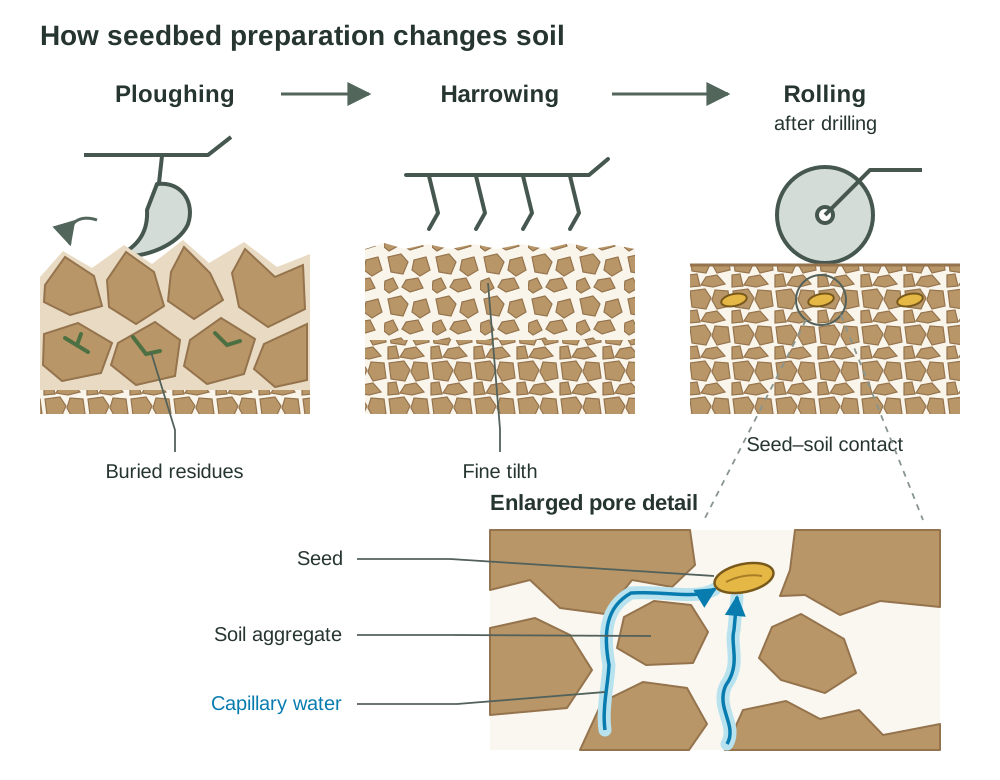
- Ploughing: Carried out in autumn or early spring to a depth of 20–25 cm. The mouldboard plough inverts the topsoil, buries surface weeds and crop residues, loosens compacted soil layers, and exposes soil-dwelling pests to frost and bird predation.
- Harrowing: Disc, spring-tine, or power harrows break down ploughed furrows into a fine, crumb-structured tilth (aggregates roughly 2–5 mm in diameter). This produces an even, aerated surface that allows rapid root penetration and uniform seed placement.
- Rolling: A ribbed Cambridge roller or flat roller consolidates loose soil before or after drilling. Rolling eliminates large air pockets, firms soil around the seed embryo, and restores continuous pore networks for capillarity (the upward draw of water from the subsoil to the germinating seed).
Seed Selection, Sowing Decisions, and Comparative Establishment
High yields require high-grade seed. Certified seed is officially inspected and tested by the Department of Agriculture, Food and the Marine (DAFM) to guarantee defined minimum standards:
- Germination: At least 85% for cereals (wheat, barley, oats) and 80% for perennial ryegrass.
- Analytical Purity: At least 98% clean seed by weight of the named species for cereals, and 96% for grass seed.
- Varietal Purity: High genetic uniformity true to the stated cultivar.
- Weed Seed Limits: Strict statutory limits on wild oats (Avena fatua) and other noxious weeds.
Many certified cereal seed lots are also dressed with a fungicide against seed-borne diseases such as loose smut; this is a separate treatment, not part of certification.
Sowing Decisions: Date, Seed Rate, and Method
- Sowing Date: Spring barley is sown between March and April once soil temperature reaches roughly 6 °C and ground conditions allow machinery to travel without causing compaction. Winter cereals (winter wheat and barley) are sown in autumn, typically late September to October, so seedlings establish strong root systems before winter dormancy. Sowing winter crops too early increases the risk of aphid attack and viral transmission, whereas sowing spring crops too late shortens the growing season and lowers yield.
- Seed Rate: Sowing rates must establish an optimal plant population. Too low a seed rate leaves an open sward where weeds thrive; too high a rate creates dense, overcrowded seedlings that compete for light and nutrients, resulting in weak stems that lodge (fall over). Seed rates are increased if seedbed quality is rough or if sowing is delayed into cold soils.
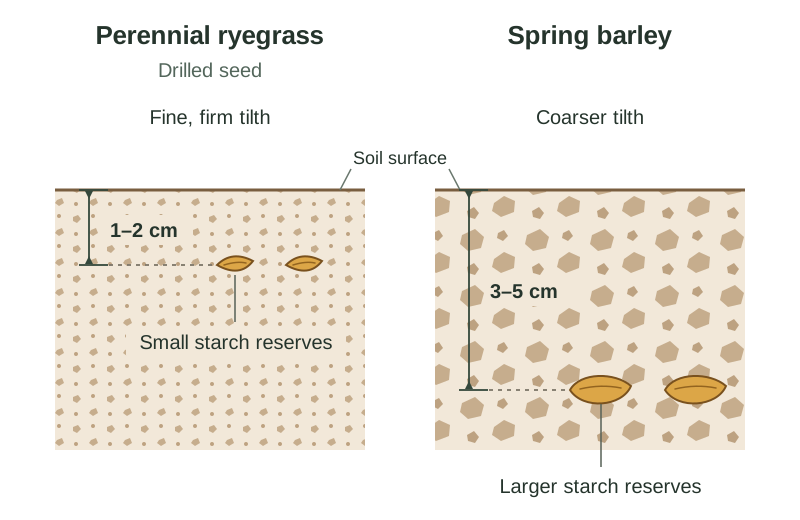
- Sowing Method: Cereals are drilled in rows 12–15 cm apart at a uniform depth of 3–5 cm. Grass seed is broadcast across the surface or drilled shallowly (1–2 cm) and rolled immediately.
Comparative Establishment: Perennial Ryegrass vs. Cereals
- Perennial Ryegrass (Lolium perenne): Small seeds containing tiny endosperm energy reserves. They demand a very fine, firm seedbed and must not be buried deeper than 1–2 cm; otherwise, the emerging coleoptile runs out of stored starch before reaching sunlight. Seedlings emerge with modest initial vigour and rely on tillering* (producing leafy side shoots from the plant base) to close the canopy.
- Cereals (e.g. Spring Barley): Substantial grains packed with starch reserves. They are sown deeper (3–5 cm) into a coarser tilth. This deeper placement anchors the plant, secures capillary moisture, and protects the seed from bird feeding.
Conventional vs. Organic Food Production
Modern agricultural systems operate under either conventional or organic management guidelines. Organic farming relies on biological cycles and mechanical cultivations, avoiding synthetic chemical inputs. Farms converting to organic status undergo a rigorous conversion period (usually two years for land) monitored by approved bodies such as the Irish Organic Association or Organic Trust.
| Management Area | Conventional Production | Organic Production |
|---|---|---|
| Nutrient Supply | Synthetic chemical fertilisers (CAN, urea, 10-10-20) matched to soil test results. | Farmyard manure, slurry, compost, and atmospheric nitrogen fixation via clover and legume leys. No synthetic fertilisers permitted. |
| Weed Control | Selective and non-selective synthetic herbicides. | Crop rotations, stubble cleaning, stale seedbeds, and mechanical weeding using comb harrows or inter-row hoes. |
| Pest and Disease Control | Routine or targeted synthetic fungicides and insecticides; resistant varieties. | Multi-year rotations, resistant varieties, disease-free seed, biological controls, and a very limited list of natural mineral compounds. |
| Crop Yield | Consistently higher yields per hectare due to immediate nutrient availability and chemical crop protection. | Typically lower yields per hectare, especially in cereal crops, due to weed competition and slower organic nutrient release. |
| Input Costs and Margins | Higher expenditure on purchased fertilisers and agrochemicals; standard farm-gate market prices. | Lower purchased chemical costs, higher machinery and hand labour demands; produce commands a premium market price supported by organic farming schemes. |
| Environmental Impact | Greater risk of chemical run-off, groundwater nitrate leaching, and spray drift affecting non-target insects. | Reduced chemical run-off and enhanced on-farm biodiversity; however, repeated tractor passes for mechanical weed weeding can burn fuel and impact soil structure. |
For example, an arable farmer switching from conventional to organic spring barley eliminates synthetic bagged nitrogen, undersows the crop with red or white clover, controls weeds using a tractor-mounted comb harrow instead of a selective herbicide, and accepts lower overall grain tonnage in return for an organic price premium.
Crop Protection: Direct Controls, Indirect Controls, and Disease Strategies
Effective crop protection combines direct intervention with preventive farm husbandry.
- Direct Control: Chemical or physical actions applied directly to suppress the pest, pathogen, or weed. Examples include spraying a systemic fungicide onto potato foliage or applying a selective herbicide to broadleaved weeds in cereals.
- Indirect Control: Management practices that make the field environment unfavourable to pests and diseases without targeting them directly with synthetic sprays. Key indirect methods include crop rotation, stubble cleaning (shallow autumn cultivation that triggers weed seeds to germinate so seedlings can be destroyed mechanically), sowing resistant varieties, certified seed selection, liming to balance pH, field drainage, and biological controls (encouraging natural predators like ladybirds to consume aphids).
Benefits of Crop Rotation and Alternatives
Rotating unrelated plant families on the same field delivers several agronomic benefits:
- Breaks host-specific disease and pest life cycles.
- Minimises weed populations that adapt to single-crop management.
- Improves soil physical structure through varying rooting depths.
- Introduces nitrogen into the soil when legumes (peas, beans, clover) fix atmospheric nitrogen through symbiotic Rhizobium bacteria in root nodules.
- Spreads labour and equipment demands evenly across the farming calendar.
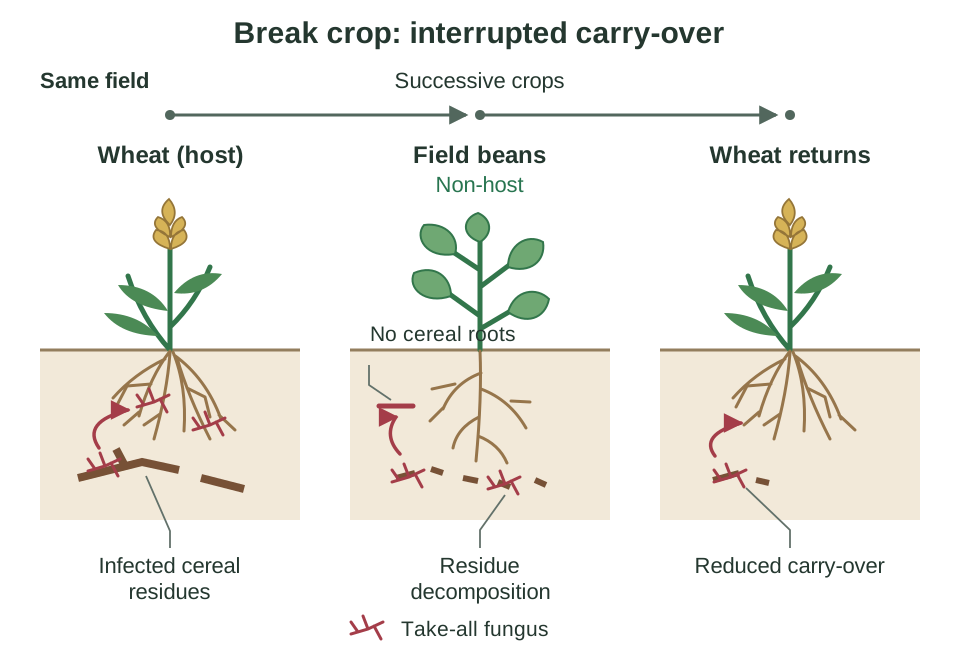
When a grower chooses continuous cereal monoculture instead of a rotation, alternative disease control strategies must be used: planting disease-resistant crop varieties, applying fungicidal seed dressings (e.g. against take-all), operating a planned fungicide spray schedule, or inserting short overwinter catch crops between successive cereal plantings.
Protection Strategies Against Named Diseases
- Fungal Disease: Late Blight in Potatoes (Phytophthora infestans)*:
- Symptoms: Dark brown water-soaked lesions on leaves and white fungal growth on leaf undersides in warm, humid weather.
- Control Strategy: Plant certified, disease-free seed tubers and choose blight-resistant varieties. Spray protectant fungicides preventively before infection occurs, timed to Met Éireann blight warnings. Destroy volunteer potato dumps. Burn off or desiccate foliage (haulms) two to three weeks before harvesting to stop fungal spores washing down through ridges onto clean tubers.
- Bacterial Disease: Blackleg in Potatoes (Pectobacterium)*:
- Symptoms: Inky-black decaying stems, yellowing curled leaves, and soft rotting tubers.
- Control Strategy: There are no chemical sprays available to cure bacterial plant infections. Control is entirely indirect: plant certified disease-free seed, handle tubers carefully to prevent bruising, avoid waterlogged ground, and store harvested tubers in cool, dry, well-ventilated sheds.
- Viral Disease: Barley Yellow Dwarf Virus (BYDV):
- Symptoms: Yellowing (in barley) or reddening (in oats) of leaf tips, stunted root systems, and sterile grain heads.
- Control Strategy: Viruses cannot be eliminated with chemical sprays. Instead, control the aphid vectors (carriers). Delay autumn sowing of winter cereals past peak aphid flight periods (mid-to-late October), control volunteer cereal plants and grass weeds between crops to break the 'green bridge' carrying the virus, choose BYDV-tolerant cereal cultivars, and apply an approved insecticide only if aphid numbers exceed economic damage thresholds.
Notifiable Diseases and Chemical Evaluation
Certain high-consequence pests and pathogens are designated as notifiable diseases by statutory legislation. Farmers are legally required to notify the Department of Agriculture immediately upon suspecting an outbreak so containment procedures can begin. Examples include potato brown rot (a destructive bacterial disease) and the Colorado potato beetle (an invasive insect pest).
While synthetic fungicides and herbicides provide fast, reliable crop protection, overusing them selects for resistant pathogen strains (such as resistant strains of Septoria in wheat), damages non-target beneficial organisms, and risks washing chemicals into waterways. Modern management uses Integrated Pest Management (IPM), prioritising rotation, hygiene, and biological controls, retaining synthetic chemicals as a measured, threshold-driven final option.
Nutrient Matching and Livestock Health Disorders
Crop nutrient applications must be synchronised with crop growth stages. Soil testing dictates base fertiliser requirements: Nitrogen (N) drives leaf development and tillering; Phosphorus (P) promotes early root growth and energy transfer; Potassium (K) regulates water movement and reinforces straw strength.
Forage crop management directly influences the nutrition and metabolic health of livestock:
- Nutritional Advantages: Grazing leafy perennial ryegrass swards or feeding high-digestibility whole-crop cereal silage maximises livestock dry matter intake (DMI), driving daily live-weight gain in beef cattle and milk solids in dairy cows. High-fibre arable by-products like clean barley straw stimulate rumen cud-chewing.
- Grass Tetany (Hypomagnesaemia): Lush, rapidly growing spring grass contains naturally low levels of magnesium, and cattle cannot store magnesium reserves in the body. Spreading heavy dressings of potassium fertiliser or slurry in early spring causes grass to take up excess potassium. High potassium in the animal's diet blocks magnesium absorption across the rumen wall. Blood magnesium plummets, causing muscle tremors, staggering gait, violent convulsions, and sudden death. Prevent grass tetany by avoiding heavy spring potash or slurry on milking pastures, dusting pastures with calcined magnesite (Cal-Mag), adding magnesium to drinking water, or administering slow-release magnesium rumen boluses.
- Nitrate Toxicity: When grass or brassica forage receives heavy nitrogen applications during cold, dull, or drought-stressed weather, the plant takes up nitrogen faster than it can convert it into protein. Nitrate builds up in leaf tissue. When consumed, rumen microbes convert nitrate into toxic nitrite, which stops blood haemoglobin from transporting oxygen. Animals experience rapid breathing, blue-tinted mucous membranes, and death from internal suffocation.
Biotechnology, Plant Breeding, and Trait Transfer
Crop improvement relies on both conventional cross-breeding and modern genetic innovations to introduce pest resistance, drought tolerance, and yield potential.
- Marker-Assisted Selection (MAS): Traditional breeding requires growing hybrid crosses to maturity over multiple generations to observe which plants display desired physical traits. MAS runs a laboratory DNA test on tiny leaf samples from young seedlings to detect specific molecular markers known to sit beside beneficial economic genes (such as disease resistance). The breeder selects only the seedlings carrying the marker, saving years of field trials. No foreign DNA is introduced; it simply speeds up conventional selection.
- Genome Editing: Molecular tools like CRISPR modify an organism's existing DNA with extreme precision. Rather than inserting genetic material from an unrelated species (as in traditional genetic modification), genome editing deactivates or edits the plant's native genes—for instance, switching off a specific susceptibility gene in wheat to make it resistant to powdery mildew.
- Ethical and Economic Issues: Agribusiness patenting of gene-edited crop varieties may leave commercial growers dependent on a few seed corporations. Consumer acceptance and international trade access also vary across export destinations depending on regional regulatory definitions.
- Investigating Trait Transfer: Single-gene traits inherited in simple crosses produce recognizable Mendelian ratios ( in the generation). However, most valuable agronomic traits—such as total grain yield, grain protein percentage, and lodging resistance—are polygenic traits. They are governed by multiple interacting genes whose expression is modified by soil fertility, moisture, and temperature, producing continuous variation along a bell-shaped curve rather than distinct visual categories.
Specified Practical Activities: Field and Laboratory Methods
The Leaving Certificate specification requires students to complete, record, and interpret specific investigations:
1. Effect of Soil and Weather Conditions on Percentage Germination
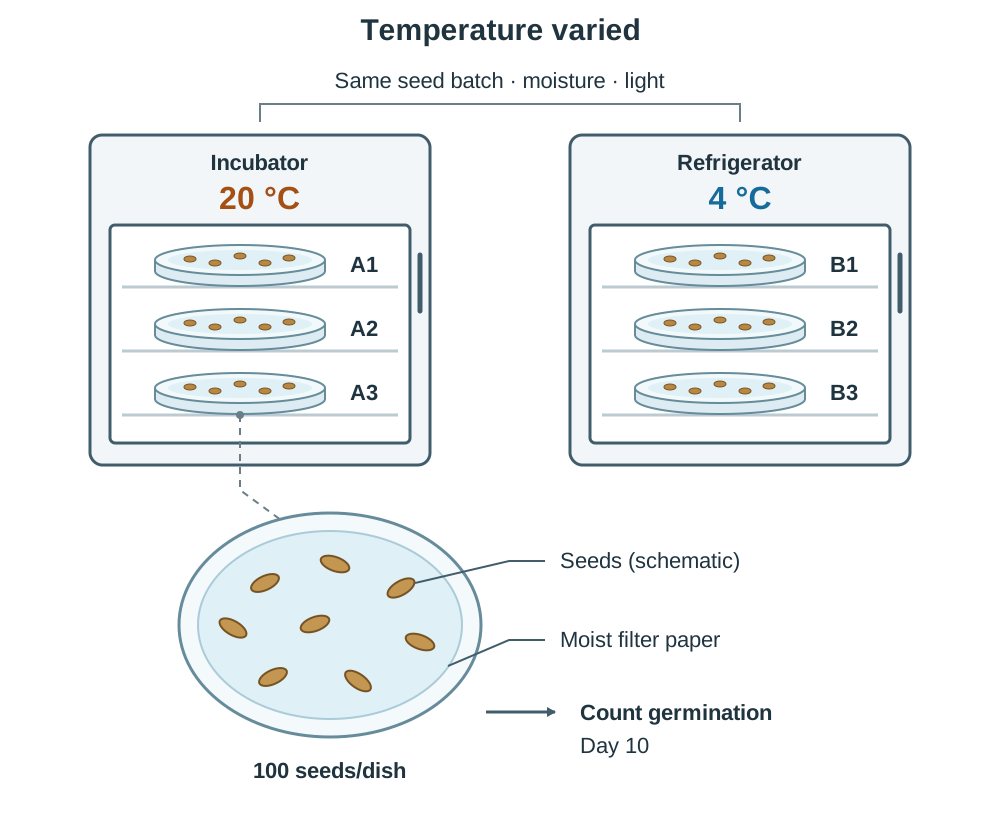
- Method: Place 100 seeds from a single batch onto moist filter paper in Petri dishes or into trays of uniform soil. Place Dish A in an incubator set at 20 °C (representing warm spring soil) and Dish B in a refrigerator at 4 °C (representing cold, early season soil). Supply both with identical moisture volumes and light conditions. Count the number of germinated seeds after 10 days.
- Calculation: .
- Example: If 84 seeds germinate at 20 °C and 37 germinate at 4 °C, percentage germination is and .
- Fair Test Parameters: Independent variable: Temperature. Dependent variable: Number of germinated seeds. Controlled variables: Seed batch, moisture volume, seed count (100). Control: The dish kept at the standard optimum temperature (20 °C). Repeat with three dishes per temperature and calculate an average. Results are quantitative because they are numerical seed counts.
- Significance: Germination is markedly slower and lower at 4 °C. This shows why tillage farmers wait until soil temperatures rise to roughly 6 °C before drilling spring barley.
2. Plant Uniformity: Certified vs. Uncertified Seed
- Method: Sow 50 certified barley seeds and 50 uncertified (farm-saved) barley seeds into separate, identical seedling trays filled with uniform compost. Maintain equal moisture, temperature, and light. Measure the shoot height of every seedling on day 14 using a ruler. Record emergence dates and note any foreign weed seedlings.
- Calculations: Calculate the average seedling height and the range (tallest minus shortest) for both batches. A smaller range indicates higher uniformity.
- Fair Test Parameters: Independent variable: Seed certification status. Dependent variable: Seedling height and emergence timing. Controlled variables: Soil type, moisture, sowing depth (2 cm), temperature. Quantitative measurement of shoot heights.
- Significance: Certified seed usually gives a narrower height range, more even emergence and fewer weed or off-type seedlings. Uniform growth lets sprays and harvesting be timed correctly for the whole field.
3. Botanical Composition of an Old Pasture vs. a New Ley
- Method: Lay out a grid pattern across an old permanent pasture and a newly sown ley. Place a quadrat at ten randomly generated coordinates in each field (never throw a quadrat, as this is unsafe and non-random). In each quadrat, identify all plant species present. Estimate the percentage ground cover of each species or assign an abundance category using the DAFOR scale (Dominant, Abundant, Frequent, Occasional, Rare). To measure dry matter contribution, take random grab cuts to ground level, sort species into piles (perennial ryegrass, clover, weed grasses, broadleaved weeds), dry each pile to constant mass, and calculate the dry botanical percentage.
- Significance: A newly sown ley is dominated by perennial ryegrass and white clover (). An old permanent pasture contains lower ryegrass levels, higher proportions of low-productivity weed grasses (e.g. Yorkshire fog, bent grass), and broadleaved weeds (e.g. docks, buttercups), showing when a sward needs reseeding.
4. Effect of Nutrients on Plant Biomass (Above- and Below-Ground)
- Method: Sow samples of three different plant types (e.g. barley, perennial ryegrass, and white clover) in pots containing nutrient-free washed silica sand. Coat the clover seed with a Rhizobium inoculant (or add a little field soil from a clover pasture) before sowing. Feed one set of pots with a complete nutrient solution (+N, +P, +K), a second set with a solution lacking nitrogen (-N), and a third set lacking phosphorus (-P). Grow for four weeks with identical watering and light. Carefully wash sand from roots over a fine sieve. Cut roots away from shoots with a scalpel. Dry shoot and root portions separately in an oven at 85–100 °C to constant mass. Weigh each on an electronic balance.
- Fair Test Parameters: Independent variable: Nutrient formulation supplied. Dependent variable: Dry mass of shoots and roots. Controlled variables: Sand medium, light, temperature, water volume. Quantitative dry mass data.
- Significance: Lacking nitrogen severely restricts shoot dry biomass in barley and ryegrass, while phosphorus deficiency severely restricts root development across all crops. Inoculated white clover in the -N pots still grows reasonably well, because Rhizobium bacteria in its root nodules fix nitrogen from the air.
5. Measuring Dry Matter (DM) Content of a Crop
- Method: Weigh a clean, dry container to establish tare mass (). Add fresh chopped forage (e.g. grass, whole-crop cereal) and record the combined mass (). Fresh mass . Place the container in an oven set between 85 °C and 100 °C. Remove, cool in a desiccator, and weigh every few hours until two consecutive weighings are identical (constant mass, ). Dry mass .
- Calculation: .
- Result Record Example: Container tare = 50 g; Fresh crop + container = 250 g (Fresh mass = 200 g). Drying: Hour 3 = 104 g; Hour 5 = 92 g; Hour 7 = 90 g; Hour 9 = 90 g (Dry mass = ). DM .
- Significance: Water provides no nutritive feed value. Establishing DM percentage allows farmers to balance livestock feed rations accurately and calculate true field dry matter yields per hectare.
Investigation: Rate of Trait Transfer via Hybridisation
Students investigate how genetic traits transfer across generations by hybridising two plant varieties showing contrasting forms of a single physical characteristic (e.g. purple stems versus green stems in fast-cycling brassicas, or purple flowers versus white flowers in peas).
Practical Investigation Method
- Select two pure-breeding (homozygous) parent varieties differing in one distinct physical trait (e.g. purple-flowered parent and white-flowered parent ).
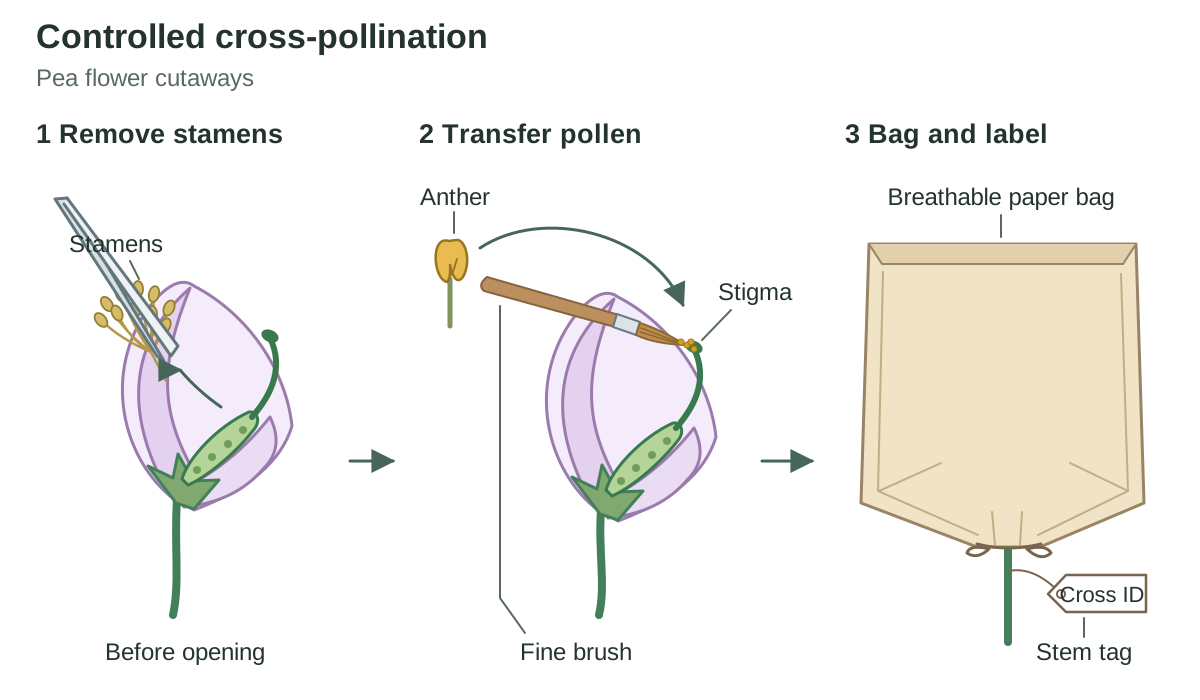
- Before flower buds on the female parent plant open naturally, remove the immature stamens using fine forceps (emasculation) to eliminate any possibility of self-pollination.
- Collect mature pollen from the male parent using a sterile fine paintbrush and transfer it directly onto the sticky stigma of the emasculated female flower. Clearly label the stem tag.
- Enclose the pollinated flower in a breathable paper pollination bag to block windblown pollen and insects.
- Allow seeds to develop and mature fully. Harvest these seeds—this represents the generation.
- Sow the seeds, grow the plants, and record the trait displayed by each plant (all show the dominant purple phenotype, genotype ).
- Allow plants to self-pollinate (peas), or transfer pollen between plants with a paintbrush (brassicas, which cannot self-pollinate). Harvest and sow the resulting seeds.
- Count and record the number of offspring displaying each phenotype.
Transfer Rate Calculation and Interpretation
Worked Example: In an population of 200 pea plants, 150 produce purple flowers and 50 produce white flowers.
This gives a classic Mendelian phenotypic ratio of , confirming that purple petal colour is controlled by a single dominant allele.
Why Experimental Counts Often Deviate from 3:1:
- Small experimental sample size.
- Unequal seed germination or seedling death before scoring.
- Accidental self-pollination during cross-pollination steps.
- Environmental influence modifying trait expression, or complex polygenic inheritance.
Farming Application: Commercial plant breeders use controlled hybrid crosses to transfer valuable traits (e.g. straw stiffness, fungal resistance) into high-yielding crop cultivars.
Farm Safety, Precision Innovation, and Environmental Sustainability
Crop operations involve powerful machinery and hazardous agrochemicals, requiring strict safety precautions:
- Power Take-Off (PTO) Shaft Safety: Rotating tractor PTO shafts driving power harrows, rotavators, and sprayers carry extreme entanglement risks. The PTO shaft must be enclosed along its entire length by an undamaged plastic O-guard with end cones overlapping the tractor and implement shields. Anti-rotation chains must be anchored securely to stationary tractor framework. Always disengage drive, switch off the tractor engine, and remove the ignition key before clearing blockages or inspecting machinery.
- Chemical Application Safety: Concentrated pesticides, herbicides, and fungicides present severe poisoning and skin-absorption hazards. By law, crop protection chemicals may only be applied by a trained, registered professional user using an officially tested and certified sprayer. Operators must wear full Personal Protective Equipment (PPE: nitrile gloves, face visor, chemical overalls, rubber boots), mix chemicals in well-ventilated areas, triple-rinse empty chemical containers into the sprayer tank, and respect statutory buffer zones bordering streams, drains, and hedgerows.
- Machinery Stability: Work across steep slopes with tractors fitted with an approved Roll-Over Protective Structure (ROPS) or safety cab, and always wear a seatbelt to prevent crush injuries during a overturn.
Sustainable Development and Modern Innovations
Sustainable crop production generates profitable food yields without depleting soil quality, water systems, or biodiversity:
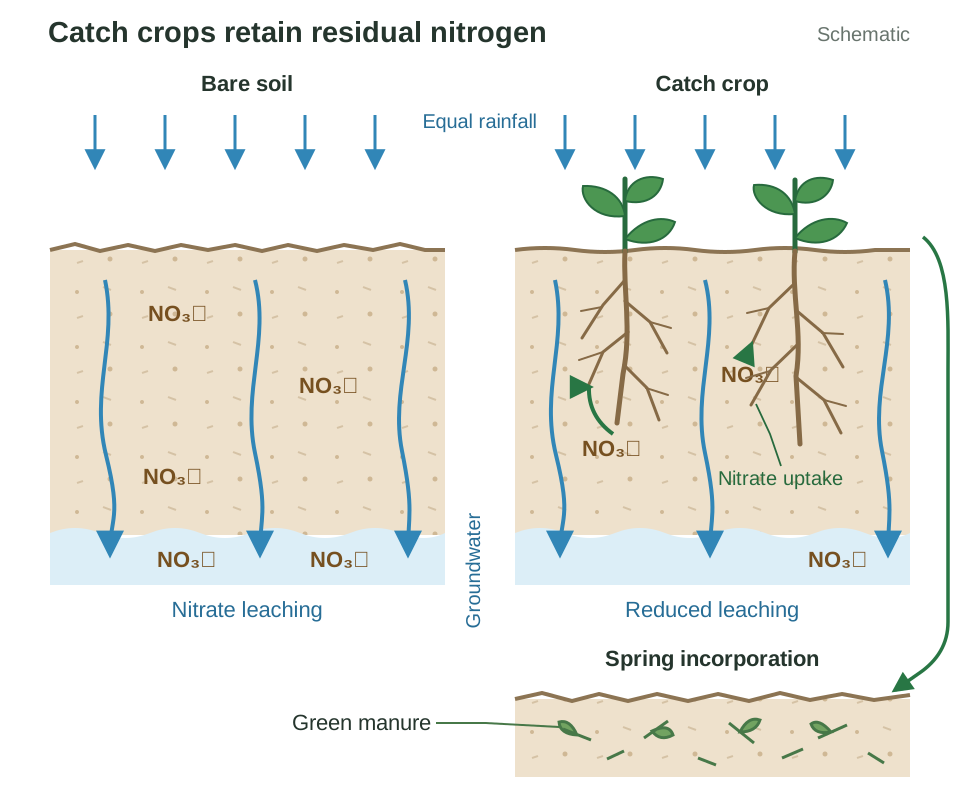
- Catch Crops and Green Cover: Leaving bare tilled soil over winter allows rainfall to leach mobile nitrate into groundwater. Sowing fast-growing catch crops (e.g. mustard, forage rape, phacelia) immediately following harvest absorbs residual soil nitrogen. Ploughing this green manure down in spring returns captured nitrogen and adds organic matter to improve soil crumb structure.
- Reduced Cultivation (Min-Till): Minimising tillage operations leaves crop residues on the surface, lowers tractor fuel consumption, protects earthworm networks, and reduces soil erosion risks.
- Precision Agriculture: Satellite GPS systems on modern tractors guide steering to prevent seed and spray overlapping. Variable-rate fertiliser spreaders use digital soil maps and optical crop sensors to apply nitrogen exclusively where plants need it, preventing wasteful run-off.
- Decision Support Forecasting: Using national forecasting tools like Met Éireann blight alerts allows farmers to time fungicide applications precisely to periods of high disease risk, avoiding unnecessary calendar-based spraying.
Key terms
- Tilth
- The physical condition of a prepared seedbed, ideally consisting of a crumb structure (2–5 mm) that balances soil aeration, moisture retention, and seed-to-soil contact.
- Capillarity
- The upward movement of water through narrow, continuous pore spaces from the wetter subsoil to the germinating seed embryo in the surface seedbed.
- Certified Seed
- Seed officially inspected and certified by DAFM to meet legal minimum standards of germination, analytical purity and varietal purity, with strict limits on weed seeds such as wild oats.
- Tillering
- The production of leafy side shoots from the base of a grass or cereal plant, increasing plant density, ground cover, and potential grain head numbers.
- Crop Rotation
- The planned sequence of growing different, unrelated crop families on the same field over successive years to break pest, weed, and disease cycles.
- Break Crop
- A non-host crop grown in a rotation to starve out specialised, soil-borne pests or pathogens that affect the primary economic crop.
- Direct Control
- A crop protection measure that directly targets and destroys the offending pest, weed, or disease organism, typically using synthetic chemical sprays.
- Indirect Control
- A management practice that creates conditions unfavourable to pests, weeds, or diseases without directly targeting them, such as crop rotation or stubble cleaning.
- Integrated Pest Management (IPM)
- An ecosystem-based strategy combining rotation, resistant varieties, hygiene, and biological controls, reserving synthetic chemical sprays as a monitored last resort.
- Dry Matter (DM)
- The solid plant matter remaining after all internal and capillary water has been evaporated by drying plant material to constant mass.
- Constant Mass
- A state achieved during moisture testing where consecutive weighings following repeated oven-drying intervals remain identical, confirming all water has evaporated.
- Hypomagnesaemia (Grass Tetany)
- A fatal metabolic disorder in ruminants caused by low blood magnesium, frequently triggered when high dietary potassium in lush spring grass blocks magnesium absorption in the rumen.
- Nitrate Toxicity
- Livestock poisoning occurring when ruminants consume lush forage laden with unassimilated nitrates, which rumen microbes convert to nitrite, blocking oxygen transport in blood.
- Catch Crop
- A fast-growing crop sown immediately after harvest to absorb residual soil nutrients over winter, preventing nitrate leaching and building organic matter when incorporated.
- Marker-Assisted Selection (MAS)
- A plant breeding technique using laboratory DNA assays to identify economic genes in young seedlings via linked molecular markers, accelerating conventional selection without genetic modification.
- Genome Editing
- A molecular breeding method, such as CRISPR, that makes precise targeted modifications or deactivations directly within an organism's own native genome without inserting foreign DNA.
- Polygenic Trait
- An economic characteristic controlled by multiple interacting gene loci, resulting in continuous quantitative variation across a population rather than distinct phenotypic categories.
- Notifiable Disease
- A severe, highly contagious plant pathogen or pest that landholders are legally required to report immediately to the Department of Agriculture upon detection.
Check yourself
State the minimum legal DAFM certified seed standards for cereal germination and cereal analytical purity.
Minimum 85% germination capacity and minimum 98% analytical purity.
In a germination test, 45 out of 60 seeds sprout successfully. Calculate the percentage germination.
(45 ÷ 60) × 100 = 75% germination.
Why must small perennial ryegrass seed be sown shallower (1–2 cm) than cereal grains (3–5 cm)?
Ryegrass seeds carry tiny endosperm energy reserves; if sown too deep, energy reserves run out before the shoot reaches sunlight.
Give two differences between conventional and organic weed control in an arable crop.
Conventional systems apply synthetic chemical herbicides; organic systems rely on crop rotations, mechanical comb harrowing, and stale seedbeds.
How does spreading heavy slurry or potash in early spring trigger grass tetany in lactating cows?
Lush spring grass is naturally low in magnesium; excess dietary potassium in the grass blocks magnesium absorption across the rumen wall, depressing blood magnesium.
Where does the take-all fungus (Gaeumannomyces graminis) survive between cereal crops, and how does a break crop control it?
It survives on infected root debris and cereal stubble. A non-host break crop like oilseed rape deprives the fungus of host cereal roots, causing the fungal mycelium to die off.
In an F2 generation of a hybridisation cross, 90 out of 120 plants display purple flowers. Calculate the rate of trait transfer.
(90 ÷ 120) × 100 = 75% transfer rate (displaying a 3:1 ratio).
Why must oven drying temperatures for plant dry matter determinations not exceed 100 °C?
Temperatures above 100 °C scorch and burn plant volatile organic compounds rather than just evaporating water, causing an artificially low dry mass reading.