

On Irish livestock farms, getting cows and ewes back in calf or in lamb on time is what drives output and profit. A cow that calves once every 365 days produces more milk or beef over her lifetime than one that slips to 400 days. Understanding the mammalian reproductive cycle means tracking the animal across her entire year: the hormonal control of the oestrous cycle, heat detection, fertilisation by natural service or artificial insemination (AI), pregnancy, parturition, and newborn care. This note covers the comparative reproductive physiology of cattle and sheep, supported by the sow as an optional comparison, alongside breeding targets, herd health, and the evaluation of modern breeding technologies.
Comparative Reproductive Benchmarks and Tract Anatomy
Every livestock enterprise works against biological clocks set by the species. Committing the baseline numbers to memory makes the underlying physiology much easier to interpret.
Comparative Reproductive Benchmarks
| Parameter | Cow | Ewe | Sow (Optional 3rd species) |
|---|---|---|---|
| Oestrous Cycle Length | 21 days (range 18–24) | 17 days (range 14–19) | 21 days |
| Duration of Oestrus (Heat) | ~18 hours (range 12–24) | 24–36 hours | 48–72 hours (2–3 days) |
| Ovulation Timing | 10–12 hours after heat ends | Near end of heat | 36–44 hours after heat begins |
| Gestation Length | 283 days (~9 months) | 147 days (~5 months) | 114 days (3 months, 3 weeks, 3 days) |
| Breeding Season | Non-seasonal (cycles all year) | Seasonal (short-day breeder; autumn) | Non-seasonal (cycles all year) |
The Female Reproductive Tract
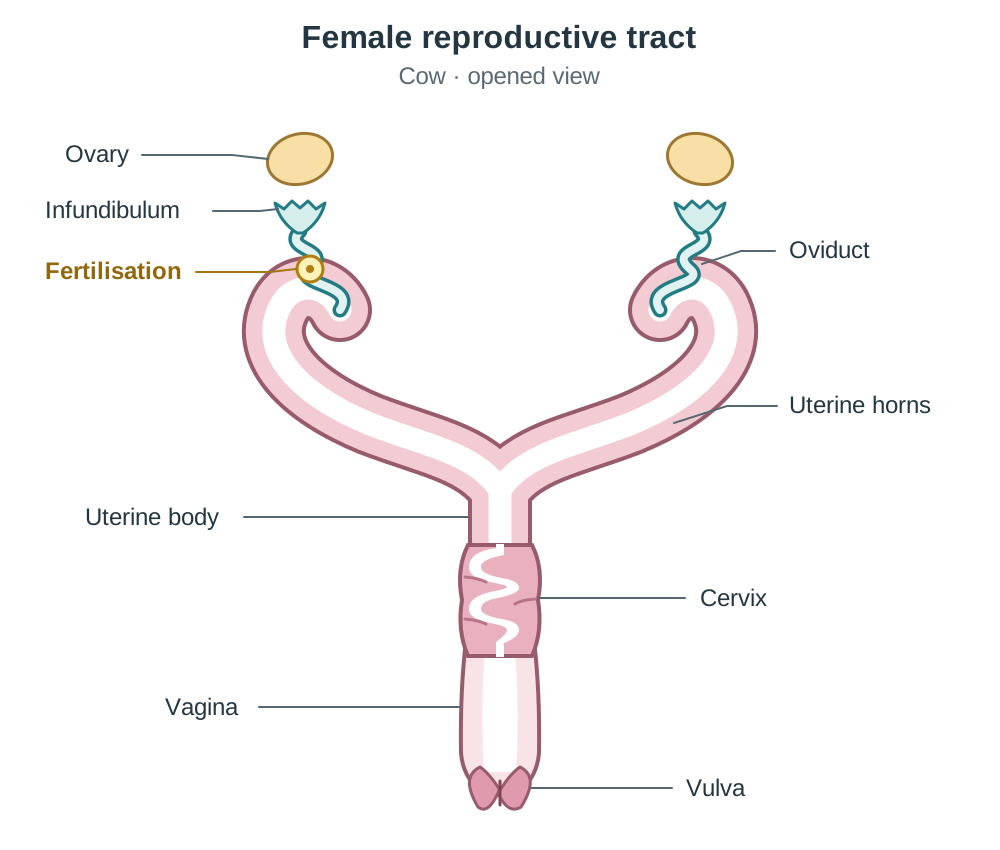
In farm mammals, the female tract consists of the vulva, vagina, cervix, uterus (with two uterine horns and a small body), oviducts, and ovaries.
Examiners regularly ask for a labelled diagram or an ordered description of this tract. Be able to sketch and trace the path from outside inwards:
- Ovaries: Paired primary organs that produce ova (eggs) inside fluid-filled Graafian follicles and secrete the sex hormones oestrogen and progesterone.
- Oviduct: The narrow, coiled tube with a funnel-shaped opening (infundibulum) catching the released egg. The oviduct is the exact site of fertilisation.
- Uterus: Composed of two horns and a uterine body. It provides the vascular site for embryo implantation and foetal development. If pregnancy is not recognised, the uterine endometrium secretes prostaglandin F2-alpha.
- Cervix: A rigid, muscular neck with tightly interlocking cartilaginous rings. It acts as a physical barrier protecting the sterile uterus. During pregnancy, it is sealed with a thick mucus plug, dilating only during heat and birth.
- Vagina: The elastic muscular tube that acts as the receptacle for semen during natural mating and forms the birth canal during parturition.
- Vulva: The external opening that swells and reddens under the influence of oestrogen, giving a visible cue that standing heat is approaching.
The Male Reproductive Tract
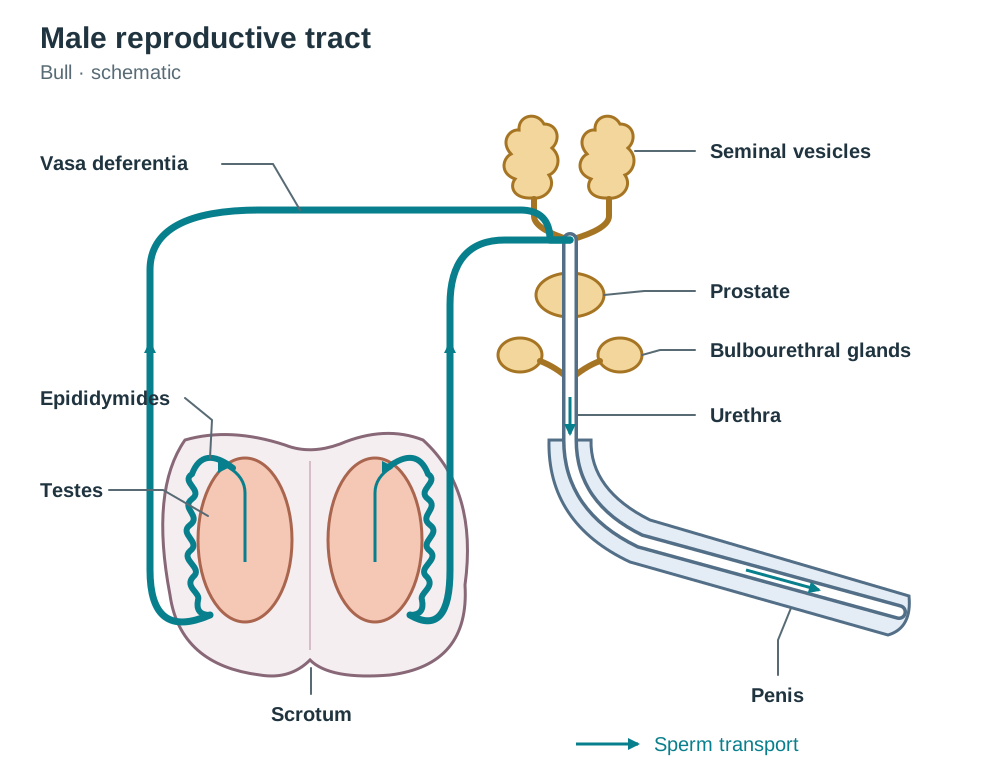
The male tract produces viable spermatozoa, suspends them in protective fluid, and deposits semen into the female.
- Testes: Suspended externally in the scrotum, which maintains testicular temperature below core body temperature to permit viable spermatogenesis. Testes produce sperm in the seminiferous tubules and testosterone in Leydig cells to govern male libido.
- Epididymis: Coiled tube on the edge of each testis where sperm mature, gain motility, and are stored.
- Vas deferens: The muscular sperm duct that transports motile sperm from the epididymis to the urethra during ejaculation.
- Accessory Glands: The seminal vesicles, prostate, and bulbourethral glands secrete seminal fluid rich in fructose (energy) and alkaline buffers to neutralise vaginal acidity.
- Penis and Urethra: Delivers semen into the front of the vagina, just outside the cervix, during natural service.
Practical Anatomy in Action
- In a vasectomy, a vet severs and ties off a section of the vas deferens. The vasectomised teaser bull or ram produces normal testosterone and shows full libido to seek out and mount females in heat, but ejaculates no sperm.
Endocrine Control of the Oestrous Cycle and Fertilisation
The oestrous cycle is the regular, hormonally controlled cycle of changes in the female reproductive tract that prepares the animal for mating and pregnancy. If fertilisation does not happen, the uterine lining is reabsorbed (unlike the shedding in a human menstrual cycle) and a new cycle begins.
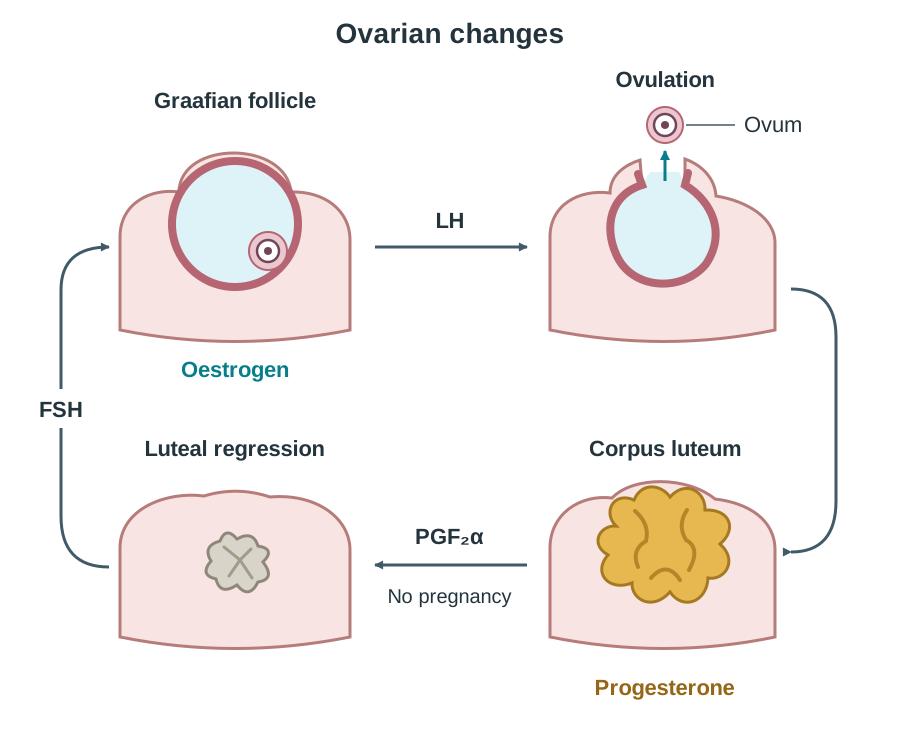
The Hormone Sequence
To remember the chain of hormones controlling the cycle, use this order:
- Follicle grows under FSH.
- Oestrogen makes her bull.
- LH bursts the follicle (ovulation).
- Corpus luteum makes progesterone.
- Prostaglandin kills the corpus luteum if no calf is conceived.
| Hormone | Gland of Origin | Target Tissue | Primary Function |
|---|---|---|---|
| GnRH (Gonadotrophin-Releasing Hormone) | Hypothalamus | Anterior Pituitary | Stimulates pulses of FSH and LH release |
| FSH (Follicle Stimulating Hormone) | Anterior Pituitary | Ovary | Stimulates development and growth of ovarian follicles |
| Oestrogen | Graafian Follicle | Brain, Uterus, Pituitary | Induces standing heat behaviour; triggers the pre-ovulatory LH surge |
| LH (Luteinising Hormone) | Anterior Pituitary | Ovary | Triggers ovulation; transforms the ruptured follicle into the corpus luteum |
| Progesterone | Corpus Luteum | Uterus, Brain | Maintains pregnancy; thickens endometrium; blocks GnRH, FSH, and LH release |
| Prostaglandin F2-alpha | Uterine Endometrium | Corpus Luteum | Causes luteolysis (destruction of the corpus luteum) if no embryo is present |
Chronological Stages of the Bovine Cycle
- Oestrus (Day 0): Standing heat. Lasts on average about 18 hours in the cow. High oestrogen triggers behavioural receptivity—the cow stands firmly to be mounted. Peak oestrogen triggers the surge of LH.
- Metoestrus (Days 1–4): The cow ovulates 10–12 hours after standing heat has ended. Under LH, the collapsed Graafian follicle luteinises into a corpus luteum and begins releasing progesterone.
- Dioestrus (Days 5–17): The luteal phase. Progesterone remains high, suppressing further follicular waves and keeping the cervix closed.
- Proestrus (Days 18–21): Around day 16–17, if no embryo is detected, the endometrium releases prostaglandin F2-alpha. This causes luteolysis. As progesterone crashes, pituitary inhibition lifts, FSH rises, and a new Graafian follicle matures to produce oestrogen for the next heat.
Maternal Recognition of Pregnancy
If the cow conceives, the live embryo enters the uterus and produces a chemical signal (interferon-tau in cattle) by day 15–17. This signal blocks the endometrium from releasing prostaglandin F2-alpha. Because luteolysis is blocked, the corpus luteum survives and progesterone stays high, preventing heat and maintaining pregnancy for 283 days. If the embryo dies before day 17, prostaglandin is released as normal and the cow returns to heat on day 21. If the embryo dies later (days 25–35), the cycle is delayed, leading to an irregular repeat.
Fertilisation: Step by Step
- Sperm swim from the site of deposition up through the cervix and horns into the oviduct.
- In the female tract, sperm undergo capacitation (6–8 hours), a biochemical change on the sperm head enabling it to penetrate an egg.
- In the upper oviduct, sperm meet the ovum. A single sperm binds to the outer glycoprotein coat (the zona pellucida) and releases acrosomal enzymes to digest through it.
- The zona pellucida instantly hardens to block other sperm (preventing polyspermy).
- Haploid sperm and ovum nuclei fuse to create a diploid zygote ( in cattle).
- The zygote undergoes cleavage into a blastocyst, moves into the uterus by day 4–5, and begins implantation into the endometrium around day 18–21.
Breeding Management: Cattle and Sheep Compared
Cattle and sheep differ fundamentally in seasonality and heat duration, demanding distinct management routines.
Cattle: Non-Seasonal Breeding and the AM/PM Rule
Cattle are non-seasonal breeders: they are polyoestrous, which means they come into heat again and again at regular intervals all year round until they become pregnant. After calving, cows undergo roughly three to four weeks of natural anoestrus while the uterus involutes.
Because the cow ovulates 10–12 hours after standing heat ends, timing insemination is critical:
- Frozen-thawed semen requires 6–8 hours for capacitation and survives 18–24 hours.
- The released ovum survives only 8–10 hours.
- Inseminating too early means sperm die before ovulation; inseminating too late means the ovum degrades before sperm capacitate.
Farmers apply the AM/PM rule:
Detecting Standing Heat in Cattle
A missed heat costs 21 days. The primary sign is standing firmly to be mounted by herdmates. Secondary signs include chin resting, restlessness, bellowing, clear mucus hanging from the vulva ('bulling string'), and a red, swollen vulva. Aids include:
- Tail paint: Disturbed or rubbed paint over the tailhead indicates the cow was mounted.
- Pressure sensors (e.g. Kamar): Glued to the tailhead; mounting pressure triggers a coloured dye release.
- Teaser bull with chin-ball: A sterile bull mounts cows in heat, marking their loins with ink.
- Activity collars/pedometers: Electronic monitors that detect the two- to four-fold increase in walking activity typical of oestrus.
Sheep: Short-Day Seasonality and Flushing
Lowland sheep in Ireland are seasonally polyoestrous (short-day breeders). In autumn, declining day length is detected by the eyes, causing the pineal gland to secrete elevated melatonin. Melatonin triggers the hypothalamus to release GnRH pulses, restarting cycles so that spring lambs coincide with pasture growth.
- Flushing: Shifting ewes from maintenance onto an improving plane of nutrition (0.3–0.5 kg/day of concentrates or good aftermath grass) 2–3 weeks before mating and 2–3 weeks into service. It raises blood glucose and insulin-like growth factors, stimulating the pituitary to release more FSH. This increases ovulation rate, boosts embryo survival, and gives a more compact lambing spread with more twin births. Only ewes below target condition (BCS < 3.0) respond.
- The Ram Effect: Introducing a novel mature ram to ewes isolated from rams for a month triggers an immediate LH surge, bringing the flock into synchronised heat roughly 17–24 days later.
- Raddling: Fitting a ram with a coloured chalk harness to mark mounted ewes. Changing the colour every 16–17 days tracks repeats and groups ewes by expected lambing week.
Breeding Male Management and Safety
- Ratios: Run 1 mature bull to 30–40 cows (or 1 yearling bull to 15–20); run 1 ram to 40–50 ewes.
- Pre-breeding check: Ensure males achieve BCS 3.5–4.0, feet are pared sound, teeth are intact, and testes are firm, equal-sized, and free of lumps.
- Safety: Never turn your back on a bull; maintain an escape route. House stock bulls in dedicated pens with feed access from outside, and use a nose ring and bull pole when leading. A protective calving gate is essential when handling newly calved cows.
Fertilisation Methods: Natural Service, AI, and Biotechnologies
Livestock producers choose between natural service and assisted reproductive technologies depending on labour, facilities, and genetic goals.
Natural Service versus Artificial Insemination
| Management Factor | Natural Service | Artificial Insemination (AI) |
|---|---|---|
| Site of Semen Placement | Vagina (cranial end, outside cervix) | Body of the uterus (cattle) or uterine horns (laparoscopic sheep AI) |
| Genetic Progress | Limited to the bull or ram on farm | Access to top global sires with proven high indexes |
| Heat Detection | Done naturally by the male | Demands active observation by the farmer 3–4 times daily |
| Disease Risk | Venereal spread possible (e.g. Campylobacter, Trichomonas) | Biosecure; semen certified disease-free and stored in antibiotic extenders |
| Traceability and Records | Exact service date and sire often unknown in multi-sire groups | Exact insemination date, straw batch, and sire recorded for ICBF / AIM |
| Capital Cost | Upfront cost of purchasing, feeding, and fencing a bull | Straw and technician fee per service; no bull maintenance costs |
| Farm Safety | High risk; aggressive bulls cause frequent farm injuries | Eliminates the need to keep an intact stock bull on farm |
Insemination Techniques
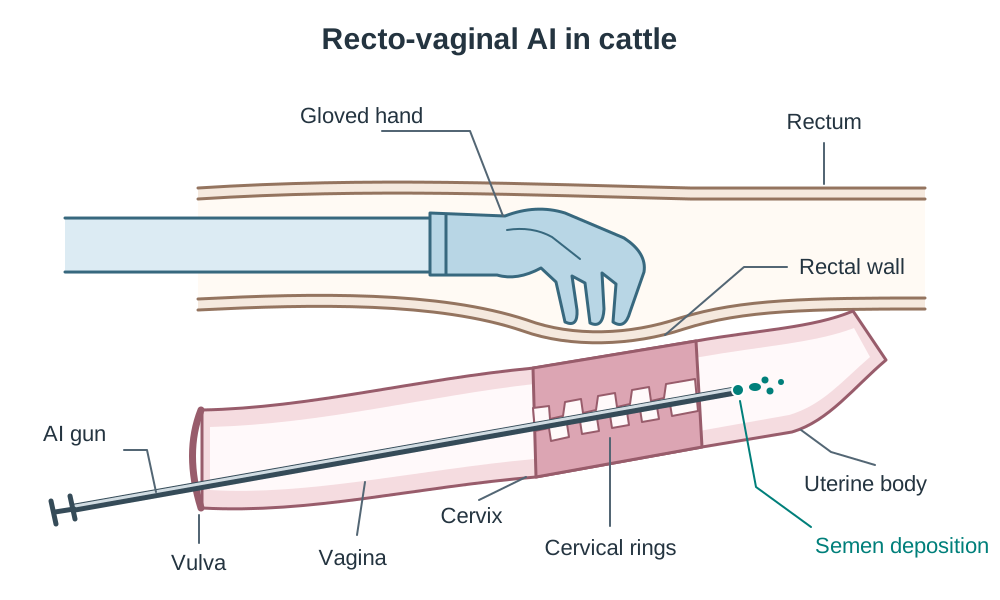
- Cattle (Recto-vaginal AI): The operator inserts a gloved arm into the rectum to locate and steady the cervix through the rectal wall. The AI straw gun enters through the vulva and vagina at an upward angle, passes through the cervical rings, and deposits semen directly into the body of the uterus.
- Sheep (Laparoscopic AI): The ewe's cervix has tight, interlocking rings that prevent an AI gun from entering the uterus safely. While cervical AI works with fresh semen, cryopreserved semen must be injected directly into the uterine horns by a vet using a laparoscope and needle through a small abdominal incision.
Oestrus Synchronisation Protocols
Synchronisation coordinates cycles to allow fixed-time AI (FTAI) and compact calving.
- Cattle: Prostaglandin F2-alpha injections cause luteolysis of an active corpus luteum (days 5–16). In practice, an 11-day double-injection protocol ensures that almost all cycling cattle respond and come into heat together 2–4 days after the second dose. Cows in anoestrus (with no corpus luteum) will not respond.
- Sheep: An intravaginal polyurethane sponge impregnated with synthetic progestagen is inserted for 12–14 days, acting like an artificial corpus luteum to block natural FSH and LH. Withdrawing the sponge drops progesterone sharply. An injection of PMSG (Pregnant Mare's Serum Gonadotrophin, an FSH analogue) at removal triggers follicle growth, bringing ewes into standing heat within 36–48 hours.
Advanced Biotechnologies
- Sexed Semen: Flow cytometry sorts X-bearing (female) and Y-bearing (male) sperm based on DNA mass, delivering over 90% female calves. Conception rates are typically slightly lower than conventional semen, making accurate heat detection essential.
- Embryo Transfer (ET):
- An elite donor cow is superovulated using FSH injections to release multiple eggs.
- She is inseminated with semen from an elite bull.
- Seven days later, embryos are non-surgically flushed from her uterus with saline and graded under a microscope.
- Viable embryos are transferred into synchronised recipient (surrogate) cows or frozen in liquid nitrogen.
- This allows one superior cow to produce dozens of high-value calves per year.
Lifecycle Targets, Reproductive Efficiency, and Herd Health
Maintaining a profitable enterprise requires meeting developmental milestones and protecting animals against reproductive failure.
Puberty and Replacement Breeding Targets
Puberty is the age when an animal first releases viable gametes and begins cycling. It depends more on liveweight than chronological age.
- Dairy Heifers: Target service at 15 months so she calves at 24 months. She must reach 60% of her mature bodyweight at service (~330–350 kg for a Holstein Friesian) and 90% at calving. Calving at 24 months gives an extra lifetime lactation and lower rearing costs; serving an underweight heifer causes severe calving difficulty (dystocia).
- Ewe Lambs: Breed only if they reach 60% of mature ewe weight (40–45 kg) by autumn mating; otherwise, carry them over to 18 months.
Calving Interval and Herd Targets
The target calving interval is 365 days (one calf per cow per year).
Allowing 30–40 days for the uterus to heal (uterine involution), the farmer has only two or three 21-day cycles to get the cow back in calf. Every day beyond 365 days costs roughly €2.00–€4.50 per cow per day in lost yield and extra feed.
Key herd targets:
- Calving interval of 365 days.
- 6-week calving rate of at least 90%.
- Empty (not-in-calf) rate under 10% after a 12-week breeding season.
Pregnancy Diagnosis and Parturition
- Pregnancy Diagnosis: Ultrasound scanning from day 30–35 in cows confirms a heartbeat; scanning ewes at 45–90 days confirms litter size so the farmer can feed singles, twins, and triplets separately.
- Signs of Imminent Calving/Lambing: The udder springs and fills with colostrum, pelvic ligaments slacken causing the tailhead to sink, the vulva swells and discharges clear mucus, and the female separates from the group and shows restlessness.
- Stages of Parturition: (1) Dilation of the cervix; (2) Expulsion of the foetus (normal presentation: head resting on two extended front hooves); (3) Expulsion of the placenta (within 6–8 hours). A retained placenta past 12–24 hours requires veterinary care to prevent uterine infection (metritis).
Care of the Newborn and Colostrum
Clear fluid from mouth and nostrils, dip the navel in iodine solution to block navel ill and joint ill, and feed colostrum immediately. Colostrum contains concentrated antibodies (immunoglobulins), energy, and vitamins, conferring essential passive immunity.
Apply the 1-2-3 rule for calves:
- 1st milking colostrum only.
- Within 2 hours of birth.
- At least 3 litres consumed (about 8.5% of bodyweight).
Antibody absorption across the gut wall falls rapidly after 6 hours and stops entirely by 24 hours. Lambs require ~50 ml colostrum per kg bodyweight within two hours.
Infertility and Reproductive Diseases
Common causes of infertility include low Body Condition Score (<2.75 at service causing anoestrus), trace mineral deficiencies (copper, selenium, iodine), sub-fertile males, and infectious diseases:
- Bovine Viral Diarrhoea (BVD): Viral infection causing embryo death, abortion, and persistently infected (PI) calves. Controlled by tag-and-test eradication, tissue testing, and vaccination.
- Leptospirosis: Bacterial disease causing abortion storms and milk drop. It is a dangerous zoonosis causing severe flu and kidney damage (Weil's disease) in humans. Vaccinate stock and wear gloves.
- Enzootic Abortion of Ewes (EAE / Chlamydia):* Most common cause of infectious sheep abortion. It is zoonotic; pregnant women must never handle lambing ewes or aborted tissues.
- Toxoplasmosis: Protozoan spread via cat faeces contaminating sheep feed; causes mummified foetuses and abortion. Controlled by vaccination and vermin control.
Genetics, Traceability, and Ethical Evaluation
Selecting animals on genetic indexes drives permanent, cumulative improvements in fertility alongside production.
Genetic Selection Indexes
- Economic Breeding Index (EBI): A single figure ranking dairy animals on expected extra profit per lactation of their progeny. The two largest components are the milk production sub-index and the fertility sub-index (which rewards short calving intervals and better cow survival).
- Beef Indexes: The Irish Cattle Breeding Federation (ICBF) provides a 1- to 5-star rating for the Replacement Index (breeding maternal traits: fertility, milk, calving ease) and the Terminal Index (slaughter traits: carcase weight, conformation, feed efficiency).
- Progeny Testing versus Genomic Selection: Progeny testing assesses a sire based on the actual recorded performance of his milking daughters or finished carcases. It is highly accurate but slow (taking 4–5 years). Genomic selection analyses the calf's DNA markers at birth to estimate breeding values immediately, halving the generation interval.
Ethical and Welfare Evaluation of Reproductive Technologies
Under Strand 1.3, students must evaluate ethical issues in agriculture using balanced evidence:
- Arguments in favour: Synchronisation creates compact calving, allowing farmers to supervise births closely, reduce calf mortality, and match herd demand to spring grass growth. Sexed semen dramatically reduces the birth of surplus male dairy calves, solving a significant animal welfare and disposal dilemma.
- Arguments against: Over-reliance on hormonal protocols can mask underlying poor stockmanship or chronic nutritional deficits. Laparoscopic AI in sheep is an invasive surgical procedure requiring sedation and abdominal puncture. Extreme genetic selection for milk yield has historically compromised cow body condition, fertility, and longevity.
- Reasoned conclusion: Reproductive technologies are ethical and defensible when applied under veterinary oversight to improve farm safety and animal welfare, provided they complement rather than replace good husbandry and balanced nutrition.
Key terms
- Oestrous cycle
- The regular, hormonally controlled cycle of changes in the female reproductive tract that prepares the animal for mating and pregnancy; it lasts about 21 days in the cow and 17 days in the ewe.
- Oestrus
- The distinct stage of sexual receptivity ('standing heat') during the oestrous cycle when the female stands firmly to be mounted.
- Ovulation
- The release of a mature ovum from a ruptured Graafian follicle on the ovary into the oviduct, triggered by a surge of luteinising hormone.
- Corpus luteum
- The temporary endocrine gland formed on the ovary from the collapsed Graafian follicle following ovulation; it secretes progesterone.
- Luteolysis
- The regression and destruction of the corpus luteum brought about by prostaglandin F2-alpha released from the non-pregnant uterine endometrium.
- Capacitation
- The biochemical changes spermatozoa must undergo in the fluids of the female reproductive tract (taking 6–8 hours) before gaining the ability to fertilise an ovum.
- AM/PM rule
- The management guide for timing artificial insemination in cattle: cows observed in standing heat in the morning are inseminated that evening, and cows seen in the evening are inseminated the following morning.
- Flushing
- The practice of improving the plane of nutrition fed to ewes 2–3 weeks prior to mating and into service to elevate ovulation rates and multiple births.
- Colostrum
- The thick, nutrient-rich first milk secreted by the mammary gland after parturition, packed with maternal antibodies that give the newborn passive immunity.
- Calving interval
- The time in days between one calving and the next; the target interval for dairy and suckler herds is 365 days.
- Polyoestrous
- Describing an animal that experiences continuous, repeating oestrous cycles throughout the entire year if not pregnant (e.g. cattle).
- Short-day breeder
- A seasonally polyoestrous animal (e.g. sheep) whose oestrous cycles are triggered in late summer and autumn by increasing melatonin levels caused by shortening daylight.
- Laparoscopic AI
- A minor surgical artificial insemination technique in sheep where frozen-thawed semen is injected directly into the uterine horns via an endoscope.
- Zoonosis
- An infectious disease that can be transmitted naturally from vertebrate animals to humans (e.g. leptospirosis, enzootic abortion).
Check yourself
What is the average length of the oestrous cycle and the duration of standing heat in (a) a cow and (b) a ewe?
(a) Cow: 21-day cycle, ~18 hours heat. (b) Ewe: 17-day cycle, 24–36 hours heat.
Why must a newborn calf receive colostrum within the first two hours of life?
The calf is born with no antibodies of its own; colostrum provides maternal antibodies for passive immunity, and the calf's intestinal wall stops absorbing intact immunoglobulins after 24 hours (with absorption dropping sharply after 6 hours).
What are the target age and bodyweight requirements for serving a dairy replacement heifer?
15 months of age and approximately 60% of mature bodyweight (~330–350 kg), ensuring she calves at 24 months.
Why does standard non-surgical AI work poorly with frozen semen in sheep?
The ewe's cervix has tight, interlocking cartilaginous rings that prevent an AI catheter from passing into the uterus, requiring laparoscopic AI directly into the uterine horns.
A cow is observed in standing heat at 20:00 on Thursday evening. When should she receive AI?
The following morning (Friday AM), between 07:00 and 10:00, under the AM/PM rule.
Which hormone causes the destruction of the corpus luteum, and which tissue secretes it?
Prostaglandin F2-alpha, secreted by the non-pregnant uterine endometrium.
How many days does a dairy cow have between calving and conceiving to maintain a 365-day calving interval?
82 days (365 days − 283 days gestation).
Name one major infectious cause of abortion in sheep and identify the human health risk associated with it.
Enzootic abortion of ewes (EAE / Chlamydia) or Toxoplasmosis; both are zoonoses that pose severe risks of miscarriage or illness to pregnant women.