

Classification means sorting living things into groups based on shared features. On the farm, it helps you identify grasses, crops, weeds, and animal breeds, and choose the right variety or cross for your land, management system, and market.
Cellular Organisation: Comparing Plant and Animal Cells
Living agricultural organisms are divided into two fundamental groups based on cell structure: prokaryotes and eukaryotes.
Prokaryotes lack a membrane-bound nucleus and membrane-bound organelles. Their genetic material is a circular loop of DNA floating freely in the cytoplasm. The nitrogen-fixing bacterium Rhizobium in clover root nodules and mastitis-causing bacteria like Streptococcus uberis are farm-critical prokaryotes. Eukaryotes, which include all farm crops, livestock, and fungi, have a distinct nucleus surrounded by a nuclear membrane, along with specialised organelles.
Plant and Animal Cell Structures
| Feature | Plant Cell | Animal Cell | Role on the Farm |
|---|---|---|---|
| Cell wall | Present (made of cellulose; freely permeable) | Absent | Gives rigidity to grass and crop stems, allowing swards to stand upright. |
| Cell membrane | Present (semi-permeable) | Present (semi-permeable) | Controls which minerals, water, and nutrients enter or leave the cell. |
| Vacuole | Large, permanent central vacuole | Small, temporary vacuoles | Stores cell sap (water and minerals) and maintains internal turgor. |
| Chloroplasts | Present in leaves and green stems | Absent | Contain chlorophyll, which traps light energy to synthesise glucose by photosynthesis. |
| Mitochondria | Present | Present (abundant in active tissues like muscle) | Release energy through aerobic respiration to power growth and maintenance. |
| Ribosomes | Present | Present | Assemble amino acids into proteins for plant tissue or animal muscle growth. |
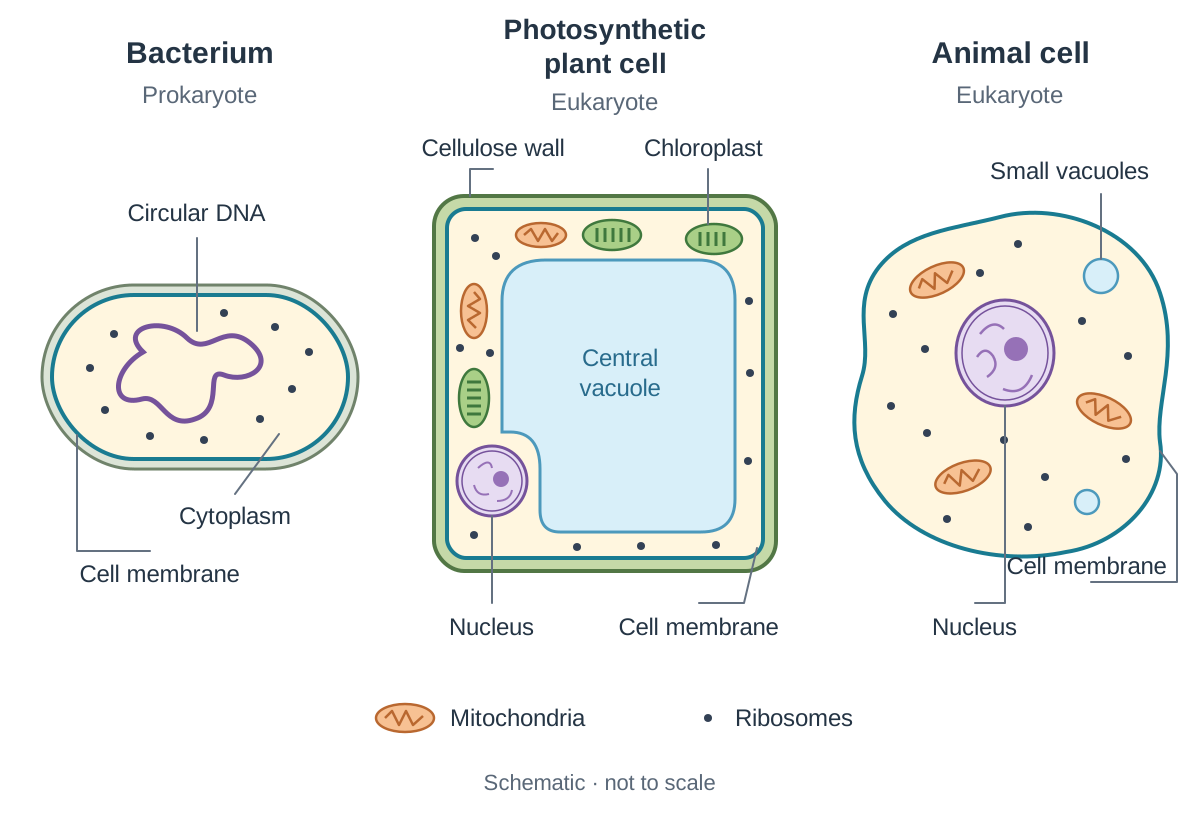
In the laboratory, viewing these cells under a microscope requires staining. Onion epidermis cells are treated with iodine solution, which stains the nucleus yellow-brown so it stands out, while any starch grains turn blue-black. Animal cells, such as cheek cells, are treated with methylene blue, which stains the nucleus dark blue.
Osmosis and Water Regulation in Agricultural Systems
Water and nutrients move across farm plant and animal tissues through three main transport processes:
- Diffusion: The movement of molecules from an area of high concentration to an area of low concentration, down a concentration gradient without using energy. Carbon dioxide diffusing into open stomata for photosynthesis is a key example.
- Osmosis: The movement of water molecules across a semi-permeable membrane from a dilute solution (high water concentration) to a concentrated solution (lower water concentration).
- Active transport: The movement of molecules or ions across a membrane against a concentration gradient (from low to high concentration), using energy from ATP. Plant root hairs use active transport to absorb nitrate () and phosphate () ions from soil water.
Osmotic Balance in Farm Plants
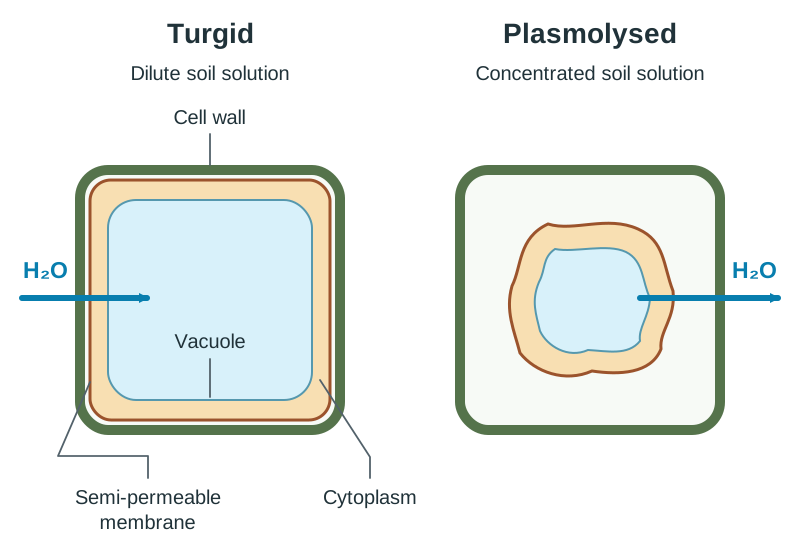
When soil water is plentiful and dilute, water enters root cells by osmosis. The expanding vacuole pushes the cytoplasm outward against the cellulose cell wall. Because the cell wall is rigid, it resists this expansion. This internal pressure is called turgor, and it keeps non-woody plant tissues such as grass blades and clover stems upright.
When a farmer spreads excessive chemical fertiliser or thick slurry during dry weather, the concentration of dissolved salts in the soil solution becomes higher than the cell sap inside the root cells. Water leaves the root cells by osmosis. The cytoplasm shrinks away from the cell wall, causing plasmolysis. At field scale, the crop loses turgor and wilts, often suffering from fertiliser scorch.
Plant Classification: Monocots, Dicots, and Life Cycles
Flowering plants are divided into two groups, monocots and dicots, depending on how many seed leaves (cotyledons) are in the seed.
| Feature | Monocotyledons (Monocots) | Dicotyledons (Dicots) |
|---|---|---|
| Seed structure | One cotyledon | Two cotyledons |
| Leaf venation | Parallel veins along the leaf | Net veins (branching network) |
| Root system | Fibrous root system | Deep central taproot with lateral branches |
| Stem vascular bundles | Scattered randomly throughout the stem | Arranged in an orderly ring near the outside |
| Flower parts | In multiples of three (3, 6, 9) | In multiples of four or five (4, 5, 8, 10) |
| Farm examples | Perennial ryegrass, wheat, barley, oats, maize | White clover, potatoes, sugar beet, docks, thistles |
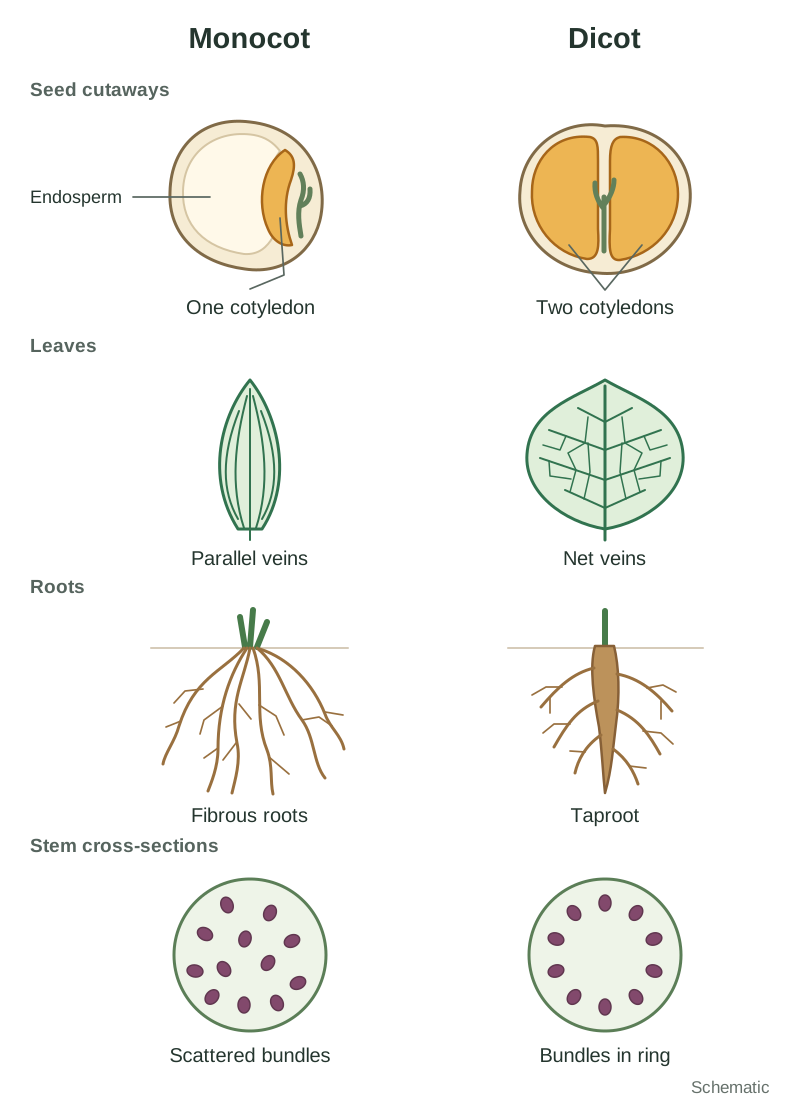
This structural difference determines how weedkillers work. Selective hormone herbicides such as MCPA copy a natural plant growth hormone (auxin). They cause rapid, uncontrolled, distorted cell growth in broad-leaved (dicot) weeds like docks and buttercups until the weeds collapse and die. Grasses (monocots) are undamaged because their narrow, upright leaves catch little spray and their growing points are protected inside the base of the plant. However, because white clover is a dicot, MCPA also destroys clover; farmers must use a clover-safe herbicide on mixed grass–clover swards.
Plant Life Cycles
- Annual: A plant that completes its life cycle—from germination to vegetative growth, flowering, seed production, and death—in one year. Examples include spring barley, winter wheat, oats, and annual meadow grass.
- Biennial: A plant that completes its life cycle in two years. In year one, it produces vegetative leaves and stores surplus food in an underground root or bulb. In year two, it uses these food reserves to flower, set seed, and die. Examples include sugar beet, fodder beet, carrots, and ragwort (Jacobaea vulgaris). Farmers harvest sugar beet at the end of year one, before it bolts and uses its stored sugar for flowering.
- Perennial: A plant that lives for several years, regrowing each spring from crowns, stolons, tillers, or persistent root networks. Examples include perennial ryegrass, white clover, broad-leaved dock, and creeping thistle.
Grass and Cereal Crop Identification
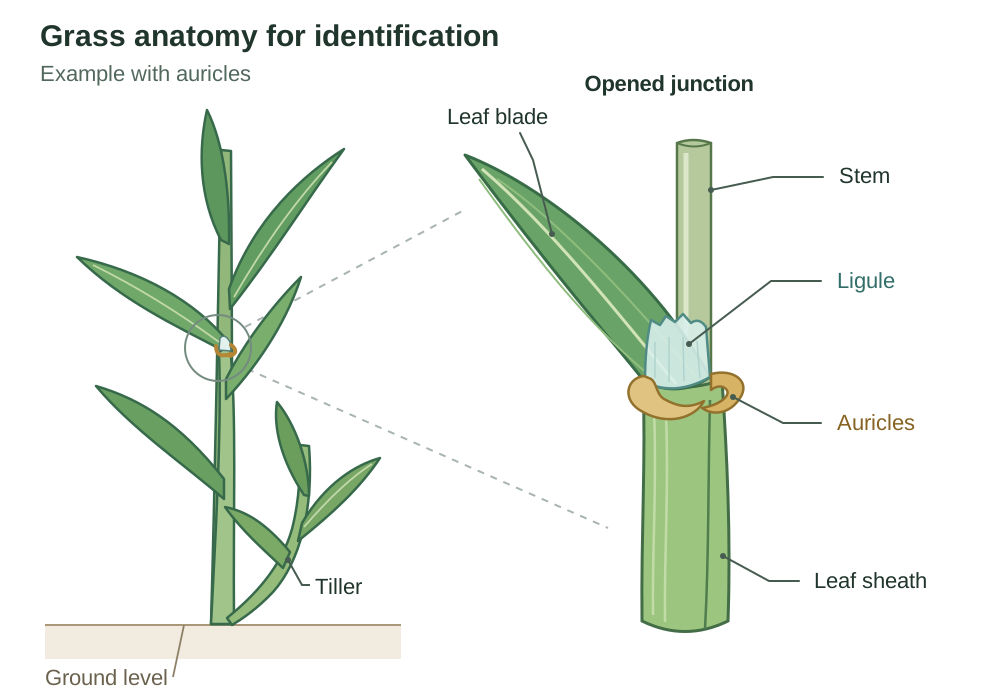
To identify grasses before they flower, farmers inspect vegetative features where the leaf blade meets the sheath.
Parts of a Grass Plant
- Leaf blade: The flat, upper green part of the leaf.
- Leaf sheath: The lower tubular part of the leaf wrapped firmly around the stem.
- Ligule: A thin, translucent, papery membrane on the inner surface where the leaf blade joins the sheath. It stops water and dirt from slipping down inside the sheath.
- Auricles: Small, claw-like projections growing from the base of the blade that can wrap around the stem.
- Tiller: A side shoot growing from the base of the plant at ground level, which increases sward density.
Vegetative Pasture Grass Key
- Perennial ryegrass (Lolium perenne): Young leaves are folded in the bud*. The leaf blade has a dark green colour with a distinct, shiny, glossy underside. The base of the shoot is reddish-pink. Auricles are small, and the ligule is short and blunt. Highly digestible and persistent.
- Italian ryegrass (Lolium multiflorum): Leaves are rolled in the bud*. It shares the glossy underside and red base of perennial ryegrass, but has long, slender auricles that clasp the stem. Very high spring yield, but lives for only two seasons.
- Cocksfoot (Dactylis glomerata): Leaves are folded in the bud*, with a boat-shaped tip. The shoot base is strongly flattened and compressed. It has a long, pointed ligule and no auricles. Deep-rooting and drought-tolerant.
- Timothy (Phleum pratense): Leaves are rolled in the bud*. The shoot base has a swollen, bulb-like base at soil level. It has a long, blunt ligule and no auricles. Thrives on heavy, damp, cold soils.
The Grass Flower and Wind Pollination
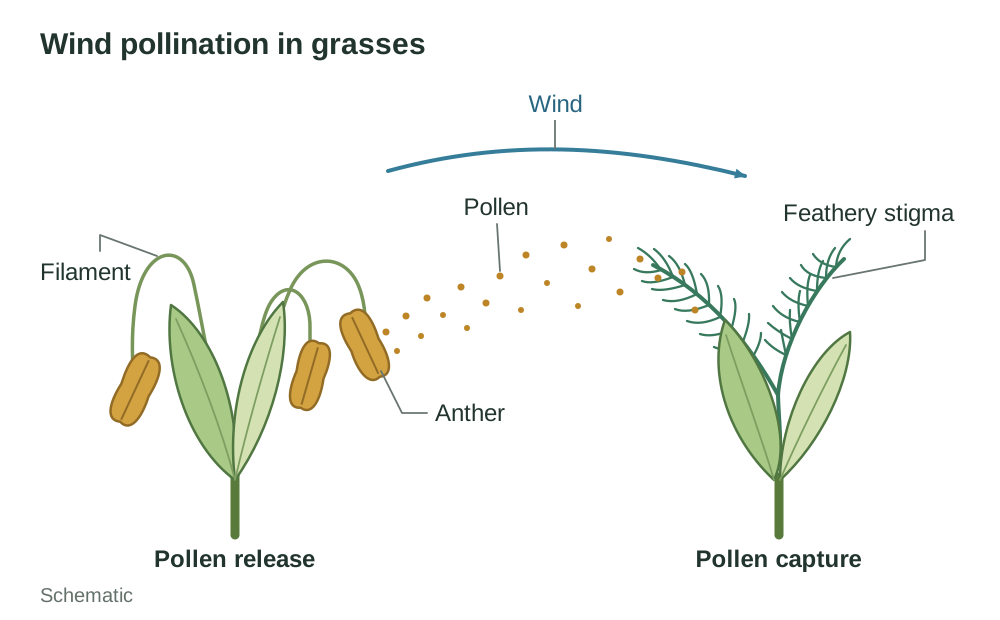
Grass flowers are grouped into spikelets on the seed head and are adapted for wind pollination:
- Long stamens hang outside the flower, exposing versatile anthers so the breeze easily dislodges pollen.
- Petals are reduced or absent, meaning there is no coloured corolla, scent, or nectar obstructing the wind.
- Pollen is produced in large quantities and is small, light, and smooth, allowing it to stay airborne over distance.
- Large, feathery stigmas hang outside the flower, providing a wide surface area to trap drifting pollen grains.
Identifying Cultivated Cereal Crops
All three common Irish cereals are annual monocots. They are distinguished vegetatively by their auricles, and at maturity by their seed heads:
- Barley: Has large, prominent, hairless auricles that overlap around the stem. Its mature ear carries long, stiff awns (bristles).
- Wheat: Has small, narrow auricles fringed with fine hairs. Its mature ear is dense and compact, usually without awns.
- Oats: Has no auricles at all, possessing a large ligule instead. Its mature seed head is an open, loose, branching panicle with hanging spikelets.
Pasture Legumes, Weeds, and Botanical Composition
White Clover and Sward Health
White clover (Trifolium repens) is a perennial dicot and an agricultural legume*. It is recognised by:
- Trifoliate leaves (three leaflets on one stalk), usually showing a pale white V-shaped crescent on each leaflet.
- Stolons: Creeping horizontal stems that run along the soil surface and develop roots at the nodes, allowing clover to spread and fill bare patches in a sward.
- Round, creamy-white flower heads.
Its main agricultural value lies in its symbiotic relationship with Rhizobium bacteria inside root nodules. These bacteria fix atmospheric nitrogen gas () into plant-available ammonium and nitrate. This reduces the farm's need for chemical nitrogen fertiliser and increases the protein content and palatability of the pasture. Red clover (Trifolium pratense) has larger, hairy leaves, pink flowers, and a deep taproot, making it suitable for multi-cut silage leys rather than tight grazing.
Common Weeds and Indicators
- Ragwort (Jacobaea vulgaris):* A biennial weed. In year one, it forms a low, flat rosette of deeply lobed, ragged leaves. In year two, it sends up a tall flowering stalk with bright yellow, daisy-like flowers. It contains toxic pyrrolizidine alkaloids that cause irreversible liver damage in cattle and horses. While livestock avoid the bitter growing plant, they readily eat it when cut and dried in hay or silage, where the poison remains active. It is a legally declared noxious weed that must be pulled before setting seed.
- Creeping thistle (Cirsium arvense):* A perennial weed with spiny, lobed leaves. It spreads aggressively using underground creeping lateral roots that send up new aerial shoots. Cutting or topping the sward only removes the shoots, as broken roots send up new plants.
- Broad-leaved dock (Rumex obtusifolius):* A perennial with large, paddle-shaped leaves and a deep, thick taproot that outcompetes grass for potassium.
- Rushes (Juncus effusus):* Clump-forming plants with round, pithy, dark green stems. They indicate poor soil drainage and acidic, waterlogged conditions.
Investigating Botanical Composition (Quadrat Survey)
To measure the botanical composition of an old permanent pasture or a new ley:
- Use a square frame quadrat, typically ().
- Throw or place the quadrat randomly across the field at least 10 times to avoid bias.
- At each placement, identify and record every plant species present within the quadrat frame.
- Calculate the percentage frequency for each species using the formula:
In a new ley, the survey will show high frequencies (over 80%) of sown perennial ryegrass and white clover. In an old permanent pasture, ryegrass frequency is typically much lower, replaced by weed grasses like Yorkshire fog and meadow foxtail, alongside broadleaf weeds like docks, buttercups, and thistles. A low ryegrass percentage confirms falling Dry Matter Digestibility (DMD), signalling that the sward should be reseeded.
Plant Breeding and Seed Selection
Plant breeders cross selected parent plants over multiple generations to produce new varieties with improved agronomic traits:
- Higher total dry matter yield per hectare.
- Genetic resistance to plant diseases (such as rust or mildew), reducing fungicide spraying.
- Higher feeding quality, particularly elevated Dry Matter Digestibility (DMD) and water-soluble carbohydrate levels in grasses.
- Improved ground cover, sward density, and persistence under grazing.
- Stiff straw in cereals that resists lodging (plants falling flat due to heavy wind and rain).
In Ireland, new grass, clover, and cereal varieties undergo continuous multi-site field trials run by the Department of Agriculture, Food and the Marine (DAFM). Varieties that prove superior under Irish soil and climatic conditions are published on the Recommended List. For grassland, varieties are further evaluated using the Pasture Profit Index (PPI), which gives each grass variety an economic profit score (€/ha/year) based on seasonal yield, spring growth, silage quality, and grazing efficiency.
When reseeding, farmers should choose certified seed. Certified blue-label seed guarantees:
- A guaranteed high germination rate (typically over 85%).
- High varietal purity (free from rogue cereal or grass varieties).
- Minimal contamination with weed seeds (especially wild oats and docks).
- Freedom from specific seed-borne fungal diseases.
Using uncertified or farm-saved seed introduces risks of poor germination, patchy establishment, and weed infestations.
Livestock Classification: Cattle Breeds, Conformation, and Genetics
Cattle breeds are classified by production purpose into dairy, beef, or dual-purpose types.
Key Livestock Definitions
- Breed: A population of animals within a species that share distinct physical and genetic traits which they pass on to their offspring.
- Purebred: An animal whose sire and dam belong to the same registered breed.
- Crossbreeding: The mating of purebred animals from two different distinct breeds.
- Dual-purpose breed: A breed selected to produce two commercial outputs, typically milk and beef (such as the Simmental and Shorthorn).
- Conformation: The muscular shape and structural build of an animal, particularly the development of muscle across the hindquarter, loin, and shoulder.
- Kill-out percentage (KO%): The weight of the dressed carcase expressed as a percentage of the live animal's weight prior to slaughter:
For example, if a bullock weighs live and yields a carcase, the kill-out is .
British versus Continental Beef Breeds
| Feature | British Breeds (Aberdeen Angus, Hereford, Shorthorn) | Continental Breeds (Charolais, Limousin, Belgian Blue, Simmental) |
|---|---|---|
| Frame and size | Smaller, compact, blocky body frame | Large, long, heavily muscled frame |
| Maturity rate | Early maturing (lay down subcutaneous fat early) | Late maturing (continue depositing lean muscle) |
| Growth rate | Moderate daily liveweight gain (DLG) | High daily liveweight gain (DLG) |
| Carcase traits | Lower kill-out %, higher waste fat cover | High kill-out %, lean meat, superior conformation grades (E and U) |
| Finishing | Finish easily off grass with little meal | Require more concentrates to achieve an adequate fat cover |
| Calving | Easy calving, low birth weights | Higher risk of calving difficulty (dystocia) |
Cattle Breeds and Farm Selection
- Holstein-Friesian: Dairy breed. Tall, angular, wedge-shaped frame with black-and-white patches. Chosen for exceptional liquid milk yield.
- Jersey: Dairy breed. Small, fawn-coloured cow with a dished face. Produces milk with very high butterfat (around 5%) and protein, valuable for processing into butter and cheese.
- Aberdeen Angus: British beef breed. Naturally polled (hornless) with a solid black coat. Farmers choose an Angus bull on dairy or suckler heifers because of its low birth weights and easy calving.
- Hereford: British beef breed. Dark red coat with a white face, white chest, white underline, and white tail switch. Known for docile handling and ability to fatten rapidly on grass alone.
- Charolais: Continental beef breed. Creamy-white coat with massive muscling. Selected as a terminal sire on mature suckler cows to produce heavy, high-growth weanlings for export or finishing.
- Limousin: Continental beef breed. Golden-red coat with lighter shading around the eyes and muzzle. Chosen for high kill-out percentage and high meat-to-bone ratio.
- Belgian Blue: Continental beef breed. White, black, or blue-roan coat. Carries a mutated myostatin gene causing double muscling. Purebred cows frequently require caesarean sections due to calf muscularity.
- Simmental: Continental dual-purpose breed. Red/yellow and white coat with a white face. Excellent milk yield in suckler dams combined with fast calf growth.
- Shorthorn: British dual-purpose/beef breed with a red, white, or roan (mix of red and white hairs) coat.
Genetics of Dominant Traits in Cattle
The polled trait () is dominant over the horned trait (). Crossing a homozygous polled Aberdeen Angus bull () with horned dairy cows () produces offspring that are all heterozygous polled (). Calves are hornless, which saves the farmer time, cost, and animal stress by eliminating disbudding. Similarly, black coat colour and the white Hereford face are dominant alleles.
Sheep, Pig, and Horse Breeds and Breeding Systems
Sheep Stratification System
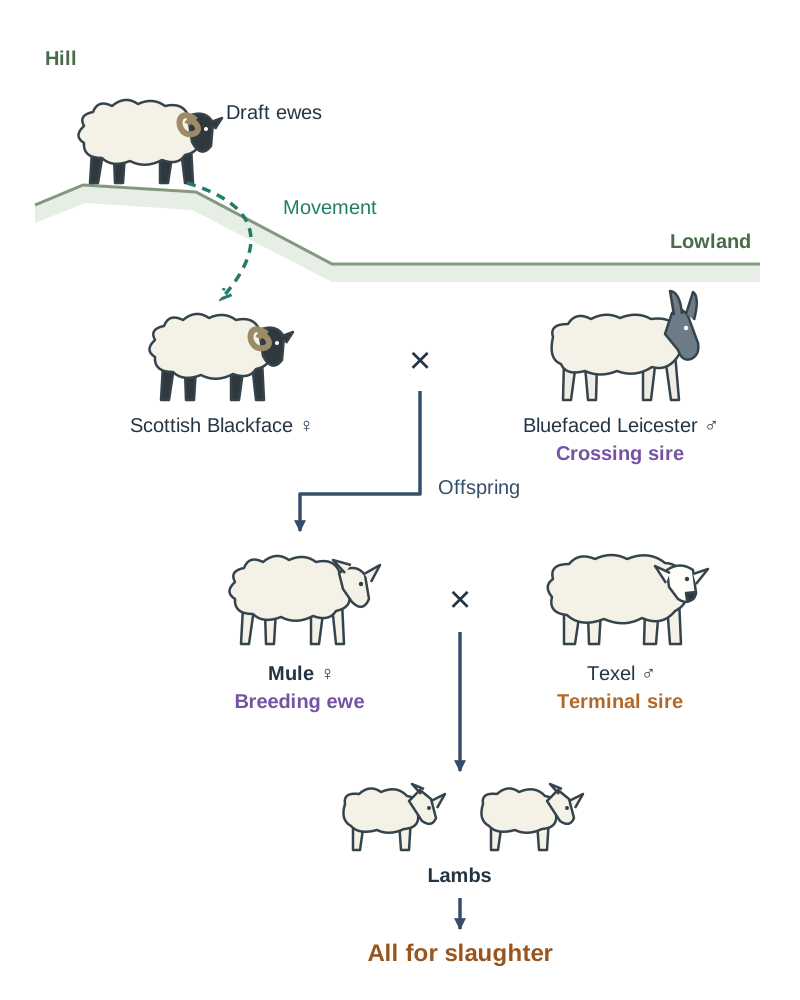
Irish sheep production uses an altitude-based stratification system to combine the hardiness of hill breeds with the prolificacy of crossing sires and the meat quality of terminal sires:
- Hill / Mountain Breeds:
- Scottish Blackface: Black face and legs, coarse fleece, horned in both sexes. Hardy and able to thrive on poor heather grazing.
- Cheviot: White face and legs, erect pricked ears, hornless. Hardy upland breed with a dense fleece and good mothering ability.
- Crossing Sires (Prolificacy and Milk):
- Bluefaced Leicester: Bare, dark blue facial skin, long body, upright ears. Mated to Scottish Blackface hill ewes to sire Mules. (Mating a Border Leicester ram to a Cheviot ewe produces a Halfbred). These crossbred ewes inherit the hill ewe's hardiness alongside the Leicester's high prolificacy (lambing percentage) and milk yield.
- Lowland Terminal Sires (Meat Conformation):
- Suffolk: Jet-black head and legs free of wool; hornless. Sires fast-growing, early-finishing lambs.
- Texel: Broad, short white face with a black nose; muscular loin and hindquarters. Sires lean lambs with high kill-out percentages.
In this system, draft hill ewes are brought down to lowlands and mated with a Bluefaced Leicester crossing sire to produce Mule ewes. These Mule ewes are then crossed with a Texel or Suffolk terminal sire. All resulting lambs go directly for meat slaughter, benefiting from hybrid vigour.
Native and Irish Sheep Breeds
- Galway: Ireland's only native sheep breed. A large, polled lowland sheep with a white face and a characteristic tuft of wool on the forehead. Noted for a heavy fleece, docility, and good mothering.
- Belclare: A breed developed by Teagasc through structured crossing of the Galway, Finnish Landrace, Lleyn, and Texel. Selected specifically for high prolificacy (large litters, often more than two lambs born per ewe) combined with high carcase quality.
Pig Breeds and Commercial Crossbreeding
Commercial pig units mate pure breeds in a two-stage cross to capture hybrid vigour:
- Large White: White coat, erect ears, long body. Known for maternal ability, large litter sizes, and fast daily gain.
- Landrace: White coat with large, drooping ears hanging forward over the face. Valued for deep body length and heavy milk production.
- Duroc: Red-brown coat with drooping ear tips. Used primarily as a terminal boar to deliver feed conversion efficiency and tender meat with good intramuscular fat.
Commercial producers cross a Large White boar with a Landrace sow to create an hybrid sow. This sow is then mated to a terminal Duroc or Piétrain boar. Every piglet is fattened and sold for slaughter.
Horse Breeds in Agriculture
- Irish Draught: A strong, docile horse with clean, dense bone and a level head. Historically used for ploughing and carting, it now serves as a foundation broodmare line crossed with Thoroughbreds to produce Irish Sport Horses.
- Connemara Pony: A hardy native breed adapted to western bogs and rocky hillsides. Compact, sure-footed, and noted for stamina and jumping ability.
Key terms
- Prokaryote
- A single-celled organism that lacks a membrane-bound nucleus and membrane-bound organelles, possessing a naked loop of circular DNA.
- Eukaryote
- An organism whose cells contain a membrane-bound nucleus and specialised membrane-bound organelles such as mitochondria and chloroplasts.
- Turgor
- The outward pressure exerted by the fluid contents of the plant vacuole and cytoplasm against the rigid cellulose cell wall, keeping the plant upright.
- Plasmolysis
- The shrinking of the plant cell cytoplasm away from the cell wall due to water loss by osmosis when placed in a hypertonic solution.
- Cotyledon
- An embryonic seed leaf within the seed that stores or absorbs food reserves for the germinating seedling.
- Annual
- A plant that completes its entire life cycle from seed germination to flowering, seed set, and death in one year.
- Biennial
- A plant that completes its life cycle in two years, storing food reserves in year one and flowering, setting seed, and dying in year two.
- Perennial
- A plant that lives for several years, regrowing each season from persistent roots, crowns, stolons, or tillers.
- Ligule
- A thin, translucent membrane found at the junction of the leaf blade and leaf sheath in grass plants, used as an identification feature.
- Auricle
- A small, claw-like projection occurring in pairs at the base of the leaf blade in grasses and cereals that may clasp the stem.
- Polled
- Naturally or genetically hornless in livestock breeds, such as Aberdeen Angus cattle.
- Conformation
- The shape and muscular structure of an animal's body, particularly the muscle development across the hindquarters, loin, and back.
- Kill-out Percentage
- The weight of the dressed animal carcase expressed as a percentage of its liveweight prior to slaughter.
- Purebred
- An animal whose parents belong to the same recognized breed and are recorded in that breed's herd or flock book.
- Crossbreeding
- The mating of animals from two different pure breeds to produce crossbred progeny.
- Hybrid Vigour (Heterosis)
- The increased performance, fertility, growth rate, and survivability shown by crossbred offspring over the average of their purebred parents.
- Terminal Sire
- A sire chosen for muscular carcase traits whose offspring are all sent for slaughter for meat production rather than kept for breeding.
- Crossing Sire
- A ram, such as the Bluefaced Leicester, used on hill ewes to produce fertile, milky crossbred replacement breeding females like Mules.
- Prolificacy
- The ability of an animal to produce large numbers of offspring; in sheep, the number of lambs born per ewe.
- Dual-Purpose Breed
- A breed reared to provide two main agricultural products, typically meat and milk, such as Simmental cattle.
Check yourself
An image shows a sheep with a jet-black face and legs, no wool on its face or ears, and no horns. (i) Identify the breed. (ii) Explain the term terminal sire.
(i) Suffolk. (ii) A terminal sire is a ram selected for superior carcase and growth traits whose offspring are all slaughtered for meat; none are retained for breeding.
Is ragwort an annual, biennial, or perennial plant, and why does this lifecycle affect its control on a farm?
Ragwort is a biennial. In year one, it produces a flat vegetative rosette, and in year two, it flowers and sets seed. It must be pulled, sprayed, or dug out before it flowers in its second year to prevent seed spread.
State two adaptations of the grass flower suited to wind pollination.
Long stamens that hang outside the flower to shed pollen into breezes, and large, feathery stigmas that hang outside the flower to trap airborne pollen.
How can a student distinguish between vegetative Perennial Ryegrass and vegetative Italian Ryegrass?
Perennial Ryegrass has leaves folded in the bud and small auricles, whereas Italian Ryegrass has leaves rolled in the bud and long, pointed auricles that clasp the stem.
What is the dominant horned/polled condition in Aberdeen Angus cattle, and how does this benefit farmers when Angus bulls are crossed with horned dairy cows?
Polled (hornless) is dominant (P) over horned (p). All crossbred calves (Pp) are born hornless, eliminating the labour, cost, and stress of disbudding calves.
A quadrat thrown 10 times in an old pasture detects broad-leaved dock in 3 quadrats. Calculate the percentage frequency of docks in the pasture.
% Frequency = (3 ÷ 10) × 100 = 30%.