

Digestion is the biological breakdown of complex feedstuffs into simple, soluble molecules that can be absorbed across the gut wall into the bloodstream for maintenance, growth, milk, and meat production. In Leaving Certificate Agricultural Science, the work falls into a few key areas: how feed is broken down mechanically and chemically, how rumen microbes let cattle and sheep live on grass, how a young calf transitions from milk to dry feed, how pigs, poultry, and horses differ in their digestion, what this means for formulating rations and measuring animal performance, the health disorders and parasites that affect the gut, and how rumen fermentation connects to the environment through enteric methane.
The Two Core Digestive Strategies: Ruminant vs Monogastric
Every farm animal processes feed through five continuous stages: ingestion (taking feed into the mouth), digestion (mechanical and chemical breakdown of large molecules), absorption (transporting soluble nutrients across the gut wall into blood or lymph), assimilation (using absorbed nutrients for tissue growth, repair, and milk), and egestion (expelling indigestible waste as faeces).
Farm livestock fall into two main categories based on stomach anatomy and where fermentation happens:
- Ruminants (cattle, sheep, goats): Possess a single stomach divided into four communicating compartments (rumen, reticulum, omasum, abomasum). They carry out pre-gastric microbial fermentation in the rumen before feed reaches the enzymatic true stomach. This lets them digest fibrous plant materials like grass, silage, and hay.
- Monogastrics (pigs, poultry): Possess a single, simple glandular stomach and rely on their own digestive enzymes. They cannot break down much fibre (cellulose), so they must be fed concentrated, easily digested cereal-based rations. Poultry are also monogastric, but possess specialised organs (the crop and gizzard) that replace the function of teeth.
- Hindgut Fermenters (horses): Monogastric herbivores that possess a simple stomach followed by an enlarged caecum and colon, where post-gastric microbial fermentation breaks down fibre after the small intestine.
Side-by-Side Comparison: Dairy Cow vs Finishing Pig
| Feature | Ruminant (Cow) | Monogastric (Pig) |
|---|---|---|
| Front Dentition | No upper incisors; tough dental pad | Upper and lower incisors and canines present |
| Cheek Teeth | Ridged grinding molars with sideways jaw action | Rounded crushing molars adapted for grains |
| Saliva | High volume, alkaline bicarbonate buffers, no amylase | Contains salivary amylase, begins starch digestion |
| Stomach Chambers | Four (rumen, reticulum, omasum, abomasum) | One simple glandular stomach |
| Site of Fermentation | Pre-gastric (foregut: rumen and reticulum) | None in stomach; minimal in large intestine |
| Source of Cellulase | Symbiotic bacteria, protozoa, and fungi | None (mammals cannot produce cellulase) |
| Main Absorbed Energy | Volatile fatty acids (VFAs) across rumen wall | Glucose across small intestine villi |
| Protein Supply | Microbial protein digested in abomasum | Must supply pre-formed essential amino acids |
| Typical Diet | Forage-based: grazed grass, grass silage, hay | Concentrated: ground barley, wheat, soya bean meal |
| Typical FCR | 6.0–10.0 (beef on forage; fermentation energy losses) | 2.5–3.0 (dense, highly digestible cereal feed) |
The Mouth: Dentition, Chewing, and Salivary Buffering
Mechanical digestion begins in the mouth, where teeth shear and crush feed to increase the surface area for chemical and microbial breakdown.
Dental Formulas
A dental formula represents the number of teeth of each type in one half of the upper jaw over one half of the lower jaw, multiplied by two for the full mouth.
Adult Ruminant (Cattle and Sheep): 2(I 0/4, C 0/0, P 3/3, M 3/3) = 32
Cattle and sheep have no upper incisors or upper canines. Instead, they have a tough dental pad. Grass is gathered by the tongue, clamped between the lower incisors and the dental pad, and torn off with an upward flick of the head. Some textbooks treat the fourth lower biting tooth as an incisiform canine and write the formula as 2(I 0/3, C 0/1, P 3/3, M 3/3) = 32; the total is 32 either way. Herbivores also have a distinct toothless gap between their front biting teeth and cheek teeth, called the diastema, which gives the tongue room to manipulate forage into a bolus.
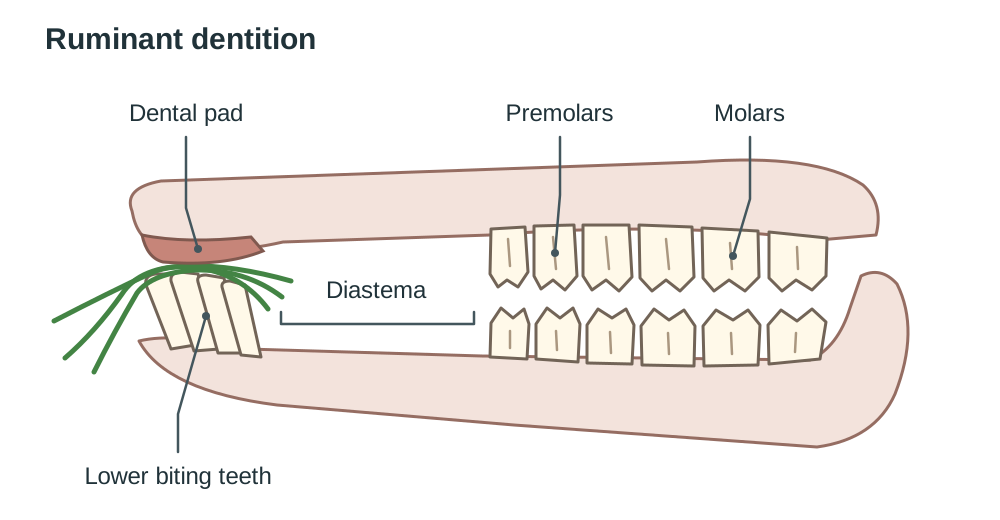
Adult Monogastric (Pig): 2(I 3/3, C 1/1, P 4/4, M 3/3) = 44
Pigs are omnivores with a full set of 44 teeth. Their molars have rounded cusps suited for crushing grain kernels and roots.
Saliva and Swallowing
Saliva lubricates feed particles to form a bolus, which travels down the oesophagus by peristalsis (involuntary, wave-like muscular contractions).
- Pig saliva: Contains the enzyme salivary amylase, which starts breaking dietary starch into maltose.
- Ruminant saliva: Contains no amylase. A dairy cow produces 100 to 150 litres of saliva daily, which is mildly alkaline (pH 8.1 to 8.3) and rich in sodium bicarbonate and phosphate buffers. These buffers flow into the rumen and neutralise the acids produced during microbial fermentation, keeping the rumen pH stable between 6.0 and 6.8.
The Ruminant Stomach and Microbial Symbiosis
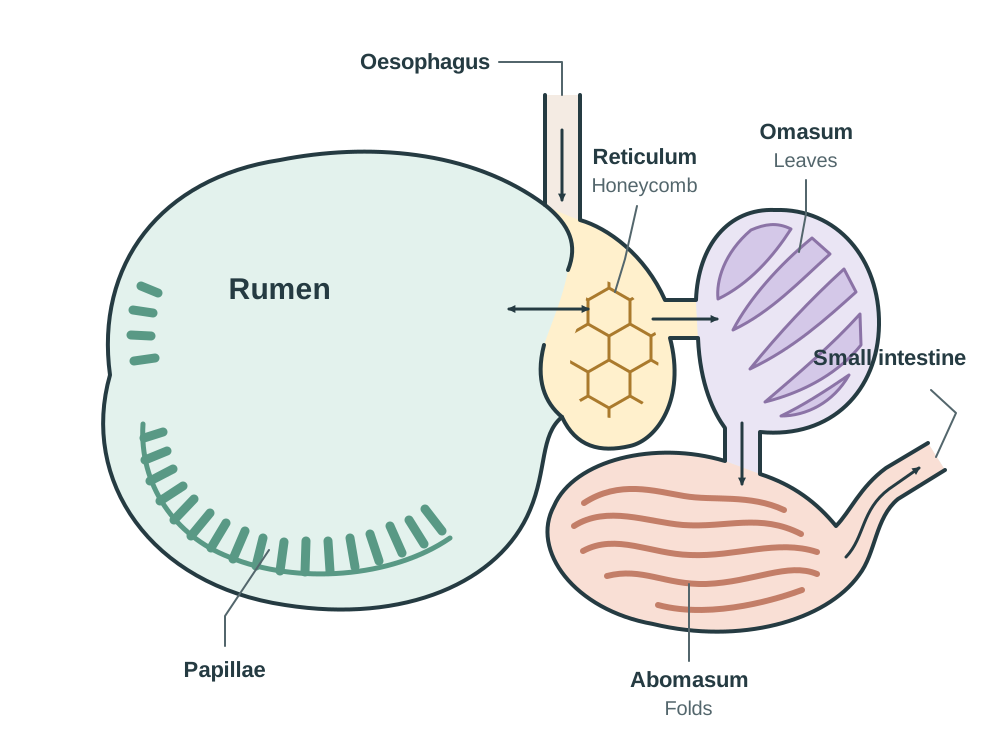
A ruminant has one stomach divided into four communicating chambers that take up about 75% of the abdominal cavity. A helpful way to remember their functions in sequence is: Rumen = ferment, Reticulum = regurgitate, Omasum = remove water, Abomasum = acid.
The Four Chambers in Sequence
| Chamber | Internal Structure | Core Physiological Function |
|---|---|---|
| Rumen | Lined with millions of short, carpet-like rumen papillae | Anaerobic fermentation vat where microbes break down cellulose; absorbs volatile fatty acids (VFAs) directly into the blood. |
| Reticulum | Raised mucosal ridges forming distinct hexagonal cells (honeycomb) | Coordinates regurgitation of digesta boluses back to the mouth for rumination; collects heavy or sharp swallowed objects like wire or nails. If a wire pierces the wall, it causes traumatic reticulitis (hardware disease). |
| Omasum | Broad, muscular leaves resembling the pages of a book | Squeezes digesta mechanically; reabsorbs water, bicarbonate buffers, and dissolved minerals, concentrating the solid matter. |
| Abomasum | Smooth, glandular mucosa with deep folds | The 'true stomach'. Secretes gastric juice containing hydrochloric acid (pH ~2), pepsinogen (activated to pepsin), and rennin (in young stock); digests microbial and feed protein enzymatically. |
Rumination ('Chewing the Cud')
Cattle graze quickly with little initial chewing. When resting, the reticulum and rumen contract to regurgitate a bolus of coarse forage back up the oesophagus into the mouth. The animal re-chews the forage thoroughly, breaking fibres down to increase the surface area for microbes, and coats it in alkaline saliva before swallowing it again.
The Rumen Microbiome: A Mutualistic Symbiosis
No farm mammal can make the enzyme cellulase, so none of them can digest cellulose on their own. The ruminant overcomes this through mutualistic symbiosis with billions of anaerobic bacteria, protozoa, and fungi living in the rumen at 39 °C and pH 6.0–6.8.
- Cellulose Breakdown and Volatile Fatty Acids (VFAs): Rumen microbes secrete cellulase, breaking cellulose down into simple sugars, which they ferment into short-chain fatty acids. These volatile fatty acids (VFAs) are absorbed through the rumen papillae into the bloodstream and supply about 70–80% of the animal's energy needs:
- Acetic acid (acetate): Enters the general circulation and serves as the main building block for milk fat (butterfat) and body fat. Diets high in digestible fibre support acetate production.
- Propionic acid (propionate): Carried via the hepatic portal vein to the liver, where it is converted into glucose. This glucose drives lactose synthesis and overall milk yield.
- Butyric acid (butyrate): Converted in the rumen wall to provide fuel for rumen tissue and stimulate papillae development.
- Synthesis of Microbial Protein: Rumen bacteria use dietary protein and non-protein nitrogen (such as urea) to build their own cellular proteins. As these microbes are washed into the abomasum and small intestine, they are digested by the cow's own enzymes, supplying high-quality microbial protein containing all essential amino acids.
- Vitamin Synthesis: Rumen bacteria synthesise the B-group vitamins and vitamin K, so healthy adult ruminants do not normally need these added to their feed. However, the microbes require the trace element cobalt to synthesise vitamin B12. On cobalt-deficient soils, lambs and cattle develop 'pine' (poor thrive and anaemia), which is corrected by cobalt drenches, boluses, or cobalt-treated fertilisers.
- Gases and Eructation: Fermentation produces large volumes of carbon dioxide (~65%) and methane (~35%). The animal continually clears these gases through eructation (belching). If the belching mechanism is blocked, gas accumulates rapidly, causing life-threatening bloat.
The Neonatal Calf: Milk Digestion and Rumen Transition
At birth, a calf is functionally monogastric. The abomasum is the largest and only working stomach compartment, making up roughly 60–70% of total stomach capacity. The rumen and reticulum are small, thin-walled, and sterile.
Colostrum: The Critical First Feed
Colostrum is the thick, yellow first milk produced by the dam after calving. It provides three essential functions:
- Antibodies (immunoglobulins): Deliver passive immunity against infectious diseases, because a calf is born with almost no circulating antibodies of its own.
- Nutrients: A concentrated source of protein, energy, and vitamins A, D, and E.
- Laxative effect: Helps clear the first dung (meconium) from the calf's digestive tract.
The 1-2-3 Rule for Colostrum Management
- Feed the calf's own dam's first milking (contains the highest antibody concentration).
- Feed within 2 hours of birth (and certainly within 4 hours). The calf's small intestine can absorb intact antibody molecules only during the first few hours; gut permeability drops sharply after 6 hours and the gut 'closes' completely by 24 hours, after which antibodies are broken down as ordinary dietary protein.
- Feed at least 3 litres (roughly 8.5% of the calf's birth weight).
Dam's colostrum is superior to dried replacers because it contains antibodies specific to the disease pathogens present on that particular farm. High hygiene is vital when collecting colostrum: dirty equipment introduces bacteria that multiply rapidly in warm milk and physically block antibody uptake across the gut wall.
The Oesophageal Groove and Abomasal Digestion
When a calf drinks warm milk from a teat, a nervous reflex causes muscular folds in the wall of the reticulum to close. This forms a temporary bypass tube—the oesophageal groove—that carries milk straight past the rumen and reticulum and into the abomasum.
If a calf drinks milk that is too cold or gulps it from an open bucket, this reflex can fail. Milk spills into the undeveloped rumen, where it putrefies, causing severe bacterial scour and bloat.
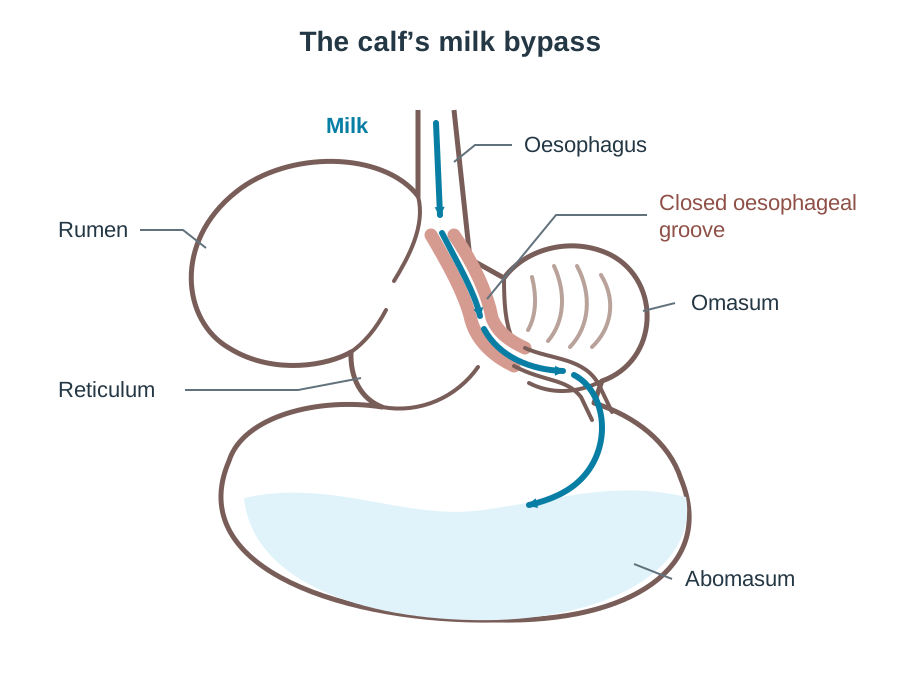
In the abomasum, the enzyme rennin curdles the soluble milk protein caseinogen into insoluble casein clots in the presence of calcium ions. This clotting slows transit through the gut, giving pepsin and lipase time to digest proteins and fats thoroughly.
Developing the Rumen (Weeks 1 to 8)
Transforming a pre-ruminant calf into an adult ruminant requires three distinct nutritional inputs:
- Starter Concentrates (Chemical Stimulus): Palatable, dry starter meal offered from week one is fermented by colonising bacteria into propionic and butyric acids. Butyrate acts as the direct chemical trigger that causes the rumen papillae to grow and elongate, expanding the absorptive surface area.
- Coarse Hay or Clean Straw (Physical 'Scratch Factor'): Ingesting coarse roughage rubs against the rumen wall, stimulating muscular tone, wall thickness, and volume expansion of the rumen and reticulum.
- Clean Water: Microbes need water to ferment feed. Milk bypasses the rumen via the groove, so clean drinking water must be available from day three to establish a working microbial population.
Lower Tract Digestion, Secretions, and Absorption
Beyond the abomasum or simple stomach, all farm livestock share common intestinal digestive processes.
Biological Catalysts: Enzymes
An enzyme is a protein that acts as a biological catalyst: it speeds up a specific chemical reaction without being consumed. Each enzyme is specific to one substrate. Enzymes have an optimum temperature (around 37–39 °C in farm mammals) and an optimum pH. Pepsin works in the acidic stomach (pH ~2), whereas pancreatic and intestinal enzymes require slightly alkaline conditions (pH 7.5–8.0). Heating an enzyme beyond its optimum permanently changes its shape, denaturing it so it no longer functions.
The Small Intestine
The small intestine consists of the duodenum, jejunum, and ileum. As acidic chyme enters the duodenum, it meets two secretions:
- Bile: Produced by the liver and stored in the gall bladder (horses lack a gall bladder). Bile contains no enzymes. It consists of bile salts that emulsify large fat globules into tiny droplets, increasing the surface area for lipase. Being alkaline, bile also neutralises acidic chyme to create the correct pH (7.5–8.0) for intestinal enzymes.
- Pancreatic Juice: Secreted by the pancreas, containing bicarbonate and three main enzymes:
- Pancreatic amylase: Hydrolyses starch into maltose.
- Trypsin (secreted as inactive trypsinogen): Cleaves proteins into peptides.
- Pancreatic lipase: Hydrolyses emulsified fats into fatty acids and glycerol.
Intestinal mucosal enzymes (maltase, sucrase, lactase, and peptidases) complete the breakdown into monosaccharides and amino acids.
Absorption across the Villi
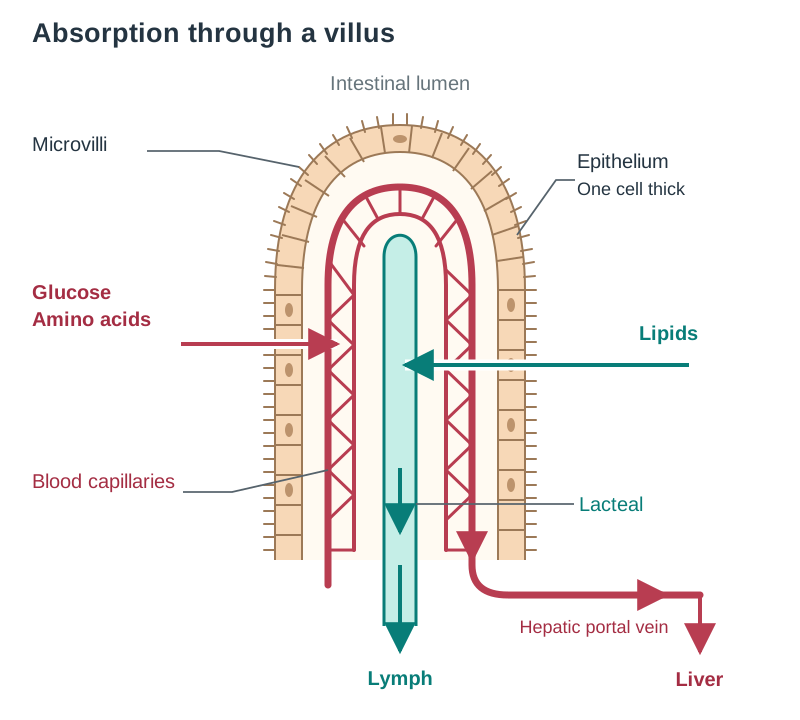
The lining of the jejunum and ileum is covered in millions of microscopic folds called villi, which are folded further into microvilli. Villi are adapted for absorption by having a very large surface area, a wall one cell thick for rapid diffusion, and rich capillary networks. Monosaccharides, amino acids, minerals, and water-soluble vitamins enter the capillaries and travel to the liver via the hepatic portal vein. Fatty acids and glycerol enter the central lymphatic vessel (lacteal).
The Large Intestine and Liver
The large intestine (caecum, colon, and rectum) reabsorbs water and dissolved mineral electrolytes, compacting indigestible waste into faeces. Commensal bacteria produce small amounts of B-complex vitamins and vitamin K.
The liver acts as the animal's biochemical processing centre: it stores glucose as glycogen, deaminates excess amino acids to form urea, produces bile, stores fat-soluble vitamins (A, D, E, K), and in ruminants, converts propionic acid into glucose.
Monogastrics: The Pig, Avian Adaptations, and Horses
The Monogastric Pig
A pig has a single glandular stomach that secretes hydrochloric acid and pepsinogen (activated to pepsin). Pigs lack a pre-gastric fermentation chamber and produce no cellulase, so they cannot digest bulky grass or silage.
- Feeding: Pig rations must be concentrated and cereal-based (barley and wheat for starch energy; soya bean meal for protein).
- Formulation: Pigs cannot make amino acids from non-protein nitrogen. Diets must supply balanced essential amino acids—especially lysine, methionine, threonine, and tryptophan.
The Avian Digestive System (Poultry)
Poultry are monogastric birds that lack teeth entirely. Their digestive tract includes four specialised structures:
- Crop: An expandable pouch at the base of the oesophagus where swallowed grain is stored and softened with moisture.
- Proventriculus: The glandular stomach that secretes hydrochloric acid and pepsin to start chemical breakdown.
- Gizzard: A thick, muscular organ containing swallowed insoluble grit. Rhythmic muscular churning crushes seeds and grains mechanically, doing the job of teeth.
- Cloaca: The single terminal chamber where the digestive, urinary, and reproductive tracts open. Birds excrete nitrogen as a white paste of uric acid mixed with faeces.
The Equine Hindgut Fermenter (The Horse)
The horse is a monogastric herbivore with post-gastric microbial fermentation:
- Feed passes through a small stomach and the small intestine, where starch, protein, and oils are digested enzymatically and absorbed.
- Fibrous material passes into an enlarged caecum and colon (hindgut), where symbiotic microbes ferment cellulose into VFAs.
- Key Limitation: Because microbial fermentation takes place after the stomach and small intestine, horses cannot absorb the high-quality microbial protein made by hindgut microbes; it is lost in the droppings. Large, starch-rich cereal meals can overflow into the caecum, upsetting the microflora and causing colic or laminitis. Horses must be fed little and often with plenty of long fibre.
From Digestion to Nutrition: Constituents, Rations, and Efficiency
What Feed Constituents Do in the Animal
| Constituent | Digested to | Function in the Animal |
|---|---|---|
| Carbohydrate (sugars, starch, cellulose) | Glucose in monogastrics; fermented to VFAs in the rumen | Primary energy source for maintenance, growth, milk, and movement |
| Protein | Amino acids; rumen microbes also make microbial protein | Muscle growth, tissue repair, enzymes, milk protein, wool |
| Fat (lipid) | Fatty acids and glycerol | Concentrated energy store (about 2.25 times the energy of carbohydrate); carries fat-soluble vitamins (A, D, E, K) |
| Minerals | Absorbed as ions | Calcium and phosphorus for bone and milk; cobalt for rumen microbes to synthesise vitamin B12 |
| Vitamins | Absorbed directly | Regulate metabolic reactions; adult ruminants synthesise B-group and K in the rumen |
| Water | — | Solvent, transport medium, temperature regulation, rumen fermentation medium; milk is ~87% water |
Reading a Pig Ration
In a commercial pig ration, rolled barley, wheat, and rice bran supply energy (as starch) alongside fibre for healthy gut transit. Soya bean meal supplies high-quality protein, particularly the essential amino acids lysine and methionine, which pigs cannot make on their own. Minerals and vitamins are added as a premix.
Why Crude Protein Falls as an Animal Grows
Young stock are growing rapidly and laying down lean muscle tissue, so they need a high percentage of dietary protein (e.g. 16–18% crude protein for a 15–30 kg weaner pig). As the animal matures, its growth rate slows down and it begins laying down more fat than muscle, reducing its protein requirement per kilogramme of feed (e.g. 13–14% for finishing pigs over 60 kg). Feeding excess protein to older stock is wasteful: surplus amino acids are deaminated in the liver and excreted as urea, increasing feed costs and raising environmental nitrogen losses.
Measuring Digestibility and Performance: DLG and FCR
Farmers use two core metrics to assess how efficiently livestock turn feed into saleable product:
- Daily Live-weight Gain (DLG): The average weight an animal gains each day.
- Feed Conversion Ratio (FCR): The mass of feed eaten per unit of live-weight gain.
FCR has no units (it is a ratio, kg:kg). A lower FCR means higher feed efficiency.
Monogastric pigs on concentrated cereal rations achieve an FCR of roughly 2.5–3.0. Beef cattle on grazed grass and silage have an FCR of 6.0–10.0 because high-fibre forage is less digestible and energy is lost as heat and methane during rumen fermentation. However, ruminants convert grass—a cheap feed that humans and monogastrics cannot eat—into high-value beef and milk.
Digestive Health: Metabolic Disorders and Parasites
When answering exam questions on digestive disorders, lay out your answer under five distinct headings: Named Disorder, Cause, Symptoms, Treatment, and Prevention.
1. Metabolic Disorders
Bloat (Tympanites)
- Cause: Cattle grazing lush pastures high in white clover or young spring ryegrass. Soluble proteins in the clover produce a persistent, stable foam on top of the rumen liquid. The foam traps fermentation gases ( and ) and blocks the cardia, preventing normal eructation (belching).
- Symptoms: Severe swelling of the left flank, acute pain, laboured breathing as the distended rumen compresses the diaphragm and lungs, collapse, and rapid death by suffocation.
- Treatment: In mild cases, drench with an anti-foaming agent (vegetable oil or poloxalene) or pass a stomach tube to release gas. In an acute emergency, puncture the rumen through the left paralumbar fossa using a trocar and cannula, removing the trocar to vent the gas.
- Prevention: Feed roughage (hay or straw) before turnout to stimulate salivation; strip-graze clover-rich swards; add anti-foaming surfactants to the water supply.
Ruminal Acidosis ('Grain Overload')
- Cause: Abrupt feeding of large amounts of starch-rich concentrates (barley or wheat) with too little effective fibre. Starch-fermenting bacteria multiply rapidly and produce high levels of lactic acid, dropping rumen pH below 5.5. The acidity kills fibre-digesting microbes, halts rumen contractions, and damages the papillae.
- Symptoms: Loss of appetite, foul-smelling watery scour, lethargy, teeth grinding, dehydration, and laminitis.
- Treatment: Drench with antacids or alkaline buffers (sodium bicarbonate); administer intravenous fluids for dehydration; feed coarse hay.
- Prevention: Introduce concentrates gradually over 10–14 days; ensure the diet contains at least 15–20% coarse roughage to stimulate chewing and saliva flow; include sodium bicarbonate in the ration.
2. Infectious and Parasitic Diseases of the Gut
Stomach Worm (Ostertagia ostertagi in cattle, Teladorsagia in sheep)
- Transmission: Adult roundworms living in the abomasum lay eggs that pass out in dung. In warm, moist weather, larvae hatch and move onto grass blades, where they are ingested by grazing stock. Young stock in their first grazing season are most vulnerable.
- Symptoms: Profuse watery scour, poor thrive, reduced DLG, weight loss, rough coat, and stunted frame.
- Treatment: Dose with an anthelmintic (wormer) from an appropriate chemical class.
- Prevention: Rotational grazing; turn weanlings onto clean silage aftergrass; practise mixed grazing with cattle and sheep (most gastrointestinal worms are host-specific); rotate anthelmintic classes to prevent anthelmintic resistance.
Liver Fluke (Fasciola hepatica)
- Transmission: Eggs pass out in dung and hatch into larvae that must infect an intermediate host—the mud snail (Galba truncatula)—which lives in wet, poorly drained soil. Cercariae leave the snail and encyst on pasture blades, where grazing cattle and sheep ingest them. Immature flukes burrow through the liver into the bile ducts. Incidence is highest following a wet summer and autumn.
- Symptoms: Severe ill thrive, anaemia, bottle jaw (oedema under the lower jaw), reduced milk yield, liver condemnations at slaughter, and sudden death in sheep.
- Treatment: Dose with a flukicide effective against the relevant stages of the parasite.
- Prevention: Drain or fence off wet, marshy areas; avoid grazing high-risk pastures in late autumn; dose all stock at winter housing.
Calf Scour (Diarrhoea) and Zoonoses
- Nutritional Scour: Caused by feeding errors—milk fed cold, mixed at the wrong concentration, fed at irregular hours, or gulped from open buckets so the oesophageal groove fails and milk ferments in the rumen.
- Infectious Scour: Caused by viruses (rotavirus, coronavirus) or bacteria and protozoa (E. coli, Salmonella, Cryptosporidium) picked up from contaminated calving pens.
- Symptoms: Watery dung, severe dehydration (sunken eyes, loss of skin elasticity), weakness, and cold extremities.
- Treatment: Isolate the calf immediately; feed oral rehydration electrolytes to replace lost water and salts; continue milk feeding in small, frequent amounts; use antibiotics only on veterinary advice for bacterial infections.
- Prevention: Provide adequate high-quality colostrum using the 1-2-3 rule; keep calving and calf pens clean, disinfected, and well-bedded; feed warm milk at regular times; vaccinate cows against rotavirus and E. coli before calving.
- Zoonosis Link: A zoonosis is any infectious disease that can transmit from animals to humans. Cryptosporidium and Salmonella from scouring calves are serious zoonoses, which is why handlers must wear protective gloves and wash hands thoroughly after treating calves.
Enteric Methane and Sustainable Intensification
The same anaerobic fermentation that allows ruminants to thrive on grass also produces methane (). Inside the rumen, a group of specialised anaerobic microbes called methanogens combine carbon dioxide with free hydrogen released during carbohydrate fermentation to produce methane. The animal expels this gas through eructation.
The Environmental Challenge
Enteric fermentation is the single largest contributor to Irish agricultural greenhouse gas emissions. Methane is a potent greenhouse gas with a global warming potential roughly 28 times greater than carbon dioxide over a 100-year period. Furthermore, methane represents an energetic loss to the farm: between 6% and 8% of the total feed energy eaten by the cow leaves the animal as belched methane gas rather than being turned into milk or muscle.
Mitigating Rumen Methane Emissions
To meet climate targets under sustainable intensification, Irish farmers use several mitigation strategies:
- High-Digestibility Grass: Grazing leafy, high-DMD perennial ryegrass at the correct sward height (covers of 1,200–1,500 kg DM/ha) speeds up passage through the rumen, shifting fermentation toward propionate and cutting methane output per kilogramme of feed.
- Incorporating White Clover: Including 20–30% clover in swards reduces chemical nitrogen fertiliser use via atmospheric nitrogen fixation and improves daily dry matter intake and animal performance, lowering emissions intensity.
- Earlier Finishing Age: Improving beef genetics and grassland management allows cattle to reach target slaughter weights at 20–24 months rather than 28–30 months, eliminating several months of lifetime enteric methane output per animal.
- Breeding via Genetic Indexes: Using the Economic Breeding Index (EBI) in dairy and the Commercial Beef Value (CBV) to select animals with superior feed conversion efficiency reduces total emissions per unit of food produced.
- Dietary Feed Additives: Incorporating compounds such as seaweed extracts, essential oils, or chemical inhibitors into concentrate rations can suppress methanogen activity directly.
The Irish Grass-Fed Debate
When answering questions asking you to 'discuss' or 'evaluate' grass-fed animal production, present a balanced scientific argument:
- Strengths: Low-cost, natural, pasture-based system utilising land unsuitable for tillage; high animal welfare; produces milk and meat rich in beneficial omega-3 fatty acids, conjugated linoleic acid (CLA), and vitamin E, commanding premium value in export markets.
- Challenges: Enteric methane emissions from rumen fermentation; potential nitrate leaching into waterways under high stocking rates; weather dependence leading to variable grass growth and winter slurry storage demands.
Laboratory Investigation: Demonstrating Enzyme Action (Amylase)
This investigation is not one of the starred practical activities in the specification, but describing a controlled method to demonstrate the action of a named digestive enzyme is regularly examined on written papers.
Experimental Protocol
- Label two clean test tubes: Tube A (test) and Tube B (control).
- Add 5 cm³ of a 1% starch solution and 2 cm³ of pH 7 buffer solution to both tubes.
- Add 2 cm³ of active amylase solution to Tube A. Add 2 cm³ of distilled water to Tube B. Tube B acts as the negative control, proving that starch does not break down spontaneously without the enzyme.
- Place both tubes in a water bath maintained at 37 °C (simulating mammalian core body temperature) for 10 minutes.
- Testing for Substrate Disappearance (Iodine Test): Place drops of iodine solution onto a white dimple tile. Every minute, take a drop from Tube A and Tube B and mix with the iodine.
- Tube A: Turns blue-black at first, but after several minutes stays yellow-brown. This confirms that all starch has been broken down.
- Tube B (control): Stays blue-black at every sampling time, showing that starch remains present because no enzyme was added.
- Testing for Product Formation (Benedict's Test): Add 2 cm³ of Benedict's reagent to 2 cm³ of the mixture from each tube. Heat both tubes in a boiling water bath (95–100 °C) for 5 minutes.
- Tube A: Changes from blue to green, yellow, and forms a brick-red precipitate, confirming the presence of a reducing sugar (maltose).
- Tube B (control): Remains clear blue, proving that no reducing sugar was produced without the enzyme.
Controlled Variables and Limitations
- Independent Variable: Presence of active amylase versus water.
- Dependent Variable: Breakdown of starch (time to negative iodine test and colour change in Benedict's test).
- Controlled Variables: Temperature (37 °C), substrate volume and concentration (5 cm³ of 1% starch), buffer pH (7.0), incubation time.
- Scientific Limitations: Sampling at 1-minute intervals means the exact endpoint cannot be identified to the second; colour change is semi-quantitative and does not measure the exact concentration of maltose; enzyme solutions can degrade if stored for too long.
Key terms
- Ruminant
- An even-toed ungulate mammal (such as cattle or sheep) with a four-chambered stomach that digests fibrous plant cell walls via pre-gastric microbial fermentation.
- Monogastric
- An animal possessing a single, simple glandular stomach (such as a pig or chicken) that relies primarily on its own digestive enzymes to break down feed.
- Cellulase
- The enzyme required to hydrolyse the beta-bonds in plant cellulose into simple sugars; produced by symbiotic rumen microbes but never by mammals.
- Volatile Fatty Acids (VFAs)
- Short-chain fatty acids (primarily acetic, propionic, and butyric acids) produced by microbial fermentation in the rumen and absorbed across the rumen wall as the main energy source.
- Oesophageal Groove
- A muscular reflex channel in the reticular wall of a young ruminant that closes during suckling to route milk past the rumen straight into the abomasum.
- Dental Pad
- A dense, calloused layer of fibrous tissue replacing upper incisors and canines in cattle and sheep, against which lower incisors grip and tear grass.
- Rennin
- A gastric enzyme secreted in the abomasum of young calves that curdles milk caseinogen into solid casein clots, slowing gut transit for efficient digestion.
- Eructation
- The reflex of belching by which ruminants expel carbon dioxide and methane gases produced during anaerobic fermentation.
- Bloat
- A dangerous digestive disorder where fermentation gases become trapped in the rumen, often within a stable clover foam, distending the left flank.
- Ruminal Acidosis
- A metabolic disorder caused by rapid bacterial fermentation of excess starch into lactic acid, dropping rumen pH below 5.5 and damaging the papillae.
- Emulsification
- The physical breakdown of large lipid globules into microscopic droplets by bile salts in the duodenum, multiplying the surface area for lipase.
- Microbial Protein
- High-quality protein contained in the bodies of rumen microorganisms, synthesised from feed nitrogen and digested by the animal in the abomasum and small intestine.
- Feed Conversion Ratio (FCR)
- The mass of feed consumed divided by the live-weight gained; a lower figure indicates greater feed efficiency.
- Zoonosis
- An infectious disease that can be transmitted naturally from vertebrate animals to humans (such as Cryptosporidium or Salmonella).
Check yourself
State the dental formula of an adult bovine animal and identify how its front dentition differs from that of a pig.
2(I 0/4, C 0/0, P 3/3, M 3/3) = 32. Cattle have no upper incisors or upper canines, possessing a fibrous horny dental pad instead, whereas pigs have upper incisors and canines: 2(I 3/3, C 1/1, P 4/4, M 3/3) = 44.
Name the three principal volatile fatty acids produced in the rumen and state the metabolic fate of propionic acid.
Acetic acid, propionic acid, and butyric acid. Propionic acid travels to the liver where it is converted into glucose via gluconeogenesis, which drives lactose production and milk yield.
Explain the 1-2-3 rule for colostrum management in newborn calves.
Feed the calf's own dam's 1st milking, within 2 hours of birth (before gut closure to antibodies), at an amount of at least 3 litres.
How do starter concentrates and coarse roughage differ in how they stimulate calf rumen development?
Starter meal is fermented into butyric acid, providing the chemical trigger that develops the rumen papillae; coarse roughage provides the physical 'scratch factor' that stimulates muscular wall tone and expands rumen volume.
Why can an adult ruminant live without dietary B vitamins, and what one mineral condition must be met for this to happen?
Rumen bacteria synthesise all required B-group vitamins and vitamin K. However, the microbes require the trace element cobalt to make vitamin B12; on cobalt-deficient ground, synthesis fails and animals develop pine.
A farmer moves cattle onto a lush clover sward after rain. Two hours later, a beast has a swollen left flank and difficulty breathing. Name the disorder, explain the cause in terms of eructation, and state one immediate treatment and one management change.
Frothy bloat. Clover proteins create a stable foam that blocks the cardia, preventing normal eructation (belching) of carbon dioxide and methane, which builds pressure against the diaphragm. Treatment: drench with an anti-foaming agent (or use a trocar and cannula in an acute emergency). Prevention: feed roughage before turnout and strip-graze clover-rich swards.
Explain why enteric fermentation in cattle is both an environmental issue and a direct financial loss to the farmer.
Rumen methanogens produce methane, a potent greenhouse gas that makes up the largest share of Irish agricultural emissions. It is also an economic loss because 6% to 8% of the feed energy eaten by the animal leaves as belched gas instead of being converted into milk or meat.
20 weanling cattle weigh 280 kg each on 1 November and reach 322 kg each 42 days later, having consumed 6,720 kg of silage dry matter. Calculate the DLG per animal and the group FCR.
DLG = (322 kg − 280 kg) ÷ 42 days = 42 ÷ 42 = 1.0 kg/day. Total live-weight gain = 20 × 42 kg = 840 kg. FCR = 6,720 kg feed ÷ 840 kg gain = 8.0.