

Pig production in Ireland is an intensive livestock enterprise governed by monogastric biology. Because pigs have a single-chambered stomach and produce no cellulase enzymes, they cannot digest fibrous forages like grass or silage. Instead, commercial production depends on nutrient-dense, cereal-based rations balanced for energy and essential amino acids, especially lysine. Almost all Irish pigs are produced in indoor units where breeding, rearing and finishing take place on the one site. Replacement females are usually bred on farm using a rotational criss-cross breeding system between Landrace and Large White to exploit hybrid vigour. Maintaining profitability requires strict temperature control above the lower critical temperature, phase feeding, high biosecurity, compliance with animal welfare legislation, safe handling of slurry, and clear traceability under the Bord Bia Pigmeat Quality Assurance Scheme.
Monogastric Digestion and Comparison with Ruminants
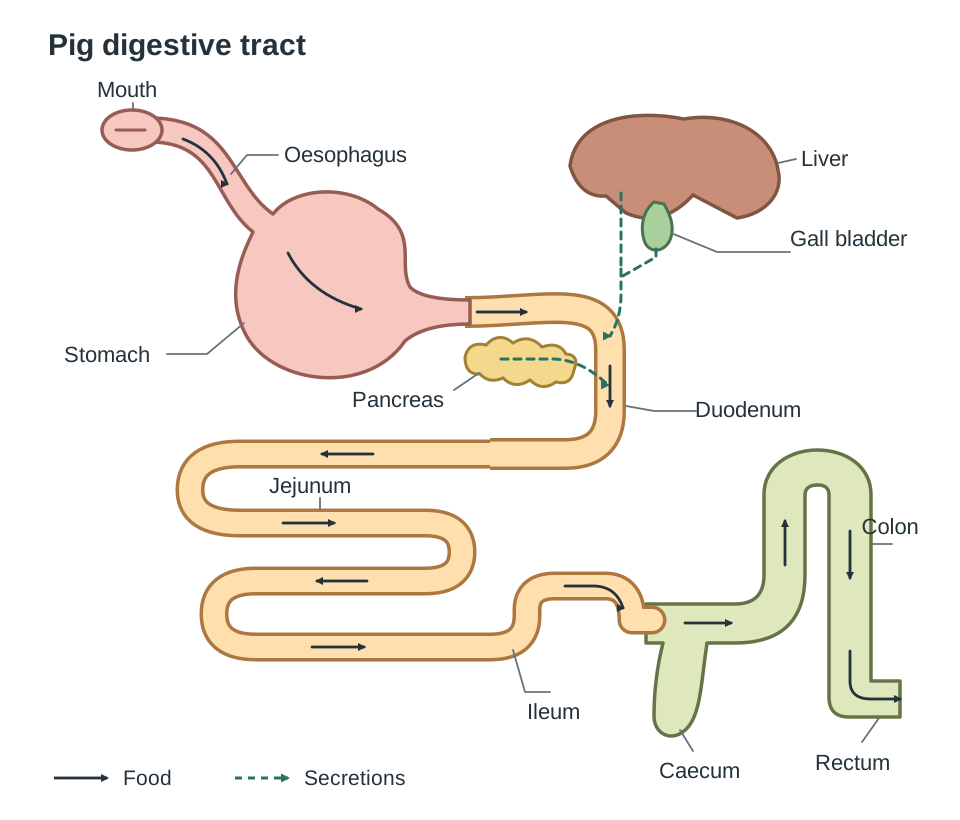
Pigs are non-ruminant monogastric animals with a single, simple stomach. Digestion follows a clear anatomical pathway:
- Mouth: Feed is chewed and mixed with saliva, which contains salivary amylase to begin hydrolysing starch into maltose.
- Oesophagus: The food bolus is moved to the stomach by involuntary muscular contractions known as peristalsis.
- Stomach: Gastric glands secrete hydrochloric acid (maintaining a pH of 1.5–2.0) and pepsinogen. Acid converts pepsinogen into pepsin, which breaks proteins down into soluble peptides.
- Small intestine: Comprises the duodenum, jejunum and ileum. The duodenum receives bile from the liver (via the gall bladder) to neutralise stomach acid and emulsify fats, alongside pancreatic juice containing trypsin (proteins to peptides), pancreatic amylase (starch to maltose) and lipase (lipids to fatty acids and glycerol). Brush-border enzymes complete digestion, and the products (amino acids, glucose, fatty acids) are absorbed across the villi.
- Large intestine: Comprises the caecum, colon and rectum. Absorbs water and minerals; a modest microbial population produces small amounts of B and K vitamins, but provides no significant fibre digestion.
Ruminant vs monogastric digestion
Questions often require a direct, matched comparison between the monogastric system and the ruminant system:
| Feature | Monogastric (pig) | Ruminant (cattle, sheep) |
|---|---|---|
| Stomach anatomy | One simple chamber | Four compartments: rumen, reticulum, omasum, and abomasum (the abomasum is the true stomach) |
| Primary digestive mechanism | Enzymatic digestion by the animal's own secreted enzymes | Microbial fermentation in the rumen, followed by acid-enzymatic digestion in the abomasum |
| Microorganism population | Small population in the large intestine only | Enormous symbiotic population of bacteria, protozoa, and fungi in the rumen |
| Fibre (cellulose) digestion | Cannot digest cellulose; secretes no cellulase and lacks a rumen fermentation vat | Rumen microbes secrete cellulase, fermenting cellulose into volatile fatty acids (VFAs) as the primary energy source |
| Essential amino acids & protein | Must be supplied ready-made in the ration; cannot synthesise essential amino acids | Rumen microbes synthesise high-quality microbial protein from dietary protein and non-protein nitrogen (such as urea) |
| B-vitamin synthesis | Must receive B vitamins in formulated feed | Rumen microbes synthesise all required B-complex vitamins |
| Chewing behaviour | Chewed once at ingestion | Feed is regurgitated and re-chewed as cud (rumination) |
| Typical commercial diet | Nutrient-dense concentrates: cereals (barley, wheat) and soya bean meal | Forages: fresh grazed grass, grass silage, and hay, supplemented with concentrates |
Stage-Specific Nutrition, Limiting Amino Acids, and Phytase
Pigs cannot synthesise ten of the amino acids they require for metabolic maintenance and tissue growth. Diets must supply these essential amino acids in balanced ratios. In cereal-based rations, lysine is the first limiting amino acid, followed by methionine, threonine, and tryptophan. If lysine is in short supply, protein synthesis can only continue as far as the available lysine allows, so lean muscle growth is limited no matter how much total crude protein is in the ration. The surplus amino acids are broken down by the liver through deamination and excreted as nitrogen in urine, which wastes feed money and elevates slurry nitrogen levels.
Phase feeding across production stages
Nutrient density shifts over the lifecycle to match changing tissue growth:
| Stage | Weight / Age | Crude Protein (%) | Lysine (%) | Nutritional Objective |
|---|---|---|---|---|
| Creep | 1–4 weeks (suckling) | 20–22% | 1.4–1.6% | Highly digestible milk powders and flaked cereals to encourage solid feed intake and stimulate gut enzymes before weaning. |
| Weaner | 4–10 weeks (8–30 kg) | 18–20% | 1.2–1.3% | Cooked wheat, barley and soya bean meal to drive rapid lean tissue and skeletal frame deposition. |
| Grower | 10–15 weeks (30–60 kg) | 16% | 1.0–1.1% | Balances muscle growth with moderate energy concentration to control carcase fat. |
| Finisher | 15–24 weeks (60–110 kg) | 14–15% | 0.8–0.9% | Cereal meal formulated to maximise daily live-weight gain while keeping subcutaneous backfat low. |
| Dry Sow | Pregnancy (gestation) | 13–14% | 0.6–0.7% | High-fibre cereal mix (with beet pulp or wheatfeed) fed at 2.2–2.5 kg/day to maintain body condition score at 3.0. |
| Lactating Sow | Farrowing to weaning | 16–18% | 0.9–1.0% | High-energy concentrate fed up to 7–9 kg/day to sustain milk production for 12–14 bonhams. |
Dietary crude protein percentages fall from 20% down to 14% as pigs mature because young weaners deposit predominantly water and lean muscle, which requires high amino acid concentrations. Older finishing pigs deposit more adipose tissue (fat), which requires metabolic energy rather than protein. Furthermore, older pigs consume a much larger daily volume of feed, so a lower dietary protein percentage still supplies their daily requirement in absolute grammes.
Supplemental phytase
Pigs lack endogenous phytase to break down phytic acid, the storage form of phosphorus in cereal grains. Supplemental phytase is added to commercial rations to hydrolyse phytic acid, releasing bound plant phosphorus. This eliminates the need to add mined inorganic dicalcium phosphate, lowering feed costs and significantly cutting phosphorus excretion in slurry, which protects waterways from eutrophication.
Breeds, Criss-Cross Breeding, and Herd Genetic Improvement
Commercial units rely on three principal breeds, dividing them into maternal and terminal lines:
- Landrace: Long-bodied, white pig with distinctive drooped (lop) ears. Outstanding maternal breed noted for prolificacy, docile temperament, high milk yield, and strong mothering instincts.
- Large White: Large British breed with erect ears, a dished face, and excellent bacon conformation. Combines high prolificacy and milk production with rapid daily growth and high carcase lean yield.
- Duroc: Hardy, dark red-brown American breed with drooping ears and pigmented skin that resists sunburn. Used as a terminal sire in indoor herds to pass on rapid growth, exceptional feed efficiency, and intramuscular fat (marbling), and as foundation stock in outdoor enterprises.
The criss-cross breeding system
Most commercial indoor units use a rotational criss-cross breeding programme between Landrace and Large White lines to breed their own female herd replacements:
- A crossbred sow (Landrace Large White) is mated to a purebred boar of one breed (for example, Large White).
- The top-performing gilts from this litter are selected for breeding. Their genetic makeup is roughly 75% Large White and 25% Landrace.
- In the next generation, these gilts are mated to a purebred boar of the other breed (Landrace).
- Boar breeds alternate every generation. Replacement boars (or AI semen) are purchased from outside breeding companies, and boars are replaced every two years to prevent inbreeding.
This system maintains high hybrid vigour (heterosis) for maternal traits like litter size, piglet survival and milk yield, while keeping replacement costs low because gilts are bred on farm rather than bought in.
Principles of genetic improvement
Genetic progress in modern pig herds relies on six core principles:
- Performance testing: Evaluating an individual young boar's or gilt's own daily live-weight gain, backfat depth (using ultrasound), and feed conversion efficiency under standardised housing and feeding.
- Progeny testing: Evaluating a breeding animal by measuring the performance, growth rate, and carcase quality of its offspring.
- Genotyping and genomic selection: Analysing DNA samples for thousands of genetic markers early in life. This predicts breeding values accurately before puberty, shortening the generation interval.
- Physical traits: Inspecting prospective gilts for conformation, sound feet and legs, good locomotion, and at least 14 well-spaced, functional teats.
- Natural selection: The natural survival of individuals best adapted to their environment. Outdoor units mimic this by keeping sows that farrow easily and rear robust litters outdoors without assistance.
- Genetic engineering: Direct alteration of an animal's DNA, such as research into gene-edited pigs resistant to respiratory viruses. While inputs like vaccines and phytase enzymes are produced using genetic engineering, no genetically engineered livestock are used in commercial Irish meat production.
Reproduction, the Oestrous Cycle, and Artificial Insemination
A well-managed commercial herd targets 2.2 to 2.4 litters per sow per year. The reproductive cycle follows an ongoing schedule: service → gestation (114 days) → farrowing → lactation (28 days) → weaning → return to oestrus (5–7 days post-weaning).
The sow's oestrous cycle lasts 21 days on average. Oestrus (standing heat) lasts 2 to 3 days. Signs of heat include a swollen, reddened vulva, restlessness, grunting, mounting other sows, and the standing reflex—the sow stands completely rigid when downward pressure is applied to her back.
The boar effect
The boar effect is the stimulation and synchronisation of heat in sows and gilts through direct sensory exposure to a mature boar. Housing a vasectomised or mature teaser boar nearby allows sight, sound, and salivary pheromones (androstenone) to trigger rapid follicle development and standing heat in freshly weaned sows.
Double servicing
Breeding managers practise double servicing: the sow is served or inseminated within 12 hours of the first detected standing heat, and served again 12 to 24 hours later. Because a sow releases ova over several hours and the exact time of ovulation varies, double servicing makes sure that viable sperm are present in the oviduct throughout the ovulation window, which improves conception rates and increases the number of piglets born alive.
Artificial insemination (AI) vs natural service
Over 80% of Irish commercial sows are served by artificial insemination:
- Natural service: A boar is brought to the sow in heat. Boars are costly to feed and house, can become aggressive and dangerous to stockpersons, and can only serve a limited number of sows each week.
- Artificial insemination (AI): Semen is collected from elite boars at licensed stud centres, diluted with nutrient extenders, and packed into single-dose bottles. Pig semen is stored at 16–18 °C (it cannot be frozen in liquid nitrogen like cattle semen, as freezing destroys pig sperm membranes) and is used within 3 to 5 days. The technician inserts a spiral catheter through the vagina, locking it into the cervix, while a teaser boar in front of the sow stimulates uterine contractions to draw the semen inward.
Advantages of AI: Gives access to top index boars for growth, lean meat and low FCR; eliminates the cost and danger of keeping multiple boars; lowers disease entry risk by avoiding live animal movement; and enables planned use of terminal sires (such as Duroc).
Disadvantages of AI: Demands skilled heat detection and correct timing; semen has a short shelf life; and conception fails if insertion technique or timing is flawed.
Housing Design, Critical Temperatures, and the Five Freedoms
Pigs have very sparse hair coats and lack functional sweat glands, which makes them sensitive to cold and heat stress. The lower critical temperature (LCT) is the environmental temperature below which a pig must burn feed energy purely to maintain core body temperature. When room temperature falls below the LCT, dietary energy is diverted from lean muscle growth into shivering and metabolic heat production. Daily live-weight gain drops and the feed conversion rate worsens. The smaller the pig, the higher its LCT, because small piglets have a large surface area relative to their body weight and almost no insulating body fat.
Temperature targets across housing zones
- Dry Sow House (16–20 °C): Houses pregnant sows in group pens with automated feeders and lying bays.
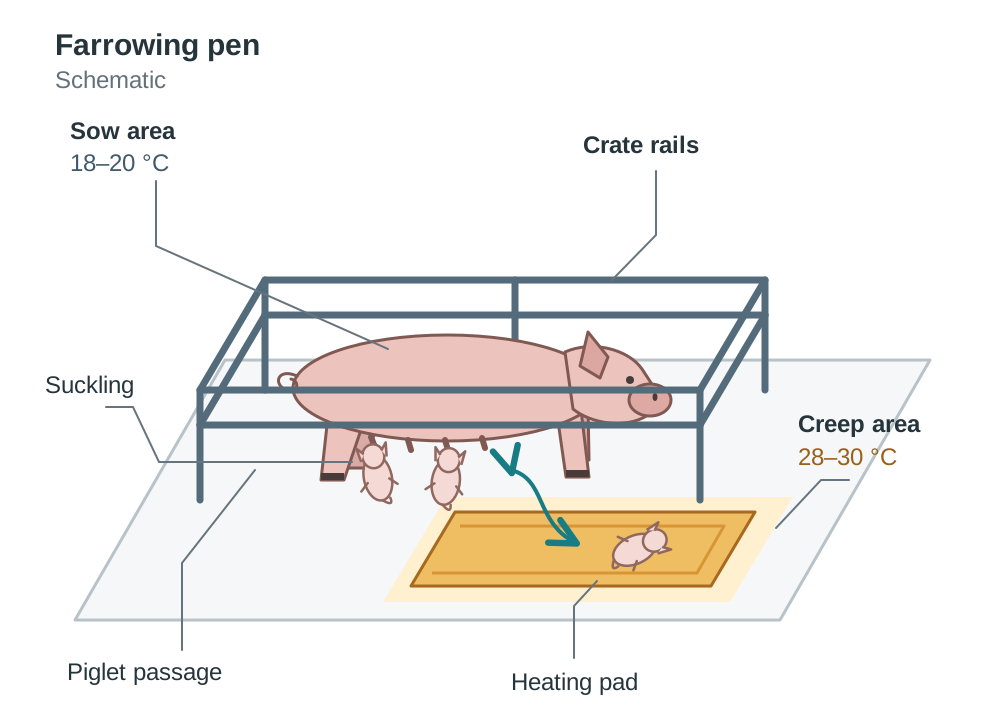
- Farrowing House (Sow area: 18–20 °C; Piglet Creep Area: 28–30 °C): Houses the sow in a farrowing crate to stop her lying down suddenly or rolling over, which is the main cause of piglet crushing. The adjacent creep area has heating pads or infrared lamps providing a 28–30 °C microclimate to keep bonhams warm without stressing the sow.
- First-Stage Weaner House (24–26 °C, stepping down to 22 °C): Low ceilings, insulated plastic/wire slatted floors, and computerised temperature control. Bonhams enter at 4 weeks (~7–8 kg) and are batched strictly by weight to eliminate fighting.
- Finisher/Fattener House (18–22 °C): Accommodates growing pigs from 30 kg up to slaughter live weight (105–115 kg). Pens use fully slatted concrete floors over slurry storage channels.
Animal welfare and the Five Freedoms
Welfare on Irish farms is governed by the Animal Health and Welfare Act 2013, which places a legal duty of care on the keeper. Housing systems are judged against the internationally recognised Five Freedoms:
- Freedom from hunger and thirst: Automated dry or wet feeding systems; constant supply of fresh water via nipple drinkers.
- Freedom from discomfort: Insulated, draught-free sheds with temperature curves adjusted to growth stage; dry lying areas.
- Freedom from pain, injury and disease: Non-slip slatted floors, all-in/all-out sanitation breaks, and hospital pens for isolated recovery.
- Freedom to express normal behaviour: Manipulable enrichment materials (hanging chains, hardwood/softwood blocks, compressed straw cylinders) to occupy rooting instincts.
- Freedom from fear and distress: Calm handling using solid pig boards; keeping social groups stable; loose-housing of dry sows in groups from 4 weeks after service until 1 week before farrowing (individual sow gestation stalls are banned across the EU).
Neonatal Care, Health Husbandry, and Traceability
Newborn bonhams weigh only 1.0–1.5 kg, have almost no body fat to keep them warm, and have no antibodies of their own. Warmth and colostrum are the two critical priorities:
- Colostrum: Bonhams must suckle colostrum within the first 6 hours. For the first 24 hours, the piglet's gut wall can absorb intact maternal antibodies directly into the bloodstream without digesting them. These antibodies provide passive immunity against farm-specific pathogens until the piglet's active immune system matures. Colostrum also provides concentrated energy to fuel body heat.
- Iron injection: Sow milk is naturally deficient in iron, and piglets are born with very small liver reserves. Because indoor pigs on concrete slats cannot root in soil, blood haemoglobin drops quickly. Piglets receive an intramuscular injection of 100–200 mg iron dextran into the neck muscle at 2 to 3 days of age to prevent nutritional anaemia.
Welfare regulations on routine procedures
Under EU Council Directive 2008/120/EC, routine tail-docking and routine clipping of the eight sharp needle teeth (third incisors and canines) are illegal. Farmers must tackle vices like tail and ear biting by lowering stocking density, improving ventilation, and providing manipulable enrichment materials. Tail-docking or tooth grinding is permitted only under veterinary direction as a last resort when actual biting injuries persist.
Food safety, traceability, and quality assurance
Irish pigmeat enters rigorous domestic and international export markets regulated by the Department of Agriculture, Food and the Marine (DAFM) and Bord Bia:
- Herd registration and slap marking: Every commercial unit is allocated a unique DAFM herd number. Before leaving the farm for slaughter, pigs receive an indelible tattoo stamped onto each shoulder using a slap mark. This tattoo survives scalding and de-hairing in the abattoir, linking the carcase directly to its farm of origin for complete farm-to-fork traceability.
- Bord Bia Pigmeat Quality Assurance Scheme (PQAS): Audits participating units on animal welfare, veterinary medicine records, feed safety, and environmental hygiene.
- Veterinary medicine withdrawal periods: Farmers must record every antibiotic or anthelmintic administered and observe mandatory withdrawal periods before sending animals to slaughter, guaranteeing meat free from chemical residues.
Performance Metrics: Calculating and Interpreting DLG, FCR, and Sow Output
Herd profitability is monitored through standard production formulas:
Daily live-weight gain (DLG)
DLG measures the average weight the pig puts on each day. Healthy commercial finishing pigs achieve a DLG between 0.80 and 1.00 kg/day.
Feed conversion rate (FCR)
FCR measures feed conversion efficiency. Feed makes up about 70% of the cost of producing a pig, so FCR is the single most critical performance figure on the farm. A lower FCR is better: less feed is eaten for each kilogram of live weight gained, reducing finishing costs. FCR is expressed as a decimal ratio or with the units kg feed / kg gain.
- Weaners: Convert at an efficient FCR of 1.5 to 1.8 because young pigs deposit lean muscle tissue and water, which is energetically efficient.
- Finishers: Convert at a poorer FCR of 2.4 to 2.8. As pigs approach finish weight, muscle growth slows and fat deposition accelerates. Adipose tissue contains more than double the energy density of muscle and very little water, so it takes significantly more feed energy to deposit each extra kilogram.
Slaughter weights and kill-out percentage
Pigs are slaughtered at roughly 105–115 kg live weight, reached at 22–24 weeks of age. The factory pays on carcase (dead) weight:
Pigs have the highest kill-out percentage of the main farm livestock (73–77%), compared with cattle (54–58%) and sheep (46–50%), because their digestive tract is smaller and lighter than a ruminant's full four-chambered stomach.
How to answer secondary-data questions on DLG and FCR
When exam questions provide performance tables or trial charts, structure your written response using four steps:
- Trend: State the direction of change with figures quoted from the data.
- Comparison: Identify the highest and lowest performing groups and state the numerical gap.
- Biological explanation: Explain why the difference occurred (for example, higher lysine density, house temperature kept above LCT, or absence of subclinical pneumonia).
- Limitation of evidence: Evaluate data validity. A trial on a single farm or batch represents a small sample size. Confounding variables (differences in genetics, stocking rate, or underlying health) mean the ration is correlated with better gain, but correlation does not prove causation without matched controls.
Comparing Production Systems: Indoor Integrated Units vs Outdoor Herds
To achieve full marks on comparison questions, set out matched criteria using comparative language (such as "whereas"):
| Criterion | Intensive Integrated Indoor Unit | Extensive Outdoor Free-Range Herd |
|---|---|---|
| Housing and accommodation | Insulated, computer-ventilated sheds; slatted floors over slurry channels; farrowing crates and heated creep boxes. | Outdoor paddocks on free-draining soil; corrugated steel arcs (huts) bedded with straw for shelter and farrowing. |
| Breeds and genetics | Landrace Large White crossbred sows; white skin; selected for prolificacy, high DLG and lean meat percentage. | Hardy, pigmented breeds (Duroc, Saddleback crosses); dark skin prevents sunburn; high cold tolerance and mothering ability. |
| Feed conversion and output | Superior finisher FCR (2.4–2.7) due to climate control; low pre-weaning mortality (8–10%); tightly scheduled batches. | Poorer FCR (2.9–3.4) as feed energy is burned to keep warm outdoors; higher piglet mortality (12–18%) from hypothermia and overlaying in arcs. |
| Animal welfare | Climate, parasites and nutrition tightly managed; sow confinement in farrowing crates faces consumer scrutiny. | Freedom of movement and natural rooting behaviour in soil; higher parasite burdens (Ascaris suum) and lameness risks. |
| Labour and capital | High initial capital investment for automated feeding, housing and slurry storage; low labour requirement per pig finished. | Low housing capital cost; high land requirement; significantly higher labour demands for straw bedding, fence upkeep and feeding. |
| Environmental pressures | High volumes of concentrated liquid slurry; point-source ammonia and odour emissions requiring low-emission spreading. | Risk of severe soil poaching, loss of grass cover, and diffuse nitrate and phosphate leaching into surface streams. |
| Market outlets | Produces large volumes of uniform fresh pork and bacon for domestic supermarkets and export markets under Bord Bia PQAS. | Targets niche, artisan, and organic markets commanding a 20–30% retail price premium over commodity pork. |
Sustainable Intensification, Slurry Management, and Health and Safety
Sustainable intensification means producing more food per unit of land and resource while cutting the environmental impact per kilogram of pork produced:
- Improving FCR: Better feed efficiency cuts the overall acreage, water and fertiliser required to grow imported cereals, and reduces total excreted nutrients.
- Lowering dietary crude protein: Balancing rations with synthetic amino acids (lysine, methionine) reduces protein excess, cutting urinary nitrogen and ammonia () emissions.
- Phytase supplementation: Releases plant phosphorus from cereal grains, reducing phosphorus accumulation in soils and runoff into streams.
- Slurry digestion: Anaerobic digestion of pig slurry captures methane for renewable heat and power, producing a stable digestate fertiliser.
- Sourcing certified feed: Buying certified deforestation-free soya reduces the lifecycle carbon footprint of the unit's feed.
The trade-offs: High stocking densities increase disease transmission pressure and veterinary intervention; large herds concentrate slurry on a small land footprint; and welfare-friendly outdoor systems have a poorer FCR and higher greenhouse gas emissions per kilogram of meat produced.
Managing pig slurry as a nutrient resource
Pig slurry supplies valuable nitrogen (N), phosphorus (P) and potassium (K). Compared with cattle slurry, pig slurry has a lower dry matter and is relatively richer in N and P and lower in K. Key rules:
- Storage capacity: Units must provide sealed sub-floor or external storage sufficient to hold all slurry through the statutory winter closed spreading period (roughly mid-October to mid-January, depending on Nitrates zone).
- Low-Emission Slurry Spreading (LESS): Trailing shoe or band spreader equipment applies slurry in bands beneath the crop canopy. This cuts ammonia loss to air, reduces odour, and increases nitrogen recovery by the growing crop compared with splash plates.
- Water protection: Apply slurry according to a Nutrient Management Plan based on soil test results, respecting statutory buffer strips (e.g. 5 m) beside streams and lakes to prevent eutrophication.
Slurry decomposition gases and agitation safety
Anaerobic breakdown of stored slurry produces four gases: hydrogen sulphide (, heavier than air, toxic, smells of rotten eggs at low concentrations but rapidly paralyses the sense of smell above 100 ppm, causing respiratory arrest within breaths at high concentrations); methane (, lighter than air, odourless, explosive in air at 5–15%); carbon dioxide (, heavier than air, colourless, displaces oxygen); and ammonia (, lighter than air, sharp pungent smell, irritates eyes and lungs).
Slurry agitation safety steps:
- Agitate only on a windy day to ensure rapid dispersion of vented gases.
- Evacuate all personnel and remove all livestock from the shed.
- Open all external doors, end gates and ventilation flaps to create a strong cross-draught.
- Guard open agitation points to prevent accidental falls.
- Start the agitator from outside the building and leave the shed immediately.
- Stay out of the shed for at least 30 to 60 minutes after agitation starts.
- Never enter an enclosed tank under any circumstances.
Hazards of working with pigs and farm biosecurity
| Hazard Class | Farm Example | Control Measure |
|---|---|---|
| Physical | Being bitten by aggressive sows with litters; attacked by boars; crushed against pen walls by heavy finishers; slipping on wet concrete | Use solid handling boards and pig paddles; never enter a pen alone with a mature boar; establish clear escape routes; wear non-slip steel-toe safety boots |
| Biological (Zoonoses) | Bacterial infections (Salmonella, E. coli, Leptospira); fungal ringworm; erysipelas; swine influenza | Wash hands with antibacterial soap; wear farm-dedicated boots and overalls; cover skin wounds; maintain rodent control programmes |
| Respiratory / Health | Dust from dry feed and bedding combined with airborne ammonia causing occupational asthma and farmer's lung | Ensure high-capacity ventilation; use liquid or pelleted feeds to suppress dust; wear FFP3 dust respirators when sweeping or moving stock |
Disease management and notifiable diseases
High animal density requires all-in/all-out management: entire rooms are emptied together, power-washed with hot water, disinfected with approved virucidal agents, and dried for 48 hours to break pathogen cycles.
- Bonham scour (E. coli): Watery diarrhoea and dehydration; controlled by sow pre-farrowing vaccination, early colostrum intake, and high creep hygiene.
- Enzootic pneumonia (Mycoplasma hyopneumoniae):* Chronic dry coughing, consolidated lung tissue, and poor FCR; controlled by piglet vaccination and ventilation control.
- Notifiable diseases: A notifiable disease must, by law, be reported immediately to the local DAFM Regional Veterinary Office upon suspicion alone. Notifiable pig diseases include African swine fever (ASF), classical swine fever, foot and mouth disease, and Aujeszky's disease. Compliance requires stopping all pig, vehicle and personnel movements, allowing official sampling, and obeying restriction orders. Because there is no cure or vaccine for ASF, Irish biosecurity depends on the strict EU-wide ban on feeding swill or food waste to pigs.
Key terms
- Monogastric
- An animal with a single-chambered, simple stomach that relies on its own secreted digestive enzymes rather than foregut microbial fermentation.
- Cellulase
- The enzyme required to hydrolyse the beta-glycosidic bonds in cellulose; not produced by pigs or any other mammal.
- Bonham
- The standard Irish agricultural term for a young pig from birth to weaning.
- Gilt
- A young female pig selected for breeding that has not yet farrowed her first litter.
- First Limiting Amino Acid
- The essential amino acid in shortest supply relative to an animal's requirement that dictates the ceiling for protein synthesis (lysine in pig diets).
- Phytase
- An enzyme added to pig rations to break down indigestible phytic acid in cereals, releasing plant phosphorus and reducing phosphorus in slurry.
- Criss-Cross Breeding
- A rotational crossbreeding system that alternates purebred boars of two distinct breeds (Landrace and Large White) on crossbred home-reared females.
- Hybrid Vigour (Heterosis)
- The biological phenomenon where crossbred progeny outperform the average genetic merit of their purebred parents for traits like prolificacy and survival.
- Terminal Sire
- A purebred boar (such as a Duroc) whose offspring are all slaughtered for meat rather than retained for breeding, selected for rapid growth and carcase lean.
- Boar Effect
- The stimulation and synchronisation of oestrus in sows and gilts through direct sensory exposure to the sight, sound, and salivary pheromones of a mature boar.
- Double Servicing
- Inseminating or mating a sow twice within a 12 to 24 hour interval during standing heat to ensure live sperm are present across the full ovulation window.
- Lower Critical Temperature (LCT)
- The ambient temperature below which an animal must burn dietary feed energy purely to maintain core body heat, depressing growth rate and worsening FCR.
- Daily Live-weight Gain (DLG)
- The average live weight an animal puts on each day over a given feeding period, expressed in kg/day.
- Feed Conversion Rate (FCR)
- The mass of feed consumed divided by live-weight gain achieved; a lower numerical value indicates greater feed efficiency.
- All-In / All-Out
- A management protocol where entire batches of animals enter and vacate housing together, allowing complete washing, disinfection, and resting between batches.
- Slap Mark
- A permanent tattoo applied with indelible ink to each shoulder of a finished pig before transport, displaying the DAFM herd number for meat traceability.
- Notifiable Disease
- An infectious disease that must, by law, be reported immediately to the Department of Agriculture, Food and the Marine upon suspicion.
Check yourself
Why is fresh grass excluded from commercial pig diets? Give two distinct biological reasons.
1. Pigs are monogastrics with a single stomach and no rumen microbes, and they secrete no cellulase, so they cannot break down the cellulose in grass. 2. Grass is too bulky and low in energy density; the pig's stomach fills up before it absorbs sufficient energy, causing poor DLG and FCR.
Outline how the criss-cross breeding system operates in commercial pig herds, and state one advantage.
A crossbred Landrace × Large White sow is mated to a purebred boar of one breed (e.g. Large White); the best gilts are kept and mated to a purebred boar of the other breed (Landrace), alternating the boar breed every generation. Advantage: Maintains high hybrid vigour for maternal traits while replacement females are bred on farm, so only boars or semen must be bought in.
Define lower critical temperature (LCT) and state the consequence of housing pigs below it.
LCT is the environmental temperature below which an animal must burn dietary feed energy purely to maintain core body temperature. Housing pigs below their LCT diverts feed energy away from muscle growth to keep warm, which depresses daily live-weight gain (DLG) and worsens the feed conversion rate (FCR).
Why must indoor-reared bonhams receive an iron injection within their first 3 days of life?
Piglets are born with very small liver iron reserves and grow rapidly, while sow milk is naturally low in iron. Housed indoors on concrete or plastic slats, they cannot root in soil to obtain natural iron, causing nutritional anaemia if untreated.
How does adding phytase enzyme to pig diets benefit both farm economics and the environment?
Phytase hydrolyses phytic acid in cereal grains, releasing bound plant phosphorus. This eliminates the need to buy expensive inorganic phosphate supplements (economic) and cuts phosphorus excretion in slurry, protecting waterways from eutrophication (environmental).
Name the four hazardous gases produced during anaerobic slurry storage, and identify which one is most acutely lethal.
Hydrogen sulphide (H2S), methane (CH4), carbon dioxide (CO2), and ammonia (NH3). Hydrogen sulphide is the most acutely lethal because it rapidly paralyses the olfactory nerves, deadening the sense of smell, and causes fatal respiratory arrest.
What is a notifiable disease, and what action must a farmer take if one is suspected?
A notifiable disease is an infectious disease that, by law, must be reported to the Department of Agriculture, Food and the Marine (DAFM) immediately upon suspicion. The farmer must contact the local Regional Veterinary Office and halt all movements of animals, people, and vehicles on and off the holding.