

Innovation and biotechnology provide modern agriculture with the scientific tools needed to produce food efficiently while protecting the environment. In the Leaving Certificate Agricultural Science specification, this topic spans crop and animal science. It examines how farmers and researchers select and improve genomes, moving from visual selection to molecular tools such as genomic selection, transgenics, and CRISPR genome editing. It also encompasses biological processes on the farm, including tissue culture, microbial inoculants, vaccines, and diagnostic testing, alongside precision farming technologies. At Higher Level, students must understand the biological mechanisms, know the required practical investigation on plant hybridisation, and evaluate the economic and ethical arguments surrounding modern technologies in the context of Irish production systems and export markets.
Understanding Innovation and Biotechnology in Agriculture
Biotechnology in farming means using living organisms, cells, or biological processes to manufacture useful products, improve crops and livestock, or solve agricultural challenges.
- Traditional biotechnology relies on natural biological and reproductive processes. It includes selective breeding, crossbreeding cattle, hybridising plant varieties, and using micro-organisms for fermentation or nitrogen fixation. In these approaches, whole genomes are combined through normal mating or pollination, reshuffling thousands of uncharacterised genes at the same time.
- Modern biotechnology works directly with genetic material at the molecular level. It includes DNA genotyping, marker-assisted selection, recombinant DNA transfer (genetic engineering), and site-directed genome editing such as CRISPR/Cas9.
Innovation is a broader concept that includes any new tool, machine, digital system, or management practice that improves farm productivity, profitability, or environmental sustainability. Alongside molecular genetics, innovation includes precision livestock farming tools like rumination collars, low-emission slurry spreading, and satellite grass measurement.
Modern farming relies on these advances to achieve sustainable intensification, which means increasing agricultural output from existing farmland while minimising environmental impact and protecting animal welfare. Because genetic gains are cumulative and permanent, breeding animals or crops for higher disease resistance or better feed conversion delivers lasting improvements generation after generation.
The Principles of Genetic Improvement and Selection
Five principles of genetic improvement and selection are specified for both crops and animals: performance testing, selection on physical traits, progeny testing, genotyping and genomic selection, and natural selection. For animals, genetic engineering is listed as a sixth principle. For crops, genetic engineering is treated separately: students must explain how specific genes are identified in characterised crop genomes and how they produce protective proteins to tackle crop diseases.
1. Performance Testing
Evaluating an individual's genetic merit by directly measuring its own performance under standardised, uniform conditions. At the Irish Cattle Breeding Federation (ICBF) test centre in Tully, Co. Kildare, young commercial beef bulls are fed identical diets to compare their daily live-weight gain (DLG) and feed conversion rate (FCR) objectively. In crop science, official variety trials grow candidate cereal lines side by side to measure grain yield, straw stiffness, and disease resistance under the same soil and weather conditions.
2. Selection on Physical Traits
Choosing breeding stock based on visual assessment of conformation and functional traits. In livestock, this includes scoring udder attachment, teat placement, feet, and legs. In crops, breeders assess plant height, canopy density, and ear architecture. While quick and inexpensive, physical appearance can mislead breeders because an animal's visible phenotype () reflects both its underlying genotype () and the influence of its management and environment ():
Two bull calves with identical genetic merit will look very different if one was reared on good silage and meal while the other received poor grass. This is why performance testing only works when all candidate animals are managed under identical environmental conditions.
3. Progeny Testing
Assessing the breeding value of a parent by recording the performance of a representative group of its offspring across multiple commercial environments. Progeny testing is indispensable for sex-limited traits that a sire cannot express directly, such as milk yield and butterfat percentage in dairy bulls, or egg numbers in cockerels. While highly reliable once hundreds of daughters complete milk recording, progeny testing is slow. A dairy sire is typically 5 to 6 years old before his daughter proof is confirmed.
4. Genotyping and Genomic Selection
Reading an organism's DNA at thousands of specific marker points to predict its genetic merit at birth or as a seedling, bypassing the multi-year wait for progeny records.
5. Natural Selection
The environmental process where individuals best adapted to survival and reproduction pass their advantageous alleles to the next generation. While farmers practise artificial selection to suit market demands, natural selection continues in the background. Mountain sheep breeds like the Scottish Blackface survive harsh upland conditions because, over many generations, the less hardy ewes failed to rear lambs on exposed hillsides, so only the genes of the hardy ewes were passed on.
6. Genetic Engineering
The deliberate laboratory alteration of an organism's genome, often by inserting a characterised gene from an unrelated species to produce a protective protein.
Genotyping, Genomic Selection, and Animal Breeding
Genotyping involves reading an animal's DNA code at specific variable locations called single nucleotide polymorphisms (SNPs) using a diagnostic DNA chip. A hair follicle, blood sample, or ear-notch tissue biopsy taken at birth provides sufficient DNA.
Genomic selection pairs this marker data with a large reference population of thousands of older animals whose genotypes and lifelong performance records are fully known. Statistical models match specific SNP patterns to superior milk solids, fertility, or health traits. Geneticists then calculate a young animal's genomic breeding value within weeks of birth.
Genomic selection greatly shortens the generation interval in cattle from 5 to 6 years (waiting for daughters to mature, calve, and finish a lactation) down to 1 to 2 years, because semen can be collected from genomically selected yearling bulls before they have any daughters milking. Their genomic prediction is less reliable than an older bull's daughter proof, which is why farmers must use a balanced team of sires (typically 5 to 7 bulls) to spread risk across the herd.
Worked Example: Proven Sire versus Genomic Yearling
Scenario: A farmer is choosing AI sires for the coming breeding season. Bull A is an 8-year-old bull with a daughter proof from 200 milk-recorded daughters. Bull B is a 14-month-old bull with a genomic evaluation from an ear-notch DNA sample and no milking daughters. Explain one advantage and one limitation of using each in an AI breeding programme.
Solution:
- Bull A (Daughter-proven):
- Advantage: High reliability (over 90%). Daughter lactation data confirms his ability to transmit milk solids and calving ease, meaning little financial risk of proof dropping.
- Limitation: Long generation interval. Because it took 5 to 6 years to prove him, his genetics are already half a decade behind the newest breeding lines.
- Bull B (Genomic yearling):
- Advantage: Short generation interval. Using him at 14 months accelerates annual genetic gain for milk solids and fertility in the herd.
- Limitation: Lower reliability (typically 60% to 70%). His proof may adjust upwards or downwards once milking daughters are recorded, which is why he must be used as part of a team of bulls rather than across the entire herd.
Irish Breeding Indexes
Irish genetic evaluations are published from national databases managed by the Irish Cattle Breeding Federation (ICBF) for cattle and Sheep Ireland for sheep:
- Economic Breeding Index (EBI): Dairy index ranking animals by the expected profit in euro per lactation of their progeny, combining sub-indexes for milk production, fertility, calving, beef, maintenance, health, and management.
- Dairy Beef Index (DBI): Ranks beef bulls for use on dairy cows, balancing easy calving and short gestation against carcase weight and conformation.
- Commercial Beef Value (CBV): Ranks non-breeding beef calves for expected feed efficiency and carcase performance in finishing units.
- Sheep Ireland €uro-Star Indexes: Includes a Replacement index (maternal traits: lambing ease, milkiness, ewe prolificacy) for breeding ewe replacements, and a Terminal index (growth rate, carcase conformation, days to slaughter) for factory-bound lambs.
Heritability determines how quickly these indexes deliver progress. Highly heritable traits like butterfat percentage and carcase conformation respond rapidly to selection. Lowly heritable traits like female fertility and mastitis resistance respond slowly to traditional selection, which is why genomic screening and large progeny databases are so valuable for them.
Advanced Animal Reproductive Technologies
- Artificial Insemination (AI): Cryopreserved semen from elite sires is deposited through the cervix into the uterine body using an insemination gun. AI gives herds access to top genetics, eliminates venereal disease transfer, and removes the physical danger of maintaining stock bulls. Timing follows the AM/PM rule: cows seen in standing heat in the morning are inseminated that evening, and cows in heat in the evening are served the following morning.
- Limitations: Requires high labour and skill for heat detection; storage in liquid nitrogen is costly; there is no bull to catch repeats; and widespread use of a few elite sires narrows national genetic diversity and increases the risk of inbreeding. Farmers manage this by using teams of sires and consulting ICBF sire advice.
- Sexed Semen: Semen sorted using flow cytometry. Because the X chromosome carries slightly more DNA—about 4% more—than the Y chromosome, a fluorescent dye allows a laser-guided sorter to separate viable sperm into female (X) and male (Y) fractions with approximately 90% purity. Dairy farmers target sexed female semen on their highest-EBI heifers to breed replacements, using terminal beef semen on the rest of the herd.
- Limitations: Higher cost per straw, fewer sperm cells per straw, and conception rates typically a few percentage points lower than conventional semen. It must be targeted carefully on healthy maiden heifers or cows displaying strong standing heat.
- Embryo Transfer (ET): An elite donor cow receives hormone injections (follicle-stimulating hormone, FSH) so that she releases many eggs instead of one—this is called superovulation. She is inseminated, and about seven days later the embryos are flushed out of her uterus with sterile fluid through the cervix without surgery. The viable embryos are implanted into synchronised recipient cows.
- Limitations: Expensive, requires skilled veterinary labour, and success varies because some donor cows respond poorly to superovulation.
- Oestrus Synchronisation: Giving hormones (such as a progesterone device placed in the vagina, alongside prostaglandin and GnRH injections) so that a group of heifers or cows all come into heat at the same time, facilitating compact calving blocks and scheduled fixed-time AI.
Plant Genetics and the Specified Hybridisation Practical
Plant breeding develops crop varieties adapted to Irish growing conditions, selecting for dry matter yield, lodging resistance, disease resistance, and feeding or malting quality. In grassland farming, varieties are evaluated using the Department of Agriculture, Food and the Marine (DAFM) Recommended Lists and the Pasture Profit Index (PPI).
Basic Genetics Foundation
- A gene is a sequence of DNA nucleotides that codes for a specific polypeptide or functional characteristic. Different versions of the same gene are called alleles (such as purple stem and green stem ).
- An allele is dominant if it is expressed even when only one copy is present (). It is recessive if it is only expressed when both copies are present ().
- An organism with two identical alleles ( or ) is homozygous (true-breeding). An organism with two different alleles () is heterozygous.
When crossing two true-breeding parents (: ), all offspring in the first filial () generation receive one allele from each parent, making them all heterozygous () and displaying the dominant phenotype (purple).
When the plants are crossed with each other (), alleles segregate into gametes. The resulting generation is predicted by a Punnett square:
| P | p | |
|---|---|---|
| P | PP (purple) | Pp (purple) |
| p | Pp (purple) | pp (green) |
This produces a genotype ratio of and an expected phenotype ratio of 3 dominant (purple) : 1 recessive (green) (75% to 25%). The recessive green phenotype reappears in the generation because the recessive allele was carried, hidden, in the heterozygous plants.
Hybrid Vigour versus F₂ Segregation
Crossing two distinct homozygous inbred parent lines produces an F₁ hybrid displaying hybrid vigour (heterosis). The plants are exceptionally uniform and outperform both parent lines in yield and vigour. However, if a farmer saves and sows seed from an crop, Mendelian segregation occurs in the generation. Alleles separate, breaking the balanced heterozygous combinations and resulting in uneven maturity, variable yields, and mixed disease resistance. Consequently, farmers must purchase certified seed each season.
Specified Practical Activity: Plant Hybridisation Investigation
The syllabus requires students to investigate the genetic inheritance of traits by hybridising two varieties to measure the rate of trait transfer to progeny, using rapid-cycling brassicas or peas.
- Hypothesis: Stem colour in this variety is controlled by a single gene with one dominant allele, so crossing two true-breeding parents will produce an all-purple generation and an generation with a ratio of purple to green plants.
- Independent Variable: Genotypes of the parent plants crossed ().
- Dependent Variable: Number of and plants displaying each phenotype (the trait transfer rate).
- Controlled Variables: Compost type, pot size, watering volume, temperature, and light intensity kept identical for all seedlings, with all seeds sown on the same day.
- Control: Grow batches of each true-breeding parent line ( and ), self-pollinated and bagged, alongside the experimental cross. If they breed true, any phenotypic variation observed in the seedlings must come from the cross rather than environmental variation.
Method:
- Select two true-breeding parent varieties displaying contrasting qualitative traits (for example, purple stem and green stem ).
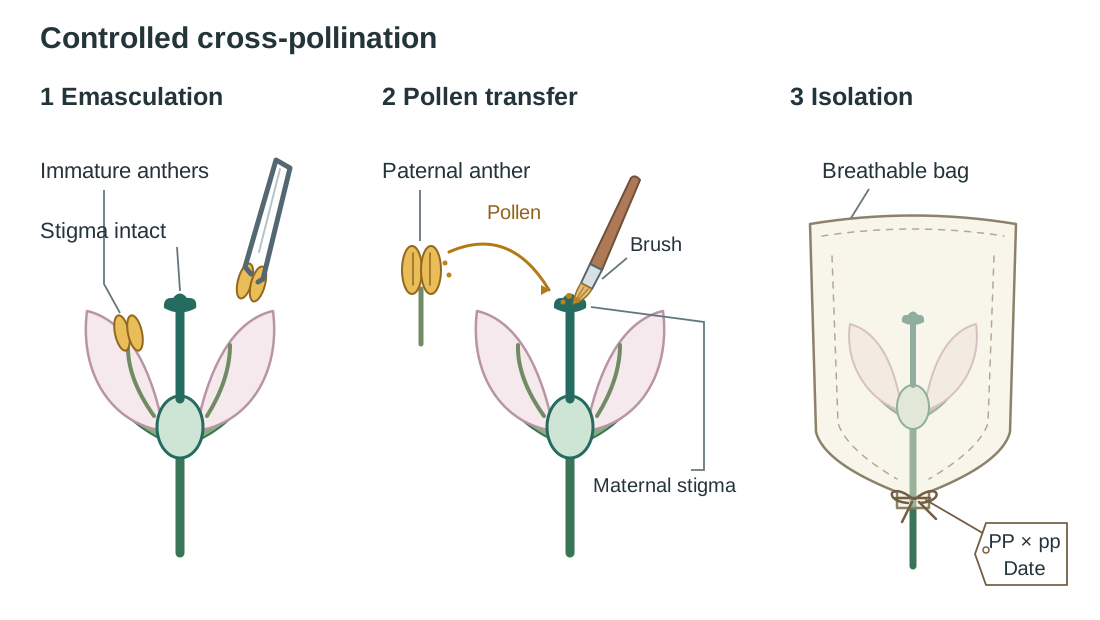
- Open the flower bud of the maternal parent plant using fine forceps before it opens and carefully remove all immature anthers. This step is called emasculation. It is essential because removing anthers before pollen ripens prevents accidental self-pollination.
- Collect ripe pollen from the shedding anthers of the designated paternal plant using a fine paintbrush and dust it onto the receptive stigma of the emasculated flower.
- Cover the pollinated flower head immediately with a breathable parchment bag and secure it with a tie. This isolates the flower, excluding unwanted airborne or insect-carried pollen. Attach a label noting parentage and date.
- Allow the seed pods to ripen. Harvest, dry, and sow the seeds under uniform conditions. Record the phenotype of every seedling (all will be purple, ).
- Produce the generation according to the species: rapid-cycling brassicas are self-incompatible, so cross-pollinate sibling plants by hand and bag them; peas self-pollinate naturally, so simply bag the flowers and allow them to self.
- Sow a large sample of seeds—at least 200—so that random variation has less effect on the ratio. Count and record the number of seedlings displaying purple and green stems.
- Record results in a structured table:
| Phenotype | Number of Plants Observed | Percentage of Total () | Expected Number ( Ratio) |
|---|---|---|---|
| Purple stem | Observed count | ||
| Green stem | Observed count |
- Present the data using a bar chart comparing observed counts against expected counts for each phenotype.
- Calculate the trait transfer rate using the formula:
Reliability: Score a large population ( seedlings), repeat the cross across several flower heads, and have a second observer score the seedlings independently to minimise misclassification.
Other Biotechnology and Innovation on Irish Farms
Beyond genetics and reproductive technologies, biotechnology and innovation operate across multiple areas of Irish crop and animal production.
Crop Biotechnologies and Micro-organisms
- Micropropagation (Tissue Culture): Growing large numbers of identical plants from tiny pieces of plant tissue (explants, such as shoot-tip meristems) on a sterile nutrient agar medium containing plant growth regulators. As cells divide, they form an undifferentiated lump called a callus; altering hormone ratios induces shoot and root formation before plantlets are hardened off. This produces disease-free, uniform clones rapidly and out of season. On Irish farms, it is used to multiply disease-free certified seed potato stocks, soft fruit runners, and newly bred crop varieties.
- Silage Inoculants: Sprayed onto grass at harvest, these supply beneficial lactic acid bacteria (Lactobacillus). They rapidly ferment plant sugars into lactic acid, dropping the silage pH to approximately 4.0. This inhibits spoilage bacteria, preserves forage feed value, and reduces dry matter loss in the pit.
- Rhizobium Inoculation of Legumes: Symbiotic Rhizobium bacteria inside the root nodules of clover, peas, and beans fix atmospheric nitrogen gas () into plant-available ammonium and nitrate. Sowing white clover in grazing pastures can reduce chemical nitrogen fertiliser requirements by 50 to 100 kg/ha each year.
- Anaerobic Digestion: Methanogenic bacteria break down animal slurry and silage in sealed, oxygen-free digester tanks to produce biogas (methane and carbon dioxide) for renewable heat and electricity. The remaining nutrient-rich digestate serves as a bio-fertiliser with lower odour and lower methane emissions than raw slurry storage.
- Rumen Micro-organisms: Symbiotic bacteria, protozoa, and fungi in the rumen produce cellulase enzymes to break down cellulose into volatile fatty acids (VFAs), enabling cattle and sheep to convert grass into milk and meat.
Animal Health Biotechnology
- Vaccines: Formulations containing killed, weakened, or engineered antigens from pathogens. Administering a vaccine stimulates the animal's immune system to produce antibodies and memory lymphocytes, granting active immunity without causing the full disease. Common examples include clostridial vaccines in sheep, leptospirosis and IBR vaccines in cattle, and dry-cow scour vaccines to boost protective colostrum antibodies.
- DNA and Antibody Diagnostics (PCR and ELISA): Polymerase Chain Reaction (PCR) amplifies tiny amounts of pathogen DNA for rapid detection, while ELISA tests detect specific antibodies or antigens in blood or milk samples. Ireland's national Bovine Viral Diarrhoea (BVD) eradication programme relies on testing calf ear-notch tissue samples to identify and cull persistently infected (PI) calves before they spread virus through the herd.
- Compliance and Disease Status: A notifiable disease (such as bovine tuberculosis, foot-and-mouth, or avian influenza) is an infectious disease that must by law be reported immediately to a veterinary practitioner or the Department of Agriculture, Food and the Marine (DAFM). A zoonosis is a disease that can be transmitted naturally between animals and humans (such as ringworm, leptospirosis, or brucellosis). Rapid molecular diagnostics improve early reporting, containment, and eradication.
Precision Farming and Grassland Innovations
- Heat-Detection Collars and Pedometers: Electronic motion sensors monitor cow movement, mounting activity, and rumination minutes. They automatically flag cows entering standing heat to improve submission rates and compact calving, while also alerting farmers to sick cows early via sudden drops in rumination.
- Automatic Milking Systems (Robots): Cows enter milking stalls voluntarily, guided by concentrates. Robotic arms wash teats and attach cups using laser sensors. The system records yield, milk conductivity, and somatic cell count (SCC) for each quarter at every milking, drastically reducing farm labour.
- Electronic Identification (EID) Tags and the AIM Database: Radio-frequency ear tags link every animal to the national Animal Identification and Movement (AIM) database, underpinning full farm-to-fork traceability and rapid traceback during disease outbreaks.
- PastureBase Ireland and Rising Plate Meters: Farmers walk pastures weekly with a plate meter to measure grass height and cover, logging data into PastureBase to generate a pasture wedge. This allows farmers to allocate grass precisely, identify surpluses for baling, and avoid shortages.
- GPS Variable-Rate Spreading: Soil analysis data by GPS-mapped zones guides fertiliser spreaders to apply lime, phosphorus, and potassium only where soil deficits exist, cutting chemical costs and preventing nutrient runoff into waterways.
- Low-Emission Slurry Spreading (LESS) and Protected Urea: Applying slurry with trailing shoe or dribble bar systems places nutrients directly on the soil surface under the grass canopy. This drastically reduces ammonia gas loss compared to splash plates. Treating granular urea with a urease inhibitor (protected urea) reduces ammonia and nitrous oxide emissions while preserving nitrogen for grass growth.
- Multi-Species Swards: Combining perennial ryegrass with white clover, red clover, and deep-rooting herbs like ribwort plantain and chicory. These swards maintain high dry matter yield under lower fertiliser inputs, improve drought tolerance, and enhance soil structure and biodiversity.
Crop Biotechnology: Transgenics, Cisgenics, and Genome Editing
Modern crop biotechnology targets specific sequences within characterised crop genomes—genomes that have been fully sequenced and mapped so that specific gene loci are linked to known biological functions.
The Molecular Pathway: Gene to Protective Protein
A plant gene contains the nucleotide sequence coding for a protein. When the cell transcribes this gene into messenger RNA (mRNA) and translates it at ribosomes, it produces a functional protective protein. In disease resistance, the protein usually acts as a receptor in the plant cell membrane. It recognises attacking pathogens and switches on the plant's own defence pathways, causing infected cells to die off and seal the pathogen inside before it can spread through the tissue.
- Transgenic Engineering (Recombinant GM): Introducing a characterised gene from an unrelated, sexually incompatible species into the plant genome using a bacterial plasmid vector (such as Agrobacterium tumefaciens) or a gene gun. In commercial Bt maize, a gene (cry1Ab) from the soil bacterium Bacillus thuringiensis is inserted into the maize chromosome. Maize cells produce crystalline Cry endotoxin proteins. When caterpillar pests chew the plant tissue, the protein binds to alkaline gut receptors, perforating the insect's digestive tract and killing the pest without chemical sprays.
- Cisgenic Engineering: Inserting a gene derived from the same species or a sexually compatible relative capable of natural crossbreeding. In Ireland, Teagasc conducted monitored field research at Oak Park, Co. Carlow, evaluating a cisgenic potato (cultivar Désirée). Researchers inserted a late blight resistance gene (Rpi-vnt1.1) derived from a wild potato relative (Solanum venturii). The potato synthesized a receptor protein conferring strong resistance against late blight (Phytophthora infestans). Because the resistance gene was introduced in a laboratory using recombinant DNA techniques, the plant remains legally classified as a genetically modified organism (GMO) in the EU. This was an experimental field trial to investigate potential fungicide reductions; it was not approved for commercial cultivation, and no GM potato is grown commercially in Ireland.
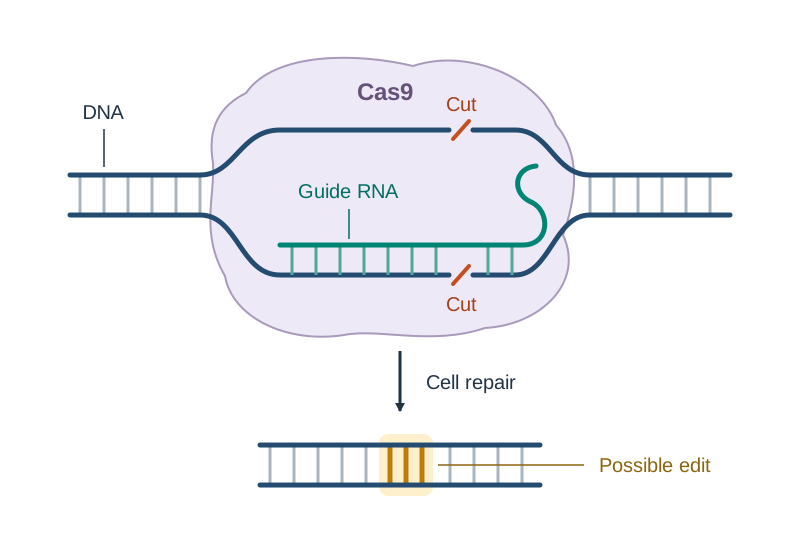
- Genome Editing (CRISPR/Cas9): A precision molecular tool that uses a guide RNA matched to a specific target sequence alongside a Cas9 endonuclease enzyme. The Cas9 enzyme acts as molecular scissors, creating a double-strand break at that exact location. The cell's natural repair mechanisms repair the cut, allowing scientists to disable a susceptibility gene or alter specific base pairs. Genome editing does not require the introduction of foreign DNA from unrelated species, producing edits that can mimic spontaneous natural mutations.
Higher Level Evaluation: Ethics, Economics, and Market Realities
At Higher Level, examination questions frequently require candidates to evaluate agricultural technologies. To evaluate means to collect and examine evidence on both sides, consider limitations, and arrive at a supported judgement. A one-sided answer cannot receive full marks.
Structuring an 'Evaluate' Answer
- State the technology and the specific farm challenge it addresses.
- Outline the evidence in favour under economic, environmental, and ethical or welfare headings.
- Outline the evidence against under the same headings.
- Note the limitations of current evidence (such as lack of long-term field data or uncertain legal status).
- Give a clear concluding judgement explaining the exact conditions under which the technology should or should not be adopted.
| Evaluation Dimension | Traditional Breeding (Hybridisation & Selection) | Genetic Engineering (Transgenics / GM) | Genome Editing (e.g. CRISPR/Cas9) |
|---|---|---|---|
| Mechanism | Recombines whole parental genomes naturally; causes linkage drag of unwanted wild traits. | Inserts foreign recombinant DNA from unrelated species at random chromosomal sites. | Modifies specific native DNA sequences with high precision; introduces no foreign genes. |
| Economics | Cheap to register; slow (10 to 15 years to release a cultivar); high chemical spray costs. | Very costly development and patent fees; controlled by large multinational seed companies. | Faster variety development (2 to 3 years); lower research costs allow public institutions to breed varieties. |
| Environment | Requires frequent chemical fungicide and insecticide passes with diesel tractors. | Drastically reduces chemical spraying; risks gene flow to wild relatives and pest resistance evolution. | Cuts spray passes while maintaining crop health; reduces chemical residues in soil and water. |
| Ethics & Regulation | High consumer trust; free from restrictive regulatory barriers. | Widespread consumer opposition in Europe; strict regulation under EU GMO legislation. | Growing scientific acceptance; legal status under EU GMO directives remains subject to ongoing legislative debate. |
Summary: Traditional breeding mixes whole genomes slowly and is accepted; transgenics inserts foreign DNA and faces European opposition; genome editing modifies native DNA precisely, with its EU regulatory status currently under debate.
Livestock Applications: Polled Cattle
Genome editing has been used in cattle breeding to introduce the dominant polled (hornless) allele into dairy breeds such as Holstein Friesians. Introducing this allele eliminates the need for thermal or chemical disbudding of calves, improving animal welfare and protecting handlers from horn injuries. However, ethical concerns persist regarding consumer acceptance of edited food animals and the biological risk of unintended off-target effects in the animal's genome.
The Irish Agricultural and Regulatory Reality
A genetically modified organism (GMO) is an organism whose genetic material has been altered in a way that does not occur naturally through mating or natural recombination. In Ireland:
- No commercial GM crop is cultivated, and GM technology is strictly prohibited in organic farming.
- Ireland imports substantial quantities of GM soya bean meal and GM maize from North and South America to meet livestock protein feed deficits. Meat and milk produced from animals fed GM feed do not require GM labelling under EU law.
- Food products containing GM ingredients directly must be clearly labelled in the EU.
- Ireland's agri-food export model depends on Bord Bia's Origin Green and Grass-Fed certifications. Adopting GM crops or edited livestock could jeopardise access to premium European markets that require verified GM-free status.
- Pests and pathogens evolve. Over-relying on a single resistance gene or Bt toxin selects for resistant strains. Crop management must combine genetics with rotation, forecasting, and refuge areas to preserve resistance durability.
Link to the Individual Investigative Study (IIS)
If your investigative brief touches on genetics, clover, or farm technology, the scientific practices practiced here apply directly. Use ICBF, Sheep Ireland, and PastureBase as primary sources of secondary data, and design practical investigations using clear controls, large sample sizes, and comparisons of observed versus expected values.
Key terms
- Biotechnology
- The use of living organisms, cells, or biological processes to manufacture useful products, improve plants and animals, or solve agricultural challenges.
- Performance Testing
- Evaluating an individual animal's or crop variety's genetic merit by directly measuring its own performance and physical outputs under standardised, uniform conditions.
- Progeny Testing
- Assessing the breeding value of a parent by recording and analysing the performance of a representative sample of its offspring across different commercial environments.
- Genotyping
- The laboratory process of analysing an organism's DNA at specific marker points (such as SNPs) to determine the exact alleles it carries.
- Genomic Selection
- A breeding tool that uses an organism's DNA marker profile combined with a large reference population to predict its genetic breeding value early in life.
- Generation Interval
- The average age of parents when their replacement offspring are born; shortening this interval accelerates the annual rate of genetic gain.
- Sexed Semen
- Semen sorted by flow cytometry based on the roughly 4% DNA mass difference between X and Y chromosomes to achieve approximately 90% purity for a chosen sex.
- Embryo Transfer
- The process of superovulating and inseminating an elite female donor, flushing out the embryos, and implanting them into synchronised surrogate recipient females.
- Hybrid Vigour (Heterosis)
- The increased performance, growth rate, and hardiness observed in crossbred offspring compared to the average of their purebred or inbred parents.
- Certified Seed
- Seed grown under official supervision and tested to guarantee high varietal purity, minimum germination percentages, and freedom from weed seeds and seed-borne diseases.
- Characterised Genome
- An organism's genome that has been completely sequenced and mapped so that specific gene sequences are linked to their physical functions.
- Genetic Engineering
- The direct, deliberate alteration of an organism's genome in the laboratory — by inserting a gene from another organism (often an unrelated species), or by editing the organism's own genes.
- Cisgenic
- A genetic modification where the transferred gene originates from the same species or a sexually compatible relative capable of natural crossbreeding.
- Genome Editing (CRISPR/Cas9)
- A precision molecular technique using a guide RNA and an endonuclease enzyme to make targeted cuts, deletions, or edits in an organism's native DNA sequence.
- Sustainable Intensification
- Increasing agricultural yields from existing farmland while protecting environmental resources, reducing emissions, and maintaining high animal welfare.
- Economic Breeding Index (EBI)
- A single-figure profit index in Irish dairy farming that ranks cattle based on the expected economic profit their progeny will generate per lactation.
- Micropropagation
- The asexual propagation of large numbers of identical plants from small pieces of parent tissue grown on sterile nutrient agar containing growth hormones.
- Notifiable Disease
- An infectious animal or plant disease that must by law be reported immediately to a veterinary practitioner or the Department of Agriculture, Food and the Marine.
- Zoonosis
- Any infectious disease that can be transmitted naturally from vertebrate animals to humans.
- Linkage Drag
- The unwanted inheritance of undesirable wild alleles that occur physically close to the target beneficial gene during traditional crossbreeding.
- Traceability
- The ability to track and follow an animal, food product, or agricultural input through all stages of production, processing, and distribution.
Check yourself
Why is progeny testing strictly necessary when evaluating a dairy bull for milk yield in traditional breeding programmes?
Milk yield is a sex-limited trait; bulls do not produce milk, so their genetic merit can only be evaluated through the lactation performance records of their daughters.
How does genomic selection reduce the generation interval in dairy cattle breeding?
It reads DNA markers (SNPs) at birth to predict breeding values, allowing elite yearling bulls to enter AI service at 1 to 2 years old rather than waiting 5 to 6 years for daughter milk records.
Why can sperm carrying an X chromosome be separated from sperm carrying a Y chromosome?
The X chromosome is physically larger and contains approximately 4% more DNA mass than the Y chromosome, allowing flow cytometry to sort them using a fluorescent dye.
Name two biotechnological applications used in Irish crop production, other than genetic modification, and state one benefit of each.
Micropropagation produces uniform, disease-free seed potato stocks rapidly; silage inoculants containing lactic acid bacteria speed up the pH drop to preserve silage feed value.
In a cross between two heterozygous purple-stemmed brassicas, 400 seedlings are produced. Calculate the expected number of green-stemmed seedlings assuming complete dominance.
In a monohybrid cross (Pp × Pp), one-quarter (25%) of offspring are expected to show the recessive phenotype: 400 × 0.25 = 100 green-stemmed seedlings.
Give one economic argument for and one against Ireland adopting gene-edited crops.
For: cutting fungicide spray passes lowers chemical, diesel, and machinery costs per hectare. Against: Irish food exports rely on GM-free marketing (Origin Green), and key European customers could reject the produce.
What is the biological difference between a transgenic organism and a cisgenic organism?
A transgenic organism contains foreign recombinant DNA from an unrelated species, whereas a cisgenic organism contains genes transferred only from the same species or a sexually compatible relative.