

Grass is Ireland's most important crop: it feeds most of our cattle and sheep, either grazed fresh or conserved as silage and hay. Efficient grassland management balances two core goals: supplying high-digestibility leafy grass for direct grazing from early spring to late autumn, and conserving surplus summer growth as high-quality winter feed. This revision guide covers grass morphology and identification, the grass growth cycle, rotational grazing systems, grass budgeting with the grass wedge, soil fertility under the EU Nitrates Directive, forage conservation as silage and hay, and specified practical activities.
Structure and Identification of Grasses
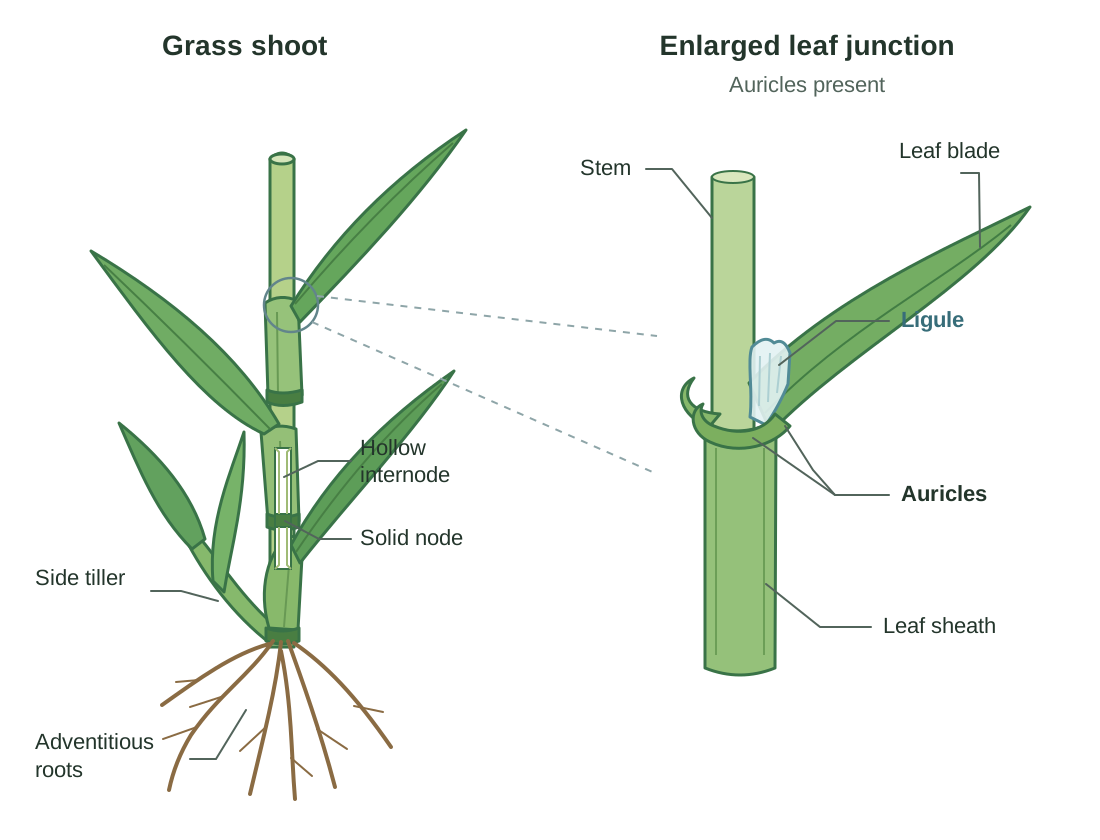
A grass plant is made of individual shoots called tillers. Each tiller consists of a stem with solid nodes and hollow internodes, leaves, and adventitious roots developing from the base. Each leaf is divided into two distinct parts: the leaf blade (the flat, green photosynthetic section) and the leaf sheath (which wraps snugly around the stem to give it physical support).
At the junction where the blade and sheath meet, two diagnostic structures help in identification:
- Ligule: A thin, translucent membrane that prevents rain, insects, and soil from entering between the sheath and stem.
- Auricles: Small, claw-like projections arising from the base of the blade that may clasp the stem.
Identifying Common Agricultural Grasses
- Perennial ryegrass (Lolium perenne):* Leaves are folded in the bud, dark green and distinctly glossy/shiny on the underside. Auricles are small and pointed, the ligule is short and blunt, and the tiller base has a reddish-pink tinge. Spikelets are arranged alternately along a central rachis without stalks.
- Italian ryegrass (Lolium multiflorum):* Leaves are rolled in the bud with prominent, spreading auricles. The spikelets have distinct awns (bristle-like projections) on the seeds.
- Cocksfoot (Dactylis glomerata):* Leaves are folded in the bud with a strongly flattened (keeled) stem base and a large, jagged ligule. Grows in dense, coarse tussocks.
- Timothy (Phleum pratense):* Leaves are rolled in the bud with a white, pointed ligule and no auricles. The inflorescence is a dense, cylindrical 'cat's-tail' panicle.
Grass Flower Adaptations for Wind Pollination
The flower head (inflorescence) emerges during reproductive growth. Grasses are wind-pollinated (anemophilous) and display specific structural adaptations:
- Long stamens with loosely attached (versatile) anthers: Filaments hang outside the protective bracts (lemma and palea) so that light breezes shake the anthers and dislodge pollen.
- Reduced or absent petals: The floral envelope lacks colourful petals, ensuring pollen release and reception are unobstructed.
- Copious light, smooth pollen: Grains are small, smooth, dry, and lightweight, staying airborne over long distances.
- Large, feathery stigmas: Branched, feather-like stigmas protrude into the open air to maximize the surface area for trapping airborne pollen.
Grass Growth Dynamics and Sward Quality
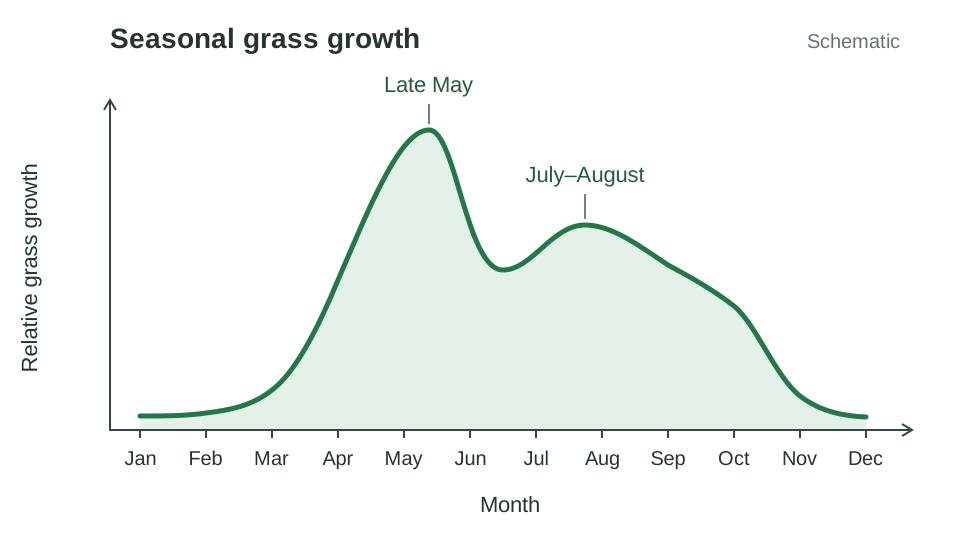
Perennial ryegrass regrows year after year. Its seasonal production follows an Irish growth curve: growth begins in early spring once soil temperatures reach 5.5°C to 6.0°C, peaks strongly in late May, shows a smaller secondary peak in late July or August, and falls off rapidly from October onwards.
Life Cycle Stages of Grass
- Vegetative stage: The plant produces leaves and new tillers. The growing point (apical meristem) remains tucked right down at the soil surface, below the grazing height of animals. A perennial ryegrass tiller maintains only about three live leaves simultaneously. When a fourth leaf emerges, the oldest leaf at the base dies and decays. Grazing at the 2.5 to 3-leaf stage captures peak yield and quality before valuable leaf matter is wasted.
- Reproductive stage: Triggered by lengthening daylight and warming spring temperatures, the growing point elevates above ground level via stem elongation. The flower head emerges (heading out). Once heading occurs, the plant deposits structural lignin into its cell walls to support the seed head. This causes Dry Matter Digestibility (DMD) to drop by roughly 0.5% per day, reducing animal performance.
Tillering
Tillering is the production of vegetative side shoots from axillary buds situated at the crown (base) of the plant. Dense swards prevent bare ground and suppress weeds. Frequent, tight defoliation by rotational grazing lets sunlight penetrate directly to the base of the sward, stimulating tillering. Undergrazing or continuous resting shades the sward base, killing off lower tillers and opening the sward to weed invasion.
Calculating Available Pasture Dry Matter
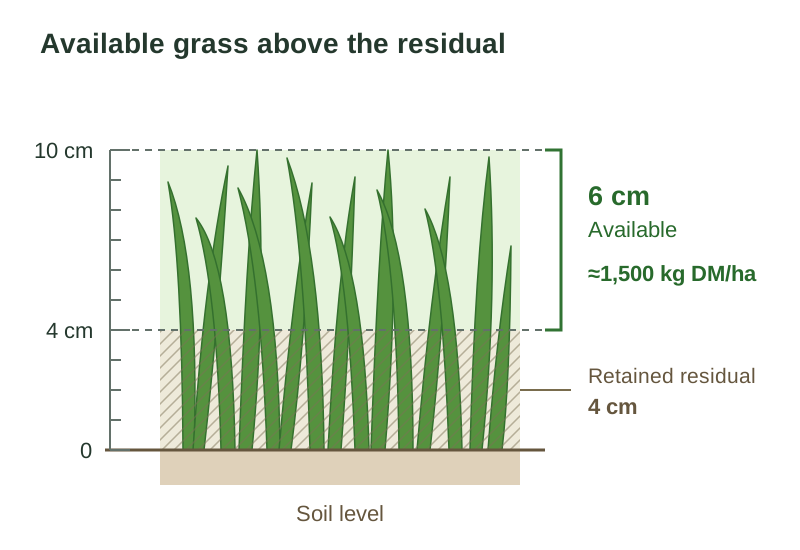
Available grass dry matter is calculated from sward height. The target post-grazing residual height across Irish pastoral systems is 4 cm. Every 1 cm of sward height above this 4 cm residual provides approximately 250 kg DM/ha (kilograms of dry matter per hectare):
For example, if a field measures 10 cm before cattle enter, the available height is . Multiplying gives of grazeable forage.
Grazing Systems
Grazing systems control how livestock harvest grass and allow pastures to recover.
Rotational Grazing Systems
In rotational systems, livestock move through a sequence of separate grazing parcels. After grazing, pasture rests for 18 to 21 days during the peak growing season to recover to the optimal 3-leaf stage. Rotational grazing maintains a vegetative leafy sward, promotes vigorous root growth, and interrupts the life cycle of stomach worms.
- Paddock grazing: The grazing platform is split into about 21 paddocks, each holding roughly one day's grass. The herd moves to a new paddock every 24 hours, so each paddock gets about 20 days to regrow before it is grazed again. This ensures fresh, high-DMD leafy grass daily. Capital investment is high because every paddock requires fencing and dedicated water troughs.
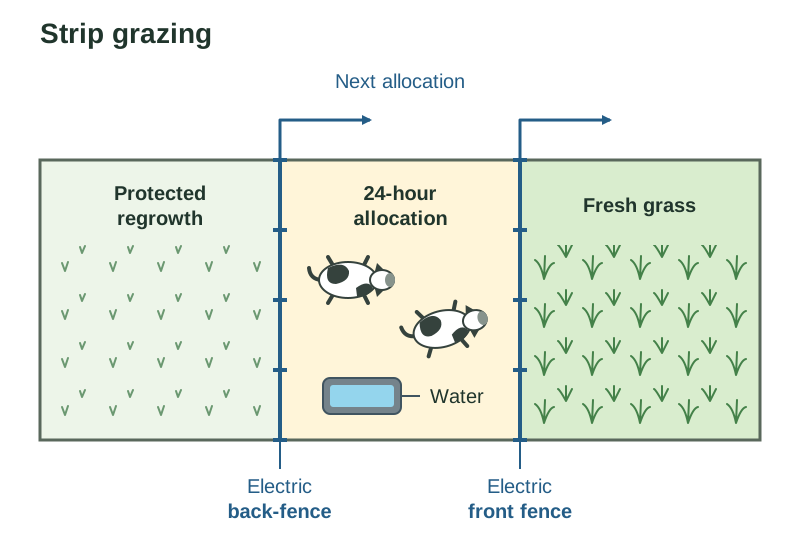
- Strip grazing: A movable electric fence rations a 24-hour grass allocation in a long strip. An electric back-fence is essential; without a back-fence, stock will turn around to graze tender fresh regrowth, exhausting carbohydrate reserves in the root system.
- Block grazing: Fields are partitioned into larger sections where stock remain for 5 to 7 days. It cuts down on fencing and water trough expenses, but utilization drops because cattle trample and foul grass on days 4 to 7.
Continuous Grazing (Set Stocking)
Livestock graze an undivided block of land for an extended period or throughout the whole grazing season. Setup costs are low because no internal subdividing fences or mobile water troughs are required. However, pasture utilization is poor. Cattle graze tender, young tillers repeatedly and reject older, stemmy patches. Because the sward is grazed continuously, grass roots never get a chance to recover and build up carbohydrate reserves, resulting in shallow rooting, patchy swards, and weed infestation.
Pasture Management Tools and Complementary Grazing
To budget grass accurately, farmers use standardized Livestock Units (LU). One mature bovine (dairy or suckler cow) equals 1.0 LU. Other stock are expressed as fractions:
- Dairy cow / Suckler cow: 1.0 LU
- Cattle 1–2 years old: 0.6 LU
- Cattle under 1 year: 0.4 LU
- Ewe with lambs: 0.15 LU
The stocking rate is calculated by dividing total herd LU by the usable grassland area (LU/ha).
The Grass Wedge and Farm Cover
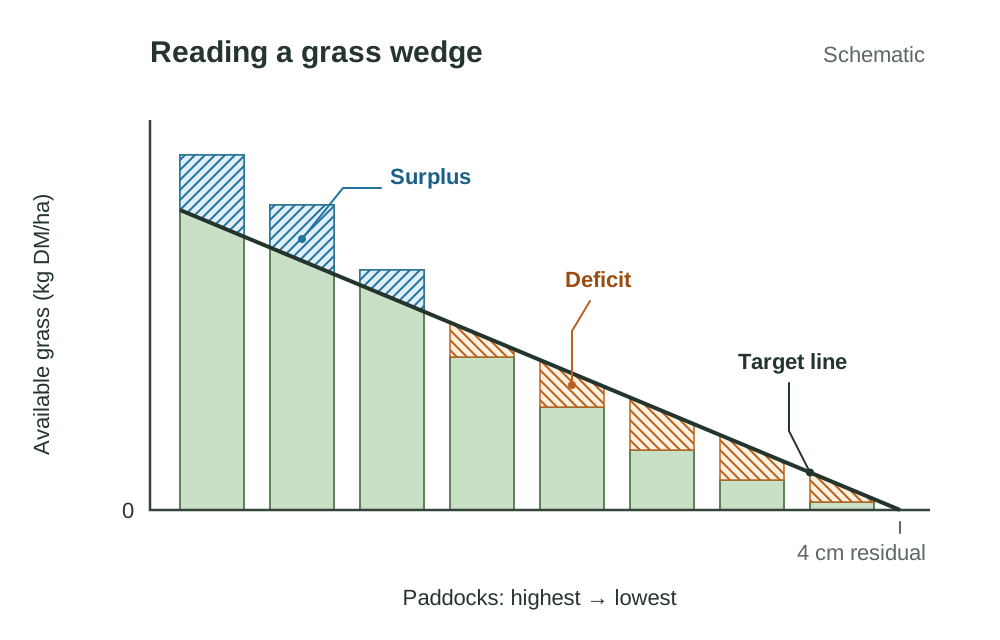
A grass wedge is a visual bar chart of all paddocks on the farm, arranged from highest grass cover on the left to lowest cover on the right. A target line runs from the ideal pre-grazing cover (typically 1,400–1,600 kg DM/ha) down to the post-grazing residual (4 cm, where no grazeable grass is left above the target height):
- Paddocks above the line = Grass Surplus. The rotation is running ahead of the herd. The farmer skips these paddocks and cuts them as surplus baled silage, bringing the rotation back into balance.
- Paddocks below the line = Grass Deficit. Growth is falling behind herd feed demand. The farmer must act to prevent overgrazing: lengthen the rotation by feeding silage or meals, or boost growth by applying nitrogen fertiliser.
Average farm cover (the mean kg DM/ha across the entire farm) is tracked weekly with a rising plate meter or sward stick to match grass growth rate with herd demand.
Complementary Grazing Strategies
These grazing methods are used alongside rotational grazing to give young stock the best grass and to reduce worm infection:
- Leader-Follower system: Calves or replacement heifers graze fresh paddocks first to select leafy, top-quality grass. Mature cows follow to clean out stemmier residual grass down to 4 cm. Young calves avoid picking up heavy burdens of gastrointestinal roundworm larvae shed by adult carriers.
- Creep grazing: Young calves or lambs move ahead of their dams into adjacent lush paddocks through an adjustable creep gate. This gives suckling young high-energy grazing and optional concentrates without competition from adult animals.
- Mixed grazing: Grazing sheep and cattle together lifts overall pasture utilization by 10% to 15%. Sheep crop short grass around cattle dung pats and stimulate tillering, while cattle graze the taller canopy. Most of the main stomach worms affecting sheep and cattle are different species, so larvae eaten by the 'wrong' host cannot complete their life cycle, reducing the worm burden on pasture.
- Extended grazing: Stock remain outdoors into November or December by building up autumn grass covers from August. This cuts down winter housing costs, slurry storage pressure, and silage demand, provided soil conditions remain firm enough to prevent poaching.
Grass Establishment and Reseeding
Old pastures containing low perennial ryegrass percentages produce less total yield, respond poorly to chemical fertiliser, and show reduced DMD. Reseeding replaces worn-out swards with modern, high-performance grass varieties.
Steps in Sward Establishment
- Soil testing: Test soil to ensure pH is between 6.3 and 6.5, and both phosphorus (P) and potassium (K) are at Index 3. Lime is spread to correct acidity before cultivation.
- Sward destruction: Spray the old pasture with an approved systemic herbicide (burn-off) to kill deep-rooted perennial weed grasses and docks.
- Cultivation: Options include conventional ploughing and power harrowing, minimum cultivation (discing/harrowing), or direct drilling into unploughed ground.
- Seedbed preparation: Produce a fine, firm, level seedbed. Roll the ground before and after sowing to establish good seed-to-soil contact and retain moisture.
- Seed selection: Sow certified seed mixtures containing perennial ryegrass cultivars ranked highly on the Pasture Profit Index (PPI), typically at 35 kg/ha, along with white clover.
- Post-emergence weed control: Control seedling weeds such as docks while they are small, using a clover-safe herbicide and following its label instructions for the crop growth stage.
- Initial grazing: Once plants pass the 'pluck test' (pulling leaves does not uproot the whole plant), graze lightly with sheep or young calves to encourage tillering and consolidate the soil.
The Importance of Certified Seed
Using certified seed guarantees high germination capacity, analytical purity (minimal weed seed contamination), true-to-type variety identity, and freedom from seed-borne pathogens. This ensures uniform seedling emergence and an even sward.
Grassland Nutrients and the Nitrates Directive
Operating productive pasture requires balancing soil fertility against legal limits to protect surface water and groundwater.
Soil Fertility Benchmarks
For optimum perennial ryegrass and clover growth, target a soil pH of 6.3 to 6.5 and Soil Index 3 for Phosphorus (P) and Potassium (K). At Soil Index 4, soils hold excess plant-available phosphorus; by law, no chemical phosphorus may be applied to Index 4 soils to prevent runoff and eutrophication.
The EU Nitrates Directive
The Nitrates Directive protects water quality from agricultural pollution:
- The statutory baseline limits organic nitrogen from livestock manure to 170 kg N/ha/year across the whole farm.
- Farms wishing to stock above this limit must apply for a specific Nitrates Derogation and meet strict management criteria.
- The amount of organic nitrogen excreted by a dairy cow is banded according to her annual milk yield, meaning higher-yielding cows produce more N, which directly influences the farm's legal stocking capacity.
- Mandatory closed periods prohibit spreading chemical fertiliser and organic slurries during the winter when soils are waterlogged and plants are dormant.
Role of White Clover
Incorporating 20% to 30% white clover (Trifolium repens) into swards fixes atmospheric nitrogen gas () into plant-available ammonium () through symbiotic Rhizobium bacteria residing in its root nodules. This biological nitrogen fixation can contribute an estimated 50 to 100 kg N/ha annually, decreasing the farm's reliance on chemical nitrogen fertilisers.
Silage Conservation and Fermentation Biochemistry
Most conserved grass in Ireland is made as silage because our humid maritime climate makes multi-day dry spells unpredictable. Ensiling preserves wet grass through controlled anaerobic fermentation.
Fermentation Stages in Silage
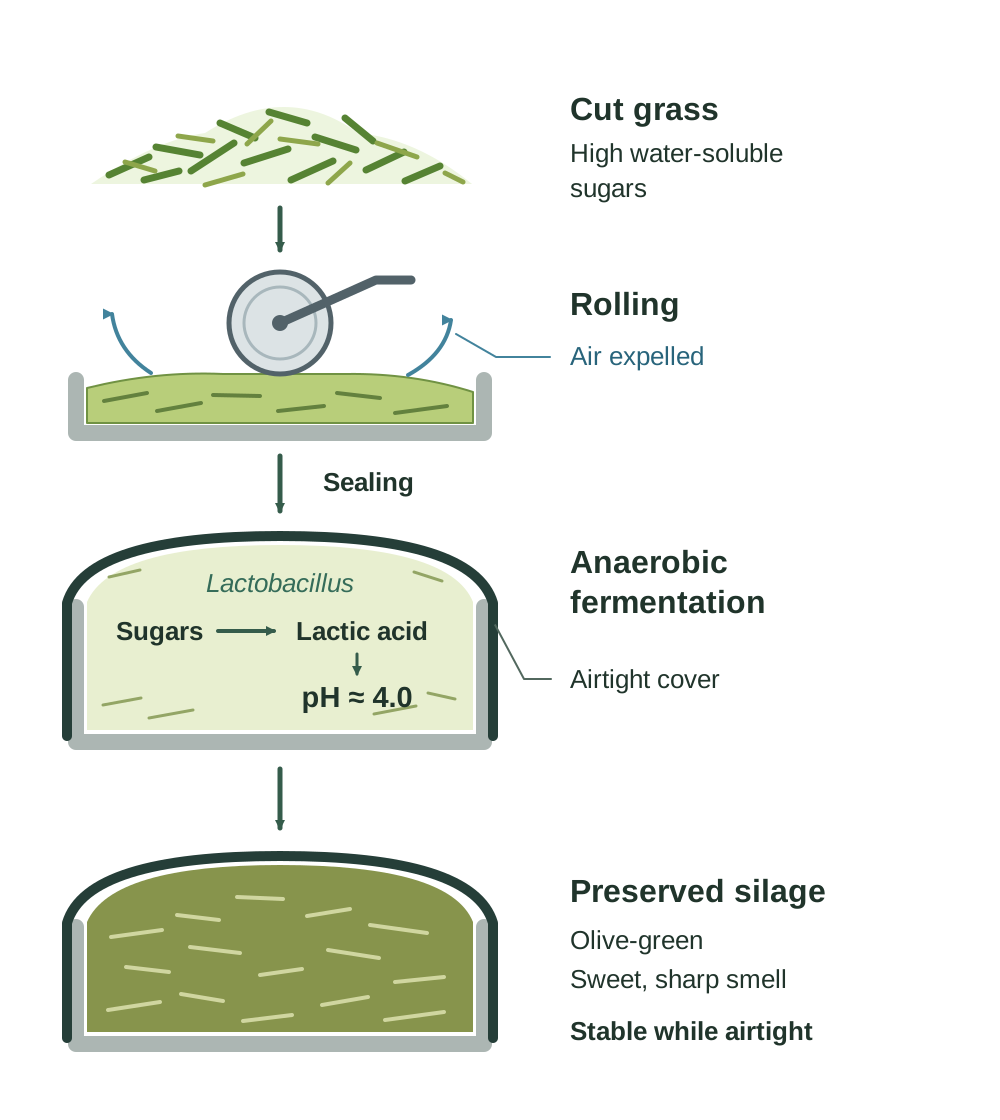
- Stage 1 – Aerobic phase (respiration): Freshly cut plant cells continue to respire, consuming sugars and residual oxygen, releasing carbon dioxide, water, and heat. This phase must be shortened as quickly as possible; prolonged respiration burns off valuable sugars and leads to overheating. Thorough rolling and rapid airtight sealing exclude oxygen to end this stage quickly.
- Stage 2 – Anaerobic fermentation: Once oxygen is completely depleted, beneficial lactic acid bacteria (Lactobacillus) multiply. They ferment water-soluble carbohydrates (fructose and glucose) into lactic acid. This drops the silage pH rapidly to around 4.0, which pickles the forage and inhibits spoilage microbes.
- Stage 3 – Stable storage phase: Provided the pit or bale remains completely airtight, bacterial activity ceases at pH 4.0 and the silage remains preserved indefinitely.
Spoilage Pathways
- Clostridium fermentation (Anaerobic spoilage): If grass is wet, low in sugar, or contaminated with soil, the pH fails to drop quickly. Anaerobic Clostridium bacteria take over, converting sugars and lactic acid into foul-smelling butyric acid while degrading valuable proteins into ammonia. This yields dark, slimy, unpalatable silage with high nutrient loss.
- Mould and yeast breakdown (Aerobic spoilage): If polythene covers tear or round bale plastic is punctured, atmospheric air enters. Yeasts and moulds consume sugars and lactic acid, causing the pit face or bale to heat up and rot.
Silage Practical Steps and Their Biological Role
| Practical Step | Biological / Chemical Reason |
|---|---|
| Cut at heading out in sunny afternoon | Captures peak DMD (70–75%) and maximum plant sugars accumulated via daily photosynthesis. |
| Wilt for 24–48 hours | Lowers moisture, concentrates sugars in plant sap, and drastically suppresses effluent production. |
| Chop forage during harvest | Bruises plant stems to release soluble sap for bacteria; packs tighter in the clamp. |
| Roll the pit continuously | Expels trapped air pockets, cutting short aerobic respiration and accelerating anaerobic conditions. |
| Double-sheet polythene and weight down | Creates and maintains a durable, airtight seal to prevent aerobic mould growth. |
Pit Silage versus Round-Bale Silage
| Feature | Pit (Clamp) Silage | Round-Bale Silage |
|---|---|---|
| Machinery | Mower-conditioner, forage harvester, and trailers | Mower-conditioner, round baler, and bale wrapper |
| Air removal | Heavy tractor rolls grass in pit; sealed with plastic sheets | Baler compresses grass tightly; sealed with multi-layer wrap |
| Plastic use | Less plastic per tonne of forage | More plastic waste from individually wrapping bales |
| Effluent risk | Higher risk; requires collection channels and storage tanks | Lower risk when wilted; minimal effluent per bale |
| Flexibility | Entire pit can spoil if seal fails; must feed steadily once opened | Bales opened as needed or sold; spoilage limited to damaged bales |
Hay, Haylage, and Silage Additives
Conserving grass as hay relies on physical dehydration rather than bacterial fermentation. Grass moisture must be reduced below 20% (over 80% DM). At this low moisture level, bacteria and fungi cannot grow and cause decay. Hay harvesting involves mowing the grass, using a rotary tedder to shake swathes and speed drying, raking into rows, and baling once moisture drops below 20%.
Silage versus Hay Comparison
| Feature | Silage | Hay |
|---|---|---|
| Preservation mechanism | Biological anaerobic fermentation (acidification) | Physical dehydration (drying) |
| Oxygen requirement | Strictly anaerobic (air excluded) | Aerobic storage in well-ventilated sheds |
| Moisture content | 65% to 75% moisture (25%–35% DM) | Less than 20% moisture (over 80% DM) |
| Stage of grass cut | Leafy, at heading out (late May; high DMD) | More mature, stemmy grass (June/July) |
| Weather dependency | 1 to 2 dry days needed for wilting | 4 to 5 continuous dry, sunny days needed |
| Storage method | Airtight concrete pit or plastic-wrapped bales | Loose or tied bales in dry, open sheds |
| Pollution / Effluent risk | High Biochemical Oxygen Demand (BOD) effluent risk | Zero effluent risk |
Silage Additives
Additives improve preservation when grass is harvested under difficult conditions (wet weather, low sugar, or clover-dense swards):
- Molasses (Sugars): Adds readily fermentable carbohydrate to feed Lactobacillus bacteria when plant sugars are insufficient.
- Acids (e.g. Formic acid): Directly acidifies the forage, dropping the pH toward 4.0 immediately to prevent Clostridium growth.
- Bacterial Inoculants: Sprays billions of live lactic acid bacteria onto the grass during harvesting to kick-start rapid fermentation.
Haylage
Haylage is baled at 50% to 60% dry matter and sealed in multi-layer stretch wrap. It undergoes a limited anaerobic fermentation, creating dust-free, palatable forage ideal for horses and livestock prone to respiratory issues.
Health, Safety, and Environmental Hazards
- Silage Effluent and Waterways: Silage effluent has a Biochemical Oxygen Demand (BOD) of 12,000 to 65,000 mg/L (up to about 200 times stronger than untreated domestic sewage). If allowed into streams, aerobic bacteria feeding on it consume all dissolved oxygen, suffocating fish. Silage pits must feature leak-proof channels directing effluent into dedicated collection tanks.
- Pit Rolling and Gases: Overturning tractors on silage clamps is a major fatal hazard. Never fill the pit higher than the concrete walls, keep ramp slopes gentle, use heavy tractors with safety cabs, and exclude bystanders. Respiration and fermentation produce carbon dioxide (), which displaces oxygen, and toxic nitrogen dioxide (). Never enter an enclosed silage pit or climb under sealed sheets.
- Machinery and Power Lines: Ensure all tractor Power Take-Off (PTO) shafts are fitted with intact, chained safety guards. Watch for overhead electrical power lines when tipping forage trailers or stacking round bales with front loaders.
Specified Practical Activities in Grassland
The specification lists two of these as specified practical activities (*): measuring the dry matter content of a named crop, and investigating the botanical composition of an old permanent pasture or a new ley. It also asks you to investigate two factors which affect crop preservation. No single method is prescribed, but the methods below include steps examiners reward.
1. Determining Percentage Dry Matter (% DM) of Fresh Grass
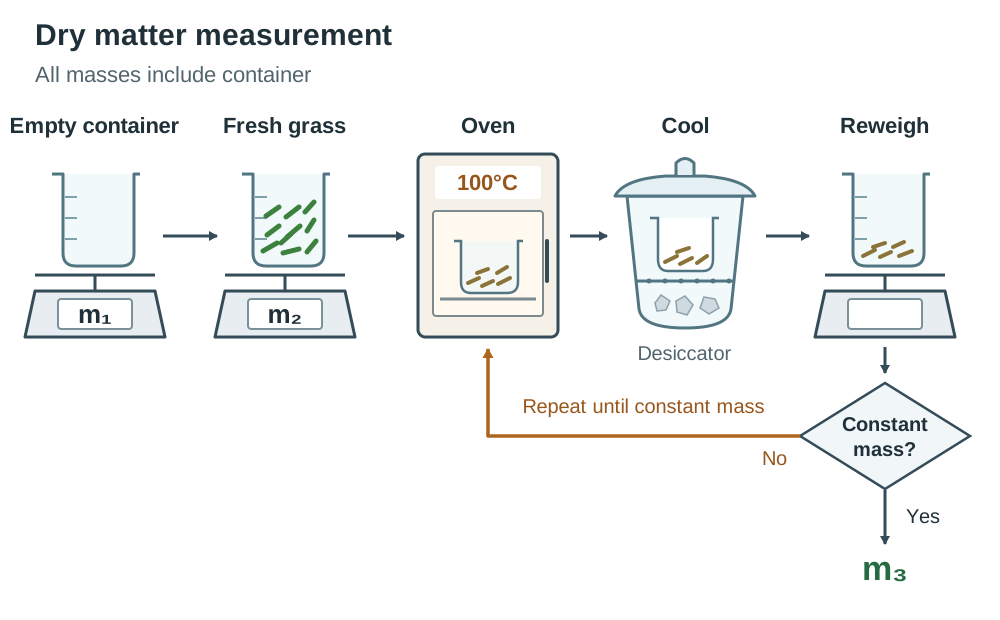
- Weigh a clean, dry container on an electronic balance and record its tare mass ().
- Add a sample of fresh, finely chopped grass and record the combined mass (). The fresh grass mass is .
- Place the container in an oven set to 100°C (or use a microwave at short, low-power intervals with a beaker of water alongside to prevent charring).
- Remove, cool in a desiccator, and reweigh. Return to the oven and repeat this drying cycle until the sample reaches a constant mass (), proving all water has been removed without burning dry plant matter.
- Calculate dry grass mass as .
Worked Practical Example: An empty beaker weighs 50 g (). With fresh grass it weighs 150 g (). After repeated drying at 100°C to constant mass, it weighs 68 g ().
- Fresh grass mass =
- Dry grass mass =
2. Investigating Botanical Composition of a Sward
- Walk the field in a 'W' or 'X' pattern so that samples are collected representatively across the whole field. Avoid atypical headlands, gateways, and hedgerows.
- Throw a quadrat (e.g. 0.5 m × 0.5 m) randomly at least 10 times along the walking transect.
- Using a plant identification key, identify each plant species present within the quadrat frame (e.g. perennial ryegrass, white clover, meadow grasses, docks, and dandelions).
- Estimate the percentage ground cover of each species or calculate its frequency of occurrence across all 10 quadrats.
Farm application: Calculate the average percentage cover of perennial ryegrass. If perennial ryegrass content is low (e.g. under 50%) and broad-leaved weeds or weed grasses dominate, the sward needs reseeding to restore high dry matter yields and digestibility.
3. Investigating Two Factors Affecting Silage Preservation
- Collect fresh grass from a uniform sward and divide it into three distinct treatments:
- Treatment A (Control): Fresh, unwilted grass.
- Treatment B (Factor 1 - Wilting): Grass wilted in the sun for 24 hours.
- Treatment C (Factor 2 - Additive): Fresh grass treated with a sugar additive (e.g. molasses).
- Chop the grass in each batch and pack it tightly into heavy-duty plastic bags. Squeeze out all air to create anaerobic conditions, seal tightly with tape, and label clearly. Prepare three replicates for each treatment.
- Store all bags under identical conditions at room temperature for 4 to 6 weeks.
- Open the bags and evaluate the preservation quality: test pH using a calibrated pH meter or broad-range indicator paper on a water extract, inspect colour (olive-green versus dark brown/black), note odour (sweet/sharp lactic acid versus rancid/foul butyric acid), and check for mould or effluent.
Expected Result: Treatments B (wilted) and C (molasses) reach a lower pH (~4.0), have a sweet aroma, produce minimal effluent, and keep well. Treatment A (unwilted) ferments more slowly, reaches a higher pH, smells pungent, and drains smelly effluent.
Key terms
- Dry Matter Digestibility (DMD)
- The percentage of dry matter in a forage that can be broken down, digested, and absorbed by livestock.
- Heading Out
- The stage of grass growth when the inflorescence (seed head) emerges from the flag leaf sheath, marking the start of reproductive growth.
- Tillering
- The production of new vegetative side shoots from axillary buds situated at the crown (base) of a grass plant.
- Livestock Unit (LU)
- A standard unit of grazing pressure representing the feed demand of one adult bovine (dairy or suckler cow = 1.0 LU).
- Rotational Grazing
- A grazing management system where livestock move through a planned sequence of enclosures, allowing grazed pasture an undisturbed recovery period.
- Post-Grazing Residual
- The target sward height left behind after animals exit a pasture, standardly 4 cm in Irish rotational grazing.
- Grass Wedge
- A bar chart of farm paddocks ordered from highest to lowest grass cover (kg DM/ha) used to identify feed surpluses and deficits.
- Lactobacillus
- Beneficial anaerobic bacteria that convert soluble plant sugars into lactic acid during silage fermentation.
- Clostridium
- Undesirable anaerobic bacteria that convert sugars and lactic acid into foul-smelling butyric acid and break down proteins into ammonia in wet, low-sugar silage.
- Biochemical Oxygen Demand (BOD)
- A measure of the quantity of dissolved oxygen consumed by aerobic microorganisms as they decompose organic matter in water.
- Wilting
- Leaving mown grass in the field for 24 to 48 hours to evaporate moisture, concentrating sugars and greatly reducing effluent production.
- Effluent
- The acidic, nutrient-rich liquid that drains from un-wilted or poorly preserved silage clamps, carrying a very high BOD.
Check yourself
Why does dry matter digestibility (DMD) fall sharply once grass heads out?
Structural lignin builds up in plant cell walls to physically support the emerging seed head, reducing digestibility by roughly 0.5% each day.
How do feathery stigmas and long, hanging stamens adapt the grass flower for wind pollination?
Long stamens dangle loosely attached (versatile) anthers outside the flower to release pollen into air currents, while large feathery stigmas provide maximum surface area to catch airborne pollen.
A fresh grass sample of 40 g is dried in an oven to a constant mass of 9 g. What is its percentage dry matter (% DM)?
22.5% DM [(9 g / 40 g) × 100 = 22.5%].
On a grass wedge chart, what management action should a farmer take for a paddock that sits well above the target demand line?
Remove it from the grazing rotation and cut it as surplus round baled silage.
How does mixed grazing of sheep and cattle improve pasture utilization and parasite management?
Sheep crop grass closely around cattle dung pats and stimulate tillering, while cattle graze taller grass. Because their main internal stomach worms are host-specific, each animal ingests larvae that cannot infect them, breaking parasite life cycles.