

Genetics is the foundation of modern crop and livestock improvement in Irish agriculture. This topic links Gregor Mendel's classic laws of inheritance to commercial farm decisions, national breeding indexes such as the Economic Breeding Index (EBI) and €uro-Star schemes, and reproductive technologies. Both the crops and animals sections of the specification highlight core principles of selection: performance testing, physical traits, progeny testing, genotyping and genomic selection, and natural selection. The animals strand adds genetic engineering as a sixth principle, while crop production evaluates how genetic engineering and biotechnology protect crops against disease and impact sustainability.
Principles of Mendelian Inheritance and Crosses
Genetics explores how inherited characteristics pass from parents to progeny via genes on chromosomes. An allele is an alternative form of a gene (such as for black coat and for red coat). An organism's genetic make-up is its genotype, whereas its observable traits—the genotype expressed in its environment—form its phenotype.
An individual with identical alleles at a locus is homozygous ( or ). If the alleles differ, it is heterozygous (). A dominant allele masks a recessive allele in the heterozygous state. For example, in cattle, the naturally hornless or polled trait () is dominant to horned (), and black coat colour () is dominant to red ().
Mendel's Laws
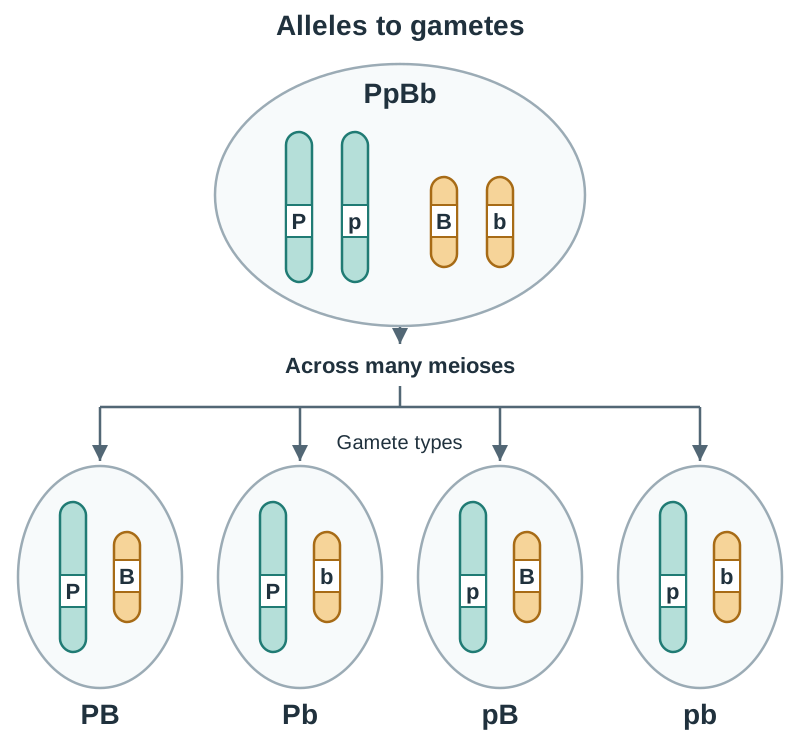
- Law of Segregation: Inherited characteristics are controlled by pairs of alleles that separate during gamete formation (meiosis), so each gamete carries only one allele for each gene.
- Law of Independent Assortment: During gamete formation, either member of a pair of alleles can combine randomly with either member of another pair, provided the genes are unlinked (located on separate chromosomes).
Monohybrid Cross Example
Consider an Aberdeen Angus bull homozygous for the polled trait () mated to a horned Hereford cow ():
- Parents:
- Gametes: and
- Genotype: All (100% heterozygous)
- Phenotype: All polled
Crossing two of these individuals ():
- Gametes: each parent produces and
- Punnett Square (2 2):
| P | p | |
|---|---|---|
| P | PP | Pp |
| p | Pp | pp |
- Genotypic ratio: 1 PP : 2 Pp : 1 pp
- Phenotypic ratio: 3 polled : 1 horned
Incomplete Dominance and Codominance
In some traits, neither allele completely masks the other, so the heterozygote shows an intermediate or blended phenotype. Coat colour in Shorthorn cattle is a classic example:
- Red () White () produces roan (), where red and white hairs mix across the coat.
- Crossing two roan animals () yields genotypes 1 RR : 2 RW : 1 WW and matching phenotypes 1 Red : 2 Roan : 1 White. The genotype ratio and phenotype ratio are identical.
Test Cross
A test cross reveals whether an animal displaying a dominant phenotype is homozygous dominant or heterozygous. The animal of unknown genotype is mated to a homozygous recessive individual ( or ):
- If the parent is heterozygous (), the offspring show a 1 : 1 ratio (half dominant, half recessive).
- If any offspring display the recessive phenotype, the unknown parent must be heterozygous.
- If all offspring display the dominant phenotype across a large sample, the parent is almost certainly homozygous dominant ().
- A dihybrid test cross produces a 1 : 1 : 1 : 1 ratio only when the unknown parent is heterozygous for both genes ().
Practical Investigation: Hybridising Plant Varieties
To investigate the inheritance of traits, two purebred varieties (such as purple-stem and non-purple stem seedlings in Brassica) are cross-pollinated. Immature anthers are removed (emasculation) to prevent self-pollination. The resulting generation displays the dominant trait. These plants are then cross-pollinated with each other. The seedlings are grown, counted, and recorded. An observed ratio close to 3 dominant : 1 recessive supports Mendel's law of segregation. Because small individual samples vary by chance, class data are pooled to demonstrate the ratio reliably.
Breeding Systems, Heritability, and Hybrid Vigour
Commercial farmers match their breeding systems to their production goals, using either inbreeding to fix traits or crossbreeding to boost commercial performance.
Inbreeding vs Crossbreeding
- Inbreeding is the mating of closely related individuals within the same breed (such as sire to daughter). Pedigree breeders use it to fix desirable traits and ensure genetic uniformity. However, continuous inbreeding causes inbreeding depression—a decline in fertility, vigour, and disease resistance—and increases the risk of harmful recessive defects matching up (such as complex vertebral malformation in calves).
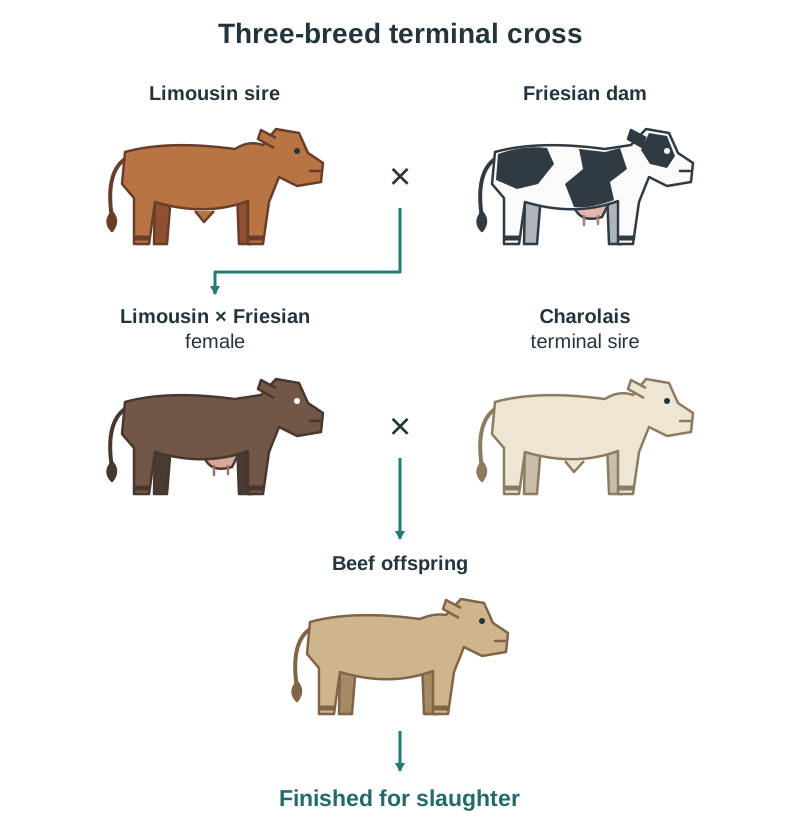
- Crossbreeding is the mating of animals from two different pure breeds (such as a Hereford bull Holstein-Friesian cow) to produce offspring with hybrid vigour (heterosis).
Hybrid Vigour (Heterosis)
Hybrid vigour is the increased performance, hardiness, growth rate, and fertility displayed by crossbred progeny over the average of their purebred parents. In a Hereford bull Holstein-Friesian cow cross, the Hereford passes on a dominant white face, and the Friesian passes on a dominant black coat. The resulting "black baldy" calf gets beef conformation from the Hereford, milk and frame size from the Friesian, and extra vigour. The heifers make excellent suckler cows.
Hybrid vigour is highest in the generation and is largely lost if animals are mated to one another. Commercial farmers retain hybrid vigour by crossing crossbred females with a terminal sire of a third breed (for example, mating a Mule ewe to a Texel or Suffolk ram, or a Limousin Friesian suckler cow to a Charolais bull). Pedigree breeders maintain the purebred herds that supply these parent lines.
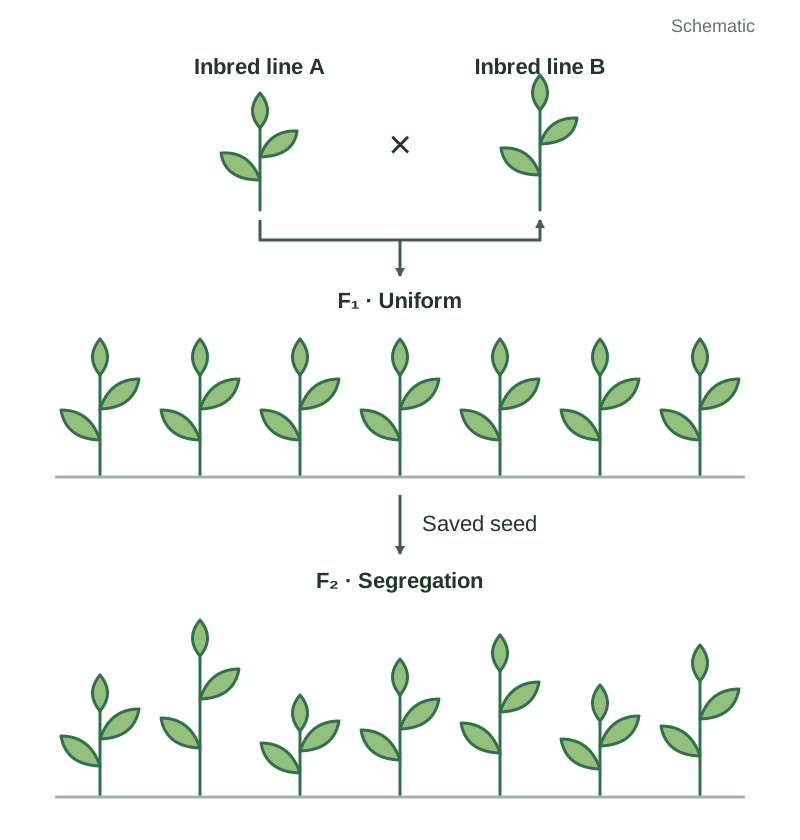
In tillage, plant breeders produce hybrid seeds by crossing two inbred parental lines. The crop exhibits uniform height, even ripening, and high yields. Sowing saved seed leads to genetic segregation, giving uneven stands and lower yields. Certified seed guarantees varietal purity, high germination rates, and freedom from weed seeds and seed-borne disease.
Heritability
Heritability () is the proportion of total phenotypic variation in a population that is attributable to genetic differences rather than management or environmental conditions. It is scored from 0 to 1 (or 0% to 100%):
- High heritability (): Traits like carcase conformation, fat depth, kill-out percentage, and milk protein percentage. Offspring strongly resemble their parents, so selective breeding of top sires and dams achieves rapid genetic progress.
- Low heritability (): Traits like female fertility, calving interval, and disease resistance. Environmental factors and herd management drive most of the variation. These traits improve slowly through direct selection, making crossbreeding and hybrid vigour the most effective genetic tools for lifting them.
Principles of Selection and Irish Breeding Indexes
Irish farmers and breeders use established principles to select superior parents. Both the crops and animals strands list five principles: performance testing, physical traits, progeny testing, genotyping and genomic selection, and natural selection. The animals strand adds genetic engineering as a sixth.
- Performance Testing: Evaluating an animal or plant based on its own recorded performance under uniform, standardised environmental conditions. Young beef bulls at a central performance test station receive identical rations to measure daily live-weight gain (DLG), feed conversion ratio (FCR), and ultrasonic muscle depth directly.
- Progeny Testing: Evaluating a parent's breeding merit by recording and assessing the performance of a representative sample of its offspring. While highly accurate, progeny testing requires finishing slaughter stock or recording full milking lactations of daughters, which lengthens the generation interval.
- Physical Traits (Visual Assessment): Evaluating structural characteristics and functional conformation. Linear classifiers score dairy cows on udder depth, teat placement, and feet and legs to predict milking longevity. Beef classifiers score muscling, skeletal width, and mobility.
- Genotyping and Genomic Selection: Profiling an animal's DNA from an ear-notch tissue sample, hair follicle, or blood sample. Thousands of single-nucleotide polymorphisms (SNPs) across the genome are compared against a national reference population of proven animals. This predicts breeding value with high reliability when the calf or lamb is only days old, drastically shortening the generation interval.
- Natural Selection: The survival and reproduction of individuals best suited to their local environment, passing their favourable genes to the next generation. Hardy hill breeds such as the Scottish Blackface thrive on exposed, nutrient-poor mountain grazings where lowland breeds would fail, while the native Kerry cow is adapted to wet Irish conditions.
Irish Breeding Indexes
- Economic Breeding Index (EBI): A single-figure profit index in euro (€) for dairy cattle. It predicts the extra profit per lactation that an animal's daughters will deliver compared to the national base cow. Its sub-indices are:
- Milk Production (milk volume kg, fat kg, protein kg)
- Fertility (calving interval in days, survival rate %)
- Calving (gestation length, direct calving difficulty, calf mortality)
- Beef (carcase weight and conformation of calves and cull cows)
- Maintenance (cow live weight to control feed costs)
- Management (milking speed, temperament)
- Health (somatic cell count, mastitis, lameness)
- Carbon/Environment
For exam answers, Milk Production and Fertility are the two most important sub-indices to learn in full, but be able to name the others.
- Beef Indexes (ICBF €uro-Star): The Replacement Index selects bulls to breed fertile, milky, docile suckler cows; the Terminal Index selects bulls whose progeny will be finished efficiently for beef carcase weight and conformation.
- Sheep Ireland Indexes: The €uroStar Replacement Index selects maternal traits, while the €uroStar Terminal Index selects rams to produce rapid-growing, well-muscled slaughter lambs.
- Computed Tomography (CT) Scanning: Used on live pedigree rams to measure muscle depth, fat depth, and bone volume without slaughtering progeny. Breeders identify top terminal sires for carcase yield and can plan nutritional regimes accurately to hit market target grades.
Reproductive Technologies in Livestock
Reproductive technologies allow Irish livestock producers to accelerate genetic gain, improve herd biosecurity, and manage labour safely without keeping dangerous mature males on the farm.
Artificial Insemination (AI)
Semen collected from elite pedigree sires is diluted with an extender before packaging into plastic straws. Each component of the extender has a clear biological role:
- Glucose: Provides an energy source for cellular respiration in sperm cells.
- Egg yolk or milk: Contains phospholipids that protect sperm cell membranes from cold shock.
- Glycerol: Acts as a cryoprotectant to prevent sharp ice crystals from puncturing delicate cell membranes during freezing.
- Antibiotics: Suppress bacterial growth and prevent the transmission of venereal diseases.
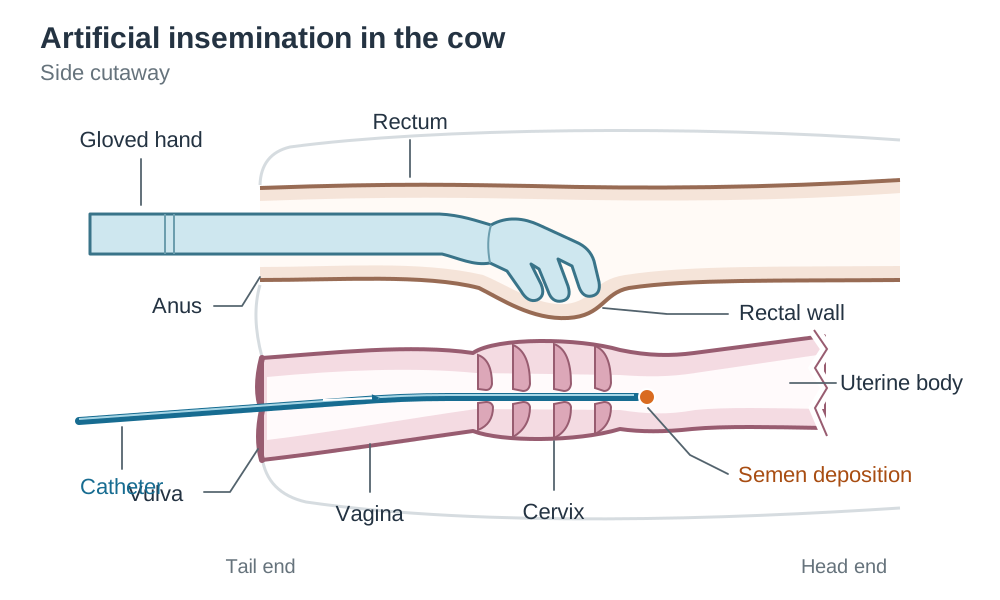
Diluted straws are stored at in liquid nitrogen. Thawed straws are placed into an insemination catheter, guided through the cow's cervix via rectal palpation, and deposited into the body of the uterus. AI allows a single elite bull to sire thousands of calves across many herds, controls reproductive diseases, and removes the farm safety hazard of handling a dairy or beef bull.
Sexed Semen
Sperm cells are stained with a fluorescent DNA dye and sorted via flow cytometry. Because X chromosomes contain slightly more DNA than Y chromosomes, detectors separate them with roughly 90% accuracy. Dairy farmers use sexed semen on their highest-EBI cows and maiden heifers to breed female replacements, leaving the rest of the herd to be crossed with high-index terminal beef sires.
Embryo Transplantation (ET)
An elite donor cow receives follicle-stimulating hormone (FSH) injections to induce superovulation (the release of multiple mature eggs during one oestrous cycle). She is inseminated with elite semen. Six to seven days later, technicians flush the developing embryos from her reproductive tract non-surgically. The embryos are graded and transferred into synchronized recipient surrogate cows. This allows an elite female to produce several calves per flush and far more progeny over her lifetime than the single calf possible through natural gestation.
Genetic Engineering in Animals
Strand 4 includes genetic engineering as a principle of genetic improvement: deliberately modifying an animal's genome to introduce or alter a specific trait. Examples include transgenic salmon carrying an introduced growth-hormone gene to reach market weight faster, and genome editing dairy cattle to introduce the hornless (polled) allele naturally found in Angus cattle. Introducing the polled allele removes the need to disbud calves, improving animal welfare and saving farm labour.
Crop Biotechnology and Disease Resistance
Modern tillage relies on both cell culture and molecular genetics to multiply clean stock and protect crops against devastating pathogens.
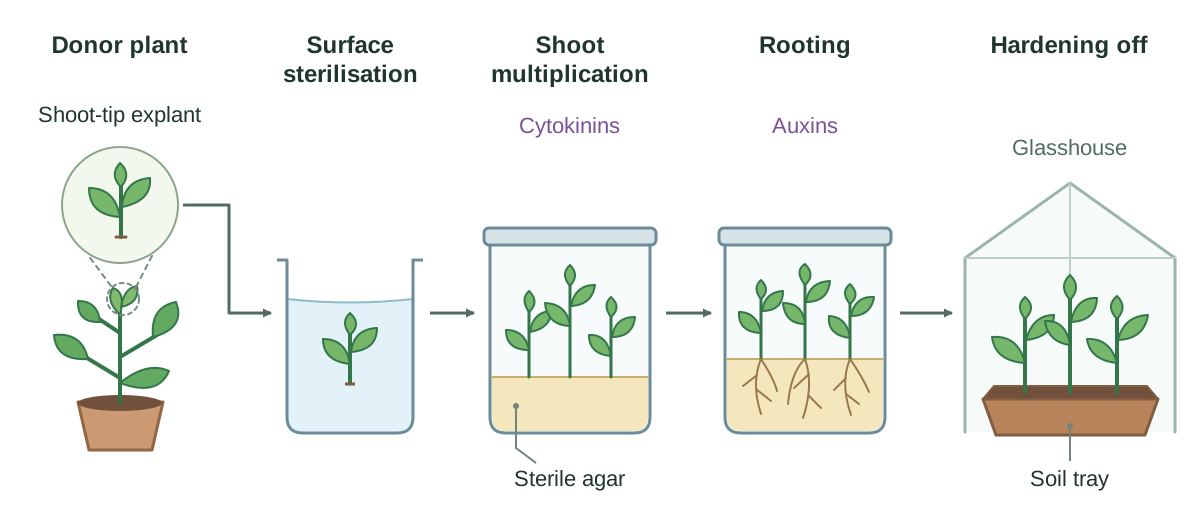
Micropropagation (Tissue Culture)
Micropropagation multiplies large quantities of genetically identical, disease-free plants in sterile laboratory conditions:
- Small tissue samples (explants), usually shoot tips or apical meristems, are cut from an elite donor plant.
- Explants are surface-sterilised and placed onto sterile nutrient agar containing sucrose, mineral nutrients, and vitamins.
- In commercial propagation, shoots are multiplied directly from meristems to keep plantlets genetically uniform (forming an undifferentiated mass of cells called a callus is avoided, as callus culture introduces genetic variation).
- Plant growth regulators are adjusted: cytokinins stimulate shoot multiplication, and auxins promote adventitious root development.
- Rooted plantlets are hardened off in soil trays in glasshouses before field planting.
Irish application: Micropropagation produces certified, virus-free seed potatoes and clean soft-fruit canes.
How a Gene Protects a Crop from Disease
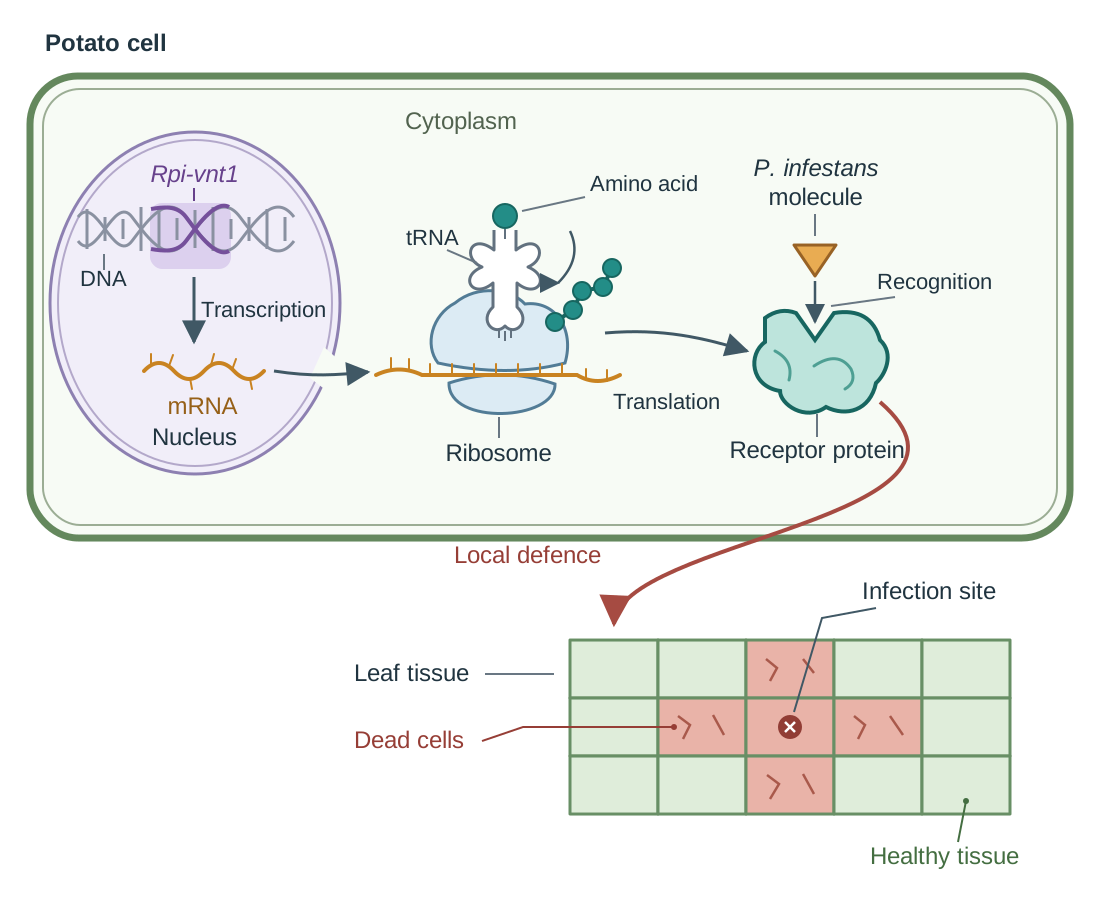
A gene is a sequence of DNA bases that codes for a functional protein:
- In the plant nucleus, the gene sequence is copied into messenger RNA during transcription.
- At the ribosome, transfer RNA reads the mRNA sequence and assembles amino acids in order to synthesize the protein during translation.
Plants contain resistance (R) genes that code for receptor proteins. These proteins recognise specific molecules produced by an invading fungal, bacterial, or viral pathogen. When an attack occurs, the receptor protein detects the pathogen and switches on active plant defences, such as a hypersensitive response where cells around the infection site die rapidly, starving the pathogen and stopping its spread.
Irish Potato Late Blight (Phytophthora infestans) Example*:
- Blight-resistance genes (such as Rpi-vnt1) were identified in wild South American potato relatives. Because the potato genome has been sequenced (characterised), scientists could locate and isolate the gene.
- The gene was isolated and inserted into the commercial potato variety Désirée.
- The engineered potato synthesises the receptor protein, detects Phytophthora infestans, and triggers natural defensive cell death.
- Teagasc field-tested these blight-resistant GM potatoes at Oak Park, Carlow, demonstrating a substantial reduction in the fungicide sprays required per season.
Genome Editing vs Transgenics
- Transgenic modification: DNA from an unrelated species is inserted into the host genome (for example, transferring bacterial Bt toxin genes into maize to kill stem-boring caterpillars).
- Genome editing (e.g. CRISPR-Cas9): Makes precise cuts or changes to an organism's existing DNA without incorporating foreign genes from another species. For instance, researchers can disable a gene that makes the plant susceptible to a disease, without adding any gene from another species.
Ethical and Economic Evaluation of Agricultural Biotechnology
The specification requires evaluating the ethical and economic arguments surrounding agricultural biotechnology, including genetic modification, genome editing, cloning, and embryo transfer.
Arguments in Favour
- Lower chemical inputs: Blight-resistant crops or pest-resistant plants reduce fungicide and pesticide applications, cutting input costs, machinery fuel, and chemical run-off into waterways.
- Enhanced farm profitability and yield: Crops engineered for drought tolerance or disease resistance protect harvest volumes and ensure stable food supplies.
- Accelerated genetic gain: Genome editing can introduce a targeted trait in a single generation, whereas traditional crossing and backcrossing can take many generations. Embryo transfer speeds up genetic gain by letting elite females produce many more offspring.
- Animal welfare gains: Introducing the polled gene into dairy herds via genome editing removes the pain and stress of calf disbudding.
Arguments Against
- Market and export risks: Ireland markets its beef, dairy, and lamb internationally on a "clean, green, grass-fed" image. Widespread commercial adoption of GM crops or animals could trigger consumer resistance in valuable European and export markets.
- Gene escape and biodiversity: Pollen from GM or edited crops could cross with wild relatives or neighbouring organic crops, creating resistant weeds or compromising organic certification.
- Corporate control and seed costs: Patented GM seeds require farmers to purchase new, expensive seed every season, leaving producers dependent on multinational seed companies.
- Pathogen adaptation: Relying entirely on a single resistance gene applies strong selection pressure on pathogens to mutate, potentially overcoming the resistance trait.
- Animal welfare in cloning: Animal cloning suffers from high rates of embryonic loss, large offspring syndrome leading to difficult calvings, and early organ failure.
Balanced Conclusion
Biotechnology offers clear economic and environmental advantages by reducing chemical dependency and lifting yields. However, commercial uptake in Ireland must align with strict EU regulations, consumer acceptance, and the preservation of Ireland's pasture-based brand image. Biotechnology should complement, rather than completely replace, conventional breeding and good rotational management.
Key terms
- Allele
- An alternative form of a gene located at a specific locus on a chromosome (e.g. B for black coat, b for red coat).
- Crossbreeding
- The mating of animals from two different pure breeds (e.g. Hereford bull x Friesian cow) to produce offspring with hybrid vigour.
- Hybrid Vigour (Heterosis)
- The increased performance, growth rate, fertility, and hardiness displayed by crossbred progeny over the average of their purebred parents.
- Inbreeding Depression
- The loss of vigour, fertility, and general health resulting from mating closely related individuals and accumulating deleterious recessive alleles.
- Heritability
- The proportion of total phenotypic variation in a population that is due to genetic differences rather than environmental conditions.
- Performance Testing
- Evaluating an animal or plant based on its own recorded growth, feed efficiency, or yield under uniform, standardised environmental conditions.
- Progeny Testing
- Evaluating an animal's breeding value by recording and assessing the average performance, conformation, or yield of a large sample of its offspring.
- Genomic Selection
- Selecting breeding stock early in life by profiling their DNA markers (SNPs) and comparing them against a validated national reference population.
- Economic Breeding Index (EBI)
- A single-figure profit index (€) predicting the additional profit per lactation that a dairy animal's daughters will deliver compared to the national base cow.
- Terminal Sire
- A male parent selected for growth and carcase traits whose offspring are all finished for slaughter rather than kept as breeding replacements.
- Superovulation
- The hormonal stimulation of a female using follicle-stimulating hormone (FSH) to release multiple mature ova in a single oestrous cycle.
- Micropropagation
- An in vitro tissue culture technique that multiplies large numbers of genetically identical, disease-free plantlets from small plant tissue samples.
- Transgenic Organism
- An organism that contains functional recombinant DNA deliberately introduced from an unrelated species.
- Polled
- Naturally hornless without physical disbudding or dehorning (a dominant genetic trait in cattle breeds such as Aberdeen Angus).
- Prolificacy
- The ability of an animal to produce large numbers of offspring (e.g. high litter sizes in ewes or sows).
- Dual-Purpose Breed
- A livestock breed reared for two distinct commercial resources, such as milk and meat in cattle (e.g. Simmental or Shorthorn).
- Purebred
- An animal or plant of unmixed descent whose lineage has been recorded and bred within that breed for generations.
Check yourself
In garden peas, tall (T) is dominant to dwarf (t), and round seed (R) is dominant to wrinkled (r). What is the probability of producing a dwarf, wrinkled plant from a cross between two plants heterozygous for both traits (TtRr x TtRr)?
1/16 (or 6.25%). A dihybrid cross between two double heterozygotes yields a 9:3:3:1 ratio; the double recessive phenotype (ttrr) represents exactly 1 of the 16 combinations.
Name the three key protective ingredients in bull semen extender and explain their biological roles.
Glucose supplies energy for cellular respiration; egg yolk or milk provides phospholipids to prevent cold shock; glycerol acts as a cryoprotectant to prevent ice crystals from puncturing cell membranes during freezing.
List the principles of genetic improvement and selection specified in the Agricultural Science syllabus for crops and animals.
Both strands list: performance testing, physical traits, progeny testing, genotyping and genomic selection, and natural selection. The animals strand adds genetic engineering as a sixth principle.
Why is crossbreeding more effective than direct selection for improving fertility and calving interval in suckler cows?
Fertility and calving interval have low heritability (under 0.15), meaning they are strongly influenced by the environment rather than direct additive genetics. They respond strongly to hybrid vigour (heterosis) produced by crossbreeding.
How does an engineered resistance (R) gene protect a potato plant against late blight (Phytophthora infestans)?
The R gene undergoes transcription and translation to produce a receptor protein. This protein detects the blight pathogen upon infection and triggers a hypersensitive response (localized cell death), stopping the pathogen from spreading.