

Slurry Management, Water Quality, and Climate Impacts
Animal manure is a valuable organic fertiliser, but improper storage or spreading damages waterways, soil, and the air.
Slurry versus Farmyard Manure (FYM)
| Heading | Slurry | Farmyard Manure (FYM) |
|---|---|---|
| Nutrient value | Liquid; higher available nitrogen; fast-acting | Solid; rich in organic matter; slow-release nutrients; builds soil structure |
| Storage | Underground slatted tanks or slurry lagoons | Solid dungstead or concrete manure slab with effluent collection tank |
| Spreading method | Tanker fitted with trailing shoe, dribble bar, or splash plate | Muckspreader |
| Disadvantages | Strong odours; releases toxic gases; risk of spreading disease to pasture | Slower return to grazing; can spread weed seeds; bulky to transport and spread |
Protecting Water Quality: Eutrophication and Buffer Zones
Under the Nitrates Regulations (Good Agricultural Practice), farmers must have 16 to 22 weeks of winter slurry storage (depending on the county) to hold waste during the winter closed period, when land spreading is prohibited by law.
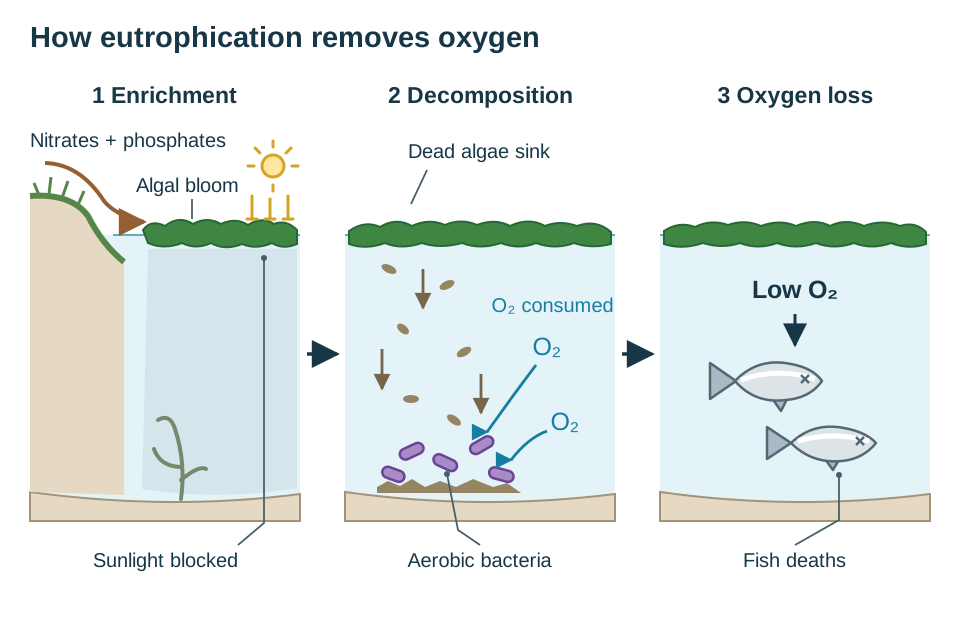
Spreading slurry on wet, frozen, or steeply sloping ground causes runoff into rivers and lakes. Phosphate and nitrate enrichment causes eutrophication:
- High nutrient levels trigger a rapid algal bloom.
- Algae cover the surface, blocking sunlight from underwater plants.
- The algae die and sink to the bottom.
- Aerobic decomposers (bacteria) multiply and use up the dissolved oxygen as they break down the dead algae.
- Dissolved oxygen levels collapse, suffocating fish and other aquatic life.
To prevent runoff, statutory buffer zones must be observed: chemical fertiliser must not be spread within 2 m of a watercourse, while organic slurry and FYM must not be spread within at least 5 m (with wider buffer zones near lakes and drinking water sources).
Low-Emission Slurry Spreading (LESS)
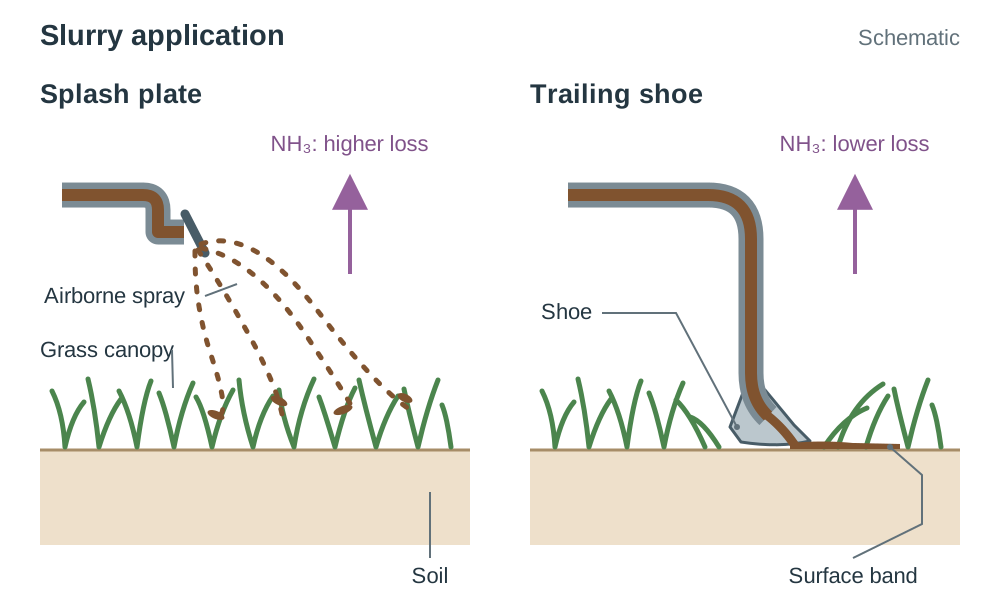
Traditional splash plates throw slurry into the air, losing up to 80% of available ammonium-nitrogen as ammonia () gas. Low-Emission Slurry Spreading (LESS) techniques, such as the trailing shoe and dribble bar, apply slurry in narrow bands directly below the grass canopy onto the soil surface. This cuts ammonia loss by 30% to 60%, keeps nitrogen in the soil for plant growth, reduces pasture soiling, and allows stock back onto pasture sooner.
Climate Mitigation and Biodiversity
- Enteric methane (): Produced by microbes in the cow's rumen during grass fermentation and belched out. Reduced by feeding highly digestible leafy grass, using clover and multi-species swards, and breeding more efficient animals with high Economic Breeding Index (EBI) values.
- Nitrous oxide (): Potent greenhouse gas released from wet, compacted soils. Reduced by using protected urea instead of CAN, spreading slurry in spring when grass is growing actively, and aerating compacted ground.
- Biodiversity: Retaining native hedgerows, establishing field margins, maintaining buffer zones, and sowing multi-species swards provide habitats for wildlife and pollinators while intercepting overland nutrient runoff.