

Energy crops and catch crops are grown for very different reasons from a normal food crop. An energy crop is grown as fuel rather than food. A catch crop is squeezed into the gap between two main crops, mainly to protect the soil and hold on to nutrients over the winter. Energy crops in Ireland include short rotation coppice willow and miscanthus, grown for solid biomass, and crops such as forage maize grown as feedstock for anaerobic digestion. Catch crops, such as stubble turnips, kale, and forage rape, provide fast-growing, cheap succulent forage while preventing nutrient leaching. This note examines the growth cycles, establishment methods, nutrient balancing, rotational disease breaks, dry matter calculations, preservation factors, and farm safety hazards associated with both systems.
1. Defining Energy Crops and Catch Crops
A crop is classified by its agronomic purpose rather than its botanical family alone. When forage maize (Zea mays) is harvested as biomass feedstock for an anaerobic digester to produce biogas (methane), it functions as an energy crop.
Energy crops grown in Ireland include short rotation coppice willow (Salix spp.), miscanthus (elephant grass), forage maize for anaerobic digestion, oilseed rape for biodiesel, and sugar beet or cereals for bioethanol. Willow and miscanthus are perennials: they are planted once and harvested every year (miscanthus) or every 2 to 3 years (willow) for up to 15 to 20 years, spreading establishment costs over many seasons. They are harvested in late winter or early spring when the crop has dried down and shed its leaves, using a forage harvester fitted with a specialised coppice or cane header that cuts and chips the stems in one pass. The woodchip is stored in a ventilated, roofed shed or under a breathable cover below roughly 30% moisture; wet chip in large piles composts, self-heats, and loses dry matter. Maize, by contrast, is an annual crop harvested green in autumn and preserved as silage in an airtight clamp because it is too wet to store dry.
A catch crop is a fast-growing crop established during the autumn gap between two main cash crops, such as between harvested winter barley in July or August and a following spring cereal. Catch crops perform three distinct functions:
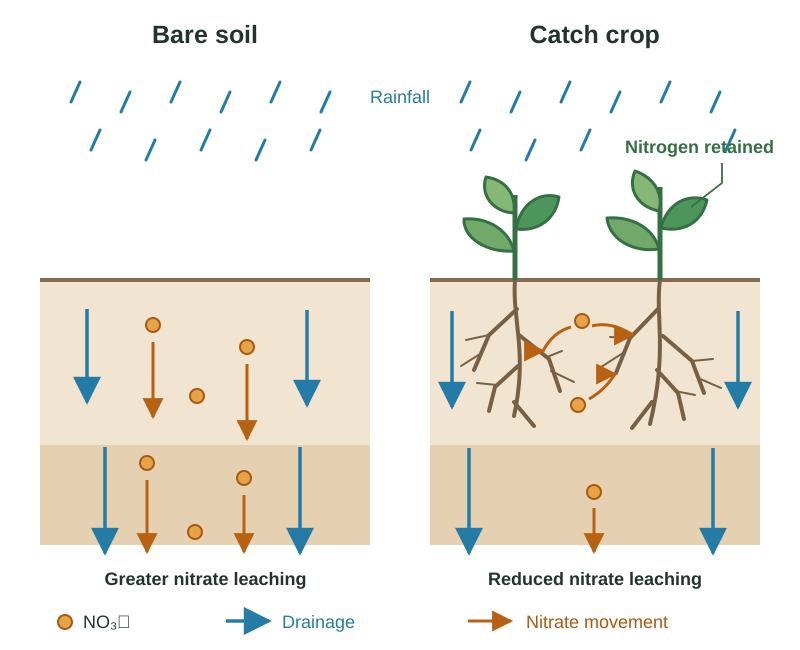
- Catch Crop: The growing roots take up leftover nitrate from the soil and lock it up in the plant's leaves and stems, where rain cannot wash it away into groundwater.
- Cover Crop: The vegetative leaf canopy shields the bare topsoil against heavy rainfall impact, preventing soil capping, compaction, and winter erosion.
- Green Manure: When ploughed down into the soil rather than grazed, the lush biomass decomposes rapidly, increasing soil organic matter, boosting microbial life, and recycling captured nutrients for the following crop.
2. Maize Physiology and Growth Cycle
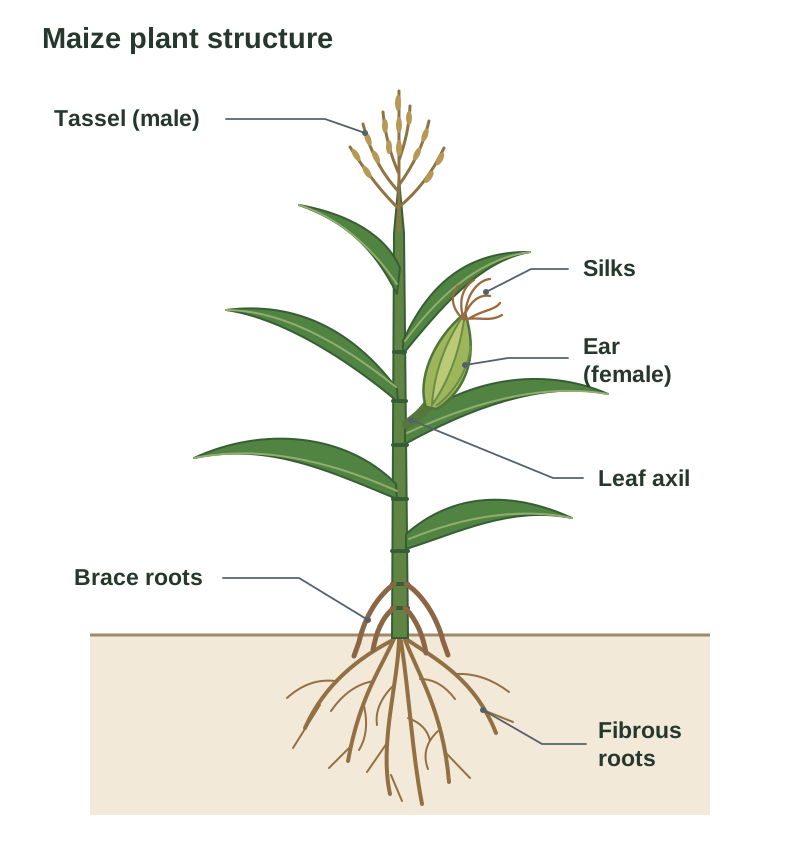
Forage maize (Zea mays) is a tall annual cereal belonging to the grass family (Poaceae / Gramineae). It develops a fibrous root system comprising seminal roots followed by nodal crown roots, supplemented by sturdy adventitious brace roots emerging from lower stem nodes above the soil surface to anchor the 2 to 3 metre plant against wind lodging.
Maize is monoecious, bearing separate male and female flowers on different parts of the same plant:
- Tassel (Male Inflorescence): Borne at the terminal tip of the main stem, shedding large volumes of wind-blown pollen.
- Ear or Cob (Female Inflorescence): Borne at the leaf axils along the mid-stem. Long, sticky styles called silks protrude from the husk to intercept airborne pollen. Once fertilised, each ovule develops into a starch-filled kernel.
The Maize Growth Cycle
- Germination: The seed absorbs moisture and the shoot and seminal roots emerge. Maize will not germinate reliably below about 10 °C. In the open, that means waiting until mid-April or May. Under plastic film, the seedbed warms to that threshold 3 to 4 weeks earlier, allowing sowing in late March.
- Vegetative Growth: Stems elongate rapidly and leaves emerge through June and July, forming a tall canopy supported by adventitious brace roots.
- Tasselling and Silking: Tassels shed pollen while cobs expose receptive silks in late July to early August. Cross-pollination occurs predominantly by wind.
- Grain Filling (Milk to Dough Stage): Sugars manufactured through leaf photosynthesis translocate to the kernels and convert into insoluble starch.
- Maturation and Harvest: The crop matures in September or October. Whole-crop harvesting occurs when dry matter reaches 30% to 32% and the starch 'milk line' is visible halfway down the kernels, before ground frosts kill the canopy.
3. Crop Establishment: Plastic Mulch and Comparison with Grass
Because maize originated in warm, subtropical climates, cool Irish spring soils limit its natural growing season. The majority of Irish commercial maize is grown under degradable plastic mulch.
Clear, thin polythene film acts like a miniature greenhouse, raising seedbed soil temperatures by 3 °C to 5 °C. This microclimate accelerates germination, brings forward flowering, and advances crop maturity before wet autumn weather and damaging frosts arrive.
| Agronomic Factor | Under Plastic Mulch | Open (Uncovered) Sowing |
|---|---|---|
| Sowing Date Window | Late March to mid-April | Mid-April to mid-May |
| Row Spacing | 66 cm | 76 cm |
| Time to Germination | ~7 days | ~21 days (3 weeks) |
| Harvest Timing | Late September | Mid-to-late October |
| Typical DM Yield | 15–20 t DM/ha | 12–14 t DM/ha |
| Grain Starch Content | ~28% | ~22% |
Seedbed and Soil Conditions
Maize requires a deep, warm, well-aerated sandy loam or brown earth with an optimal soil pH of 6.5 to 7.0. Because roots reach depths of 1.5 metres, compacted or waterlogged soils cause root suffocation, poor nutrient uptake, and complete crop failure.
Comparing Maize and Catch Crops with Grass
Grass is the cheapest feed on an Irish farm because it is a perennial that is fertilised and grazed rather than resown annually. Maize is sown every year, requires a warm, sheltered site, plastic film, and specialised machinery, which restricts it mainly to the south and east. However, maize yields a high-starch, high-dry-matter forage in a single cut that balances wet grass silage in winter rations. A catch crop is cheaper than maize because it is direct-drilled into cereal stubble and grazed in situ with no harvesting, carting, or clamp storage costs.
4. Crop Nutrition and Nutrient Matching
Matching nutrients means calculating what the crop will remove and comparing that against what the soil can supply. A representative soil sample is collected (roughly 20 cores taken in a W pattern across a 2 to 4 hectare area) and tested. The laboratory results place the field into Soil Index 1 to 4 for phosphorus (P) and potassium (K):
- Index 1 (Deficient): Requires an extra build-up dressing above crop requirement.
- Index 2 (Low): Requires maintenance plus a small build-up dressing.
- Index 3 (Target / Optimum): Requires only a maintenance dressing to replace the nutrients removed by the harvested crop.
- Index 4 (Surplus): Rich in nutrients; no chemical P or K is applied.
Applying nutrients beyond crop uptake results in luxury uptake, where the plant absorbs nutrients without increasing yield, or excess washes into waterways and leaches into groundwater. Nitrogen rates are set using expected crop yield, previous cropping history, and organic manure contributions, staying within statutory Nitrates Regulations limits.
Maize Nutrient Requirements
Maize has a high demand for potassium and utilises organic slurries efficiently, making it an excellent crop for dairy and beef enterprises. Slurry is applied in early spring and ploughed in immediately to reduce ammonia volatilisation.
- Nitrogen (N): Powers leaf and vegetative growth. Excessive N delays cob maturity, keeps the crop green for too long, and lowers whole-crop dry matter at harvest. Nitrogen deficiency causes stunted growth and leaf yellowing (chlorosis).
- Phosphorus (P): Drives energy transfer (ATP) and early root development, which is critical in cool spring soils when the seedling root system is small. Deficiency causes stunted, thin stems with purplish leaves.
- Potassium (K): Regulates stomatal opening and drives sugar translocation into grain starch. Maize takes up large quantities of K from the soil. Deficiency appears as leaf edge browning and scorching (necrosis).
5. Catch Crops: Stubble Turnips, Kale, and Animal Health
Most catch crops grown in Ireland belong to the family Cruciferae (Brassicaceae). They are established rapidly using minimum tillage or direct drilling into cereal stubble to conserve soil moisture and reduce diesel costs.
Stubble Turnips
Stubble turnips mature within 10 to 14 weeks, producing leafy tops and bulbous storage roots. They can be sown in late spring to finish lambs or drilled in July and August after winter barley to supply outwintering cattle forage.
Brassicas contain sulphur compounds (glucosinolates) that can taint milk with an off-flavour. They are not banned from dairy systems, but they require strict management: feed turnips immediately after milking, limit them to no more than one third of daily dry matter intake, and move cows off the crop at least 2 to 3 hours before the next milking. Where taint cannot be managed reliably, the crop is reserved for dry cows, weanlings, or finishing lambs.
Kale
Kale is botanically a biennial plant, but in Irish agriculture it is grown and grazed as an annual crop within its first vegetative year. Sown in June or July, it takes 5 to 6 months to mature and produces high yields of cold-hardy, protein-rich forage for outwintered cattle.
- Nutritional Red Water (Haemoglobinuria): Kale contains an amino acid compound called S-methylcysteine sulphoxide (SMCO). Rumen microbes convert SMCO into dimethyl disulphide, a toxin that lyses red blood cell membranes, triggering severe haemolytic anaemia and red urine.
- Diagnostic Distinction: Do not confuse nutritional red water from kale with tick-borne Redwater Fever. Nutritional red water is a non-infectious dietary poisoning caused by SMCO in brassicas. Redwater Fever is an infectious parasitic disease caused by the protozoan Babesia divergens, transmitted by the tick Ixodes ricinus.
- Prevention of Kale Toxicity: Never graze kale once it begins flowering, as SMCO levels peak during reproduction. Introduce stock gradually over 7 to 10 days, and provide mineral supplementation because kale is rich in calcium but deficient in phosphorus, manganese, and iodine.
Grazing Management: The Fibre Scratch Factor
Brassica catch crops contain very low levels of structural neutral detergent fibre (NDF). Cattle and sheep grazing brassicas must always have long fibre available—the so-called scratch factor—in the form of baled silage, hay, or straw, offered ad lib (freely available at all times) on an adjacent runback area. This roughage stimulates cud chewing, keeps rumen pH above 6.0, and prevents frothy bloat and rumen acidosis. Electric fence strip grazing allocates a narrow strip each day to reduce trampling and selective feeding.
6. Crop Rotation, Alternatives, and Chemical Evaluation
Indirect disease control refers to cultural, non-chemical farming practices that suppress pests and pathogens by breaking their life cycles rather than using chemical sprays.
Club Root in Brassica Catch Crops
All cruciferous catch crops are vulnerable to club root, caused by the soil-borne protist Plasmodiophora brassicae. The organism invades root hairs, causing cells to multiply abnormally into large galls that restrict water and mineral uptake, leading to severe wilting and stunting.
- Rotational Break: Resting spores survive in soil for over 15 years. Brassica crops (turnips, kale, rape, mustard) must not be grown in the same field more than once every 4 to 5 years.
- Soil Management: Brassicas grow well at pH 6.0 to 6.5, but where club root is a known risk in the field, apply lime to raise pH towards 7.0 or above, because resting spores germinate most readily in acidic, poorly drained soils.
Alternatives to Crop Rotation
A farmer who cannot rotate crops (for example, on a specialist tillage holding with limited acreage) can use alternatives to break disease pressure:
- Resistant Varieties: Sow cultivars bred with genetic resistance, such as club-root-resistant forage rape.
- Certified Seed: Ensures seed is free of seed-borne fungal spores, viral agents, and weed seeds.
- Stubble Cleaning and Ploughing: Inverting soil buries crop residues and destroys volunteer plants that carry pathogens over the winter.
- Liming and Drainage: Removing soil acidity and waterlogging eliminates the physical conditions that favour fungal and protist pathogens.
- Adjusting Sowing Date: Delaying or advancing sowing allows young seedlings to emerge outside the peak egg-laying period of pests like the cabbage flea beetle (Phyllotreta spp.).
- Biological Control: Introducing natural predators or using companion plants to suppress pests.
- Chemical Control: Using targeted fungicidal seed treatments or sprays.
Evaluating Chemical Use in Crop Protection
Because maize grows slowly in early spring, a pre-emergence or early post-emergence herbicide is routinely used to control fat hen, redshank, and chickweed before canopy closure. Catch crops may also receive an insecticidal seed dressing against flea beetle.
- Arguments For: Fast, reliable, and protects crop yields and farm income; allows cropping where land area prohibits wide rotations; a single spray pass can replace multiple mechanical cultivations, saving diesel and reducing tractor compaction.
- Arguments Against: High financial cost; repeated use of single active ingredients selects for pesticide-resistant weed and fungal strains; risk of run-off or spray drift into watercourses damaging aquatic ecology; direct harm to beneficial pollinators and soil life; strict statutory spray records and Professional User licensing are required.
- Balanced Conclusion: Chemical sprays work best as a component of Integrated Pest Management (IPM), where rotations, certified seed, and mechanical seedbeds are the primary controls, and chemicals are reserved for when field scouting confirms pests have crossed economic damage thresholds.
7. Harvesting, Storage, and Preservation Factors
Harvesting techniques and storage differ between energy crops and catch crops based on plant moisture and intended use.
Harvesting and Ensiling Maize
Whole-crop maize is harvested in late September or October using a self-propelled forage harvester fitted with a specialised maize header. The whole plant is chopped to 10 to 15 mm. An onboard kernel processor (corn cracker) uses two textured rollers spinning at different speeds to crack the outer pericarp of each maize grain, allowing rumen microbes and digestive enzymes to access the starch inside.
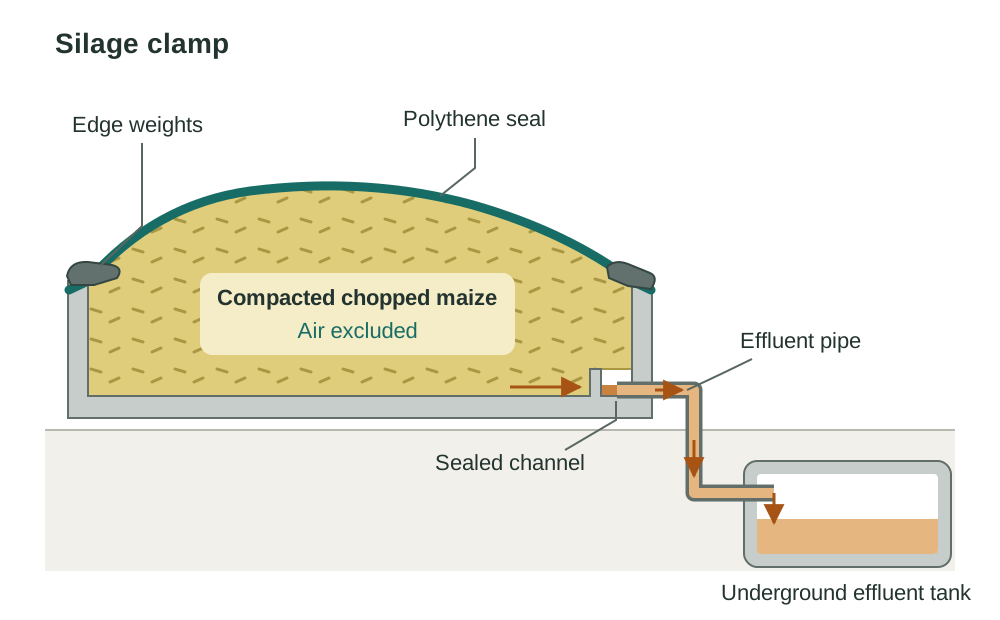
The chopped crop is ensiled in a clamp where anaerobic lactic acid fermentation preserves the sugars:
Two critical preservation factors determine silage quality:
- Oxygen Exclusion: Clamps are rolled continuously with heavy tractors to expel trapped air, then sealed beneath heavy polythene sheeting weighted with tyres or gravel bags. If oxygen enters, aerobic fungi and yeasts consume plant sugars, generate heat, and produce toxic mycotoxins.
- Dry Matter and Moisture Content: Harvesting maize below about 25% DM leaves the crop too wet: the pH does not fall quickly enough, Clostridia bacteria take over from lactic acid bacteria, and they ferment sugars and protein into foul butyric acid and ammonia. This produces unpalatable silage and large volumes of polluting effluent. Harvesting too dry (above 38% DM) prevents adequate clamp compaction, trapping air pockets that lead to mould.
Silage Additives and Effluent
Silage additives improve fermentation in difficult conditions. Bacterial inoculants add large numbers of lactic acid bacteria to accelerate the pH drop; acid additives reduce pH instantly; molasses supplies fermentable sugars. Maize naturally contains high sugar and starch, so it ferments well without additives, though an inoculant may be used to improve aerobic stability when the pit face is opened in winter.
Silage made below 25% DM produces effluent that is approximately 200 times more polluting than raw domestic sewage. Effluent must be captured in sealed channels, piped to an underground storage tank, and spread on land in compliance with nitrates rules; it must never enter open drains or streams.
Harvesting and Storing Catch Crops
Most catch crops are not harvested by machinery; they are grazed in situ behind an electric fence, avoiding all cutting, carting, and storage costs, though grazing in wet weather risks severe soil poaching. Alternatively, crops can be zero-grazed (cut daily with a forage harvester and hauled fresh to housed stock). Stubble turnips can be lifted with a root harvester and stored in cool, dark, frost-proof clamps or sheds. Topped roots must be fed within a few weeks because their high moisture content makes them prone to rotting.
8. Syllabus Practical Investigations
Specified Practical Activity: Measuring Dry Matter (% DM) Content (LO 3.3.2)
- Take a representative sample of the chopped crop from across the field.
- Weigh a clean, dry evaporating dish on an electronic balance and record its tare mass ().
- Add the fresh chopped crop to the dish and record the combined mass ().
- Place the dish in a thermostatically controlled drying oven at 100 °C to 105 °C. Do not exceed 110 °C: higher temperatures drive off volatile fatty acids and cause thermal decomposition of sugars, which leads to mass loss that is not water and underestimates dry matter.
- Remove the sample periodically, place it in a desiccator to cool without absorbing atmospheric moisture, and reweigh.
- Repeat until two consecutive weighings are identical (constant mass), recording the final mass ().
Specified Practical Activity: Comparing Establishment of Grass with Maize (LO 3.3.1)
- Prepare six identical seed trays using the same loam soil, firmed and levelled: three for perennial ryegrass, three for maize.
- Sow a counted number of seeds per tray (e.g. 100 grass seeds at 1 to 2 cm depth; 25 maize seeds at 4 to 5 cm depth).
- Keep all trays at the same temperature and supply identical volumes of water.
- Record the date of first seedling emergence, then count emerged seedlings every two days for three weeks.
- Calculate percentage emergence for each crop and plot emergence over time.
- Typical Result: Grass emerges in 7 to 10 days and produces an even, dense ground cover. Maize takes longer to emerge and forms widely spaced, solitary seedlings.
- Farm Relevance: Maize's slow, open establishment leaves the seedbed prone to aggressive weed competition and soil erosion for weeks. This is why farmers use fine, warm seedbeds, pre-emergence herbicides, and plastic mulch film in Ireland.
Specified Practical Activity: Percentage Germination under Different Conditions (LO 3.3.1)
Sow 100 counted seeds in each of several trays filled with identical soil. Vary only one independent variable (such as temperature: 5 °C, 15 °C, and 25 °C), keeping soil moisture and sowing depth constant. After 14 days, count the germinated seedlings:
For maize, typical results show approximately 21% germination at 6 °C compared to 80% at 15 °C, proving why sowing must wait until soils reach 10 °C or why plastic film is required.
Laboratory Investigation: Two Factors Affecting Crop Preservation (LO 3.3.3)
Preservation is evaluated using replicate mini-silos (airtight glass jars):
- Factor 1 (Air Exclusion): Pack identical masses of chopped forage tightly into two sets of jars. Seal Set A completely airtight with greased rubber lids; leave Set B open to the air covered only with perforated gauze.
- Factor 2 (Moisture Content): Pack freshly chopped, wet forage (Set C) into airtight jars. Wilt an identical sample on the bench for 24 hours to 30% DM before packing and sealing (Set D).
- Control Variables: Same forage species, same chop length, and identical incubation temperature (20 °C) for 3 weeks.
- Measurements: Open jars after 21 days. Measure pH using a calibrated digital pH probe inserted into expressed forage juice, examine for visible fungal mycelium, and record odour.
- Expected Results: Sealed, wilted jars (Set D) reach roughly pH 4.0, develop a pleasant, sweet lactic smell, and show no mould. Unsealed jars (Set B) remain at pH 5.5 to 6.5, smell rancid, and show extensive grey fungal growth. Overly wet sealed jars (Set C) produce dark, foul-smelling butyric acid with liquid effluent pooling at the bottom.
9. Health, Safety, and Environmental Sustainability
Farm Health and Safety
- Machinery Entanglement: Forage harvesters, kernel crackers, and tractor power take-off (PTO) shafts represent severe entanglement hazards. All PTO shafts must have fully intact tubular plastic guards restrained by safety chains. Never clear a blocked harvester drum or feed roller while the tractor is running; always follow the Safe Stop procedure (handbrake on, disengage PTO drive, stop engine, remove ignition key).
- Fermentation Gases in Silage: During the first week of ensiling, respiration and microbial activity generate carbon dioxide () and lethal nitrogen dioxide (). Nitrogen dioxide is a heavy, yellow-brown gas that smells like bleach; inhaling it causes fatal chemical lung damage (silo filler's disease). Never enter an unventilated clamp area during early fermentation.
- Clamp Overturn Risks: Rolling high silage clamps creates a severe tractor rollover risk. Tractors must be fitted with an approved Roll-Over Protective Structure (ROPS) and operators must wear seatbelts at all times.
Environmental Sustainability
Catch crops reduce nitrate leaching through winter rainfall, protecting groundwaters and rivers under the EU Nitrates Directive. Incorporating catch crop green manures increases soil organic carbon and builds cation exchange capacity (CEC).
For energy crops, maize fed into anaerobic digesters provides renewable biomethane and electricity, offsetting fossil fuels. However, a complete sustainability audit must consider fuel used during multi-pass cultivations, disposal of non-degradable plastic films, and the ethical dilemma of diverting prime arable land away from human food production.
Key terms
- Energy Crop
- A crop grown primarily as biomass feedstock for renewable energy production, such as miscanthus or willow for solid fuel, or maize for biomethane via anaerobic digestion.
- Catch Crop
- A fast-growing crop sown between two main commercial crops to absorb residual soil nutrients, reduce erosion, and supply cheap autumn or winter livestock feed.
- Cover Crop
- A crop sown primarily to provide leafy ground cover over bare soil, protecting the surface against raindrop impact, capping, and erosion during winter.
- Green Manure
- A crop grown and ploughed directly into the soil while still vegetative to decompose, increasing soil organic matter, humus, and available plant nutrients.
- Monoecious
- Describing a plant that possesses separate male flowers (tassels) and female flowers (silks and cobs) on different nodes of the same plant.
- Adventitious Brace Roots
- Thick, specialised aerial roots that emerge from the lower stem nodes of maize and grow down into the soil to support the tall plant against wind lodging.
- Plastic Mulch
- A thin, photo-degradable polythene film laid over crop rows at sowing to elevate seedbed soil temperatures and accelerate early seedling development.
- Dry Matter (DM)
- The solid plant matter remaining after all free moisture has been completely evaporated by heating to constant mass in a laboratory oven.
- Soil Index
- A scale from 1 to 4 indicating the available nutrient status of a soil: Index 1 is deficient, Index 3 is the agronomic optimum, and Index 4 is surplus.
- Luxury Uptake
- The absorption of plant nutrients in excess of the quantity required for optimum crop growth, leading to nutrient waste and potential environmental pollution.
- Kernel Processor
- A pair of textured rollers inside a forage harvester designed to crack the outer grain pericarp of maize, exposing internal starch to digestion.
- Indirect Disease Control
- Agronomic practices such as crop rotation, liming, and resistant varieties that suppress crop pests and diseases without applying chemical pesticides.
- Club Root
- A destructive soil-borne disease of cruciferous crops caused by the protist Plasmodiophora brassicae, producing large, swollen root galls.
- S-methylcysteine sulphoxide (SMCO)
- A sulphur-containing amino acid found in brassicas that rumen bacteria convert into dimethyl disulphide, causing red blood cell breakdown and anaemia.
- Scratch Factor
- The dietary requirement for coarse, structural long fibre (hay, straw, or silage) needed to stimulate rumination and cud chewing in livestock grazing low-fibre brassicas.
- Constant Mass
- The end-point of an oven-drying procedure where consecutive weighings separated by a drying interval show no further mass loss, confirming all water has evaporated.
Check yourself
Name two perennial energy crops grown in Ireland other than maize and state how they are harvested.
Short rotation coppice willow and miscanthus; both are cut and chipped in late winter or early spring using a forage harvester fitted with a specialised coppice or cane header once the crop has dried down.
What is the botanical meaning of the term monoecious when applied to forage maize?
It means the plant bears separate male flowers (tassels at the stem apex) and female flowers (cobs and silks at the stem axils) on the same individual plant.
Why will maize seeds fail to germinate reliably if sown into bare soil in late March in Ireland?
Maize requires a minimum baseline soil temperature of 10 °C to germinate, which Irish bare soils do not reach until mid-April or May without plastic mulch.
State two alternatives to crop rotation for controlling a soil-borne disease like club root.
Any two of: sowing resistant crop varieties, using certified disease-free seed, stubble cleaning and ploughing, liming to raise soil pH, improving drainage, adjusting sowing dates, or applying targeted chemical seed dressings.
Identify the toxic compound in kale that causes nutritional red water in cattle and name the specific growth stage when it peaks.
S-methylcysteine sulphoxide (SMCO); its concentration peaks during the reproductive flowering stage.
Why must livestock grazing catch crops always be provided with roughage like silage, hay, or straw?
Brassicas are low in structural fibre; roughage provides the scratch factor needed to stimulate rumination, maintain rumen pH above 6.0, and prevent bloat and acidosis.
In a dry matter test, an empty dish weighs 35.0 g. Dish plus fresh forage weighs 185.0 g. After drying to constant mass, dish plus sample weighs 80.0 g. Calculate the % DM.
Fresh mass = 185.0 - 35.0 = 150.0 g. Dry mass = 80.0 - 35.0 = 45.0 g. % DM = (45.0 / 150.0) x 100 = 30.0%.