

Reproduction and Lactation Physiology in Cattle
The Mammalian Reproductive Cycle
The bovine oestrous cycle averages 21 days, with standing heat lasting approximately 18 to 24 hours:
- FSH (Follicle-Stimulating Hormone): Secreted by the anterior pituitary gland; stimulates the development of a Graafian follicle containing an egg on the ovary.
- Oestrogen: Secreted by the growing ovarian follicle; induces physical and behavioural signs of heat.
- LH (Luteinising Hormone): An anterior pituitary surge triggers ovulation approximately 10 to 14 hours after the end of standing heat. The ruptured follicle reorganises into the corpus luteum (yellow body).
- Progesterone: Secreted by the corpus luteum; thickens the endometrium, maintains pregnancy, and suppresses further FSH secretion and oestrus cycles.
- Prostaglandin (): If pregnancy does not occur, the uterine endometrium secretes prostaglandin around day 17, which regresses the corpus luteum, dropping progesterone and restarting the cycle.
Signs of Heat and Fertilisation Methods
- Primary Sign: Standing firmly to be mounted by herd-mates ('standing heat').
- Secondary Signs: Mounting other cows, restlessness, bellowing, clear chin-ball marks, rubbed tail-head paint, swollen vulva, clear stringy mucus discharge, and a drop in milk yield.
- Natural Service: Relying on a stock bull running with the herd.
- Artificial Insemination (AI): Depositing proven semen into the uterine body using an AI straw and gun. Follows the AM/PM rule: cows observed in standing heat in the morning are inseminated that evening; cows seen in the evening are inseminated the next morning.
- AI Advantages: Access to high-merit, progeny-tested sires; improved biosecurity; eliminates stock bull hazards; enables use of sexed semen (which delivers ~90% female calves for dairy replacements, though at a slightly higher straw cost and marginally lower conception rate).
Reproductive Efficiency and the 365-Day Target
Reproductive efficiency is the ability of a breeding herd to successfully mate, conceive, and rear calves, expressed as the number of calves weaned per 100 cows mated.
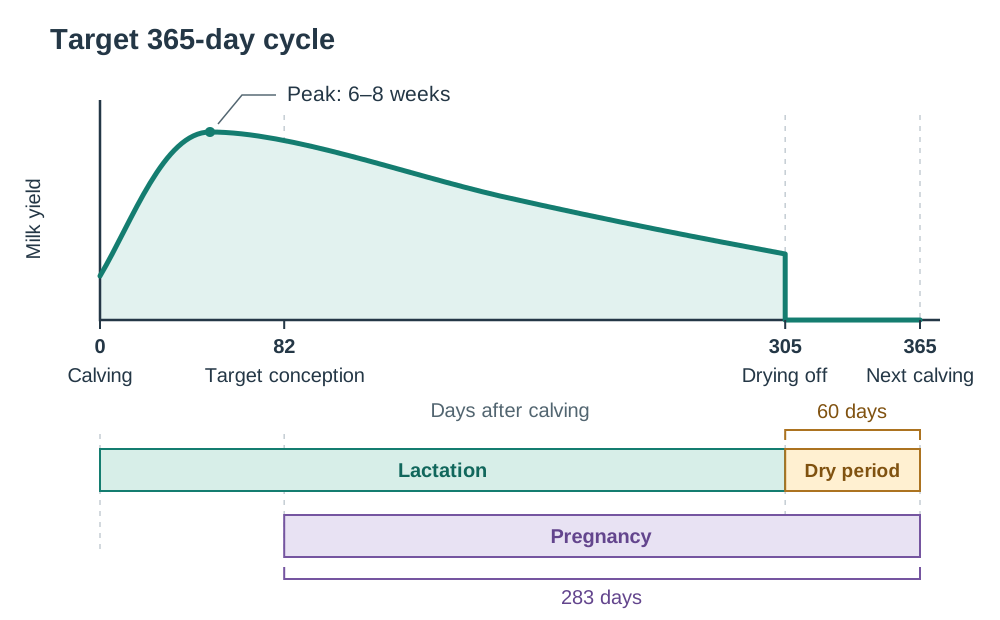
Bovine gestation lasts approximately 283 days. To achieve one calf per cow per year (a 365-day calving interval), a cow must conceive within:
Factors governing reproductive efficiency include Body Condition Score (BCS) (target 2.75–3.0 at breeding), heat detection accuracy, plane of nutrition, and herd biosecurity.
Udder Physiology and Milk Let-Down
Milk is synthesised within microscopic alveoli lined with secretory epithelial cells, surrounded by myoepithelial muscle networks.
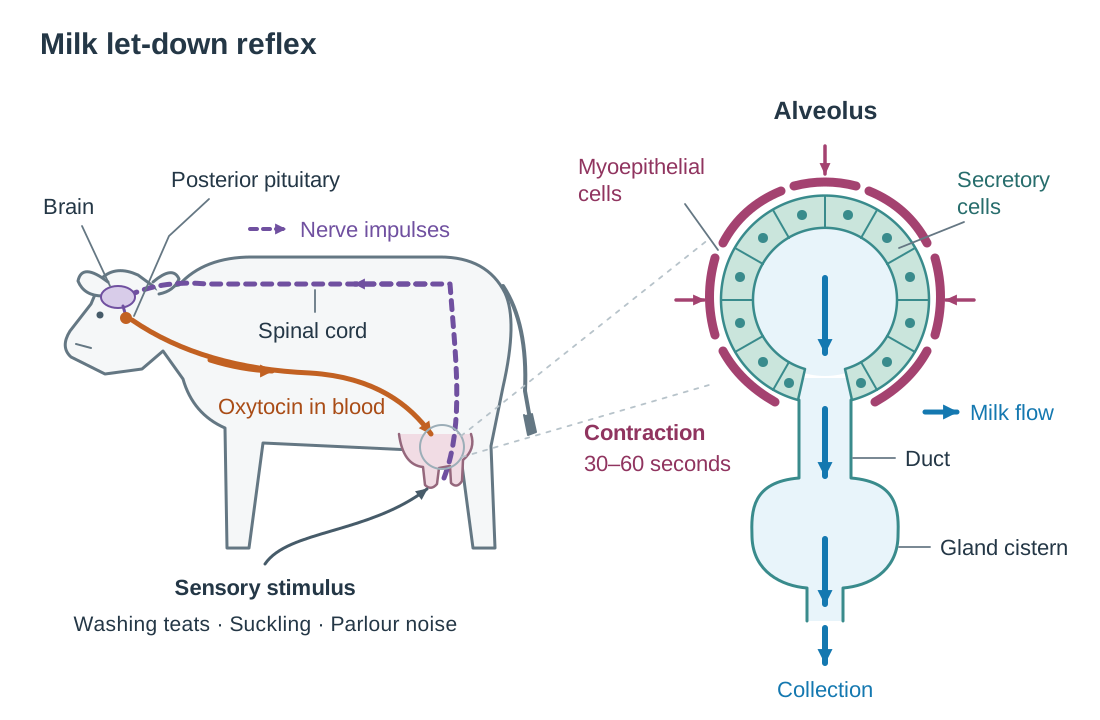
If the cow is frightened or handled roughly, the adrenal glands release adrenaline. Adrenaline constricts mammary blood vessels, blocking oxytocin delivery and impeding milk let-down.
Lactation Curve Management
- Early Lactation (Days 1–100): Milk yield climbs to a peak at 6–8 weeks. Energy output in milk exceeds daily dry matter intake, creating a negative energy balance. The cow mobilises body fat ('milks off her back'). BCS loss must not exceed 0.5 units to safeguard fertility.
- Mid Lactation (Days 101–200): Intake matches milk requirements. Milk declines at 7–9% per month (persistency).
- Late Lactation (Days 201–305): Milk yield tapers off. Feeding focuses on achieving a BCS of 3.0 before drying off.
- Drying Off (60-day Dry Period): Milking ceases abruptly 60 days before calving, allowing alveolar repair. Farmers practice selective dry cow therapy (SDCT): cows with low historical Somatic Cell Counts receive internal teat sealants alone, while cows with high SCC or mastitis receive antibiotic tubes. In the final 4–6 weeks, cows are steamed up with high-DMD forage and minerals to adapt rumen microbes.
Calf Rearing, Rumen Development, and Target Milestones
Colostrum and Passive Immunity: The 1-2-3 Rule
Because the bovine syndesmochorial placenta prevents antibody transfer in utero, newborn calves depend entirely on colostrum for passive immunity.
- 1: Use colostrum from the first milking only (contains up to 15% protein, dominated by immunoglobulins).
- 2: Feed within two hours of birth. The porous calf intestine begins closing rapidly and becomes impermeable to large antibodies within 24 hours.
- 3: Feed at least three litres (or 8.5–10% of body weight) via clean teat or stomach tube.
Navels are immediately dressed with 10% iodine solution to seal the umbilical vessels against bacteria.
Transition to a Functional Ruminant
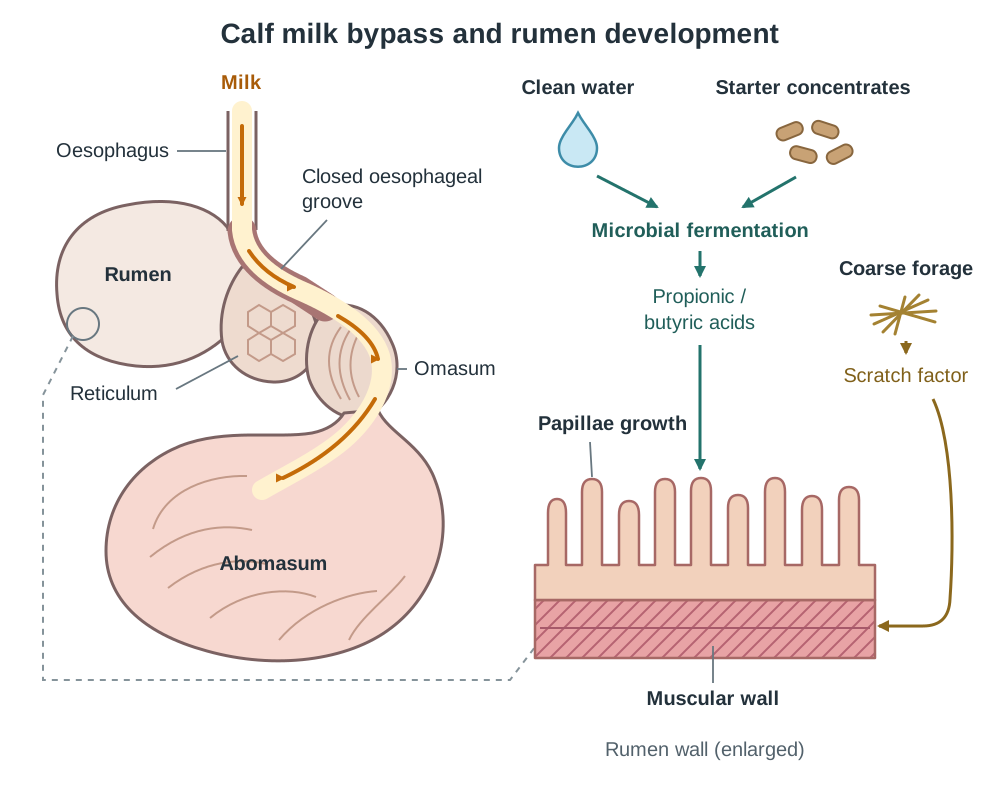
At birth, a calf's stomach functions like a monogastric stomach: the abomasum represents ~70% of total stomach volume, while the rumen is undeveloped. When suckling, the oesophageal groove (a muscular gutter) folds into a closed bypass tube, routing liquid milk directly past the rumen into the abomasum. If milk spills into an inactive rumen, it putrefies, causing bloat and scour.
Developing the rumen requires three complementary inputs:
- Clean Water: Facilitates bacterial colonisation and carbohydrate fermentation.
- Starter Concentrates: Microbes ferment starch into volatile fatty acids (primarily propionic and butyric acids). These acids stimulate the physical growth and vascularisation of absorption papillae on the rumen wall.
- Coarse Forage (Clean Straw or Hay): Provides the scratch factor. The physical abrasion of fibre rubs the rumen lining, stimulating muscular contractions, wall thickening, and the regurgitation reflex.
Calves are ready for weaning once they consume at least 1.0 kg of concentrate pellets daily for three consecutive days, typically at 8–10 weeks of age.
Target Liveweight Milestones (Dairy-Bred Heifers / Steers)
| Production Stage | Target Liveweight | Nutritional and Husbandry Management |
|---|---|---|
| Birth | ~40 kg | 3 L clean colostrum within 2 hours; naval disinfected with iodine. |
| Weaning (8–10 weeks) | ~80–90 kg | Double birth weight; consuming at least 1.0 kg starter concentrates daily. |
| Housing (Year 1, November) | ~200–230 kg | Rotational grazing; dosed for hoose and worms; housed on 70%+ DMD silage. |
| Turnout (Year 2, March) | ~280–310 kg | Winter gain ~0.5 kg/day; turnout triggers rapid compensatory growth on spring grass. |
| Mating (Heifers, 15 months) | ~330–350 kg | Minimum 60% of mature body weight; calve down successfully at 24 months. |
| Slaughter / Calving (24 months) | ~550–600 kg | Steers finished off autumn grass with meal; dairy heifers calve down at BCS 3.25. |
Milk Quality, Component Pricing, and Grass-Fed Attributes
Milk Composition and Diurnal Variation
Standard bovine milk contains approximately 87.5% water, 3.8% butterfat, 3.4% protein (casein and whey), 4.6% lactose, and 0.7% minerals.
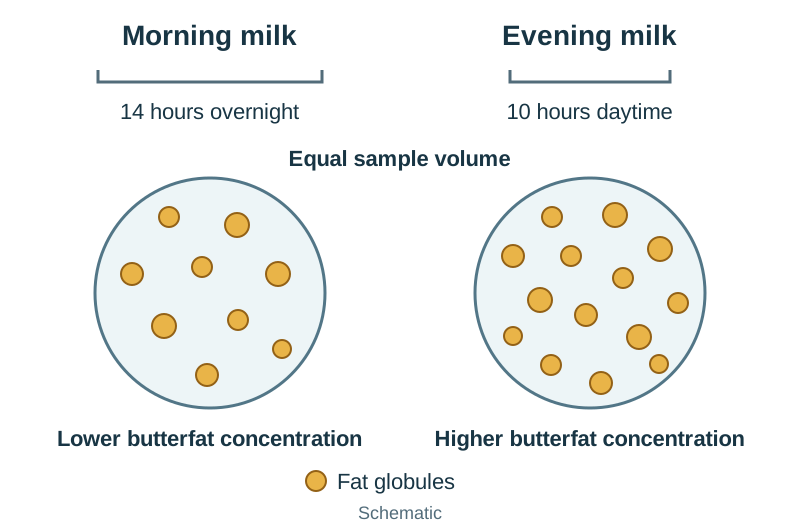
Because herds are milked at unequal intervals (typically 14 hours overnight and 10 hours during the day), morning milk contains a lower butterfat percentage than evening milk. Over the longer overnight gap, more milk volume (mostly water and lactose) is made, while fat is added at a steadier rate and some fat is held back in the alveoli. The fat is therefore diluted, so morning milk has a lower butterfat % than evening milk. Evening milk, produced over 10 hours, is lower in liquid volume but has concentrated butterfat globules.
Secondary Data Solids Calculation
- Morning Milk (a.m.): 3.6% fat + 3.3% protein + 4.7% lactose + 0.7% minerals = 12.3% solids → 87.7% water.
- Evening Milk (p.m.): 4.4% fat + 3.4% protein + 4.7% lactose + 0.7% minerals = 13.2% solids → 86.8% water.
Milk Quality Benchmarks
- Total Bacterial Count (TBC): Measures general bacteria per ml. Legal maximum is 100,000/ml (co-op target <20,000/ml). Elevated TBC indicates unwashed milking lines or plate cooler/bulk tank refrigeration faults.
- Somatic Cell Count (SCC): White blood cells per ml. Legal limit is 400,000/ml (target <150,000/ml). Elevated SCC indicates clinical or subclinical mastitis.
- Thermoduric Bacteria: Spores surviving pasteurisation (target <1,000/ml); caused by milk residues inside pipelines.
- Inhibitory Substances (Delvo Test): Detects antibiotic residues. Milk testing positive is rejected and penalised, as residues destroy cheese-starter cultures and risk consumer reactions. Farmers must observe statutory medicine withdrawal periods.
Specified Practical Activity: Investigating Milk Quality Over Time
- Method:
- Split one fresh milk sample into two portions. Store one portion at room temperature (~20°C) and the other in a refrigerator (~4°C).
- Each day for 4–5 days, transfer 10 ml from each portion into sterile test tubes and add 1 ml of resazurin dye (or methylene blue).
- Prepare a negative control tube containing 10 ml of boiled milk (to kill all bacteria) with 1 ml of dye added at the same time.
- Incubate all tubes in a water bath at 37°C and record the time taken for the colour to change (resazurin reduces from blue to pink and white as bacteria consume oxygen).
- Result: The dye decolourises faster each successive day, with the fastest colour change occurring in the warm sample stored at room temperature. The boiled-milk control shows no colour change.
- Conclusion: Bacterial populations multiply over time, and do so far more rapidly in warm conditions. Rapid chilling in farm bulk tanks to below 6°C is therefore essential to prevent bacterial proliferation and maintain low TBC.
The A + B − C Component Pricing Model
Where is the value of protein, is the value of butterfat, and is the processing/haulage charge.
Attributes of Irish Grass-Fed Produce and Market Trends
Pasture-based diets deliver milk and meat higher in omega-3 fatty acids, conjugated linoleic acid (CLA), beta-carotene (providing yellow butter and fat colour), and vitamin E. With over 85–90% of Irish beef and dairy exported, international markets value our pasture-grazed systems, certified via Bord Bia's Sustainable Assurance Schemes and Protected Geographical Indication (PGI) status.
Animal Health, Mastitis, and Disease Control
Preventing and controlling disease protects animal welfare, farm income, and food safety.
Mastitis in Dairy Cows
Mastitis is inflammation of the udder, caused by bacteria entering through the teat canal.
- Clinical mastitis: Visible symptoms include a hot, swollen, hard quarter, clots or flakes in the milk, reduced milk yield, and a cow showing signs of pain or fever.
- Subclinical mastitis: No visible clots in the milk, but the cow has a high Somatic Cell Count (SCC) and lower milk yield.
- Treatment: Milk out the infected quarter fully, clean and disinfect the teat end, infuse an intramammary antibiotic tube, mark the cow clearly, and dump her milk for the full withdrawal period.
- Prevention: Dip or spray all teats after every milking; keep cubicles clean and limed; service the milking machine regularly; milk infected cows last; use dry-cow therapy or teat sealants at drying off; cull persistent repeat cases.
Sheep Parasite Control and Footrot
Always pair the control method with the named parasite in exam answers:
- Stomach and intestinal worms: Dose with an anthelmintic; use rotational grazing or clean aftergrass to break the lifecycle; use faecal egg counts to dose only when needed, which slows anthelmintic resistance.
- Liver fluke: Drain or fence off wet, muddy areas to eliminate the mud snail (the intermediate host); dose with a flukicide.
- Blowfly (maggots / flystrike): Shearing in early summer; dagging (shearing soiled wool from around the tail); tail docking; applying pour-on chemical treatments or insect growth regulators.
- Sheep scab and lice: Plunge dipping in an approved dip; injectable treatments.
- Footrot: Caused by bacteria, leading to severe lameness, red moist skin between the claws, a foul smell, and horn separating from the hoof. Treat by isolating the sheep, using antibiotic sprays or injections, running the flock through a zinc sulphate or copper sulphate footbath, and vaccinating. Chronically lame sheep eat less, lose condition, and should be culled.
Notifiable Diseases
A notifiable disease is an infectious disease that a farmer or vet is legally required to report to the Department of Agriculture, Food and the Marine (DAFM) immediately upon suspicion. Examples include bovine tuberculosis (TB), brucellosis, foot-and-mouth disease, BSE, and avian influenza.
These diseases are controlled by law because they spread rapidly across farms, some are zoonoses, and an uncontrolled outbreak can shut down Ireland's international export markets. Compliance requires annual TB skin testing of the herd, immediately isolating reactors until DAFM collects them, placing movement restrictions on the herd until it tests clear, maintaining full tagging records on the AIM database, and running strict farm biosecurity.
Farm Economics, Milk Quality, and Market Standards
Farmers must manage costs, animal performance, and product quality to maintain profit margins.
Farm Economics: Gross Margin, Carcass Value, and Stocking Rate
- Gross margin measures the output of an enterprise minus its variable costs:
Variable costs include meal, chemical fertiliser, veterinary medicine, seed, and contractor charges. Fixed costs (machinery depreciation, building maintenance) are not deducted.
- Comparing Production Systems (Beef Enterprise):
- Suckler-to-weanling: Calves are sold in autumn at 8–9 months old. This system requires less winter shed space, lower silage reserves, and smaller slurry storage because only cows are housed or outwintered. Variable costs (meal, vet) and capital tied up in stock are lower, giving quicker annual cash flow, but total output value per cow is lower.
- Suckler-to-beef: Animals are kept until slaughter at 20–28 months of age. This system demands substantial winter housing, more silage, extra slurry tank capacity, and higher variable costs for concentrate feed and veterinary care across two winters. Cash flow is delayed, but output per head and overall gross margin potential are higher if finishing performance is strong.
- The choice of system directly alters the farm's gross margin by changing both the value of output per hectare and the variable input costs required to finish stock.
- Kill-out percentage: The percentage of the live animal that ends up as saleable carcass weight:
Typical kill-out percentages are 52–56% for beef steers, 56–60% for continental bulls, and 46–50% for lambs. Carcasses are graded on conformation (shape: E, U, R, O, P, with E being best) and fat cover (1 to 5, with 3 to 4 being ideal). Factory base prices are adjusted based on the grid grade plus quality assurance bonuses.
- Livestock Unit (LU) and Stocking Rate: A Livestock Unit is a standardised unit of feed demand equal to the annual feed requirement of a 550 kg mature cow (roughly 12 tonnes of dry matter per year). A dairy cow is 1.0 LU, a beef store animal is 0.6–0.8 LU, and a mature ewe is 0.15–0.20 LU. The stocking rate is calculated as total LU divided by the farm area in hectares. Under the Nitrates Directive, organic nitrogen from grazing livestock cannot exceed 170 kg N/ha per year unless the farm holds a formal nitrates derogation.
Milk Quality and the A + B − C Pricing System
Processors pay for milk based on solids rather than liquid volume, using the formula:
Where is the payment per kg of protein, is the payment per kg of butterfat, and is the processing and volume deduction per litre.
- Milk tests:
- Hygiene tests: Total Bacterial Count (TBC) measures bacteria per millilitre; low counts earn bonuses, while high counts indicate poor milking hygiene or failing refrigeration. Somatic Cell Count (SCC) measures white blood cells per millilitre. A high SCC (for an individual cow, above about 200,000 cells/ml) indicates subclinical mastitis. Processors reward low SCC and penalise high SCC, and milk above 400,000 cells/ml does not meet the standard for sale. An antibiotic residue test checks for medicine traces.
- Composition tests: Butterfat %, protein %, and lactose %.
Irish Grass-Fed Produce, Traceability, and Innovation
- Grass-fed advantages: Beef and dairy from grass-fed stock contain higher levels of healthy omega-3 fatty acids, conjugated linoleic acid (CLA), and beta-carotene, giving Irish butter its characteristic yellow colour. Bord Bia's Grass Fed Standard and Origin Green scheme verify these claims to international buyers.
- Market trends and consumer requirements:
- Export markets: The vast majority of Irish dairy and beef is exported, meaning compliance with stringent international buyer standards on traceability, carbon footprint, and animal welfare directly determines market access.
- Value-added products: Processing raw milk and meat into specialised products such as cheese and branded premium cuts captures higher margins than selling bulk commodities.
- Niche and artisan markets: Small-scale premium sectors, such as farmhouse cheese and certified organic meat, command higher price premiums.
- Consumer demand: Rising consumer demand for sustainable, high-welfare, and traceable food drives participation in quality assurance schemes.
- Food traceability: Dairy calves must be double ear-tagged within 20 days of birth (suckler calves within 27 days) and registered on the AIM database within 7 days. Farmers must record all medicine batch numbers, dates, and observed withdrawal periods in a herd register to ensure zero pharmaceutical residues enter the food chain.
- Innovations in sustainable intensification: Producing food efficiently without damaging the environment requires modern technologies: genomic selection and sexed semen in cattle, electronic heat-detection collars, CT scanning of terminal-sire rams to evaluate muscle and fat depth without slaughtering the animal, and Low-Emission Slurry Spreading (LESS).
Milk Quality Over Time and Milk Solids
Investigating the quality of a milk sample over time is a specified (starred) practical activity. In contrast, comparing the percentage of water and solids in morning and evening milk is an outcome based on secondary data, where exam questions typically supply sample masses for calculation.
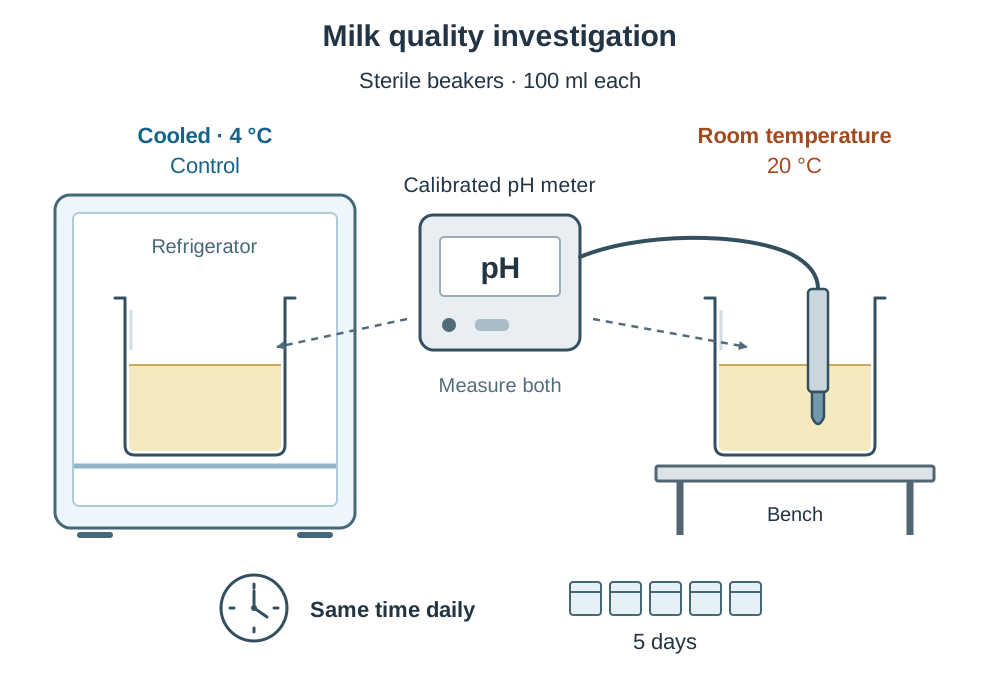
Investigation: Milk Quality Over Time (pH Method)
- Aim: To show that milk quality deteriorates over time as bacteria multiply, and that uncooled milk spoils faster.
- Method:
- Pour equal volumes (100 ml) of fresh raw or pasteurised milk into two clean, sterile beakers.
- Label one beaker 'Cooled' and store it in a refrigerator at 4 °C. This acts as the control.
- Label the other beaker 'Room Temperature' and leave it on an open laboratory bench at 20 °C.
- Measure and record the pH of both beakers using a calibrated pH meter at the same time each day for 5 days.
- Result: The pH of the room-temperature milk drops rapidly from 6.7 down to below 5.0, turning sour and curdling. The refrigerated milk maintains its pH for significantly longer.
- Conclusion: Bacteria in milk ferment lactose sugar into lactic acid, dropping the pH. Storing milk at 4 °C inhibits bacterial growth.
- Farm link: This is why milk is cooled quickly in the bulk tank to about 4 °C and collected regularly. Poor cooling lets bacteria multiply, raising the Total Bacterial Count (TBC) and leading to price penalties.
Comparing Water and Solids in A.M. and P.M. Milk
Milk composition is calculated using the formulas:
Evening milk (p.m.) almost always contains a higher percentage of solids (fat and protein) than morning milk (a.m.). The interval between evening and morning milking is typically longer (for example, 14 hours overnight vs 10 hours during the day). A longer milking interval produces a larger volume of milk with a diluted fat content, whereas a shorter interval produces a smaller volume with concentrated solids.