

Textiles and fabrics covers fibre classification, sewing and embellishment skills, care labelling, and sustainable consumer choices. In the Junior Cycle examination, you will classify fibres, describe fabric properties, name stitches and their uses, identify international care symbols, and discuss sustainable and ethical clothing choices.
Fibre Classification and Fabric Properties
Textile fibres fall into two main groups based on their origin:
- Natural fibres:
- Plant (vegetable): Cotton, from the seed boll of the cotton plant, and linen, from the stem of the flax plant. Cotton is cool, highly absorbent, strong, and washable.
- Animal (protein): Wool and silk. Wool is warm, elastic, and does not burn easily, though high heat shrinks it.
- Man-made fibres:
- Synthetic (chemical): Polyester, nylon, and acrylic, made from petrochemicals. Nylon is lightweight and tough; acrylic provides wool-like warmth.
- Regenerated (natural cellulose treated with chemicals): Viscose and acetate.
A fabric blend combines two or more different fibres to share their best qualities and lower costs. For example, a polyester-cotton blend unites cotton's soft breathability with polyester's crease resistance and strength.
Stitches, Seams, and Sewing Machines
Sewing joins and finishes fabrics neatly using hand stitches or a sewing machine.
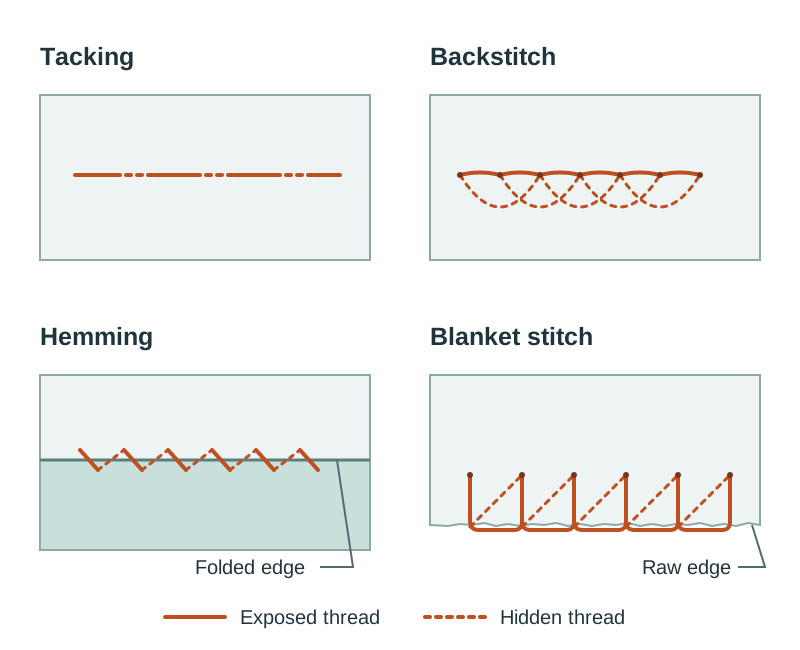
Hand stitches
- Tacking (basting): A temporary, loose running stitch in contrasting thread to hold fabric pieces before final sewing.
- Backstitch: A strong, overlapping stitch used to join seams or repair split stitching by hand.
- Hemming: Small, slanted stitches to hold down a folded edge, for example the hem of a skirt or trousers.
- Blanket stitch: A decorative looped stitch used on raw edges to prevent fraying or to attach appliqué.
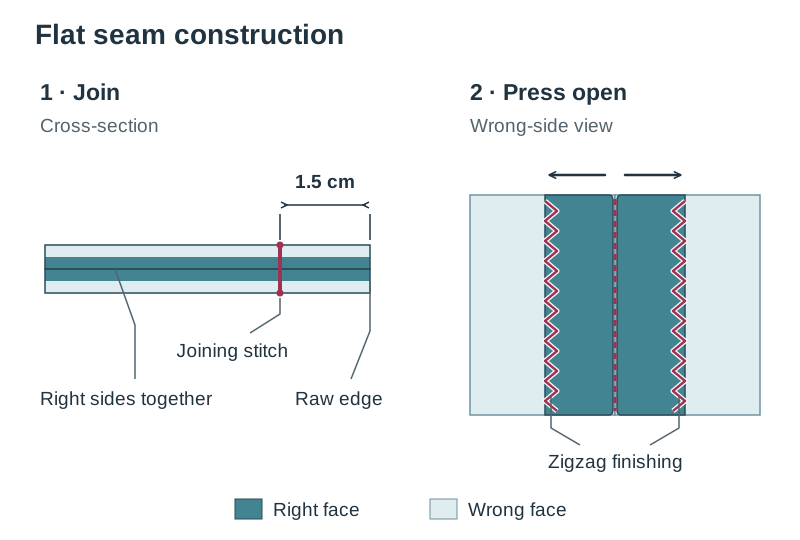
Flat seam
Place right sides together, pin and tack, then machine stitch 1.5 cm from the raw edge. Press open with an iron and neaten the edges with pinking shears or zigzag machining.
Sewing machine rules and care
- Using: Thread correctly, test stitch tension on scrap fabric, lower the presser foot before sewing, guide fabric gently without pulling, and raise the needle before removing work.
- Caring: Follow manufacturer instructions, brush out dust and fluff, oil moving parts occasionally, cover when not in use, and service regularly.
Embellishment Techniques and Wellbeing
Fabric embellishment adds colour, texture, and pattern to clothing and household textiles:
- Appliqué: Stitching smaller fabric shapes onto a background fabric using blanket stitch or machine satin stitch.
- Embroidery: Decorative stitching worked by hand with embroidery thread, for example satin stitch to fill in a shape.
- Quilting: Stitching three layers together: a decorative top fabric, an insulating wadding layer, and a backing fabric.
- Dyeing: The fabric is soaked in dye so colour penetrates right through the fibre.
- Printing: Colour is applied to the fabric surface only, using blocks, rollers, or screens.
Participating in textile crafts also serves as a therapeutic leisure activity that relieves stress, encourages creativity, and supports positive mental health.
Consumer Choices, Care Labels, and Sustainability
Choosing and extending clothing life
When buying clothes or household textiles, consider cost, fit and size, purpose and properties, care label instructions, quality and durability, style suitability, and ethical and ecological impact. Ethical considerations include fair wages and safe conditions for workers, animal welfare, and avoiding fast fashion waste.
Extend the life of textiles by following four sustainable actions:
- Repair: Sew on loose buttons, mend split seams with backstitch, or re-stitch fallen hems.
- Reuse: Pass outgrown clothes to siblings, donate to charity shops, or swap with friends.
- Re-purpose: Cut worn towels into cleaning cloths or turn old jeans into bags or cushion covers.
- Recycle: Break worn textiles down into raw fibres to spin new yarn.
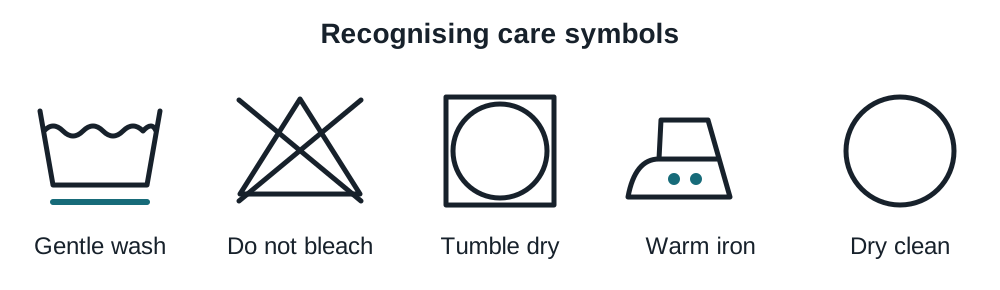
International care symbols
- Wash tub: Washing method and temperature (numbers give °C; a bar underneath indicates a gentle cycle).
- Triangle: Bleaching advice (a diagonal cross means do not bleach).
- Square: Drying method (a circle inside means tumble dry; a curved line means line dry).
- Iron: Pressing temperature (one dot is cool, two warm, three hot).
- Circle: Professional dry cleaning.
- Greener care: Wash full loads at 30 °C, line dry instead of tumble drying, and avoid dry cleaning where possible — this saves energy and water and cuts chemical pollution.
Design brief process
The design brief process guides practical projects through set stages: state the brief, research and investigate, generate ideas, develop two solutions, choose one with reasons, list resources and a workplan, make the item, and evaluate it.
Key terms
- Natural fibre
- A textile fibre obtained directly from plants (such as cotton or linen) or animals (such as wool or silk).
- Synthetic fibre
- A man-made fibre manufactured entirely from petrochemical chemicals, such as nylon, polyester, or acrylic.
- Regenerated fibre
- A man-made fibre made by processing natural plant cellulose with chemicals, such as viscose.
- Fabric blend
- A fabric made by combining two or more different fibres to unite their beneficial properties.
- Upcycling
- Transforming an old or discarded textile item into a new, higher-value product without breaking it down into raw fibres.
- Fast fashion
- Cheap, mass-produced clothing designed to meet short-term catwalk trends, resulting in environmental damage and poor working conditions for garment workers.
Check yourself
Name the two sub-categories of natural fibres and give one example of each.
Plant fibres (such as cotton or linen) and animal fibres (such as wool or silk).
Which hand stitch is used to secure the hem of a skirt or trousers?
Hemming stitch.
What is the key difference between fabric dyeing and fabric printing?
Dyeing penetrates through the entire fibre, whereas printing applies colour only to the surface.
What does a single horizontal bar placed underneath a wash tub symbol mean?
Use a gentle or mild wash cycle.
Give two ways an old pair of denim jeans could be re-purposed.
Cut and sewn into a pencil case or cushion cover, or cut into household cleaning cloths.