

This topic is about choosing, making, caring for and recycling clothes and textile items for yourself and the home. For the Junior Cycle examination, you need to understand clothing choices, design principles, sewing techniques, garment care labelling, and the environmental impacts of fast fashion.
Influences on Clothing Choice and Fast Fashion
Clothing meets a physical need for warmth and protection, while fashion choices often reflect personal wants. Our clothing choices are influenced by fashion trends, social media and celebrities, advertising, peer pressure, cost and budget, occasion (school, sport, work), and climate.
Ethical consumers choose durable items, buy second-hand from charity shops, or look for Fairtrade labels.
Fast fashion means cheap, mass-produced clothing made quickly to copy current trends. It causes serious ethical issues, such as low wages and unsafe conditions for factory workers. It also causes major ecological damage, including excessive water usage, toxic chemical dyes, microplastic pollution from synthetic fabrics, and landfill waste.
Fibres, Design Lines, and Sewing Skills
Fabrics are made from two main types of fibres:
- Natural fibres from plants or animals: cotton (t-shirts), wool (jumpers), and silk (scarves).
- Synthetic fibres made from chemicals: polyester (sportswear) and nylon (jackets).
The visual lines in clothing create optical illusions for the wearer:
- Vertical lines draw the eye up and down, which makes the wearer look taller and slimmer.
- Horizontal lines draw the eye across the body and make the person seem wider or broader.
- Diagonal lines create a sense of movement or draped effect.
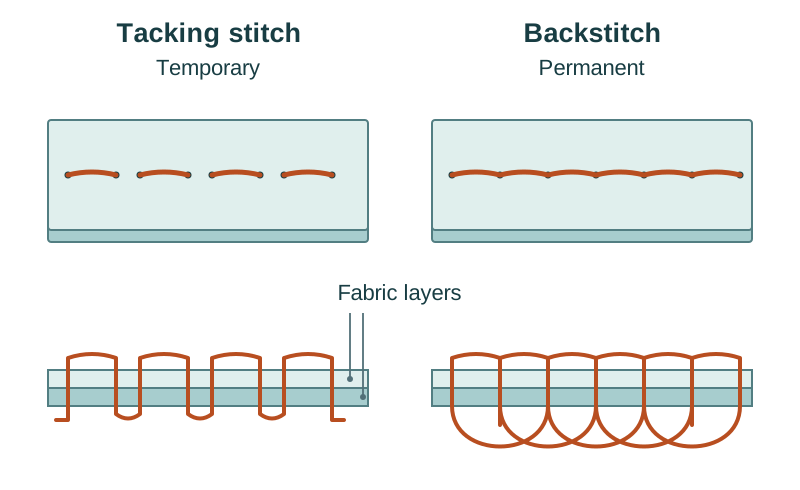
You need to be able to demonstrate basic hand and machine sewing techniques. Tacking stitch holds layers together temporarily. Backstitch joins seams with a strong, permanent finish. Hemming stitch secures folded edges neatly. On a sewing machine, straight stitch joins seams and zigzag stitch neatens raw edges to stop fraying. Appliqué stitches fabric shapes onto a base fabric for decoration. Always stand the iron upright on its heel when you are not using it. Textile work also has a therapeutic and leisure role — sewing and craft help you relax, concentrate and feel proud of making something yourself.
The Design Brief Process and Creative Textiles
The design brief process is the step-by-step way you plan, make and evaluate a textile item:
- State the brief: Identify the user, purpose, and requirements.
- Investigate solutions: Research and sketch two different ideas.
- Chosen solution: Pick the best idea and give two reasons for choice.
- Workplan and resources: List needed fabrics, tools, and ordered steps.
- Manufacture: Make the product safely using sewing and embellishment skills.
- Evaluation: Reflect on the finished quality, what went well, and what to change next time.
For example, if the brief is to make a cushion cover for a child, your two sketches might be an appliqué star or a patchwork pattern. You might choose the appliqué star because it is quicker to sew and reuses fabric scraps.
Garments apply the principles of design: balance, proportion, rhythm, and emphasis (a focal point).
The 5 Rs of Sustainable Textiles
We can reduce textile waste in the home using the 5 Rs:
- Repair: Mend broken zips, re-stitch torn seams, or sew on loose buttons.
- Reuse: Wear clothes repeatedly, hand garments down to family, or donate to charity shops.
- Re-purpose: Convert an old item into something completely different without processing its fibres, such as using worn bath towels as household cleaning rags.
- Recycle: Put unwearable clothes into a textile bank, where the fibres are shredded and used for insulation, stuffing or cleaning cloths.
- Upcycle: Redesign and transform an old textile item into a new product of higher value, such as turning old denim jeans into a sturdy school tote bag.
Textile Care Labels and Eco-Friendly Care
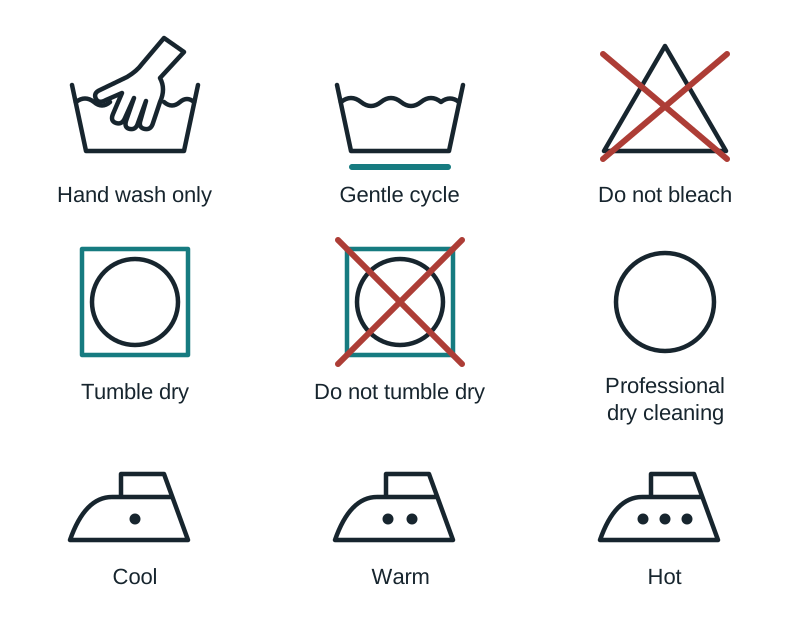
A textile care label gives instructions to prevent garment damage. Learn the five main care symbols:
- Wash tub: Washing temperature; a hand means hand-wash only; a bar underneath means gentle cycle.
- Triangle: Bleaching instructions; a cross through the triangle means do not bleach.
- Square: Drying instructions; a circle inside means tumble dry; a cross means do not tumble dry.
- Iron: Ironing heat; one dot is cool, two dots is warm, and three dots is hot.
- Circle: Professional dry cleaning.
Eco-friendly ways to care for textiles at home include washing clothes at 30 °C, washing only full loads, line-drying clothes outside instead of tumble drying, measuring detergent accurately to limit water pollution, and avoiding dry cleaning solvents.
Key terms
- Fast fashion
- Inexpensive, mass-produced clothing made rapidly to copy current trends, which leads to high waste and ethical concerns.
- Upcycling
- Transforming an old or discarded textile item into a new product of higher value or quality.
- Re-purposing
- Using an existing textile item for a completely different purpose without breaking down its fibres.
- Appliqué
- A fabric embellishment technique where cut fabric shapes are stitched onto a background fabric.
- Tacking stitch
- A quick, temporary running hand stitch used to hold fabric pieces in place before permanent stitching.
- Backstitch
- A strong, permanent hand stitch used to join seams securely or complete repairs.
- Design brief process
- A step-by-step problem-solving method of researching, planning, making, and evaluating a design task.
- Textile care label
- A label attached to a garment showing its fibre content and standard international cleaning symbols.
Check yourself
What visual illusion do horizontal lines create on a garment?
They draw the eye across the body and make the wearer seem wider or broader.
Name one natural fibre and one synthetic fibre, giving one common use for each.
Cotton (used for t-shirts or towels) and polyester (used for sportswear).
Give two ways to care for clothes at home in an eco-friendly manner.
Wash clothes at 30 °C in full loads, and line-dry outdoors instead of using a tumble dryer.
What is the specific purpose of a zigzag machine stitch?
It neatens raw fabric edges to prevent them from fraying.
What does a wash tub symbol with a hand placed inside indicate?
Hand wash only.