

Nutrition is the study of food, its nutrients, and how our bodies use them for growth, energy, and health. In the Junior Cycle exam, you need to know nutrient functions and sources, the digestive system, lifecycle needs, and how to read food labels when planning balanced meals.
Nutrients: Functions, Sources, and Deficiencies
Nutrients fall into two main groups. Macronutrients are needed in large daily amounts, while micronutrients are needed in tiny amounts.
- Protein builds new cells and repairs damaged tissue. High biological value (HBV) protein contains all essential amino acids and comes from meat, fish, eggs, dairy, and soya. Low biological value (LBV) protein lacks one or more essential amino acids, found in beans, peas, and lentils.
- Carbohydrates supply warmth and energy, while dietary fibre keeps waste moving through the bowel to prevent constipation. Fats provide concentrated energy and protect vital organs.
- Vitamin C from citrus fruits, berries, and peppers aids wound healing and helps absorb iron; a severe shortage causes scurvy.
- Vitamin D works with calcium to build strong bones and teeth. Calcium comes from milk, cheese, yoghurt and tinned fish; vitamin D comes from oily fish, eggs, fortified foods and sunlight on the skin. A lack of vitamin D causes rickets in children and osteomalacia or osteoporosis in adults.
- Iron, from red meat, liver, dark green vegetables and fortified cereals, forms haemoglobin in red blood cells, which carries oxygen around the body. A shortage leads to anaemia, leaving a person tired and pale.
How Digestion Works
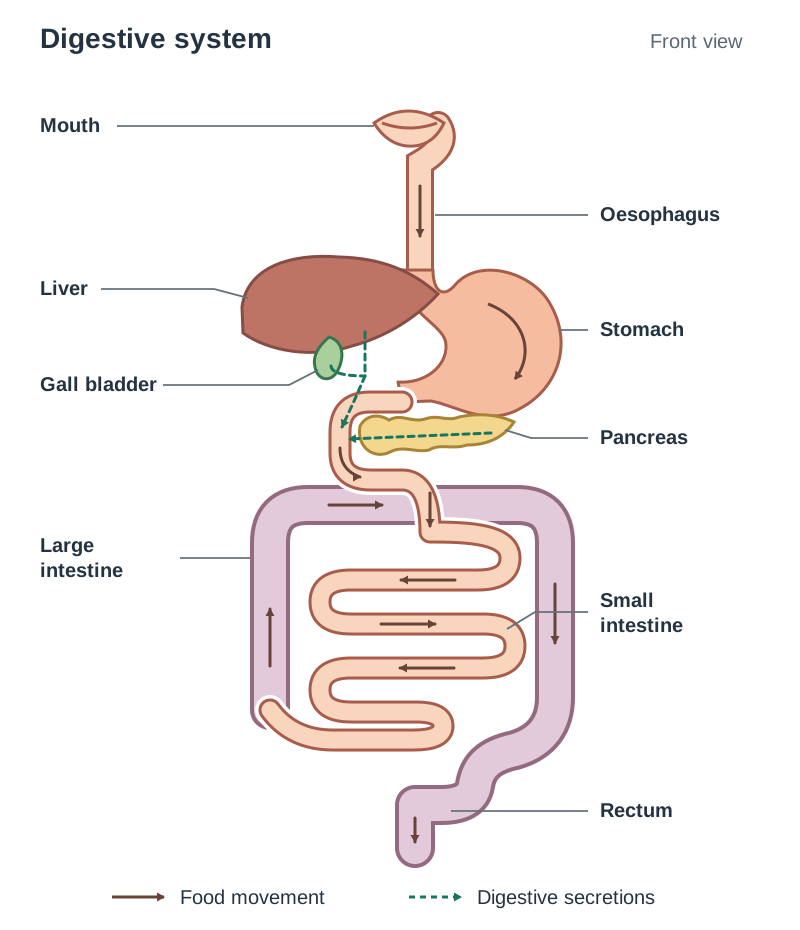
Digestion breaks food down physically and chemically so nutrients can enter the bloodstream.
- Mouth: Teeth chew food into smaller pieces, while saliva adds salivary amylase to break starch down into maltose.
- Oesophagus: Waves of muscle contractions called peristalsis push swallowed food down into the stomach.
- Stomach: Churns food with gastric juices and hydrochloric acid to break down protein and kill bacteria.
- Liver, gall bladder, and pancreas: The liver makes bile, stored in the gall bladder, which enters the small intestine to break fats into droplets. The pancreas produces digestive enzymes.
- Small intestine: Digestion finishes here. Tiny, finger-like projections called villi absorb digested nutrients straight into the bloodstream.
- Large intestine: Takes back water into the body, leaving behind solid waste to pass out through the rectum.
Lifecycle Nutrition and Special Diets
Different life stages and health conditions change what the body needs each day.
- Children and teens: Fast growth requires plenty of protein, calcium, and vitamin D for strong bones. Teenage girls need extra iron to replace menstrual blood loss and prevent anaemia.
- Older adults: Energy needs drop as metabolism slows down, but nutrient needs stay high. Meals should supply calcium, vitamin D, and fibre.
- Pregnancy: Extra folic acid is vital before and during early pregnancy to prevent neural tube defects like spina bifida.
- Diabetes: Type 1 diabetes means the pancreas makes no insulin, while Type 2 means the body cannot use insulin properly. Both require balanced meals based on high-fibre carbohydrates with little added sugar.
- High cholesterol: Linked to heart disease. Managed by cutting back on saturated fats and choosing baking or grilling over frying.
- Coeliac disease: An autoimmune condition where gluten, a protein in wheat, barley, and rye, damages the small intestine lining.
Healthy Living and Food Labels
A healthy lifestyle pairs a balanced diet with regular exercise, adequate sleep, and good hygiene.
- The Food Pyramid recommends 5 to 7 daily servings of vegetables, salad, and fruit, wholemeal grains for fibre, and 1.5 to 2 litres of water.
- Front-of-pack labels show colour-coded traffic lights and Reference Intake percentages for energy, fat, saturates, sugar, and salt.
- Back-of-pack panels list ingredients in descending order by weight, highlight common allergens like nuts and milk in bold, and state use-by or best-before dates.
- Always evaluate foods using the per 100g column rather than per serving data, because serving sizes vary between different brands.
Key terms
- High biological value (HBV) protein
- Protein containing all essential amino acids, found mostly in animal foods and soya.
- Low biological value (LBV) protein
- Protein lacking one or more essential amino acids, found in plant foods like beans, peas, and lentils.
- Peristalsis
- Involuntary, wave-like muscular contractions that push food along the digestive tract.
- Villi
- Tiny, finger-like projections lining the small intestine that absorb nutrients into the bloodstream.
- Diet-related disease
- A chronic illness, such as diabetes or heart disease, linked to long-term poor dietary intake.
- Special dietary consideration
- A medical or personal reason to adapt meals, such as coeliac disease or vegetarianism.
- Coeliac disease
- An autoimmune reaction where eating gluten damages the lining of the small intestine.
Check yourself
Which enzyme in the mouth begins digesting starch?
Salivary amylase.
Name the mineral needed with vitamin D to build strong bones.
Calcium.
What protein must people with coeliac disease avoid?
Gluten, found in wheat, barley, and rye.
Where are nutrients absorbed into the bloodstream during digestion?
Through the villi in the small intestine.
Why should you use the per 100g column when comparing two food packets?
Serving sizes vary between brands, but per 100g allows a standardised, direct comparison.