

Common foods are the everyday ingredients we cook with, from staple grains and dairy to fresh vegetables and meats. The Junior Cycle exam tests how you compare these ingredients, evaluate food labels, reduce kitchen waste, and choose foods for different nutritional needs.
Common Foods and Food Choices
Common foods are regular kitchen staples that form the building blocks of daily cooking. The Junior Cycle curriculum groups them into five basic types:
- Grains and cereals: wheat flour, oats, bread, pasta, and rice.
- Protein foods: eggs, milk, cheese, lean meat, fish, beans, and lentils.
- Vegetables and fruits: potatoes, carrots, onions, tomatoes, apples, and bananas.
- Fats and oils: butter, margarine, rapeseed oil, and olive oil.
- Basic seasonings: black pepper, dried or fresh herbs, mild spices, and salt.
Several practical factors shape what people choose to eat. A household budget determines whether a shopper buys own-brand staples or premium brands. Busy lifestyles leave less time for cooking, so families often choose quick, simple meals. Personal health, food allergies, stage of life, religious customs, and seasonal availability also guide what ends up in the trolley.
Comparing Ingredients: Nutrition and Sensory Quality
Swapping one ingredient for another alters a dish's nutritional value and its sensory qualities—appearance, aroma, flavour, and texture.
| Ingredient Swap | Nutritional Impact | Sensory Impact |
|---|---|---|
| Wholemeal flour instead of white flour | Adds dietary fibre and iron | Gives a darker colour, a heavier crumb, and a nuttier flavour |
| Rapeseed oil instead of butter | Cuts saturated fat; provides unsaturated fats | Makes a lighter texture with less dairy richness |
| Greek yoghurt instead of double cream | Boosts protein and calcium; reduces total fat | Creates a pleasant tangy flavour with a lighter mouthfeel |
| Herbs and spices instead of table salt | Lowers sodium, helping maintain healthy blood pressure | Deepens savoury aroma and taste without extra saltiness |
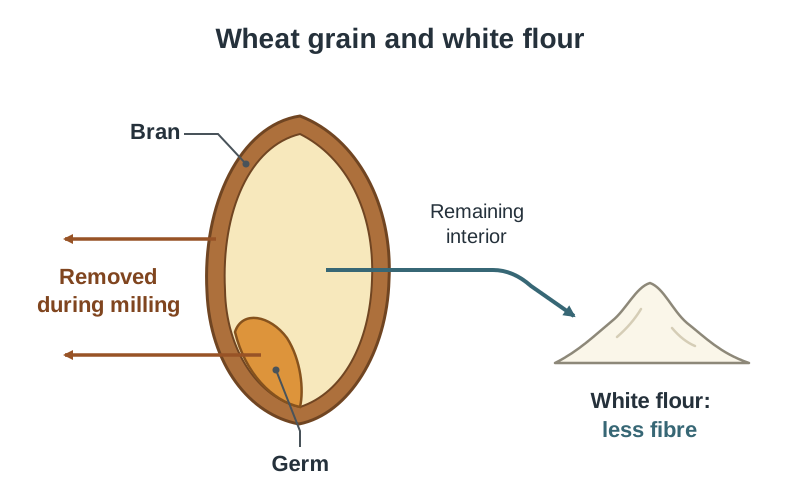
White flour is a refined food because the milling process strips away the outer bran and germ layers, removing most of the natural fibre.
Sustainable Food Choices and Reducing Waste
Our grocery habits carry real environmental and ethical consequences. Buying seasonal Irish produce cuts transport miles, while choosing Fairtrade tea, coffee, and bananas protects fair wages for growers. Purchasing loose vegetables reduces single-use plastic packaging.
Food waste can be reduced across three everyday stages:
- Selecting: plan meals ahead, write a shopping list, and buy loose items to avoid over-purchasing.
- Preparing: measure exact portion sizes of rice or pasta, use vegetable peelings for homemade stock, and repurpose leftovers into curries or soups.
- Storing: follow the First In, First Out (FIFO) rule so older items are eaten before fresh ones spoil. Keep perishable foods covered in the fridge below 5°C.
Food Labels and Convenience Foods
Pre-packed food labels help consumers compare items and eat safely. Irish and EU law requires several details on the pack:
- Legal requirements: the food's name, net weight, business address, and instructions for storage or cooking.
- Ingredients: listed in descending order by incoming weight, with the 14 mandatory allergens (like gluten, milk, or nuts) emphasised in bold.
- Date marks: a use-by date warns when perishable food becomes unsafe to eat; a best-before date indicates expected quality on shelf-stable goods.
- Back-of-pack nutrition table: lists energy, fat, saturates, carbohydrates, sugars, protein, and salt standardised per 100 g or 100 ml.
Front-of-pack traffic lights are voluntary guides that colour-code nutrients as green (low), amber (medium), or red (high). Convenience foods save time and keep well, but many commercial ready meals contain excess salt, sugar, and saturated fat compared to homemade versions.
Key terms
- Common foods
- Basic, everyday ingredients—such as cereals, dairy, meat, fruit, vegetables, and fats—used as the foundation of home cooking.
- Sensory qualities
- The characteristics of a food perceived through the senses: appearance, aroma, flavour, and texture.
- Refined food
- Food that has undergone processing to remove natural components, such as milling grain to strip the bran and germ.
- Use-by date
- A strict safety deadline found on perishable foods; food should never be eaten after this date.
- Best-before date
- A quality guideline found on longer-lasting foods; the food remains safe afterwards, though flavour or texture may decline.
- Convenience food
- Commercially pre-cooked or processed food made to reduce the time, skill, and effort needed for meal preparation.
Check yourself
What happens to the nutritional value and texture of soda bread when you replace white flour with wholemeal flour?
Dietary fibre and iron increase, while the bread develops a darker colour and a noticeably heavier, denser crumb.
Name four mandatory items that must appear on a pre-packed food label by law.
The food name, net quantity, ingredient list with allergens emphasised, and an appropriate date mark.
Give one practical way to cut down food waste during preparation and one during storage.
Measure portion sizes accurately before boiling; use the First In, First Out (FIFO) system in cupboards and fridges.
If 1 kg (1000 g) of rice costs €1.80, what is the cost of using a 250 g portion?
(€1.80 ÷ 1000) × 250 = €0.45.