

Plate tectonics explains how internal Earth movements create volcanoes, earthquakes, and fold mountains. The Junior Cycle exam tests Earth's layers, plate boundary types, landform diagrams, global distribution patterns, and human responses to tectonic hazards.
Structure of the Earth and Convection Currents
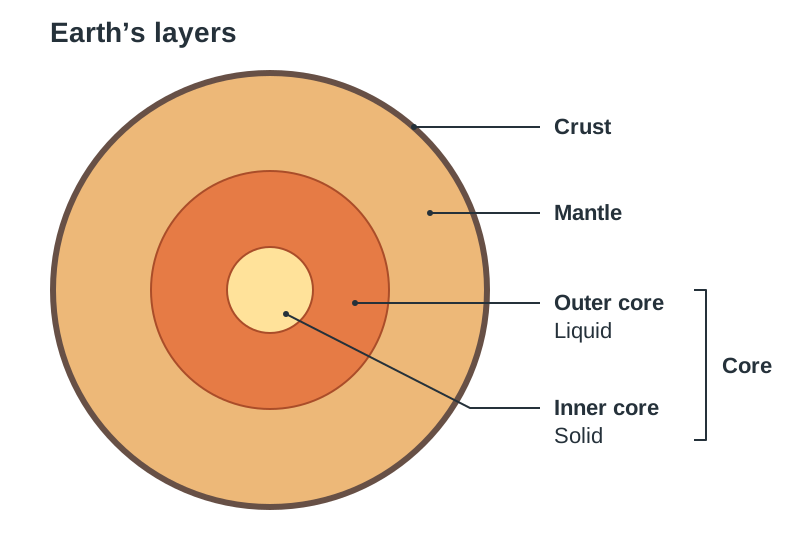
The Earth has three layers: the crust, the mantle, and the core. The core is divided into an outer core and an inner core.
- Crust: The thin outer layer of solid rock, varying from 10 km thick under oceans to 60 km under continents.
- Mantle: The thick middle layer of very hot, semi-molten rock that flows slowly.
- Outer core: A molten, liquid metal layer made of nickel and iron.
- Inner core: A solid metal ball of nickel and iron, kept solid by immense pressure despite extreme heat.
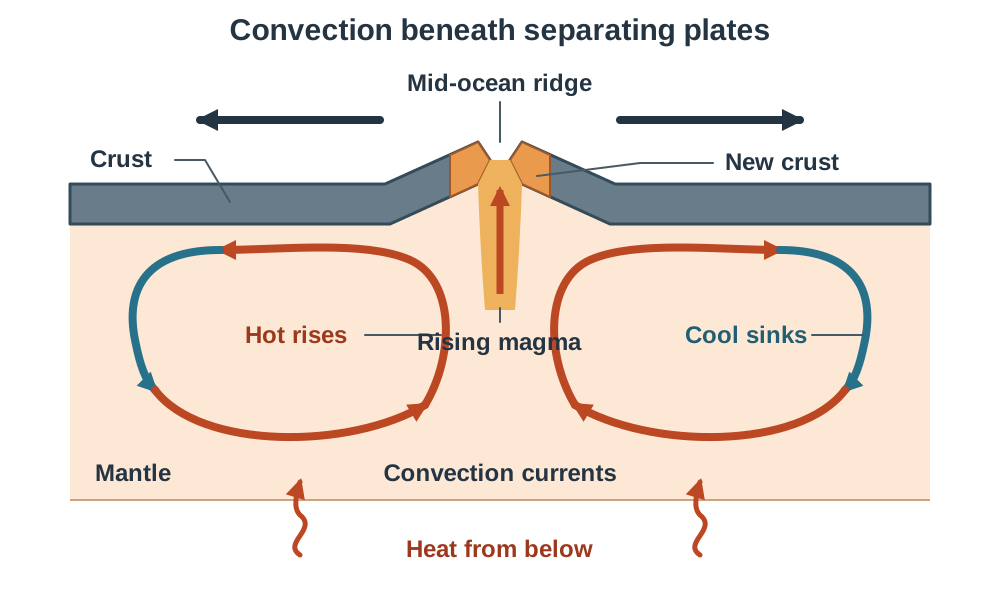
Convection currents circulating in the mantle move the overlying crust. Heat from the core warms magma in the lower mantle, making it rise. Near the crust, it spreads sideways and drags the plates along, then cools and sinks back down to be reheated.
Types of Plate Boundaries
The crust is cracked into large slabs called tectonic plates. The place where two plates meet is called a plate boundary.
| Boundary Type | Plate Movement | Key Features and Examples |
|---|---|---|
| Constructive (Divergent) | Plates separate and pull apart. | Magma rises to fill the gap, creating new crust, mid-ocean ridges, and volcanic islands (e.g. Mid-Atlantic Ridge in Iceland). |
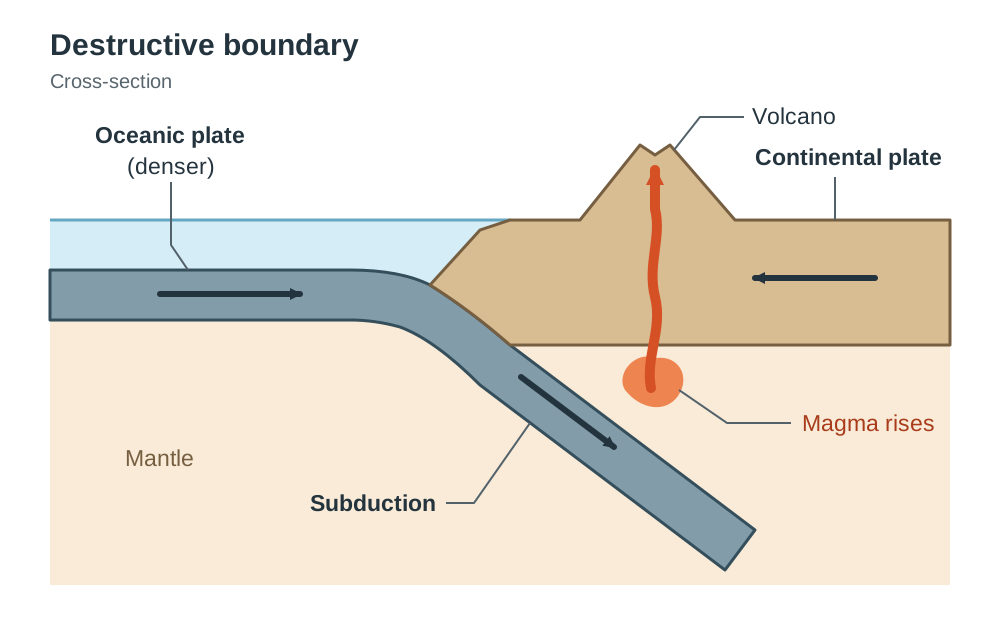
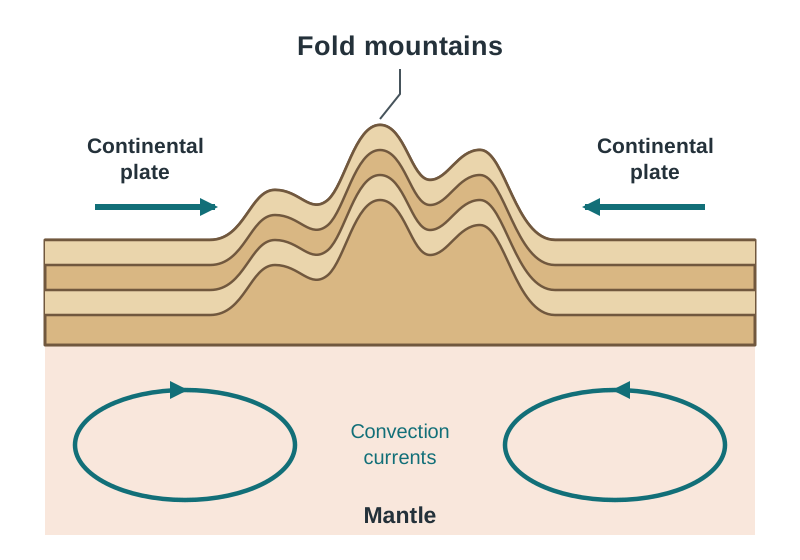
| Destructive (Convergent) | Plates collide and push together. | Oceanic plate is denser, so it sinks and melts in subduction. The melted rock rises as volcanoes (e.g. Andes). Where two continental plates meet, neither sinks and rock buckles into fold mountains (e.g. Himalayas). |
| Conservative (Passive) | Plates slide past each other. | Pressure builds as the plates lock together; when they suddenly slip, an earthquake happens (e.g. San Andreas Fault). No volcanoes form here. |
Earthquakes and Volcanoes: Where They Happen
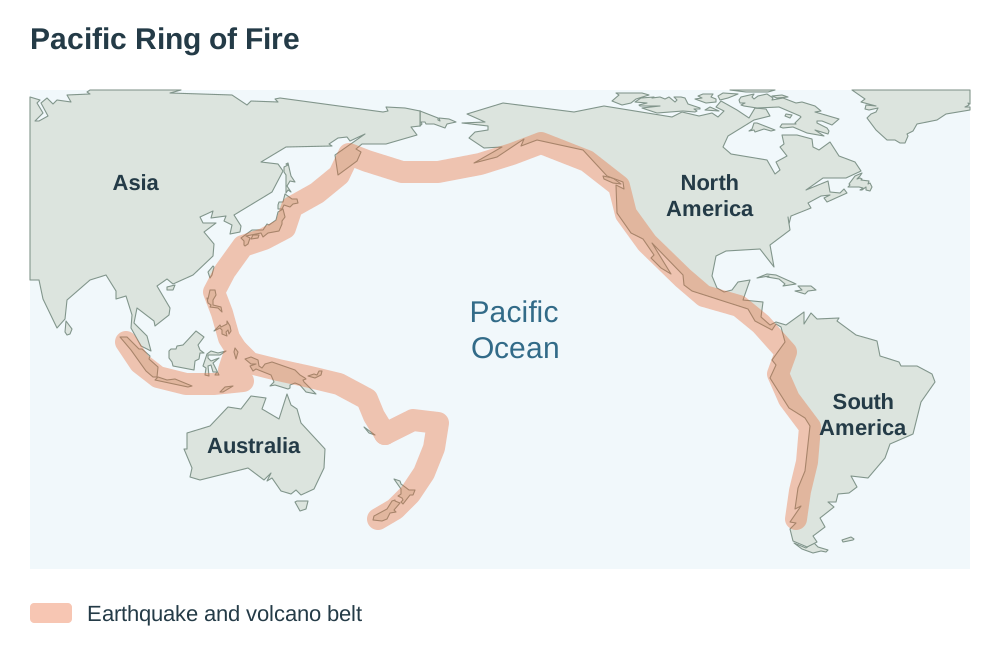
Earthquakes and volcanoes occur in distinct belts along plate boundaries rather than being spread evenly.
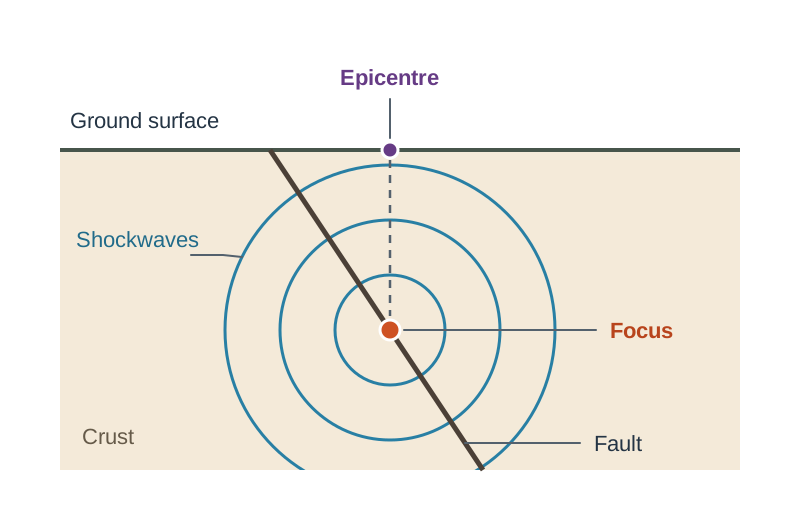
- Plates can lock together along cracks in the crust called faults. Pressure builds up, and when the plates suddenly slip, shockwaves (tremors) travel through the crust.
- The focus is the underground point where the earthquake originates. The epicentre is the point on the surface directly above the focus.
- An earthquake under the sea can push up a huge wave called a tsunami.
- Magma is molten rock underground, whereas lava is molten rock that reaches the surface.
- A volcano erupts through an opening called a vent; the hollow at the top is the crater; molten rock running down the side is a lava flow.
- The Pacific Ring of Fire is a major horseshoe-shaped belt around the Pacific Plate where most volcanoes and earthquakes occur.
- Fold mountains form long belts where plates collide: the Himalayas in Asia, the Alps in Europe, the Andes in South America, and the Rockies in North America. In Ireland, MacGillycuddy's Reeks in Co. Kerry are old fold mountains.
Key terms
- Convection current
- The circular movement of semi-molten rock in the mantle driven by heat from the core, which moves tectonic plates.
- Subduction
- The process where a heavier, denser oceanic plate sinks beneath another plate into the mantle and melts.
- Fold mountains
- Mountains formed when colliding tectonic plates compress and buckle layers of rock upwards.
- Focus
- The exact underground point where an earthquake begins.
- Epicentre
- The point on the Earth's surface directly above the focus of an earthquake.
- Richter scale
- A scale that measures the magnitude, or strength, of an earthquake.
- Pacific Ring of Fire
- A horseshoe-shaped zone along the edges of the Pacific Ocean where most of the world's earthquakes and volcanoes occur.
Check yourself
What drives the movement of tectonic plates?
Convection currents circulating in the semi-molten mantle, powered by heat from the core.
At which type of plate boundary does subduction occur?
At a destructive (convergent) plate boundary where a denser oceanic plate sinks beneath another plate.
What does the Richter scale measure?
The magnitude, or strength, of an earthquake.
Name two types of short-term emergency aid needed after a severe earthquake.
Search-and-rescue teams, clean water, emergency food, medical supplies, or temporary tents.
Social and Economic Impacts and Disaster Responses
Tectonic activity presents dangerous hazards as well as valuable economic opportunities for people.