

This topic covers how rocks form, how we extract rocks and energy, and how we manage resources like water, fish, soil, and forestry. In the Junior Cycle exam, you must classify rock types, evaluate extraction impacts, and explain sustainable resource use.
The Three Rock Categories
Rocks fall into three groups based on how the physical Earth creates them.
| Rock Group | How It Forms | Characteristics | Irish Location | Human Use |
|---|---|---|---|---|
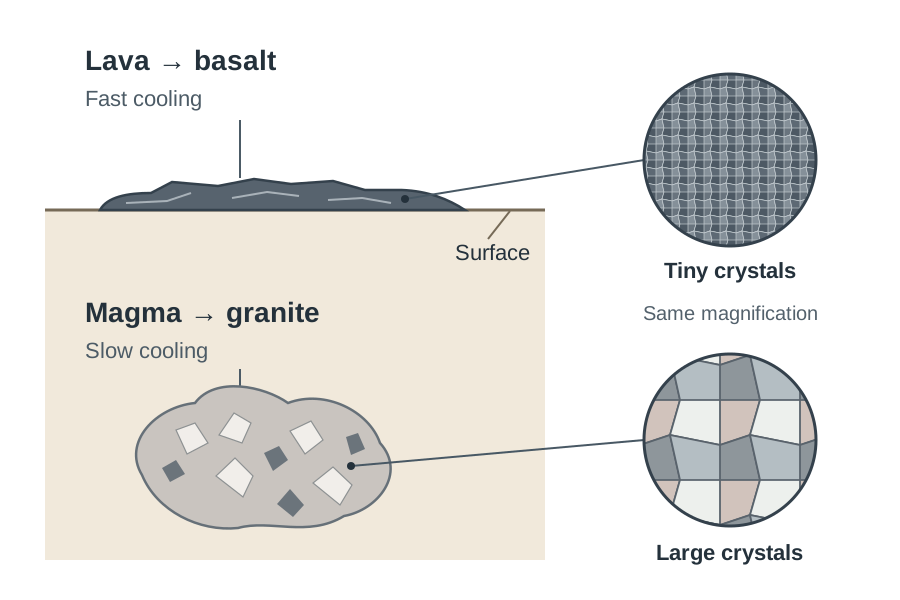
| Igneous | Magma or lava cools and turns solid | Granite cools slowly underground with large crystals; basalt cools quickly on the surface with tiny crystals | Wicklow Mountains (granite); Giant's Causeway, Antrim (basalt) | Polished kitchen worktops, monuments, and crushed road stone |
| Sedimentary | Broken sediments compress under water in layers called strata | Limestone contains compressed sea fossils; sandstone consists of sand grains cemented by silica | The Burren, Clare (limestone); MacGillycuddy's Reeks, Kerry (sandstone) | Crushed stone for making cement and gravel for building foundations |
| Metamorphic | Extreme heat and pressure alter existing rock without melting it | Marble forms from baked limestone; quartzite forms when sandstone is hardened under intense pressure | Connemara, Galway (green marble); Great Sugarloaf, Wicklow (quartzite) | Fireplace surrounds, decorative floor tiles, and polished gravestones |
Extracting Rocks and the Physical Landscape
Extracting materials from the ground is a primary economic activity. Landscape features decide which method works best.
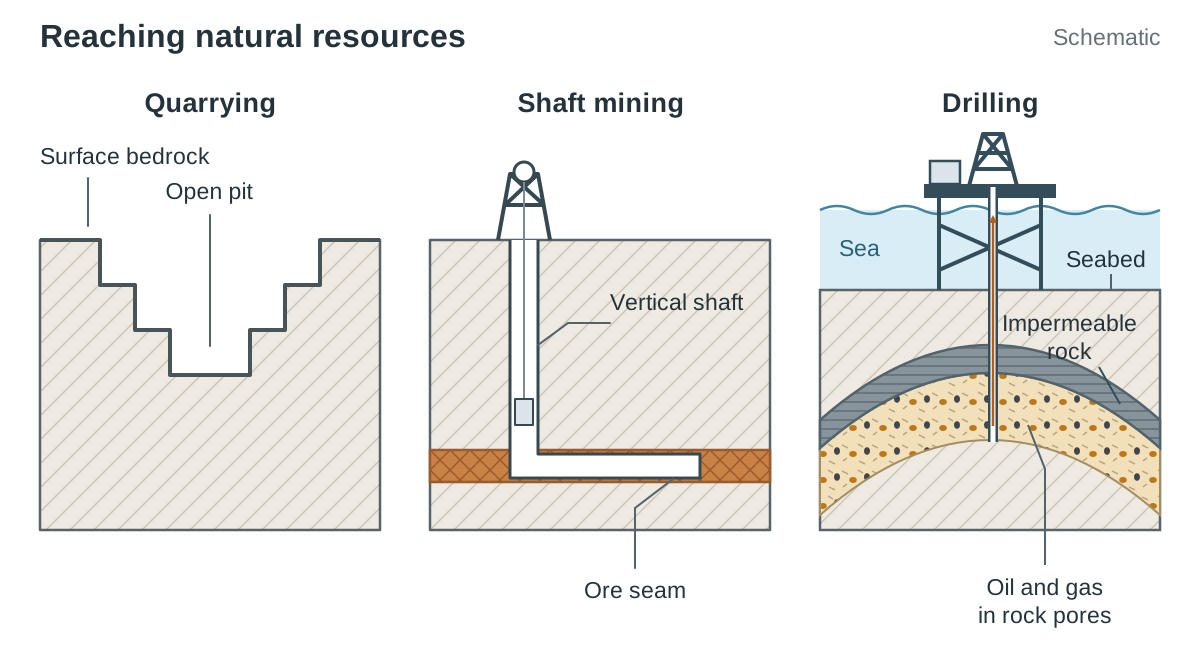
- Quarrying scoops stone from open pits where bedrock lies right at the surface.
- Shaft mining sinks vertical tunnels deep underground to reach valuable metal ore seams.
- Drilling taps oil and natural gas trapped beneath impermeable rock layers under the seabed.
Tara Mines Case Study
Tara Mines near Navan, County Meath, is Europe's largest zinc and lead mine.
- Economic: Employs over 600 workers directly and supports local engineering firms and transport hauliers.
- Social: Miners spend high wages in Navan shops, though heavy lorry traffic damages local roads.
- Environmental: Ponds of liquid waste called tailings risk leaking into groundwater, so trees were planted to hide the site.
Energy Resources and Midland Peat
Energy resources come directly from our physical world and fall into two groups.
- Renewable energy naturally replenishes and never runs out, including wind turbines, solar panels, and river dams.
- Non-renewable energy takes millions of years to form and cannot be replaced once burned, including coal, oil, and gas.
- Saving energy: insulate the attic and walls, switch off lights, appliances and chargers when not in use, and walk, cycle or take the bus for short journeys.
Industrial Peat Exploitation
Bord na Móna used ditchers to drain Midland raised bogs, milling machines and harvesters to lift the dried peat, and narrow-gauge rail wagons to carry it away far faster than hand-cutting.
- Burning peat produced electricity but damaged rare bog habitats and released heavy carbon dioxide emissions.
- Commercial harvesting has ended, leaving bare cutaway bogs across the Midlands.
- Cutaway bogs are now rewetted into wetland wildlife reserves, planted with native woodland, or used for wind turbines.
Water, Fish, Soil, and Forestry
Sustainable exploitation means using natural resources today without stopping future generations from meeting their own needs.
- Water: Uisce Éireann takes water from rivers like the Liffey, screens out debris, filters it, and adds chlorine before piping it to homes.
- Fish: Modern trawlers with sonar cause overfishing, so Ireland enforces yearly catch quotas and larger net mesh sizes.
- Soil: Heavy rain washes loose soil off bare slopes, so farmers plant shelter belts of trees and plough across hillsides.
- Forestry: Clear-felling large timber plantations causes severe soil washing, so foresters replant cleared parcels with mixed species.
Key terms
- Igneous rock
- Rock formed when molten magma or lava cools and hardens into solid mineral crystals.
- Sedimentary rock
- Rock created when layers of broken minerals or sea shells compress under water over millions of years.
- Metamorphic rock
- Existing rock changed into a harder form by intense heat and pressure without melting.
- Sustainable exploitation
- Using natural resources to meet present needs without damaging the ability of future generations to meet theirs.
- Tailings
- Liquid slurry of crushed rock and chemical waste left behind after separating valuable metal ores.
- Renewable resource
- A natural power source that nature replenishes continuously so it will not run out.
- Non-renewable resource
- A finite resource that cannot be replaced in a human lifetime once used up.
Check yourself
Which of these rocks is metamorphic: granite, limestone, or marble?
Marble.
What extraction method is used when rock or gravel sits right at the Earth's surface?
Quarrying (opencast mining).
State one practical way a farmer can stop topsoil from washing away on a hill.
Ploughing across the slope instead of down it, or planting tree shelter belts.
Name two distinct ways to conserve water in your home.
Turning off running taps while brushing teeth and taking short showers instead of deep baths.