
Design and manufacture is all about taking an idea from an initial brief right through to a tested, working artefact. The Junior Cycle exam tests how you select materials, test prototypes, solve practical problems, and evaluate your work against user needs.
The Design Process and User Needs
Design starts by figuring out what the problem is and who you are making the product for.
- A design brief states the problem clearly and sets out what the final product must do.
- A design specification is a measurable checklist of requirements that your finished solution has to satisfy.
- A constraint is any practical limit on your work, such as materials, size, cost, or workshop time.
- Ergonomics means designing products to suit the human body so they are comfortable and safe to use.
- Good ergonomic design includes rounded grip handles on tools or placing control buttons within easy thumb reach.
Prototyping and Iteration
In technology, you rarely get everything right on the first try. You use an iterative process, which means testing and tweaking ideas step by step.
- Quick thumbnail sketches help you explore several different shapes before settling on one.
- A model is an early mock-up used to check shapes or mechanisms, where the scale can be arbitrary.
- A prototype is the first full-size, complete item of a product made to test real performance.
- Making a prototype reveals hidden flaws early, such as parts rubbing together or weak joints.
- Record sketches, photos and test results; explain design changes and review your manufacturing plan as you work.
Planning, Materials, and Safety
Good preparation in the workshop saves material, keeps you safe, and avoids costly mistakes.
- Work out your manufacturing steps in advance, like drilling holes while sheet metal is still flat.
- Mark out parts close together on stock sheets to cut down on waste and cost.
- A thermoplastic softens when heated and can be reshaped repeatedly, making acrylic and HIPS easy to bend.
- Aluminium is lightweight and resists corrosion, which makes it ideal for vehicle frames and robot chassis.
- Before drilling, secure the work using suitable clamps or a secured machine vice, following your teacher’s instructions.
Joining, Assembly, and Project Review
Choosing the right fixing keeps your project sturdy and makes future repairs possible.
- Temporary fixings like machine screws let you open battery covers or replace worn components.
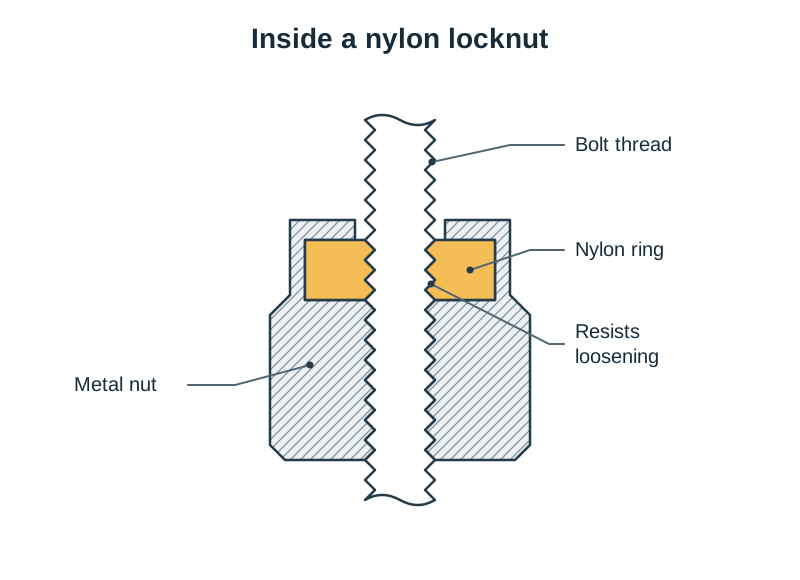
- A nylon locknut has a nylon ring that grips the thread and helps resist loosening under vibration.
- Permanent joints, such as riveted or acrylic-cement joints, cannot be dismantled without damaging the joint, fastener or joined parts.
- In CBA 2, you analyse your own bench and machine skills to set goals for your SEC project.
- When testing your finished artefact, evaluate it directly against your original specification checklist.
Key terms
- Design brief
- A clear statement that outlines the problem to solve and the purpose of the finished product.
- Design specification
- A precise checklist of measurable requirements that a successful design solution must meet.
- Constraint
- A practical limitation on a design project, such as time, cost, materials, or workshop tools.
- Iterative process
- Developing a product through repeating cycles of research, modelling, testing, and refinement.
- Prototype
- The first full-size, complete item of a product, unlike an arbitrary scale model.
- Thermoplastic
- A plastic that softens with heat and can be repeatedly reshaped or recycled, such as acrylic.
- Ergonomics
- The practice of designing products to match the human body for safety, comfort, and ease of use.
Check yourself
What is the key difference between a model and a prototype?
A prototype is a full-size, complete version of the product, while a model can be made to an arbitrary scale.
Why is a nylon locknut preferred over a standard nut on moving pivots?
Its nylon collar grips the screw thread and helps resist loosening under vibration.
What happens to a thermoplastic when it is heated?
It softens and can be bent, reshaped, or remelted for recycling.
How do you evaluate whether a completed project was successful?
You test the final artefact against every requirement listed in your initial design specification.