

At Leaving Certificate Higher Level, the topic of family, people, and emotions is examined across all four components: Oral (25%), Written Production (25%), Reading Comprehension (30%), and Listening Comprehension (20%). At Higher Level you need to do more than list relatives: you should be able to say how you get on with people and why, describe feelings accurately, give your opinion on issues like blended families and the generation gap, and use du or Sie correctly.
Family Life, Relationships, and Pets
When introducing family members, use haben with the accusative case (Ich habe einen Bruder). For marital status, age, and profession, use sein (Meine Eltern sind geschieden). The dative case appears after prepositions such as mit (mit meinem Vater), for indirect objects, and after verbs like helfen and gefallen (Er hilft mir, Das gefällt mir).
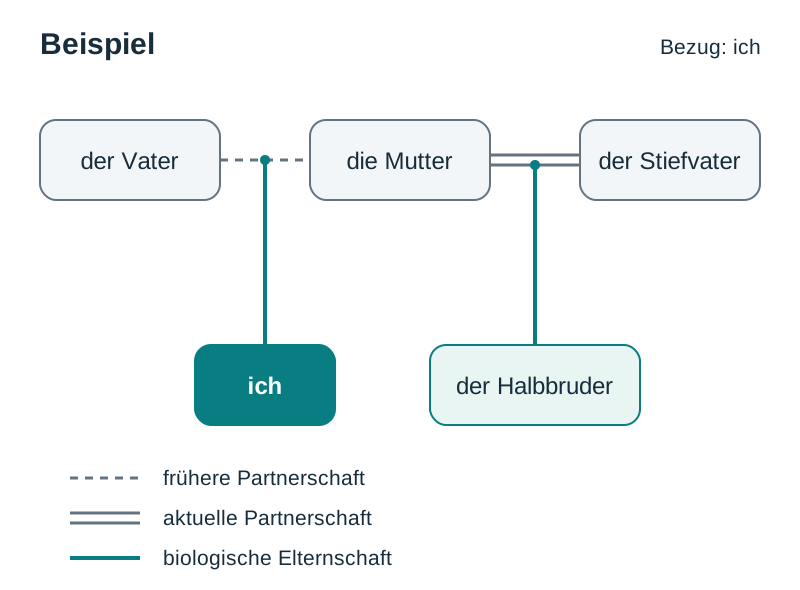
Core and Blended Family Vocabulary
- die Kernfamilie (nuclear family): der Vater (father), die Mutter (mother), die Eltern (parents), der Bruder (brother), die Schwester (sister), die Geschwister (siblings, plural only), das Einzelkind (only child).
- die Großfamilie und Verwandten (extended family): die Großeltern (grandparents), die Oma / der Opa (granny / grandad), der Onkel (uncle), die Tante (aunt), der Cousin / die Cousine (male / female cousin), der Neffe (nephew), die Nichte (niece).
- moderne Familienformen (modern family types): die Patchworkfamilie (blended family), der Stiefvater / die Stiefmutter (stepfather / stepmother), der Halbbruder / die Halbschwester (half-brother / half-sister), alleinerziehende Eltern (single parents).
Relationships and Going Out
- der Freund / die Freundin: Be careful with possessives. Mein Freund or meine Freundin usually means boyfriend or girlfriend. To talk about a friend who is not a partner, say ein Freund von mir / eine Freundin von mir or mein bester Freund.
- der Schatz / der Liebling (darling, pet names used between partners or parents and children).
- sich verlieben in (+ Akk.): Sie hat sich in ihn verliebt. (She fell in love with him.)
- zusammen sein: German uses seit with the present tense for an ongoing state: Wir sind seit zwei Jahren zusammen. (We have been together for two years.)
- Schluss machen mit (+ Dat.): Sie hat mit ihm Schluss gemacht. (She broke up with him.) Alternatively, use sich trennen von (+ Dat.) (to split up with).
- eifersüchtig sein auf (+ Akk.) (to be jealous of), jemanden betrügen (to cheat on someone), jemandem vertrauen (+ Dat.) (to trust someone).
- Marital status: ledig (single), verlobt (engaged), verheiratet (married), geschieden (divorced), getrennt leben (to live separated).
- heiraten (to marry), sich scheiden lassen (to get divorced), die Ehe (marriage), die Hochzeit (wedding).
Describing How You Get Along
Describing family relationships requires verbs followed by mit, which always takes the dative case:
- sich verstehen mit (+ Dat.): Ich verstehe mich prima mit meiner Mutter. (I get on great with my mother.)
- auskommen mit (+ Dat.): Ich komme gut mit meinem Stiefvater aus. (I get on well with my stepfather.)
- sich streiten mit (+ Dat.) um (+ Akk.): Ich streite mich oft mit meinem Bruder um die Fernbedienung. (I often argue with my brother over the remote control.)
In the dative plural, possessives take -en and nouns add -n (unless they already end in -n or -s): Ich wohne bei meinen Eltern and Ich streite mich selten mit meinen Geschwistern.
When giving reasons, subordinating conjunctions like weil and da (because) kick the conjugated verb to the end of the clause:
- Ich verstehe mich gut mit meinem Vater, weil er mir immer bei den Hausaufgaben hilft. (I get on well with my father because he always helps me with homework.)
- Wir streiten uns manchmal, da meine Schwester nie ihr Zimmer aufräumt. (We sometimes argue because my sister never tidies her room.)
Pets (Haustiere)
- das Haustier (pet), der Hund (dog), die Katze (cat), das Kaninchen (rabbit), das Meerschweinchen (guinea pig), der Wellensittich (budgie), das Pferd (horse).
- Wir haben einen Hund, der Max heißt. (We have a dog called Max. Haben governs the accusative, giving einen Hund.)
- Wir haben keine Haustiere. (We do not have any pets.)
- Ich muss jeden Tag mit dem Hund Gassi gehen. (I have to walk the dog every day.)
Describing People, Adjective Endings, and Social Register
Describing people accurately requires separating physical features that someone has (haben) from qualities that someone embodies (sein).
Physical Appearance vs. Personality
- haben for physical features: Er hat kurze, lockige Haare und blaue Augen. Note that die Haare (hair) and die Augen (eyes) are plural in German.
- sein for build, height, and character: Sie ist ziemlich groß und schlank, aber manchmal etwas ungeduldig. (She is quite tall and slim, but sometimes a bit impatient.)
- tragen (to wear, irregular: er trägt) takes the accusative: Mein Großvater trägt eine Brille und einen grauen Bart. (My grandad wears glasses and a grey beard.)
Adjective Endings When Describing People
An adjective placed before a noun requires an ending based on gender, number, and case:
- Plural with no article: add -e. Example: Sie hat lange, blonde Haare und braune Augen. (She has long blond hair and brown eyes.)
- Accusative after ein / kein / mein: masculine takes -en, feminine takes -e, neuter takes -es. Example: Er hat einen kurzen Bart, eine große Nase und ein rundes Gesicht. (He has a short beard, a big nose, and a round face.)
- Nominative singular after der / die / das: add -e. Example: Der kleine Junge ist mein Neffe. (The little boy is my nephew.)
- After sein (predicative adjectives): no ending. Example: Mein Bruder ist groß. (My brother is tall.)
For comparisons, add -er to the adjective: Mein älterer Bruder ist zwei Jahre älter als ich. (My older brother is two years older than me.) For professions, omit the indefinite article: Meine Mutter ist Ärztin, und mein Vater ist Krankenpfleger. (My mother is a doctor and my father is a nurse.)
Personality Adjectives
| Trait | Meaning | Trait | Meaning |
|---|---|---|---|
| zuverlässig | reliable | stur | stubborn |
| hilfsbereit | helpful | launisch | moody |
| ehrlich | honest | eifersüchtig | jealous |
| großzügig | generous | streng | strict |
| verständnisvoll | understanding | nervig / lästig | annoying / tiresome |
Social Register and Question Forms
You need to match your language to who you are talking to:
- Informal address (du / ihr): used with friends, family, and peers. Informal examples include Spinnst du? (Are you mad? – with friends only) and Du kannst ruhig mitkommen. (Sure, you can come along.)
- Formal address (Sie / Ihnen): used with adult strangers, employers, and examiners. Useful phrases: Darf ich Sie einen Augenblick stören? (May I disturb you for a moment?) and Wie gefällt Ihnen Irland? (How do you like Ireland?).
- Case forms of wer (who): Nominative = Wer ist das?; Accusative = Wen hast du gesehen?; Dative = Bei wem wohnst du während des Austauschs? (Who are you staying with during the exchange?).
Expressing Feelings, Attitudes, and Everyday Social Phrases
Choosing the correct grammatical pattern for emotions is essential for accuracy marks.
Physical Sensations and Involuntary States: Mir ist + Adjektiv
Physical sensations and involuntary mental states take a dative pronoun (mir, dir, ihm, ihr, uns, euch, ihnen/Ihnen):
- Mir ist kalt / warm. (I feel cold / warm. Saying Ich bin kalt means you are an emotionally cold person.)
- Mir ist langweilig. (I feel bored. Saying Ich bin langweilig means you are a boring person.)
- Mir ist übel / schlecht. (I feel sick / unwell.)
- Es ist mir peinlich, dass ich deinen Namen vergessen habe. (It is embarrassing to me that I forgot your name.)
Core Emotional Expressions by Feeling Type
- General wellbeing: Wie geht es dir / Ihnen? – Mir geht es ausgezeichnet. (How are you? – I am doing brilliantly.)
- Liking and preference: Ich spiele gern Fußball, aber ich lese lieber, und am liebsten gehe ich mit Freunden aus. (I like playing football, but I prefer reading, and most of all I like going out with friends.) With gefallen, the thing liked is the subject and the person is dative: Mir gefällt ihre Art. (I like her manner.) Ich mag ihn nicht besonders. (I don't particularly like him.)
- Satisfaction and indifference: Ich bin mit meinem Leben zufrieden. (I am happy with my life – zufrieden sein mit + Dat.). Das ist mir egal. (I do not mind / It is all the same to me.)
- Surprise, regret, and disappointment: Das wundert mich nicht. (That doesn't surprise me.) Wie schade! (What a pity!) Es tut mir leid, dass ich zu spät bin. (I am sorry that I am late.) Leider konnte ich nicht kommen. (Unfortunately I couldn't come.) Ich bin von ihm enttäuscht. (I am disappointed in him.)
- Hope: Ich hoffe, dass wir uns bald wiedersehen. (I hope we see each other again soon.)
- Belief, certainty, and uncertainty: Ich glaube nicht, dass das stimmt. (I don't believe that is true.) Ich bin mir sicher, dass alles klappt. (I am sure that everything will work out.) Ich bin mir nicht sicher, ob er kommt. (I am not sure whether he is coming.) Das kann ich kaum glauben. (I can hardly believe that.)
- Reporting someone else's feelings: Es gefällt ihr. (She likes it.) Es tut ihm leid. (He is sorry.) Ihr ist langweilig. (She is bored.) Er ist davon überzeugt, dass... (He is convinced that...).
Everyday Social Phrases
- Introducing someone: Das ist mein Cousin Tom. (This is my cousin Tom.) / Darf ich Ihnen meine Mutter vorstellen? (May I introduce my mother to you?)
- Asking after someone: Wie geht es deiner Oma? (How is your granny?)
- Congratulating and wishing well: Herzlichen Glückwunsch zum Geburtstag! (Happy birthday!) / Alles Gute! (All the best!) / Gute Besserung! (Get well soon!) / Viel Glück bei der Prüfung! (Good luck in the exam!)
- Compliments: Das steht dir gut! (That suits you!) / Du siehst toll aus! (You look great!)
- Apologies and excuses: Entschuldige bitte! (Excuse me / Sorry – informal) / Entschuldigen Sie bitte! (formal). Ich konnte dich nicht anrufen, weil mein Handy kaputt war. (I couldn't ring you because my phone was broken.) Ich hatte leider keine Zeit. (Unfortunately I had no time.)
Prepositional Verbs, Da-Compounds, and Wo-Questions
Many feelings verbs come with a fixed preposition, and that preposition always takes the same case. Normally auf and über take the dative for position (auf dem Tisch) and the accusative for movement (auf den Tisch), but in these fixed feelings expressions they always take the accusative. Learn the verb, the preposition, and the case together as one unit.
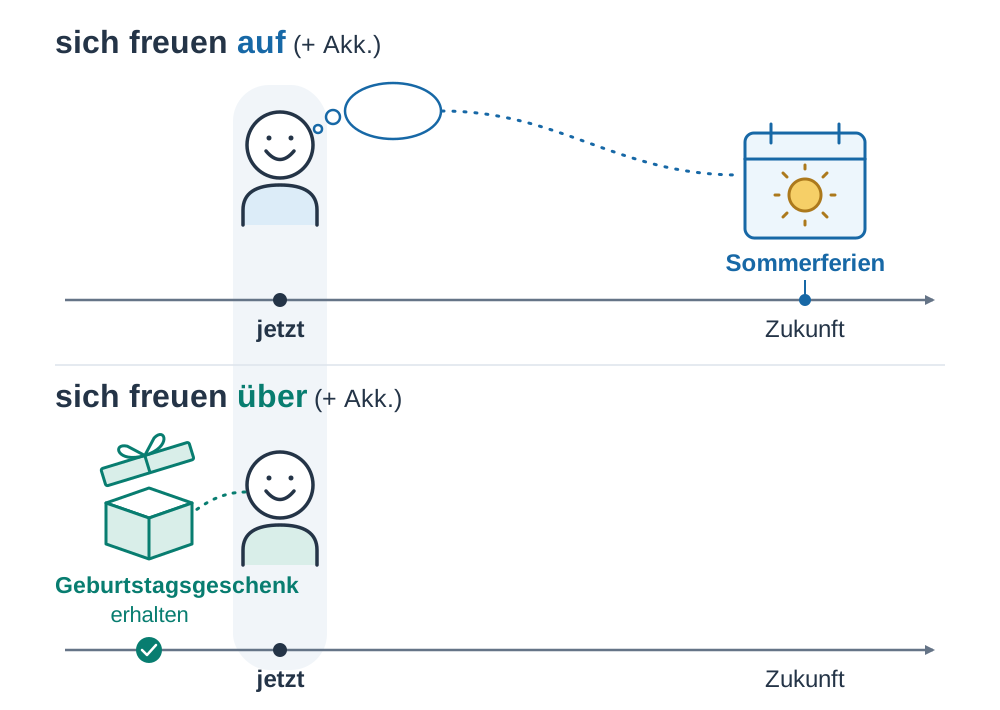
Essential Emotion Verbs with Prepositions
- sich freuen auf (+ Akk.): looking forward to a future event.
- Ich freue mich auf die Sommerferien. (I am looking forward to the summer holidays.)
- sich freuen über (+ Akk.): pleased about a present situation, gift, or completed event.
- Sie freut sich über das schöne Geburtstagsgeschenk. (She is delighted with the lovely birthday present.)
- sich ärgern über (+ Akk.): annoyed or angry about something.
- Mein Vater ärgert sich über die hohen Benzinpreise. (My father is annoyed about high fuel prices.)
- hoffen auf (+ Akk.): hoping for something.
- Wir hoffen auf besseres Wetter am Wochenende. (We are hoping for better weather at the weekend.)
- sich fürchten vor / Angst haben vor (+ Dat.): afraid of something.
- Viele Jugendliche fürchten sich vor der Zukunft. (Many young people fear the future.)
- überzeugt sein von (+ Dat.): convinced of something.
- Ich bin fest von seiner Ehrlichkeit überzeugt. (I am firmly convinced of his honesty.)
Da-Compounds (darauf, darüber, davon)
When the thing you are happy about, hoping for, or convinced of is an entire clause (a dass clause or a zu + infinitive phrase), place a da-compound (da + preposition) in the main clause to point forward to it. Add an -r- when the preposition begins with a vowel (darauf, darüber):
- Sie hofft darauf, eine gute Note in Deutsch zu bekommen. (She is hoping to get a good grade in German.)
- Er ärgert sich darüber, dass sein jüngerer Bruder nie zuhört. (He is annoyed that his younger brother never listens.)
- Ich bin davon überzeugt, dass gegenseitiges Vertrauen wichtig ist. (I am convinced that mutual trust is important.)
Questions with Wo-Compounds and Prepositions
When asking about things, combine wo(r)- with the preposition. When asking about people, use the preposition followed by the correct case of wer (wen or wem):
- Worauf freust du dich? (What are you looking forward to? – thing)
- Auf wen wartest du? (Who are you waiting for? – person, accusative)
- Worüber ärgert er sich? (What is he annoyed about? – thing)
- Mit wem verstehst du dich am besten? (Who do you get on best with? – person, dative)
The Generation Gap, Konjunktiv II, and Picture Description
You may be asked to discuss how family life, relationships, and marriage are changing, along with the generation gap (der Generationenkonflikt).
Household Friction and Changing Roles
- die Ausgehzeiten (curfews): Teenagers often complain about overly strict house rules (zu strenge Regeln).
- der Medienkonsum und die Handynutzung (screen time and smartphone use): Parents complain that teenagers are constantly glued to their screens (ständig am Handy hängen).
- der schulische Leistungsdruck (academic pressure): Arguments flare up over schoolwork and grades.
- der Wunsch nach Unabhängigkeit (desire for independence): Teenagers seek autonomy and their own space (mehr Freiraum).
- Changing family perspectives: Heutzutage basiert eine Familie nicht mehr nur auf traditionellen Rollenbildern, sondern vor allem auf gegenseitiger Unterstützung. (Nowadays, a family is no longer based only on traditional roles, but above all on mutual support.) Note that das Rollenbild means a role concept, whereas a role model is das Vorbild.
Wishes and Hypotheticals: wenn + Konjunktiv II
To explain what you would do or what you wish were different, use Konjunktiv II:
- Put würde + infinitive in the main clause.
- Use wäre (would be) or hätte (would have) in the wenn clause.
- When the wenn clause comes first, the main clause starts with its verb (verb, verb pattern):
- Wenn meine Eltern weniger streng wären, würde ich öfter ausgehen. (If my parents were less strict, I would go out more often.)
- Wenn ich mehr Zeit hätte, würde ich meine Großeltern öfter besuchen. (If I had more time, I would visit my grandparents more often.)
- Ich wünschte, mein Bruder wäre ordentlicher. (I wish my brother were tidier.)
- Compare this with a real condition using present tense: Wenn ich Zeit habe, werde ich das machen. (If I have time, I will do that.)
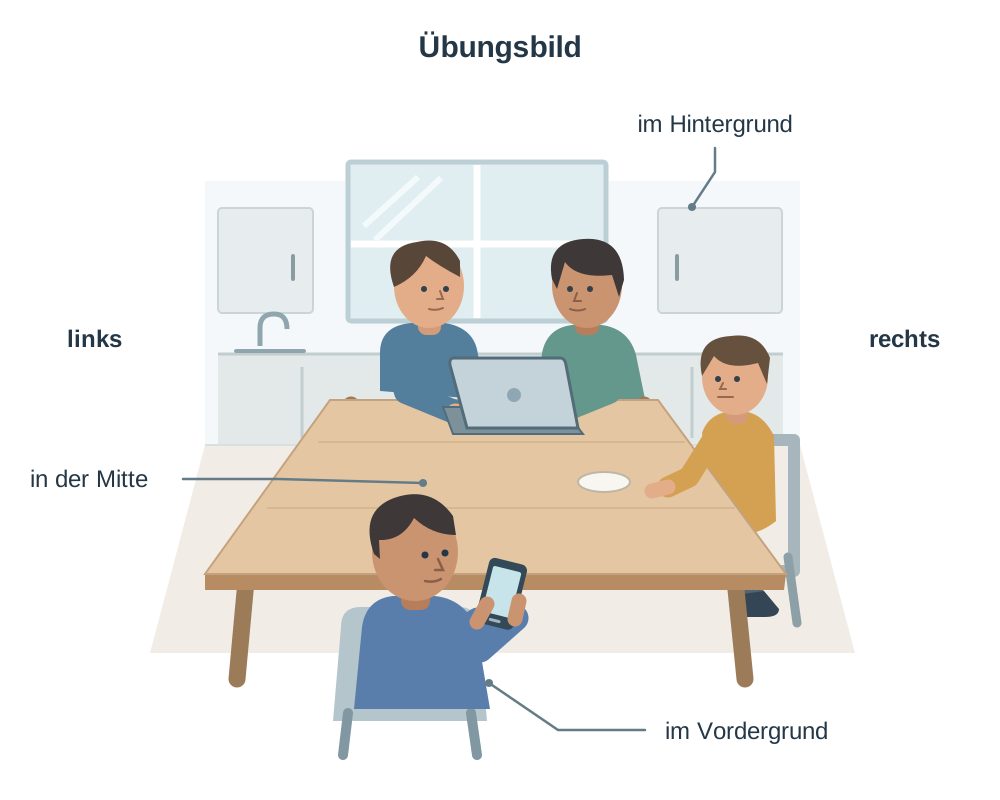
Describing a Photo or Picture
When describing an image in written or oral tasks, use these positioning and interpretive phrases:
- Auf dem Bild / Foto sieht man eine Familie. (In the picture you can see a family.)
- Im Vordergrund / Im Hintergrund / In der Mitte / Links / Rechts sitzt... (In the foreground / background / middle / on the left / on the right is sitting...)
- Sie scheinen glücklich zu sein. (They seem to be happy.)
- Es sieht so aus, als ob sie Spaß hätten. (It looks as if they are having fun.)
- Das Foto zeigt, wie Technologie den Alltag beeinflusst. (The photo shows how technology influences daily life.)
- Transitioning to your own opinion: Das Bild erinnert mich an meine eigene Familie, weil... (The picture reminds me of my own family because...)
Written Formats, Oral Strategies, and Comprehension Clues
In the written section you may be asked to write a letter or email, a diary entry, or an opinion piece. Check the latest examination papers for current task types and word counts.
Informal Letter or Email
- Salutation: Lieber Lukas, (male) / Liebe Julia, (female). After the comma, start the next line with a lowercase letter unless the word is a noun or formal Sie: Lieber Lukas, / vielen Dank für deine letzte E-Mail. Ich habe mich sehr darüber gefreut. Wie geht es dir und deiner Familie?
- Sign-off: Schreib mir bald! / Viele Grüße / Dein Seán (if the writer is male) / Deine Aoife (if the writer is female).
Diary Entry (Tagebucheintrag)
- Date line: Dublin, den 3. Mai
- Opening: Liebes Tagebuch,
- Daily events in the Perfekt: Heute war ein furchtbarer Tag. Ich habe mich fürchterlich mit meinen Eltern gestritten. Es ging wieder mal um meine Ausgehzeiten und mein Handy. (Today was an awful day. I had a terrible argument with my parents. It was once again about my curfews and my phone.)
- Closing: Jetzt muss ich schlafen gehen. Gute Nacht!
Opinion Piece (Äußerung zum Thema)
- Opening: Dieses Thema ist heute von großer Bedeutung, denn das Familienleben hat sich stark verändert. (This topic is of great importance today because family life has changed significantly.)
- Structuring opposing views: Einerseits möchten Eltern ihre Kinder beschützen. Andererseits brauchen Jugendliche mehr Freiraum, um selbstständig zu werden. (On the one hand parents want to protect their children. On the other hand teenagers need more freedom to become independent.)
- Higher Level conditional argument: Obwohl es oft Meinungsverschiedenheiten gibt, könnten viele Familien harmonischer leben, wenn sie mehr miteinander sprechen würden. (Although there are often disagreements, many families could live more harmoniously if they spoke to each other more.)
- Concluding: Zusammenfassend lässt sich sagen, dass gegenseitiger Respekt der Schlüssel ist. (In summary it can be said that mutual respect is the key.)
Oral Exam Strategies
- Tell me about your family: Wir sind zu fünft: meine Eltern, mein älterer Bruder, meine kleine Schwester und ich. Ich verstehe mich am besten mit meiner Schwester, weil wir viel gemeinsam haben. (There are five of us: my parents, my older brother, my little sister, and me. I get on best with my sister because we have a lot in common.)
- Handling domestic conflict questions: Ja, ab und zu streite ich mich mit meinem Bruder, meistens darüber, wer den Abwasch machen muss. (Yes, now and then I argue with my brother, mostly about who has to do the washing-up.)
- If you need clarification: Könnten Sie die Frage bitte wiederholen? (Could you repeat the question, please?) / Ich habe die Frage nicht ganz verstanden. (I didn't quite understand the question.)
Listening and Reading Comprehension: Identifying Tone and Emotions
When questions ask how you know a speaker is shocked, angry, or relieved, write your answer in English or Irish and always support it with a specific German phrase or an accurate translation. In the 2018 marking scheme, mentioning tone of voice without a specific expression earned no marks.
- Shock and disbelief: Mich hat fast der Schlag getroffen! (I was completely stunned / horrified!) / Ich bin aus allen Wolken gefallen! (I couldn't believe it! / I was flabbergasted!) / So einen Schreck habe ich noch nie bekommen! (I've never got such a fright!) / Das darf doch nicht wahr sein! (That simply cannot be true!)
- Anger and annoyance: Das ist ja unerhört! (That is outrageous!) / Ich habe die Nase voll! (I am fed up!) / Jetzt reicht's! (That's enough!)
- Relief: Gott sei Dank! (Thank God!) / Da bin ich aber erleichtert! (What a relief!)
- Relationship clues: check whether speakers use pet names (Schatz, Liebling), address each other with du rather than Sie, or mention durations (Wir sind seit zwei Jahren zusammen).
Key terms
- der Generationenkonflikt
- The generation gap; disagreements and friction between teenagers and older generations regarding lifestyle, curfews, or autonomy.
- die Patchworkfamilie
- A blended family composed of partners and children from current and previous relationships.
- sich verstehen mit (+ Dat.)
- To get along with someone (e.g. 'Ich verstehe mich gut mit meinem Bruder').
- auskommen mit (+ Dat.)
- To get on or manage with someone (e.g. 'Sie kommt gut mit ihrer Stiefmutter aus').
- Schluss machen mit (+ Dat.)
- To break up or end a romantic relationship with someone.
- geschieden
- Divorced (e.g. 'Meine Eltern sind seit drei Jahren geschieden').
- zusammen sein
- To be together in a relationship; takes 'seit' and the present tense for ongoing duration.
- eifersüchtig sein auf (+ Akk.)
- To be jealous or envious of someone or something.
- das ist mir egal
- An expression meaning 'I don't mind' or 'it is all the same to me'.
- die Kompromissbereitschaft
- Willingness to compromise, essential when discussing domestic conflict resolution.
- der Leistungsdruck
- Pressure to achieve or perform, particularly within school and family life.
- aus allen Wolken fallen
- An idiomatic expression meaning to be utterly shocked, flabbergasted, or unable to believe what has happened.
- Mich hat der Schlag getroffen
- An idiom meaning 'I was completely stunned / thunderstruck / horrified'.
- das Vorbild
- A role model (as opposed to 'das Rollenbild', which means a societal role concept).
Check yourself
How do you say 'I live with my parents' using accurate German prepositional phrasing?
'Ich wohne bei meinen Eltern' or 'Ich wohne mit meinen Eltern zusammen'.
Complete the sentence with the correct da-compound: 'Ich freue mich ___, dass du gekommen bist.'
'darüber' (Pleased about something that has already happened: sich freuen über becomes darüber before a dass clause).
Translate into German: 'If my parents were less strict, I would go out more often.'
'Wenn meine Eltern weniger streng wären, würde ich öfter ausgehen.' (Uses Konjunktiv II wären in the wenn clause and würde in the main clause, following the verb, verb pattern).
How do you report in German that a female person likes something, using the verb 'gefallen'?
'Es gefällt ihr.' (The thing liked is the grammatical subject, and the person who likes it is in the dative pronoun form ihr).
Which question form asks 'What are you looking forward to?' as opposed to 'Who are you waiting for?'?
'Worauf freust du dich?' for the thing (wo(r)- compound), and 'Auf wen wartest du?' for the person (preposition + accusative pronoun).
Why is 'because of her tone of voice' a weak answer?
Examiners look for specific linguistic evidence rather than vague impressions. In past marking schemes (such as 2018), mentioning tone of voice without citing a specific German phrase (e.g. 'Mich hat der Schlag getroffen') or an accurate translation earned no marks.