

Mastering vocabulary and sentence architecture for the environment, politics, and social issues is essential for Leaving Certificate Higher Level German. These themes feature across the entire examination: the oral interview (25%), listening comprehension (20%), reading comprehension (30%), and written production (25%). Whether you are answering an Äußerung zum Thema or writing a letter or e-mail to a German-speaking friend, success requires moving beyond simple assertions. Examiners award marks for specific terminology, precise case governance (such as schützen taking the accusative while schaden takes the dative), and disciplined word order in subordinate clauses.
Written Exam Formats and Task Architecture
The formats below are drawn from the 2016–2018 papers and show how to practise social and environmental themes. Check the latest SEC paper for the current layout, and follow the instructions and word counts printed on your question.
Äußerung zum Thema (ÄZT)
The Äußerung zum Thema is a short exercise of roughly 100 words attached to one of the reading comprehension texts. You receive two or three compulsory bullet points, such as giving two reasons for a social trend and describing the situation in Ireland.
- Answer every single bullet point in the exact order given. If a prompt demands zwei Gründe, supply two distinct reasons. If it asks for in zwei Sätzen, write exactly two well-formed sentences.
- In the 2016 and 2017 examples, marks were split roughly evenly between content (covering all prompt requirements) and expression (grammatical accuracy and vocabulary range). Leaving out one prompt point immediately caps your content mark, no matter how flawless your German is.
Schriftliche Produktion
The longer Schriftliche Produktion task requires approximately 160 words (marked 25 for content and 25 for expression in the 2018 example). You generally choose between:
- An informal letter or email to a German-speaking friend, replying to four topic prompts.
- A discursive piece based on a photo or stimulus text covering four or five specified aspects.
Give every prompt bullet its own dedicated paragraph containing a clear opinion, an explanation, and a concrete example.
Describing a Photo (Bildbeschreibung)
Practise using a photo as a starting point for social commentary. Keep these core phrases ready:
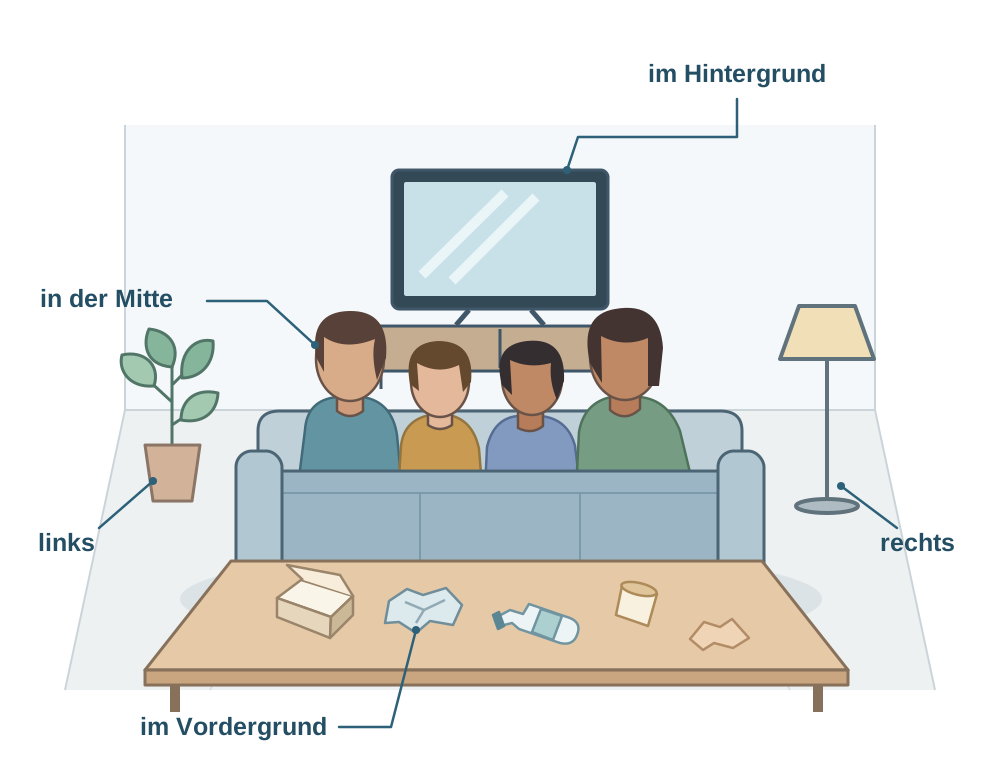
- Auf dem Foto sieht man... (In the photo you see... finite verb in second position)
- Im Vordergrund / Im Hintergrund (In the foreground / In the background)
- In der Mitte / Links / Rechts (In the middle / On the left / On the right)
- Es scheint, dass... / Es sieht so aus, als ob... (It seems that... / It looks as if...)
- Die Leute sehen glücklich / besorgt / gestresst aus. (The people look happy / worried / stressed.)
Auf dem Foto sieht man eine Familie, die zusammen vor dem Fernseher sitzt. Im Vordergrund liegt viel Verpackungsmüll auf dem Tisch. Es scheint, dass die Jugendlichen sich langweilen.
Nature, Climate, and Waste Management
Higher Level answers require specific environmental vocabulary and accurate prepositions rather than vague statements.
Essential Climate and Landscape Lexis
- der Klimawandel (no pl.): climate change
- die globale Erwärmung: global warming
- der Umweltschutz (no pl.): environmental protection
- die erneuerbaren Energien (pl.): renewable energies
- die Abgase (pl.): exhaust fumes
- die Luftverschmutzung / die Wasserverschmutzung: air / water pollution
- die Dürre (-n): drought
- die Überschwemmung (-en): flood
- der Meeresspiegel (no pl.): sea level (steigt = rises)
- das Aussterben (no pl.): extinction (vom Aussterben bedroht = endangered)
Sea vs. Lake: Three Distinct Words
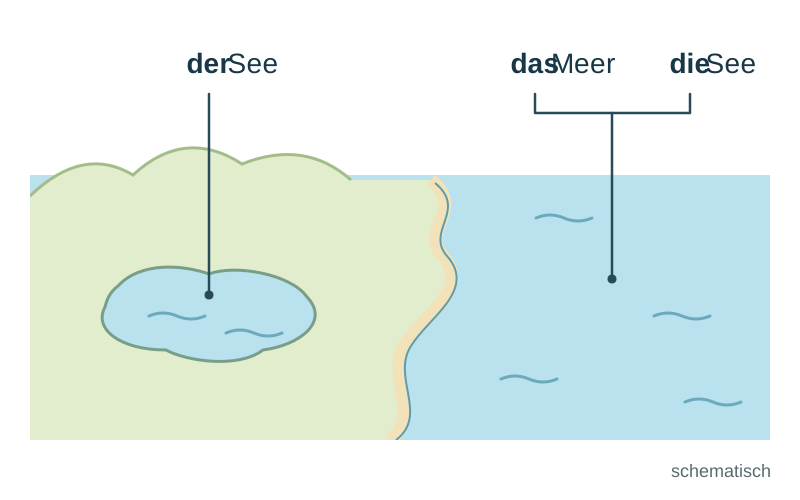
- das Meer (-e): open sea or ocean (im Meer schwimmen)
- die See (-n): sea (used in compound coastal names: die Nordsee, die Ostsee; an die See fahren = to go to the coast)
- der See (-n): inland freshwater lake (am Bodensee urlauben)
High-Yield Verb Distinction: schützen vs. schaden
- schützen takes the accusative case: Wir müssen die Umwelt schützen. (We must protect the environment.)
- schaden takes the dative case: Abgase schaden der Umwelt. (Exhaust fumes harm the environment.)
Waste, Litter, and Everyday Recycling
Practise comparing waste habits between Ireland and Germany:
- die Lebensmittelverschwendung: food waste
- Lebensmittel wegwerfen: to throw food away
- das Haltbarkeitsdatum: best-before date
- Reste verwerten: to use up leftovers
- die Verpackung (-en): packaging
- die Mülltonne (-n): wheelie bin
- der Gelbe Sack: yellow recycling bag for packaging (German dual system)
- das Pfand (no pl. in this sense; pl. die Pfänder): container deposit (die Pfandflasche = deposit bottle; die Mehrwegflasche = refillable bottle; die Einwegflasche = single-use bottle)
- Müll aufsammeln: to pick up litter
- umweltfreundlich / umweltschädlich: environmentally friendly / harmful to the environment
Im Gegensatz zu Deutschland gibt es in Irland erst seit 2024 ein Pfandsystem für Plastikflaschen und Dosen.
Teenagers, Mental Health, and Digital Life
Practise youth culture vocabulary in personal writing, opinion pieces and listening comprehension. A 2017 listening item, for example, discussed a youth telephone helpline.
Youth Helplines: 'Nummer gegen Kummer'
A past listening item on a youth helpline (2017) asked about three areas:
- Problems young callers discuss:
- der Kummer (no pl.): sorrow, grief (Sorgen und Kummer haben)
- der Liebeskummer (no pl.): heartbreak
- die erste Liebe: first love
- der Streit (-e) mit den Eltern / mit Freunden: row with parents / friends
- der Konflikt (-e) in der Familie: family conflict
- das Mobbing / das Cybermobbing: bullying / cyberbullying (gemobbt werden = to be bullied)
- die Drogen (pl.): drugs
- der Leistungsdruck (no pl.): academic pressure (gute Noten bekommen müssen)
- die Zukunftsangst (¨-e): anxiety about the future
- die Sucht (¨-e): addiction (die Handysucht, die Drogensucht)
- Helpline features:
- das Sorgentelefon / die Beratungsstelle: helpline / advice centre
- kostenlos: free of charge
- bundesweit: nationwide
- die Beratung (-en): advice, counselling
- Why callers reach out:
- anonym: anonymous (Man muss seinen Namen nicht nennen)
- vertraulich: confidential (Informationen werden nicht weitergegeben)
- zuhören: to listen (Jemand hat Zeit und hört zu)
Digital Life and Smartphone Pressures
- ständig aufs Handy schauen: to be constantly checking one's phone
- die Bildschirmzeit: screen time
- das Handy am Steuer: phone use while driving
- die Geldstrafe (-n) / das Bußgeld (-er): fine
- abgelenkt sein: to be distracted
- vereinsamen: to become socially isolated
- in Kontakt bleiben: to stay in touch
Ich befürworte Geldstrafen für das Handy am Steuer, weil abgelenkte Autofahrer schwere Unfälle verursachen.
Family Models, Gender Roles, and Politics
Syllabus section III.5 includes the generation gap, sexual and racial equality and changing views of marriage and the family; III.4 covers links between Ireland and the German-speaking countries, such as EU membership.
Modern Family and Gender Equality
- der Generationskonflikt: generation gap
- die Patchworkfamilie (-n): blended family
- alleinerziehend: single-parent (eine alleinerziehende Mutter)
- die gleichgeschlechtliche Ehe: same-sex marriage
- die traditionelle Rollenverteilung: traditional division of gender roles
- typische Männerberufe / Frauenberufe: traditional male / female occupations
- die Gleichberechtigung von Mann und Frau: gender equality
- gleicher Lohn für gleiche Arbeit: equal pay for equal work
Democratic Politics and European Links
- wählen: to vote (ab 18 wählen dürfen = to be allowed to vote from 18)
- das Wahlrecht: right to vote
- die Wahl (-en): election or choice (zur Wahl gehen = to go vote)
- die Stimme (-n): individual ballot/vote, or speaking voice (seine Stimme abgeben)
- die Abstimmung (-en): a vote, ballot (the voting process), e.g. Die Abstimmung findet morgen statt
- die Partei (-en): political party
- der Politiker / die Politikerin: politician
- der Bundeskanzler / die Bundeskanzlerin: German Federal Chancellor
- der Bundestag: German Federal Parliament
- das Bundesland (¨-er): federal state (such as Bayern or Nordrhein-Westfalen)
- die Europäische Union (EU): European Union (Irland und Deutschland sind aktive Mitglieder der EU)
Adjectival Nouns in Public Roles
Be careful with der/die Abgeordnete (member of parliament). It declines like an adjective rather than taking an -in suffix:
- ein Abgeordneter (a male MP)
- eine Abgeordnete (a female MP)
- die Abgeordneten (the MPs, plural)
This pattern matches der/die Jugendliche (ein Jugendlicher, eine Jugendliche, die Jugendlichen).
Advanced Grammar: Word Order, Reported Speech, and the Passive
To secure high expression marks, you must manage three distinct connector categories, reported speech in reading texts, and passive constructions.
Three Connector Classes and Sentence Word Order
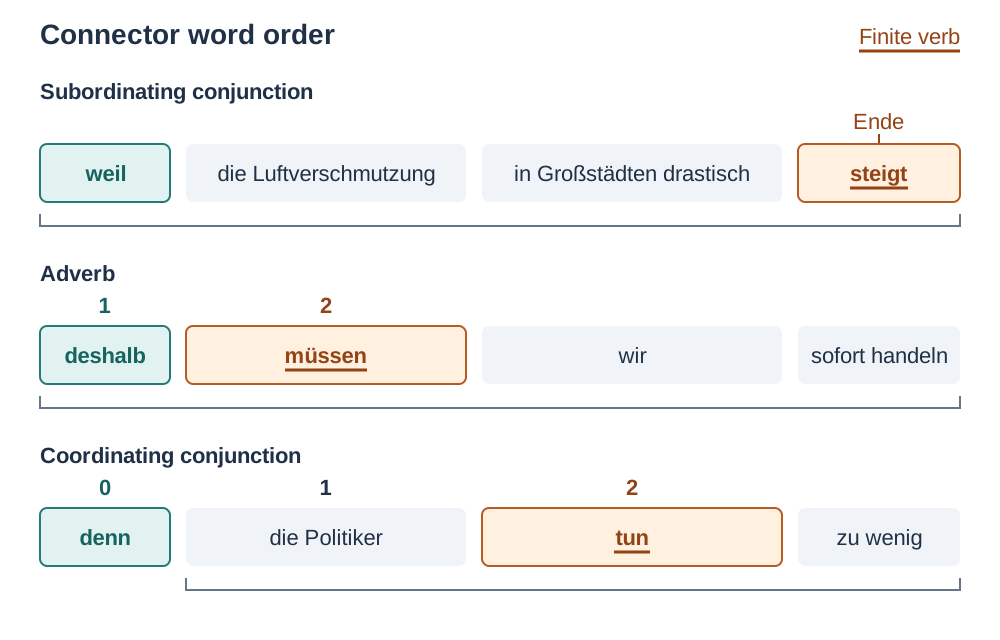
- Subordinating Conjunctions (weil, da, dass, obwohl, während) send the conjugated verb to the end of the clause:
- ..., weil die Luftverschmutzung in Großstädten drastisch steigt.
- Adverbs (deshalb, deswegen, trotzdem, außerdem) occupy position 1 in main clauses, forcing immediate verb-subject inversion (verb in position 2):
- Die Temperaturen steigen; deshalb müssen wir sofort handeln.
- Coordinating Conjunctions (und, aber, oder, denn, sondern) occupy position 0, leaving normal subject-verb order untouched:
- Wir demonstrieren, denn die Politiker tun zu wenig.
Reported Speech (indirekte Rede: Konjunktiv I)
Newspaper reports on politics use Konjunktiv I to report statements neutrally without declaring them factual:
- sein -> sei (Der Minister behauptet, die Krise sei bald vorbei.)
- haben -> habe (Die Polizei meldet, sie habe keine Hinweise.)
- werden -> werde (Die Sprecherin erklärt, das Projekt werde fortgesetzt.)
- können -> könne / müssen -> müsse
- Other verbs use stem + -e (er komme, sie sage).
In your own writing, using dass with standard indicative verbs is acceptable (Er sagt, dass die Lage ernst ist), but recognising Konjunktiv I in reading comprehensions is essential.
The Passive Voice (das Passiv)
Use the passive when an action or policy is more important than who executes it.
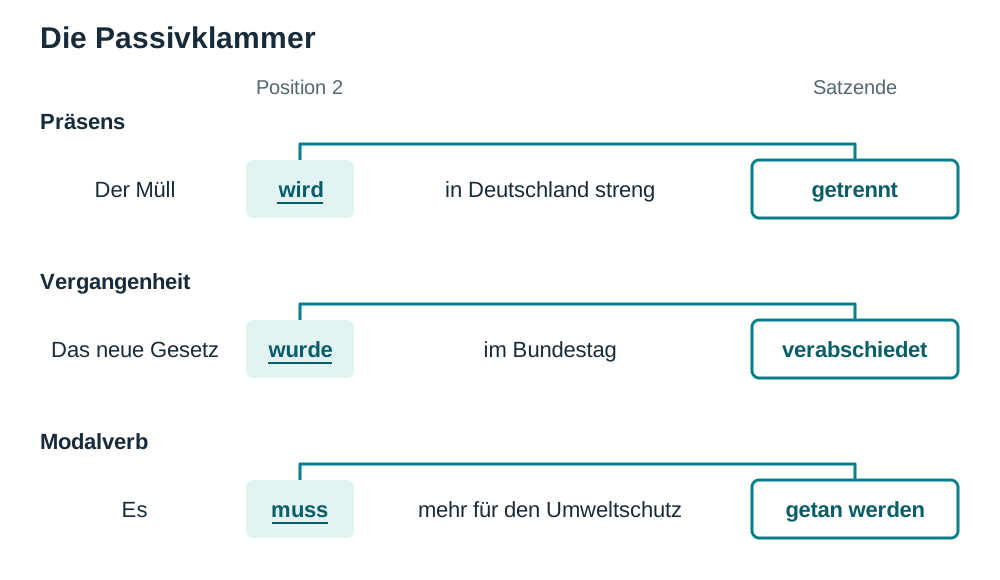
- Present Passive: form of werden + past participle at the end.
- Der Müll wird in Deutschland streng getrennt.
- Past Passive: past tense of werden (wurde / wurden) + past participle at the end.
- Das neue Gesetz wurde im Bundestag verabschiedet.
- With Modals: modal verb conjugated in position 2, past participle and werden at clause end.
- Es muss mehr für den Umweltschutz getan werden.
- To indicate the agent, use von + dative: Die Anlaufstelle wird von Freiwilligen geleitet.
Oral Examination Strategies: Discussion and Nuance
The oral examination accounts for 25% of Higher Level marks. Examiners look for the ability to defend viewpoints, introduce nuance, and discuss social realities in both Ireland and Germany.
Discussion Starters and Nuance
- Meiner Meinung nach + verb: Meiner Meinung nach könnte der Staat mehr tun. (Never place a comma or subject directly after this phrase).
- Ich bin davon überzeugt, dass...: I am convinced that...
- Da haben Sie / hast du recht, aber...: You are right there, but...
- Das ist wohl möglich, aber...: That is quite possible, but...
- Ich bin anderer Meinung, weil...: I am of a different opinion, because...
- Ich will nicht damit sagen, dass...: I do not mean to say that...
- Einerseits... andererseits...: On the one hand... on the other hand... (both trigger inversion).
Oral Practice: Model Questions and Responses
1. Was machst du persönlich für den Umweltschutz? Ich versuche, im Alltag umweltbewusst zu leben. Ich trenne meinen Müll zu Hause sorgfältig und fahre meistens mit dem Bus oder gehe zu Fuß zur Schule, anstatt mich mit dem Auto bringen zu lassen. Außerdem kaufe ich wiederverwendbare Trinkflaschen, um Plastikmüll zu vermeiden.
2. Gibt es Obdachlosigkeit in deiner Gegend? Ja, leider ist Obdachlosigkeit auch in Irland ein ernstes Problem, besonders in Großstädten wie Dublin oder Cork. Wegen der akuten Wohnungsnot können sich viele Familien die hohen Mieten nicht mehr leisten. Viele Freiwillige engagieren sich bei Suppenküchen, aber der Staat muss dringend mehr bezahlbare Wohnungen bauen.
3. Sollte man ab 16 Jahren wählen dürfen? Das ist eine schwierige Frage. Einerseits betreffen politische Entscheidungen über Bildung und Klima direkt unsere Zukunft, deshalb sollten Jugendliche mitreden dürfen. Andererseits interessieren sich manche Sechzehnjährige noch nicht genug für Politik. Trotzdem bin ich der Ansicht, dass ein früheres Wahlrecht das politische Bewusstsein fördern würde.
4. Leiden Jugendliche in Irland unter Leistungsdruck? Auf jeden Fall. Das Leaving Certificate erzeugt enormen Stress, weil die Punkte über den Studienplatz entscheiden. Viele Schüler haben Zukunftsangst und fühlen sich überfordert. Es wäre sinnvoll, das Punktesystem zu reformieren und mehr kontinuierliche Beurteilungen einzuführen.
Key terms
- der Klimawandel
- Climate change; masculine compound noun without a plural form.
- der Umweltschutz
- Environmental protection; masculine compound noun (Umwelt + Schutz) used without a plural.
- das Pfand
- Refundable deposit paid on recyclable bottles and drink cans in Germany and Ireland.
- der Leistungsdruck
- Pressure to achieve academically; exam-related stress placed on students.
- die Zukunftsangst
- Anxiety concerning future prospects, such as exams, careers, or housing.
- das Mobbing
- Bullying, particularly in school or online (das Cybermobbing); used with 'gemobbt werden'.
- die Wohnungsnot
- Housing shortage or crisis, leading to rising rents and homelessness.
- ehrenamtlich
- Voluntary or unpaid; describes community and charitable service done for the public good.
- die Gleichberechtigung
- Equal rights and legal equality, particularly regarding gender and minority protections.
- die Stimme
- An individual's personal vote in an election, as well as the physical voice.
- die Abstimmung
- A collective ballot, referendum, or voting procedure.
- der/die Abgeordnete
- Member of parliament (equivalent to a TD); an adjectival noun that declines like an adjective.
Check yourself
Identify the word-order error in this sentence and correct it: 'Deshalb wir müssen den Müll trennen.'
'Deshalb' is an adverb taking position 1, requiring verb-subject inversion in position 2. The correct sentence is: 'Deshalb müssen wir den Müll trennen.'
What is the grammatical case difference between 'schützen' and 'schaden'?
'Schützen' governs the accusative case ('die Umwelt schützen'), whereas 'schaden' governs the dative case ('der Umwelt schaden').
What does 'Der Minister sagt, die Lage sei ernst' mean, and why is the verb 'sei' used instead of 'ist'?
It means 'The minister says the situation is serious.' The verb form 'sei' is Konjunktiv I, used in journalistic German to report speech neutrally without verifying it as a personal fact.
Convert this active statement into the passive voice: 'Man trennt den Müll in Deutschland streng.'
'Der Müll wird in Deutschland streng getrennt.' (Form of 'werden' in position 2, past participle 'getrennt' at clause end).
Translate into German with correct word order: 'In my opinion, homelessness is a major problem in Dublin.'
'Meiner Meinung nach ist Obdachlosigkeit ein großes Problem in Dublin.' ('Meiner Meinung nach' takes position 1, so the finite verb 'ist' must be in position 2).
What is the difference between 'das Meer', 'die See', and 'der See'?
'Das Meer' is the sea/ocean (neuter); 'die See' is also the sea (feminine, used in 'die Nordsee' and 'an die See fahren'); 'der See' means a lake (masculine, like 'der Bodensee').
Social Inequality, Homelessness, and Integration
To develop an answer, name a problem, explain a cause and suggest a realistic solution.
Youth Homelessness and Street Children
Civic Duty and Community Action
Volunteering is a useful way to discuss solutions to social problems, for example in a letter or the oral:
Racism, Refugees, and Pluralism
Man sollte Vorurteile abbauen und Geflüchtete unterstützen, anstatt rechtsextreme Parolen zu verbreiten.